The .22 Rimfire · Volume 7
The Volume Makers — Who Builds the Cheap Stuff, and How Well
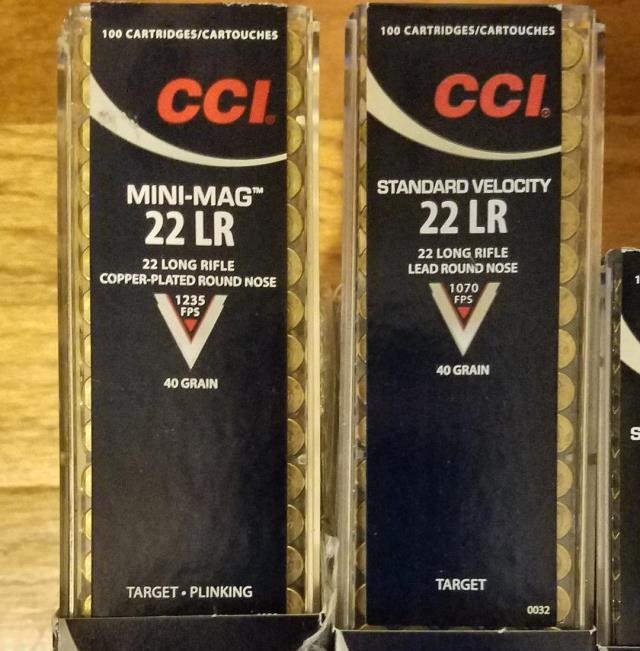
“Which manufacturer is best?” is the wrong shape of question, and this volume and the next exist to replace it with a better one. The .22 LR market has two industries in it that happen to share a cartridge name. The volume makers optimise rounds-per-day at an acceptable defect rate. The match houses optimise dispersion at almost any cost. Judging either by the other’s yardstick produces nonsense, and most of the “best .22 ammo” arguments online are exactly that mistake.
This volume covers the volume makers. Volume 8 covers the match houses. Volume 9 turns both into shortlists.
7.1 The Market-Structure Fact Nobody Mentions
Before the individual brands, one thing that changes how you should read brand comparisons:
CCI, Federal, Remington ammunition, Speer, Blazer and HEVI-Shot are all owned by the same company. They were consolidated under Vista Outdoor as The Kinetic Group, and in a deal announced October 2023 and completed at the end of November 2024, the Czechoslovak Group (CSG) acquired the whole of it for $2.225 billion.1
So when you compare CCI to Federal to Remington, you are comparing product lines inside one corporate parent, not competing firms. They still run separate plants, separate engineering and separate specifications — CCI in Lewiston, Idaho; Federal in Anoka, Minnesota — and the differences between their products are real. But the folk model of scrappy American competitors keeping each other honest is out of date, and any historical reputation you carry for one of these brands may predate two ownership changes.
The genuinely independent volume competition in the US market today is Winchester (Olin), Aguila (Industrias Tecnos), Fiocchi, Sellier & Bellot, Armscor, Magtech and the European houses in Volume 8.
7.2 CCI
Where: Lewiston, Idaho. The dedicated .22 rimfire plant is 37,000 sq ft and turns out roughly four million .22 rounds per day on proprietary equipment designed in-house.2 Ownership: The Kinetic Group / CSG.
What they are good at: CCI’s reputation rests on two things — ignition reliability and breadth of purpose-built loads. On the first, CCI is the brand that hobbyists reach for when a gun is being finicky, and its priming is the component other people’s marketing gets compared to. On the second, CCI has done something none of the match houses attempt: it has engineered a specific product for nearly every job in this series.
The lineup, read as a set of engineering answers:
- Standard Velocity — 40 gr at 1,070 fps, G1 BC 0.123. Subsonic by design, cheap, and the default suppressor round for a semi-auto because it is quiet and carries enough bolt momentum to cycle (Volume 10).3
- Mini-Mag — the general-purpose hunting round, 36 gr CPHP and 40 gr CPRN. It came out of comparative testing as the best all-round performer for accuracy, consistent expansion and low velocity variation (Volume 6).
- Stinger — the original hyper-velocity load, 32 gr at 1,640 fps, on a 0.702 in case rather than the standard 0.613 in (Volume 4 §4.4). Fast, and worth verifying in a match-chambered gun before you commit.
- Velocitor — hyper-velocity that keeps a 40-grain bullet instead of trading weight for speed. Arguably the more sensible hyper-velocity answer for hunting.
- Segmented HP — splits into three on impact (Volume 6).
- Quiet-22 and Quiet-22 Semi-Auto — the low-noise loads; the Semi-Auto variant exists specifically to be quiet and cycle an autoloader.
- Suppressor — 45 gr subsonic HP, purpose-built. In one comparative test it was the quietest load fired from a suppressed pistol at 112.62 dBZ, and it cycled reliably (Volume 10).4
- Clean-22 — the interesting one. A polymer bullet coating replaces the traditional wax lubricant, derived from Federal’s Syntech handgun technology. CCI claims it cuts lead fouling inside a suppressor by up to 60 percent. The line runs a 40 gr High Velocity at 1,235 fps, a 40 gr Sub-Sonic at 1,070 fps, and a Clean-22 Suppressor at 45 gr / 1,000 fps.5 For anyone who owns a rimfire can, this is the most consequential product development in bulk .22 in years — see Volume 10.
- Copper-22 — 21 gr lead-free at an advertised 1,850 fps, for lead-restricted ground (Volume 6).
- Blazer — CCI’s budget line, and honest about it.
Where CCI falls short: it is not a top-tier match manufacturer. CCI has target offerings, but if you are shooting for score at 50 metres the answer is in Volume 8. CCI also costs more than true bulk-pack ammunition, which is the correct trade for most people and an annoying one if you are shooting thousands of rounds a month at cans.
Verdict: for a shooter who owns one .22 rifle, one .22 pistol and a suppressor, CCI is the most useful single brand on the market — not because it wins any one category outright, but because it fields a considered, reliable product for every category. That breadth is the actual competitive advantage, and it is the honest answer to “CCI or Hornady?” (Hornady, per Volume 1, is not in this cartridge at all.)
7.3 Federal
Where: Anoka, Minnesota.6 Ownership: The Kinetic Group / CSG — same parent as CCI.
Federal spans the widest range of any American maker, from genuine bulk to genuine match:
- American Eagle / Champion / AutoMatch — the bulk and volume-practice tiers. AutoMatch is specifically loaded to run in semi-autos, which is a real distinction in the bulk category.
- American Eagle Suppressor — 45 gr subsonic; measured at 119.34 dB average in one suppressed test.4
- Hunter Match — 40 gr subsonic HP, an under-appreciated hunting-plus-suppressor load.
- Punch — the 29 gr defensive load (Volume 6 §6.5).
- Gold Medal Match / Gold Medal Target (711B) / Gold Medal Ultra Match — Federal’s match tier, 40 gr at 1,080 fps, made in Anoka.7 Ultra Match retains a following from 1990s silhouette competition. This is the only American match rimfire that seriously contends with the Europeans, and it is meaningfully cheaper than they are.
Where Federal falls short: the bulk end is ordinary. Federal bulk is the standard against which other bulk is judged, which is another way of saying it is average by definition.
Verdict: the broadest ladder. If you want one brand you can climb from bulk to match without switching manufacturers, this is it.
7.4 Winchester
Where: Oxford, Mississippi. Olin opened the plant in 2005 specifically to take over .22 rimfire production from East Alton, and it now runs three shifts around the clock.8 Ownership: Olin Corporation — genuinely independent of the CSG group.
The line: Super-X (the traditional hunting load, including the Power Point hollow point), Wildcat (bulk), M22 (a 40 gr bulk load aimed at semi-auto reliability), and T22 (the target load).
Assessment: Winchester is the workmanlike middle. Super-X Power Point is a genuinely good hunting bullet with a long track record. The bulk lines are competitive with Federal’s. Winchester does not field a serious match product, and it does not field the specialised suppressor and low-noise loads CCI does.
Verdict: buy it when it is cheaper than the equivalent CCI or Federal, which it often is. Nothing here is a mistake; nothing here is a reason to switch.
7.5 Remington
Ownership: The Kinetic Group / CSG — same parent as CCI and Federal.
Remington’s rimfire reputation is the most contested subject in this volume, and it needs to be handled carefully because reputation lags production by years and the ownership has changed twice.
The line: Golden Bullet (the bulk staple), Thunderbolt (the budget staple), Subsonic, Yellow Jacket and Viper (the hyper-velocity truncated-cone loads, both of which appear in the BBTI test matrix in Volume 4).
On dud rates: user-reported figures span an order of magnitude — from 1–2% across a 20,000-round sample to 10% in a 200-round sample — with wide gun-to-gun variation, and a more recent account holds that newer Golden Bullet is “about the same quality as Federal bulk pack.” Thunderbolt is consistently reported as dirtier and less accurate than Golden Bullet.9
This series will not print a dud-rate number for Remington, because the evidence does not support one. What it will say is the structural point: variance itself is the product characteristic. A brand whose reported failure rate ranges from 1% to 10% depending on who is asking is a brand with loose process control at the bulk end, and that is exactly what you are buying when you buy the cheapest box on the shelf. Whether your box is a good one is the gamble.
Verdict: buy it by the brick for high-volume plinking if the price justifies the tolerance for a click instead of a bang. Do not put it in a gun where a failure to fire matters, and do not judge a rifle’s accuracy on it.
7.6 Aguila
Where: Cuernavaca, Morelos, Mexico, by Industrias Tecnos, S.A. de C.V., founded in 1961 as Cartuchos Deportivos de México in collaboration with Remington, renamed Tecnos in 1978. It is one of the largest rimfire manufacturers in the world.10
The correction. You will read, repeatedly, that Aguila is “made by Eley” or “Eley-primed.” The sources that repeat this contradict it, stating that Tecnos is affiliated with neither Remington (today) nor Eley. The strongest defensible statement is that Tecnos uses comparable machinery and priming technique.10 This series does not assert an Eley connection, and neither should you when arguing about it on the internet.
The line: Super Extra (standard and high velocity bulk), Interceptor (hyper-velocity), Subsonic, the Colibri / Super Colibri primer-only loads (Volume 2 §2.3 — the rifle hazard), and the 60-grain Sniper Subsonic, which needs 1:12 twist or faster and keyholes in a standard 1:16 barrel (Volume 4 §4.3).
Assessment: Aguila is the most interesting volume maker because it builds the oddities nobody else will — the 60-grain, the primer-only loads, the shotshells. That inventiveness is a genuine service to the shooting community, and it comes with the corollary that Aguila’s catalogue contains more products you must check compatibility on than anyone else’s. Two of the three loads flagged as hazards in this series are Aguila products, and in both cases the hazard is a compatibility mismatch rather than a defect.
Verdict: good value bulk, and the only source for several genuinely useful specialty loads. Read the box.
7.7 The Rest of the Field
- Norma, RWS and Geco are made at the same German site in Fürth — formerly Dynamit Nobel, then RUAG Ammotec, and since 31 July 2022 wholly owned by Beretta Holding.11 Geco is the value line, Norma the mid-tier, RWS the match tier (Volume 8).
- Fiocchi, Sellier & Bellot, Armscor, Magtech and Browning-branded rimfire fill out the value shelf. All are perfectly serviceable; none is doing anything a shooter needs to reason about separately.
- Hornady does not make .22 LR. Its rimfire program is the .17 HMR, .17 HM2 and .17 WSM — cartridges it invented — plus loaded .22 WMR.12 Hornady is a serious rimfire company in the wrong cartridge for this question.
7.8 Ranking, With the Caveat That Matters
If forced to rank the volume makers on overall usefulness to one shooter with a rifle, a pistol and a can:
- CCI — breadth, reliability, and the only complete set of purpose-built specialty loads
- Federal — the widest ladder from bulk to genuine match
- Winchester — solid, independent, buy on price
- Aguila — best specialty catalogue, most compatibility homework
- Remington — buy by the brick for plinking, on price, with tolerance for variance
And the caveat that outranks the whole ranking: your rifle’s opinion beats this list. Rimfire barrels are individually selective about ammunition, which is the entire premise of the lot-testing industry in Volume 3. The correct procedure is to buy one box of each of five candidates, shoot them over the same session from the same rest, and let the groups decide. That single afternoon is worth more than any brand argument, including this one.
7.9 Bibliography
Footnotes
-
The Kinetic Group (Federal, Remington ammunition, CCI, Speer, HEVI-Shot, Blazer) acquired by Czechoslovak Group for $2.225 billion; announced October 2023, stockholder approval 25 November 2024, closed end of 2024. https://www.guns.com/news/2024/12/02/blazer-cci-federal-hevi-remington-and-speer-ammo-lines-sold-to-czech-firm ; https://www.outdoorlife.com/guns/kinetic-group-sold-to-czechoslovak-group/ ; https://en.wikipedia.org/wiki/Vista_Outdoor (confidence: high). ↩
-
CCI’s Lewiston, Idaho rimfire facility: 37,000 sq ft, ~4 million .22 rounds per day, proprietary in-house equipment. https://www.thetruthaboutguns.com/cci-opens-new-22-rimfire-production-facility-idaho/ ; https://en.wikipedia.org/wiki/CCI_Ammunition (confidence: high). ↩
-
CCI Standard Velocity: 40 gr, 1,070 fps, G1 BC 0.123. https://www.cci-ammunition.com/rimfire/cci/standard-velocity/6-32.html (confidence: high). ↩
-
CCI Suppressor Subsonic 45 gr HP measured at 112.62 dBZ from a suppressed pistol, quietest in that test and cycling reliably; Federal American Eagle Suppressor 45 gr averaged 119.34 dB. https://www.targetbarn.com/broad-side/quietest-22lr-ammo/ (confidence: medium-high — real measurements, but dB figures are only comparable within one test protocol). ↩ ↩2
-
CCI Clean-22: polymer bullet coating replacing wax, derived from Federal Syntech technology; claimed to reduce lead fouling inside a suppressor by up to 60 percent; line includes 40 gr HV at 1,235 fps, 40 gr Sub-Sonic at 1,070 fps, and Clean-22 Suppressor 45 gr at 1,000 fps. https://www.cci-ammunition.com/rimfire/cci/clean-22-suppressor/6-980CC.html ; https://www.cci-ammunition.com/news/newest-clean-22-optimized.html ; https://www.cci-ammunition.com/cci-stories/when-rimfire-went-clean.html (confidence: high that these are CCI’s published specifications and claims; the 60% figure is CCI’s own and is presented as a manufacturer claim, not an independent measurement). ↩
-
Federal ammunition manufactured in Anoka, Minnesota. https://www.federalpremium.com/rimfire/gold-medal/gold-medal-match/11-922A.html ; https://www.ammunitiontogo.com/50rds-22-lr-federal-gold-medal-match-40gr-solid-ammo (confidence: high). ↩
-
Federal Gold Medal Match / Target / Ultra Match, 40 gr at 1,080 fps, loaded at Anoka; Ultra Match’s silhouette-competition reputation. https://www.federalpremium.com/rimfire/gold-medal/gold-medal-match/11-922A.html ; https://www.rimfirecentral.com/threads/federal-gold-medal-ultra-match.1267005/ (confidence: high on the specifications; the historical reputation note is anecdotal and flagged as such). ↩
-
Winchester’s Oxford, Mississippi plant opened 2005, took over .22 rimfire production from East Alton, runs three shifts around the clock; later expanded. https://www.ssusa.org/content/watch-behind-the-scenes-at-the-winchester-rimfire-ammunition-plant/ ; https://en.wikipedia.org/wiki/Olin_Corporation (confidence: high). ↩
-
Remington bulk .22 dud rates reported between ~1–2% over a 20,000-round sample and ~10% over a 200-round sample, with wide gun-to-gun variation; a more recent account rates newer Golden Bullet comparable to Federal bulk; Thunderbolt consistently reported dirtier and less accurate than Golden Bullet. https://www.rugerforum.net/threads/remington-22-lr-ammo-quality.30703/ ; https://www.rimfirecentral.com/threads/remington-golden-bullets-are-golden-new-review.1282890/ ; https://www.rimfirecentral.com/threads/having-trouble-with-remington-thunderbolt-golden-bullet.927441/ (confidence: low-to-medium — anecdotal, high variance, and reputation lags production changes. No single dud-rate figure is asserted). ↩
-
Aguila manufactured by Industrias Tecnos, S.A. de C.V., Cuernavaca, Morelos; founded 1961 as Cartuchos Deportivos de México in collaboration with Remington, renamed 1978; among the largest rimfire manufacturers in the world. The Eley-affiliation claim is contradicted within the sources that repeat it. https://en.wikipedia.org/wiki/Aguila_Ammunition ; https://www.aguilaammo.com/about/ ; https://www.rimfirecentral.com/threads/aguila-eley-prime.509925/ (confidence: high on the corporate facts; low on any Eley connection, which is explicitly not asserted). ↩ ↩2
-
RWS, Geco and Norma produced at Fürth, Germany — formerly Dynamit Nobel, then RUAG Ammotec; Beretta Holding took full ownership 31 July 2022. https://calibremag.ca/beretta-buys-norma-rws-rottweil-geco/ (confidence: high). ↩
-
Hornady’s rimfire line is .17 HMR, .17 HM2, .17 WSM and loaded .22 WMR; no .22 LR product appears in its rimfire catalogue. https://www.hornady.com/ammunition/rimfire/17-hmr-17-gr-v-max ; https://en.wikipedia.org/wiki/.17_HM2 (confidence: high on the .17 line; high-but-negative on the .22 LR absence). ↩
Comments (0)