The .22 Rimfire · Volume 6
Terminal Ballistics — What It Actually Does to Game
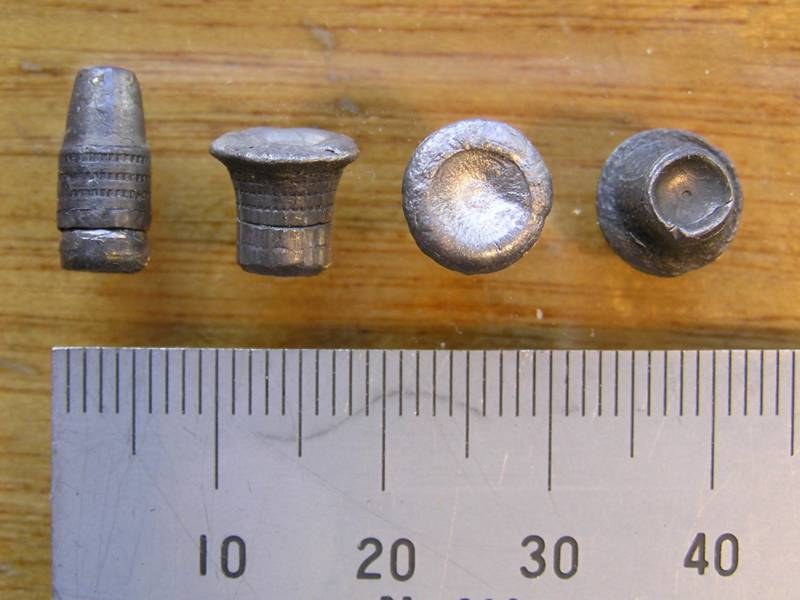
The .22 LR arrives at 50 yards carrying roughly 85 to 107 foot-pounds, depending on the load.1 That is not much. It is enough — it has killed more small game than every other cartridge combined — but only because shot placement does nearly all the work and the bullet is asked to do very little. Understanding what the bullet is being asked to do is the whole of choosing hunting ammunition.
6.1 The Two Bullet Philosophies
Every .22 hunting load is an answer to one question: penetrate, or expand? At this energy level you do not get both.
Solids (LRN, CPRN, and flat-nose solids) penetrate straight and deep, deflect less in brush, and destroy very little meat. They are the head-shot bullet. On a squirrel taken through the skull, a solid does exactly the job and leaves the animal whole.
Hollow points trade penetration for expansion and energy transfer. They are the body-shot bullet, for when the shot you get is not the shot you wanted, or when the animal is tougher than a squirrel. They also make a mess of the front half of a small animal, which is a real cost if you are eating it.
CCI’s Segmented HP is a third answer: the bullet splits into three pieces on impact, each cutting its own wound channel.2 It is an energy-transfer maximiser, and it is emphatically not a meat-preservation choice.
The honest summary from the sources: both work, both are lethal on small game, and the choice follows from where you intend to hit the animal, not from which is “better.”2 Anyone who tells you one is universally correct is describing their own shot discipline, not the ballistics.
6.2 By Species
6.2.1 Squirrel
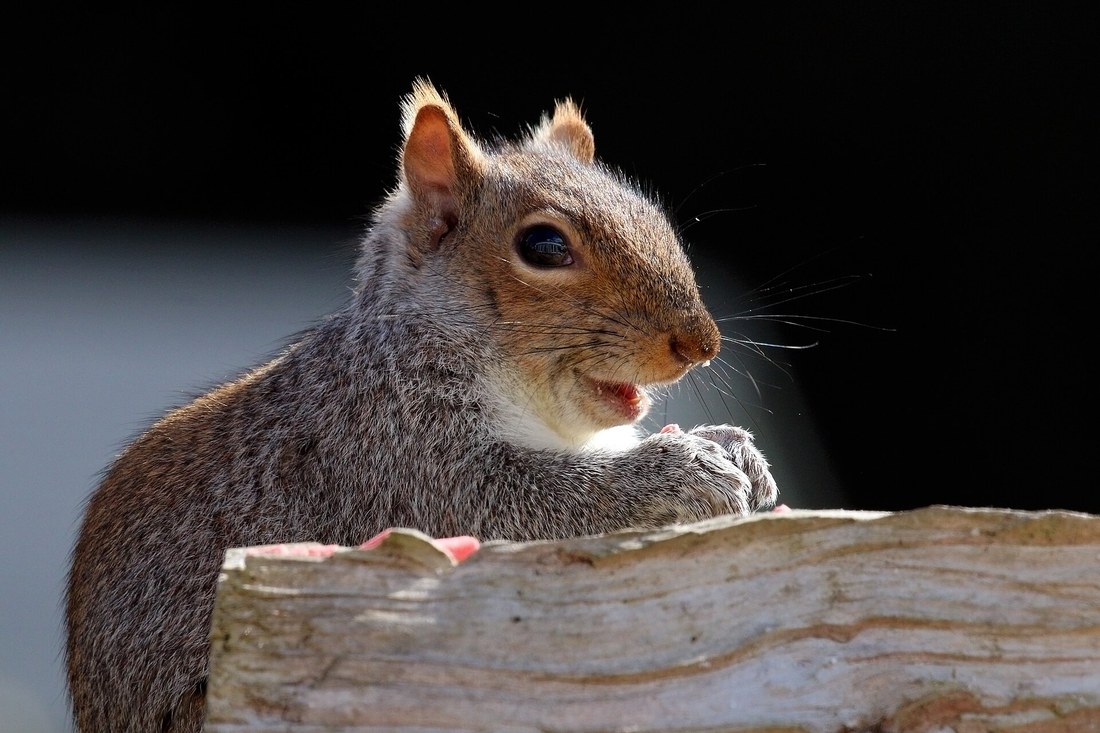
The classic .22 quarry and the one that most rewards discipline. Range is 25–50 yards, shots are often steeply upward into a tree, and the animal is small enough that a head shot is available on most presentations.
- Head shots: 40-grain solid. Clean, no meat damage, no bullet in the carcass.
- Body shots: 36–40 grain hollow point, or CCI Segmented HP. In comparative testing CCI Mini-Mag came out as the best all-round performer — accuracy, consistent expansion, and low velocity variation.2
- A caution particular to squirrel hunting: an upward shot that misses is a bullet with nothing behind it but sky and, eventually, up to two thousand yards of somewhere else.3 Know what is on the far side of the woodlot.
6.2.2 Rabbit
Thinner-skinned and lighter-boned than a squirrel, and usually taken running or at a low angle. Almost anything kills a rabbit that hits it. Hollow points are the sensible default because the shot is more likely to be a body shot, and because you are less likely to be threading it between branches.
6.2.3 Raccoon, opossum, woodchuck / groundhog
This is where the .22 LR starts working hard. A big raccoon or a woodchuck is several times a squirrel’s mass with real bone. High-velocity hollow points inside 50 yards, and be willing to pass the shot. This is the size class where the honest answer is often “use the .22 WMR.”
6.2.4 Coyote, fox, bobcat
The .22 LR is not a coyote cartridge. It has been done, at short range, with perfect placement, by people who knew exactly what they were doing. It is not what you plan around. If this is the job, the cartridge is .22 WMR at minimum and realistically a centerfire.
6.2.5 Deer and larger
No. Beyond ethics, it is illegal for deer in essentially every US jurisdiction that regulates the question. Check your state’s digest — Michigan’s is cited below.
6.2.6 Turkey and game birds
Regulated separately and restrictively almost everywhere, and the rules vary by state and often by season and land type. This is a “read the current digest” item, not a ballistics question.
6.3 When the Answer Is a Different Cartridge
Because the honest recommendation is sometimes “not this one,” here is the comparison in numbers.
Table 1 — 6.3 When the Answer Is a Different Cartridge
| .22 LR, 40 gr | .22 WMR, 40 gr | |
|---|---|---|
| Muzzle velocity | ~1,200 fps | ~1,875 fps (range 1,870–2,200) |
| Muzzle energy | ~137 ft·lbf | ~314 ft·lbf |
| Velocity @ 100 yd | ~1,001 fps | ~1,592 fps |
| Energy @ 100 yd | ~91 ft·lbf | ~153 ft·lbf |
| Drop @ 100 yd, 50 yd zero | ~6 in | ~2 in |
| Bullet construction | Plain or plated lead | Almost always jacketed |
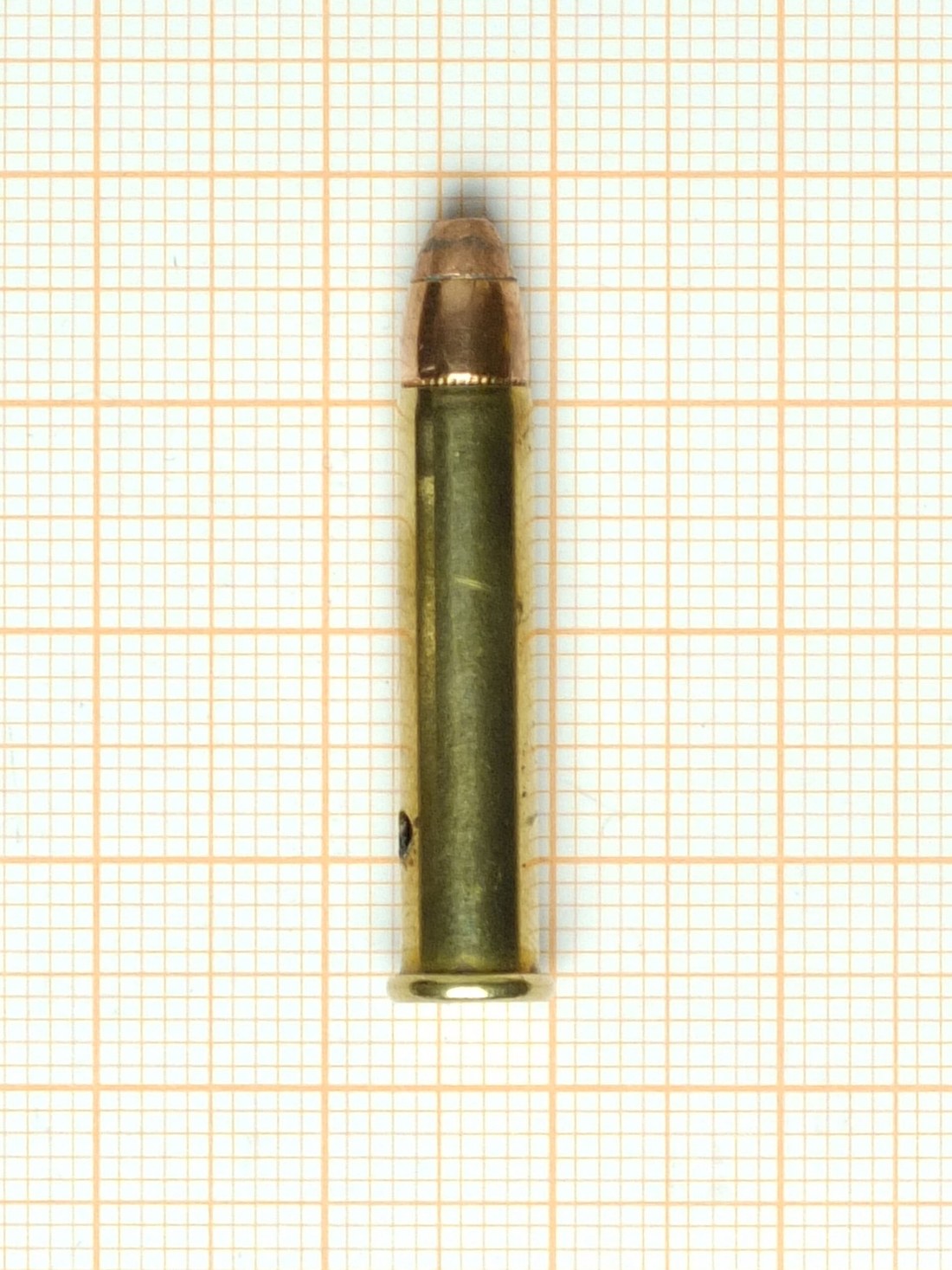
The .22 WMR delivers roughly 2.5× the muzzle energy, and — the part people underrate — it still has more energy at 100 yards than the .22 LR has at the muzzle.4
Practical range framing that the sources broadly agree on: the .22 LR is a realistic 50–75 yard small-game cartridge; the .22 WMR extends that to about 100 yards from a rifle, and is used on varmints out to 150.4 That is judgement rather than measurement, but it is widely shared judgement.
The .17 HMR is the third option and a genuinely different tool: a 17-grain V-MAX at 2,550 fps class velocities, flat enough that ranging error stops dominating, and explosively destructive on small animals. It is Hornady’s cartridge and Hornady’s lane (Volume 1). It is also, for the same reason, the wrong choice if you want to eat what you shoot.
6.4 Lead-Free Options
Where lead is restricted — California most prominently, and an expanding list of specific public lands — the practical .22 LR answer is CCI Copper-22: a 21-grain compressed copper-polymer hollow point at an advertised 1,850 fps / 160 ft·lbf, which CCI positions for use inside 50 yards.5 The 50-yard qualifier is not marketing caution; a 21-grain bullet sheds velocity very fast, and the terminal behaviour past that is not something CCI is willing to claim.
6.5 The Defensive Question
The .22 LR gets used defensively — by people with hand-strength limitations, by people who own nothing else, and by people who have thought about it and accepted the trade. It is worth understanding what the good load actually does rather than dismissing the question.
Federal Punch .22 LR is the purpose-built option: 29 grains, a heavy nickel-plated jacket over a lead core, and a flat nose deliberately designed to minimise expansion and maximise straight-line penetration, at 1,070 fps from a 2-inch barrel. In 10% gel it penetrated 13.75 inches — clearing the FBI protocol’s 12-inch minimum, and out-penetrating .25 Auto FMJ (12.79 in) and .32 Auto HP (8.5 in).6
The engineering logic is worth appreciating because it inverts the hunting logic exactly. For small game you want expansion because you have energy to spare relative to the target. For defensive use in .22 LR you have no energy to spare at all, so you spend all of it on depth and refuse to spend any on expansion. That is why Punch is a 29-grain flat-nose solid-behaviour bullet and not a hollow point.
None of which makes .22 LR a good defensive cartridge. It makes Punch a well-reasoned answer to a constrained question.
6.6 Michigan Specifics
Since this dive is written from Michigan, the local rules that actually bear on .22 hunting:
- Cottontail rabbit and fox, gray and red squirrel are small game, and a rimfire rifle is legal for them in season.7
- During 10–14 November it is unlawful to carry afield or transport any rifle or shotgun with buckshot, slug, ball loads or cut shells — a firearm-deer-season restriction that catches small-game hunters out.7
- Hunting with a legally possessed suppressor is legal in Michigan, following the Natural Resources Commission’s repeal of the prohibition effective 11 February 2016.8
Those are pointers, not authority. Michigan’s regulations are reissued annually and the small-game digest is the controlling document — check the current year’s digest before the season, every season. Volume 10 covers the federal suppressor position separately.
6.7 Bibliography
Footnotes
-
.22 LR retained energy at 50 yd: 107 ft·lbf (high velocity 40 gr) and 85 ft·lbf (standard velocity 40 gr), from the 50-yard-zero tables. https://ammowisdom.com/22lr-ballistics-chart/ (confidence: medium — computed from stated inputs; consistent with other published tables). ↩
-
Solids for head shots and meat preservation, hollow points for body shots and energy transfer; both lethal, the choice following from shot placement. CCI Segmented HP splits into three pieces, each cutting a distinct wound channel. CCI Mini-Mag reported as the best all-round performer for accuracy, consistent expansion and low velocity variation. https://www.cci-ammunition.com/cci-stories/best-22lr-ammo-for-squirrels.html ; https://www.wideopenspaces.com/solids-vs-hollowpoints-what-will-you-load-in-your-22-for-small-game/ ; https://gundigest.com/gear-ammo/ammunition/22lr-ammo-hunting-review (confidence: high on the mechanism; the Mini-Mag ranking is one comparative test, and CCI’s squirrel article is a manufacturer source — both are flagged as such). ↩ ↩2 ↩3
-
.22 LR maximum range ~2,000 yd. https://en.wikipedia.org/wiki/.22_Long_Rifle (confidence: high). ↩
-
.22 LR vs .22 WMR: ~1,200 fps / 137 ft·lbf vs ~1,875 fps (1,870–2,200) / 314 ft·lbf at the muzzle; ~1,001 fps / 91 ft·lbf vs ~1,592 fps / 153 ft·lbf at 100 yd; ~6 in vs ~2 in drop at 100 yd from a 50 yd zero; WMR bullets almost always jacketed. Practical range framing 50–75 yd vs ~100 yd from a rifle and to 150 yd on varmints. https://www.ammunitiontogo.com/lodge/22-wmr-vs-22lr/ ; https://www.wideners.com/blog/22-wmr-vs-22lr/ ; https://www.americanhunter.org/content/head-to-head-22-lr-vs-22-wmr/ (confidence: high on the figures as representative; the range framing is widely shared judgement rather than measurement). ↩ ↩2
-
CCI Copper-22: 21 gr compressed copper-polymer HP, advertised 1,850 fps / 160 ft·lbf, positioned by CCI for use within 50 yards; lead-free and therefore legal where lead is restricted. https://www.thetruthaboutguns.com/ammo-review-cci-copper-22-fastest-22-lr-ever/ ; https://www.americanrifleman.org/content/tested-cci-copper-22-ammunition/ (confidence: high). ↩
-
Federal Punch .22 LR: 29 gr, heavy nickel-plated jacket over lead core, flat nose designed to minimise expansion and maximise straight-line penetration; 1,070 fps from a 2 in barrel; 13.75 in in 10% gel, clearing the FBI 12 in minimum and out-penetrating .25 Auto FMJ (12.79 in) and .32 Auto HP (8.5 in). https://www.americanrifleman.org/content/22-lr-for-self-defense-ammunition-test-comparison/ ; https://gunmagwarehouse.com/blog/federal-punch-22lr-the-best-22-defense-load/ (confidence: high on the design and the published gel figures). ↩
-
Michigan small game: cottontail rabbit and fox, gray and red squirrel; rimfire rifle legal in season; 10–14 November restriction on carrying afield or transporting a rifle or shotgun with buckshot, slug, ball loads or cut shells. https://www.michigan.gov/dnr/managing-resources/laws/regulations/small-game (confidence: medium — regulations are reissued annually; the current digest is controlling and the text says so). ↩ ↩2
-
Michigan Natural Resources Commission repealed the prohibition on hunting with a legally possessed suppressor effective 11 February 2016. https://www.longrangehunting.com/threads/as-of-feb-11th-its-legal-to-use-silencers-hunting-in-michigan.167535/ (confidence: medium-high — the NRC action is well attested, but this is a secondary citation; verify against the current DNR digest). ↩
Comments (0)