Suppressors by Caliber · Volume 6
9mm — Boosters, Bullet Weight, and the Modular Default
9mm is the most-suppressed centerfire cartridge in America, for three reasons: there are more 9mm hosts than anything else, the ammunition is cheap, and 147-grain factory loads are subsonic straight out of the box. It is also the cartridge with the most mechanical complexity at the mount, because most 9mm hosts are short-recoil pistols and those need a moving part between the gun and the can.
6.1 Bullet Weight Is the Whole Ammunition Decision
Table 1 — 6.1 Bullet Weight Is the Whole Ammunition Decision
| Load | Typical velocity from a 4–5 in barrel | Suppressed result |
|---|---|---|
| 115 gr | ~1,150–1,200 fps | Supersonic. Crack. Wasting the can |
| 124 gr | ~1,100–1,150 fps | Borderline. Some loads and barrels are over, some under |
| 124 gr +P | ~1,200 fps | Supersonic |
| 147 gr | ~950–1,000 fps | Subsonic. This is the one |
| 147 gr subsonic-marked | ~950 fps | Subsonic with margin |
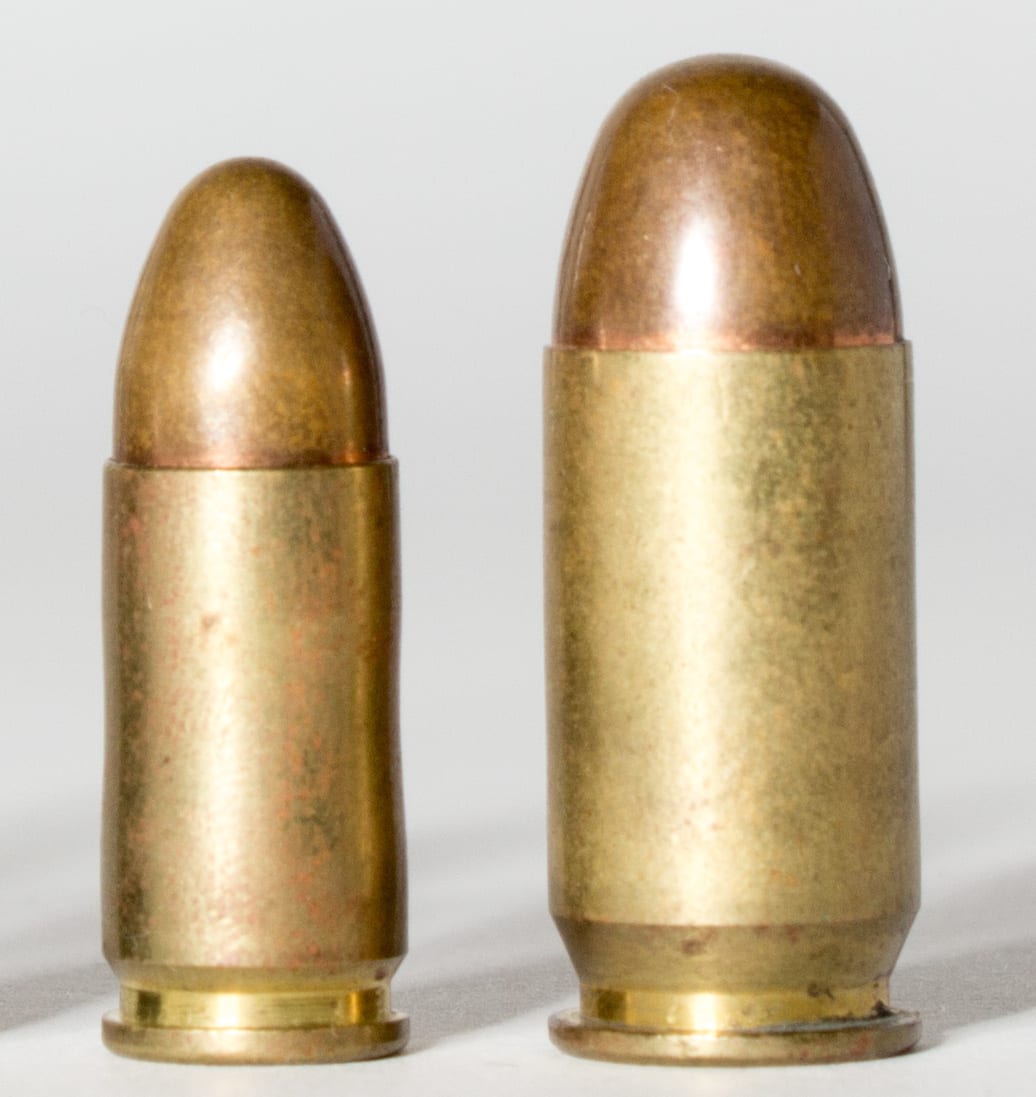
Buy 147 grain. It is the single most consequential sentence in this volume. A suppressed pistol shooting 115-grain ammunition is a loud pistol with a heavy thing on the front; the same gun with 147-grain is a genuinely quiet firearm.
Watch the margin, though: the speed of sound rises with temperature, so a load clocking 1,090 fps in a Michigan January is not necessarily subsonic in a Michigan July. If a 124-grain load is borderline on your chronograph, treat it as supersonic.
Carbines complicate this. A 16-inch 9mm PCC barrel adds 100–200 fps over a pistol, which can push a “subsonic” 147-grain load back over the line. Chronograph it in the gun you are actually shooting, not in the pistol.
6.2 The Booster — Non-Negotiable on a Tilting Barrel
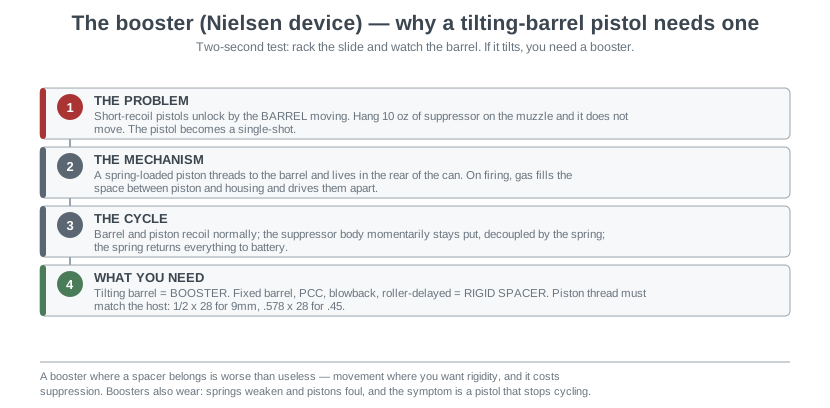
The mechanical problem, restated from How Suppressors Work Volume 7 because this is where it bites:
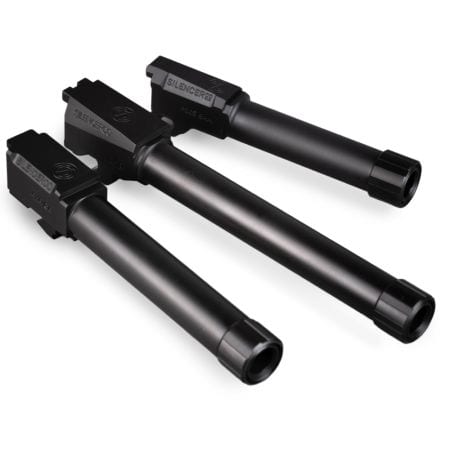
Nearly every semi-auto pistol above .380 is short-recoil operated. Barrel and slide recoil locked together for a fraction of an inch, then the barrel tilts down, unlocks, and the slide continues alone. That unlocking requires the barrel to move. Hang ten ounces of suppressor on the muzzle and it does not. The pistol becomes a single-shot.
The fix is a Nielsen device, also called a linear inertial decoupler or muzzle booster: a spring-loaded piston in the rear of the can, threaded to the barrel. On firing, gas fills the space between piston and housing and drives them apart — barrel and piston recoil normally while the suppressor body momentarily stays where it is, decoupled by the spring, which then returns everything to battery.12
The two-second test: rack the slide and watch the barrel.
Table 2 — The two-second test: rack the slide and watch the barrel.
| Host | What it needs |
|---|---|
| Glock, SIG, S&W M&P, 1911, CZ — anything that tilts | Booster / piston |
| Fixed-barrel pistol (e.g. some .22 and blowback designs) | Rigid spacer |
| Pistol-caliber carbine, blowback | Rigid spacer |
| Roller-delayed (MP5 pattern) | Rigid spacer |
Using a booster where a spacer belongs is worse than useless — it introduces movement where you want rigidity, and it costs suppression.
Practical booster notes:
- The piston thread must match the host. 1/2×28 for most domestic 9mm pistols; 1/2×36 is common on 9mm carbines; .578×28 for .45. Pistons are sold separately and are the part you buy per host.
- Spring rate matters. Some pistols need a heavier or lighter booster spring. Symptoms of a mismatch: failures to fully cycle, or a can that unscrews itself over a string.
- Boosters wear and foul. They are a moving part in a hot, dirty, lead-laden environment. Clean and inspect; a sticky booster is a malfunctioning pistol.
- A booster costs a little suppression compared to a rigid mount, because it is a moving joint with clearances. This is one reason a PCC is quieter than a pistol with the same can.
6.3 Hosts: Pistol vs PCC vs MP5
The pistol is the harder host and the noisier one — short barrel, booster interface, and the muzzle close to your head. It is also the one where suppression is most dramatic subjectively, because an unsuppressed pistol is genuinely painful.
The pistol-caliber carbine is the better host in every acoustic respect: longer barrel (more complete powder burn, less muzzle blast), rigid mount, more mass, and the muzzle much further from your ear. A suppressed 9mm PCC with 147-grain ammunition is one of the most pleasant things to shoot in existence. The blowback action is the noisy part.
Roller-delayed guns (MP5 pattern) are the quietest of the three. The delayed action opens later and with less residual pressure, and the fluted chamber and heavy bolt do the rest.
6.4 The Modular Default
The 9mm class is where modularity became standard, because the same can serves a pistol (where length is awful) and a carbine (where it is fine).
Table 3 — 6.4 The Modular Default
| Can | Notes |
|---|---|
| Rugged Obsidian 9 | The consensus all-rounder. Two-piece: 8.6 in full / 6.7 in short. Serviceable, well supported |
| Dead Air Wolfman | Distinctive rectangular baffle stack; full-length or short “K” configuration; built for PCCs and subguns under sustained fire |
| SilencerCo Omega 9K | Very short, very popular as a pistol can where length is the binding constraint |
| SilencerCo Osprey 9 / 45 | Eccentric body sits below the sight line so factory-height sights still work. Sealed — cannot be disassembled |
| YHM R9 | 10.8 oz of 17-4 stainless, full-auto rated. The budget answer, and with subsonic ammunition it gives up little |
| Dead Air RXD910Ti | New for 2026, printed, multi-caliber: 9mm / 10mm / .300 BLK / .400 Legend |
| Lyman Sonicore Valor 9 | New for 2026, aluminium, 8 baffles, entry price |
Reported positioning; the usual caveats about retailer sourcing apply, and no dB figures here are comparable across brands.
6.5 Cleaning
9mm cans need servicing — not at rimfire frequency, but they are not sealed-and-forget rifle cans either. Subsonic ammunition is dirty, plated and cast bullets shed lead, and a 9mm can gains real weight over a few thousand rounds.
Buy serviceable unless you have a specific reason not to. The Osprey’s sealed construction is a deliberate trade for its geometry and is defensible; accepting sealed construction by accident is not.
The aluminium warning from How Suppressors Work §6.5 applies hard here: many 9mm cans are partly or wholly aluminium, and ammoniated cleaners will attack them. Know what yours is made of.
6.6 9mm Against .300 Blackout
These two are genuinely competing for the same job — “the quiet centerfire” — and the comparison is worth making explicitly.
Table 4 — 6.6 9mm Against .300 Blackout
| Suppressed 9mm | Suppressed subsonic .300 BLK | |
|---|---|---|
| Quiet | Excellent | Excellent, and reportedly the quieter of the two from a closed breech |
| Energy at the muzzle | ~350 ft-lb | ~500 ft-lb with a 220 gr at 1,000 fps |
| Ammunition cost | Much cheaper | Expensive, especially factory subsonic |
| Host availability | Enormous | AR-15 with a barrel swap |
| Ammunition availability | Everywhere | Specialist |
| Pistol option | Yes | Only as a large braced pistol |
| Danger of mis-chambering | None | 🔴 Chambers in a 5.56 rifle. Catastrophic |
The honest split: 9mm for volume, cost, and pistols; .300 Blackout when energy matters. If you already own an AR, .300 BLK is a barrel away and gives you a subsonic cartridge with real terminal performance. If you want to shoot a lot for not much money and have it be quiet, 9mm wins on economics and is not far behind on sound.
6.7 Bibliography
Footnotes
-
SilencerCo, “What is a Nielsen Device?” and “What Is a Suppressor Piston and How Does It Work?” https://silencerco.com/blog/what-is-nielsen-device ↩
-
Palmetto State Armory, “Nielsen Device Guide — How Muzzle Boosters Work”; Silencer Shop, “How to Mount a Pistol Suppressor: Boosters and Pistons.” https://palmettostatearmory.com/blog/nielsen-device-guide-how-muzzle-boosters-work.html ↩
Comments (0)