How Suppressors Work · Volume 9
On the Gun — Point of Impact, First-Round Pop, Heat and Mirage
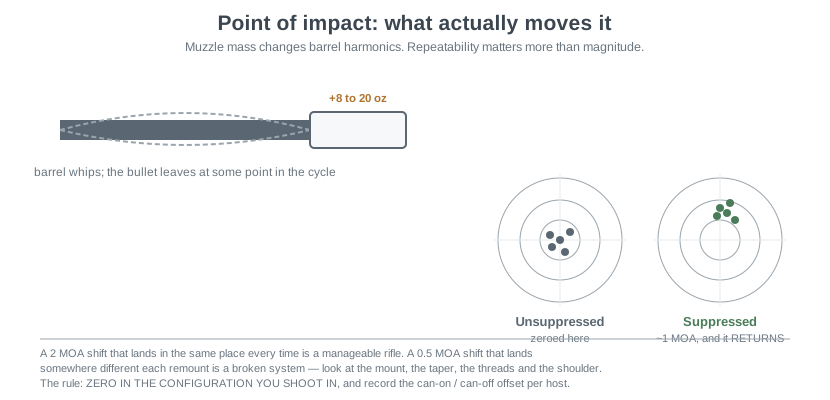
A suppressor changes the rifle it is bolted to. Not much, and usually predictably, but enough that a hunter who screwed a can on the morning of opening day and did not re-check zero has a story to tell. This volume is the behavioural stuff — the things that surprise people on the range rather than on the bench.
9.1 Point-of-Impact Shift
What happens. Adding a suppressor puts eight to twenty ounces on the end of the barrel and changes how it vibrates. A barrel in firing is not a rigid tube; it whips, and the bullet leaves at some point in that whip cycle. Change the mass distribution and you change the cycle, so the bullet leaves at a different point in it and goes somewhere slightly different. Muzzle mass is the dominant term; secondary contributions come from the gas dynamics at the muzzle and from any bending moment the mount imposes.
How much. For a well-set-up rifle with a reasonably stiff barrel and a good mount, the commonly reported figure is about 1 MOA — roughly an inch at 100 yards — with the shift consistent and the return to zero repeatable when the can is removed and refitted.1
That word repeatable is the one that matters. A shift of two MOA that lands in the same place every single time is a completely manageable rifle. A shift of half an MOA that lands somewhere different each time you remount is a broken system, and you should look at the mount, the taper, the threads and the shoulder before you look at anything else.
What makes it worse:
- A thin, whippy sporter barrel. Pencil barrels are far more sensitive than heavy ones.
- A heavy can on a light barrel.
- A QD mount with a fouled or worn taper.
- A direct-thread can that is not tightened consistently — inconsistent torque is inconsistent harmonics.
- Anything loose anywhere.
The rule. Zero in the configuration you shoot in. If you hunt suppressed, zero suppressed. If the can comes on and off, record both zeroes — the offset in MOA or mils on your specific rifle with your specific load — and treat it as a known quantity rather than a surprise. Write it on the stock or on the turret cap. This is exactly the kind of number that the .22 Rimfire dive asks for on the shared Lima: a can-on/can-off offset recorded per host, because it is different on every gun.
9.2 Cold-Bore and First-Round Impact
Separate from the can-on/can-off shift, there is a first-shot effect within a string.
Reported behaviour on some suppressed setups is a first round from a cold can landing meaningfully high — figures around 2 MOA appear in field reporting — with subsequent shots returning to the group at a normal firing pace.2 The mechanisms proposed are thermal (a cold suppressor and a cold barrel behave differently from warm ones) and gas-dynamic (see first-round pop, below, which is a real pressure difference).
Treat this as host-specific and worth measuring rather than as a universal number. For a hunter this is the only shot that matters, so if you hunt suppressed, the test worth running is: cold rifle, cold can, one shot, walk away, repeat five times on five separate outings, and see where the five cold-bore shots actually group relative to your five-shot warm group. That is a real number about your rifle. Nobody else’s number substitutes for it.
9.3 First-Round Pop
The mechanism. A suppressor sitting in open air is full of atmosphere, which is about 21% oxygen. Rifle propellant does not burn completely in the bore; a meaningful fraction of the gas leaving the muzzle is still combustible. On the first shot, that gas meets the oxygen inside the can and burns, adding energy to exactly the volume the can is trying to keep pressure out of. The result is a louder first shot.
Every subsequent shot, fired before the can has re-filled with fresh air, meets an oxygen-depleted, largely inert volume. Nothing further burns. The shot is quieter.
How much. Varies enormously with cartridge, powder, barrel length and can design. It is most pronounced on cartridges with a lot of unburnt propellant at the muzzle — short barrels, slow powders, large cases — and least pronounced on rimfire, where there is very little propellant to begin with.
Why it matters. For a target shooter it is a curiosity. For a hunter it is the only shot that counts, and for anyone whose interest in a suppressor is signature reduction, the first shot is the one that gives the position away.
What to do about it:
- Ablatives. A few cc of water, wire-pulling gel or ultrasound gel in the blast chamber displaces the oxygen and absorbs energy through vaporisation. Effective, immediate, cheap, messy, and good for a handful of shots. This is what ablatives are genuinely for — the dB they add elsewhere is a bonus, but FRP suppression is the real use case.
- Design. Some cans are markedly better than others, largely as a function of blast-chamber volume and gas-path length.
- Accept it and know it. If you cannot ablate, at least know your rifle’s first-shot behaviour, both acoustically and on paper.
9.4 Heat
A suppressor absorbs a large fraction of the energy it removes from the gas as heat, and it has nowhere to put it except into its own mass and then into the air. Consequences:
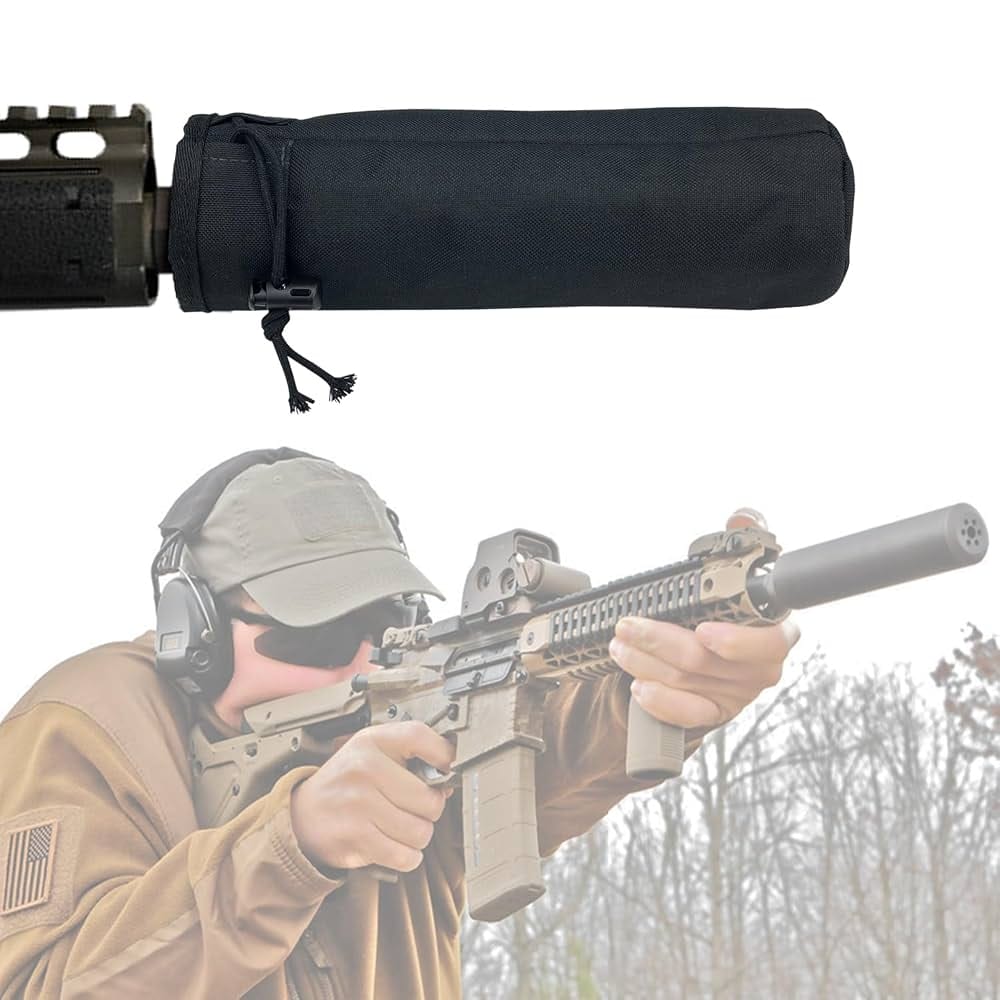
It gets hot enough to burn you, quickly. A rifle can after a magazine is well past the point of casual handling. After sustained fire it can be visibly glowing. Do not grab it, do not set the rifle down on anything flammable, and do not put it in a soft case.
It is a thermal signature. Relevant if that matters to you; irrelevant to most.
It can exceed the material’s envelope. This is Volume 4’s argument arriving in practice. A titanium can that goes past its service temperature does not explode; it softens, creeps and erodes, permanently and invisibly, and you find out later.
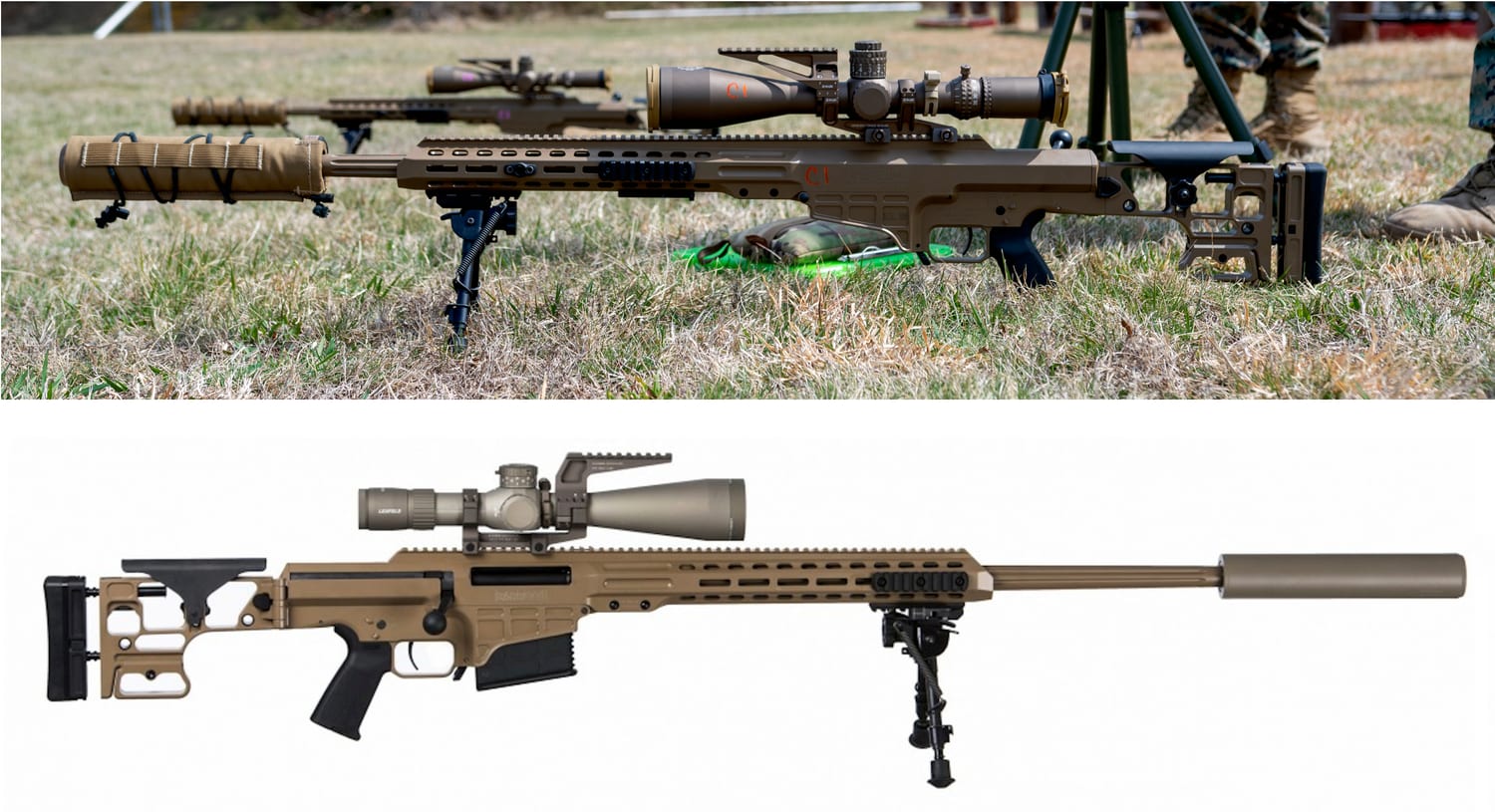
Suppressor covers address the first two and complicate the third. A cover — high-temperature fabric or a wrap — prevents burns, cuts thermal signature, and dramatically reduces mirage (below). It also insulates the can, which means the can sheds heat more slowly and runs hotter internally. On a bolt gun fired at hunting rates this is a non-issue and the cover is a clear win. On a rifle being run hard, a cover can push a marginal thermal situation over the line. Read the manufacturer’s guidance; several explicitly restrict cover use with their firing schedules.
9.5 Mirage
The one that actually costs you shots.
Hot air rising off a hot suppressor sits directly in the sight line of a scope mounted above the barrel. The refractive index gradient makes the target boil, shimmer and — importantly — appear to move, usually upward. On a high-magnification scope over a hot can, the target can become genuinely unusable.
Fixes, in order of effectiveness:
- A suppressor cover. The most effective single answer, for exactly the reason it is a thermal compromise: it keeps the hot surface away from the air in your sight line.
- A mirage band — a strip of fabric or tape suspended over the barrel and can, which breaks up the rising column. Cheap, standard equipment in the precision world.
- Let it cool. Free.
- Dial the magnification down. Mirage scales with magnification; a shimmering target at 20× is often perfectly usable at 8×.
The precision-rifle crowd has known this for decades. Hunters buying their first suppressor in 2026 frequently have not, and are surprised on the second or third shot of a prairie-dog string.
9.6 Recoil, Weight and Handling
Recoil goes down, and by more than you would expect. A suppressor works partly by decelerating gas that would otherwise leave as a high-velocity jet, and that jet is a meaningful component of felt recoil on a centerfire rifle. Reductions of 20–30% in felt recoil are commonly reported. Add the muzzle mass damping the rise, and a suppressed magnum is a substantially more pleasant rifle. This is a real and underrated benefit.
Weight and balance change. Ten to twenty ounces at the end of the barrel is a lot of leverage. Offhand, the rifle feels muzzle-heavy and slow to swing but very steady once settled. Prone with a bipod, it is nearly irrelevant. For a hunting rifle carried all day, it is the thing you will complain about — which is why titanium exists, and why over-the-barrel designs that recover three to five inches of length are the current trend (Volume 5).
Length. A nine-inch can on a 22-inch barrel is a 31-inch barrel. In a blind, a truck, a tree stand or thick cover this matters more than the weight does. Measure your actual use case before you buy length for the last two decibels.
9.7 Accuracy
The common claim is that suppressors improve accuracy. The honest version is more careful:
- Mechanically, a suppressor does not make a barrel shoot better. It changes harmonics, which can move a group’s location and can, by luck, land the barrel in a more favourable node. That is not an improvement in the barrel; it is a coincidence, and it can go the other way.
- A well-made can rarely hurts accuracy and frequently coincides with a small improvement.
- The reliable accuracy gain is the shooter. Less noise, less concussion and less recoil produce less flinch, and flinch is a far larger accuracy term than barrel harmonics for almost everybody. This is a real effect and it is worth more than the mechanical argument.
- A bad can, a bad mount or a loose can absolutely hurts accuracy, and does it inconsistently, which is worse.
9.8 Bibliography
Footnotes
-
Silencer Central, “Suppressors and POI (Point of Impact) Shift”; AMTAC Suppressors, “POI Shift and Return To Zero” — ~1 MOA typical on a heavy-barrel rifle with consistent, repeatable return to zero. https://www.silencercentral.com/blog/suppressors-and-poi-shift/ and https://amtacsuppressors.com/poi-shift-return-zero/ ↩
-
Field reports of a first-round-from-cold shift on the order of 2 MOA, returning to zero for subsequent shots at a reasonable pace. Rokslide forum discussion, “Suppressors — first round impact shift.” https://rokslide.com/forums/threads/suppressors-first-round-impact-shift.377038/ ↩
Comments (0)