How Suppressors Work · Volume 2
The Acoustics — Three Noises, and Why Decibel Numbers Lie
This is the volume that decides whether the rest of the series is useful to you. Almost every bad suppressor purchase traces back to an acoustic misunderstanding — either about what makes the noise, or about what a published decibel figure means.
2.1 The Three Noises
A gunshot is not one sound. It is at least three, generated in different places by different mechanisms, and a suppressor’s relationship to each is completely different.
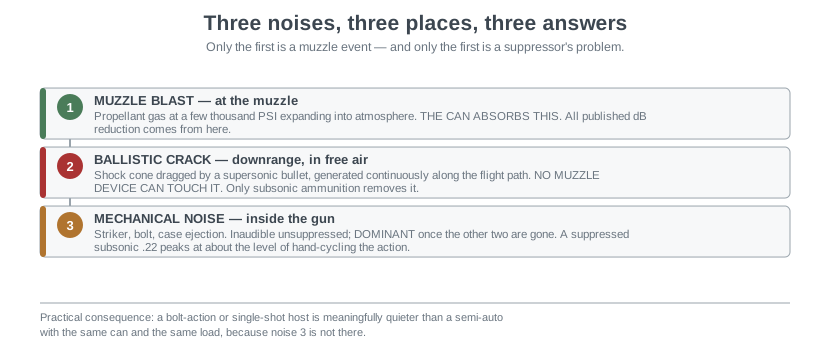
Muzzle blast. Propellant gas at a few thousand PSI leaving the bore and expanding into atmosphere in under a millisecond. This is the loud one — for a supersonic rifle round it is the majority of the acoustic energy, and for a subsonic round it is essentially all of it. A suppressor exists to absorb this. All the decibel reduction on any spec sheet, anywhere, comes from here.
Ballistic crack. A bullet moving faster than the speed of sound (about 1,125 fps at sea level in ordinary conditions) drags a conical shock wave behind it for the whole supersonic portion of its flight. It is not a muzzle event. It is generated continuously, in free air, by an object that is already gone. No muzzle device can influence it. Its intensity scales with the bullet’s diameter, velocity and length, and — importantly for the person standing next to you — it radiates outward from the whole flight path, not from the gun.
Mechanical noise. The action working. A striker falling, a bolt reciprocating, a case ejecting, a slide slamming. Under an unsuppressed gunshot this is inaudible. Under a well-suppressed subsonic one, it becomes the dominant sound, which is why a properly suppressed .22 semi-auto sounds like someone racking a bolt — and why bolt-action and single-shot hosts are meaningfully quieter than semi-autos with the same can and ammunition.
That third one is worth dwelling on, because it is the surprise. The most useful non-numeric calibration in the whole subject comes from independent analysis of suppressed rimfire: a subsonic 40-grain load at about 1,000 fps produces a peak level roughly equal to manually cycling the action of the gun firing it.1 You can verify that by ear. It is also the practical ceiling — once the can has done its job, you are listening to the machine, and no further money spent on the can changes it.
2.2 Why “How Many Decibels?” Is the Wrong Question
The decibel is a logarithmic ratio, not a quantity. Three consequences follow, and all three are routinely ignored by marketing copy.
It is logarithmic. Roughly, +10 dB is ten times the acoustic power and about twice the perceived loudness. This means a 3 dB difference between two cans — which sounds like a rounding error — is half the acoustic energy. It also means that a lab whose microphone sits six inches further away than another lab’s will produce a number several dB different for the same suppressor, and both will be correct.
Peak level is not loudness. The standard measurement is peak sound pressure level, a single instantaneous maximum. But perceived loudness and hearing damage both depend on the impulse shape — how the pressure rises, how long it stays elevated, how it decays. Two suppressors with identical peak dB can sound and damage very differently. A can that turns a sharp crack into a longer, softer thump measures the same and feels enormously better.
Nothing is standardised across the industry. Different meters, microphone distances, microphone positions (at the muzzle? at the ear?), weightings, sample rates, atmospheric conditions, hosts, barrel lengths, and ammunition lots. MIL-STD-1474D — the military reference, which specifies 1 m left of the muzzle and at-ear positions — is one protocol among several, and manufacturers are under no obligation to use it or to say which one they used.
🔴 The rule this entire category follows: a decibel figure is meaningful only relative to other figures from the same test, same day, same host, same ammunition. Any table that compares Manufacturer A’s published number with Manufacturer B’s published number is decoration. This series never does it, and neither should you.
2.3 Reference Levels — With That Caveat Applied
Approximate, widely reported, and only to establish orders of magnitude:
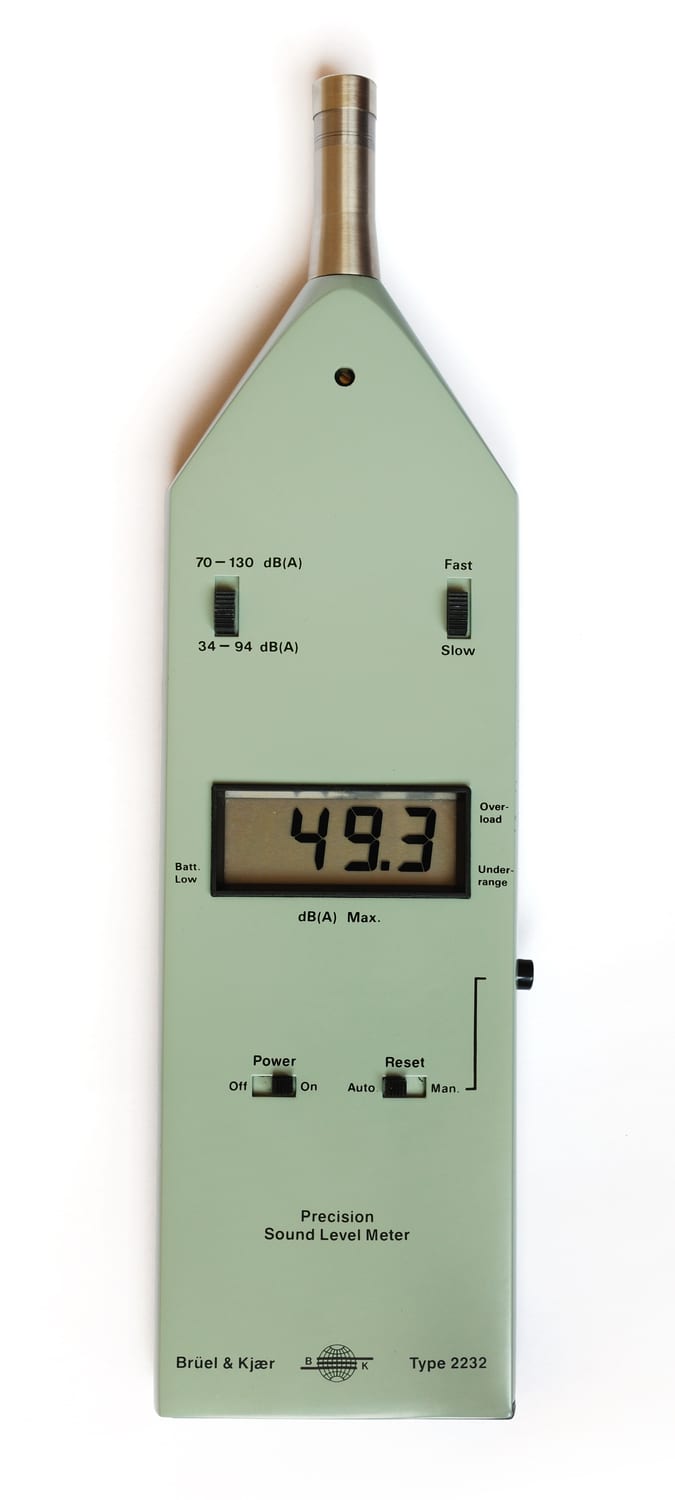
Table 1 — 2.3 Reference Levels — With That Caveat Applied
| Configuration | Reported peak level |
|---|---|
| .22 LR rifle, unsuppressed | ~139–141 dB |
| .22 LR pistol, unsuppressed | ~155–161 dB |
| .22 LR suppressed, subsonic | ~110–128 dB |
| Centerfire rifle, unsuppressed | ~160–170 dB class |
| Hearing-damage threshold, impulse, commonly cited | ~140 dB |
Two things fall out of that table.
First, the 140 dB line is why suppressors are a health product. Essentially every unsuppressed centerfire firearm, and most unsuppressed rimfire pistols, are above it. A suppressor moves a centerfire rifle to somewhere in the 130s — which is not “hearing safe” on its own, but is a large reduction in dose — and moves a subsonic rimfire clearly below it. That is the actual public-health argument behind the Hearing Protection Act, covered in the law dive.
Second, the .22 pistol figure being higher than the .22 rifle figure surprises people. Short barrel, unburnt powder still combusting at the muzzle, and the muzzle much closer to your head. Barrel length is an acoustic variable in its own right.
2.4 What PEW Science Did About It
The most serious attempt to fix the comparability problem is PEW Science’s independent testing programme and its Silencer Sound Standard™.2
Rather than publishing a peak dB, they compute a single-number Suppression Rating™ from an empirical dataset in pressure–impulse (P–i) space, mapped onto Hearing Damage Levels with a defined exposure model — theoretical shot doses for occasional exposure, defined as a sliding 24-hour window not recurring more than once a week. Ratings are published for two positions: 1.0 m left of the muzzle (the bystander) and 0.15 m from the shooter’s right ear (you).
Three things make it more useful than a dB number:
- It incorporates impulse shape, not just peak, so it tracks what actually damages hearing and what actually sounds loud.
- Every measurement is made by the same house with the same tooling, so cross-brand comparison is legitimate.
- It is explicitly host-specific. The same suppressor is rated separately on each firearm.
That last point is the one to internalise. Reported examples: the HUXWRX FLOW 556 Ti rates 41.3 on an MK18 and 41.1 on an M4A1 — nearly identical. But the SAW Tisha Titanium reportedly rates 49.6 on the MK18, described as the highest 5.56 Suppression Rating measured.3 A ~8-point gap is not subtle. There is no such thing as “how quiet is this can” without naming the gun.
Caveat, stated plainly: PEW Science is a paid-subscription publisher and does not test everything. Absence from their rankings is not evidence of anything.
2.5 The Volume Relationship
Sound reduction is, to first order, a function of internal volume. Gas expanding into a larger space arrives at the atmosphere at a lower pressure, and pressure discontinuity is the bang.
This has consequences that repeatedly surprise buyers:
- Length beats diameter, per unit weight. A longer, slimmer can and a shorter, fatter one of identical internal volume are acoustically similar, but the long one carries less metal for that volume and clears your optic and handguard better. It also puts more mass further from the receiver, which is the handling cost.
- Every “short” mode of a modular can is louder. Modularity is not free suppression; it is a switch between two operating points. The Rugged Obsidian 9 at 8.6 in full and 6.7 in short is genuinely two different suppressors.
- Diminishing returns arrive quickly. The first chamber does the most work; each subsequent one has less energy to remove. Doubling the length does not halve the sound.
- Over-bore costs decibels. Running a .30 can on a 9mm host leaves a large annulus around the bullet through which gas escapes forward instead of being trapped. It works. It is measurably worse than a correctly bored can.
2.6 Subsonic, and What “Subsonic” Costs
Since the crack is untouchable, the only way to eliminate it is to keep the bullet under the speed of sound. This is an ammunition decision, and it has a price.
The speed of sound at sea level is about 1,125 fps, varying with temperature (it rises roughly 1.1 fps per °F). The ammunition industry generally labels loads below about 1,080 fps subsonic, which is a deliberate margin — because a load that is 1,100 fps on a warm day in Michigan in July is supersonic, and you will hear it.
What subsonic costs you:
- Energy. Kinetic energy scales with the square of velocity. Going subsonic usually means going heavier to keep energy up, and heavy-for-caliber bullets need adequate twist.
- Trajectory. Subsonic projectiles drop like thrown rocks past 100 yards.
- Cycling. Semi-autos are tuned around a momentum and gas-impulse budget. The quietest loads are the ones with the least of it. This is the single most common practical failure of a suppressed setup.
- Stability. Long, heavy subsonic bullets need faster twist than the same caliber’s supersonic norms. Get this wrong and you get keyholing — and a keyholing bullet in a baffle stack is Volume 10’s worst-case.
Which cartridges are natively good at this — and which will never be — is the whole subject of the caliber dive.
2.7 Bystanders, and Where the Sound Goes
A suppressor is much more effective at the shooter’s ear than it appears to be downrange, because at the shooter’s position you have removed the muzzle blast, which is the near-field dominant term. Fifty yards downrange, with a supersonic round, an observer hears the crack essentially undiminished — and the crack arrives from the bullet’s flight path, so it does not even tell them where you are.
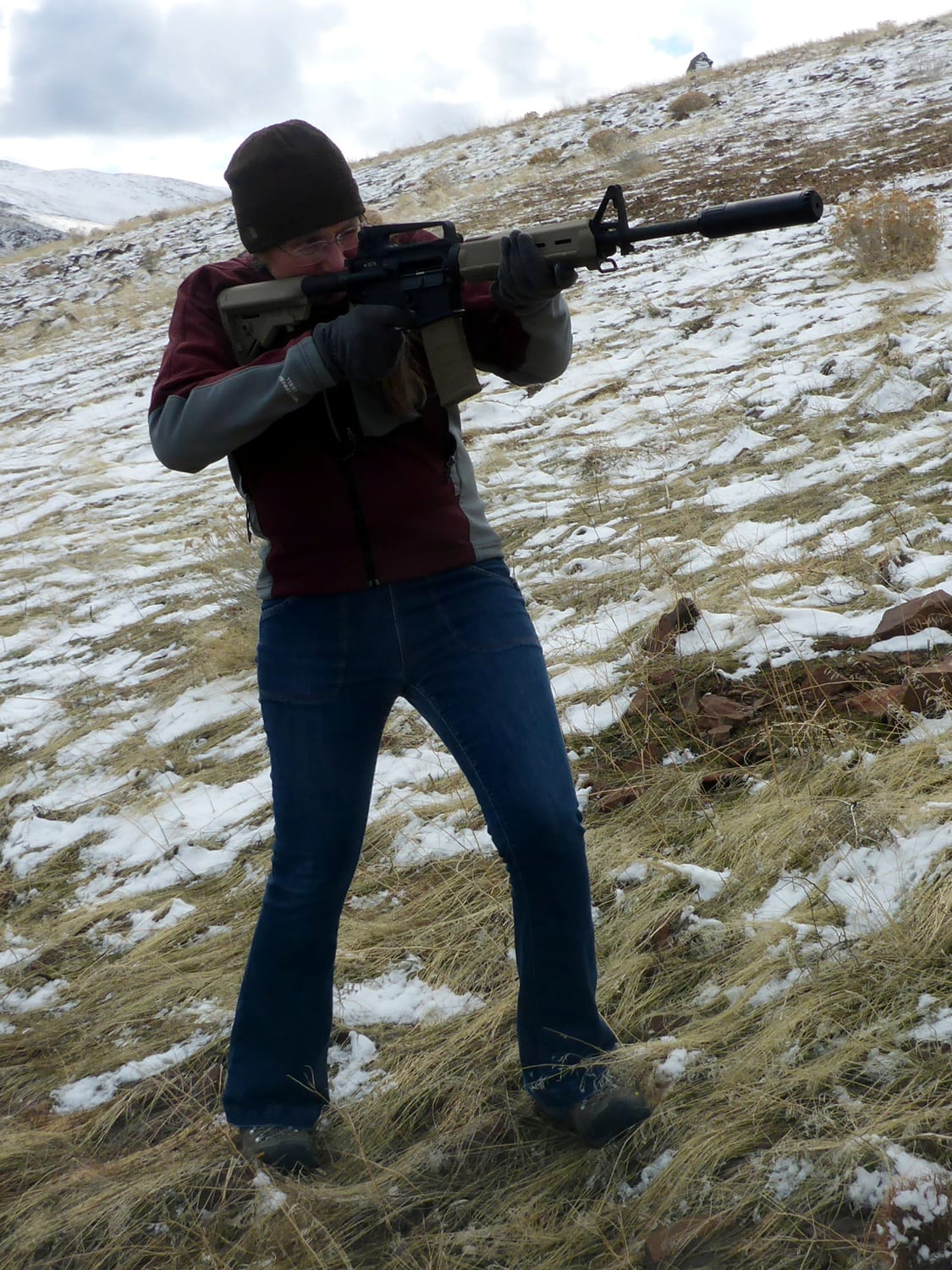
That direction-masking effect is real and is the origin of the military interest in suppressors. It is also the origin of the anti-suppressor political argument. Both are talking about supersonic ammunition, where the can does not remove the sound so much as relocate it.
With subsonic ammunition none of that applies: there is no crack to relocate, and the whole event is quiet everywhere.
2.8 Bibliography
Footnotes
-
Independent analysis cited in the .22 Rimfire dive, Volume 10 — a suppressed 40 gr subsonic at ~1,000 fps peaks at approximately the level of manually cycling the action, ~120 dB. ↩
-
PEW Science, Silencer Sound Standard™ / Suppression Rating™. https://pewscience.com/silencer-sound-standard and https://pewscience.com/silencer-sound-standard-suppression-rating ↩
-
Suppression Ratings as reported in secondary coverage of PEW Science data; HUXWRX FLOW 556 Ti 41.3 (MK18) / 41.1 (M4A1); SAW Tisha Titanium 49.6 (MK18). Figures are PEW Science’s; the compilation is not. ↩
Comments (0)