Pedersen Device · Volume 7
The Cartridge: Model 1918 Pistol Ball, .30-18 and the French 7.65 Longue
What the Army called it, the 80-grain bullet at 1,300 or 1,500 feet per second, how it was packed and headstamped, what the Infantry School measured, why the French 7.65 mm Longue is said to descend from it and why one authority doubted that, and the ammunition made today
7.1 What it was called
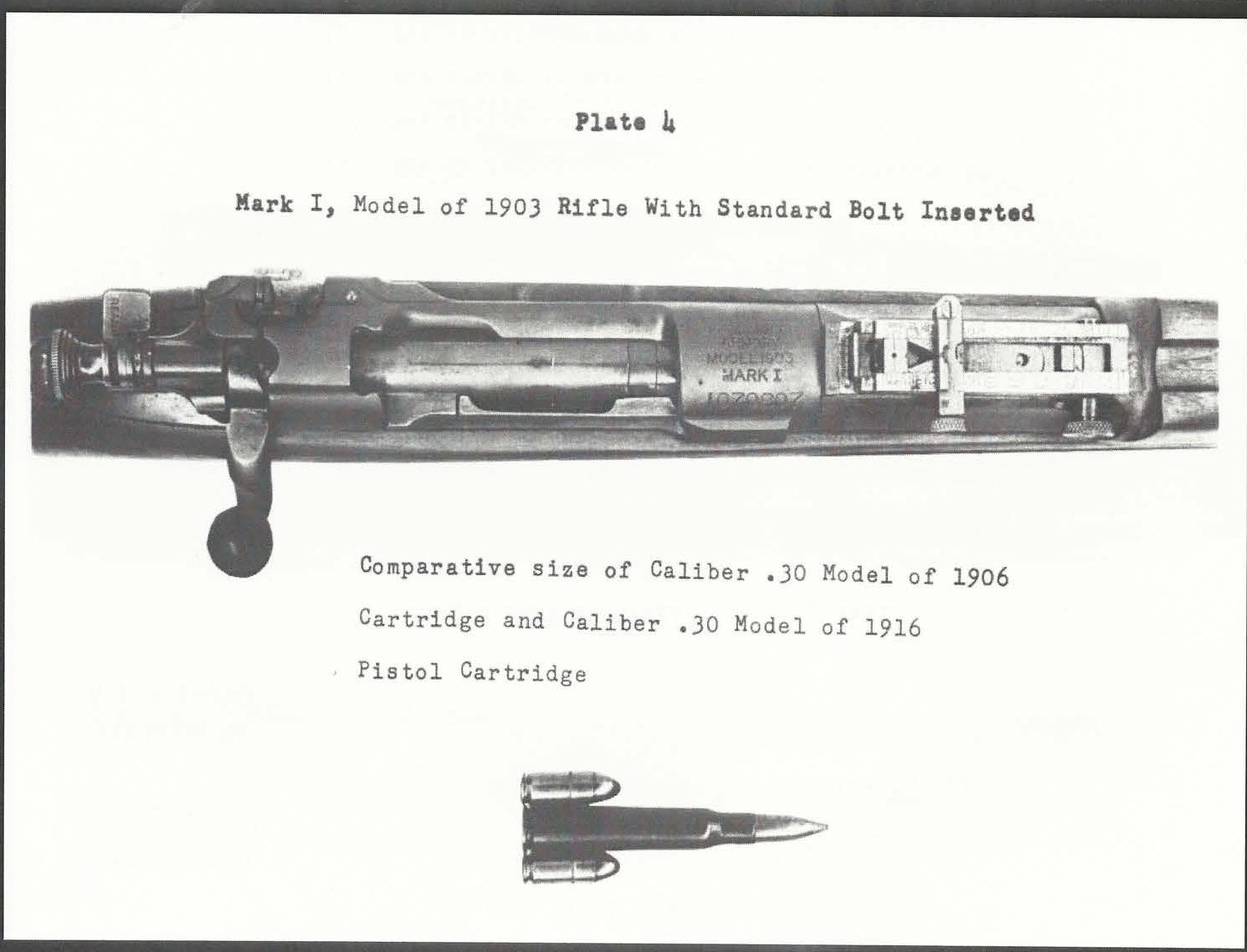
The Army’s names for the cartridge are all cover names, matched to the cover name of the device. The manual’s Plate 1 labels it “Cal. .30 Model 1918 Pistol Ammunition”. Plate 4, in the same manual, calls it the “Caliber .30 Model of 1916 Pistol Cartridge”.1 The boxes were printed “CAL.30 AUTO PISTOL / BALL CARTRIDGES / MODEL OF 1918”.2 No source found explains “Model of 1916”; it may be a typist’s error on the plate, or an earlier designation. It is recorded here as the manual prints it.
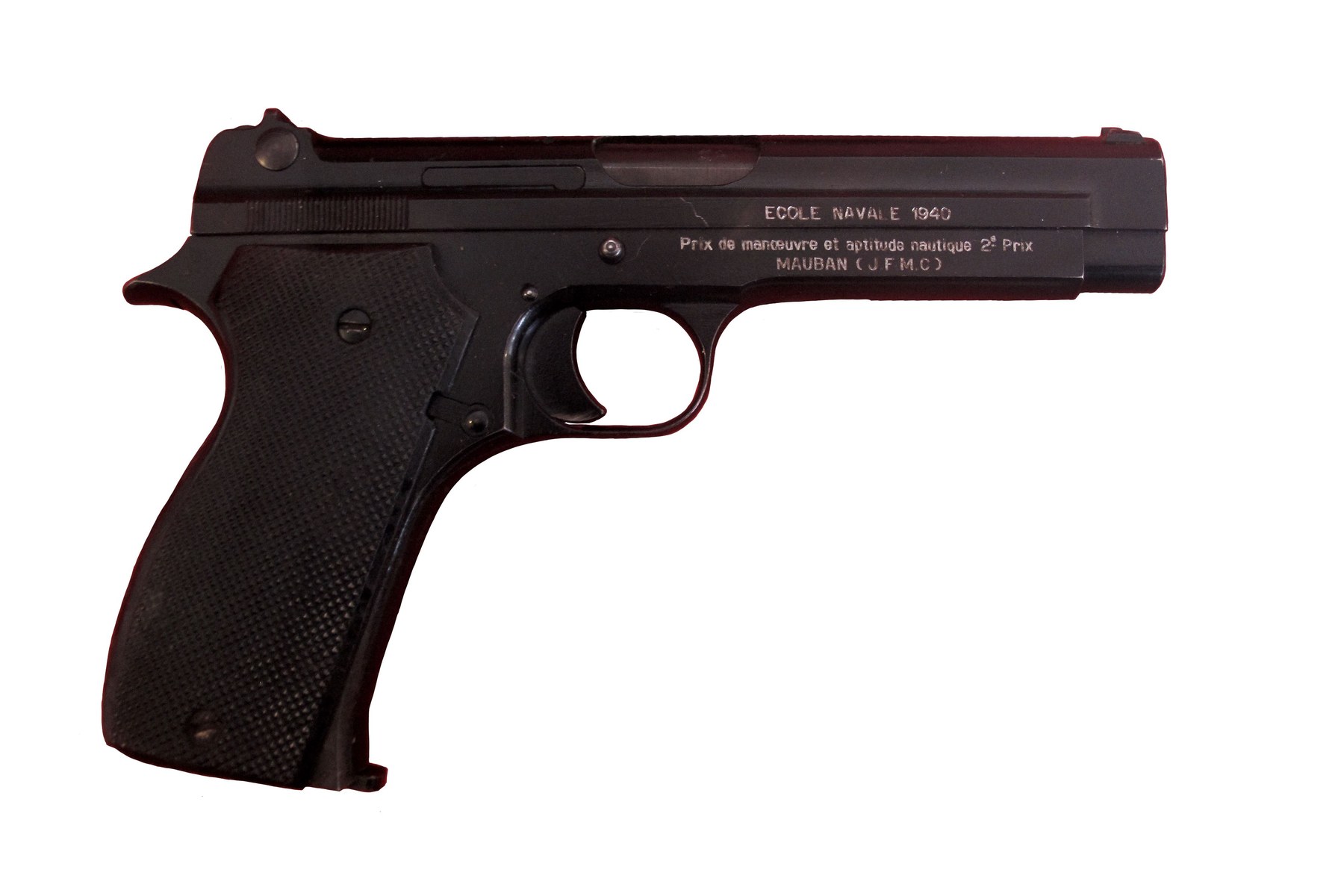
The modern names are collectors’ and dealers’: “.30-18 Auto”, “.30 Pedersen”, and, for the French round of the same size, “7.65 mm Longue”, “7.65 French Long”, “7.65×20” and “7.65 mm MAS”. Starline’s brass catalogue lists all of them as aliases of one case.3
7.2 The load
Every source agrees on the bullet: 80 grains.1456 The powder charge is given by Canfield as “about 3.5 grains of smokeless powder” and by Culver as “3 1/2 grains of Bullseye Powder”.56 Hatcher’s chapter gives a figure for the charge too, but it is lost in the Internet Archive scan’s text layer (“driven by grains of powder”); it is not reconstructed here.4
7.3 Velocity: two figures
The manual says: “Velocity at muzzle – 1500 feet per second.”1 Hatcher, twice, gives 1,300 feet per second, “as against 800 or 900 foot seconds of the ordinary automatic pistol of the same size”.4 Canfield and Culver give about 1,300.56 Krisko, writing from the archive, gives “1,300–1,500 f.p.s.” in his first article, and in his second the Infantry School’s comparison uses a “1,300 f.p.s. Remington Pedersen round”.78
The two figures are not averaged here. The manual is the Army’s document; Hatcher was the Army’s officer and the Benning test, as Krisko reports it, used 1,300. One possibility is that 1,500 was a design or specification figure and 1,300 what Remington’s production ammunition gave; another is that the two figures belong to different bullets (below). No source found says.
The muzzle energy follows from the bullet weight and either velocity by the standard formula, energy in foot-pounds = grains × (feet per second)² / 450,240:
Table 1 — The muzzle energy follows from the bullet weight and either velocity by the standard formula, energy in foot-pounds = grains × (feet per second)² / 450,240
| Velocity | Energy, 80 gr | Source of the velocity |
|---|---|---|
| 1,300 ft/s | about 300 ft-lb | Hatcher; Canfield; Culver; Krisko (Benning) |
| 1,500 ft/s | about 400 ft-lb | The manual |
Canfield gives “about 300 ft-lbs”, which matches the 1,300 figure.5 Hatcher put it as “about one-tenth that of the service cartridge”.4 Both velocities are from the M1903’s 24-inch barrel, of which the device’s short barrel is the first few inches (Volume 4).
7.4 Dimensions
No Army drawing of the cartridge was found. The dimensions in circulation are of the French 7.65 mm Longue, applied to the American round on the assumption that the two are the same size:
Table 2 — No Army drawing of the cartridge was found. The dimensions in circulation are of the French 7.65 mm Longue, applied to the American round on the assumption that the two are the same size
| Dimension | Figure | Source |
|---|---|---|
| Case length | 0.78 in | Ed Buffaloe, citing Medlin and Huon |
| Overall length | 1.19 in | Ed Buffaloe, citing Medlin and Huon |
| Case length | 0.771–0.777 in | Starline Brass, product listing |
| Case length | 19.70 mm (0.776 in) | English Wikipedia (no source on the page) |
| Overall length | 30.24 mm (1.191 in) | English Wikipedia (no source on the page) |
| Bullet diameter | 7.85 mm (0.309 in) | English Wikipedia (no source on the page) |
| Primer | Small pistol | Starline (modern brass); French military cases were Berdan, per an IAA forum member |
Hatcher compared the cartridge’s size to the .32 automatic pistol cartridge and said it was “only about one-fifth the size of the rifle cartridge, though the bullet was the same diameter”.4 The manual gives “Caliber bore – 0.305 inches”.1
There may have been more than one American bullet. John Moss, a long-standing authority on the International Ammunition Association’s forum, wrote in 2019 that “the 7.65 Long is based on the long bullet version of the .30 Pedersen cartridge that came about c.1919”.11 That implies a short and a long bullet, and it might explain why the Infantry School found Frankford Arsenal’s ammunition more accurate than Remington’s (Volume 3). No document found confirms a second bullet, and the connection is a question, not a finding.
7.5 Makers, headstamps and packing
Remington made the cartridges, under the contract of 24 May 1918 for 800 million; about 65 million were made (Volume 2). Canfield gives the headstamps as “RA” or “RAH”, dated 18, 19 or 20.5 A Poulin Auctions lot of 2026 describes headstamps “RA”, “H” and “19”, and boxes marked for “Remington Arms / UMC, Bridgeport, Conn.”12 Frankford Arsenal ammunition was used in the Infantry School’s tests; its headstamps are not described in the sources found.8
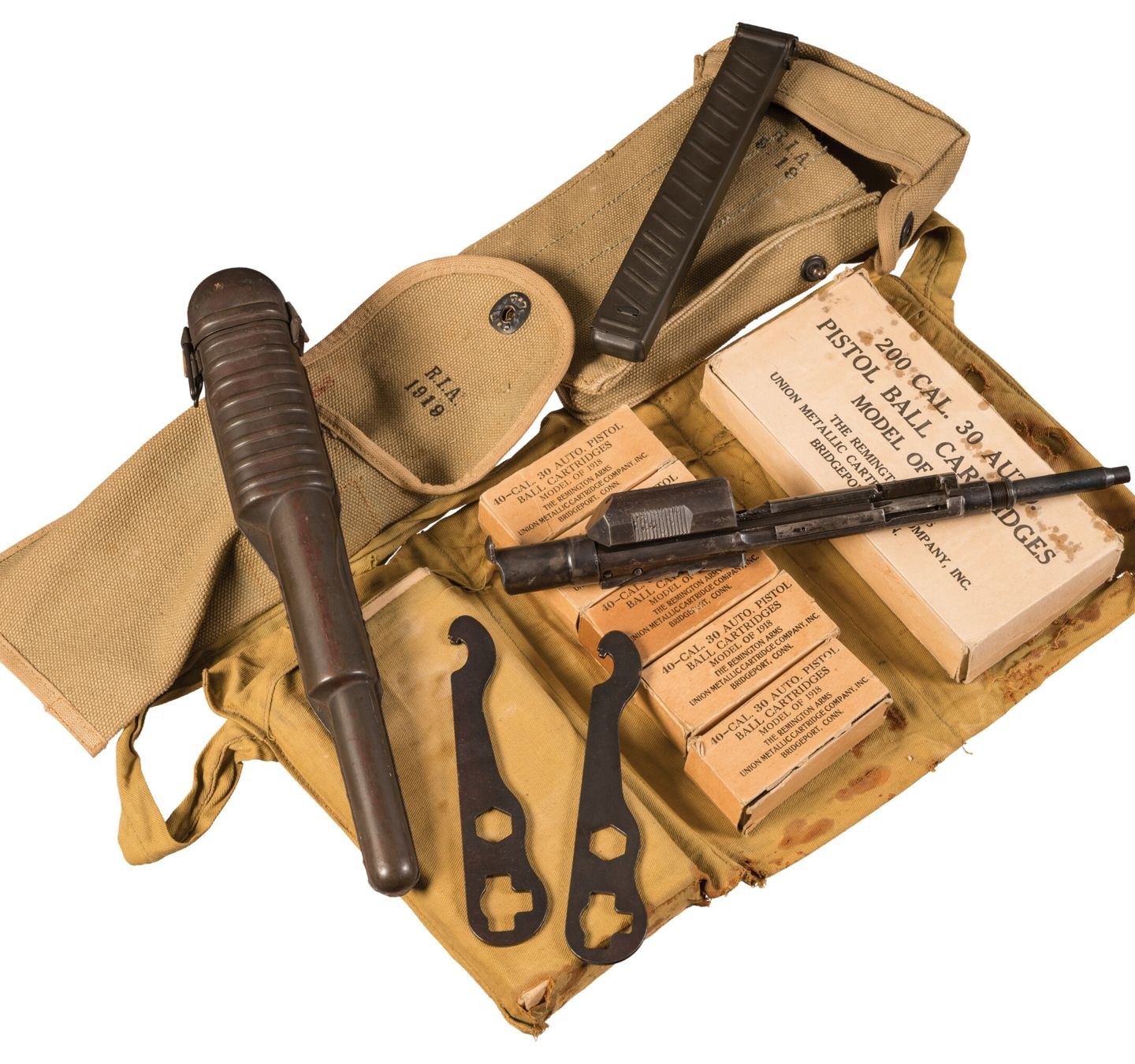
The manual’s packing: “40 cartridges in a box, 5 boxes or 200 cartridges in a paper carton, 3 cartons or 600 cartridges in a canvas bandoleer, 5 bandoleers or 3000 cartridges in a wooden packing case.”1 One box filled one magazine. Rock Island Auction describes a surviving canvas bandoleer “with three pouches made to hold 200 rounds each”.2
In 1931 about 60 million rounds remained, and later reports described them as “deteriorated to such an extent as to be unreliable”.8 Hatcher’s son nevertheless fired the device in March 1947 “with ammunition made in 1918”, which Hatcher photographed.4
7.6 What it could do
From the Infantry School’s tests, as Krisko reports them: with Frankford ammunition every shot hit up to 450 yards; at 600 yards six of ten; penetration of eight pine boards at 50 yards and two at 600, and of steel helmets at 100 yards and under; and for a 400-yard target the sights had to be set between 1,100 and 1,225 yards.8 Hatcher: accurate “against individual targets only up to about 350 yards”, lethal “at any range up to 500 yards”, and penetrating “only about 8 inches” of wood against 60 inches for the service bullet close to the muzzle.4 The round was subsonic in the rifle, and its quietness became one of the arguments against it (Volume 3).
7.7 The French 7.65 mm Longue
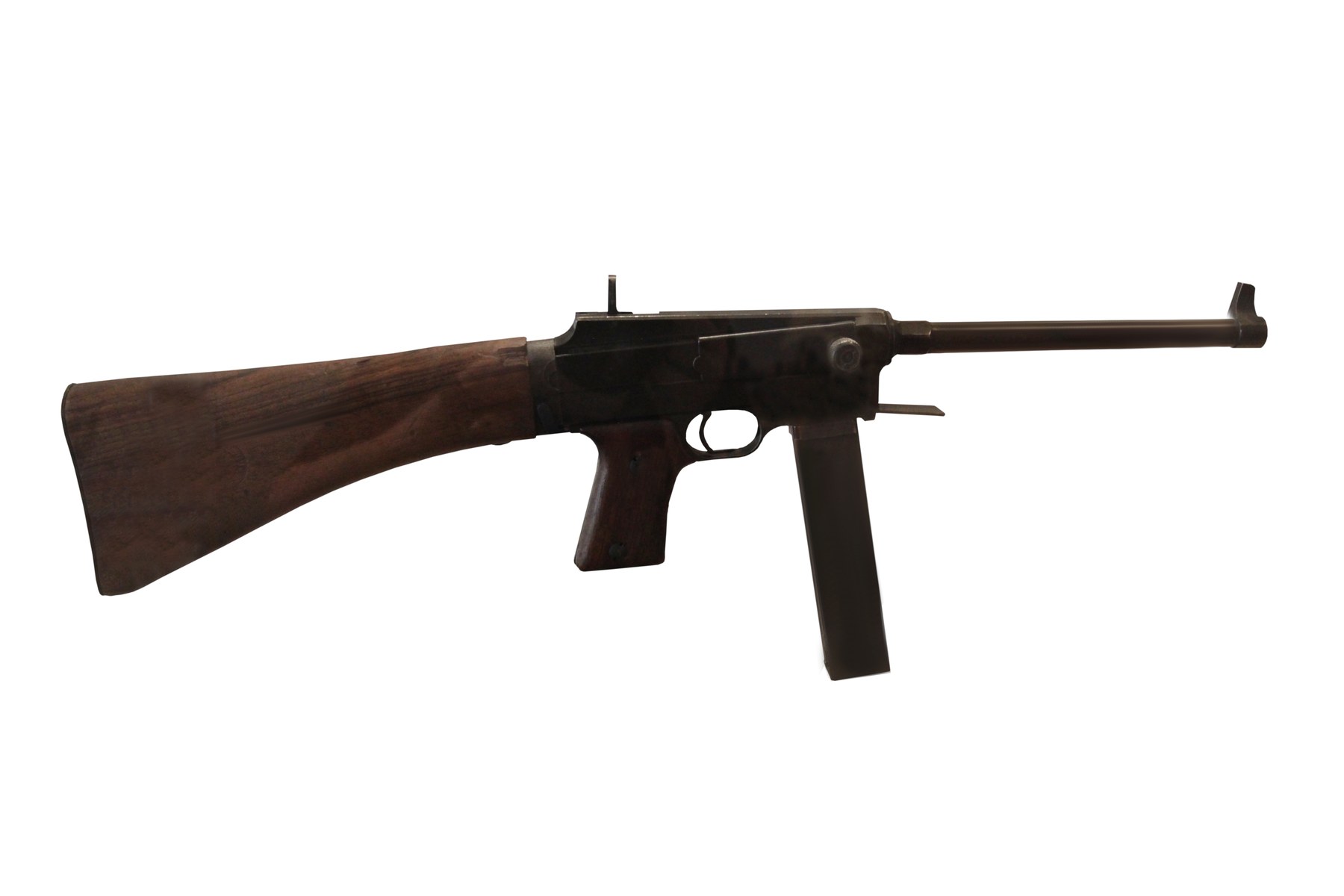
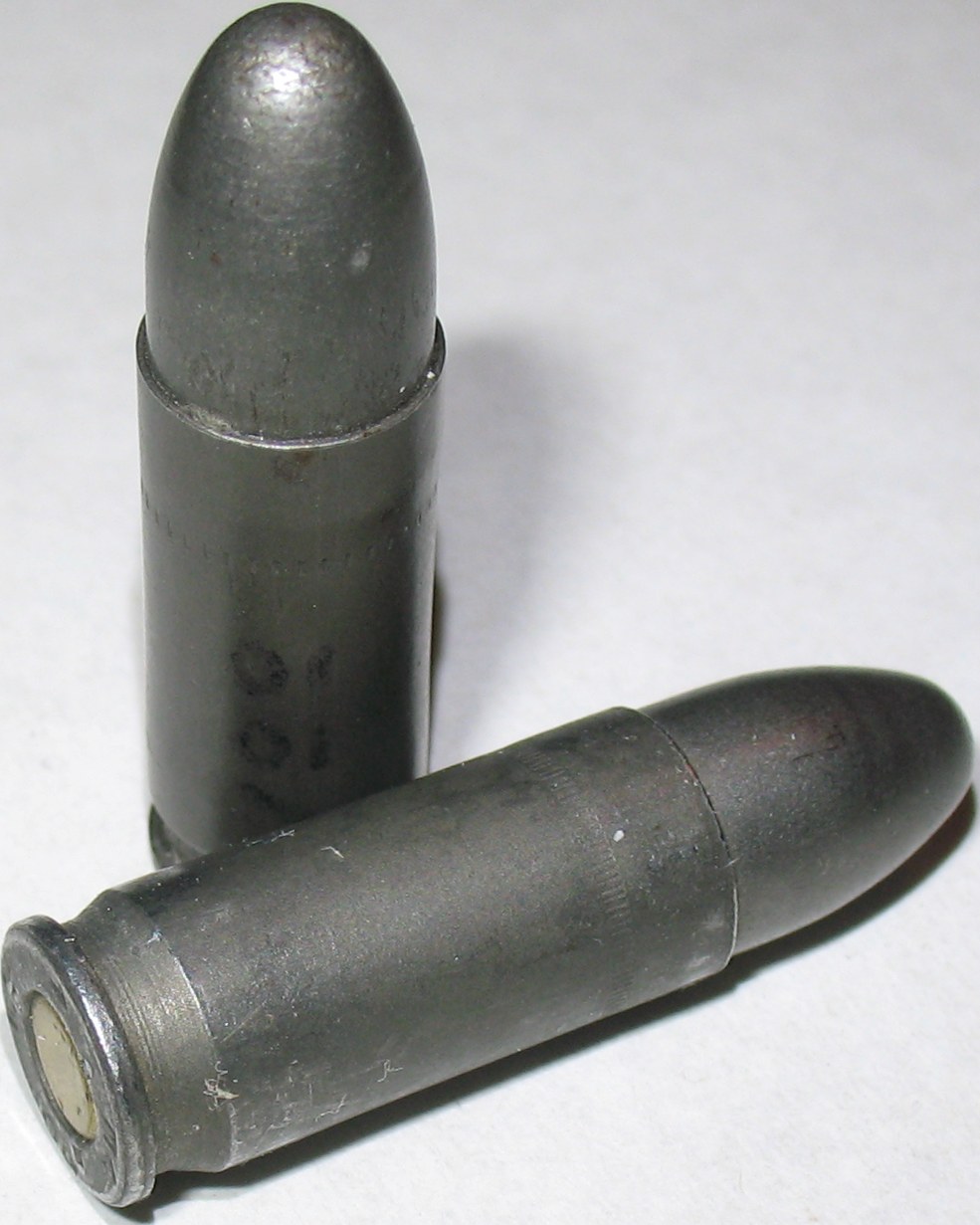
France adopted a cartridge of the same dimensions for its service pistols and submachine guns between the wars. Buffaloe gives the guns chambered for it as the MAS Model 38 submachine gun, the Modèle 1935A and 1935S pistols, and the MAB Model R; official adoption of the 1935A came in early 1937, and the first order for the 1935S in September 1938, with the first guns finished in February 1939.9 Moss, from 66 specimens, says “the earliest dated cartridge I have seen was S.F.M. 1927” and that the round “was not really adopted by France until c.1935”.11
7.8 The case for descent, and the dissent
The common account is that the French cartridge is the American one. The French saw the device demonstrated: Hatcher and Pedersen took it to Le Mans in 1919 (Volume 3), and Buffaloe suggests the French “may have encountered the cartridge during tests of the Pedersen Device in December 1917”, which would have been the board at Langres.49 Buffaloe and the English Wikipedia both say that Browning later designed an experimental carbine for the cartridge that the French tested early in the 1920s.910 Wiley Clapp, in American Rifleman, says there is “evidence that a carbine shooting the .30 Pedersen cartridge was demonstrated to the French in the late 20s”.13 Starline’s catalogue states the descent as fact.3
The dissent comes from Ian Hogg, as Buffaloe quotes him: “It seems more likely that it was a French arsenal draughtsman’s attempt to provide a 7.65mm cartridge”. Buffaloe answers: “the near identical characteristics of the two cartridges cannot be ignored.”9 No French document explaining the cartridge’s origin was found, and none of the sources quotes one. So the dimensions are the same and the French had the chance to copy them; that the French did so is likely but not documented. On the evidence found, the French round is best described as dimensionally the same as the Pedersen cartridge, probably derived from it, with the route undocumented.
Two errors in print should be noted. Clapp’s article says the cartridge is “identical to the 7.62mm French Long”.13 The French cartridge is the 7.65 mm. And a blog version of the story has the French copying a “.30-18 Browning” round; no source found describes a Browning cartridge separate from Pedersen’s.
7.9 The French guns
The French loads were not the American one. The English Wikipedia gives a 77-grain bullet at 1,132 ft/s from a pistol; Buffaloe gives 88 grains at about 1,100 ft/s, and a calculated 1,175 ft/s and 270 ft-lb from White and Munhall’s data; White and Munhall give the “.30-18” in an M1935A at 1,114 ft/s.109 The bullet weights conflict and are given separately. All are slower than the American load, as a pistol barrel would make them.
The French used the cartridge until after the Second World War: Moss mentions unheadstamped rounds made by Bertram in Australia and by Sellier & Bellot for insurgents in Vietnam.11 The MAS 38 and the 1935 pistols are why the cartridge is still made.
7.10 Ammunition today
Loaded ammunition and brass are made for the French guns, and are the only new cartridges of this size.
- Starline Brass sells cases (no loaded rounds), with a case length of 0.771–0.777 in and a small pistol primer pocket, at $0.31 each in lots of 250, $0.27 at 500 and $0.25 at 1,000, as listed on 19 October 2026. Starline says the case “is capable of firing projectiles as heavy as 100 grains”.3
- Steinel Ammunition sells loaded “7.65 French Long” with a 110-grain plated round-nose bullet at 1,010 ft/s, in Starline brass headstamped “7.65 FL”, Boxer-primed and non-corrosive, at $47.90 for 50, as listed on 19 October 2026.14 Steinel does not state the barrel length behind its velocity.
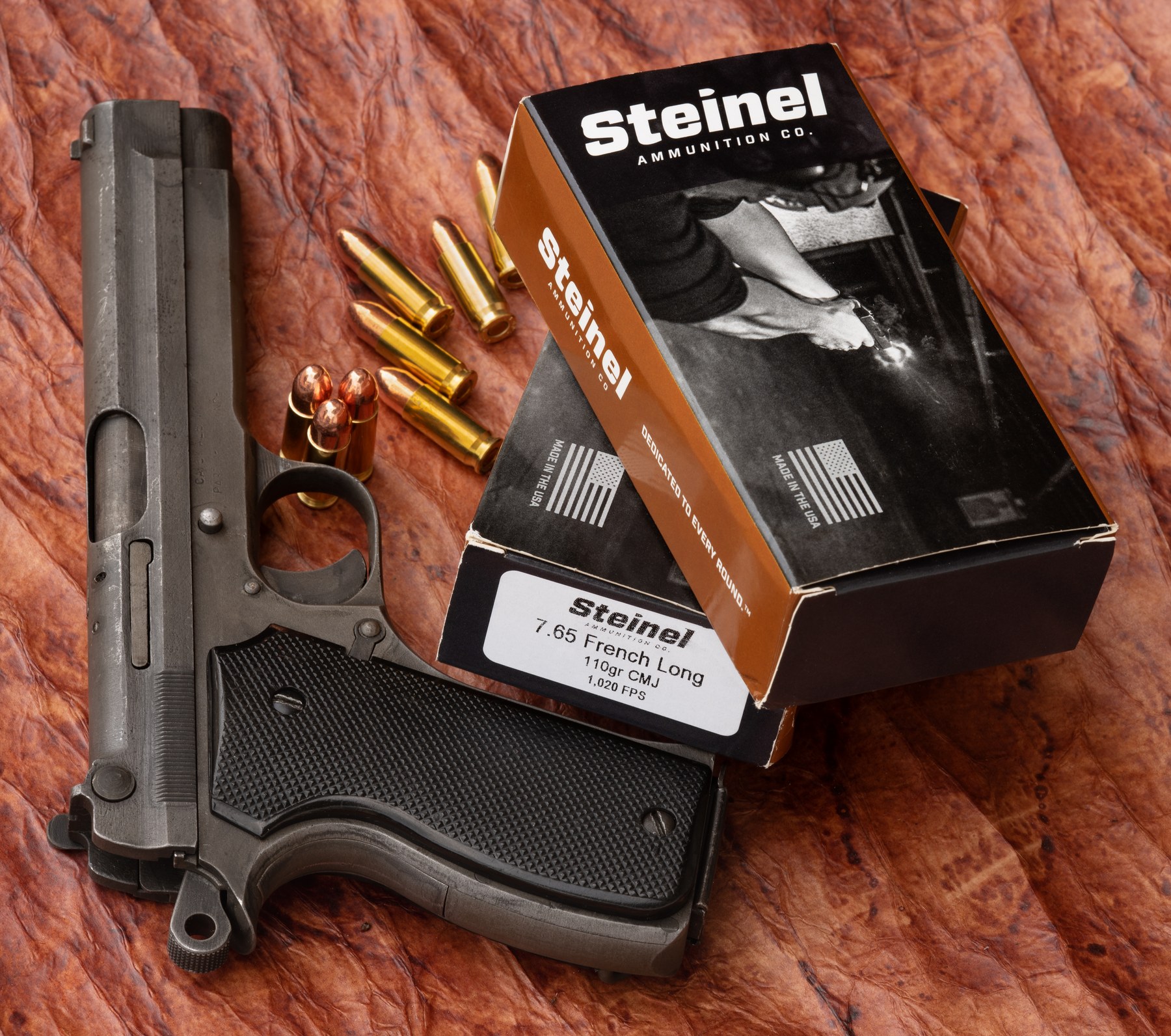
Whether any modern load functions safely in an original device is not established. The device was designed for an 80-grain bullet. Steinel’s is 110 grains, heavier than the weight Starline itself names as the case’s upper limit, and a heavier bullet changes the impulse a straight blowback has to absorb. No source found reports a device fired with modern ammunition. On an original device worth five figures, with no spare parts, that is a test nobody should run on the strength of matching case dimensions. A reproduction device (Volume 8) would have to be designed and proved for whatever load it is meant to fire, and the hub’s Reloading Bench covers the general method of developing a load for an unusual case.
7.11 What could not be established
- An Army drawing or specification of the cartridge.
- Why Plate 4 says “Model of 1916”.
- Why the manual says 1,500 ft/s and every other source 1,300.
- The powder charge in Hatcher’s text, damaged in the scan.
- A second, long-bullet American load c.1919, on Moss’s word only.
- A French document recording where the 7.65 mm Longue came from.
- The date of the Browning carbine trial in France: “1920” (Wikipedia), “early 1920s” (Buffaloe), “late 20s” (Clapp).
- Whether modern 7.65 Longue loads function in an original device.
References
Footnotes
-
Notes on Caliber .30 Model of 1918 Pistol, CONFIDENTIAL, Small Arms Division, Ord. Dept., Machine Gun Section; S. G. Green, Captain. Undated. Chapters I and IV; plates I and IV. Internet Archive, https://archive.org/details/pedersen-device-manual (accessed 2026-10-19). ↩ ↩2 ↩3 ↩4 ↩5
-
Rock Island Auction Company, 27 August 2022, lot 1458, https://www.rockislandauction.com/detail/86/1458/us-springfield-1903-rifle-with-pedersen-device-and-accessories (accessed 2026-10-19). ↩ ↩2
-
Starline Brass, “#3140 – 7.65 French Long”, https://www.starlinebrass.com/765-french-long/ (accessed 2026-10-19; prices as listed that day). ↩ ↩2 ↩3 ↩4
-
Julian S. Hatcher, Hatcher’s Notebook, chapter XV, “The Pedersen Device”, https://archive.org/details/Hatchers_Notebook (accessed 2026-10-19). ↩ ↩2 ↩3 ↩4 ↩5 ↩6 ↩7 ↩8
-
Bruce N. Canfield, “The Pedersen Device: A Secret Weapon of WWI”, American Rifleman, 17 July 2020 (print June 2003), https://www.americanrifleman.org/content/the-pedersen-device-a-secret-weapon-of-wwi/ (accessed 2026-10-19). ↩ ↩2 ↩3 ↩4 ↩5
-
Dick Culver, “The Pipsqueak Pistol That Never Was”, Civilian Marksmanship Program, Internet Archive copy of 27 March 2012, https://web.archive.org/web/20120327162014/http://www.odcmp.co/Services/Rifles/pipsqueak_pistol.htm (accessed 2026-10-19). ↩ ↩2 ↩3
-
Jonathon Krisko, “The Pedersen Device: Its Design, Production & Post-War Issuance”, American Rifleman, 12 September 2024, https://www.americanrifleman.org/content/the-pedersen-device-its-design-production-post-war-issuance/ (accessed 2026-10-19). ↩
-
Jonathon Krisko, “The Post-War Pedersen Device: Infantry Testing & Ultimate Fate”, American Rifleman, 14 September 2024, https://www.americanrifleman.org/content/the-post-war-pedersen-device-infantry-testing-ultimate-fate/ (accessed 2026-10-19). ↩ ↩2 ↩3 ↩4
-
Ed Buffaloe, “The 1935 French Service Pistols”, Unblinking Eye, ©2008–2009, https://unblinkingeye.com/Guns/F1935S/f1935s.html (accessed 2026-10-19); quotes Ian Hogg and cites Medlin and Huon, and White and Munhall. ↩ ↩2 ↩3 ↩4 ↩5 ↩6
-
“7.65×20mm Longue”, English Wikipedia, https://en.wikipedia.org/wiki/7.65%C3%9720mm_Longue (accessed 2026-10-19). Cited for figures it states without a source on the page; treated as unconfirmed. ↩ ↩2 ↩3
-
“7.65x20 French pistol ammo”, International Ammunition Association forum, posts of 23–24 July 2011 and 12 August 2019 (John Moss), https://forum.cartridgecollectors.org/t/7-65x20-french-pistol-ammo/10028 (accessed 2026-10-19). Forum posts by named collectors; not a primary source. ↩ ↩2 ↩3 ↩4
-
Poulin Auctions, Summer 2026 Premier Firearms & Militaria Auction, lot 26-29, https://www.poulinauctions.com/2026/06/14/highly-sought-after-u-s-wwi-era-remington-semi-auto-pedersen-device/ (accessed 2026-10-19). ↩
-
Wiley Clapp, “Automatic Pistol, Caliber .30, Model of 1918”, American Rifleman, 8 August 2014, https://americanrifleman.org/content/automatic-pistol-caliber-30-model-of-1918 (accessed 2026-10-19). ↩ ↩2
-
Steinel Ammunition, “7.65 French Long 110gr RN – 50 count”, https://www.steinelammo.com/product/7-65-french-long-110gr-rn-50-count/ (accessed 2026-10-19; price as listed that day). ↩
Comments (0)