Traditions Blunderbuss Kits · Volume 9
Powder, Ball & Shot: Ammunition for a .54 Smoothbore
A muzzleloader has no cartridge — you are the ammunition factory, assembling powder, projectile, and (for a ball) a patch, right there at the muzzle. This volume covers what to feed a .54 smoothbore blunderbuss and, just as importantly, the numbers that come from your kit’s own Traditions manual, which is the authority for these guns. Every charge here is a starting reference; the manual’s stated maximum for your specific gun wins over anything general, and you always work loads up from the bottom.
9.1 Powder: type, and never the wrong kind
Black powder is the correct propellant for both kits — and mandatory for the flintlock. A flintlock’s pan flash and vent need real black powder’s easy ignition; substitutes like Pyrodex and Triple Seven are much harder to light from a flint spark and are widely considered unsuitable for flint ignition. In the percussion KR500, a substitute (Pyrodex RS or Select) will ignite fine from a cap, but real black powder is still preferred for the easiest, cleanest behavior. Traditions’ own manual permits black powder or Pyrodex RS/Select — and specifically warns that Pyrodex P is not for flintlocks.
Never, ever smokeless powder. This cannot be overstated: smokeless is not interchangeable with black powder, generates pressures a muzzleloader is not built for, and will destroy the gun and injure or kill the shooter. It also voids the warranty instantly. Black powder or an approved substitute only.
9.1.1 Granulation — which grade goes where
Black powder is graded by grain size, written in “F”s — more F’s mean finer grain and faster burn:
- FFg (2F) — the main charge granulation for a .54. This is what goes down the bore as your powder charge. (Traditions’ manual allows 2F or 3F as the main charge in the .54; 2F is the conventional choice for a bore this size, 3F burns a touch faster.)
- FFFg (3F) — a finer main-charge grade, normal in smaller bores and pistols; acceptable here per the manual.
- FFFFg (4F) — the very fine priming powder, used only in the pan of the flintlock (KR510). It flashes readily off a spark. You do not use 4F as a main charge, and the percussion gun never needs it.
So the flintlock shooter keeps two powders on the bench — 2F (or 3F) for the bore, 4F for the pan. The percussion shooter needs only the one.
9.2 The numbers from your manual (.54)
Traditions’ “Loading, Shooting & Care” booklet gives the load data for these guns. Treat these as the governing figures:
Table 1 — Traditions' "Loading, Shooting & Care" booklet gives the load data for these guns. Treat these as the governing figures
| Value | |
|---|---|
| Round ball | .530 lead round ball |
| Patch | .015” cotton or linen |
| Most accurate charge | 50–80 gr (2F or 3F) |
| Maximum charge | 125 gr 2F / 120 gr 3F — do not exceed |
| Flintlock pan priming | 4F |
| Approved powder | Black powder or Pyrodex RS/Select (not Pyrodex P in the flintlock) |
Start at the low end — say 50 gr — and work up a few grains at a time, watching where the gun groups best. Most smoothbores settle into a “sweet” charge well below maximum; more powder past that point just makes more noise, recoil, and unburned fouling, not better shooting. The 125-grain figure is a ceiling, not a target. Exceeding it voids the warranty and stresses the gun.
9.3 Projectiles: three ways to load a blunderbuss
9.3.1 Patched round ball — the accurate single projectile
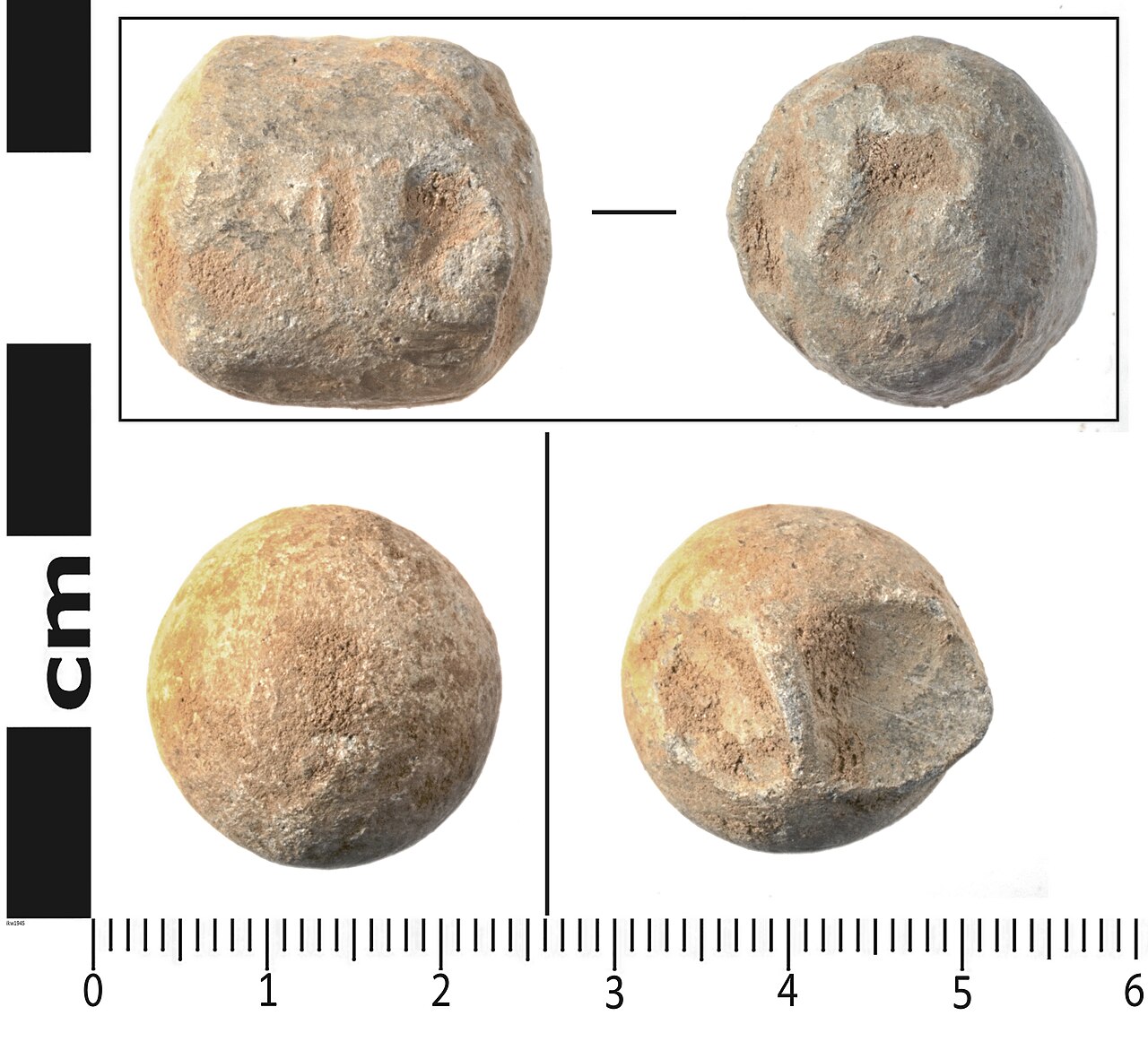
A .530 lead round ball in a .015” lubricated cloth patch is the standard single-projectile load. The ball is a few thousandths under bore so it can be started; the patch takes up the gap, seals the bore behind the ball, and keeps the load consistent. (In a rifle the patch also grips the rifling — this barrel is smooth, so here the patch is purely for seal and consistency.)
- Patch material: cotton or linen ticking of the right thickness. Pre-cut lubed patches are sold, or you cut them at the muzzle.
- Patch lube: spit (“spit patch”) for informal shooting, or mink oil / a commercial patch lube for a load that sits longer. Lube eases seating and softens fouling.
- This is the load to use when you want the blunderbuss to shoot at a mark rather than just make noise.
9.3.2 Shot — the blunderbuss as a small shotgun
Loaded with shot, the .54 smoothbore becomes a crude short-range single-barrel shotgun — and this is actually closer to the blunderbuss’s historical use than a single ball. The load is a stack:
- an over-powder card wad on the powder (a fiber/cushion wad may be added),
- the shot charge,
- a thinner over-shot card to hold the shot in.
Charge by the equal-volume rule: measure the same volume of shot as powder using one dipper — pour a measure of powder, then fill the same measure with shot. Start modest and pattern-test on paper at the range you intend to shoot; smoothbore shot patterns open quickly and effective range is short. (And remember Volume 2: the flared bell does not meaningfully widen the pattern — that’s the powder charge, shot size, and barrel doing the work, not the trumpet.)
9.3.3 Buck-and-ball — the authentic multi-projectile load
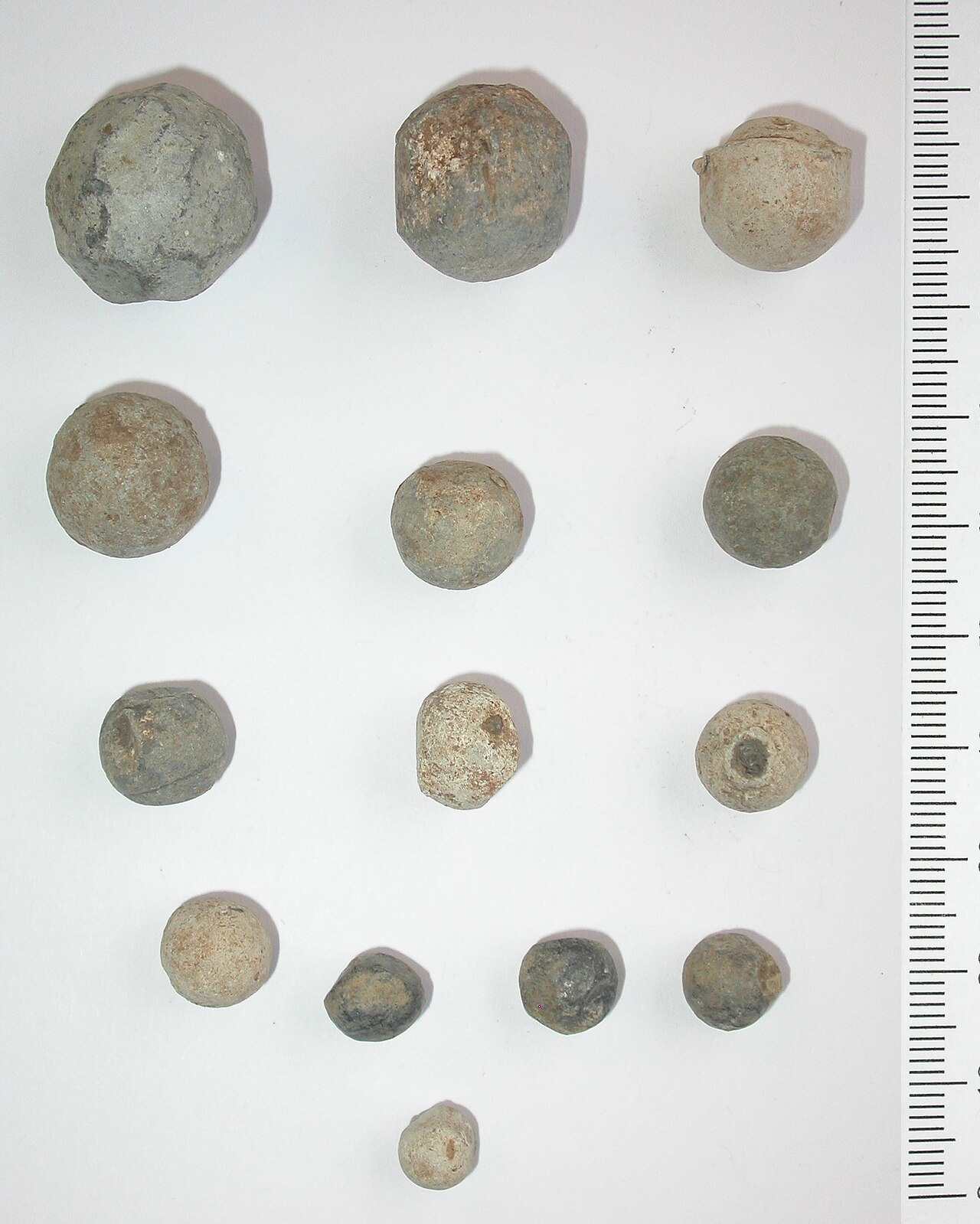
The classic blunderbuss/smoothbore load is buck-and-ball: a round ball plus several buckshot over the powder. It’s the “handful of death at close range” the gun was built for and the most period-appropriate way to load it. Build it like the shot load — over-powder card, the ball-and-buck, over-shot card — and keep ranges short.
9.4 What to have on the bench
For loading a .54 blunderbuss you’ll want:
- Powder — 2F (or 3F) for the charge; 4F as well if it’s the flintlock.
- A powder measure — an adjustable one so you can dial the charge and work loads up. (You never load from the horn or can directly — Volume 10 explains why.)
- .530 round balls, and .015” patches with lube — or card wads, shot, and over-shot cards if you’re loading shot / buck-and-ball.
- A short starter to get a patched ball into the muzzle.
- The ramrod (or a sturdier range rod) to seat the load, marked as Volume 10 describes.
- Caps (#11 or musket, per your nipple) for the KR500, or flints for the KR510.
- Cleaning gear for the same-day scrub that black powder demands.
With the right powder, the right ball or shot, and the manual’s numbers in front of you, you’re ready to load and fire — carefully — which is Volume 10.
Comments (0)