Traditions Blunderbuss Kits · Volume 3
KR500 vs KR510: Flint or Percussion, and Which to Buy
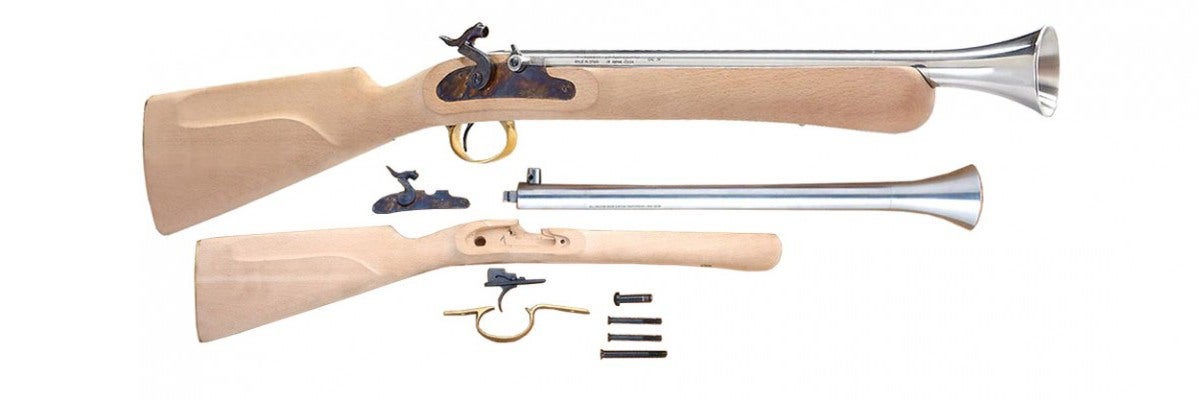
The two Traditions kits are, mechanically, one gun with a choice of ignition. The barrel, the stock, the brass furniture, the ramrod, the trigger, the assembly steps, the finishing — all identical. What changes is how a spark reaches the powder, and that single difference drives the price gap, the shooting experience, the maintenance, and the period story. This volume is the decision volume: understand both systems, then pick.
3.1 How a percussion lock works (the KR500)
Percussion — also called caplock — is the simpler and later of the two systems. On the KR500:
- A small hollow nipple (a cone with a narrow flash channel through it) is threaded into the barrel at the breech, communicating with the powder chamber.
- You place a percussion cap — a tiny copper cup holding a pinch of shock-sensitive priming compound — over the nipple. The KR500 takes a standard #11 cap or a larger musket cap, depending on the nipple fitted.
- Cocking draws the hammer back against the mainspring. Pulling the trigger releases it; the hammer’s face snaps down onto the capped nipple.
- The blow crushes the cap, the priming compound detonates, and a jet of flame drives through the nipple’s channel into the main powder charge. The gun fires.
That’s the whole cycle: cap, cock, fire. There is no exposed priming powder, nothing to blow away in a wind, and ignition is fast and reliable. This is why percussion replaced flint everywhere in the mid-1800s and why the KR500 is the easier gun to learn on.
3.2 How a flintlock works (the KR510)
Flintlock is older, more theatrical, and more work. On the KR510:
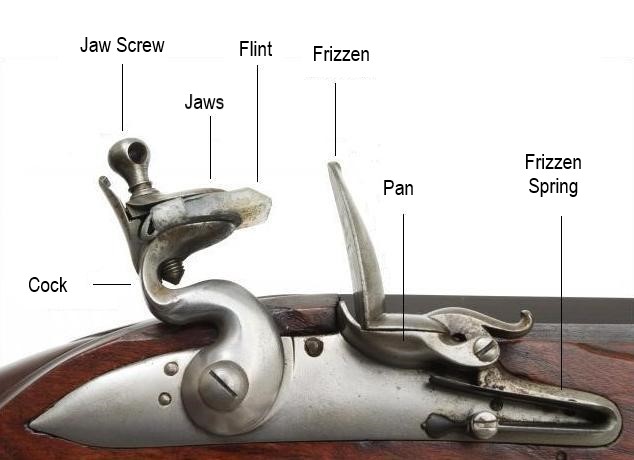
- A shaped flint is clamped in the jaws of the cock (the swinging arm — confusingly also called the hammer by modern shooters).
- Ahead of it is the frizzen: an L-shaped hardened-steel face standing above a small pan. You put a pinch of fine priming powder in the pan and snap the frizzen down to cover it.
- Cocking draws the flint back. On the trigger pull, the cock swings forward and the flint scrapes down the face of the frizzen, shaving off tiny white-hot steel particles — sparks — while the same motion kicks the frizzen up and uncovers the pan.
- The sparks drop into the priming powder in the pan. The pan flashes, and that flash passes through a small touch hole (vent) in the side of the barrel into the main charge. The gun fires.
That extra chain — flint on steel, spark to pan, pan-flash through the vent — is where the flintlock’s character lives. It gives the famous “flash in the pan” (when the pan fires but the main charge doesn’t) and the visible delay between trigger pull and the shot, the lock time, that flint shooters learn to shoot through. It also means you’re maintaining a flint (they dull and must be re-knapped or replaced), keeping the frizzen face clean and properly hardened, and managing two different powders — a coarser main charge and a fine priming powder in the pan.
3.3 The differences that actually matter
Reliability and ease. Percussion wins, decisively. A capped nipple fires in essentially any weather; a flint pan is fussy in wind and useless in rain, and a dull or badly-seated flint gives misfires. If you just want to load and go boom, the KR500 is the friendlier gun.
Cost. The flintlock runs about $60 more (~$529 vs ~$469) because the lock has more parts — the frizzen, the frizzen spring, the pan — and is more labor to make and fit.
Consumables. Percussion needs a supply of caps (#11 or musket). Flint needs flints and a can of fine priming powder (FFFFg) in addition to the main charge powder. Neither is expensive; the flintlock is just one more thing to keep on the shelf.
Period fidelity. The flintlock is the historically correct blunderbuss ignition — it is the system of the type’s whole 1700–1820 heyday. The percussion blunderbuss is a later convenience (Volume 2 covers why). If your goal is a piece that looks and works like a genuine coaching-gun era blunderbuss, the flintlock is the honest choice.
The shooting experience. This is subjective but real: a flintlock is more fun to shoot precisely because it is harder. The pan flash, the lock time, the ritual of priming — many black-powder shooters find the flintlock more engaging and the percussion gun almost too easy. Others find the flintlock’s fussiness tiresome. You are choosing between “reliable and simple” and “authentic and involving.”
3.4 Which to buy
- Buy the KR510 (flintlock) if period authenticity matters to you, if you like the ritual and don’t mind the fuss, or if you want the version that genuinely belongs to the blunderbuss’s own era. It is the more characterful gun and the more correct one.
- Buy the KR500 (percussion) if you want the easiest, most reliable, cheapest introduction to muzzleloading, if you’ll shoot it more than you’ll display it, or if flint-fiddling sounds like a chore rather than a pleasure.
- Buy both — which is a genuinely reasonable option here given the low price — if you want to feel the difference between the two great muzzleloader ignition systems on an otherwise identical gun. That side-by-side is the best hands-on ignition lesson in muzzleloading, and it’s the reason this dive documents them together. Build the percussion one first; it’s the gentler learning curve, and everything you learn about assembling and finishing it transfers directly to the flintlock.
Whichever you choose, the assembly and finishing volumes that follow apply to both. The only build steps that differ are which lock drops into the lock mortise and, at the range, how you prime it — and those are exactly the two things this dive keeps flagging as you go.
Comments (0)