Girardoni Air Rifle · Volume 2
In Service, 1788–1809 — the Turkish War, the Tyrolean Sharpshooters, and the Legends
Twenty-two air riflemen to a battalion, a regulation that warned against lowering the hammer, a third of the rifles still working after one campaign, a new emperor's special corps, 141 rifles left after the Rhine, 1,091 back in the arsenal in 1801, and what is true in the stories about silence and Napoleon
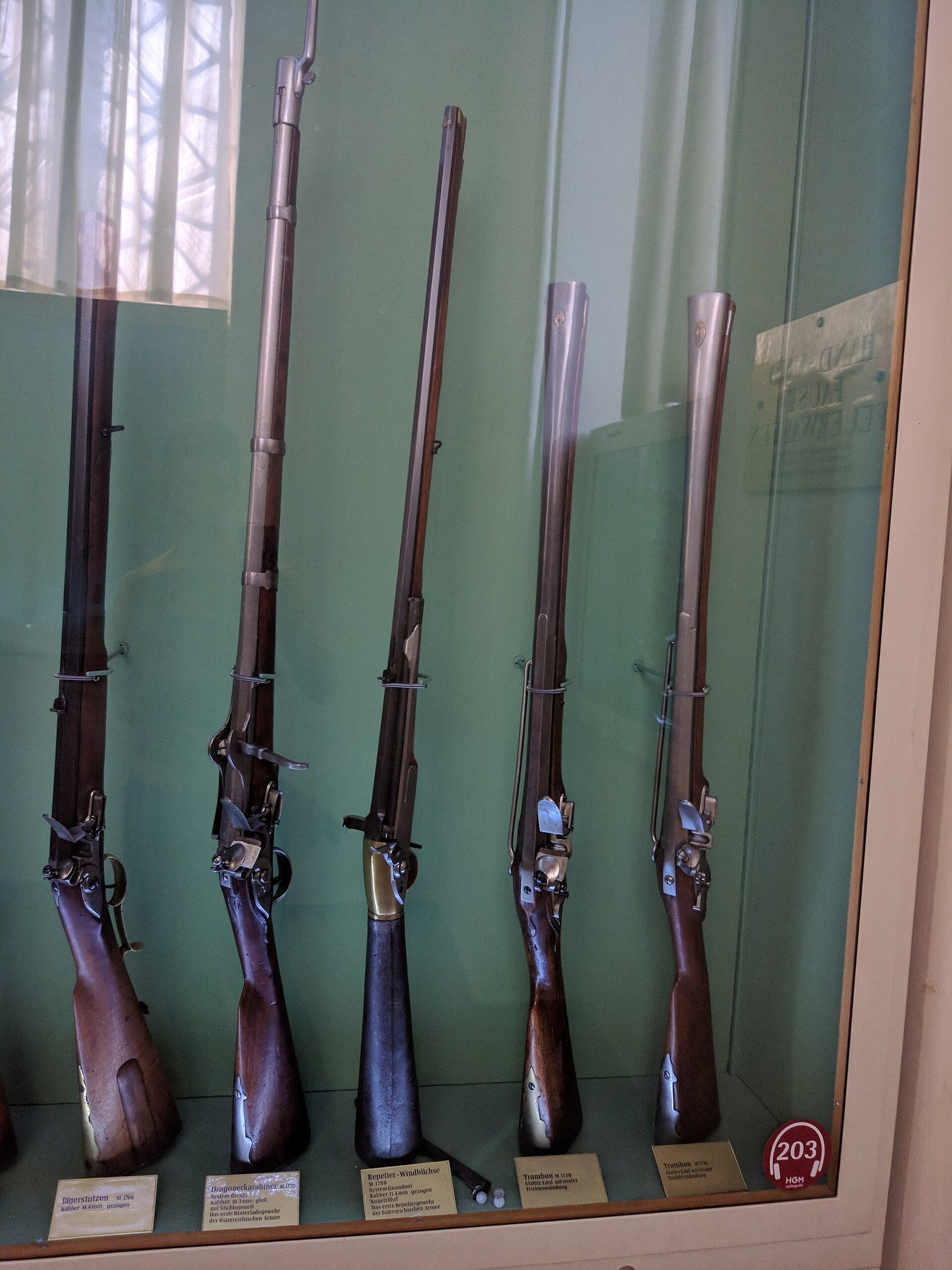
The previous volume took the rifle from Girardoni’s two samples of 1779 to the first two hundred leaving Vienna by boat in October 1787. This one follows the rifles into service. Almost everything in it comes from August Haller’s 1891 account, compiled from the Hofkriegsrat’s files, because it is the only account found that quotes the documents; other sources are named where they add to it or disagree.1
2.1 February 1788: twenty-two to a battalion
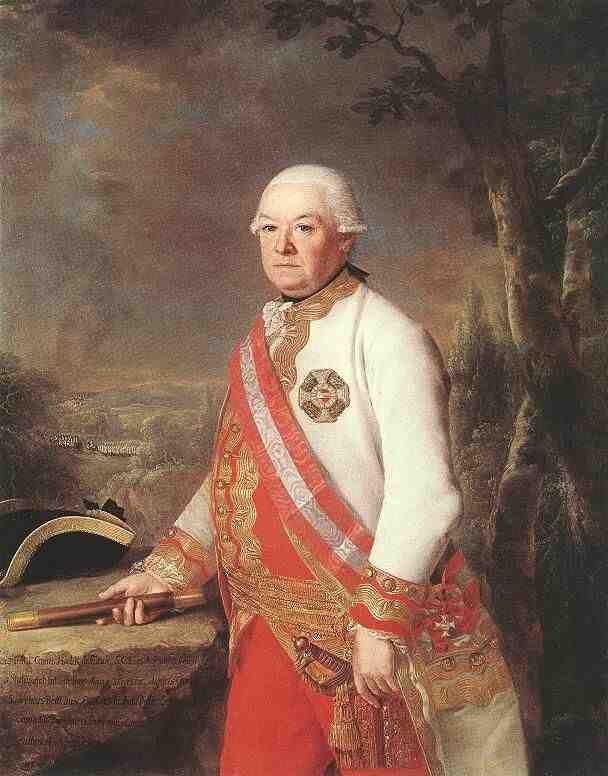
On 7 February 1788, two days before Austria declared war on the Ottoman Porte, Emperor Joseph II sent the president of the Hofkriegsrat, Field Marshal Count Andreas Hadik, the newly drafted “Vorschrift zum Gebrauche der Windbüchse”, the regulation for the use of the air rifle (its handling rules are in Volume 5), with a covering letter that set out how the first thousand rifles were to be used.1
The plan was not to form air-rifle units. It was to spread the rifles thinly through the line infantry:1
- The field army would have 46 fusilier battalions. 34 of them would each get 22 air rifles, and the other 12 would get 21: exactly 1,000.
- The 200 already at Peterwardein would go first to the 30 battalions already on the frontier, seven each to twenty battalions and six each to ten, to train on.
- Each regiment was to send one officer and two capable NCOs to Peterwardein to be taught by a General Staff captain named Mack, then go back to their battalions with the rifles and teach the men chosen to carry them.
- Each battalion’s detachment was to be one officer, two corporals and 19 or 20 privates, nine or ten men to a corporal. The privates were to be paid as Gefreite (lance-corporals), “because the handling of their rifle demands particular skill and their duty extends further than the usual duty in the regiments”.
- In action the detachment was to stand behind the centre of the battalion, beside the Jäger already posted there.
The arrangement tells a reader what the army thought the rifle was for. It was not a weapon for a separate skirmishing corps but a battalion’s reserve of rapid, aimed fire, kept behind the line and used, as Haller put it a century later, “immediately before the bayonet attack, in the defence of entrenchments and so on”.1
Beeman, translating from Hummelberger and Scharer’s study, adds two remarks attributed to the emperor that Haller does not print. The first is that the air guns must be “deployed correctly and maintained at the best standard. It is necessary that the simple soldier, whose intelligence is generally quite limited, is given this training immediately upon receiving the gun – and that the training is delivered in individual parts and not too much at once.” The second, after the first campaign, is a complaint that “we appear to have a miserable bunch of riflemen, none of who is suitable for service with the air rifles.”2 Both are English renderings at second hand of a German study that was not available for this dive; they are given as Beeman gives them, and the original wording was not checked.
2.2 The rifles go to Peterwardein
War was declared on 9 February 1788, and the arsenal was told to send everything finished over the winter to Peterwardein and to build “a kind of ammunition cart” that could carry 1,000 filled flasks behind the troops without damage. On 11 April a further 500 rifles left with 1,000 flasks, with five light wagons ready to carry the filled flasks; on 2 May another 200 were embarked. Between 3 October 1787 and 2 May 1788, the arsenal reported, 900 rifles had gone to the frontier fortress, and only 100 remained to complete the thousand.1
A footnote in Haller records two details of the flasks themselves: they were packed in crates valve downward, and Girandoni had replaced the original leather flask valve with a brass one.1 Packing valve-down makes sense once the 1788 regulation is read (Volume 5): each flask carried a spoonful of water whose job was to keep the valve’s leather wet and tight, and a flask stored valve-up would let it dry.
German Wikipedia, drawing on Baker and Currie, gives 500 rifles recorded at the Peterwardein depot on 1 April 1788 and 1,000 at Peterwardein or in use by November 1788; Pappacena, after Baer, dates the declaration of war to 17 November 1788, which conflicts with Haller’s 9 February and is not used here.34
2.3 One campaign, and a third still working
The air rifles went through the 1788 campaign against the Ottomans on the Danube. When the troops went into winter quarters at the end of 1788, Haller says, most of them left their air rifles at Temesvár. At the start of the 1789 campaign, 49 fusilier battalions each carried 15.1
The first report on how they had done in the field came from the Director of Artillery, Feldzeugmeister Count Wenzel Colloredo, writing from Weisskirchen. Haller dates it 21 June 1789 and quotes it:1
“Dieses Gewehr ist von einer solchen Beschaffenheit, dass, wenn es, wie dies in der vorjährigen Campagne geschah, unter alle Infanterie-Bataillone vertheilt wird, es nicht möglich ist, die Mannschaft unter beständiger Aufsicht zu halten, dieselbe auch nicht erlernt, den wahren Gebrauch zu machen und daher das Gewehr, welches wegen seiner Construction ungleich mehr Aufmerksamkeit als ein Feuergewehr erfordert, in kurzer Zeit so verdorben wird, dass der Mann solches gar nicht mehr benützen kann …”
“This rifle is of such a nature that when it is distributed among all the infantry battalions, as happened in last year’s campaign, it is not possible to keep the men under constant supervision; nor do they learn to make proper use of it; and so the rifle, which because of its construction demands incomparably more attention than a firearm, is in a short time so spoiled that the man can no longer use it at all …”
He went on: when the rifles were handed in, they were found so damaged “that perhaps for a long time not even a third of them could have been used, and the whole winter had to be spent repairing them and putting them back into serviceable order”. His conclusion was that it might be better to bring the air riflemen together “and provide them with their own officers”.1
Beeman, again through Hummelberger and Scharer, dates the same report 21 July 1789 and gives a slightly different English wording (“no more than one third of them were still is in a usable state. We needed the whole winter to repair and replace them”).2 Haller’s date is used here because he quotes the report from the file; the month cannot be checked further.
In July 1789 Hadik, as president of the Hofkriegsrat, put Colloredo’s proposal to the emperor. Haller summarises the submission: the reasons for raising a separate corps of air-rifle shooters deserved attention, because in the hands of well-trained men who looked after it, the air rifle could be used to very good effect “because of the speed with which one can shoot, then because of the advantage that it does not need to be loaded, and that it functions perfectly even in the heaviest rain”.1 Haller does not record the emperor’s answer. Joseph II died on 20 February 1790.
2.4 Leopold II’s special corps
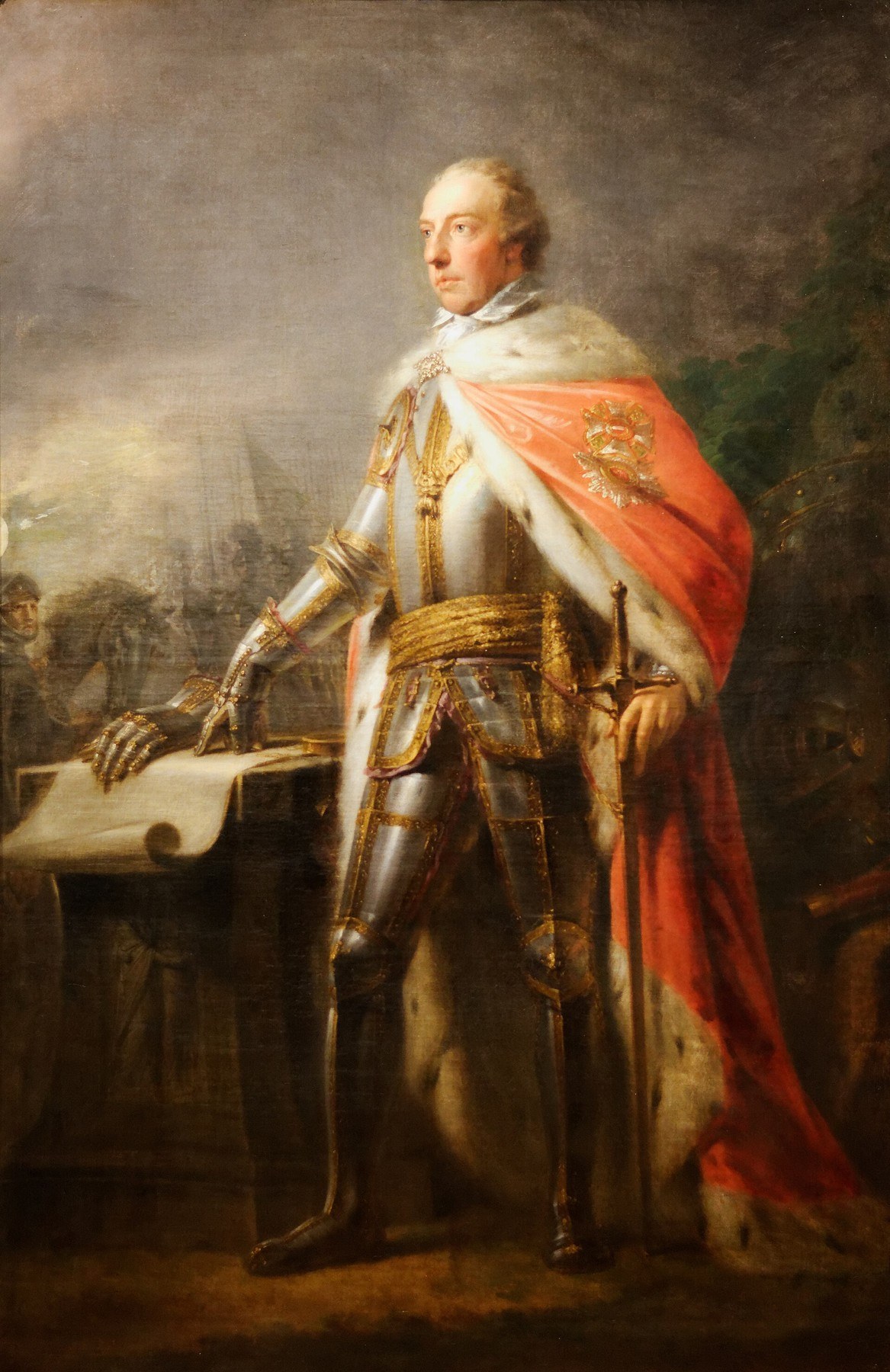
Joseph’s brother Leopold II acted within a month. His order of 14 March 1790, which Haller quotes, is the turning point of the rifle’s career:1
“Ich finde für gut, ein eigenes Corps mit Windbüchsen zu bewaffnen.”
“I think it right to arm a corps of its own with air rifles.”
Every air rifle, whether with the regiments or in the Hungarian arsenals, was to be brought to Vienna with all its equipment, inspected, and repaired. The Tiroler Scharfschützen-Corps, then being raised, was to be armed with them instead of firearms as it grew. Its NCOs were to be the corporals who had supervised the air riflemen in the line battalions. And because “the number of 1,313 such air rifles in stock, as reported by the Hofkriegsrat” was more than enough to equip the corps at full strength, the surplus was to go one each to the NCOs of the Jäger corps. Production was to continue.1
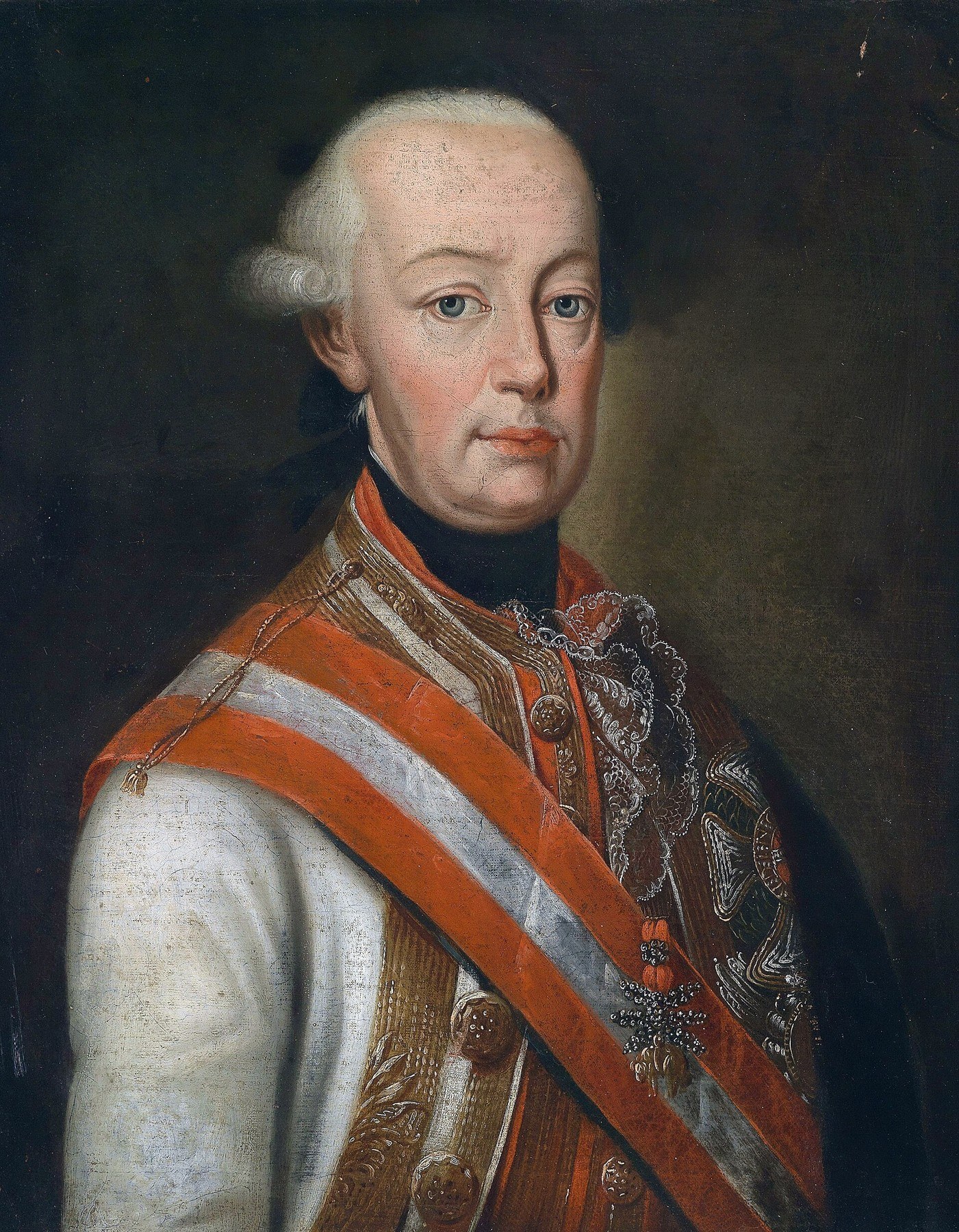
The figure of 1,313 is the only count of the whole stock in a document quoted by any source found. It is the probable origin of the “1,300” in modern references (Volume 1).
Then, Haller says, either the rifles came back from the regiments and arsenals late, or repairing them took so long, that two years passed. When war with France broke out in 1792, the Tyrolean sharpshooters still did not have them.1 German Wikipedia suggests doubts about the corps’ loyalty may also have played a part; no source for that is given in its text and it is not relied on here.3
2.5 The Tyrolean sharpshooters, 1793–1796
In December 1792, Hauptmann Fenner von Fennersberg, deputy commander of the corps, petitioned the Hofkriegsrat that at least half of his men be armed with air rifles. The emperor (now Francis II, Leopold having died in March 1792) approved it, with a condition that says a good deal about how the army regarded the weapon: after the campaign, every man who handed in his rifle in good order was to receive a ducat.1
Early in 1793, 600 air rifles, with the necessary gunsmiths and transport, were sent to the corps.1 It then fought from 1793 to 1796 in the Austrian Netherlands, on the Lower Rhine and finally on the Upper Rhine, and “the many actions in which this corps took part … and the numerous losses which it suffered” explain why, in the first half of 1796, only 141 air rifles remained with it. The army command was told to have the corps store the rest of its air rifles carefully or hand them over to the artillery.1
German Wikipedia adds, from Baker and Currie, a report of 1804 that of 500 issued, 362 were lost, many of them in the capitulations of Königstein (1792), Maastricht (1794) and Landrecies (1794).3 The figure is plausible against Haller’s 600 issued and 141 left, but it is known here only at third hand.
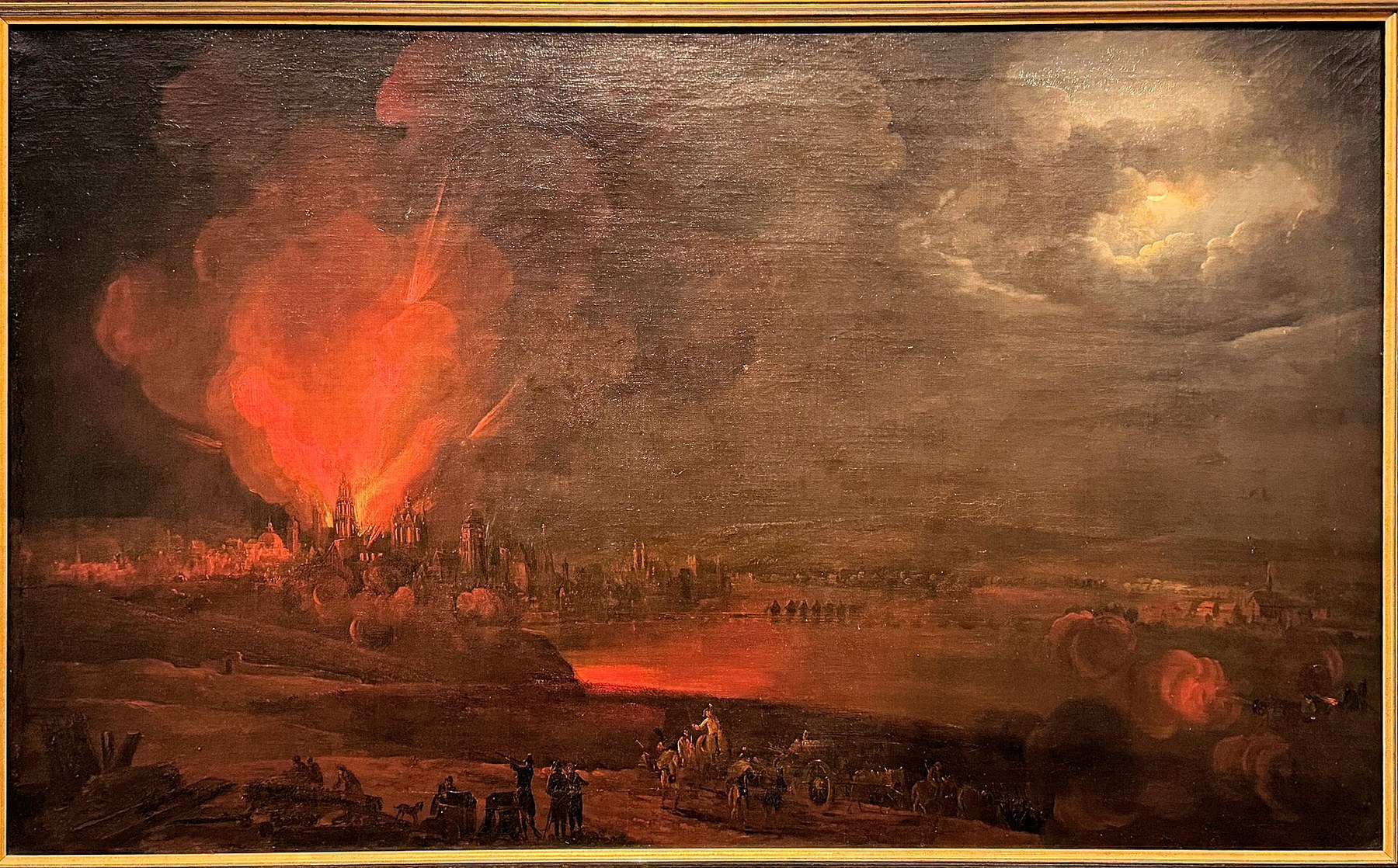
Two further episodes in Haller’s account are seldom repeated:
- Mainz, 1793. A letter from Feldmarschall-Leutnant Wartensleben of 3 May 1793 on the military situation at the fortress of Mainz says he had “seen with his own eyes” that the French were also using air rifles.1 Haller does not say whose rifles, or whether they were captured Austrian ones.
- Trento, 1796. In the same year, Feldzeugmeister Alvinczi asked for 30 Girandoni air rifles with their equipment to be sent to him at Trient (Trento), “because he promised himself substantial service from this weapon for the surprise of the enemy’s outposts at night”.1 Haller does not say whether they were sent.
The Trento request matters for the Napoleon legend (below). In the autumn of 1796 Alvinczi commanded the Austrian army sent to relieve Mantua, and his opponent in Italy was General Bonaparte.
2.6 Withdrawal: 1801, and a last request in 1809
At the great reduction of the army in 1801, the air rifles still with the troops were handed in to the Vienna arsenal. The total deposited there came to 1,091.1
Pappacena, following Baer, gives a more precise date for the Tyrolean corps: on 20 January 1801, Francis II granted Colonel Fenner von Fenneberg’s request to replace the 101 air rifles still in use with the same number of Jäger-Stutzen Model 1795 flintlocks. The essay says Francis had little confidence in a weapon that needed great care in maintenance and use, and that required its shooters to be paid more.4
After 1801, Haller writes, the air rifle “found no particular use in the Austrian army”. In 1809, however, the fortress command at Olmütz (Olomouc, in Moravia) asked for the rifles lying in the arsenal to be sent to it, to use if it came to defending the fortress’s casemates (“bei einer eventuellen Vertheidigung des Souterrains”).1 Haller does not say whether they went. “From this time on,” he concludes, “the air rifles disappear from the ranks of Austrian weapons.”1
Two later events are reported but not documented in anything read here. Pappacena says the stored rifles lay at Komorn in Hungary while the French advanced, and were later moved to the Vienna artillery depot, in a year printed as 1906 (probably 1806).4 Christie’s and German Wikipedia say the rifles were issued for the last time in the revolution of 1848–49 and then mostly scrapped.53 Neither cites a document, and neither could be checked.
2.7 When did service end? Six answers
Readers meet six different end dates for this rifle, sometimes in the same article. They come from different events being counted as the “end”.
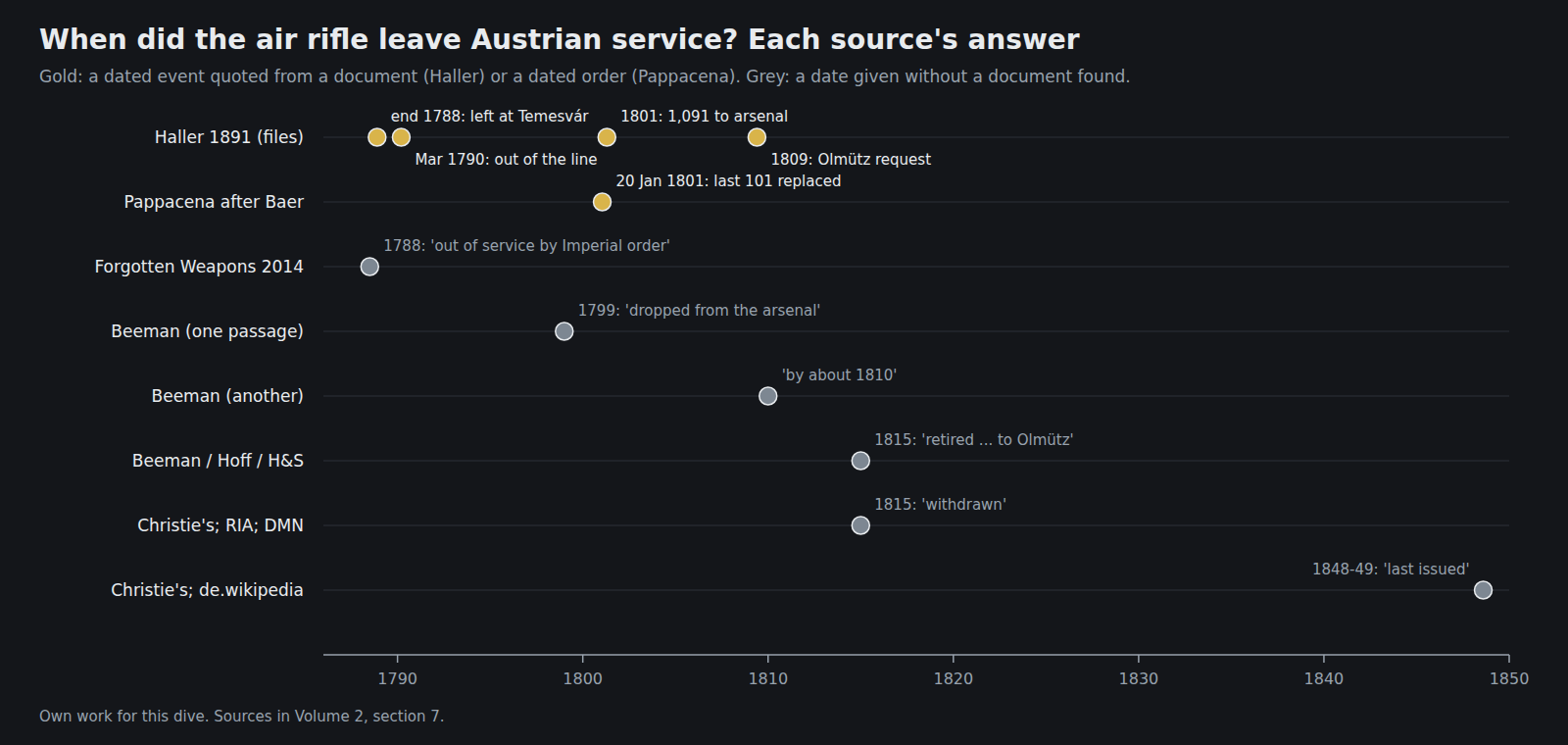
Table 1 — When did service end? Six answers
| End date | What it marks | Source |
|---|---|---|
| End of 1788 | Rifles left in winter quarters; “taken out of service by Imperial order in 1788” | Haller (Temesvár); Forgotten Weapons16 |
| March 1790 | Withdrawn from the line battalions for a special corps | Haller, quoting Leopold II1 |
| 1799 | ”dropped from the Austrian Army arsenal” | Beeman (in one passage)2 |
| 20 January 1801 | Tyrolean corps’ last 101 replaced by M1795 Stutzen | Pappacena after Baer4 |
| 1801 | 1,091 deposited in the Vienna arsenal at the army reduction | Haller1 |
| 1809 | Olmütz asks for them; “disappear” thereafter | Haller1 |
| ”about 1810" | "eventual demise … by about 1810” | Beeman (another passage)2 |
| 1815 | ”retired from service to Olmütz in Bohemia in 1815”; “Withdrawn from service in 1815” | Beeman citing Hoff and Hummelberger and Scharer; Christie’s; Rock Island Auction; Defense Media Network257 |
| 1848–49 | Last issued | Christie’s; German Wikipedia53 |
The 1815 date is the most often repeated and the least supported by anything read here. Beeman’s version, “retired from service to Olmütz in Bohemia in 1815”, has the right fortress but the wrong province (Olmütz is in Moravia) and the year of the Congress of Vienna rather than the year of the documented request. One possibility is that 1815 marks the end of the Napoleonic wars, after which the stored rifles were formally written off; another is a conflation with the 1809 Olmütz request. Neither can be confirmed without Hummelberger and Scharer. The documented service life is 1788 to 1801, with a shadow life in store until at least 1809.
2.8 Legend 1: the silent rifle
The rifle is often called silent. It was not, and its own users knew it.
- Haller, in 1891, wrote that it fired “without any smoke or report” (“ohne dass hiebei eine Rauch- oder Knallentwicklung stattfand”).1 He was describing a weapon he had not heard fired.
- The army’s case for it in July 1789 rested on speed of fire, no loading and working in rain. Silence is not among the reasons Haller summarises.1
- In August 1805, on the Jefferson River, Meriwether Lewis fired his air gun “several times in order that the Man … who we suppose is lost might hear the report”, as Private Whitehouse recorded it (Volume 3).8 An air gun fired as a signal to a man out of sight was loud enough to be worth trying.
- Beeman, who fired one of Ernest Cowan’s museum copies fully charged, wrote that “the discharge sound is quite audible, though by no means as loud as a similar large bore flintlock firearm”.2 Forgotten Weapons says the rifles “were rumored to be silent, but actually had a loud report (although quieter than gunpowder firearms)”.6
What the rifle did lack was smoke and flash, and that is the real advantage the 1789 submission and later writers point to: a shooter firing from cover was hard to locate. “Quieter than a musket and without smoke” is supportable. “Silent” is not.
2.9 Legend 2: Napoleon’s death sentence
The most repeated story is that Napoleon, or the French, ordered any soldier found with an air rifle to be shot or hanged as an assassin rather than treated as a prisoner. Fred Baer’s 1955 article was titled “The Gun That Scared Napoleon”, and his 1973 article “Napoleon Was Not Afraid of It”.25
The positions, as found:
- Beeman calls it a myth: the story was told “as the ‘eye witness’ war experience of French General Mortier” and “has now been quite thoroughly refuted (Baer, 1973)”, according to the Danish arms historian Arne Hoff “and others”. He suggests it grew from towns that banned air guns, and adds, without a source, a story that one town had an air-gun maker blinded.2
- German Wikipedia says, citing two secondary books (Middleton’s guide to man-powered projectiles and Prenderghast’s history of repeating weapons), that “French reports” attest the rifle’s effectiveness, that the French regarded the absent report as treacherous, and that they are said to have executed captured Austrians found with it.3
No French order, report or account naming the rifle was found for this dive, and the primary source for General Mortier’s story was not located. The legend is unproven; Baer’s 1973 title shows that its best-known modern historian came to doubt it, and that is as far as the evidence read here goes.
2.10 Legend 3: “never used against Napoleon”
The opposite claim is just as common. Beeman wrote that “apparently there never was any incident of the air rifles being used against Napoleon’s troops” and that “contrary to many accounts, they never saw service against any of Napoleon’s troops”.2 Defense Media Network says the rifle served against the Turks “but apparently never in Austria’s Napoleonic wars”.7
Haller’s documents do not support so flat a denial, and do not refute it either:
- The rifles fought the armies of revolutionary France from 1793 to 1796 in the Netherlands and on the Rhine, with the Tyrolean corps.1 Those were not Napoleon’s troops in the sense of being under his command; they were French troops of the years before his rise.
- In 1796, Alvinczi, then facing General Bonaparte in northern Italy, asked for 30 air rifles for night raids on enemy outposts.1 Whether he received them, and whether they were used at Arcole or Rivoli, is not recorded in any source found.
- After 1801 the rifles were in store; the only later military request found is Olmütz in 1809, the year Napoleon took Vienna, for a siege that did not come.1
The accurate statement is that the rifles fought France in 1793–96, that a commander facing Bonaparte asked for some in 1796, and that no account of their use against forces under Napoleon’s command has been found.
2.11 Legend 4: “the first repeating military rifle”
The Vienna museum’s label calls the rifle “das erste Repetiergewehr der österreichischen Armee”, the first repeating rifle of the Austrian army, which is accurate.9 Popular writing often makes it the first repeating rifle in any army, or the first rifle “widely issued” with a magazine. Those wider claims depend on definitions (Girardoni’s own repeating flintlock came first and was ordered in 1779, and earlier repeating flintlocks were made in small numbers by other gunmakers), and they are not pursued here. Baker and Currie’s observation, as Beeman reports it, is narrower and more useful: no conventional military shoulder arm matched its firepower until the Spencer repeating rifle of the American Civil War.2 The next generation of repeaters, sixty years on and powered by powder, is covered in the hub’s dives on the Volcanic repeating arms of the 1850s and the LeMat revolver.
2.12 Why it failed, in the army’s own words
The documents give the reasons plainly, and they are about people and logistics, not the design’s power:
- Too delicate for line infantry. Colloredo, June 1789: the rifle “demands incomparably more attention than a firearm” and was ruined in a short time by men who could not be supervised.1
- A third or fewer usable after one campaign, and a whole winter’s repairs.1
- Special pay, special NCOs, special gunsmiths. Privates paid as lance-corporals; two corporals and an officer to every twenty men; journeymen from the works sent with the rifles; four wagons of flasks and tools for every 500.1
- The flasks. Three per rifle, a wagon train of filled spares, a pump to two rifles, and an air-compressing machine (Volume 1). When the supply of filled flasks failed, the rifle was a club.
- A ducat to bring it back in order. The army paid men to look after it.1
- Losses. 600 issued to the Tyroleans in 1793; 141 left in 1796.1
Its strengths were also stated by the army: speed of fire, no loading in the field, and indifference to rain.1 The tension between those lists is the whole story of the weapon. The next two volumes cross the Atlantic, where one of these rifles, or something very like it, became the most famous air gun in American history.
References
Footnotes
-
August Haller, “Die österreichische Militär-Repetir-Windbüchse des vorigen Jahrhunderts. Nach Originalacten zusammengestellt”, Organ der Militärwissenschaftlichen Vereine, vol. 42 (Vienna, 1891), pp. 34–45. Internet Archive item bub_gb_XF0-AQAAMAAJ, https://archive.org/details/bub_gb_XF0-AQAAMAAJ . Accessed 2026-10-18. Translations are this dive’s. ↩ ↩2 ↩3 ↩4 ↩5 ↩6 ↩7 ↩8 ↩9 ↩10 ↩11 ↩12 ↩13 ↩14 ↩15 ↩16 ↩17 ↩18 ↩19 ↩20 ↩21 ↩22 ↩23 ↩24 ↩25 ↩26 ↩27 ↩28 ↩29 ↩30 ↩31 ↩32 ↩33 ↩34 ↩35 ↩36
-
Robert D. Beeman, “Austrian Large Bore Airguns: Girandoni style air rifles and pistols” (updated 17 July 2007) and “New Evidence on the Lewis and Clark Air Rifle” (updated 15 May 2008), formerly at beemans.net, read through the Internet Archive: https://web.archive.org/web/2022/http://www.beemans.net/Austrian%20airguns.htm and https://web.archive.org/web/2022/http://www.beemans.net/lewis-assault-rifle.htm . Accessed 2026-10-18. Beeman’s quotations of the emperor and of Colloredo are his English renderings of Walter Hummelberger and Leo Scharer, Zeitschrift für historische Waffenkunde (1964–65), which was not read. ↩ ↩2 ↩3 ↩4 ↩5 ↩6 ↩7 ↩8 ↩9 ↩10
-
“Girandoni-Windbüchse”, German Wikipedia, https://de.wikipedia.org/wiki/Girandoni-Windb%C3%BCchse , citing Baker and Currie, The Austrian Army Repeating Air Rifle (2nd ed., 2006), Middleton (2005) and Prenderghast (2018). Accessed 2026-10-18. ↩ ↩2 ↩3 ↩4 ↩5 ↩6
-
Roberto Pappacena, “I benemeriti di Cortina d’Ampezzo: 1) Bartolomeo Gilardoni (1744–1799)”, after F. H. Baer; Internet Archive capture of 10 May 2006, https://web.archive.org/web/20060510055333/http://staff.sunrise.it/polovalboite/giacomel/benemeriti1.htm . Accessed 2026-10-18. ↩ ↩2 ↩3 ↩4
-
Christie’s, “A Rare 50-Bore Austrian Breech-Loading Military Repeating Air Rifle On The Girandoni System, Circa 1780–90”, lot 129, https://www.christies.com.cn/lot/lot-842927 . Accessed 2026-10-18. ↩ ↩2 ↩3 ↩4
-
Ian McCollum, “Girardoni Air Rifle”, Forgotten Weapons, 2014, https://www.forgottenweapons.com/girardoni-air-rifle/ . Accessed 2026-10-18. ↩ ↩2
-
Mike Markowitz, “The Girandoni Air Rifle: A weapon ahead of its time?”, Defense Media Network, 14 May 2013, https://www.defensemedianetwork.com/stories/the-girandoni-air-rifle/ ; Joe Engesser, “The Girardoni Air Rifle”, Rock Island Auction Company, 21 November 2023, https://www.rockislandauction.com/riac-blog/girardoni-air-rifle . Both accessed 2026-10-18. ↩ ↩2
-
Joseph Whitehouse, journal (fair copy), 7 August 1805, in The Journals of the Lewis and Clark Expedition, ed. Gary E. Moulton (University of Nebraska Press), online at https://lewisandclarkjournals.unl.edu/item/lc.jrn.1805-08-07 . Accessed 2026-10-18. ↩
-
Exhibit label, Heeresgeschichtliches Museum, Vienna, as photographed by M11rtinb, 2 May 2018, “Girandoni air rifle reservoir 2.jpg”, Wikimedia Commons, https://commons.wikimedia.org/wiki/File:Girandoni_air_rifle_reservoir_2.jpg . Accessed 2026-10-18. ↩

Comments (0)