Girardoni Air Rifle · Volume 1
Girardoni, the Emperor and the Secret Contract, 1779–1787
A clockmaker from Ampezzo, the air gun before him, Joseph II's letter of July 1779, a workshop sworn to secrecy, what the rifles cost, how slowly they came, and what a set of five hundred weighed when it was packed for war

1.1 The rifle in one paragraph
The Girardoni rifle is a muzzle-heavy, walnut-stocked rifle of about 1.2 metres whose butt is not wood at all but a tapering iron flask of compressed air, screwed onto the back of a cast-brass lock housing. A tube alongside the barrel holds twenty lead balls. The soldier tips the muzzle up, presses a sliding bar across the breech with his left thumb, lets it spring back with a ball in it, cocks the hammer and fires. The hammer does not strike a flint: it knocks open a valve in the neck of the flask for an instant, and the burst of air drives the ball. A man could fire twenty aimed shots in about a minute, in the rain, without smoke. The Austrian army bought some 1,300 to 1,500 of them between 1780 and 1792, took them to war against the Ottoman Empire in 1788, found them too delicate for line infantry, gave them to Tyrolean sharpshooters, lost most of them in the Netherlands and on the Rhine, and put the survivors in store in 1801. Volume 2 tells the service story; Volumes 5 and 6 explain the mechanism and the arguments about its power. The man, the contract and the making are the subject here.
1.2 The sources, and why the dates disagree
Almost every popular account of this rifle descends from four or five works, and they do not agree with each other on basic dates. The dive treats them in this order of weight:
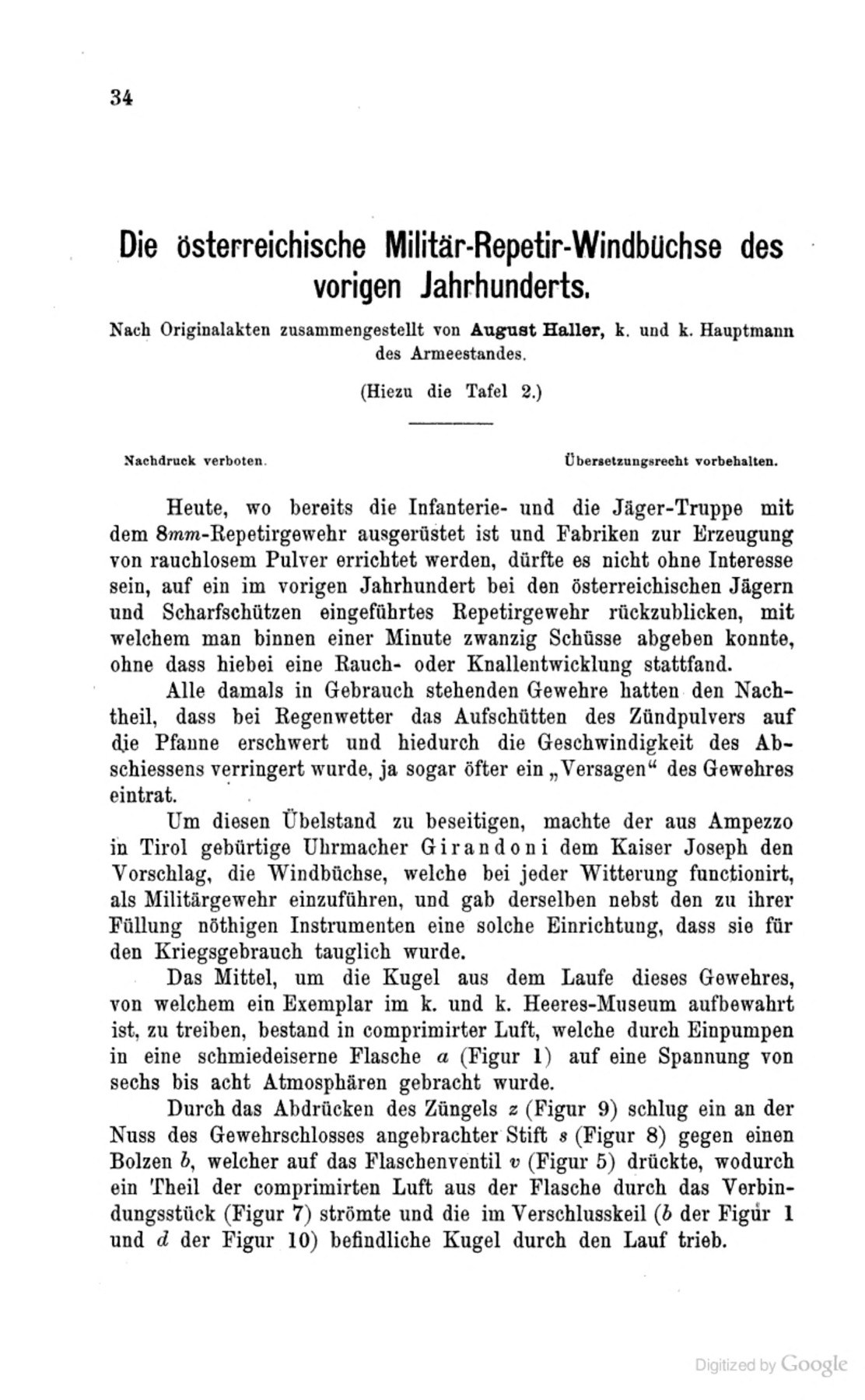
- August Haller, 1891. A retired Austrian captain, Haller published a twelve-page history “compiled from the original files” in the journal of the Vienna military-science societies, quoting the emperor’s letters and the Hofkriegsrat’s orders at length and printing the army’s 1788 handling regulation in full.1 It is the earliest scholarly account found, it quotes its documents, and it is in the public domain and readable in full. Where Haller gives a date or a number from a document, this dive prefers it.
- Walter Hummelberger and Leo Scharer, 1964–65. A two-part study in the Zeitschrift für historische Waffenkunde that later writers (Baer, Hoff, Beeman) rely on for the production story.2 It was not available for this dive. Everything attributed to it here is attributed through the writer who quotes it.
- Fred Baer, 1955 and 1973, Arne Hoff, 1977, and Geoffrey Baker and Colin Currie, whose privately published The Construction and Operation of the Air Gun, Vol. 1: The Austrian Army Repeating Air Rifle (2002; second edition 2006) is the standard technical reference.3 None of these was read directly; they are cited through Beeman, Christie’s and others, and named as such.
- Robert D. Beeman’s web chapters, written 1999–2008 for his collection’s site, which survive only in the Internet Archive.4 They are the richest English source and the one most quoted online, and they contradict themselves: the same page gives the end of the rifle’s service as 1799, 1801 and 1815.
- Popular articles and auction catalogues (American Rifleman, Defense Media Network, Forgotten Weapons, Rock Island Auction, Christie’s), which mostly repeat 3 and 4, sometimes with new errors.
The practical consequence is that a reader who meets a confident date for this rifle should ask which of these it came from. The tables in this volume and the next give each figure with its source, side by side, and never average them.
1.3 The air gun before Girardoni
Girardoni did not invent the air gun, the butt reservoir or even the idea of an air repeater. By 1779 compressed-air guns had been made in Europe for two centuries, mostly for hunting and for the cabinets of princes. The hub’s Daisy dive explains the three ways of storing air in a gun (a spring and piston, a pre-charged reservoir, or a gas cartridge) and why a pre-charged reservoir is the powerful one (Daisy, Volume 5). The reservoir is what matters here, and by the eighteenth century it took two common forms.
The first was a ball reservoir: a copper or iron sphere screwed under the lock, pumped up separately and carried as a spare. The second was the butt reservoir, in which the stock itself, or a flask shaped like one, held the air.
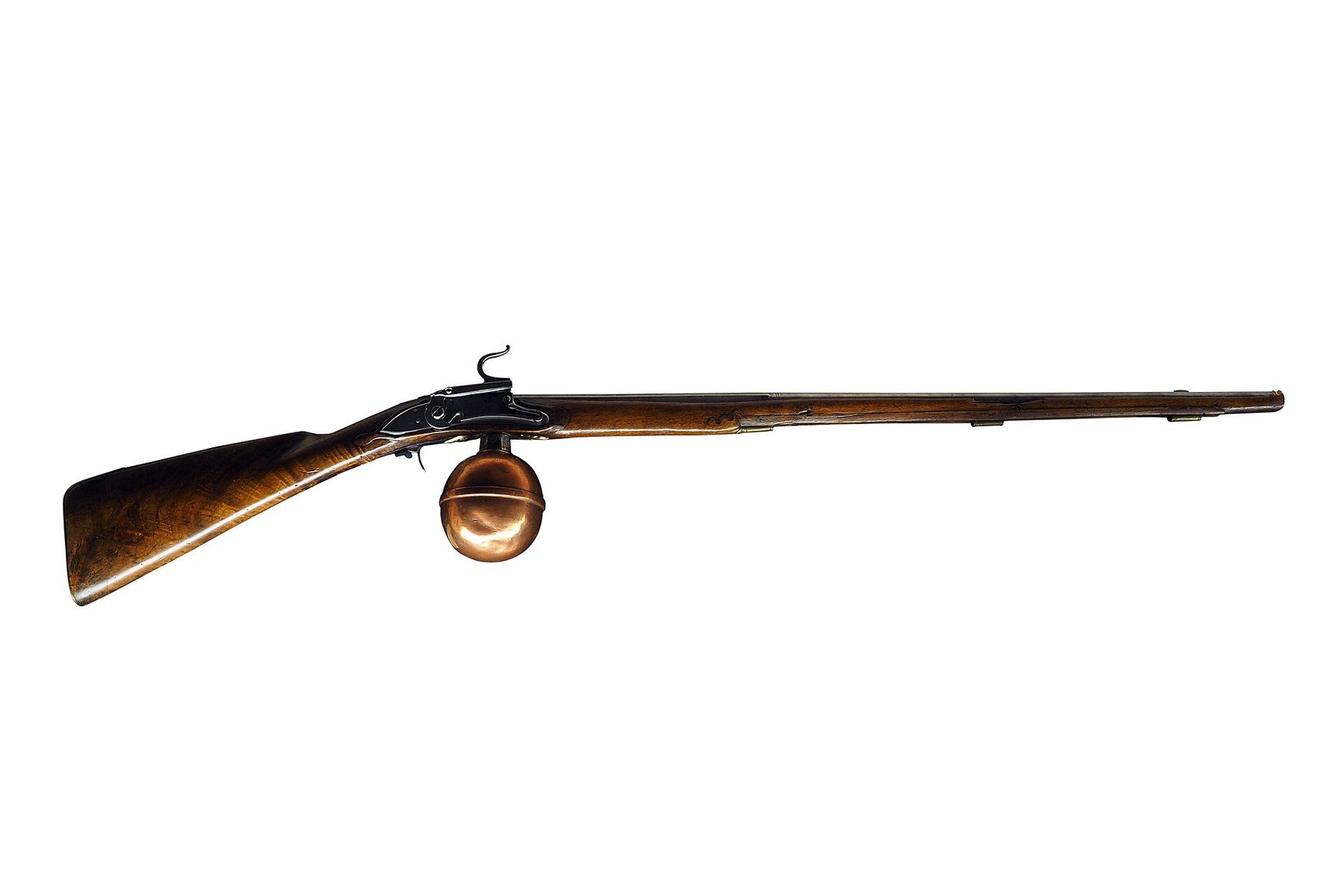
Butt-reservoir guns were being made in German lands well before Girardoni. The Swedish Royal Armoury (Livrustkammaren) holds one signed “F-I-BOSLER // DARMSTATT” and dated to about 1750, catalogued as an air gun “with an air container in the form of a stock”, with a curved brass lock housing threaded in front for the barrel and behind for the stock-flask.5 Beeman records a single-shot air rifle by C. Heiberger, a Viennese Luftbüchsenmacher (air-gun maker), of about 1750, whose cosmetic styling resembles Girardoni’s.4 What Girardoni added was not the reservoir but three things together: a reservoir strong enough and a lock powerful enough to drive a heavy ball hard, a fast and reliable way of feeding balls from a magazine, and a production system that could make the result by the hundred for an army. Volume 5 describes the mechanism in detail.
1.4 Bartolomeo Girardoni
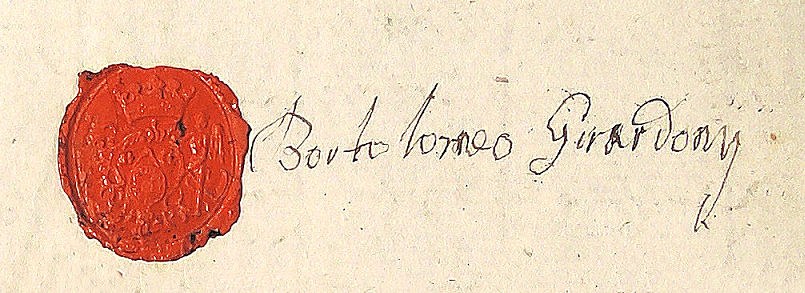
His name is spelled at least four ways. The museum label in Vienna and most German writing use Girandoni. Italian sources from his home valley write Gilardoni.6 A seal and signature photographed and placed on Wikimedia Commons in 2021, said by its file name to date from 1799, read “Bortolomeo Girardony”.7 English writing since the 1990s has settled mostly on Girardoni, the form this dive uses except in quotations; Beeman, the Army Heritage Center and the American Rifleman write Girandoni. None is wrong in the sense of being invented, and searching any one of them finds a different part of the literature.
His origin is not in doubt. Haller, working from the Vienna files, calls him a clockmaker born at Ampezzo in Tyrol (“der aus Ampezzo in Tirol gebürtige Uhrmacher Girandoni”).1 Ampezzo, the valley of Cortina, was then a Tyrolean (and so Habsburg) district, Ladin-speaking, and remained Austrian until 1918. A local-history essay from Cortina, by Roberto Pappacena and explicitly summarising Baer’s research, gives his birth as 30 May 1744 and his death at Penzing, then a village outside Vienna, on 21 March 1799.6 Christie’s, describing a rifle at auction, gives him as “recorded 1744–1799”.8 Beeman gives 1744–1799 and the same day of death, and says he died “by consumption”, citing Baer.4 One popular article gives his birth as 1729; no source for that year was found and it conflicts with every other account.9
His trade was clockmaking, and that matters. A clockmaker in the 1770s was the nearest thing to a precision mechanic: a man used to turning small arbors, cutting fine threads, fitting springs and making many identical small parts. A 1786 Viennese account quoted in the German Wikipedia article (but not checked against the original for this dive) says he made pocket watches in his spare hours, “where never one is like another”, and a wooden clock for Prince Karl Liechtenstein costing 100 ducats.10 A further claim, made without a source in the English Wikipedia article, that he had lost his left hand in a gun accident and wore an iron hand, could not be confirmed anywhere and is not relied on here.
1.5 The repeating flintlock that came first
Before the air rifle, Girardoni designed a repeating flintlock. Pappacena, following Baer, describes it from a drawing (no example survives): a short, deeply rifled Stutzen with two iron cylinders fixed at the rear of the barrel, one holding twelve round iron balls and the other powder for twelve charges and their priming. A bar moved across the breech had two cavities: pushed one way it took a charge of powder into the chamber, pushed back it brought a ball down over the powder. The essay says plainly that the gun was never used in battle.6
The same transverse bar, minus the powder, is the heart of the air rifle. The emperor’s letter of July 1779, below, describes two samples, one “in einem Feuerrohr” and one “in einer Windbüchse”, one a firearm and one an air gun, and orders a thousand of the first and five hundred of the second.1 The flintlock was dropped: the German Wikipedia account, again citing Baker and Currie, says 111 repeating flintlocks were made by 1784 before work on them was stopped, and Pappacena gives the same 111.106 A self-feeding powder magazine sitting beside a flintlock’s pan is an obvious fire hazard, and Beeman calls the firearm version “unreliable and unsafe”, though he gives no source for the judgement.4 Whatever the reason, the air gun was the version that went to war.
1.6 July 1779: the emperor’s letter
The decisive document is a letter from Emperor Joseph II, dated 15 July 1779, to the vice-president of the Hofkriegsrat (the court war council), General Count Caramelli. Haller prints it. The key passages, with a translation:1
“Es hat vor einiger Zeit ein gewisser Girandoni mir zwei Muster von Gewehren von seiner Erfindung überbracht, wovon das eine in einem Feuerrohr, das andere aber in einer Windbüchse besteht. Hierüber sind nun bereits auf meinen Befehl in dem Wiener Zeughause verschiedene Versuche angestellt worden, und da Ich aus derselben Erfolg für gut befunden habe, eine gewisse Anzahl dieser Gewehre für Feldjäger verfertigen zu lassen …”
“Some time ago a certain Girandoni brought me two samples of guns of his invention, one of them a firearm and the other an air gun. Various trials of them have already been made at my order in the Vienna arsenal, and as I have found from their success that it is good to have a certain number of these guns made for field riflemen …”
The letter then sets out the terms. Girandoni was to be taken into the emperor’s service for life as his reward. He was to be given a separate workshop, two sworn and trusted journeymen, and all the tools he needed. Barrels, stocks and parts were to be made in his workshop where possible and ordered outside where not. The arsenal was to report what each gun would cost and how long Girandoni and his two journeymen would need to make 1,000 of the firearms and 500 of the air guns “zum vollständigen Gebrauch”, ready for use. And every gun, once made, was to be tested by firing twenty shots in succession (“aus jedem zwanzig Schuss nacheinander”), with Girandoni answerable for the accuracy and quality of his work.1
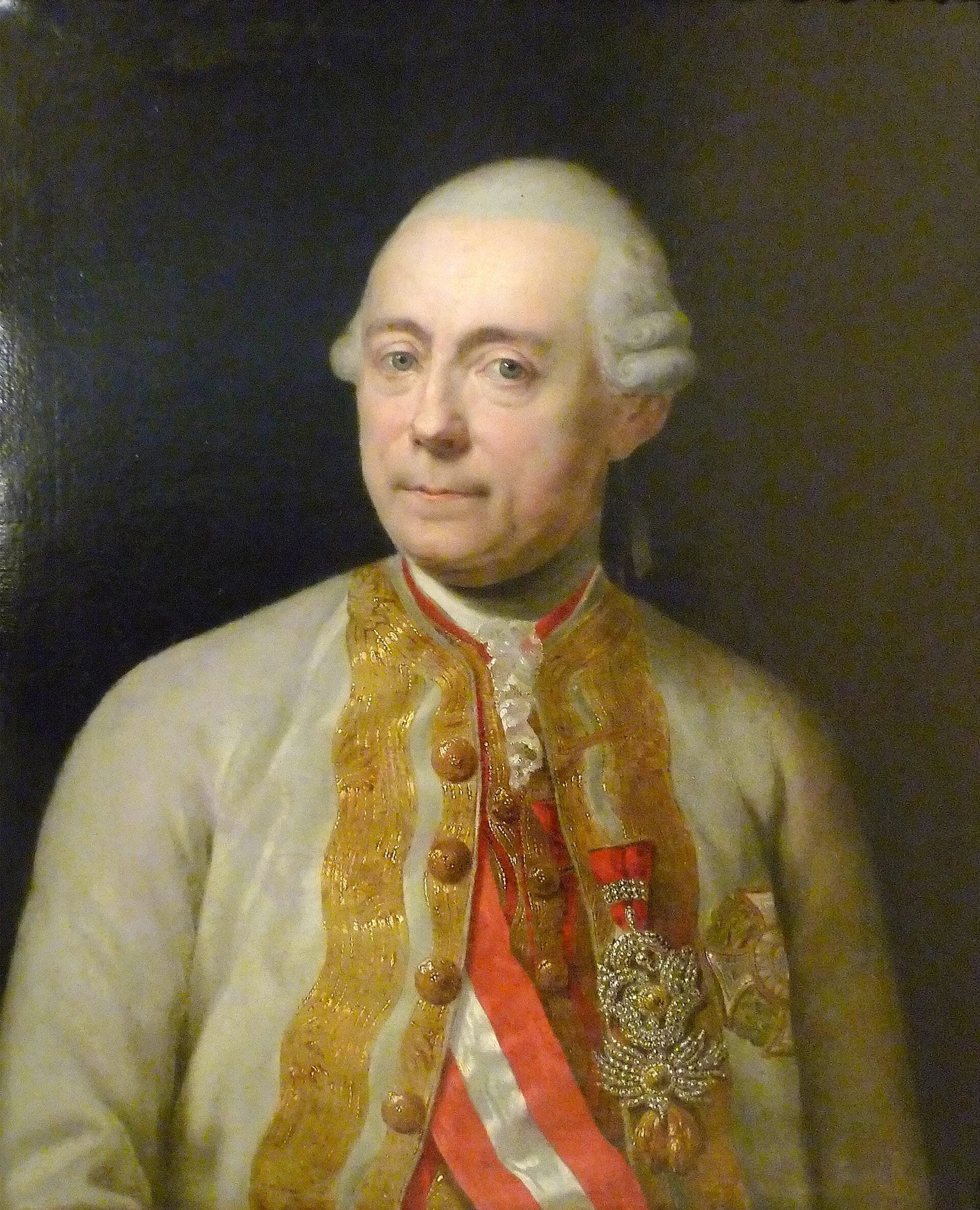
Other accounts put different names on the trials. The German Wikipedia article says Field Marshal Franz Moritz von Lacy saw the design, wrote a favourable report in 1779, was told by the emperor in March 1779 to test it, ran the trials in July, and proposed the 1,000 and 500.10 Pappacena names Major General Johann Albert von Schroeder as the officer ordered to test the guns, and dates the documents to “1 March” and “13 July” of a year printed as 1799, plainly a slip for 1779.6 None of these is inconsistent with Haller’s letter, which mentions only Caramelli and the arsenal, but only Haller’s is quoted from the document.
1.7 A secret, and what it means for the “diverted” rifles
The same letter made the design a state secret:1
“Die Structur und der Mechanismus dieser beiden Gattungen von Gewehren aber muss ein Geheimnis verbleiben, mithin hat Girandoni bei Verlust seines Dienstes kein Gewehr ausserhalb zu verfertigen oder zu verabfolgen, noch viel weniger also seine Erfindung jemanden andern, auch selbst seinen ihm beigegebenen vertrauten Gesellen nicht, ausser was nicht unumgänglich nöthig, mitzutheilen …”
“The structure and mechanism of both kinds of gun must, however, remain a secret; Girandoni is therefore, on pain of losing his post, to make or hand over no gun outside, still less to communicate his invention to anyone else, not even to the trusted journeymen given to him, beyond what is unavoidably necessary …”
This matters later in the dive. Beeman’s case that the rifle carried by Meriwether Lewis in 1803 was a Girardoni rests partly on the idea that Girardoni “was strongly suspected of producing a very small number of military models for civilian sale until the Austrian military officials clamped down on his outside activities”, which Beeman attributes to Baer, and Beeman elsewhere puts the number “reportedly” at up to 200, “but probably a far lower actual number”, without a source.4 The emperor’s letter shows that selling or giving a rifle outside the service was forbidden from the start, on pain of dismissal. That does not prove it never happened, and the Beeman rifle (Volume 4) has no maker’s mark or number where military rifles carry them. It does mean that a private Girardoni in America in 1803 needs an explanation, and that “slipped to private buyers” is a hypothesis, not a documented trade. No document of such a sale was found.
The secrecy also explains a gap that frustrates modern study. Haller found the letters, orders and the handling regulation, but no drawings are described in his account beyond the rifle in the Vienna army museum that his plate illustrates. Beeman reproduces original drawings of the pump and flask held in Vienna, via Hummelberger and Scharer.4 No full set of manufacturing drawings has been published.
1.8 The workshop and its output, 1780–1787
Production was slow from the start. Haller reports that the arsenal’s estimate, once Girandoni had calculated it, was that he and two journeymen would need about twenty years to make the thousand guns, and that he was therefore given a larger workshop and more workers “to shorten this all too respectable period”. He was given a gunmaker and a stocker. A master barrel-smith of Wiener Neustadt took on the barrels and the air flasks. Even so, by 1782 only 59 air rifles were finished.1 Later accounts put the workshop at Penzing, then a village west of Vienna, where Girardoni died.610
In 1784, the order was raised from 500 air rifles to 1,000, and a new contract made Girandoni produce them at his own risk for a fixed purchase price.1 Christie’s catalogue summary, citing Blackmore and Baer, says the same: a factory “set up for the production of 500 rifles by workmen sworn to secrecy”, the order increased to 1,000 in 1784.8
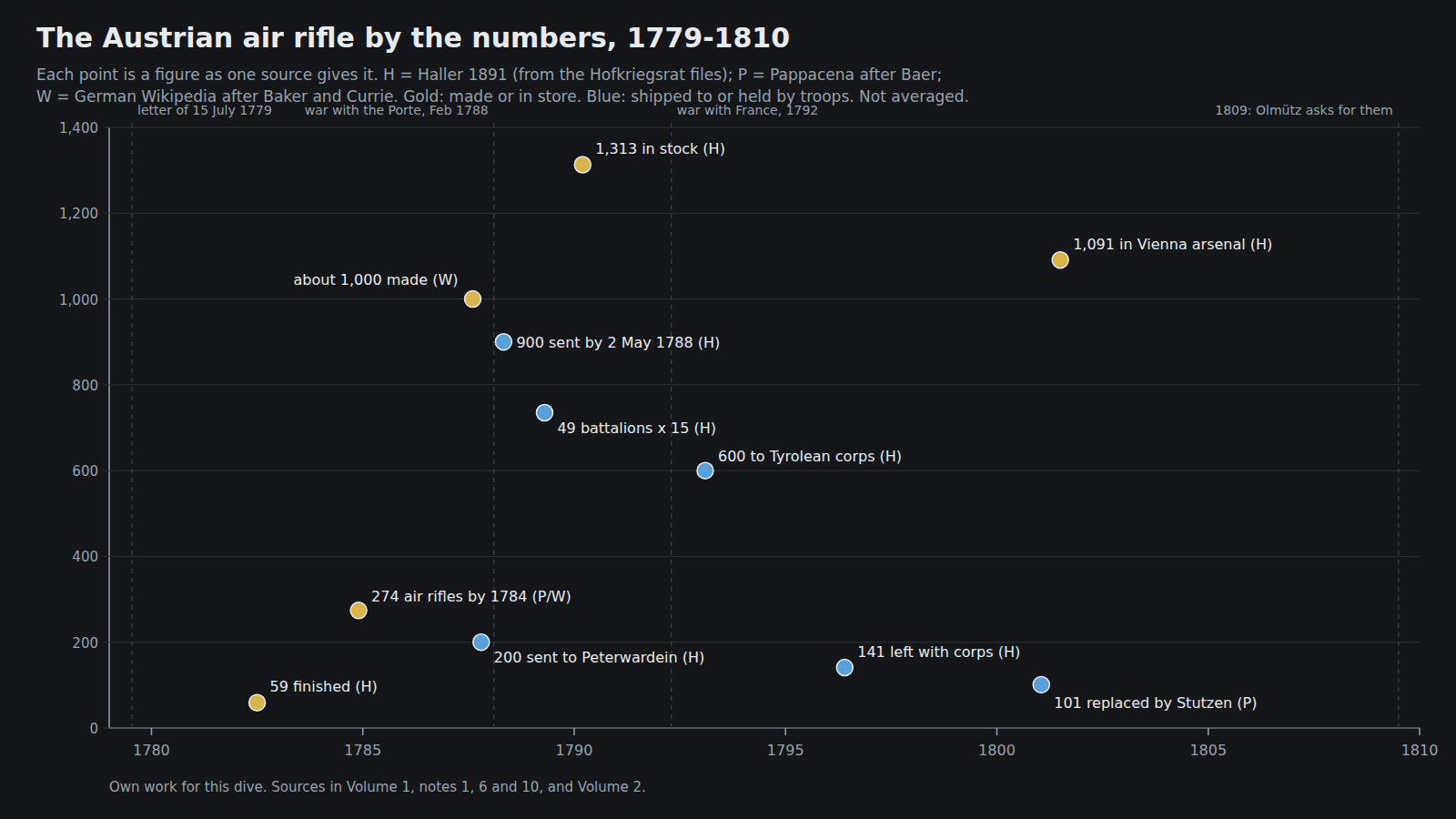
How many were made in each year is reported differently by each source. The table gives each figure with its source; none is an average or an estimate made here.
Table 1 — The workshop and its output, 1780–1787
| Date | Figure | Source |
|---|---|---|
| 1782 | 59 air rifles finished | Haller 1891, from the files1 |
| 1780–1784 | 111 repeating flintlocks and 274 air rifles (“without flasks”, per de.wikipedia) | Pappacena after Baer; German Wikipedia after Baker and Currie610 |
| 1785–1787 | 700 more air rifles | Pappacena; German Wikipedia610 |
| 1787 (outbreak of war) | about 1,000 rifles, but only one flask each | German Wikipedia, after Baker and Currie10 |
| 1788, peak | up to 100 flasks a week | German Wikipedia10 |
| 14 March 1790 | 1,313 air rifles “in stock” | Leopold II’s order, quoted by Haller1 |
| Total | ”about 1500” | Beeman, citing Hoff and Hummelberger and Scharer4 |
| Total | ”More than 1,300” made; “fewer than 25” known today “according to Dr. Beeman” | Rock Island Auction, 202311 |
| After 1799 | 45 more made by other gunsmiths | German Wikipedia, unsourced in its text10 |
The one hard number in the list is Leopold II’s 1,313 of 1790, which he gives as the Hofkriegsrat’s own count of rifles on hand. It is almost certainly the source of the round “1,300” in modern references. “About 1,500” may count rifles made after 1790 (the same order says production was to continue), or may be a round figure; it cannot be checked without Hummelberger and Scharer.
1.9 What a rifle cost
Haller gives the arsenal’s first calculation as 33 gulden for an air rifle, and the 1784 contract prices as 35 gulden for a complete air rifle, 5 gulden for a spare air flask and 3 gulden for a hand pump.1 Those are the prices the state paid Girandoni for delivered items, not production costs. The same 1786 account quoted in German Wikipedia says the guns were “only imperceptibly dearer than ordinary ones”, which, if the quotation is accurate, was optimistic: a complete set of rifle, three flasks and half a share of a pump came to about 47 gulden at the contract prices.10 A comparison with the price of an ordinary infantry musket of the same years would need a source on Austrian musket prices that was not found for this dive.
1.10 Ready for war: the order of September 1787
Russia and the Ottoman Empire went to war in August 1787, and Austria, Russia’s ally, prepared to join. On 5 September 1787 the Hofkriegsrat was instructed to send 200 of Girandoni’s air rifles to the Grenzer-Scharfschützen, the sharpshooters of the Military Frontier, at Peterwardein (Petrovaradin, on the Danube opposite Novi Sad), with 600 flasks, three to each rifle, pumping gear, and two of the most skilled journeymen from the air-rifle works.1
The arsenal asked how many pumps to make: one for every flask, or one for every two rifles? And whether the remaining 800 rifles should also each get three flasks. The emperor’s resolution, as Haller prints it, is the first appearance of the wheeled pump:1
“Da sich Girandoni anheischig gemacht hat, eine Pumpmaschine mit einem Rad zu verfertigen, wodurch die Anfüllung der Flasche mit Luft behender von statten geht, so hat das Hauptzeugamt anzuzeigen, ob eine derlei Radmaschine gemacht und gehörig geprüft worden ist.”
“As Girandoni has undertaken to make a pumping machine with a wheel, by which the filling of the flask with air goes more quickly, the arsenal is to report whether such a wheel machine has been made and properly tested.”
If it was ready, a few wheel machines plus one small hand pump to every five rifles would do; if not, one hand pump to every two rifles was to be made in the meantime. The 800 rifles staying in Vienna, which had no flasks or pumps yet, were to get two flasks each plus a ten per cent reserve, and leather covers were to be made for all 1,000 rifles’ flasks.1 Beeman, through Hummelberger and Scharer, says that in the event only two wheeled pumps were produced; that figure could not be checked.4
On 10 October 1787, the 200 rifles “with all accessories” left Vienna by water for Peterwardein, and Girandoni promised the other 800 with all their equipment by 1 April 1788.1 Volume 2 follows them into the war.
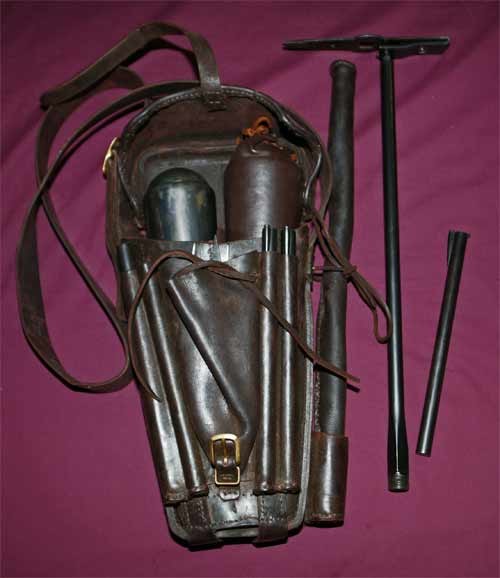
1.11 What five hundred rifles weighed
Haller closes his article with a document that is easy to skip and is more revealing than any of the anecdotes: the arsenal’s “Gewicht- und Bespannungs-Entwurf”, its plan of weights and horse teams “for the air rifles with their accessories to be sent after the army”. It is for a consignment of 500 rifles.1
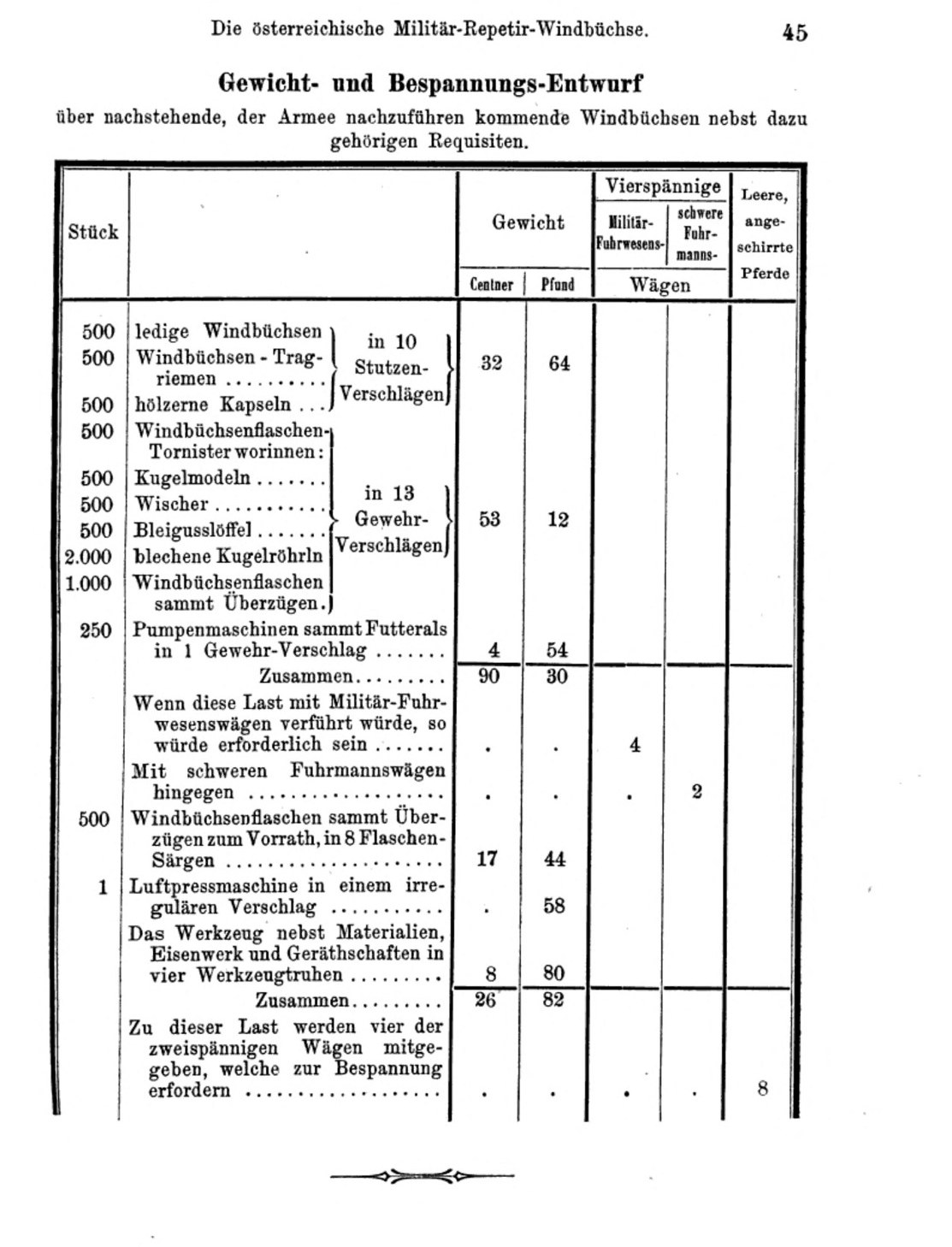
The plan, transcribed from the page:
Table 2 — The plan, transcribed from the page
| Quantity | Item | Packed in | Weight |
|---|---|---|---|
| 500 | air rifles, with 500 slings and 500 wooden caps | 10 rifle crates | 32 Ctr 64 lb |
| 500 | flask knapsacks, holding 500 bullet moulds, 500 wipers, 500 lead ladles, 2,000 tin ball tubes and 1,000 flasks with covers | 13 crates | 53 Ctr 12 lb |
| 250 | pumps with their cases | 1 crate | 4 Ctr 54 lb |
| Subtotal: four four-horse military wagons, or two heavy carter’s wagons | 90 Ctr 30 lb | ||
| 500 | spare flasks with covers | 8 “Flaschen-Särge” | 17 Ctr 44 lb |
| 1 | air-compressing machine (“Luftpressmaschine”) | 1 irregular crate | 58 lb |
| tools, materials, ironwork and equipment | 4 tool chests | 8 Ctr 80 lb | |
| Subtotal: four two-horse wagons, eight horses | 26 Ctr 82 lb |
Several things follow directly from the table.
- Three flasks a rifle. One thousand in the knapsacks and five hundred in reserve, for five hundred rifles: the scale the September 1787 order set.
- Four ball tubes a rifle. Two thousand tin “Kugelröhrln”, each holding twenty balls according to the 1788 regulation (Volume 5), so eighty balls ready-packed for each man on top of the twenty in the rifle.
- One pump to two rifles. Two hundred and fifty pumps for five hundred rifles, the fallback ratio of September 1787, which the regulation also states.
- One machine. A single “air-compressing machine” for the whole consignment, weighing 58 pounds in its crate. Whether this is Girardoni’s wheeled pump is not said.
- The logistics were heavy. The rifles and their equipment filled four army wagons, and the spares, the machine and the gunsmith’s tools four more. The air rifle was a weapon that needed a train.
The weights are in Vienna Centner (hundredweights) of 100 Pfund. Converting them requires the Vienna pound, about 0.56 kg; on that figure the 500 rifles with their slings, caps and crates came to roughly 1,830 kg, about 3.7 kg a rifle including its share of the crates, and the 500 spare flasks with covers and their coffins to roughly 980 kg, about 2 kg each including packing. Neither is the weight of a bare rifle or flask, and they should not be quoted as such; the conversion figure is a standard one, not taken from Haller.
1.12 What the record does not settle
The documents Haller printed settle the order of events from July 1779 to May 1788 and several hard numbers. They leave open:
- The total made. 1,313 on hand in March 1790 is documented; “about 1,500” is not, here.
- Exactly who tested the samples in 1779. Haller’s letter names only Caramelli and the arsenal; Lacy and Schroeder appear in later secondary accounts.
- When the flintlock was abandoned, and why.
- Whether any military rifle left the service privately before 1801. Forbidden in 1779; alleged later; undocumented.
- The birth year 1744 rests on Pappacena (after Baer) and on Christie’s; no baptismal record was seen.
- The 1786 Viennese description and its claims (fifty shots without pumping, a thick board pierced at 500 paces by the first twenty) are known here only from a quotation in German Wikipedia. Volume 6 sets them beside the other performance claims.
Volume 2 takes the rifles from Peterwardein in 1788 to the Vienna arsenal in 1801, and deals with the legends that grew up around them.
References
Footnotes
-
August Haller, “Die österreichische Militär-Repetir-Windbüchse des vorigen Jahrhunderts. Nach Originalacten zusammengestellt”, Organ der Militärwissenschaftlichen Vereine, vol. 42 (Vienna, 1891), pp. 34–45 and plate 2. Internet Archive item bub_gb_XF0-AQAAMAAJ (Google scan), https://archive.org/details/bub_gb_XF0-AQAAMAAJ , pages read as images and text. Accessed 2026-10-18. Translations from the German are this dive’s. ↩ ↩2 ↩3 ↩4 ↩5 ↩6 ↩7 ↩8 ↩9 ↩10 ↩11 ↩12 ↩13 ↩14 ↩15 ↩16
-
Walter Hummelberger and Leo Scharer, “Die österreichische Militär-Repetierwindbüchse und ihr Erfinder Bartholomäus Girandoni”, Zeitschrift für historische Waffenkunde (1964), pp. 81–95, and (1965), pp. 24–53, as cited by Beeman (note 4). Not read for this dive. ↩
-
Geoffrey Baker and Colin Currie, The Construction and Operation of the Air Gun, Vol. 1: The Austrian Army Repeating Air Rifle (London: privately published, 2002; 2nd ed. 2006), as cited by Beeman (note 4) and by the German Wikipedia article (note 10). Not read for this dive. ↩
-
Robert D. Beeman, “Austrian Large Bore Airguns: Girandoni style air rifles and pistols” (updated 17 July 2007) and “New Evidence on the Lewis and Clark Air Rifle” (updated 15 May 2008), formerly at beemans.net; read through the Internet Archive, https://web.archive.org/web/2022/http://www.beemans.net/Austrian%20airguns.htm and https://web.archive.org/web/2022/http://www.beemans.net/lewis-assault-rifle.htm . Accessed 2026-10-18. ↩ ↩2 ↩3 ↩4 ↩5 ↩6 ↩7 ↩8
-
Livrustkammaren (Swedish Royal Armoury), “Luftbössa med luftbehållare i form av kolv, Friedrich Jakob Bosler, Darmstadt ca 1750”, museum description on Wikimedia Commons, https://commons.wikimedia.org/wiki/File:Luftb%C3%B6ssa_med_luftbeh%C3%A5llare_i_form_av_kolv,_Friedrich_Jakob_Bosler,_Darmstadt_ca_1750_-_Livrustkammaren_-_43666.tif . Accessed 2026-10-18. ↩
-
Roberto Pappacena, “I benemeriti di Cortina d’Ampezzo: 1) Bartolomeo Gilardoni (1744–1799) inventore dello schioppo a vento”, summarising F. H. Baer; Internet Archive capture of 10 May 2006, https://web.archive.org/web/20060510055333/http://staff.sunrise.it/polovalboite/giacomel/benemeriti1.htm . Accessed 2026-10-18. The essay contains several evident typographical errors in years (1799 for 1779, 1906 for 1806) and a reservoir pressure of “circa 200 atmosfere” that is not credible; it is used here only where it agrees with, or adds detail not in conflict with, Haller. ↩ ↩2 ↩3 ↩4 ↩5 ↩6 ↩7 ↩8
-
“Bartolomeo Girardoni 1799.jpg”, photograph by Suessmayr, 2021, Wikimedia Commons, https://commons.wikimedia.org/wiki/File:Bartolomeo_Girardoni_1799.jpg . Accessed 2026-10-18. ↩
-
Christie’s, “A Rare 50-Bore Austrian Breech-Loading Military Repeating Air Rifle On The Girandoni System, Circa 1780–90”, lot 129, lot essay citing Howard L. Blackmore, Guns and Rifles of the World, pp. 93–4, and Fred H. Baer, “Napoleon Was Not Afraid of It”, Arms and Armor Annual vol. I, pp. 250–257, https://www.christies.com.cn/lot/lot-842927 . Accessed 2026-10-18. ↩ ↩2
-
Mike Markowitz, “The Girandoni Air Rifle: A weapon ahead of its time?”, Defense Media Network, 14 May 2013, https://www.defensemedianetwork.com/stories/the-girandoni-air-rifle/ . Accessed 2026-10-18. ↩
-
“Girandoni-Windbüchse”, German Wikipedia (rated lesenswert 26 July 2023), https://de.wikipedia.org/wiki/Girandoni-Windb%C3%BCchse , citing Baker and Currie for production figures and quoting Lorenz Hübner’s Physisches Tagebuch für Freunde der Natur (1786) via the Austrian National Library’s ANNO archive. Accessed 2026-10-18. Used as a lead to its sources and, where nothing better exists, as a reported claim; the ANNO page could not be opened (it served an automated-access check). ↩ ↩2 ↩3 ↩4 ↩5 ↩6 ↩7 ↩8 ↩9 ↩10
-
Joe Engesser, “The Girardoni Air Rifle”, Rock Island Auction Company, 21 November 2023, https://www.rockislandauction.com/riac-blog/girardoni-air-rifle . Accessed 2026-10-18. ↩

Comments (0)