SA80 (L85 Family) · Volume 2
The L85A1 and Its Troubles
The XL70 and XL80 rifles, acceptance in 1984, the closure of Enfield, the Gulf War, and fifteen years of reliability problems as Parliament recorded them
2.1 What this volume covers
Volume 1 ended with the 4.85 mm XL64E5 and XL65E4 losing NATO’s ammunition trials in 1980 and a reliability figure, after those trials, of 97 rounds between failures. This volume follows the rifle from that low point through two more prototype series, acceptance into service in 1984 as the L85A1 rifle and L86A1 Light Support Weapon, the sale and closure of the factory that designed it, the Gulf War of 1991, and the long argument in Parliament that ended with Heckler & Koch’s rebuild, which is Volume 3.
The rifle’s reputation is usually told through soldiers’ anecdotes and newspaper headlines. This volume uses three kinds of evidence instead, and keeps them apart. Ministers’ statements in Hansard are the government’s own account. Members’ and peers’ statements in the same record are claims, sometimes well informed and sometimes not, and are labelled as claims. The specialist history is Jonathan Ferguson’s series for Armament Research Services (ARES), written in 2017 with access to the Royal Armouries’ collection and drawing on Steve Raw’s The Last Enfield (2003).12 Two documents that would settle much of the argument, the Defence Committee’s report of about 1993 and the Army’s post-Gulf assessment, were not found online; where they are known only through quotation, this volume says so.
2.2 After the trials: the XL70 series, 1979 to 1981
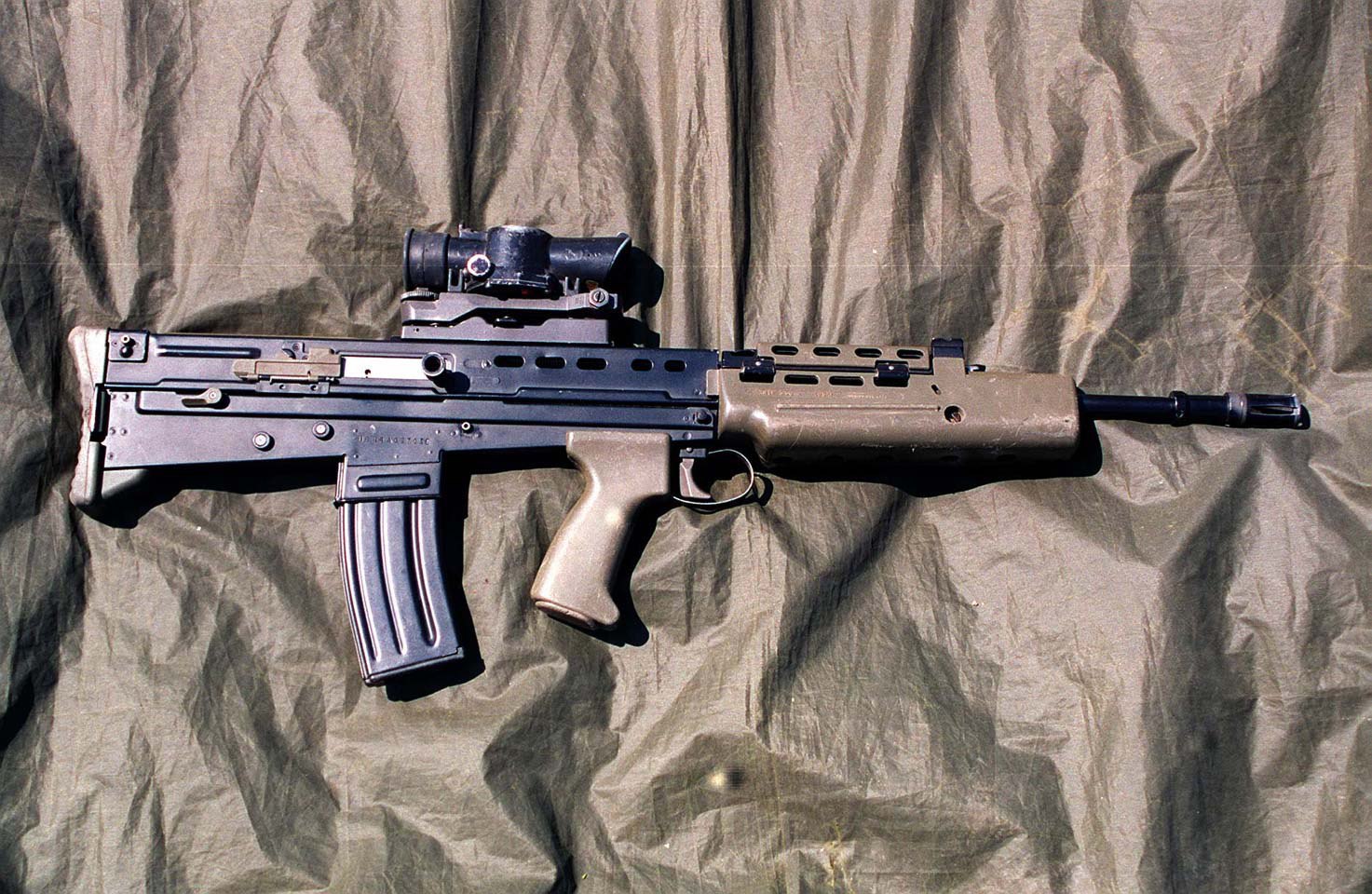
The rifles that came out of the NATO trials were, in Ferguson’s words, the subject of a second round of “value engineering” for mass production that produced “a substantial and visually obvious redesign; practically a new gun”.1 Three “PR” (Production Rifle) prototypes were made in 4.85 mm first. Their new pressings were “thin and easily distorted” even though the rifle now weighed a full kilogram more than the XL64E5, and the trigger mechanism housing was “insufficiently strong to support a loaded magazine”.1
The XL70 series proper, in 5.56 × 45 mm, made several changes that survive in the service rifle:1
- a separate external magazine well, seam-welded to the trigger mechanism housing;
- a drop-in trigger-group housing;
- a wider bolt carrier, with the tungsten inertia pellet of the earlier series removed;
- a triple-rod return assembly in place of the AR-18’s twin rods: “The slender twin guide rods and springs taken from the AR-18 were replaced by a stronger (and therefore heavier) triple rod design … a single spring fitted to the larger central rod, leaving the two outer rods to function simply as bolt carrier guides”;
- a gas cylinder reduced to “a simple tube”, hollowed at both ends for the piston and gas plug;
- dark green furniture, and a SUSAT (still XL9E1) on a mount with two wing bolts and a spring catch.
The LSW now fired from an open bolt in both modes, gained a safe position on its change lever, and lost its safety sear. The first 5.56 mm barrels were rifled one turn in 12 inches for the American M193 bullet; a faster twist for the new Belgian SS109 was anticipated.1 The designations were XL70E3 for the right-handed rifle, XL78E1 for a left-handed rifle and XL73E2 for the LSW; the left-handed LSW requirement had been dropped. The XL70E3 was 781 mm long, with a 538 mm barrel including flash suppressor, and weighed 4.390 kg.1
Trials began in 1981 against an in-service date of 1983 that had been agreed in 1975. They found barrel wear, which was blamed on “poor metallurgy and a lack of chrome lining”; Ferguson notes that “this marked the first time that the German firm of Heckler & Koch would be consulted”. They also found cracked bolt carriers, a split barrel, and “split groups” from the LSW.1
The reliability target, set after the NATO trials, was a mean of 2,500 rounds between failures for the rifle and 8,000 for the LSW. Ferguson, citing Raw, records that the XL70 reached the 2,500 figure only because the count included only failures that needed a part replaced. Counted as stoppages, the XL70 managed 95 mean rounds between stoppages, against a contemporary United States demand of 500 — “malfunction after only three full magazines”.1 The distinction between rounds between failures (a part breaks) and rounds between stoppages (the rifle stops) runs through every later argument about the SA80’s reliability, and the two are not interchangeable.
2.3 The XL80 series and acceptance in 1984
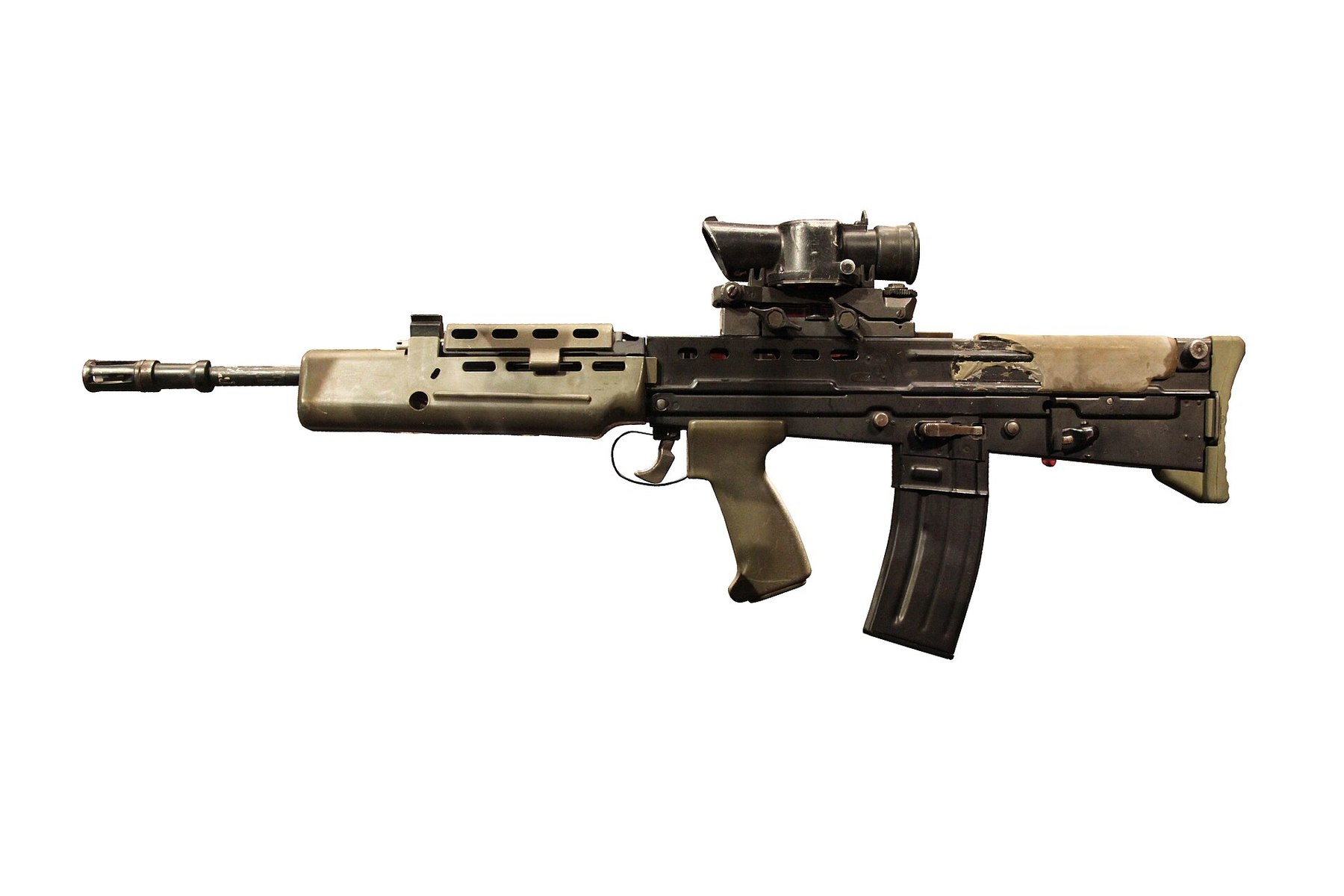
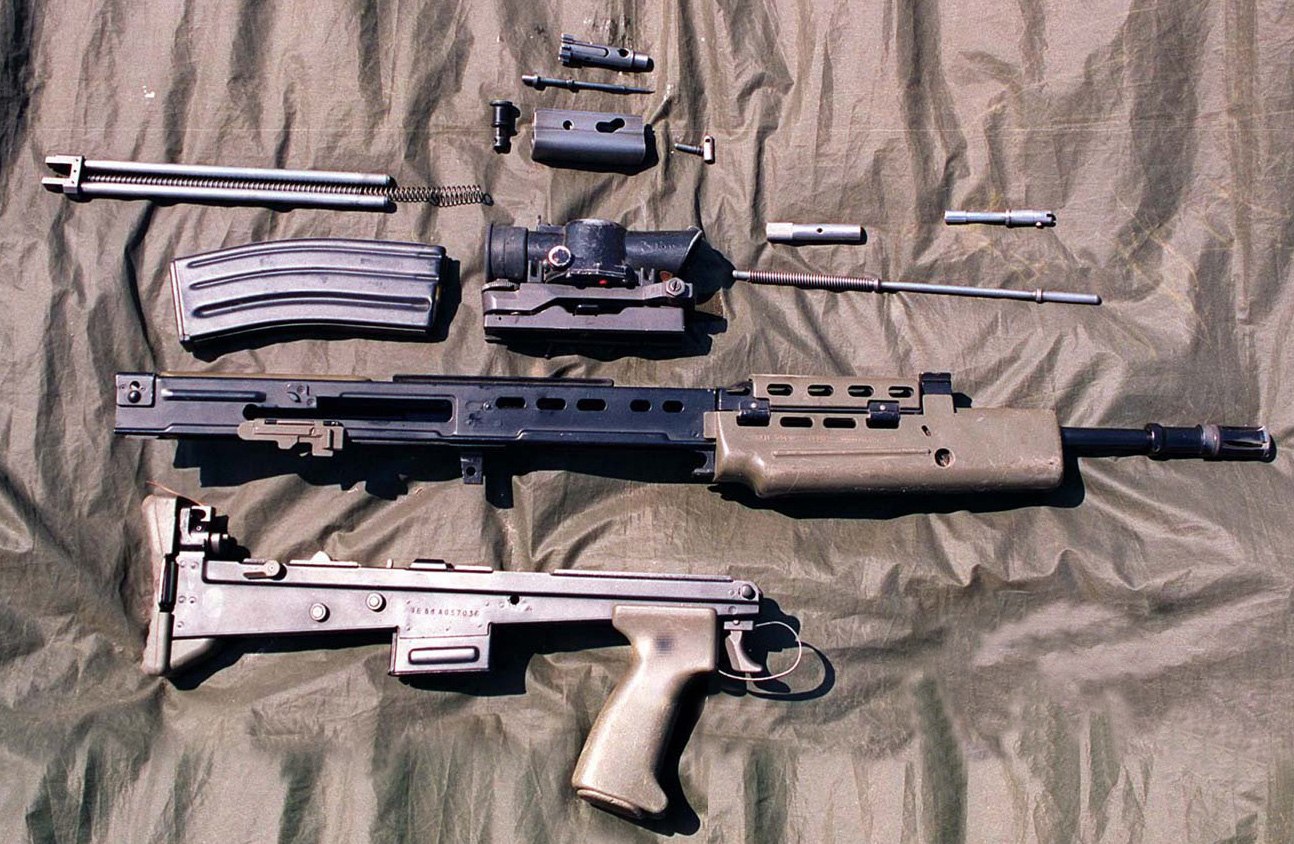
The last prototypes were the XL85E1 rifle and XL86E1 LSW; the E1 was the only pre-production standard, and the E2 to E5 rifles, made between 1987 and 1990, were test beds for environmental trials.2 The receiver was “redesigned in detail, re-toleranced, and the method of welding was changed”; the magazine housing became an insert with tabs on the trigger mechanism housing “to spot weld it in place (in lieu of the previous seam weld)”. The weight target of 3.2 kg was missed. With its optical sight the XL80 rifle weighed only 83 g less than the 7.62 mm SLR it was meant to lighten, and the SLR figure was without an optical sight.2 The XL85E1 was 780 mm long, with a 541 mm barrel including suppressor, and weighed 4.42 kg.2
The LSW’s split groups were cured mechanically. An outrigger beneath the barrel, carrying the bipod, “effectively clamped the end of the barrel in place, producing a stiffer barrel without increasing its weight”. The LSW also gained a rear vertical grip and a folding wire butt strap, and new cylindrical bird-cage flash suppressors were fitted, the rifle’s and the LSW’s not interchangeable.2
The rifle was accepted for service in January 1984; the LSW later that year.2 Ferguson’s account of the final changes between the XL80 and the L85A1 is short: the cocking handle lost its bevelled inner edge; the internal guide rail changed from an L-shape to an oblique profile; the dust-cover retainer became a plate spot-welded to the outside of the body; and the furniture changed from a darker forest green to a brighter, cheaper plastic that “appears to be cheaper and more flimsy, and after complaints of breakage would be replaced in service with a more durable alternative”. Acceptance “came with the acknowledgement that the weapons had issues still to be addressed. Unfortunately, rectifying the substantial challenges ultimately took more than 15 years”.3
2.4 Ordered, issued, and Enfield closed
Hansard gives the order and the issue in ministers’ own words. On 17 November 1983 John Stanley, Minister of State for the Armed Forces, told the Commons that “the SA80 weapons … are planned to be in service in 1985. A light assault rifle will provide the basic personal weapon and a light support weapon will replace the existing general purpose machine gun as the basic infantry section weapon. Both the new weapons are being manufactured to the new NATO small arms calibre of 5·56mm”.4 On 22 October 1984 John Lee, Under-Secretary for Defence Procurement, said: “today we have authorised the placing of an order with the Royal Small Arms factory at Enfield for 175,000 of the new SA80 infantry weapon”. In the same debate Stanley said the rifle would have “a telescopic sight, together with a complementary night sight” and “an automatic fire capability, which the present SLR does not have”, and that the Guards’ regimental sergeant majors were “having to work out how the SA80 should be handled in ceremonial duties”.5
By June 1985 Michael Heseltine could say the infantry was “already being issued with the new SA80 small arm”.6 A year later the government admitted difficulty: “After some problems with setting up large-scale production, the weapon will, we hope, enter service in quantity early next year. In the meantime, weapons are being delivered to our training organisation.”7
Meanwhile the factory changed hands. Royal Ordnance plc, which included the Royal Small Arms Factory at Enfield, had been formed for flotation; the flotation was abandoned and the company was sold to British Aerospace. Tim Sainsbury, for the government, gave the sequence in 1989: tenders for a second tranche of SA80s “were invited in June 1986 for reply by November 1986, and the decision to accept the Royal Ordnance tender, subject to confirmation by the new owners of the company, was made in February 1987”; “the sale of Royal Ordnance was agreed on 2 April 1987”; and the decision to close Enfield “was made after the sale by the new owners, and was announced in August 1987”.8 The member who secured the debate, John Hughes, put the job losses at 1,200 and the price British Aerospace paid at £190 million; Ferguson gives £188.5 million.82 The two figures are given as their sources give them. Production moved to Royal Ordnance’s factory at Nottingham.9
By October 1989 Royal Ordnance had “delivered over 70,000 SA80 weapons and it is now in service with our front line units”.10 Production of the family ended in 1994.3 No official figure for the total number made was found. The numbers that are anchored — 175,000 ordered in 1984, more than 70,000 delivered by 1989, roughly 200,000 implied by the cost of the A2 programme (Volume 3) — are given here as they stand, not combined into a total.
The politics of the order were argued again in 1997. Lord Monkswell claimed that the Conservative government had authorised production of a system “which subsequently proved not to have been fully developed” to give Royal Ordnance a forward order book before privatisation. Lord Trefgarne replied: “I was the Minister who authorised the development and production of the SA80 weapon system to which he refers. His account of what happened is quite wrong.”11 The exchange is recorded as a dispute, not settled here.
2.5 The L85A1 as issued
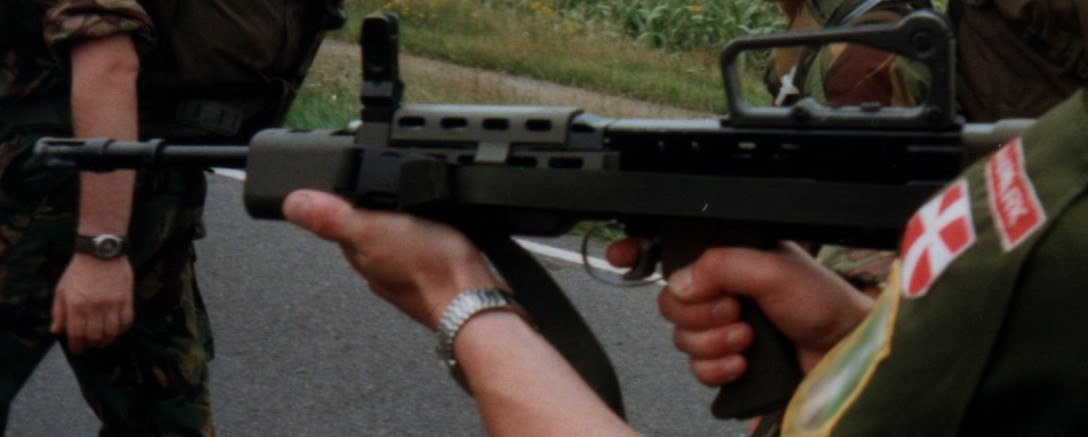
The maker’s own documents give the rifle as it was sold. Royal Ordnance’s brochure for the “Enfield Weapon System” and its User Handbook (copyright 1985) describe two weapons sharing most components: the Individual Weapon (IW, the L85A1) and the Light Support Weapon (LSW, the L86A1), which “differs from the IW in having a longer barrel, an outrigger with a bipod, a smaller front handguard, a small rear handgrip on the butt and a shoulder strap”.1213
Table 1 — The L85A1 as issued
| IW (L85A1) | LSW (L86A1) | Source | |
|---|---|---|---|
| Calibre | 5.56 × 45 mm | 5.56 × 45 mm | handbook |
| Operation | short-stroke gas, rotary forward-locking bolt | the same | handbook |
| Fire | single shot or automatic, closed bolt | the same | brochure |
| Weight, weapon only | 3.8 kg | 5.6 kg | handbook, brochure |
| Weight with SUSAT and full 30-round magazine | 5.08 kg | 6.88 kg | handbook |
| Overall length | 780 mm (handbook); 785 mm (brochure) | 900 mm | both |
| Muzzle velocity | 940 m/s | 970 m/s | handbook |
| Rifling | 4 grooves, right hand, 1 turn in 175 mm | the same | handbook |
| Magazine | 30 rounds, “the same interface as the Colt 5.56 magazine (M16 fitting)“ | the same | brochure |
The two Royal Ordnance documents disagree by 5 mm on the rifle’s length; both figures are given. The twist, one turn in 175 mm, is about one in 6.9 inches, not the round “1 in 7” usually quoted.13 How the mechanism works is Volume 5; field stripping and the maker’s maintenance regime are Volume 6.
2.6 The marksmanship claim
The rifle’s admirers have always pointed to its accuracy, and the government made the claim with a number in 1988: “The new weapon is popular with the soldier and impressive improvements in marksmanship have been achieved … Whereas an average of 8 per cent. of recruits would reach army marksmen standard using the SLR, the figure for the SA80 is 50 per cent.”14 The Army’s own website later said the rifle “proved so accurate that the Army marksmanship tests had to be redesigned”.15 Neither statement says how the comparison was made, and the SA80’s 4× optical sight against the SLR’s iron sights is an obvious part of the difference. Accuracy is Volume 7; what matters here is that accuracy was never the complaint. Nearly every critic in the record below concedes it before turning to reliability.
2.7 Small fixes in service
Before any comprehensive programme, the A1 accumulated small modifications. Ferguson lists several, dated where he could date them:23
- Triggers. A first-pattern pressed sheet-metal trigger; a second pattern “fitted to production guns from 1985”, made heavier “to prevent inadvertent firing when dropped on the muzzle”; and a third, wedge-shaped “snow clearance trigger”, which is often taken for an A2 feature but “was actually one of many universal modifications made to the A1 series”.
- Magazine catch shroud, introduced in 1987 “to prevent accidental pressing of the catch and loss of the magazine (a common issue in service)”.
- Cocking handles. The UK Historic Arms Resource Centre records that “From 1998 all in-service rifles were retro-fitted with modified cocking handles”.16
- Furniture, the brighter green plastic replaced “with a more durable alternative” after complaints of breakage.
A peer’s figure for the number of modifications, “125 times” for the dust cover alone, and a member’s “more than 100 modifications”, both of 2002, are recollections and are given only as such.17
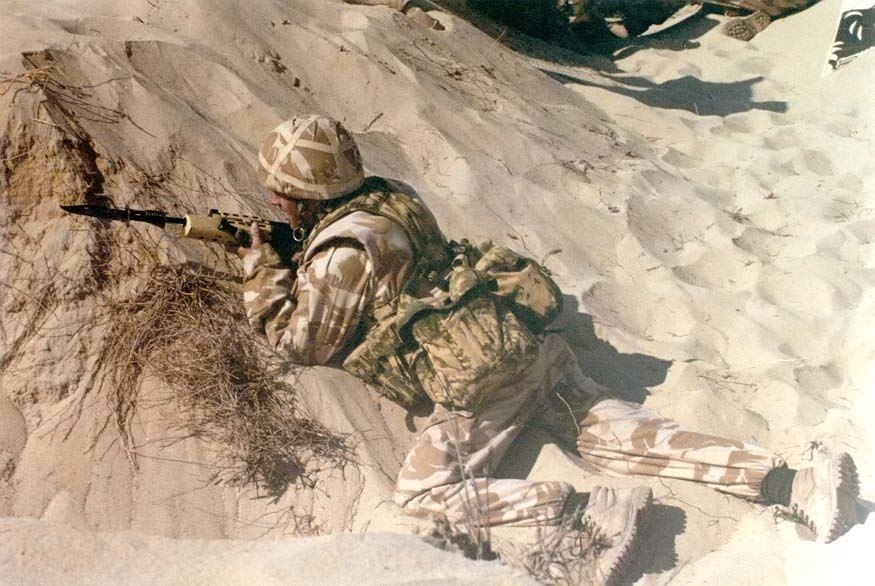
2.8 The Gulf War and the Defence Committee
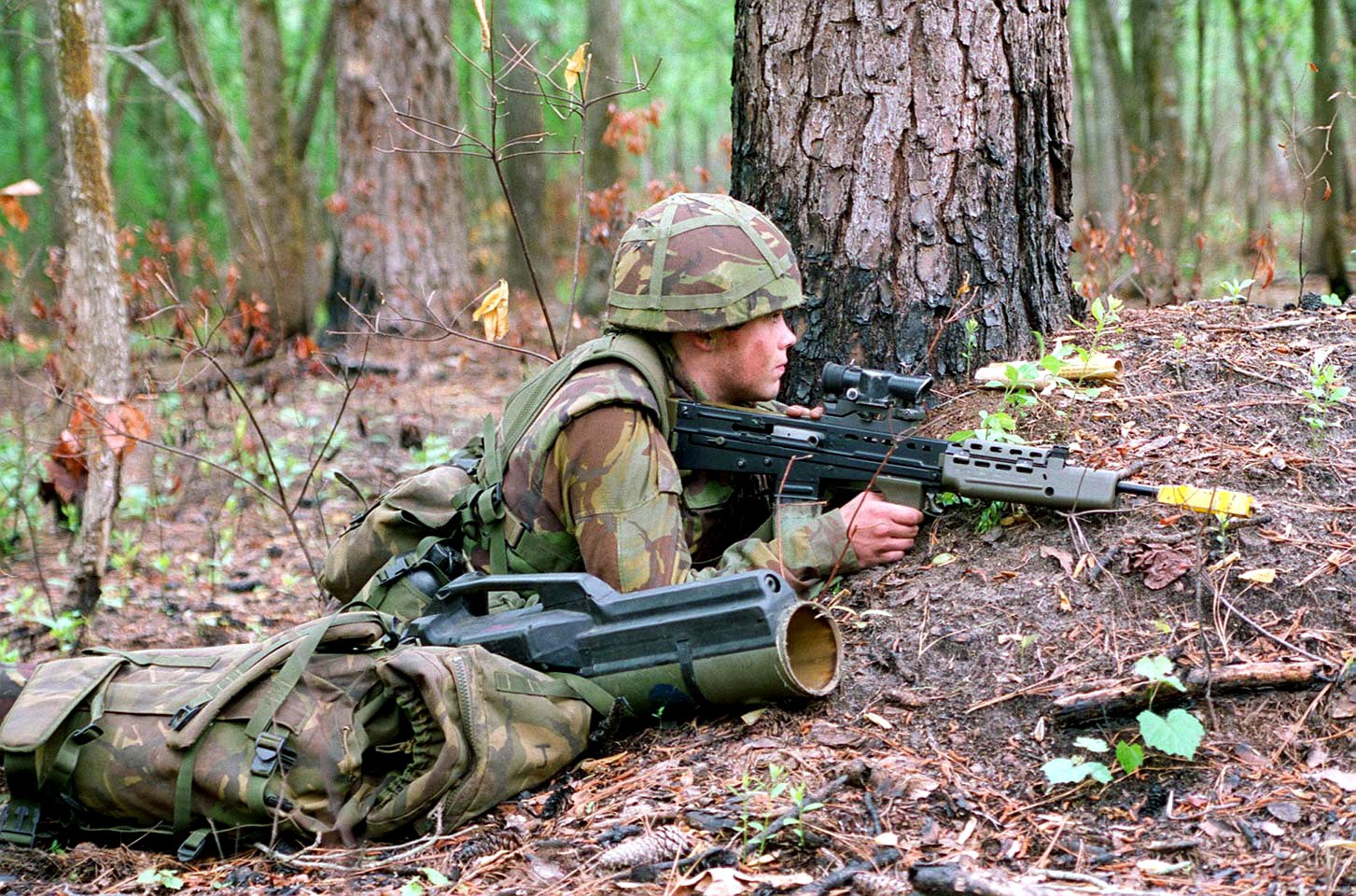
The SA80’s first war was Operation Granby, the British part of the 1991 Gulf War. What happened to the rifles there reached the public record in two stages.
The first was a report by the House of Commons Defence Committee, published around 1993. It was not found for this dive. Its content survives in the debates that quoted it. In 1994 Menzies Campbell said “the report of the Select Committee on Defence made this eloquently clear” that the SA80 “could hardly be regarded as a paradigm of good procurement”.18 In 2000 Mike Hancock quoted both the committee and the government’s reply: “in 1993, section and platoon commanders considered that, had the enemy put up more resistance in the Gulf, casualties would have been suffered because of weapons stoppages. The Conservative Government’s response to the Defence Committee at that time was that: ‘the criticisms were carefully investigated. It was concluded that stoppages were largely attributable to incorrect maintenance … Some units had not been employing the correct lubrication and cleaning procedures.’”19
That government response is the official position of the early 1990s in one sentence: the rifle was sound and the soldiers were cleaning it wrongly. It is worth holding against the later ministerial statements below, which abandon it.
The second stage is an Army post-operational assessment, widely cited online as the “LANDSET” report and credited with finding more than fifty faults, including the magazine catch and the firing pin. No primary text of it was found, and no Hansard statement names it. It is recorded here as a claim in circulation, not used as a source.
Ministers later dated the problems to the Gulf themselves. Geoff Hoon in 2000: “Yes, there are problems, but they were first identified during the Gulf war—nearly 10 years ago, under a Conservative Government.” Tom King, Secretary of State for Defence during the war, agreed that “there were lessons to be learned about the SA80 after the Gulf war”.2019
2.9 Parliament, 1990 to 1994
The early-1990s record is a series of individual complaints met by ministerial reassurance.
- July 1990, House of Lords. Lord Lyell reported infantry complaints in Germany “last autumn” and an incident at Bisley, where a Royal Marines marksman “was halted during the competition for the Methuen Cup because—guess what?—the return spring on the trigger of his SA80 had broken.”21
- December 1992, House of Lords. Viscount Cranborne, for the government, said the Cheshire Regiment was “as satisfied as anyone else with the performance of the SA80 as now issued rather than as originally issued”, and that soldiers were “now happy with the SA80—with its accuracy, its revised design and the quality of its assembly”.22 “As now issued rather than as originally issued” and “revised design” are an official admission, eight years after acceptance, that the rifle had been changed after issue.
- July 1993, House of Lords. Lord Howell: “the saga of the SA80 rifle—the gun which did not fire.”23
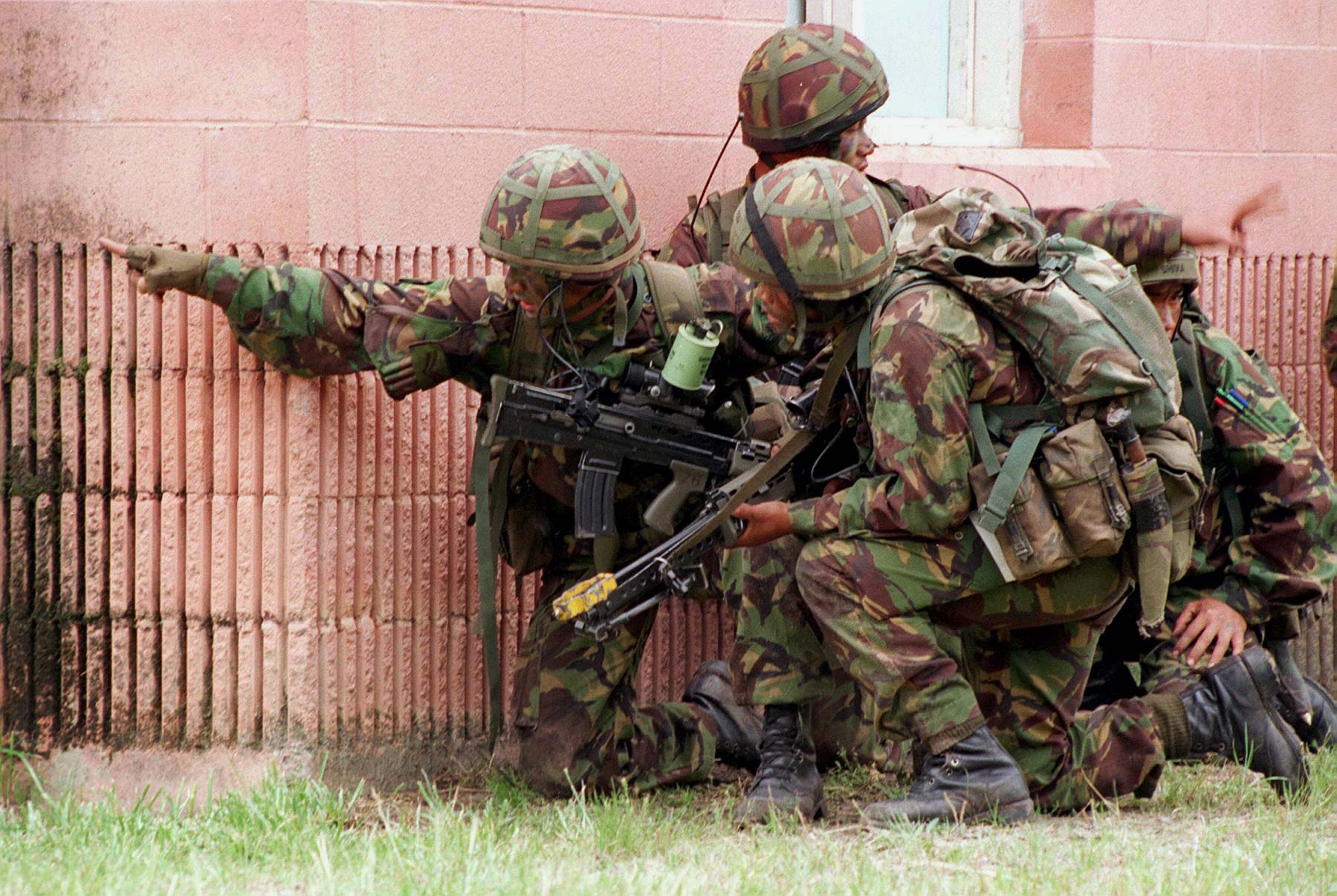
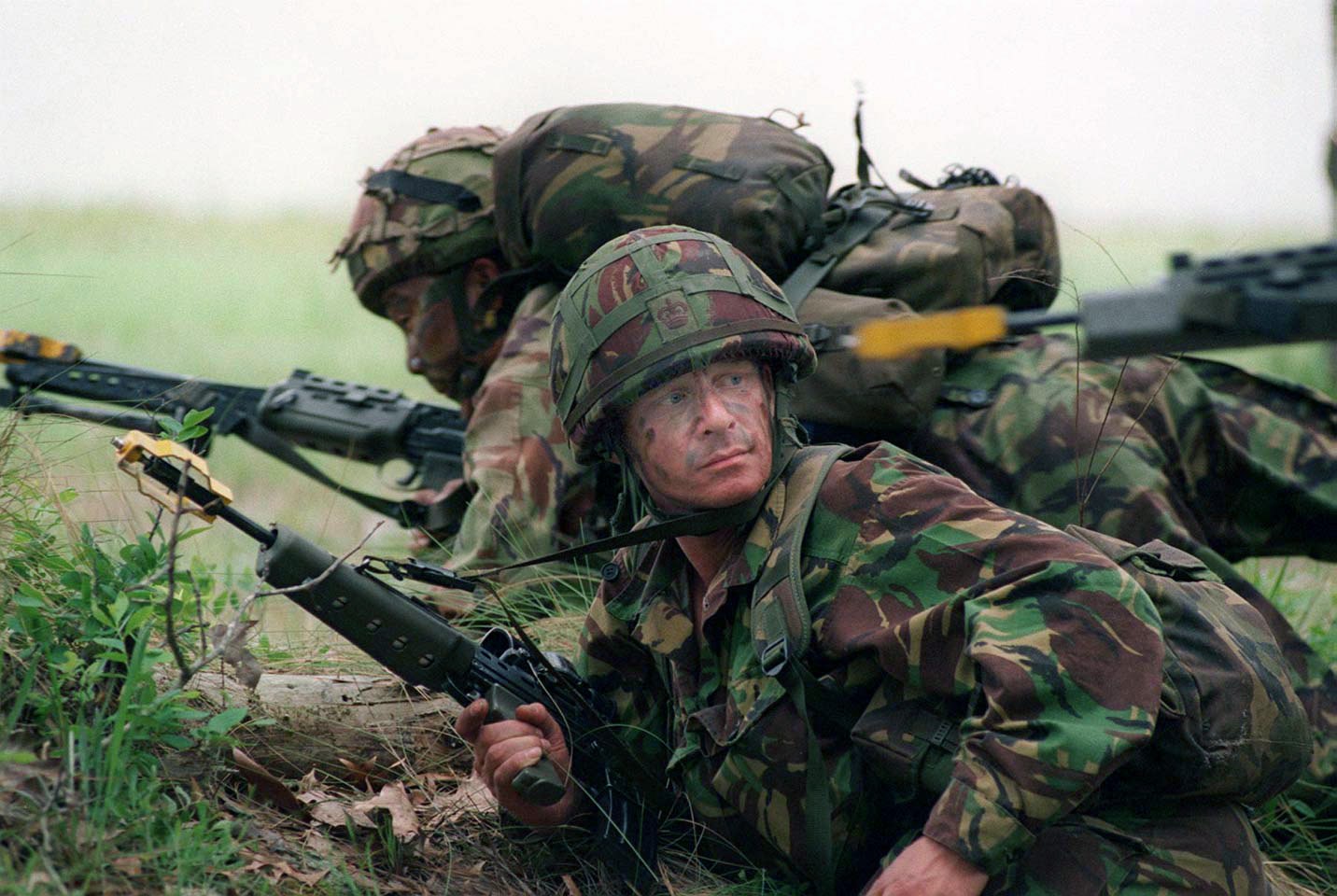
- October 1993, House of Commons. Ken Maginnis asked whether “a multitude of faults have now been rectified” and wondered “how many soldiers have been unfairly penalised for losing parts that have simply dropped off”, and later said the rifle had been “commissioned in the knowledge that it has 32 innate faults”. Ian Davidson described an exercise in Belize with 45 Commando: “two marines walked 150 yards along a trail … Those marines suffered six blockages in their SA80s. I was told that the same happened on seven of the previous eight runs up that alley.” Jonathan Aitken, Minister of State for Defence Procurement, replied that “the faults on the SA80 have been rectified”.24
Maginnis gave no source for “32 faults”, and none was found. It is a member’s claim, not a finding.
2.10 The investigation, 1995 to 1997, and Heckler & Koch
The decisive step was taken quietly. Ferguson: “In 1995, the German firearms manufacturer Heckler & Koch, then owned by British Aerospace, were engaged to analyse and provide options for upgrades that would definitively solve many of the A1 series’ issues.”3 Ferguson’s phrase “then owned by British Aerospace” is the point: the company that had bought Royal Ordnance, and with it the SA80, also owned the firm it asked to fix the rifle.
The parliamentary record confirms the timing from the other side of the House. In 2000 the Conservative spokesman Quentin Davies said that “A Conservative Government recognised that there were problems and, between 1995 and 1997, set out an investigation programme, the results of which were available to the present Government.”19 Baroness Symons, for the Labour government, made the same point in reverse: “Those problems did not start on 1st May 1997. That weapon was in use for 11 years before that date.”25
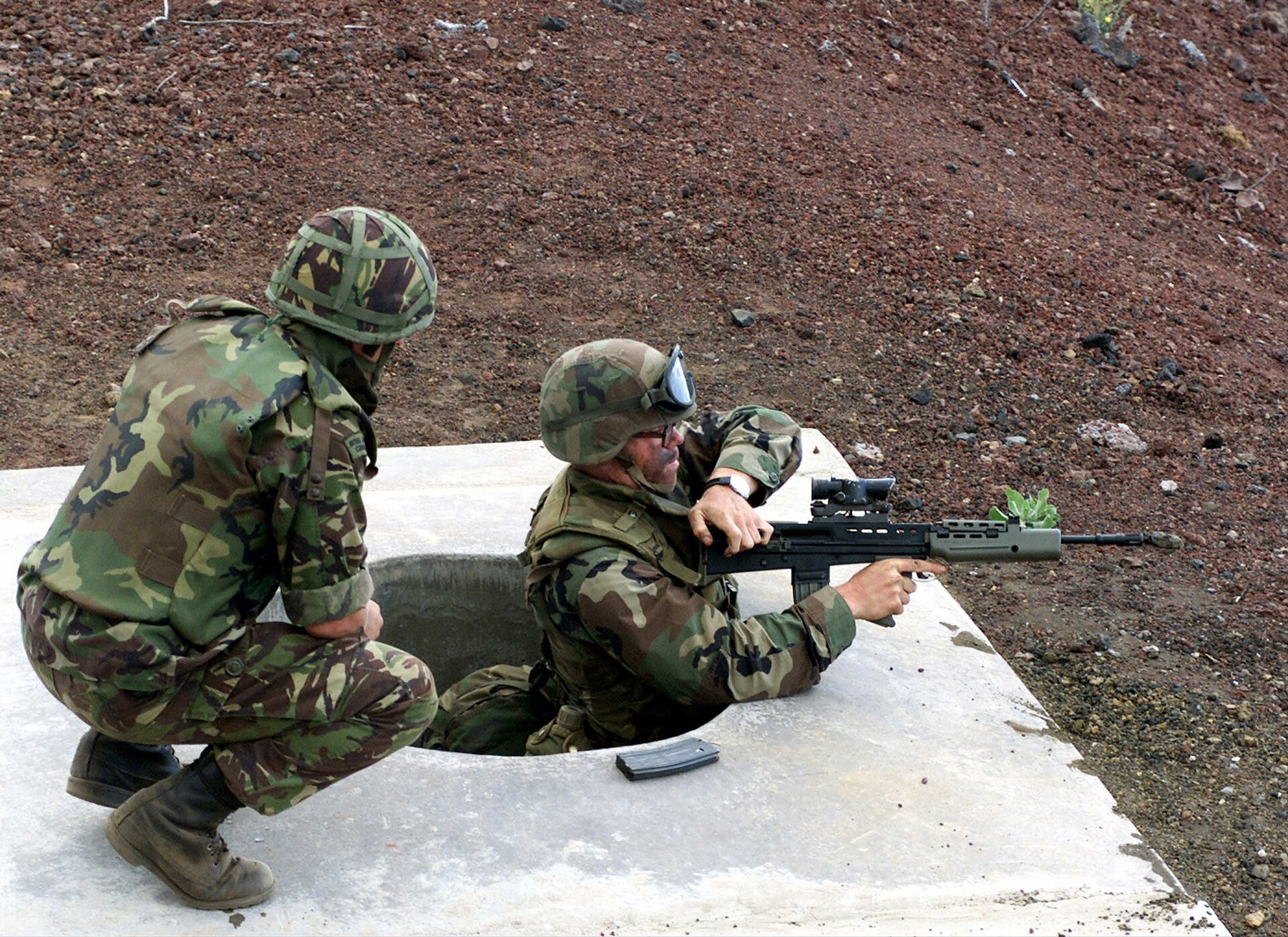
2.11 Kosovo and the year 2000
The matter became public again after the Kosovo deployment of 1999. A post-operational report by Colonel Gibson of the Parachute Regiment was referred to in the Commons; it was not published and was not found.26 On 26 February 2000 The Times quoted a lance corporal in Kosovo: “To be honest, it is useless, it falls apart on you.” Quentin Davies read the quotation into the record two days later and added that soldiers had been “given an order not to discuss the SA80 with the press”.19
The ministerial statements of 2000 are the turning point because they concede what the 1993 response had denied:
- 22 February. John Spellar, Minister for the Armed Forces: “In the Balkans, the issue was not the SA80 rifle, but the light machine gun version. We recognise the difficulties. We also recognise that, in certain extreme temperatures, the SA80 has some difficulties, although it is a capable and accurate weapon.” Geoff Hoon: “It has some reliability problems, especially in extreme conditions, and steps are being taken to ensure that those are put right quickly.”26
- 28 February. Spellar: “We have had a number of reports identifying weaknesses with the SA80, some of which date back to the Gulf war. There have been a number of modifications, but that is the case with all weapon systems, including the much-vaunted M16.”19
- 12 May, House of Lords. Baroness Symons: the rifle is “generally a very effective weapons system and highly accurate but it is unreliable in certain conditions, in particular extremes of climate. We are considering various solutions, including potential modifications to the system proposed by the design authority Heckler and Koch which have recently been validated in MoD trials.”27
In the same Lords debate Earl Attlee, a Territorial Army officer, said he had “fired several thousand rounds through my service SA80 rifle and I cannot recall ever having had a jam”, and that the LSW “comes in for criticism because it overheats”.27 Experience in temperate training and experience in desert and arctic conditions were different things, and the official language had settled on exactly that distinction: “extreme conditions”.
On 3 July 2000 Spellar explained why the rebuild would be done in Germany: “We had to consider its capability in Germany compared, unfortunately, with its declining capability in the UK … the main capability, even at Nottingham, was in large systems, rather than rifles.”28 On 26 October Iain Duncan Smith put the programme at “about £80 million … about £400 per weapon”, and Lewis Moonie said that “most will be carried out in the factory in Germany” and that “at least 20,000 weapons” should be “fully modified and … back in service by the end of next year”.29 In the same debate Claire Ward said of the Royal Marines that “only about 30 per cent. of the rifles work at any given time”; it is an anecdote attributed to unnamed marines, and is reported as such.29
2.12 Right shoulder only
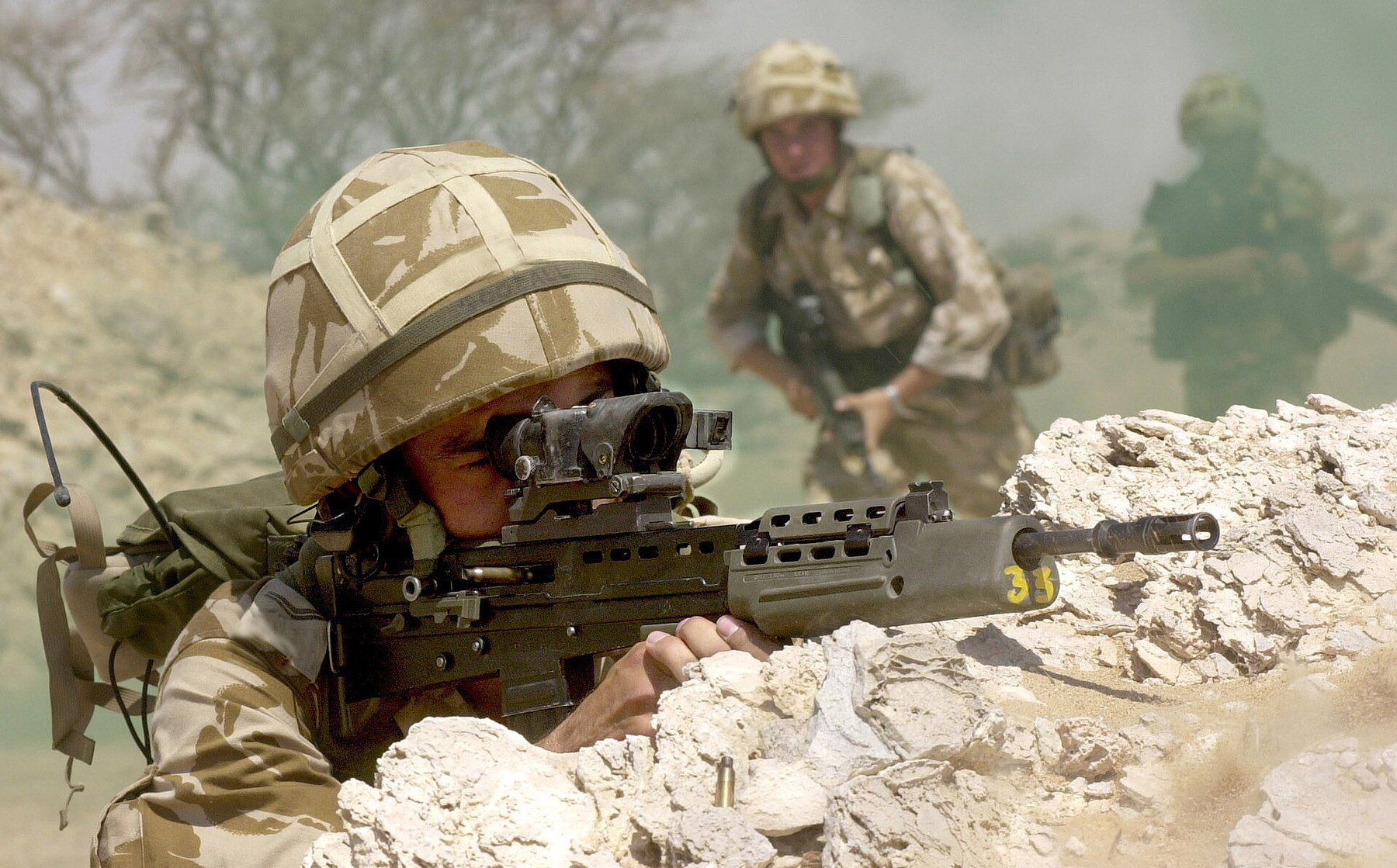
The SA80 ejects to the right, beside the firer’s face, and it cannot be fired from the left shoulder. Volume 1 recorded how that came about: left-handed XL variants were built and a left-handed requirement existed, but “the requirement was dropped and all soldiers taught to fire from the right shoulder”, because firing from the left risked “the cocking handle striking the user in the face (to say nothing of hot brass cases)”.30 As late as the XL80, “left-handed users of the IW were still to be catered for with an armourer-level conversion kit. Details on this are lacking”.2
Parliament heard the consequences. In April 2000 Ken Maginnis said “the SA80 is dangerous to a left-handed soldier because of how it discharges its rounds. Our soldiers, whether left or right-handed, have had to learn to fire off the right shoulder.” Julian Brazier: “one cannot fire around the left-hand corner of a building without exposing one’s entire body … It is manifestly an unsoldierly weapon.”31 Earl Attlee estimated in 2002 that “about 10 per cent of the Army will be left-handed”.17 No Army document stating the right-shoulder rule was found; the rule is documented here through the design history and the parliamentary record.
2.13 What was actually wrong
No released official document lists the A1’s faults and their causes. What can be assembled from the sources is this.
- The design was never given time to mature. The XL70 was “practically a new gun” in 1979–81, the XL80 another re-toleranced revision, and the rifle was accepted in 1984 “with the acknowledgement that the weapons had issues still to be addressed”.13 The 95-rounds-between-stoppages figure of the XL70 is the measure of where development stood three years before acceptance.
- The parts were made poorly. Ferguson’s verdict on what H&K did, after examining A1 and A2 rifles side by side: “a great deal was changed, but only in detail. Essentially, the weapon was simply rebuilt to the standard that it should have been manufactured to in the first place.”3 Volume 3 lists the parts.
- The magazine was a weak point. “The XL70 and XL80 series were tested and trialled with USGI Colt magazines, but the new British-designed magazine exacerbated the weapon’s problems”; the Radway Green magazines, with plastic floorplates marked “RG”, were “a new weak point in the system”.2 H&K replaced them with a steel magazine of its own.
- Cleaning mattered more than on comparable rifles. The government’s 1993 response blamed “incorrect maintenance”; Ferguson writes that the A2 “seems to take it in its stride, provided that the fairly detailed cleaning instructions are followed”, and that the much-publicised 2002 incident in Afghanistan “appears to have been down to a cleaning issue”.3 The maker’s own 1985 handbook required the gas parts to be “cleaned and gauged … after every 200 rounds fired, regardless of satisfactory functioning of the system” (Volume 6).13
None of the sources supports the popular claim that the SA80 is simply a bad design copied from the AR-18 (Volume 1). The design survived; the rebuild kept its layout, gas system, bolt and receiver.
2.14 Claims that do not survive checking
- “The SA80 was the first bullpup to enter service in an army.” Earl Attlee said so in the Lords in January 2002.17 Austria adopted the Steyr AUG as the StG 77 in 1977, eight years before the L85A1 was issued; see the hub’s Steyr AUG dive, Volume 1.
- “32 innate faults” (Maginnis, 1993): no source given in the speech; none found.
- “More than fifty faults” in a “LANDSET” report: no primary text found.
- “Only about 30 per cent of the rifles work” (Ward, 2000) and “125 modifications” to the dust cover (Redesdale, 2002): individual recollections reported in debate.
- “The SA80 was off NATO’s approved weapons list.” Duncan Smith asked in 2000 whether the rifle would “reappear on the NATO approved weapons list after the upgrade”; no such list or removal was found.29
2.15 Corrections this volume makes
- The XL70’s reliability figure was 95 rounds between stoppages, not failures. The 2,500-round “between failures” target was met only by counting part breakages (Ferguson, after Raw).
- The rifle was accepted in January 1984, the LSW later in 1984, and issued from 1985; Hansard records the 175,000-weapon order as authorised on 22 October 1984.
- Enfield was closed by British Aerospace after the sale, announced in August 1987; the second-tranche SA80 contract had been accepted in February 1987, before the sale on 2 April 1987.
- The official line changed between 1993 and 2000. In 1993 the government attributed Gulf stoppages “largely” to incorrect maintenance; by 2000 ministers conceded “reliability problems, especially in extreme conditions”.
- H&K was engaged in 1995, under the Conservative government, while it was owned by British Aerospace; the rebuild decision followed in 2000.
- The SA80 was not the first bullpup in military service; the Steyr AUG preceded it by eight years.
References
Footnotes
-
Jonathan Ferguson, “British Enfield SA80 Part 3: XL70 series”, The Hoplite, 13 May 2017. Wayback capture of 17 January 2026, http://web.archive.org/web/20260117101906/http://armamentresearch.com/british-enfield-sa80-part-3-xl70-series/, consulted 2026-10-18. Ferguson draws on Steve Raw, The Last Enfield (Collector Grade, 2003). Superseded by Ferguson, Thorneycroft to SA80: British Bullpup Firearms, 1901–2020 (Headstamp, 2021). ↩ ↩2 ↩3 ↩4 ↩5 ↩6 ↩7 ↩8 ↩9
-
Jonathan Ferguson, “British Enfield SA80 Part 4: XL80 Series”, The Hoplite, 17 May 2017. Wayback capture of 17 January 2026, http://web.archive.org/web/20260117090848/http://armamentresearch.com/british-enfield-sa80-part-4-xl80-series/, consulted 2026-10-18. ↩ ↩2 ↩3 ↩4 ↩5 ↩6 ↩7 ↩8 ↩9 ↩10
-
Jonathan Ferguson, “British Enfield SA80 Part 5: SA80 A1 vs A2”, The Hoplite, 20 May 2017. Wayback capture of 28 May 2017, http://web.archive.org/web/20170528111515/http://armamentresearch.com:80/british-enfield-sa80-part-5-sa80-a1vsa2/, consulted 2026-10-18. ↩ ↩2 ↩3 ↩4 ↩5 ↩6 ↩7
-
House of Commons, “The Army”, 17 November 1983, John Stanley. https://hansard.parliament.uk/Commons/1983-11-17/debates/92e87d21-0431-4293-b74e-b38e4effa1d7/, consulted 2026-10-18. ↩
-
House of Commons, “The Army”, 22 October 1984, John Stanley and John Lee. https://hansard.parliament.uk/Commons/1984-10-22/debates/0d94f7ba-ec02-46e1-b5e2-43a7ec770bba/, consulted 2026-10-18. ↩
-
House of Commons, 12 June 1985, Michael Heseltine. https://hansard.parliament.uk/Commons/1985-06-12/debates/208b0dc3-bc7e-4117-87c5-0a9e8cc3b4dd/, consulted 2026-10-18. ↩
-
House of Commons, 1 July 1986. https://hansard.parliament.uk/Commons/1986-07-01/debates/7a320026-d264-4180-b1ab-a879b71ad6a9/, consulted 2026-10-18. ↩
-
House of Commons, adjournment debate “Enfield Royal Ordnance Factory”, 23 June 1989, John Hughes and Tim Sainsbury. https://hansard.parliament.uk/Commons/1989-06-23/debates/b91771bb-845c-4eb1-9c04-bca1f74221b9/, consulted 2026-10-18. ↩ ↩2
-
Jonathan Ferguson, “British Enfield SA80 Part 6: Carbines”, The Hoplite, 24 May 2017. Wayback capture of 18 January 2026, http://web.archive.org/web/20260118060548/http://armamentresearch.com/british-enfield-sa80-part-6-carbines/, consulted 2026-10-18. ↩
-
House of Commons, 19 October 1989. https://hansard.parliament.uk/Commons/1989-10-19/debates/d8a444ae-8e06-4b47-91d1-691202f7daeb/, consulted 2026-10-18. ↩
-
House of Lords, 6 November 1997, Lord Monkswell and Lord Trefgarne. https://hansard.parliament.uk/Lords/1997-11-06/debates/99a154ff-4a16-491b-81ec-185ddcc7cb05/, consulted 2026-10-18. ↩
-
Royal Ordnance, The Enfield Weapon System (sales brochure, c. 1985). Flip-book hosted by the UK Historic Arms Resource Centre, https://www.rifleman.org.uk/Images/PDF-files/Enfield_Weapons_System/index.html, consulted 2026-10-18. Royal Ordnance copyright; quoted, not reproduced. ↩
-
Royal Ordnance, 5.56mm Enfield Weapon System: User Handbook, copyright Royal Ordnance plc 1985 (the hosted file is named 1986). Flip-book hosted by the UK Historic Arms Resource Centre, images courtesy of the Royal Armouries, https://www.rifleman.org.uk/Images/PDF-files/SA80-user-manual/index.html, consulted 2026-10-18. Technical Data, pp. 2–3; Introduction, pp. 4–5; Cleaning, pp. 54–56; Functional Failures, pp. 62–64. Quoted, not reproduced. ↩ ↩2 ↩3
-
House of Commons, “The Army”, 26 January 1988. https://hansard.parliament.uk/Commons/1988-01-26/debates/24f91e46-84c9-49ab-8aae-ae49353a0ecb/, consulted 2026-10-18. ↩
-
British Army, “Small arms and support weapons”, army.mod.uk. Wayback capture of 28 September 2024, http://web.archive.org/web/20240928000237/https://www.army.mod.uk/equipment/small-arms-and-support-weapons/, consulted 2026-10-18. ↩
-
UK Historic Arms Resource Centre, “L85A1 (SA80) with SUSAT sight”, https://www.rifleman.org.uk/L85A1_SA80_with_SUSAT_Sight-roto.html, consulted 2026-10-18. ↩
-
House of Lords, “Army”, 16 January 2002: Lord Bach, Lord Redesdale, Earl Attlee. https://hansard.parliament.uk/Lords/2002-01-16/debates/75d50ca8-9e81-49e9-9a9c-3a3861efecec/, consulted 2026-10-18. The “more than 100 modifications” remark is Ian Liddell-Grainger’s, House of Commons, 11 April 2002. ↩ ↩2 ↩3
-
House of Commons, 4 May 1994, Menzies Campbell. https://hansard.parliament.uk/Commons/1994-05-04/debates/95a28830-494f-4f53-9ad2-b4404b421115/, consulted 2026-10-18. ↩
-
House of Commons, “Defence White Paper”, 28 February 2000: Quentin Davies, Mike Hancock, John Spellar, Tom King. https://hansard.parliament.uk/Commons/2000-02-28/debates/7daf85df-c7e8-446c-b3b5-b073d71464ca/, consulted 2026-10-18. ↩ ↩2 ↩3 ↩4 ↩5
-
House of Commons, “Defence Procurement”, 26 October 2000, Geoff Hoon. https://hansard.parliament.uk/Commons/2000-10-26/debates/90a600bb-c8c1-494c-a100-04e5a15e6620/, consulted 2026-10-18. ↩
-
House of Lords, 17 July 1990, Lord Lyell. https://hansard.parliament.uk/Lords/1990-07-17/debates/5b7912ab-c600-41d0-b3da-2a15a7939b68/, consulted 2026-10-18. ↩
-
House of Lords, “Royal Ordnance: Orders”, 15 December 1992, Viscount Cranborne. https://hansard.parliament.uk/Lords/1992-12-15/debates/b5d9aacb-54e9-4072-9009-070fb8ef4ee9/, consulted 2026-10-18. ↩
-
House of Lords, 28 July 1993, Lord Howell. https://hansard.parliament.uk/Lords/1993-07-28/debates/a03e3ca8-9072-446e-a115-f757f3248bb2/, consulted 2026-10-18. ↩
-
House of Commons, “Statement on the Defence Estimates”, 19 October 1993: Ken Maginnis, Ian Davidson, Jonathan Aitken. https://hansard.parliament.uk/Commons/1993-10-19/debates/bfd578c8-1140-4dae-8093-103f7b833b03/, consulted 2026-10-18. ↩
-
House of Lords, 8 March 2000, Baroness Symons. https://hansard.parliament.uk/Lords/2000-03-08/debates/36ae03e9-e30c-4969-9f94-432d6e8306e2/, consulted 2026-10-18. ↩
-
House of Commons, “Defence White Paper”, 22 February 2000: John Spellar, Geoff Hoon, Menzies Campbell. https://hansard.parliament.uk/Commons/2000-02-22/debates/c6530212-c613-4853-b085-326d9cd3087e/, consulted 2026-10-18. ↩ ↩2
-
House of Lords, “Defence”, 12 May 2000: Earl Attlee, Baroness Symons. https://hansard.parliament.uk/Lords/2000-05-12/debates/6138a9df-8f3f-4fa3-b124-bdd70a80ff72/, consulted 2026-10-18. ↩ ↩2
-
House of Commons, “Troop Deployments”, 3 July 2000, John Spellar. https://hansard.parliament.uk/Commons/2000-07-03/debates/2d0116c4-7e7a-4e09-b1eb-57f39c3936da/, consulted 2026-10-18. ↩
-
House of Commons, “Defence Procurement”, 26 October 2000: Iain Duncan Smith, Claire Ward, Lewis Moonie. https://hansard.parliament.uk/Commons/2000-10-26/debates/90a600bb-c8c1-494c-a100-04e5a15e6620/, consulted 2026-10-18. ↩ ↩2 ↩3
-
Jonathan Ferguson, “British Enfield SA80 Part 2: XL60 series”, The Hoplite (Armament Research Services), 10 May 2017. Wayback capture of 17 January 2026, http://web.archive.org/web/20260117101829/http://armamentresearch.com/british-enfield-sa80-part-2-xl60-series/, consulted 2026-10-18. ↩
-
House of Commons, “Armed Forces Personnel”, 13 April 2000: Ken Maginnis, Julian Brazier. https://hansard.parliament.uk/Commons/2000-04-13/debates/b71b25a6-679a-4ccf-a108-47e9cbc58932/, consulted 2026-10-18. ↩
Comments (0)