Springfield Armory XD(M) .40 · Volume 3
The .40 S&W — From Miami to the 2014 Memo
Why the cartridge was made, why the FBI walked away from it, what the Bureau actually said, and what that leaves the owner of a .40
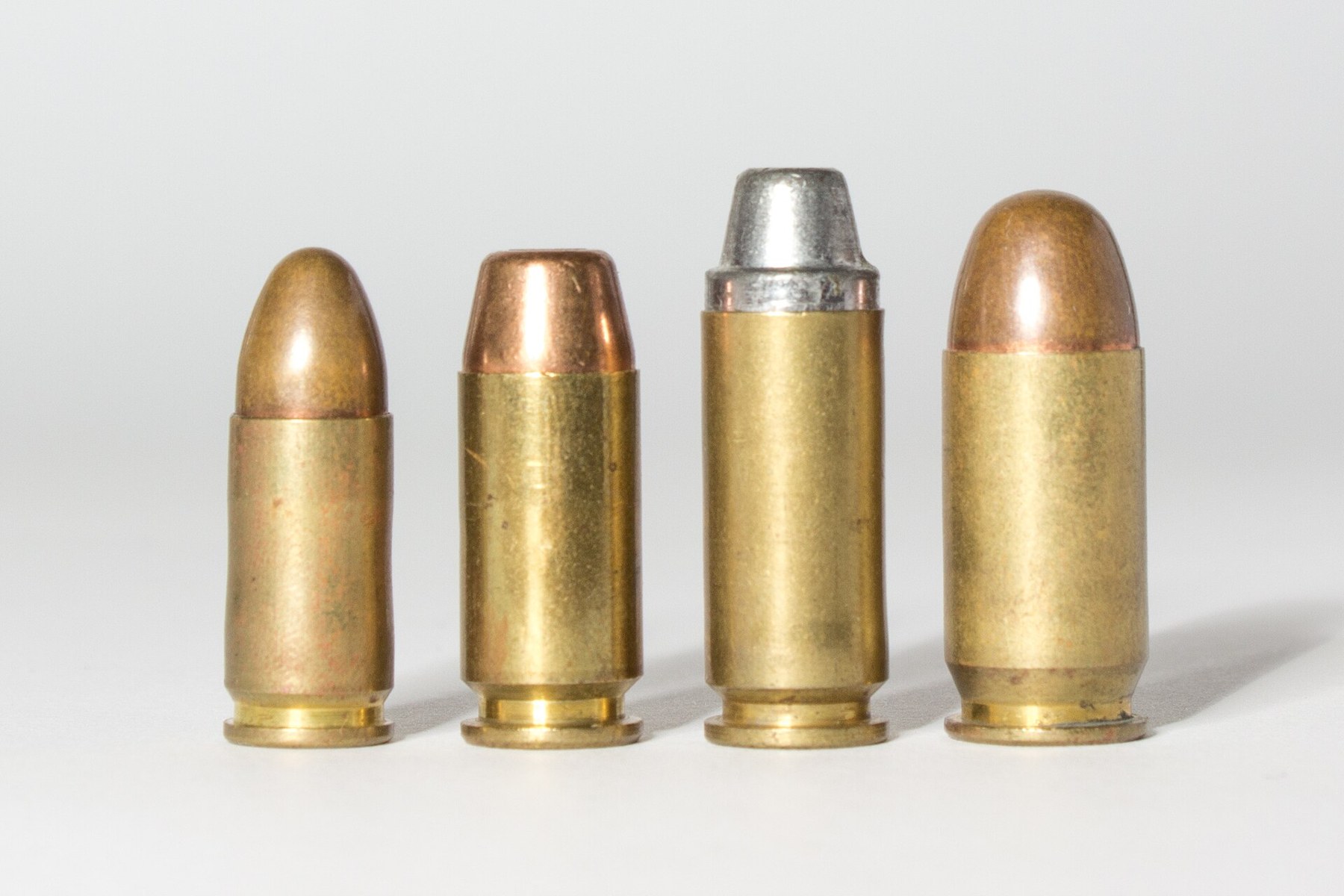
The pistol documented in these volumes is the only .40 S&W in its owner’s collection, and it is a .40 from the model’s early years, made while the cartridge was still a mainstay of American law enforcement. It was built for a market that no longer exists in the same form. The cartridge is not obsolete and is not going away, but the institutions that made it dominant have left it, and the reasons they gave are specific, printed, and routinely misquoted.
This volume tells that story from the documents where documents exist, and flags where the widely repeated history rests on secondary accounts only.
3.1 What This Volume Covers, and What It Leaves to The Reloading Bench
The hub already publishes the brass-side treatment of the .40 in The Reloading Bench, and none of it is repeated here:
- the .40 S&W’s 35,000 psi SAAMI maximum, the same as 9 mm’s, and why its reputation as “the high-pressure one” is wrong in the way it is usually stated — Volume 15;
- the base bulge in brass fired in pistols that leave the rear of the case unsupported, why a conventional sizing die cannot reach it, and why the defensible default is to cull rather than bulge-bust — Volume 15, with the Redding G-Rx’s own wording checked against the maker;
- the pass-through die on a separate press as the only way to remove a bulge — Volume 8;
- dry carbide sizing of straight pistol cases — Volume 12; why pistol cases are effectively never trimmed — Volume 13; setback, and why it matters most in pistol calibres loaded on a progressive — Volume 20;
- the .40 row of the bench’s primer and die summary — Volume 24.
What is new here is the history — nothing in the hub tells it — and one question the bench cannot answer in general but an owner can answer for one pistol (§3.8).
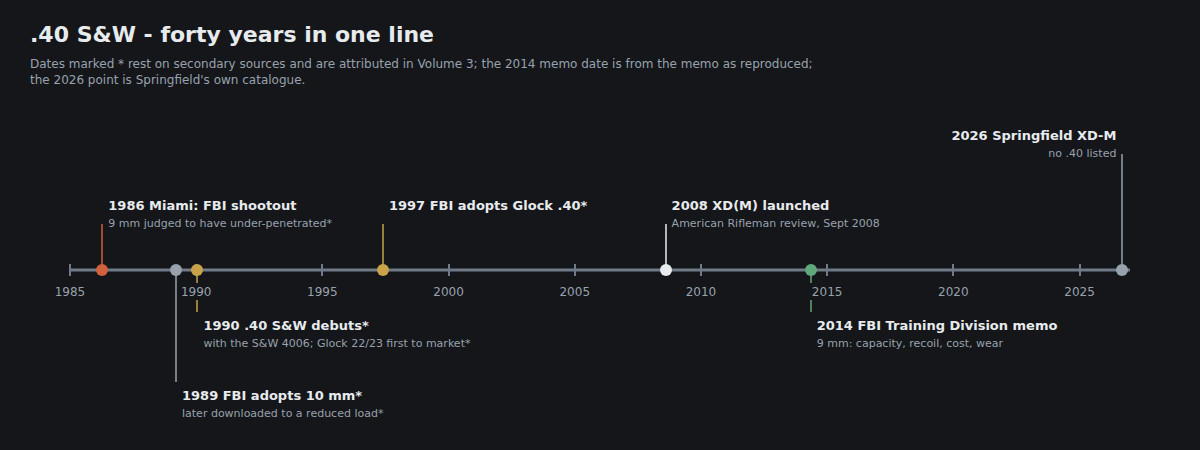
3.2 Miami, 1986
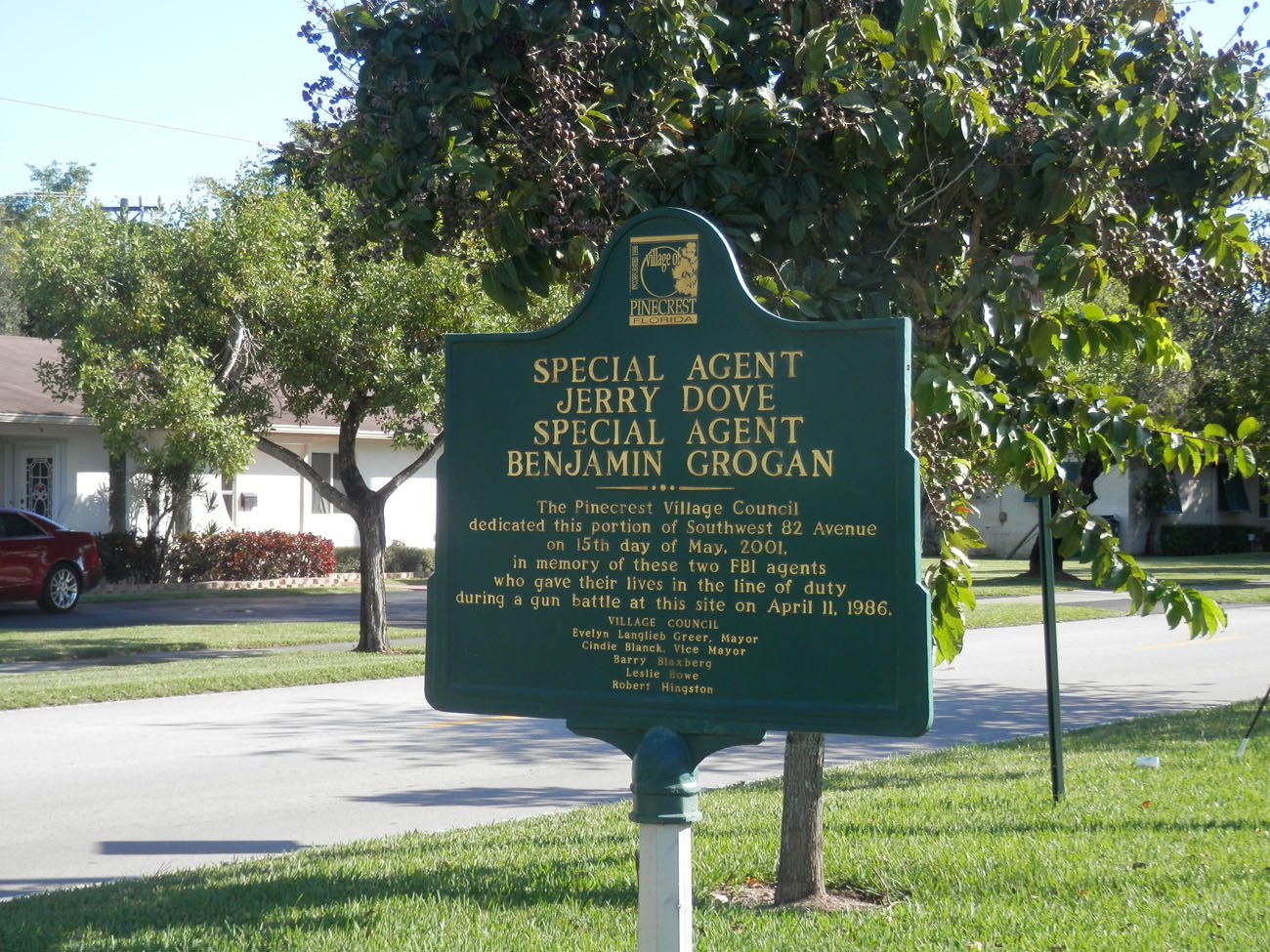
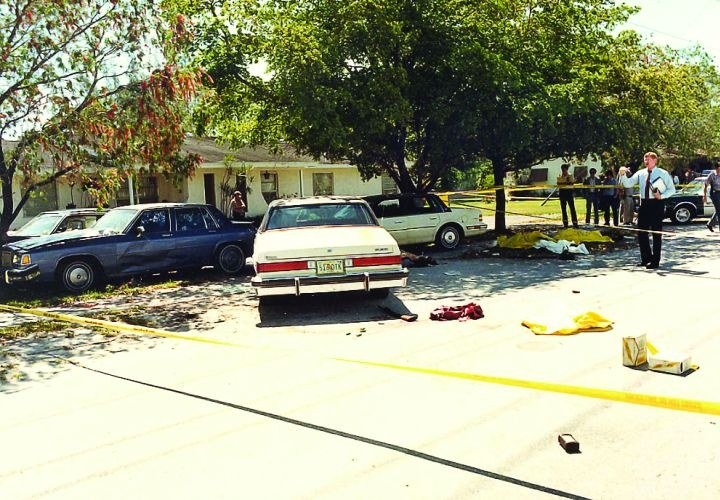
On 11 April 1986 eight FBI agents engaged two armed bank robbers in a residential street in the Pinecrest area of Miami-Dade County. Special Agents Benjamin Grogan and Jerry Dove were killed and five other agents wounded; both suspects died.12
The Bureau’s review of the fight is where the .40 S&W’s story begins. The account that circulates — that one of the robbers kept fighting after being hit by an agent’s 9 mm hollow-point bullet that stopped short of his heart — is repeated in essentially every history of the cartridge. No primary FBI document on the shootout was located for this dive, and the account is recorded here as the widely published version rather than as established fact.
3.3 The 10 mm, and the Load That Made the .40 Possible
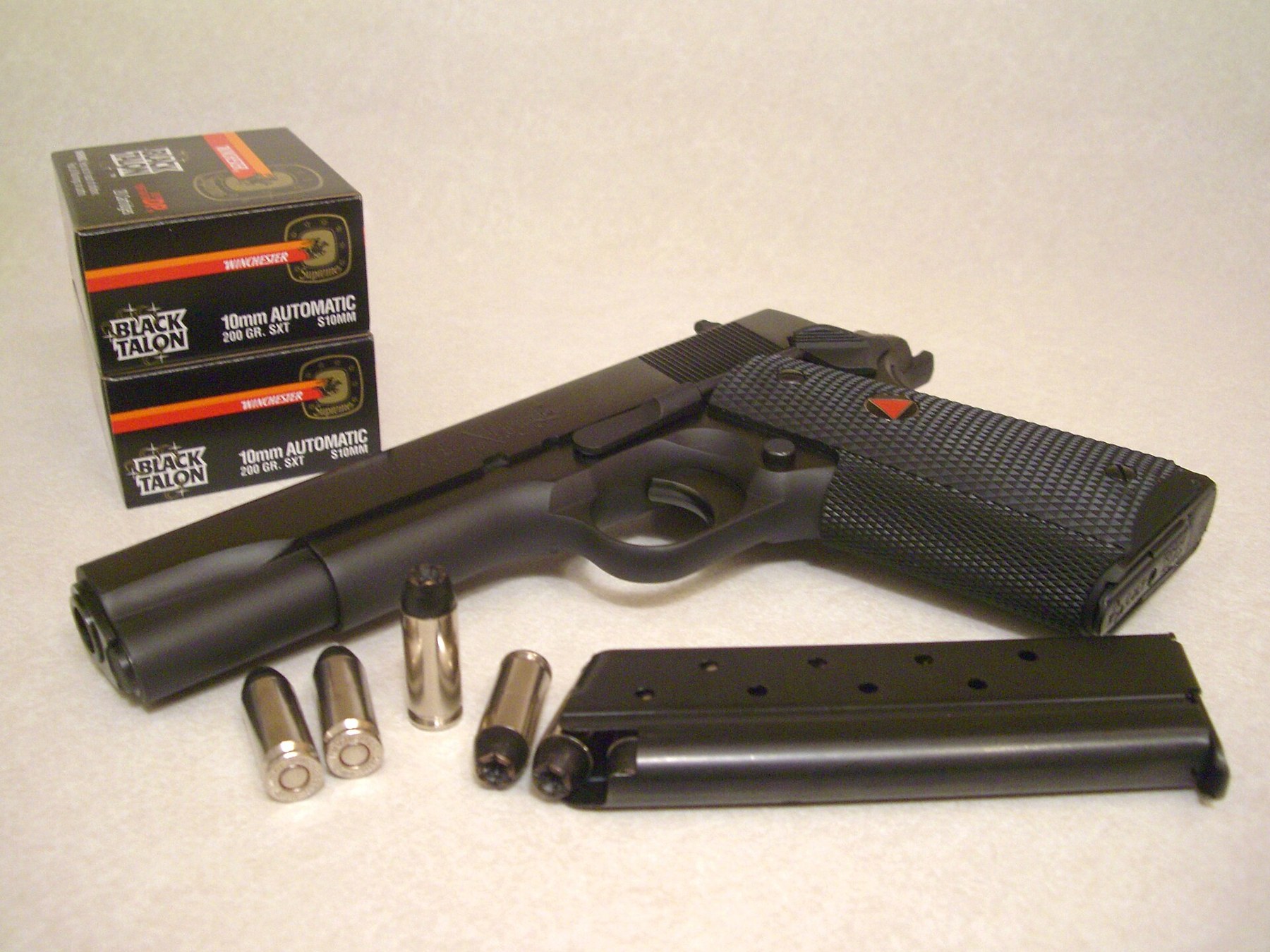
The FBI’s response, as the secondary record gives it, was a testing programme and then a new cartridge: the Bureau adopted the 10 mm Auto for its service pistol in 1989.1 Its testing, per the same account, concluded that “a 170–180 gr … 10mm bullet, propelled between 900–1,000 ft/s … achieved desired terminal performance.”1
That velocity band is well below what the 10 mm was designed to deliver, and it is the hinge of the whole story. A 10 mm bullet at 900 to 1,000 ft/s does not need a 10 mm case. The reduced load left much of the case’s capacity unused.
3.4 The .40 S&W: The Reduced 10 mm in a 9 mm-Length Frame
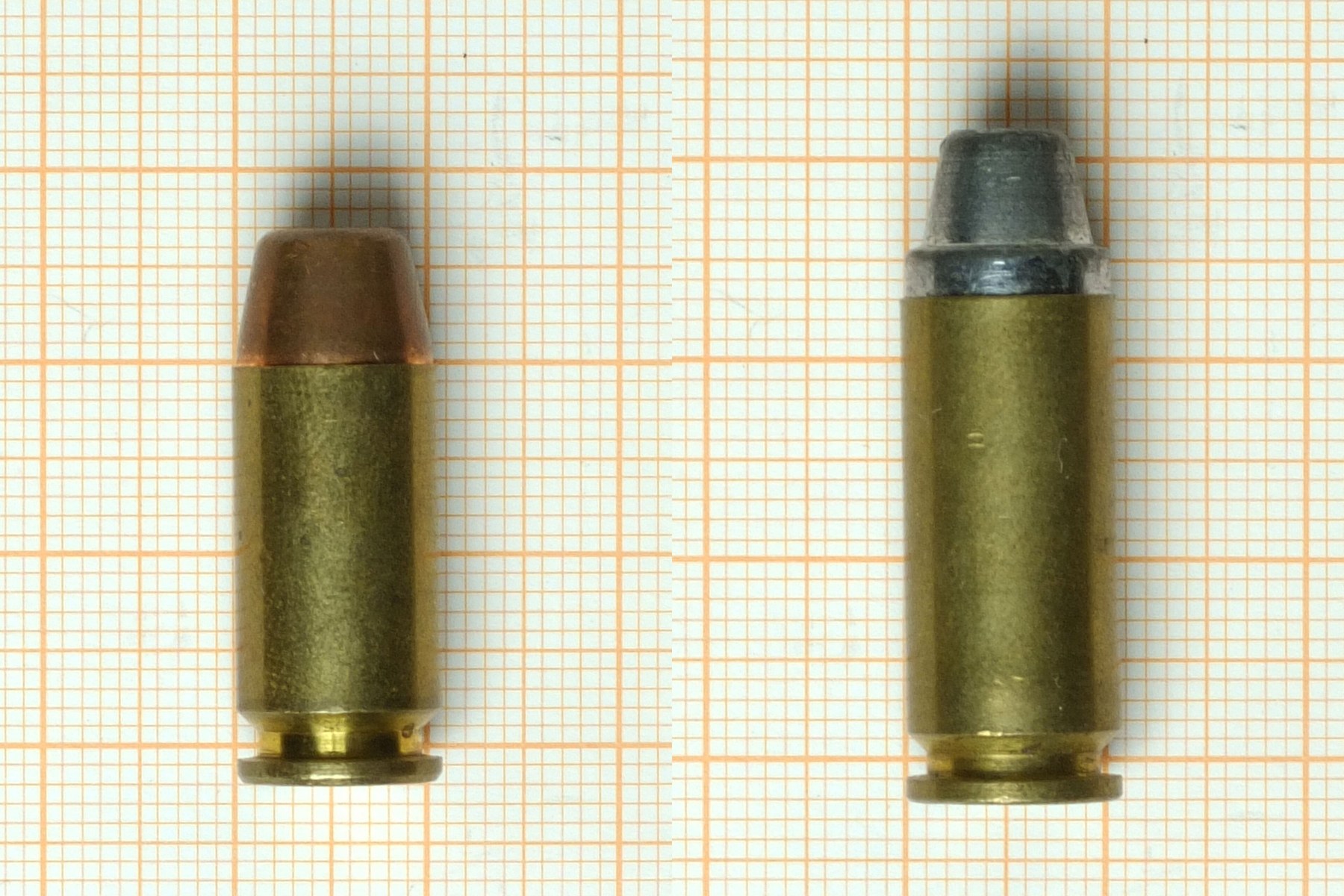
The .40 S&W is that observation made into a cartridge: the 10 mm’s bullet diameter, on a case shortened to 0.850 in, so that the loaded round fits a magazine and grip built around 9 mm dimensions.1 It debuted, in the account usually given, on 17 January 1990 alongside the Smith & Wesson Model 4006, as a joint development of Smith & Wesson and Winchester — and Glock, not Smith & Wesson, reached the market first with a pistol for it, the Glock 22 and Glock 23.1
Who initiated it is told two ways. One version has the FBI working with Smith & Wesson to shorten the 10 mm; the other has the .40 as the two companies’ commercial answer to the Bureau’s reduced load. No primary document settling the point was located, and the dive does not choose. What is not in dispute is the performance envelope: the .40 S&W was designed to do what the reduced 10 mm did, in a smaller pistol.
The cartridge was taken up widely by police: by 2014 the FBI’s own Training Division counted it among “the three most common law enforcement handgun calibers (9mm Luger, .40 Smith & Wesson and .45 AUTO)”.3 The FBI itself, per the same secondary account, adopted Glock pistols in .40 S&W in May 1997.1
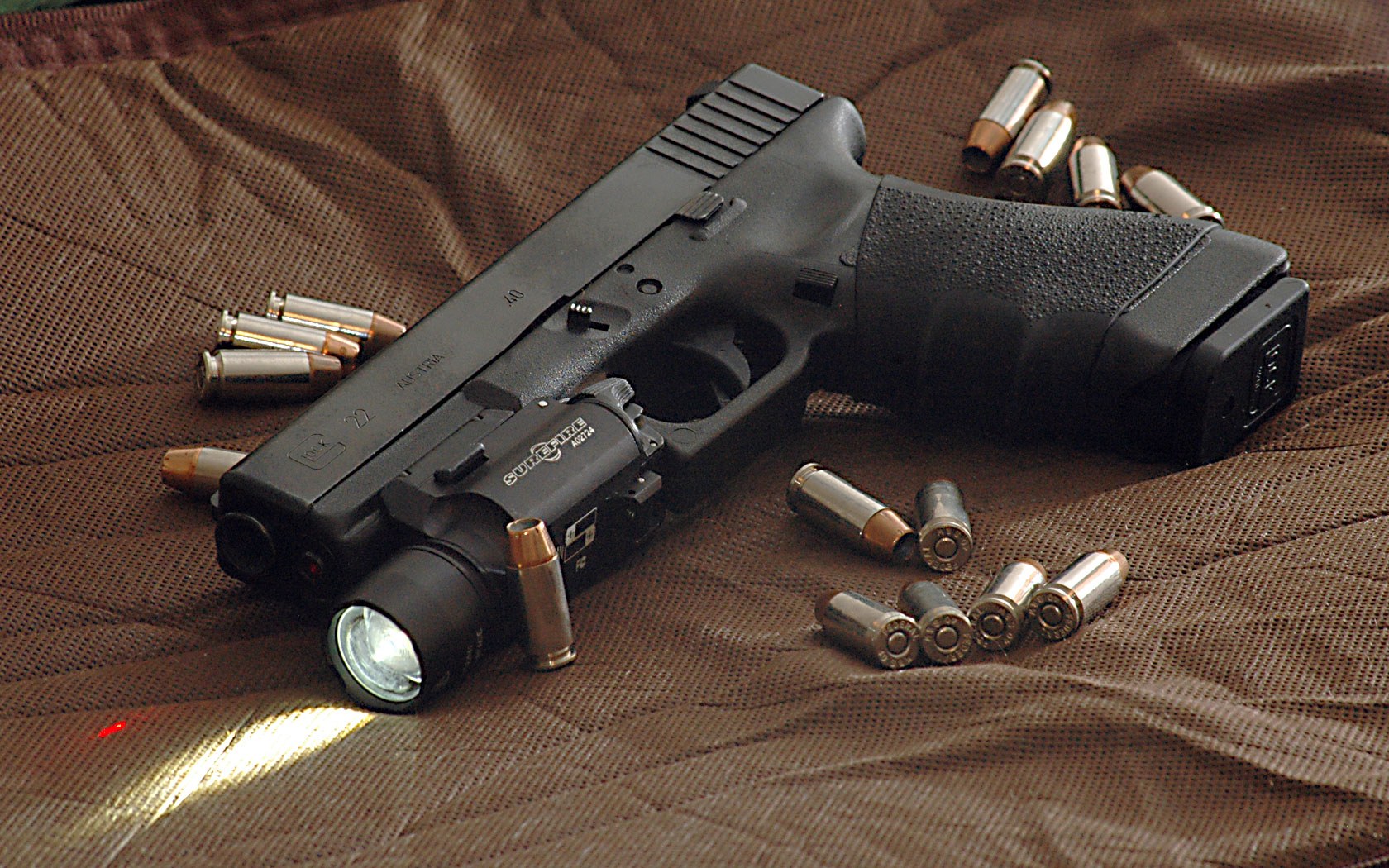
The XD(M) arrived in 2008, eleven years into the FBI’s own .40 era and six years before the memo in §3.6 — which places the pistol documented here squarely in the cartridge’s law-enforcement heyday.
3.5 The Pressure Myth
The standard folklore about the .40 is that it is a high-pressure cartridge that beats pistols up. The first half is wrong as stated, and The Reloading Bench’s Volume 15 sets out why: the .40 S&W and 9 mm share the same 35,000 psi SAAMI maximum. What differs is that the same pressure acts on a larger case-head area, producing a greater total force on the case head and breech face — “same pressure, more force, less support”, in that volume’s words.
The second half — wear — is the one the FBI itself put in writing (§3.6). It is not the pressure figure that says so; it is the Bureau’s experience with its own pistols.
3.6 The Fall: What the 2014 Memo Actually Says
The document that turned American law enforcement back toward the 9 mm is a short Training Division summary headed “FBI Training Division: FBI Academy, Quantico, VA — Executive Summary of Justification for Law Enforcement Partners”, dated 6 May 2014. It was not located on the FBI’s own site; it circulated widely in 2014 and was reproduced in full by Soldier Systems Daily on 25 September 2014, which is the text quoted here.3
Its bullet points are worth reading in the original, because the summary most people carry — “the FBI decided 9 mm is as good as .40” — leaves out the argument:3
“Handgun stopping power is simply a myth”
“The single most important factor in effectively wounding a human target is to have penetration to a scientifically valid depth (FBI uses 12” – 18”)”
“LEO’s miss between 70 – 80 percent of the shots fired during a shooting incident”
“Contemporary projectiles (since 2007) have dramatically increased the terminal effectiveness of many premium line law enforcement projectiles (emphasis on the 9mm Luger offerings)”
“9mm Luger offers higher magazine capacities, less recoil, lower cost (both in ammunition and wear on the weapons) and higher functional reliability rates (in FBI weapons)”
“The majority of FBI shooters are both FASTER in shot strings fired and more ACCURATE with shooting a 9mm Luger vs shooting a .40 S&W (similar sized weapons)”
“There is little to no noticeable difference in the wound tracks between premium line law enforcement projectiles from 9mm Luger through the .45 Auto”
Three things in it are routinely lost.
First, the argument is about bullets, not calibres. The memo’s own framing is that “the projectile needs to be the basis for the discussion on what ‘caliber’ is best”, and that in every major police calibre there are projectiles likely to fail and projectiles likely to succeed.3 The case for the 9 mm is that bullet design since 2007 closed the gap — not that the .40 was a bad idea in 1990.
Second, it is an argument about hits. A service that misses 70 to 80 per cent of the time gains more from faster, more accurate follow-up shots and more rounds in the magazine than from a larger wound per hit, if the per-hit wound is comparable — which is the memo’s claim for premium bullets.
Third, “wear on the weapons” is there, in brackets, in the Bureau’s own words. It is the FBI’s experience with its own .40 pistols, stated as a cost; the memo gives no figures for it.
The date is sometimes given as 2015 for the FBI’s announcement of the change.1 The Training Division’s justification is dated May 2014; this dive does not assert a date for any formal announcement.
3.7 What the Retreat Did to .40 Pistols
This is the section where confident claims are cheapest, and it is kept short for that reason.
The one piece of hard evidence in hand is the maker’s own catalogue. Springfield’s current XD-M line lists no .40 S&W model at all — .45 ACP and 10 mm only (Volume 1 §1.6).4 The irony has already been noted: the survivor is the parent cartridge, not the child.
Beyond that, the consequences commonly described — agency trade-in .40s flooding the used market, new models launching in 9 mm first or only, .40 ammunition becoming relatively less common on shelves — are plausible and widely reported, but no price series, sales data or production figures were gathered for this dive, and none is asserted. What can be said without data is structural: a cartridge that loses its institutional buyers loses the volume that kept new pistols and loads coming, and an owner of a .40 is now buying into a mature, stable cartridge rather than a growing one. For a handloader that matters less than for anyone else, because the brass, bullets and data do not depend on new pistols being made.
3.8 Case Support, and the Question for This Pistol
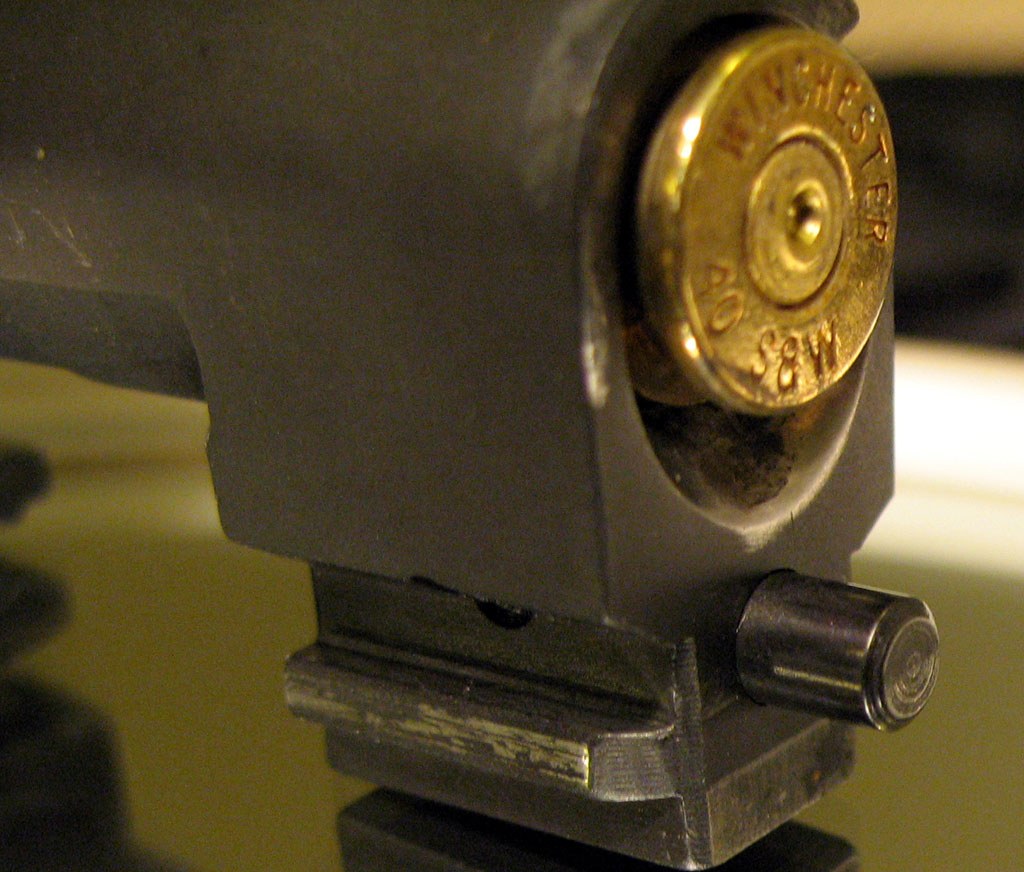
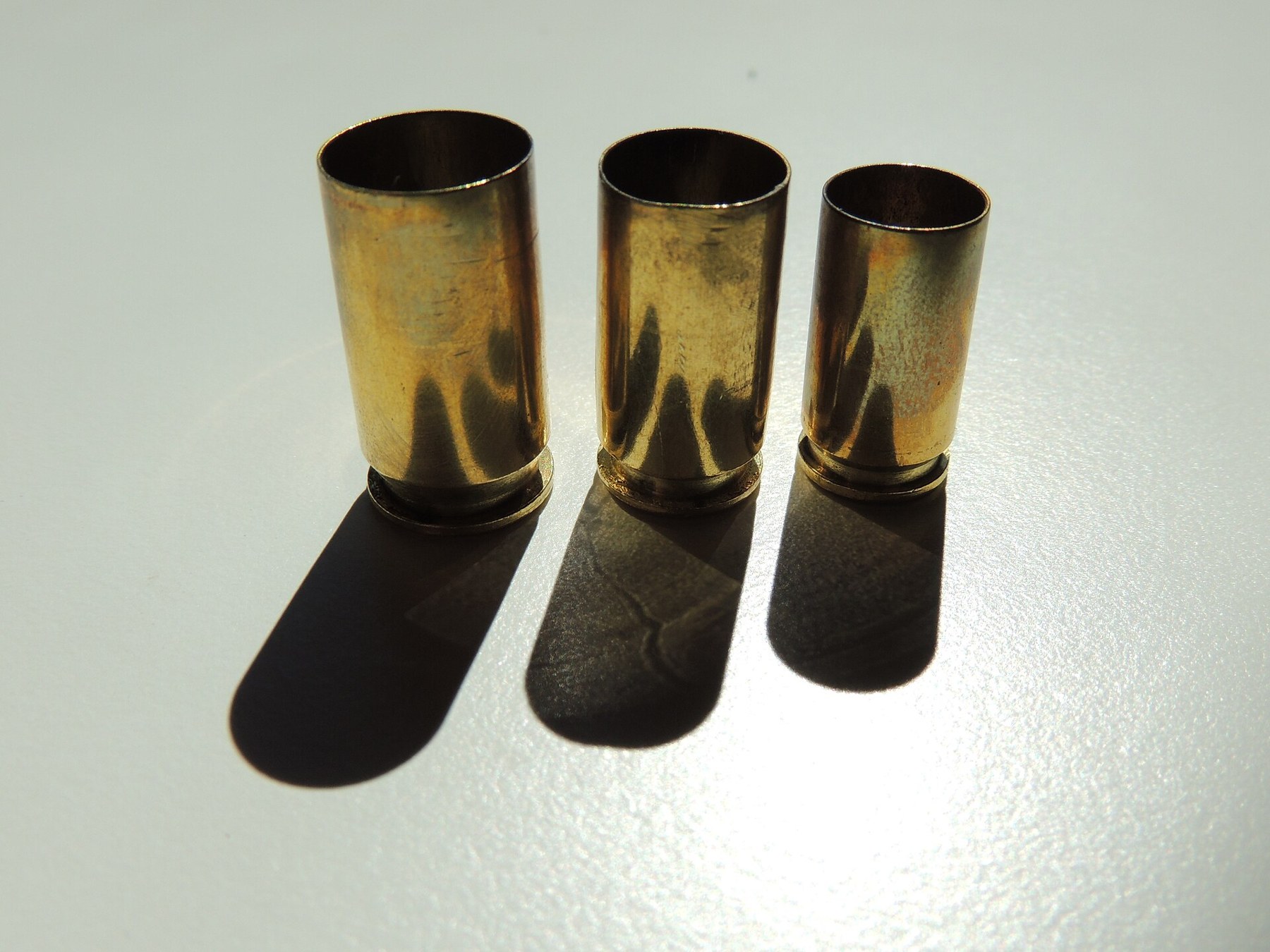
The Reloading Bench explains the base bulge in general: pistols whose feed ramp leaves the rear bottom of the case unsupported let the case swell there, and range brass fired in such pistols is likely to contain bulged cases (Volume 15). What the bench cannot say is how much support this barrel gives.
Neither can this dive, from the sources available. The Springfield pages consulted for the XD(M) — the 2014 specification and the current product pages — do not describe the chamber’s case support at all. Retail listings for this model describe a “fully supported ramp”, but that is retailer copy, not the maker’s, and “supported ramp” is not the same claim as “fully supported case head”. Nothing is asserted here.
The question is answerable by the owner, cheaply and definitively, from brass this pistol has fired:
The test does not need a measurement to be useful: a case that drops freely into a case gauge after firing, with no visible belt above the extractor groove, came out of a barrel that supported it. A handloader who runs this pistol’s own brass through a case gauge before sizing already has the data; the only thing missing is to look at it as evidence about the barrel rather than about the brass.
3.9 Handloading for It — and What the Maker Says About That
The owner of the pistol documented here handloads, and the maker’s position should be known before a handload is fired in it. Springfield’s manual says, in its safety rules: “Use only clean, dry, original, high-quality, commercially manufactured ammunition. Using reloaded ammunition may void the warranty.”5 The warranty text itself is firmer: it “does not cover any damage or condition determined by Springfield to be caused by … hand-loaded, reloaded, remanufactured, or defective ammunition.”5
Read narrowly, that is not a prohibition; it is a warranty boundary, and it is the same boundary most pistol makers draw. What it means in practice is that a case failure in this pistol while firing handloads is the owner’s to pay for, whatever its cause. The manual’s point-of-aim note makes a related point in passing: the pistol is “regulated to shoot point of aim, point of impact” at 25 yards, and “changing brand or type of ammunition may alter point of impact.”5
The process material — sizing, the bulge question, setback and crimp — is in The Reloading Bench, linked in §3.1. Two points specific to this pistol follow from the rest of this dive:
- Primer seating and primer hardness interact with Volume 4. The trigger kit fitted to this pistol includes a lighter striker spring. A lighter striker delivers less energy to the primer; a high primer or a hard-cupped primer that fires reliably with the factory spring may not with the lightest spring in the kit. A handloader who sees a light strike should suspect that combination before suspecting the primer lot. Volume 4 §4.5.
- Setback is a feeding event, and it matters most in pistols (Bench Volume 20). The practical check is to chamber a handload in this pistol, extract it, and measure its overall length against an unchambered round from the same batch.
No charge weight is given here or anywhere in this dive. Load data comes from a current published manual.
Sources
Footnotes
-
“.40 S&W”, Wikipedia — the FBI testing result, the 1989 10 mm adoption, the 0.850 in case, the 17 January 1990 debut with the S&W 4006, Glock first to market, the May 1997 FBI Glock adoption, and the “2015” announcement date. All secondary and attributed as such. Accessed 19 September 2026. ↩ ↩2 ↩3 ↩4 ↩5 ↩6 ↩7
-
Pinecrest Village Council historical marker for Special Agents Jerry Dove and Benjamin Grogan, as photographed in File:Grogan&Dove monument.JPG, Wikimedia Commons. ↩
-
FBI Training Division, FBI Academy, Quantico, VA, “Executive Summary of Justification for Law Enforcement Partners”, dated 6 May 2014, as reproduced in “FBI 9MM Justification, FBI Training Division”, Soldier Systems Daily, 25 September 2014, https://soldiersystems.net/2014/09/25/fbi-9mm-justification-fbi-training-division/ . Not located on fbi.gov. Accessed 19 September 2026. ↩ ↩2 ↩3 ↩4
-
Springfield Armory, “XD-M® Handguns”, https://www.springfield-armory.com/xd-series-handguns/xd-m-handguns/ . Accessed 19 September 2026. ↩
-
Springfield Armory, XD-M® & XD-M® Elite Operation & Safety Manual, 2022 edition (V16), https://www.springfield-armory.com/wp-content/uploads/XDmManual_V16.pdf — ammunition rule p. 9; point of aim p. 54; limited warranty p. 58. Accessed 19 September 2026. ↩ ↩2 ↩3
Comments (0)