Springfield Armory XD(M) .40 · Volume 5
Sights and Light — Tritium Arithmetic and a Light Whose Rating Changed
The TruGlo TFO sights fitted to this pistol, how fast their tritium fades, and the Streamlight TLR-1 HL on its rail
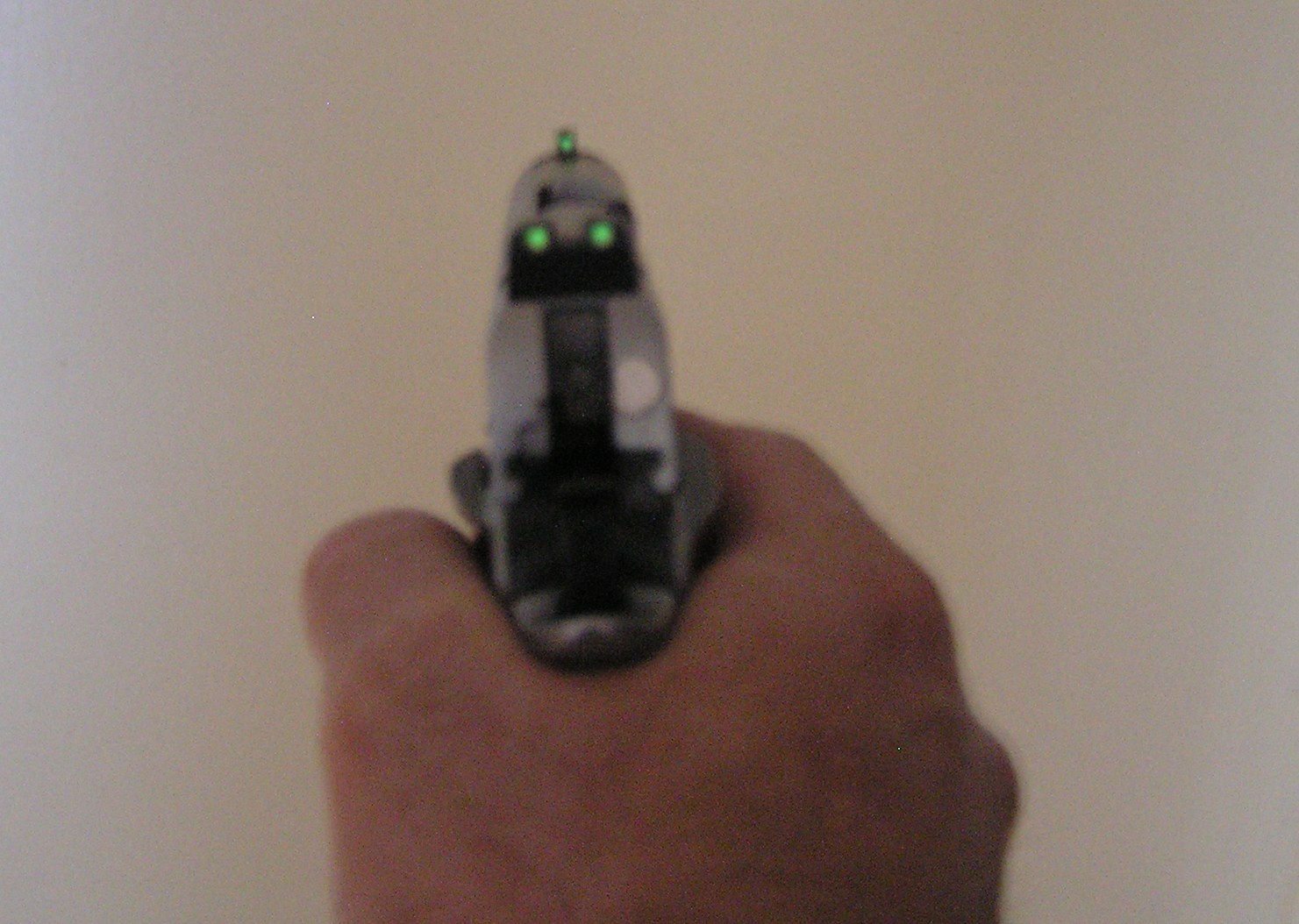
Two of the three changes recorded on this pistol are on its outside: the sights on the slide and the light on the rail. They are the easy half of the configuration, and they carry the dive’s cleanest piece of arithmetic — how quickly a tritium night sight fades, worked from the national standards laboratory’s value for the half-life rather than from a marketing line. They also carry a correction to the inventory, and a reason to doubt the lumen figure written against the light.
5.1 Which Sights Are Fitted — and a Spelling on the Inventory
As documented in September 2026, the owner’s inventory records “TruGlo Bright - Site TFO tritium and fiber-optic 3 dot sight”, marked installed.
“Bright-Site” is TruGlo’s Brite-Site line, misspelled. TruGlo’s own web address for its tritium and fibre-optic handgun sights uses “brite-site”, and its page title for the set reads “BRITESITE TFO”.1 “TFO” is TruGlo’s name for its combined tritium and fibre-optic design.
TruGlo’s own fitment chart for the Springfield XD family — covering the XD, XD(M), XD-S, XD Mod.2 and XD-E — lists two TFO sets:2
Table 1 — 5.1 Which Sights Are Fitted — and a Spelling on the Inventory
| TruGlo part | TruGlo’s description |
|---|---|
| TG131XT — TFO® | “Green front sight, green rear square-notch rear.” |
| TG131XTY — TFO® Yellow | ”Green front sight, yellow rear square-notch rear.” |
Both are three-dot sets and both match the inventory’s description. The inventory does not say which is fitted, and the difference is visible at a glance: whether the two rear dots are green or yellow. That is recorded as a question for the owner. The same chart notes that none of its sights is recommended for the XD 5.25-inch Competition models — irrelevant to a 4.5-inch pistol, but it confirms the chart is specific rather than generic.2
5.2 How a Tritium and Fibre-Optic Sight Works
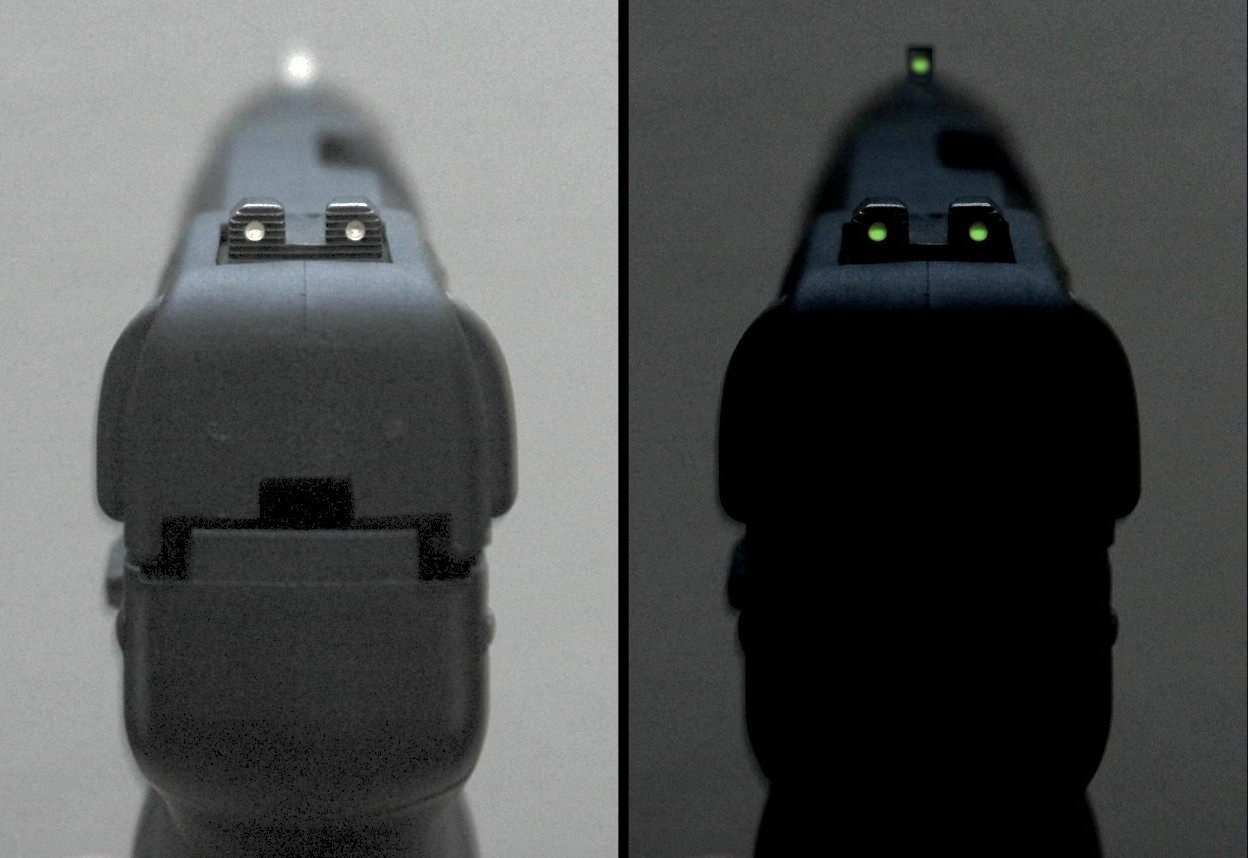
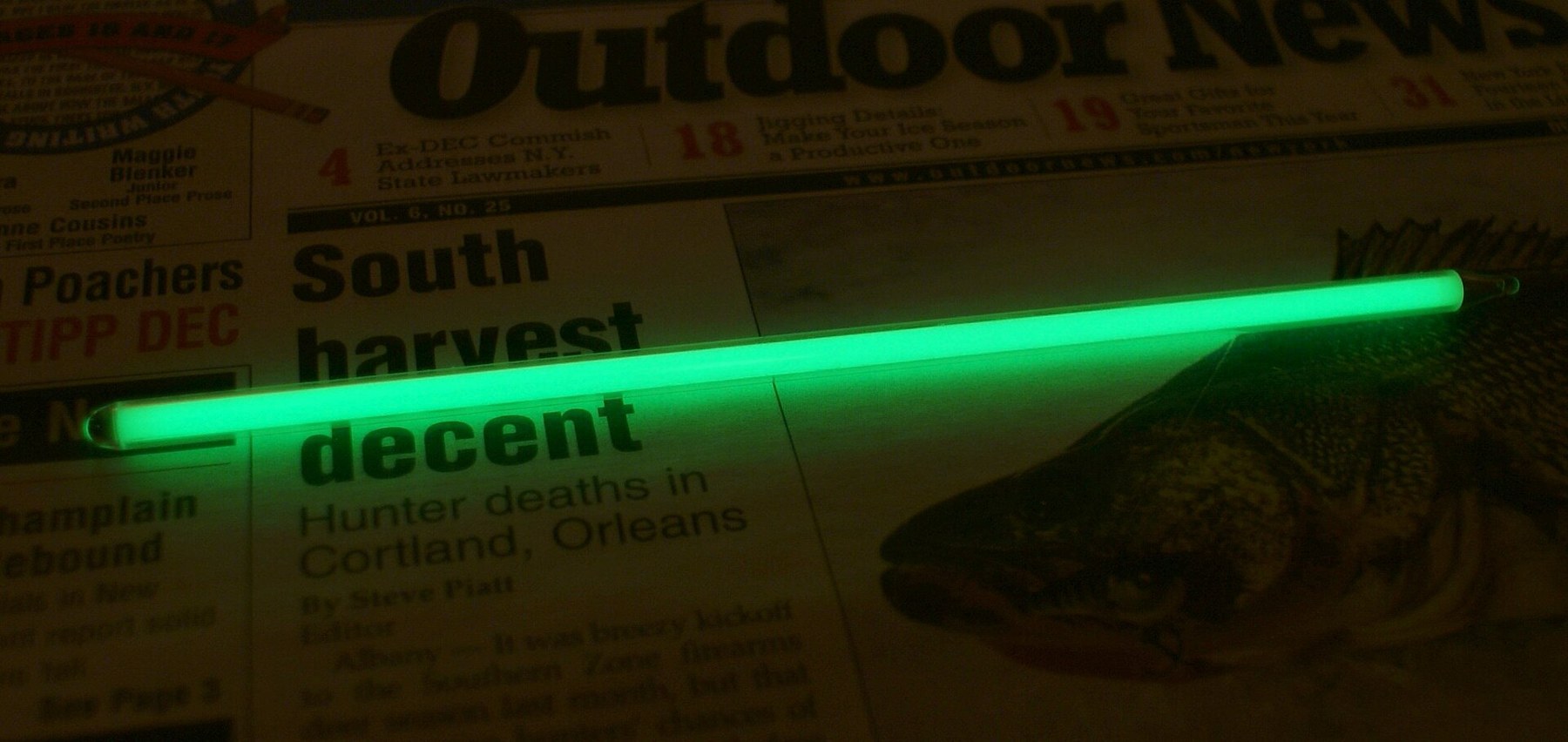
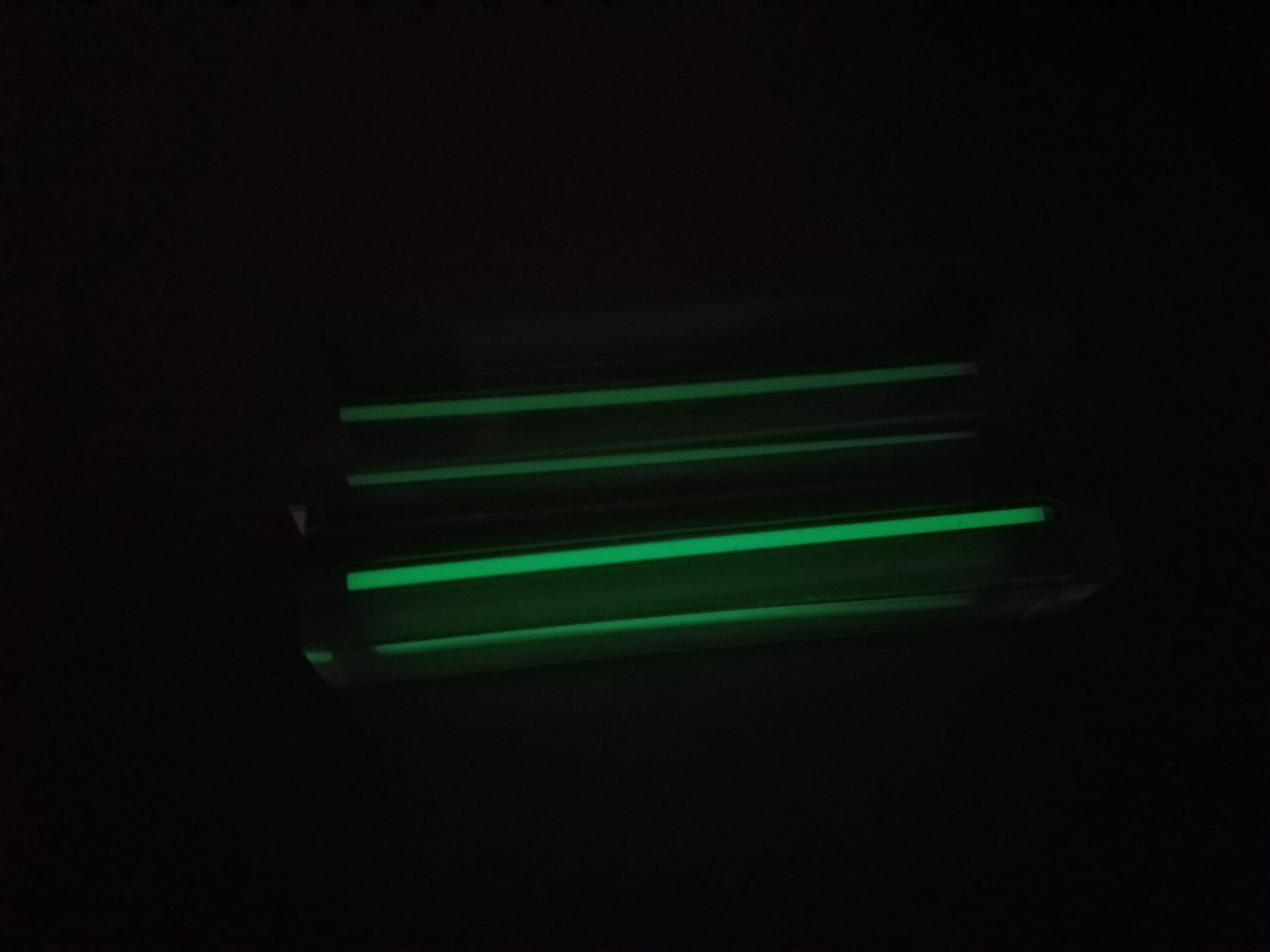
A tritium sight is a small, sealed glass vial containing tritium gas, coated inside with a phosphor. Tritium is the radioactive isotope of hydrogen; it decays by emitting a low-energy beta particle, and each decay that strikes the phosphor produces light. No battery, no charging, and no light source is needed: the vial glows continuously, day and night, for as long as there is tritium left to decay.
The glow is faint. In daylight it is invisible, which is why a tritium-only sight usually has a white ring around the vial for daytime use. TruGlo’s TFO design replaces that ring’s job with a fibre-optic element: a light pipe that gathers ambient light along its length and emits it at the end facing the shooter, so the dot is bright in daylight. At night the fibre has nothing to gather, and the tritium does the work.
The two halves age completely differently. The fibre does not decay; it fails, when it fails, by physical damage or by weathering. The tritium decays on a fixed schedule that no care can change, and that schedule is the subject of the next section.
5.3 The Half-Life, and the Arithmetic
The authoritative value comes from the United States National Institute of Standards and Technology. Lucas and Unterweger’s comprehensive review and critical evaluation of the half-life of tritium, published in the Journal of Research of NIST in 2000, recommends 4,500 ± 8 days — 12.32 years.3
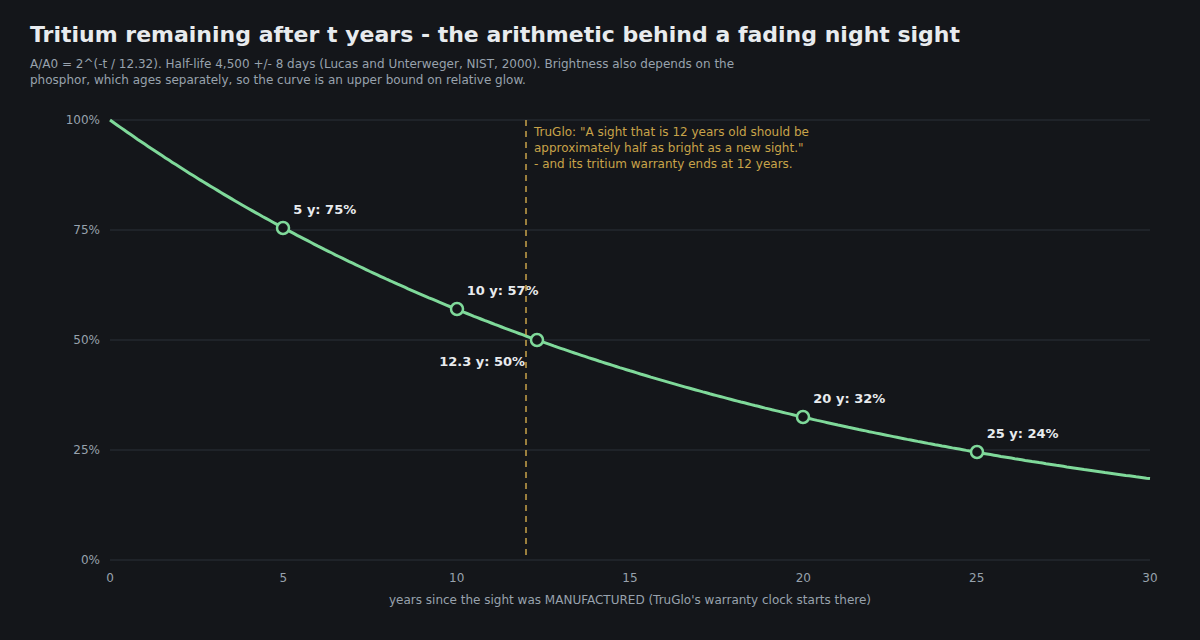
The fraction of tritium remaining after t years is 2 raised to the power (−t / 12.32). Worked:
Table 2 — The fraction of tritium remaining after t years is 2 raised to the power (−t / 12.32). Worked
| Years since manufacture | Tritium remaining |
|---|---|
| 1 | 94.5 % |
| 2 | 89.4 % |
| 5 | 75.5 % |
| 8 | 63.8 % |
| 10 | 57.0 % |
| 12.32 | 50 % |
| 15 | 43.0 % |
| 20 | 32.5 % |
| 25 | 24.5 % |
| 30 | 18.5 % |
Four things follow.
The loss is steady, about 5.5 per cent of what remains each year, and it is fastest in absolute terms when the sight is new. A sight loses a quarter of its tritium in its first five years.
TruGlo’s own statement agrees with the physics. Its handgun-sight warranty says: “the illumination of tritium naturally decays over time. A sight that is 12 years old should be approximately half as bright as a new sight.”4 Twelve years against a 12.32-year half-life is 51 per cent. The maker’s round number is honest.
The clock starts at manufacture, not at installation. TruGlo’s warranty runs “for a period of 12 years from the date of original manufacturing”.4 A sight set that sat in a warehouse or a drawer for three years before it was fitted arrived with about 84 per cent of its tritium, not 100. The owner of the pistol documented here can date the sights from the purchase record; the manufacture date is earlier by an unknown amount.
The curve is an upper bound on glow. The phosphor that turns beta decay into light also ages, independently of the tritium, and no TruGlo figure for phosphor degradation was located. A real sight will be somewhat dimmer at a given age than the tritium fraction alone predicts, not brighter.
5.4 What a Dim Sight Means
TruGlo’s warranty is blunt on the point, in capitals: “A DIM SIGHT IS NOT DEFECTIVE. IT IS THE RESULT OF THE EXPECTED AND NORMAL DECAY OF THE TRITIUM AND IS NOT COVERED BY THIS WARRANTY.”4
What a dim TFO sight is, in practice, is a fibre-optic sight with a weaker night function. The daylight performance — the fibre — is unaffected by age. The night performance falls on the schedule in §5.3. The point at which to replace a set is a judgement about the night function, not a date. As a reference point, at 20 years a sight holds about a third of its original tritium, and at 25 years about a quarter.
Whether a sight is still usable is simple to test and needs no instrument: in a dark room, after the eyes have adapted, the three dots should be visible and distinguishable against a dark background at arm’s length. A sight that fails that test has lost its night function, whatever its age.
5.5 Installation, Zero and the Warranty
TruGlo’s warranty attaches a condition to installation: “HANDGUN SIGHTS MUST BE INSTALLED BY A TRAINED GUNSMITH USING A ‘SIGHT PRESS’. ALL OTHER METHODS OF INSTALLATION WILL VOID THIS WARRANTY.”4 Its fitment chart says the same in softer words: “TRUGLO always recommends installation by a professional gunsmith with the correct sight installation tools.”2 How the sights on this pistol were installed is not recorded.
The same warranty adds that “PRODUCTS THAT CONTAIN TRITIUM ARE REGULATED BY THE NUCLEAR REGULATORY COMMISSION AND CAN ONLY BE DISSEMBLED AND SERVICED BY A LICENSEE OF THE NRC.”4 A vial is not an owner-serviceable part; a damaged one goes back to the maker.
Zero. Springfield regulates the XD-M to shoot “point of aim, point of impact” at 25 yards with the factory sights, the bullet striking at the top of the front sight.5 Replacement sights of a different height, front or rear, move that point of impact. Nothing published says whether TruGlo’s TFO heights match Springfield’s factory sights for this model, so the zero of this pistol with these sights is whatever the owner’s target says it is, and it is worth confirming at 25 yards with the load actually used.
The manual’s own “front fiber optic installation” procedure — melting a bulb onto a fibre filament with a lighter — is for Springfield’s factory fibre-optic front sight on some XD-M models.5 It does not apply to a TruGlo TFO, whose fibre sits over a tritium vial.
5.6 The Streamlight TLR-1 HL — and Which TLR-1 HL
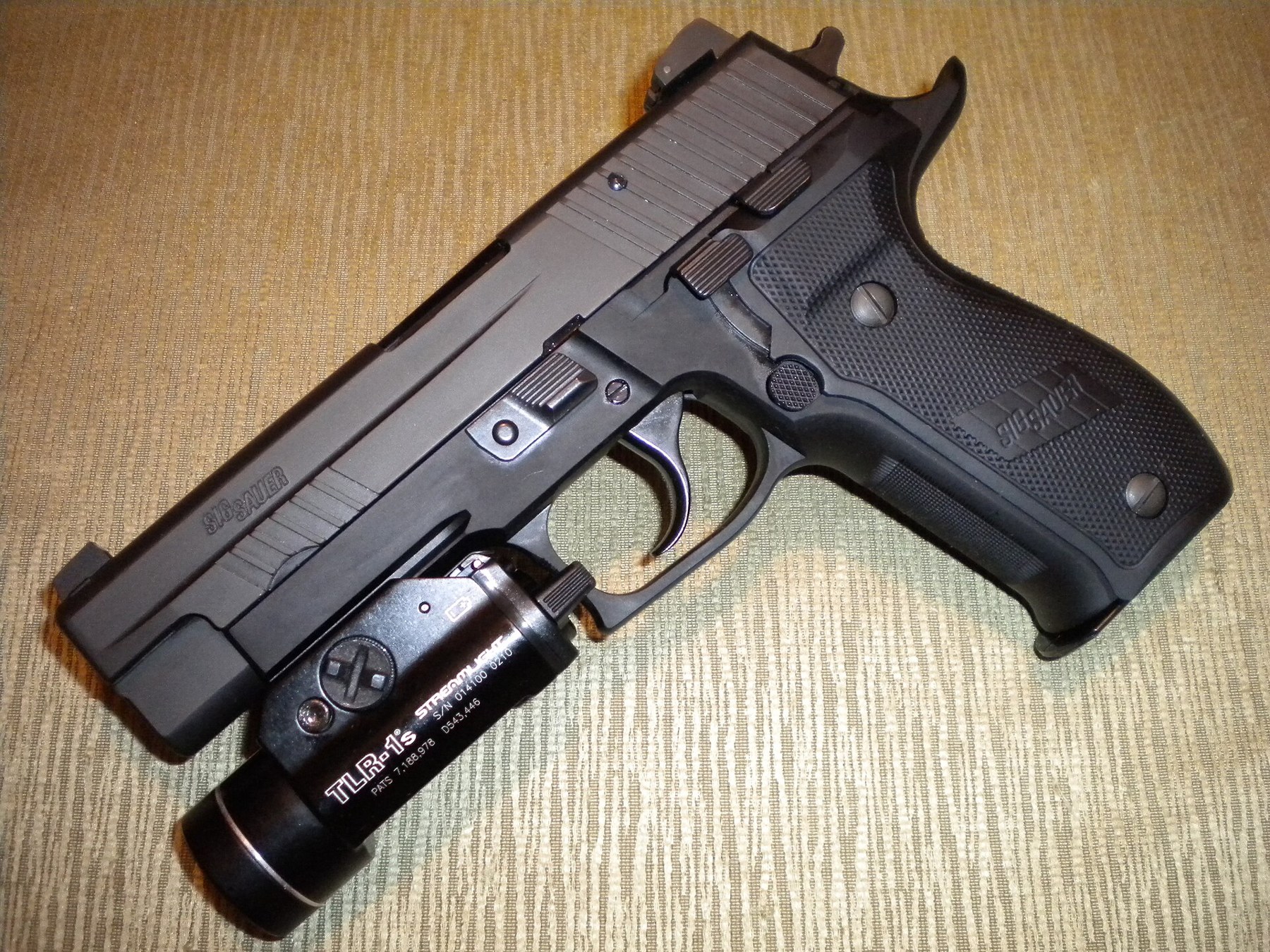
As documented in September 2026, the inventory records a “Streamlight 69266 TLR-1 HL 1000 Lumen Tac Weapon Light”, marked installed.
Streamlight’s current specification for the TLR-1 HL is “1,000 lumens; 1.5 hour run time; 20,000 candela; 283m beam distance”, on two CR123A lithium cells, in a 6000-series aluminium body, 3.39 in long and weighing 4.32 oz, rated IPX7.6
That rating is recent. Streamlight’s own page for the same light, as archived on 29 October 2016, 17 May 2019, 20 November 2019 and as late as 30 December 2019, read: “800 lumens; 15,000 candela peak beam intensity; 245m beam; runs 1.75 hours”. The first archived capture giving 1,000 lumens and 1.5 hours is dated 27 June 2020.7 The upgrade therefore happened between those two captures.
The consequence for this pistol is straightforward. A TLR-1 HL made between at least late 2016 and about mid-2020 is an 800-lumen light on its maker’s own rating (earlier production was not checked), and the “1000 Lumen” on the inventory is the current catalogue title rather than necessarily this light’s output. When the light was bought decides which it is. The earlier and later ratings are consistent with each other in one respect worth noting: both beam distances follow from their candela figures by the standard ANSI relation (distance = 2 × √candela): 2 × √20,000 = 283 m and 2 × √15,000 = 245 m.
The part number. The inventory gives 69266. Streamlight’s product page does not list part numbers against colours. Retail listings consistently tie 69266 to the Flat Dark Earth version and 69260 to black; that is retailers’ evidence, not the maker’s, and it is recorded rather than asserted. If it holds, the light on this all-black pistol is FDE. That, too, is a question for the owner.
The same inventory lists a Streamlight TLR-1 HL with the same part number on the owner’s P320. It does not say whether that is one light moved between pistols or two lights, and this dive says neither.
5.7 Living With a Light on This Pistol
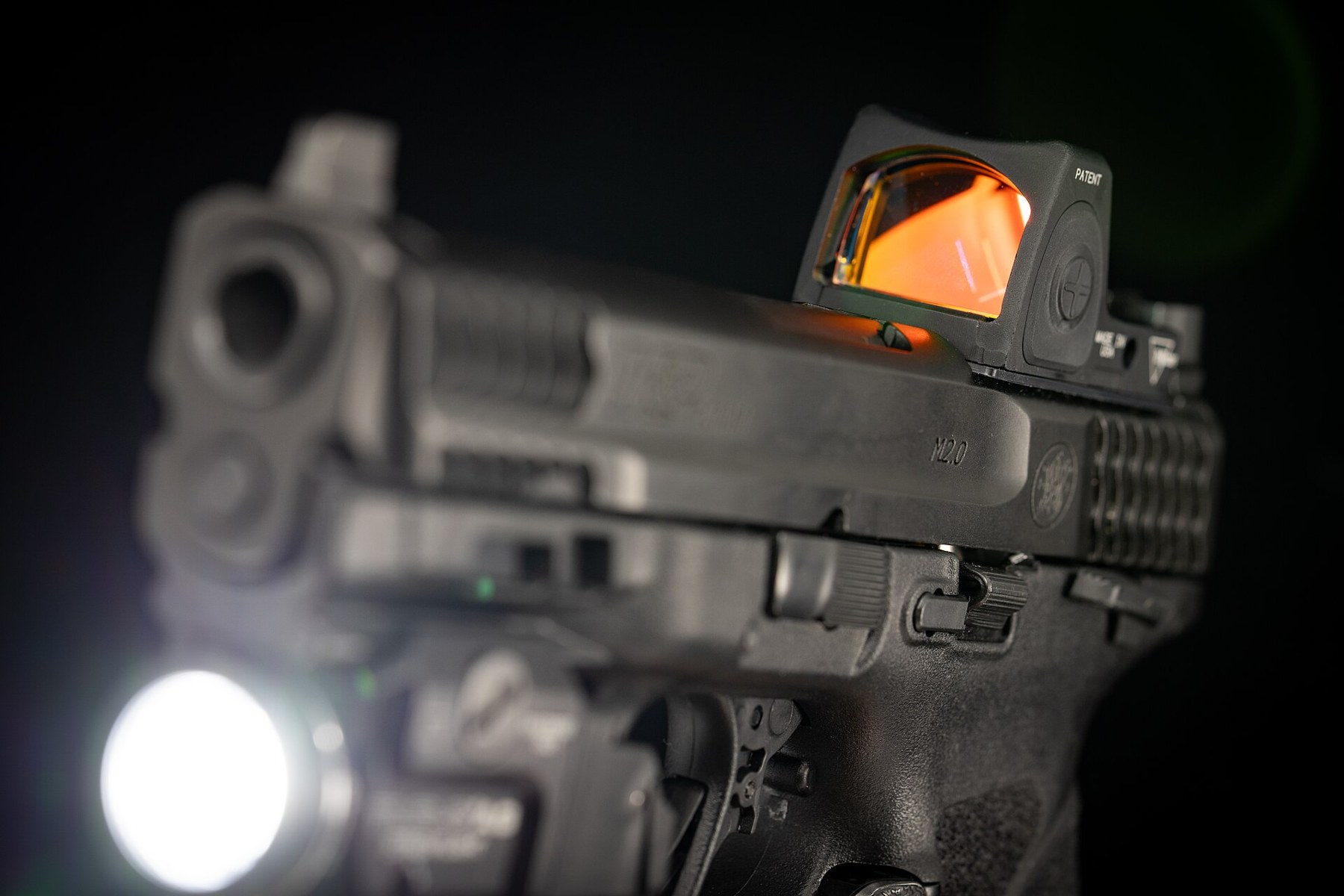
A few points follow from the specifications rather than from opinion.
- Weight moves forward. The 4.32 oz light on a pistol that Springfield gives as 30 oz with an empty magazine adds about 14 per cent to the unloaded weight, all of it under the muzzle.68 That damps muzzle rise; it also changes how the pistol balances in the hand.
- The holster must be a light-bearing holster. Streamlight says the TLR-1 HL “fits most existing light bearing holsters”.6 A holster moulded for a bare XD(M) will not take it.
- Rail keys. Streamlight ships keys for Glock-style, MIL-STD-1913, Beretta 90two, Smith & Wesson SW99/TSW and SIG P320 rails.6 Springfield is not on that list, and which key sits in the light on this pistol is not recorded. A light that shifts on its rail will not hold its aim point and will loosen under recoil; the key is what prevents that.
- Two CR123A cells are the only consumable. The 1.5-hour run time (800-lumen lights: 1.75 hours) is continuous-on at full output.67
- Removing the light for cleaning is a tool-free job with the rail-grip clamp. Refitting it in the same slot keeps it pointing where it did.
None of this touches the pistol’s mechanism. A weapon light is the easiest thing on this pistol to remove, and the only thing on it that illuminates the target as well as the sights.
Sources
Footnotes
-
TruGlo, “BRITESITE TFO (Green/Yellow)”, https://www.truglo.com/firearms-handgun/brite-site-tritium-fiber-optic-handgun-sights-green-yellow.asp — page title and address as returned by a search; the page itself sits behind an automated-access block and was not read. Accessed 19 September 2026. ↩
-
TruGlo, “Springfield® XD, XDM, XDS, XD Mod 2, and XDE — Handgun Series”, fitment FAQ, as archived 13 November 2024, http://web.archive.org/web/20241113081718/https://www.truglo.com/faq/firearm/springfield-xd-series . Accessed 19 September 2026. ↩ ↩2 ↩3
-
L. L. Lucas and M. P. Unterweger, “Comprehensive Review and Critical Evaluation of the Half-Life of Tritium”, Journal of Research of the National Institute of Standards and Technology 105(4), 541–549 (2000), https://pmc.ncbi.nlm.nih.gov/articles/PMC4877155/ — recommended value (4500 ± 8) days. Accessed 19 September 2026. ↩
-
TruGlo, “Handgun Sight Warranty”, as archived 20 January 2021, http://web.archive.org/web/20210120120913/https://truglo.com/faq/warranty/us-handgun-sight-warranty — the live page could not be read (automated-access block), so this is the latest version obtained. Accessed 19 September 2026. ↩ ↩2 ↩3 ↩4 ↩5
-
Springfield Armory, XD-M® & XD-M® Elite Operation & Safety Manual, 2022 edition (V16), https://www.springfield-armory.com/wp-content/uploads/XDmManual_V16.pdf — front fibre-optic installation p. 23; point of aim p. 54. Accessed 19 September 2026. ↩ ↩2
-
Streamlight, “TLR-1 HL®”, https://www.streamlight.com/products/detail/tlr-1-hl . Accessed 19 September 2026. ↩ ↩2 ↩3 ↩4 ↩5
-
Streamlight, TLR-1 HL product page, http://www.streamlight.com/products/detail/index/tlr-1-hl , as archived by the Internet Archive on 2016-10-29, 2019-05-17, 2019-11-20, 2019-12-30 (800 lumens) and 2020-06-27 (1,000 lumens). No earlier capture of this address was found, so the rating before October 2016 is not established here. Accessed 19 September 2026. ↩ ↩2
-
Springfield Armory, product page “XD(M)® 4.5” .40SW Handgun”, captured 24 May 2014, http://web.archive.org/web/20140524050034/http://www.springfield-armory.com/products/xdm-4-5-40-cal/ . Accessed 19 September 2026. ↩
Comments (0)