Springfield Armory XD(M) .40 · Volume 6
Owning It — Field Strip, Care, Magazines, Storage and the Michigan Position
Maintenance exactly as Springfield's manual gives it, one point on which two editions of that manual disagree, and the Michigan statutes that bear on a centrefire pistol
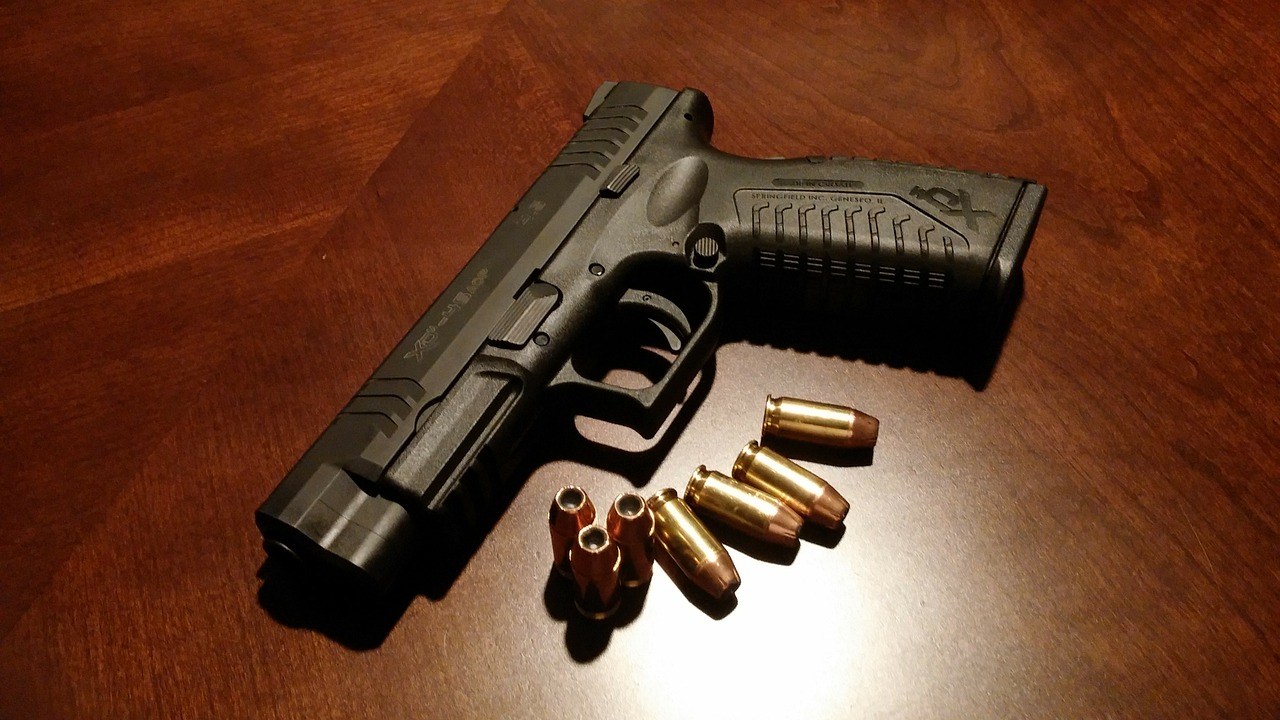
This volume is the practical one. It covers unloading, field stripping, reassembly, cleaning, magazines and storage, and closes with the Michigan statutes that bear on a centrefire pistol. The maintenance material is taken from one source only, for a reason the next section gives.
6.1 The Source, and Why It Is the Only One Used
Every procedure in §§6.2–6.7 is Springfield’s, from its XD-M® & XD-M® Elite Operation & Safety Manual, 2022 edition (V16), cross-checked against the 2020 edition.12 Nothing is added from video walkthroughs, forum posts or memory, because a disassembly sequence that is almost right is worse than none: the manual itself warns that “improper disassembly and/or assembly will create unsafe conditions that could result in injury or death, or a firearm that simply will not work.”1
Two cautions about the source. It is the current manual, and the pistol documented here is an early-pattern XD(M); the 2009 XD(M) manual that matches its vintage exists in the Internet Archive but could not be retrieved intact, so it has not been read (Volume 2 §2.1). And the manual assumes a factory pistol. The pistol documented here has an aftermarket trigger kit (Volume 4), which lives in the frame and is not disturbed by a field strip.
6.2 Unloading — With the Grip Safety in Mind
The manual’s unloading procedure differs by the position of the slide.1
If the slide is already locked back: point the pistol in a safe direction with the finger off the trigger; press the magazine release and remove the magazine; “From above and rear, carefully inspect chamber to make sure it is empty.”
If the slide is forward:
- Point the pistol in a safe direction, finger off the trigger.
- Press the magazine release and remove the magazine.
- “Fully depress the grip safety and pull slide fully to rear to eject any cartridge remaining in chamber.”
- Holding the slide to the rear, inspect the chamber.
Step 3 is the one that catches Glock habits. The manual prints the reason in capitals under it: “GRIP SAFETY MUST BE DEACTIVATED TO ALLOW THE SLIDE TO BE PULLED TO ITS REARWARD (OPEN) POSITION.”1 A slide that refuses to move is not jammed; the hand is not gripping the pistol (Volume 2 §2.3).
The manual’s standing rule applies throughout: “Firearm is not empty or unloaded until the magazine is removed and the chamber is empty,” and — because the pistol has no magazine disconnect — “THE FIREARM IS ABLE TO FIRE WITH OR WITHOUT THE MAGAZINE IN PLACE.”1
6.3 Field Strip, as the Manual Gives It
The manual notes that “field stripping procedures on the XD-M® are the same regardless of caliber”, and that eye protection should be worn.1 Its steps, in order:
- Point the gun in a safe direction, finger off the trigger.
- Remove the magazine and unload the firearm.
- “Draw back the slide to the rear stop position and lock it open, pushing up the slide stop lever.”
- “Visually inspect the chamber to confirm the firearm is unloaded.”
- “Rotate the disassembly lever clockwise to a vertical 12 o’clock position.”
- “Firmly grip slide and pull to the rear to release the slide stop lever … Maintain firm grip on slide and allow the slide to slowly move forward until the spring tension is released.” The manual’s caution: “Remember slide is under spring tension, maintain control.”
- “Move the complete slide assembly forward and off the frame.”
- “Remove the recoil system from the slide.” (See §6.4.)
- “Remove the barrel from the slide.”
“The firearm is now fully field stripped and ready for cleaning. Further dismantling is not necessary and should only be done by Springfield, Inc. or a qualified pistolsmith.”1
What the sequence does not contain is as notable as what it does: there is no trigger pull anywhere in it. The slide comes off with the striker cocked, by locking the slide back, rotating the disassembly lever and easing the slide forward off the frame. On designs whose takedown does require a trigger pull, that step is the one that turns a missed chamber check into a discharge; this pistol’s manual never asks for it.
That the slide must be drawn back in step 3 means the grip safety must be depressed in step 3. The procedure begins, necessarily, with the pistol in a firing grip.
6.4 The Recoil Spring: Two Editions of the Manual Disagree
Step 8 carries a caution in both editions of the manual, and the two editions say different things about the 4.5-inch pistol:
- 2020 edition: “Caution: The 5.25” & 4.5” is a Non-Captive Recoil Spring System. Spring is under tension. Maintain control.”2
- 2022 edition (V16): “Caution: The 5.25” is a Non-Captive Recoil Spring System. Spring is under tension. Maintain control.” — with the 4.5-inch now illustrated alongside the 3.8-inch rather than the 5.25-inch.1
Both editions’ parts lists read “Recoil Spring Assembly (Captive Style On 3.8” Model)”, and the manual’s labelled diagram of the pistol names a “Non-Captive Recoil Spring System (Internal)”.1 Springfield’s 2014 specification for this model gives its recoil system as “One Piece Full Length Guide Rod”.3
Which applies to the pistol documented here is a thing to look at, not to assume. The 2020 wording may reflect a design change between production periods, or one edition may simply be wrong. The pistol settles it the first time it is stripped: a captive assembly lifts out as one piece; a non-captive spring can leave the rod. The practical rule is the manual’s own caution either way — control the spring as the assembly comes out, because a non-captive spring under tension will launch itself.
6.5 Reassembly
The manual’s reassembly steps, “the same regardless of caliber”:1
- “Install barrel into slide … insuring that the top of the chamber of the barrel is flush with the top of the slide.”
- “Reinstall the recoil system insuring it is properly aligned.”
- “Install the slide assembly onto the frame.”
- “Move the slide to its most rearward position (at this point spring resistance will be encountered) and move/push the slide stop up, locking the slide to the rear.”
- “Rotate the disassembly lever counter-clockwise to the normal (locked) position.”
- “Lower the slide.”
With two warnings, both in capitals in the original: “IMPROPERLY ALIGNED RECOIL SYSTEM OR BARREL POSITION WILL CAUSE REASSEMBLY PROBLEMS” and “NEVER FORCE SLIDE ASSEMBLY ONTO FRAME! Doing so could cause damage to your firearm.” If the slide meets interference, the manual’s instruction is to remove it and check that the barrel is seated and the recoil system aligned.1
After reassembly on this pistol, the function checks in Volume 4 §4.6 — each a behaviour the manual states — are worth repeating, since the pistol has an aftermarket fire-control kit and a reassembled pistol is exactly the moment to confirm it still behaves as the manual describes.
6.6 Cleaning and Lubrication
The manual’s list of materials is conventional: a cleaning rod with bristle bore brushes and a patch tip, cloth patches, powder solvent, lubricating oil, lint-free cloths, and a bristle brush “for scrubbing dirt off breech face, extractor, magazine lips, follower, etc.”1 Its instructions carry four points that are specific rather than generic:
- “DO NOT APPLY OIL OR GREASE TO STRIKER.” In capitals in the original.1 Oil in a striker channel collects fouling and slows the striker. On this pistol that rule matters more than usual: the trigger kit’s lighter striker spring leaves less energy to spare for overcoming drag (Volume 4 §4.5).
- Rod from the chamber end. “When possible, insert cleaning rod from chamber end of barrel and push rod all the way through so it emerges from muzzle.” And: “Do not ‘reverse’ rod direction when patch or brush is in barrel, it might bind.”1
- Very little oil. “Only a very small amount of oil is needed … Accumulation of oil tends to attract dust and dirt which interferes with the safe and reliable functioning of firearm. DO NOT APPLY EXCESS LUBRICATING OIL.”1
- Heavier oil for storage. “If firearm is to be stored for an extended period, final oil applications can be heavier so there will be less tendency for it to evaporate.”1
The manual’s sequence runs solvent-wetted patches, then a solvent-wetted brush “until clean of residue”, then dry patches and inspection, then solvent on the mechanism, then a dry patch and “lightly oiled patch” through the barrel, and a light wipe of every surface with an oiled cloth before reassembly.1
Where the manual discusses malfunctions it points cleaning at the same places: “Use a bristle brush and solvent to remove residue and fouling from breech face, extractor, chamber and feed ramp.”1 On a .40 whose brass is reloaded, the chamber is also where the evidence in Volume 3 §3.8 is formed, and a clean chamber makes that evidence easier to read.
6.7 Magazines
The .40 S&W magazine for this pistol is a 16-round, stainless-steel, double-column magazine; the pistol shipped with two.3
Disassembly. The manual gives one procedure for “ALL XD-M® .40S&W, .45ACP AND COMPACT MAGAZINES”: “Disassembly of the XD-M® magazine is accomplished by depressing the magazine locking plate and sliding the base plate forward.” Its note is the one that saves a later hour: “MAKE NOTE OF MAGAZINE SPRING ORIENTATION.” The spring, follower and inner floor plate are under tension, and the manual requires eye protection and downward pressure on the spring with a thumb throughout.1 (The 9 mm magazine has a different procedure, which does not apply here.)
Interval. “Disassembling and cleaning magazines every 3-4 months is normally sufficient, unless the magazines have been exposed to dirt or other adverse conditions or inspection indicates a need for cleaning.”1
Diagnosis. The manual’s first step for any feeding malfunction is “changing type/brand of ammunition and/or magazine”, followed by checking that the spring holds the follower “tightly against the lips of the magazine” and that the lips “are free of nicks and burrs and are not deformed.” It states plainly that “most failures to feed or chamber a cartridge are the result of a damaged magazine, improper firearm handling or defective ammunition.”1 Numbering the magazines, so that a recurring stoppage can be traced to one of them, is the practical consequence.
Loading the chamber. The manual forbids chambering a round by hand: loading the XD-M “by manually inserting a round in the chamber is improper and may cause accidental discharge and possible damage to the extractor. Always load the firearm using the magazine.”1
Capacity and law. Nothing in federal law now limits pistol magazine capacity, and no Michigan statute imposing a capacity limit was located among the statutes read for this dive (§6.9). That is a report of what was read, not an exhaustive survey.
6.8 Storage — The Manual’s Cable Lock and Michigan’s Storage Law
The manual’s cable-lock procedure: with the pistol pointed safely and the finger off the trigger, remove the magazine, pull the slide fully to the rear and lock it open, check that the chamber is empty, “Insert cable through the ejection port and out magazine well”, lock the cable, then “Grasp slide and ease forward.” It adds: “Store key separately away from lock and out of reach of children.”1
That procedure has a legal counterpart in Michigan. MCL 28.429, added by 2023 Public Act 17 and in force since 13 February 2024, applies when an individual “stores or leaves a firearm unattended on premises under the individual’s control, and … knows or reasonably should know that a minor is, or is likely to be, present on the premises”. The individual must do one or more of the following:4
“(a) Store the firearm in a locked box or container. (b) Keep the firearm unloaded and lock the firearm with a locking device that is properly engaged to render the firearm inoperable by any individual other than the owner or an authorized user.”
The statute defines a “locking device” as “a trigger lock, cable lock, or similar lock that prevents a firearm from discharging”, and a “minor” as an individual under 18.4 An unloaded pistol with the manual’s cable lock engaged through the ejection port and magazine well is the statute’s option (b). A locked container specifically designed for firearms is option (a).
The penalties are graduated by what follows. A failure to store as required becomes a misdemeanour — up to 93 days or $500 — if a minor obtains the firearm and possesses or exhibits it in public or carelessly; it becomes a felony of up to 5, 10 or 15 years if a minor discharges it causing injury, serious impairment or death.4 A companion section, MCL 28.435, requires a licensed dealer to include a trigger lock or a lockable case with every firearm sold and a written warning of the section 9 penalties.5
6.9 The Michigan Position for a Centrefire Pistol
This hub already publishes the core Michigan pistol material, and it is linked rather than restated.
What makes it a pistol in Michigan law. MCL 28.421(1)(i): “‘Pistol’ means a loaded or unloaded firearm that is 26 inches or less in length, or a loaded or unloaded firearm that by its construction and appearance conceals it as a firearm.”6 A 7.6-inch XD(M) is a pistol under the first limb by a wide margin.
Buying one. The licence to purchase under MCL 28.422, the exemptions for concealed pistol licence holders and dealers under MCL 28.422a, the seller’s record and the state’s pistol entry database — which is what Michigan “registration” of a pistol actually consists of — are set out, quoted from the statute, in the Remington XP-100 dive, Volume 5 §5.8.
Carrying it. MCL 750.227(2) is the statute that makes a concealed pistol licence necessary:7
“A person shall not carry a pistol concealed on or about his or her person, or, whether concealed or otherwise, in a vehicle operated or occupied by the person, except in his or her dwelling house, place of business, or on other land possessed by the person, without a license to carry the pistol as provided by law and if licensed, shall not carry the pistol in a place or manner inconsistent with any restrictions upon such license.”
A violation is a felony, punishable by up to five years or a $2,500 fine.7 The words “whether concealed or otherwise, in a vehicle” are the ones to note: a pistol in a vehicle is within the statute whether it is hidden or not. How a pistol travels in a vehicle for hunting, and why a CPL changes the vehicle rules for a pistol but not for a rifle, is set out in the XP-100 dive, Volume 5 §5.9; the rifle side is in the AR-15 5.56 dive, Volume 7 §7.7.
Hunting with it. The 2026 Michigan deer regulations list “a handgun of any caliber larger than a .22-caliber rimfire” among legal firearms during a firearm deer season, and the limited firearms deer zone was eliminated effective 12 September 2026; the handgun-specific rules — minimum age 18, plain-view carry afield, and the archery-season restriction — are quoted in the XP-100 dive, Volume 5 §5.9. A .40 S&W is a legal calibre under that rule. Whether it is a suitable one for deer is a separate question this dive does not take up.
Federal law touches this pistol lightly. It is an ordinary semi-automatic handgun with no stock and no forward grip, so nothing in the National Firearms Act reaches it; none of its three modifications — a trigger kit, sights and a light — has any NFA consequence; and nothing on it is regulated by the pistol-brace history covered in the AR Pistol .300 BLK dive, Volume 4. The tritium in its sights is, per TruGlo’s own warranty text, regulated by the Nuclear Regulatory Commission at the manufacturing and servicing end (Volume 5 §5.5).
Nothing in this section is legal advice. Michigan firearms law was substantially amended in 2023, and the statutes above were read on 19 September 2026.
6.10 What Is Worth Recording About This Pistol
The volumes before this one leave a short list of facts about this particular pistol that no source can supply and that decide how several sections apply. Recorded with dates in the pistol’s own inventory file, they turn this dive’s general statements into specific ones:
Table 1 — The volumes before this one leave a short list of facts about this particular pistol that no source can supply and that decide how several sections apply. Recorded with dates in the pistol's own inventory file, they turn this dive's general statements into specific ones
| Fact | Why it matters | Volume |
|---|---|---|
| Which PRP trigger face and which spring set are fitted | Pull weight, and the light-strike question | 4 §§4.1, 4.5 |
| Measured pull weight, with the date and the spring set | Replaces two makers’ ranges with a number | 4 §4.6 |
| Whether the replaced factory parts were kept | Warranty and reversibility | 4 §4.7 |
| TruGlo set: TG131XT or TG131XTY; purchase date | Which sight; how old its tritium is | 5 §§5.1, 5.3 |
| Light purchase date and colour | 800 or 1,000 lumens; whether 69266 is the FDE version | 5 §5.6 |
| Whether the recoil spring is captive on this pistol | Resolves the manual editions’ disagreement for this pistol | 6 §6.4 |
| Whether this pistol’s fired brass shows a base bulge | Whether its own brass needs the pass-through die | 3 §3.8 |
| Point of impact at 25 yards with the TruGlo sights | Whether the sights preserved Springfield’s regulation | 5 §5.5 |
A pistol with those eight facts written down is a pistol whose owner can answer, years later, the questions this dive had to leave open.
Sources
Footnotes
-
Springfield Armory, XD-M® & XD-M® Elite Operation & Safety Manual, 2022 edition (V16), https://www.springfield-armory.com/wp-content/uploads/XDmManual_V16.pdf — loading and chambering pp. 16–17; unloading pp. 18–19; malfunctions pp. 20–21; field strip pp. 24–26; reassembly pp. 30–31; magazine disassembly p. 32; parts lists pp. 36–39; cable lock p. 55; care and cleaning pp. 56–57. Accessed 19 September 2026. ↩ ↩2 ↩3 ↩4 ↩5 ↩6 ↩7 ↩8 ↩9 ↩10 ↩11 ↩12 ↩13 ↩14 ↩15 ↩16 ↩17 ↩18 ↩19 ↩20 ↩21 ↩22 ↩23
-
Springfield Armory, XD-M® Operation & Safety Manual, 2020 edition, https://www.springfield-armory.com/wp-content/uploads/XD-M-Manual.pdf — field strip step 8 caution. Accessed 19 September 2026. ↩ ↩2
-
Springfield Armory, product page “XD(M)® 4.5” .40SW Handgun”, captured 24 May 2014, http://web.archive.org/web/20140524050034/http://www.springfield-armory.com/products/xdm-4-5-40-cal/ . Accessed 19 September 2026. ↩ ↩2
-
Michigan Compiled Laws, MCL 28.429 (Act 372 of 1927, section 9, added by 2023 PA 17, effective 13 February 2024), https://legislature.mi.gov/Laws/MCL?objectName=mcl-28-429 . Accessed 19 September 2026. ↩ ↩2 ↩3
-
Michigan Compiled Laws, MCL 28.435, https://legislature.mi.gov/Laws/MCL?objectName=mcl-28-435 . Accessed 19 September 2026. ↩
-
Michigan Compiled Laws, MCL 28.421(1)(i), https://legislature.mi.gov/Laws/MCL?objectName=mcl-28-421 . Accessed 19 September 2026. ↩
-
Michigan Compiled Laws, MCL 750.227, https://legislature.mi.gov/Laws/MCL?objectName=mcl-750-227 . Accessed 19 September 2026. ↩ ↩2
Comments (0)