Protector Palm Pistol · Volume 8
Legal Posture
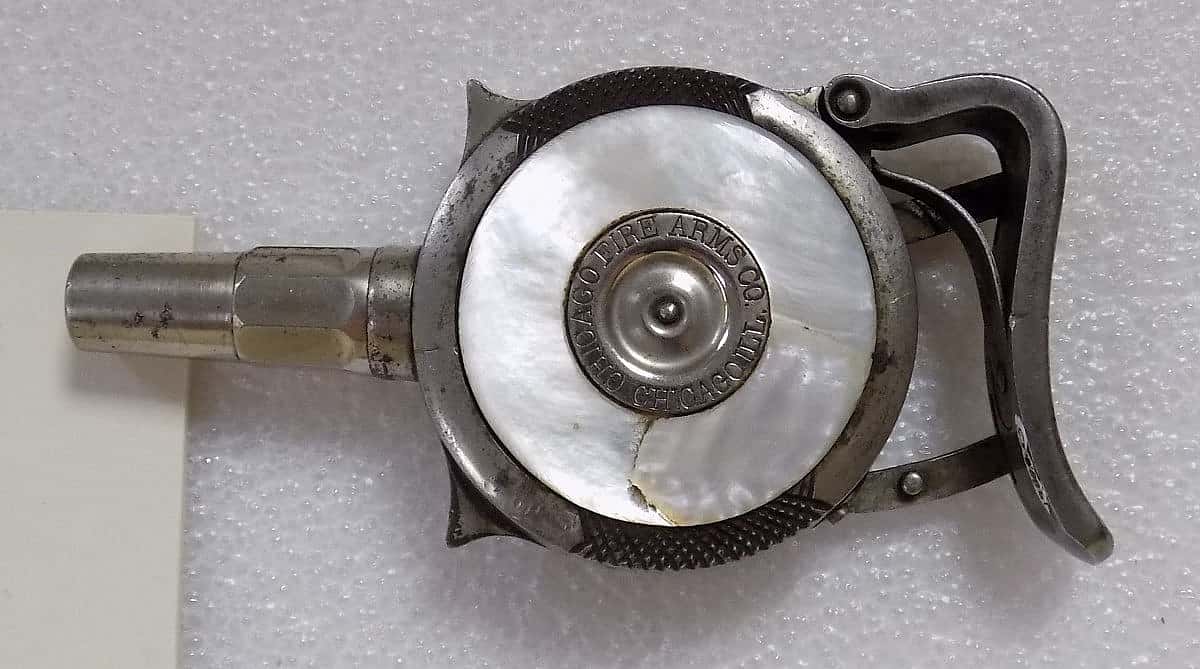
This is the most consequential volume to get exactly right, and it contains one genuinely subtle wrinkle that most casual accounts miss. The short version, for a US owner: a genuine, pre-1899 Protector is a federal antique firearm — no FFL under the Gun Control Act, and exempt from the National Firearms Act — notwithstanding that a 1955 tax ruling classified the Protector’s mechanism as an “any other weapon.” The long version, below, is where the reasoning lives, and it must be read as reasoning, not repeated as a slogan. None of this is legal advice. It is a research synthesis of primary statutory text plus one historical ruling; the hub-wide framing in the hub’s legal-posture notes governs, and for anything specimen-specific — especially any repair that could read as “manufacture,” or a re-barrel — the answer is an ATF classification request or a qualified NFA attorney, not this document.
8.1 GCA Antique Status — 18 U.S.C. § 921(a)(16)
Under the Gun Control Act, an “antique firearm” is defined at 18 U.S.C. § 921(a)(16), whose operative clause (A) reads:
“(16) The term ‘antique firearm’ means— (A) any firearm … manufactured in or before 1898 …”1
Subparagraph (B) — the rimfire/obsolete-ammunition clause — is written for replicas of a pre-1899 gun, not for later production of the original design, so it is not the operative clause for an original Protector. The controlling question is therefore purely: was this specimen manufactured on or before 31 December 1898?
- Minneapolis Firearms Co. (c. 1891–1892): clearly pre-1899. Qualifies under (A).
- Chicago Fire Arms Co. / Ames Sword Co.: the bulk of documented manufacture is 1892–c.1898 — the IMA-USA serial-range dating (3,700–5,400 = 1893–1897) supports this (Vol 3) — so most surviving specimens qualify under (A).2
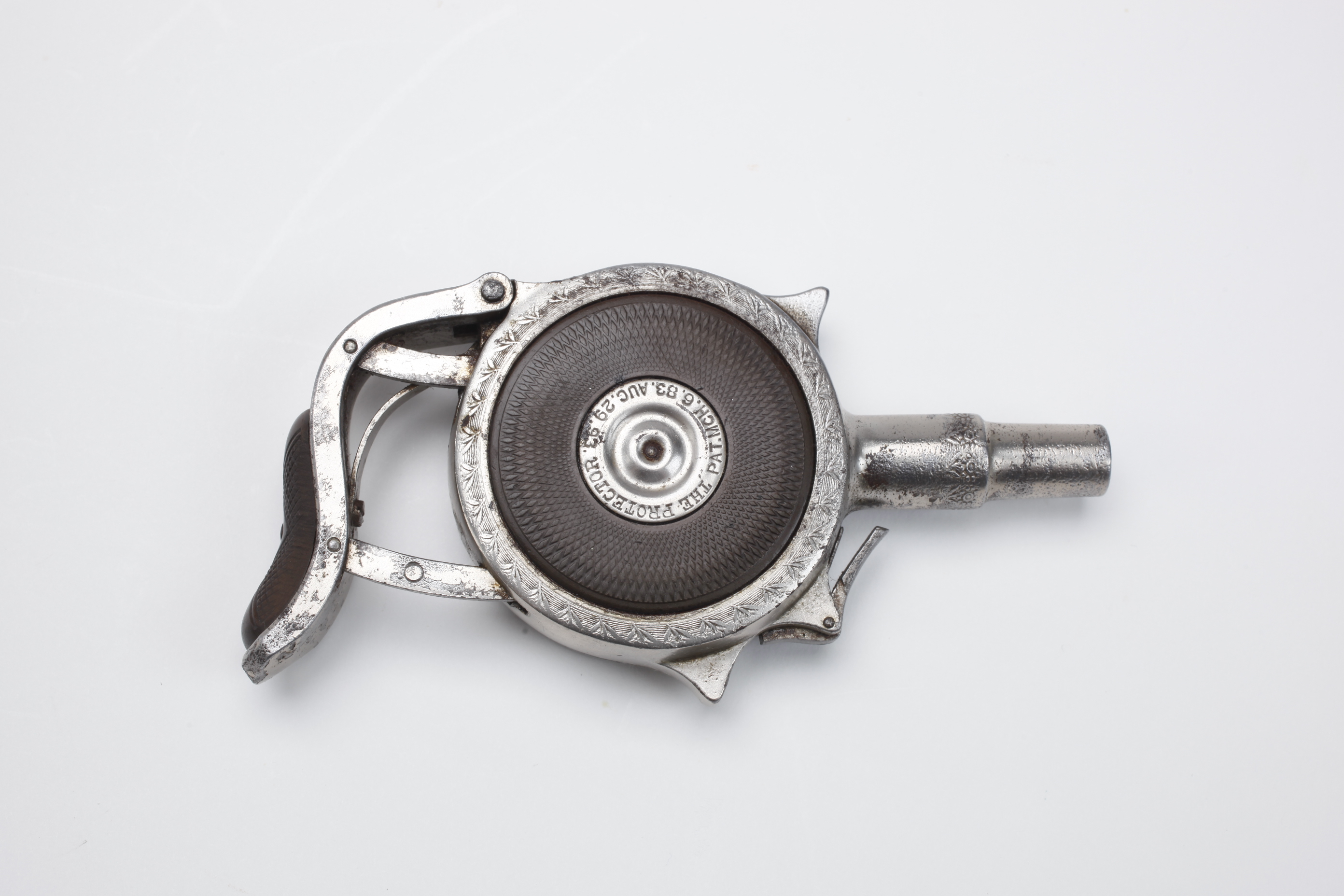
GCA bottom line: with very high confidence, a genuine Turbiaux/Minneapolis/Chicago-Ames Protector is a federal GCA antique — no FFL, no Form 4473, no interstate-transfer restriction at the federal level. Confidence is high for Minneapolis and early-to-mid Chicago/Ames guns; high-but-not-certain for the very latest-serial Chicago/Ames guns, pending the unresolved final-manufacture-date question below.
8.2 The NFA Wrinkle — AOW Classification Versus the Antique Carve-Out
This is the subtle part, and it must be presented as a synthesis of two primary sources, because no single source states both halves together as one holding. The research behind this series connects them; a court or ATF ruling spelling out the interaction for this specific gun in so many words was not found.
Step 1 — mechanically, the Protector matches the AOW definition, per a real 1955 ruling. The “any other weapon” definition is at 26 U.S.C. § 5845(e), which excludes “a pistol or a revolver having a rifled bore.”3 The Protector’s barrel is rifled (Vol 4), which on its face looks like it should fall into that exclusion — i.e., look like an ordinary, un-regulated pistol. But Revenue Ruling 55-44 (Alcohol and Tobacco Tax Division, IRS, 1955) held otherwise for this exact gun:
“The ‘Chicago Palm Protector’ is neither a pistol nor a revolver but a device capable of being concealed on the person from which a shot can be discharged through the energy of an explosive. Accordingly, it comes within the category of ‘any other weapon’ …”4
The ruling reportedly contrasted the Protector with knuckle-duster pistols, the “French Apache” fist-revolver, and pepperbox multi-barrel pistols — which it found do get the pistol/revolver exclusion because they use a rotating-barrel principle — whereas the Protector’s radial-magazine-behind-a-single-fixed-rifled-barrel architecture was different enough that it did not.4 In other words, it was the unusual turret, not the rifled barrel, that the ruling leaned on. So: by historical IRS/ATF ruling, the Protector’s mechanism is an NFA AOW.
One honest flag on this ruling: the full text of Rev. Rul. 55-44 was not independently fetched in the research behind this series. The quoted language above is a search-engine-rendered excerpt via a professional legal index (Tax Notes). Confidence that the ruling is real and says roughly this is high — the reasoning matches the statutory structure — but the exact wording should be verified against the actual 1955 ruling before it is treated as a precise quotation.
Step 2 — but the antique carve-out sits in front of that classification. The NFA’s own “firearm” definition at § 5845(a) expressly excludes antique firearms:
“The term ‘firearm’ shall not include an antique firearm …”3
and § 5845(g) defines “antique firearm” for NFA purposes using the same 1898 manufacture cutoff as the GCA (plus the same obsolete-fixed-ammunition clause).3 Reading these together: the AOW classification under § 5845(e) only matters if the object is an NFA “firearm” in the first place — and a Protector manufactured in or before 1898 is not an NFA firearm at all, because § 5845(a) excludes antiques. The antique exclusion is dispositive and comes first; the AOW classification only bites on a Protector that somehow falls outside the antique definition.
8.3 The Synthesis, Stated Plainly
- A genuine, pre-1899-manufactured Protector (Turbiaux, Minneapolis, or Chicago/Ames) is exempt from the NFA as an antique firearm under § 5845(a)/(g), notwithstanding that its mechanism was historically ruled an AOW under § 5845(e) in Rev. Rul. 55-44. This is exactly why these guns are bought, sold, and displayed openly by auction houses and museums with zero NFA paperwork — no Form 4, no $200 stamp, no CLEO sign-off — consistent with observed dealer and auction practice.
- Confidence: high, but explicitly as a synthesis of two primary sources — Rev. Rul. 55-44 for the AOW mechanical classification, and § 5845(a)/(g) for the antique carve-out. No single fetched source states both halves as one holding; this document is the one connecting them. For NFA-grade certainty on a specific gun — especially before any modification or a repair that could be read as “manufacture” — the route is an ATF Form 5320.20 / classification request or a qualified NFA attorney, not this write-up.
8.4 The Edge Case That Could Flip It — the Date Conflict
The one thing that could change the analysis is the manufacture-date question flagged in Vol 3, and it is the single most consequential open question in the whole Protector record. The best-supported reading dates Chicago/Ames manufacture to 1892–c.1898 with inventory sold through ~1910. But the Cody Firearms Museum’s blog post states production ran “early 1900s through 1910.”5 Taken literally, that would mean some or many Chicago/Ames guns were manufactured after 1898 — which would strip them of the § 5845(g)/§ 921(a)(16) manufacture-date antique status.
If a specimen were in fact made after 1898:
- It would fail the antique carve-out’s first clause (manufacture in or before 1898), so the NFA “firearm” exclusion via that clause would not apply, and the Rev. Rul. 55-44 AOW classification would then bite — meaning NFA registration would be in play.
- It would likely still be rescued by the second clause of the antique definition — a firearm using fixed ammunition no longer manufactured in the US and not readily available — since .32 Extra Short rimfire fits that description (Vol 7). But this has not been tested or ruled on for this gun specifically.
The practical upshot: for a late-serial Chicago/Ames gun, read the serial against the known bands and treat antique status as high-confidence-but-verify rather than automatic. The overwhelming real-world evidence is that the trade treats the entire production run as pre-1899 C&R antiques transferred without an FFL — strong industry practice, but industry practice, not a settled ruling on the late-serial question. This is the place where the honest answer is “almost certainly antique, but confirm the specimen’s date and, if it is genuinely a post-1898 outlier, get a specimen-specific ATF or counsel opinion before transferring or modifying it.”
8.5 State Law — a Flag, Not an Answer
Federal antique status does not automatically carry at the state level. Several states do not mirror the federal pre-1899 carve-out, or apply concealed-weapon, “gadget/undetectable weapon,” or general concealable-weapon statutes without a federal-style antique exemption — California, New York, New Jersey, Massachusetts, and Hawaii are the ones most commonly flagged in general antique-firearm guidance.6 A palm pistol designed for total concealment is exactly the sort of object such statutes were written for, so the state-of-residence rules must be confirmed before relying on the federal analysis for possession, carry, or transport.
8.6 Bibliography
Footnotes
-
Cornell Legal Information Institute, 18 U.S.C. § 921 — https://www.law.cornell.edu/uscode/text/18/921 (primary source, current US Code; antique-firearm definition at (a)(16)). ↩
-
IMA-USA, blued-finish Chicago Firearms Co. Protector, matching serial 4937 — https://www.ima-usa.com/products/original-u-s-antique-rare-blued-finish-the-protector-palm-pistol-by-chicago-firearms-co-with-matching-serial-4937-only-1-000-made-with-blued-finish (serial-range-to-date mapping). ↩
-
Cornell Legal Information Institute, 26 U.S.C. § 5845 — https://www.law.cornell.edu/uscode/text/26/5845 (primary source; AOW at (e), “firearm” antique exclusion at (a), NFA antique definition at (g)). ↩ ↩2 ↩3
-
Revenue Ruling 55-44 (Alcohol and Tobacco Tax Division, IRS, 1955) — index/excerpt via Tax Notes, https://www.taxnotes.com/research/federal/irs-guidance/revenue-rulings/rev-rul-55-44/d13t. Full text was not independently fetched; quoted language is a search-engine-rendered excerpt and should be verified against the actual ruling before being treated as an exact quotation. ↩ ↩2
-
Cody Firearms Museum / Buffalo Bill Center of the West, “Museum Minute: The Palm Protector Pistol” — https://centerofthewest.org/2020/03/19/museum-minute-the-palm-protector-pistol/ (the conflicting “early 1900s through 1910” production-date claim). ↩
-
AmmoLand, “Guide to Antique Firearms – The Legal Brief” — https://www.ammoland.com/2017/02/guide-to-antique-firearms-the-legal-brief/ (general state-variation flag; not independently fetched — the state list is a starting point, not a researched per-state conclusion). ↩
Comments (0)