FP-45 Liberator · Volume 7
Legal & Regulatory Posture
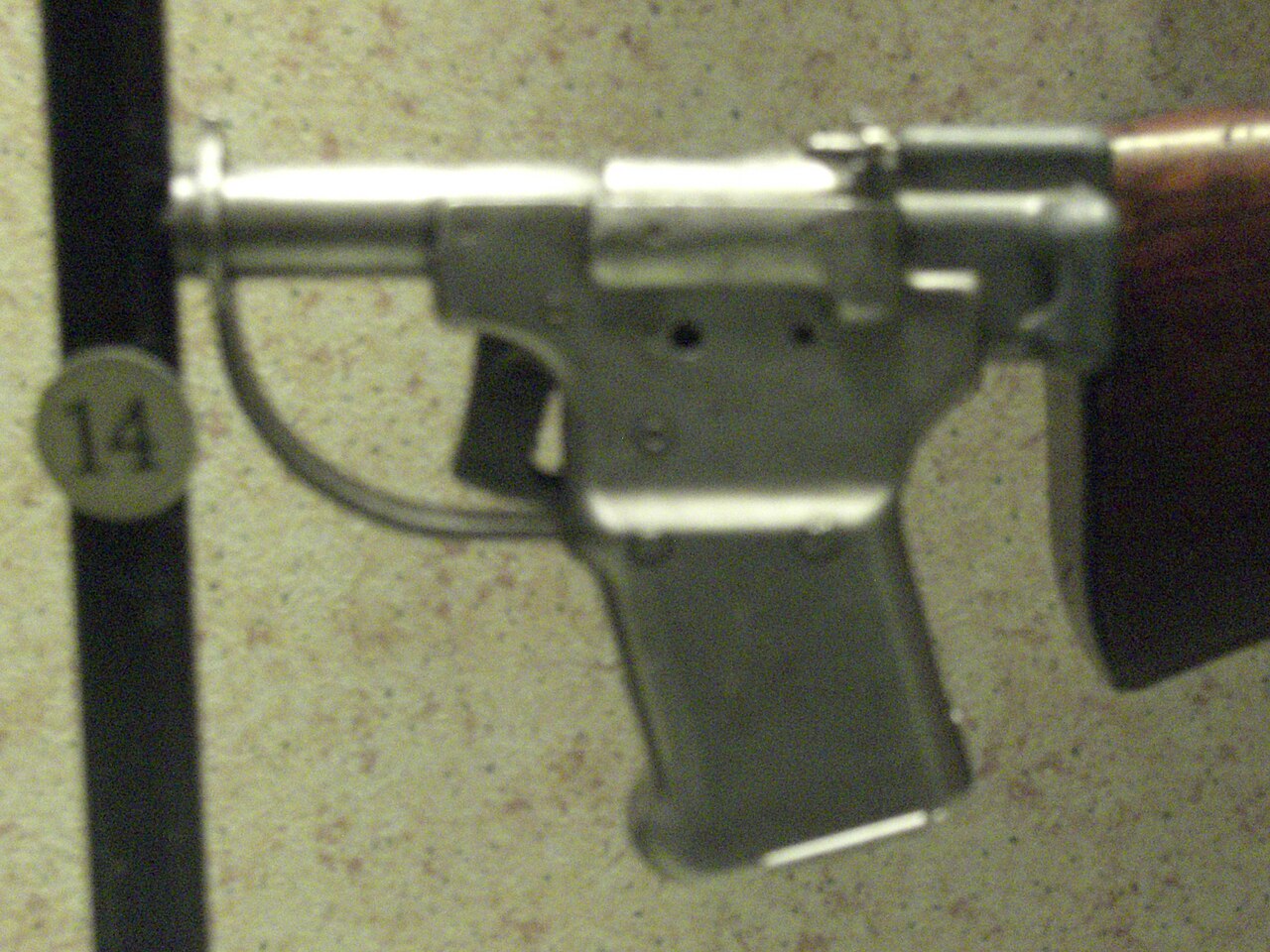
This is the volume to read before you spend a dollar on an original Liberator. The legal posture of an original is both more serious and more unsettled than the casual gun press implies, and getting it wrong is not a paperwork error — an unregistered NFA firearm is contraband. The analysis below is built on the primary statutory and regulatory text, fetched directly, and it deliberately separates what is well-settled from what is genuinely unresolved. None of this is legal advice. It is a reading of primary sources plus an honest account of where the sources and the market disagree. Confirm current status with an ATF-industry attorney or an FFL/SOT dealer before treating any specific specimen as clear to transfer.
7.1 Bottom Line Up Front
An original, unaltered FP-45 Liberator is almost certainly an NFA “Any Other Weapon” (AOW) under 26 U.S.C. § 5845(e) and its regulatory twin 27 CFR § 479.11.12 It is separately eligible for ATF Curio & Relic (C&R) recognition — but C&R status does not exempt an AOW from NFA registration and transfer requirements. A good deal of gun-press writing blurs exactly this point and implies C&R status alone “makes it legal to own.” That is an oversimplification at best. And there is a real, unresolved conflict between this statutory reading and how some dealers actually advertise and move originals — a conflict this volume presents plainly rather than papering over.
7.2 The Statutory Text
26 U.S.C. § 5845(e) defines “any other weapon” as:
“any weapon or device capable of being concealed on the person from which a shot can be discharged through the energy of an explosive, a pistol or revolver having a barrel with a smooth bore designed or redesigned to fire a fixed shotgun shell, weapons with combination shotgun and rifle barrels 12 inches or more, less than 18 inches in length, from which only a single discharge can be made from either barrel without manual reloading, and shall include any such weapon which may be readily restored to fire. Such term shall not include a pistol or a revolver having a rifled bore, or rifled bores, or weapons designed, made, or intended to be fired from the shoulder and not capable of firing fixed ammunition.”1
The regulatory text at 27 CFR § 479.11 is verbatim identical.2
7.3 Which Clause Actually Captures the FP-45 — and Why It Matters
The definition has two operative clauses relevant here:
- A broad, general clause: “any weapon or device capable of being concealed on the person from which a shot can be discharged through the energy of an explosive.”
- A narrow, specific clause: “a pistol or revolver having a barrel with a smooth bore designed or redesigned to fire a fixed shotgun shell.”
Most secondary sources reach reflexively for clause (2): smoothbore pistol, therefore AOW under the shotgun-shell clause. That is wrong on its own terms. The FP-45 fires .45 ACP — a fixed pistol cartridge, not a shotgun shell. Clause (2) does not literally apply to a gun chambered for .45 ACP.
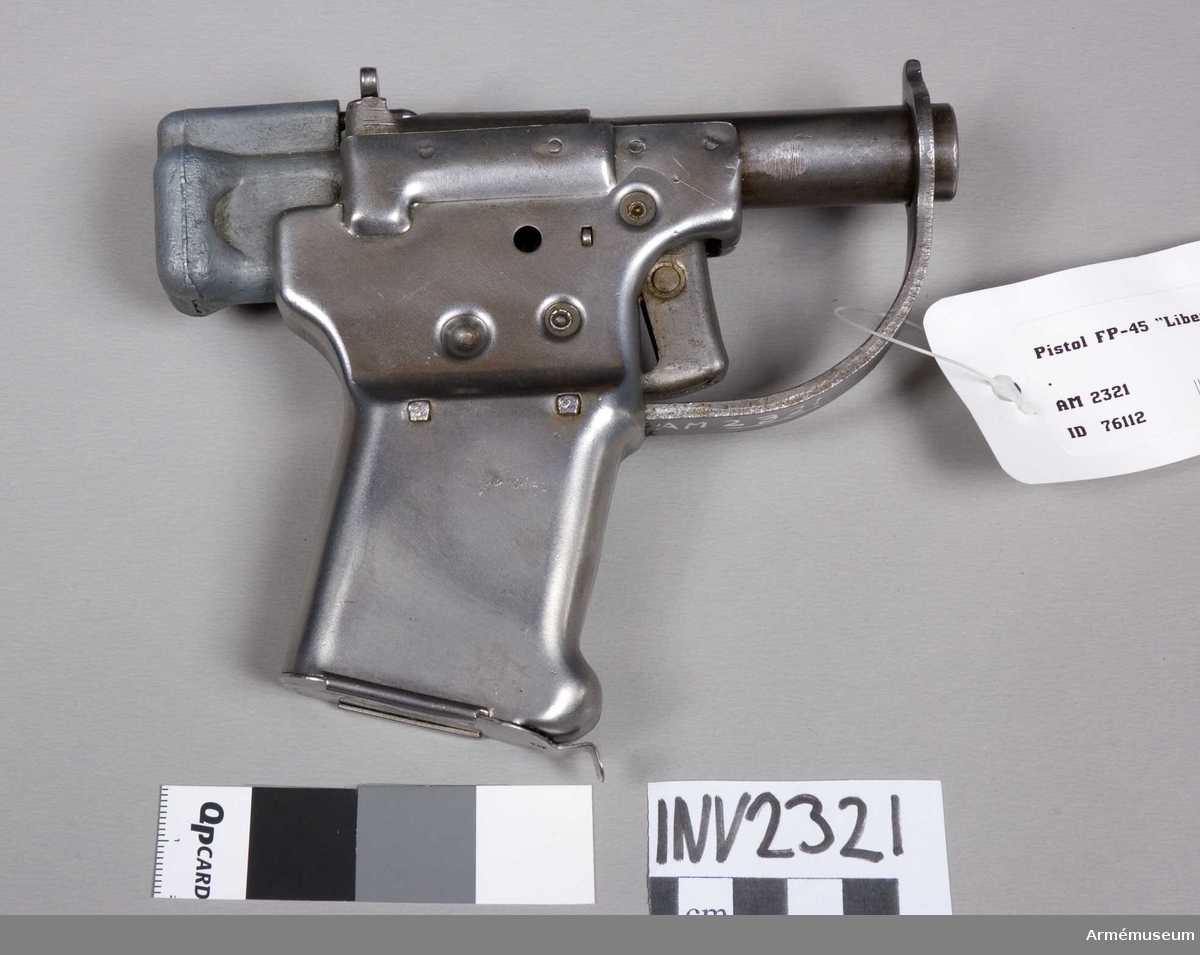
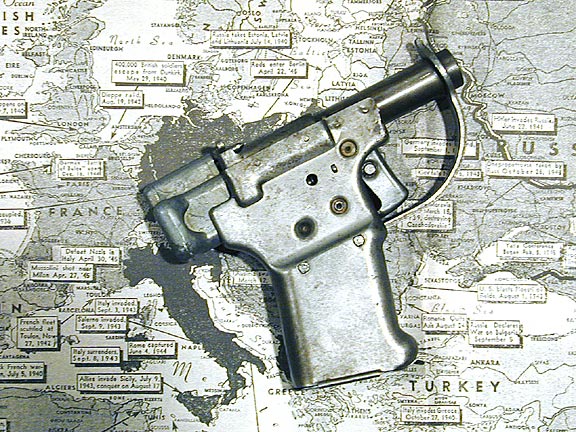
The FP-45’s AOW status rests instead on the general clause (1). It is a concealable weapon (~5.5 in overall, ~1 lb) that discharges a shot through the energy of an explosive (a centerfire cartridge). And it is not rescued by the statute’s own carve-out, because the exclusion only spares “a pistol or a revolver having a rifled bore” — and the FP-45’s bore is smooth, not rifled. In plain terms: the FP-45 is an AOW because it is a concealable smoothbore handgun that fails to qualify for the rifled-bore exclusion — not because it fires a “shotgun shell.” The distinction matters because the exclusion is bore-based (rifled vs. smooth), not shell-type-based, and a lot of casual commentary gets this backwards.
This reasoning is original synthesis of the primary text quoted above, flagged as such so it can be checked by an attorney rather than taken as gospel. It follows directly from the plain language — but “plain reading of a statute” and “settled legal conclusion” are not the same thing. No court case or ATF ruling letter applying this exact reasoning to the FP-45 by name was located in research. That gap is the theme of the rest of this volume.
7.4 It Is a Pistol, Not a “Rifled Bore” — So the Exclusion Fails
Worth stating explicitly because it is the hinge of the whole analysis: the statute excludes from “AOW” any “pistol or a revolver having a rifled bore.” The FP-45 is unmistakably a pistol, but its bore is smooth. It therefore falls outside the exclusion and inside the general concealable-weapon clause. The lawful modern reproductions (Vol 5, Vol 6) are rifled precisely to land inside this exclusion — a rifled bore drops them out of AOW territory and into ordinary Title I firearm status. The original’s smoothbore is the single feature that makes it an NFA question.
7.5 C&R Status Does Not Exempt It From the NFA
Multiple sources repeat, in varying words, that “the ATF gave the Liberator C&R status, making it legal to own.”34 That is true but incomplete, and on the NFA angle specifically it is actively misleading:
- ATF’s C&R framework (three routes to eligibility: the 50-years-old rule, museum-curator certification, or a rarity/novelty determination) governs the Gun Control Act’s collector-licensing and interstate-transfer regime — things like whether a Type 03 C&R licensee can receive a firearm directly across state lines.5 A 1942 FP-45 clears the 50-year bar easily and is treated as C&R-eligible.
- C&R is a wholly separate legal question from NFA/Title II status. As one legal-explainer source puts it: “A firearm can be both a Curio or Relic and a National Firearms Act item — and when that happens, the NFA requirements don’t go away.” SBRs, machine guns, suppressors, and AOWs “remain fully subject to NFA registration and transfer rules even if C&R classified.”5
- There is a recognized real-world category some collectors call a “C&R AOW” — an item that is simultaneously an NFA AOW and ATF-recognized C&R — commonly transferred via ATF Form 4 (tax-paid transfer) like any other AOW, just among parties who often also hold C&R licenses. This matches what one would expect for the FP-45. But research did not locate a Liberator-specific ATF ruling letter or a primary source confirming that originals are routinely processed this way in practice. That gap is the single biggest unresolved thread, addressed below.
7.6 The Antique Exemption Does Not Apply
27 CFR § 479.11 defines “antique firearm” as, in part, one “manufactured in or before 1898,” including pre-1899 fixed-ammunition guns only where the ammunition “is no longer manufactured in the United States and is not readily available.”2 The FP-45 was made in 1942, uses conventional centerfire ignition, and fires fixed, currently-in-production .45 ACP. It fails every prong of the antique test. The antique exemption clearly does not apply — this is one of the more settled, unambiguous conclusions in the whole legal picture.
7.7 Tax Amounts
- AOW transfer of an existing item via Form 4: historically a $5 tax stamp — notably lower than the $200 that applies to most other NFA categories.67
- Making a new NFA item (Form 1), and most other NFA transfers (machine guns, SBRs, SBSs, suppressors, destructive devices): historically $200.67
This $5-vs-$200 split is consistently corroborated across NFA-focused sources and is not in dispute in the research record.67
Recent change — flagged for verification, and NOT drawn from the primary research file. My brief for this series notes that, effective January 1, 2026, the NFA making and transfer tax on AOWs (along with several other NFA categories, machine guns excepted) was reduced to $0 under recent federal legislation. This is a very recent change; the research record underlying this series documents only the historical $5 AOW transfer tax and does not itself contain a citation for the $0 figure. It is stated here because the brief calls for it, but with an explicit caveat: confirm the current tax directly against 27 CFR Part 479 and current ATF guidance before relying on it. The point that matters regardless of the dollar amount is that the registration, Form 4 transfer, background-check, and CLEO-notification process still applies — a $0 tax is not the same as “no NFA process.”
7.8 Reproductions Are the Settled, Simple Case
This is the one genuinely uncontroversial corner. ATF has required that modern reproductions be rifled and serialized specifically so they are not AOWs — the rifled bore removes them from the general/smoothbore clause, and the serial number brings them into ordinary GCA-regulated Title I territory rather than NFA territory.48 Buy a rifled, serialized modern reproduction and you have an ordinary Title I firearm. The unaltered smoothbore original is the one that raises the AOW question. If NFA complexity is unwelcome, the reproduction path (/replicas/pistols/fp-45-liberator-replica/) exists precisely to avoid it.
7.9 The Honest Part: Statute vs. Market Practice
Here the research record forces intellectual honesty rather than a confident conclusion. The plain statutory reading says an original is an NFA AOW. Yet several dealer listings (LSB Auctions among them) market original Liberators as “C&R OK” in language that reads like an ordinary Curio & Relic handgun sale — implying a standard FFL/C&R transfer, not an NFA Form 4 with tax stamp, fingerprints, CLEO notification, and a months-long wait.910 Research found no ATF ruling letter naming the FP-45 to resolve this.
There are at least three ways to reconcile the conflict, and the record does not show which is correct:
- ATF does not, in practice, currently treat original Liberators as requiring NFA registration — which would contradict the plain statutory reading above.
- There is a widespread compliance gap / grey market that simply has not been tested.
- Surviving originals are already lawfully registered NFA AOWs — for example, registered during the 1968 NFA amnesty (a one-time ~30-day window to register previously-unregistered NFA firearms without penalty) — and dealers are being loose with the phrase “C&R OK.”
This is a real, unresolved conflict between the statutory text and observed market practice. It should not be resolved here with false confidence. Present it to yourself, before buying, as an open question — not a settled fact in either direction.
7.10 The Question That Actually Decides Your Risk: Is This Specimen Registered?
Flowing directly from the above, the single most important practical question for anyone considering an original is not “what’s the tax?” but “is this specific pistol already on the National Firearms Registration and Transfer Record (NFRTR)?” Research could not confirm whether, or when, surviving Liberators were formally registered — the 1968 amnesty is a plausible mechanism, but no source confirmed Liberators specifically going through it.
The stakes of that unknown are enormous and asymmetric:
- If a given original is a lawfully registered AOW, it is transferable to you on a Form 4 (historically $5 tax, see the 2026 caveat above), with the normal wait — an inconvenience, not a crisis.
- If a given original was never registered by anyone, it is today an unregistered NFA firearm — illegal to possess regardless of C&R status, and a felony to hold. “C&R OK” in a listing does not answer this question.
That gap — registered-and-transferable versus unregistered-and-contraband — is the real gating risk, and it cannot be resolved for the class of surviving Liberators as a whole from public sources. Resolve it per specimen, in writing, before money changes hands: get the registration status confirmed through the selling FFL/SOT and, ideally, an NFA attorney.
7.11 Practical Guidance
- Treat an original as an NFA AOW until proven otherwise. The plain statute supports it; the downside of being wrong (unregistered contraband) is severe.
- Do not rely on “C&R OK.” C&R does not exempt an AOW from the NFA, and the phrase does not tell you whether the specimen is registered.
- Demand registration proof per specimen, in writing, before acquiring.
- Confirm the current tax and process against 27 CFR Part 479 and ATF guidance — the 2026 $0-tax change is recent and not in the primary research file.
- State law stacks on top of all of this; the hub-wide framing in the hub’s legal-posture notes applies, and your state of residence may add restrictions on AOWs specifically.
- When in doubt, buy the reproduction — rifled and serialized, it sidesteps the entire question.
None of the above is legal advice; it is a reading of primary sources with the unresolved parts flagged. Cite the primary sources, and confirm with ATF or counsel before acquiring.
7.12 Bibliography
Footnotes
-
26 U.S.C. § 5845 (definitions). Cornell Legal Information Institute. https://www.law.cornell.edu/uscode/text/26/5845 ↩ ↩2
-
27 CFR § 479.11 (meaning of terms). Cornell Legal Information Institute. https://www.law.cornell.edu/cfr/text/27/479.11 ↩ ↩2 ↩3
-
“The Liberator Pistol.” American Rifleman (NRA). https://www.americanrifleman.org/content/the-liberator-pistol/ ↩
-
FP-45 Liberator. Guns Wiki (Fandom). https://guns.fandom.com/wiki/FP-45_Liberator ↩ ↩2
-
“Curio and Relic Firearms: ATF Classification & Rulings.” LegalClarity. https://legalclarity.org/curio-and-relic-firearms-atf-classification-rulings/ ↩ ↩2
-
“Any Other Weapon (AOW).” NationalFirearmsAct.com. https://nationalfirearmsact.com/nfa-regulated-items/any-other-weapon-aow/ ↩ ↩2 ↩3
-
“Any Other Weapon.” Silencer Central. https://www.silencercentral.com/blog/any-other-weapon/ ↩ ↩2 ↩3
-
Reproduction rifling/serialization requirement corroborated by Vintage Ordnance reproduction specs and collector-market discussion. ↩
-
LSB Auctions listing marketing an original as “C&R OK” (fetch returned HTTP 403; language from search snippet). https://lsbauctions.com/real-general-motors-guide-lamp-division-liberator-wwii-45-acp-fp-45-liberator-pistol-cr-ok/ ↩
-
Statute-vs-market-practice conflict, and the registration/1968-amnesty open questions, are documented as unresolved in this project’s research notes (“Open questions / conflicting sources,” items 1–2); no ATF ruling letter naming the FP-45 was located. ↩
Comments (0)