.17 Rimfires · Volume 8
The Semi-Automatic Question — 2009, Case Heads, Blowback, and What Changed
The ammunition makers' warning of August 2009, Remington's recall of its .17 HMR 597, Hornady's reply, the class action that followed, and how Savage and Winchester answered the problem in steel
8.1 The Semi-Automatic Question — 2009, Case Heads, Blowback, and What Changed
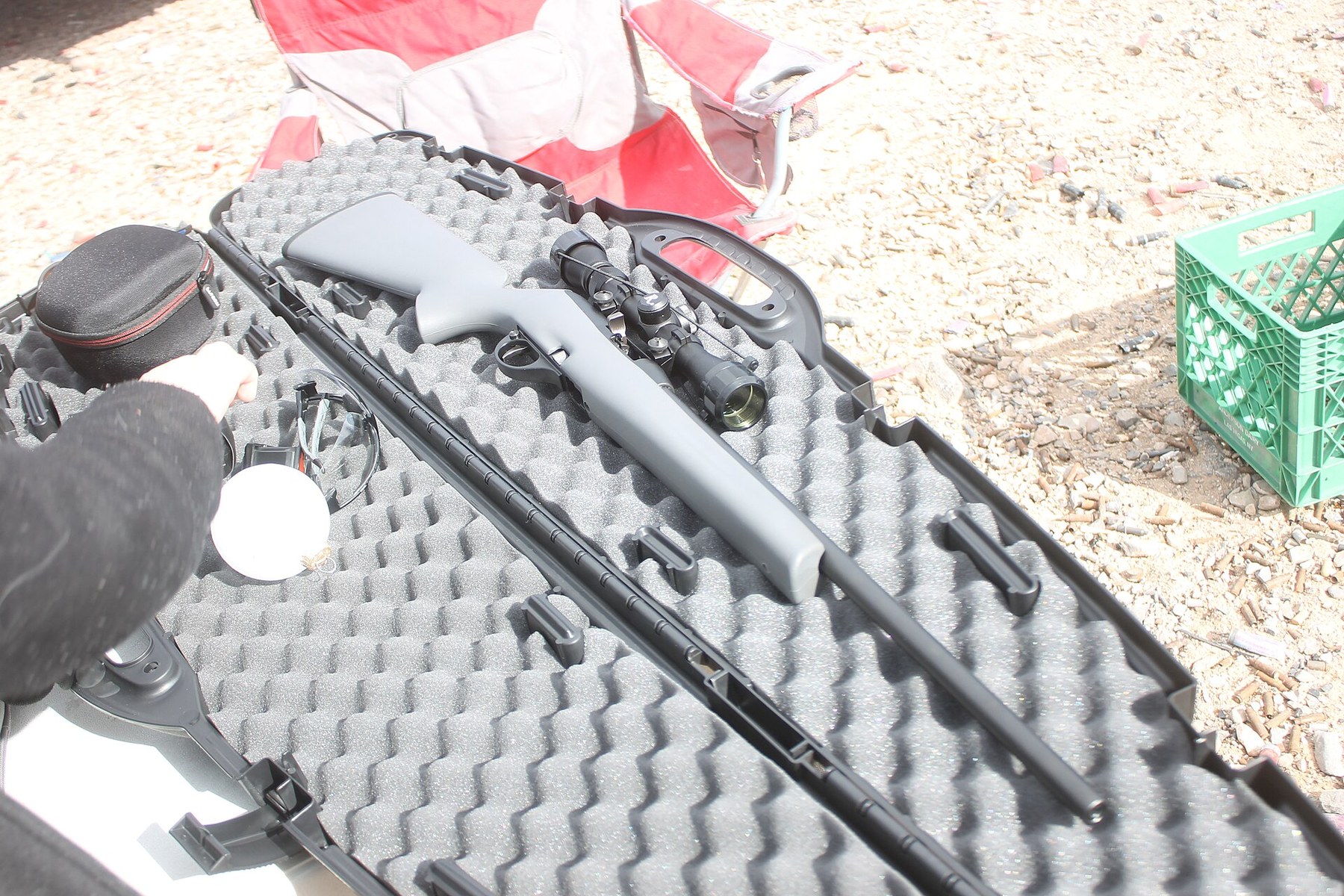
For most of its life the .17 HMR has been sold with a warning that is unusual in sporting ammunition: do not fire it in a semi-automatic rifle without asking the rifle’s maker. The warning still sits on every .17 HMR product page CCI publishes, including the page for the load CCI built for a semi-automatic. This volume sets out where the warning came from, what the documents do and do not say, and what the industry did about it.
This hub’s Savage 93R17 dive, Volume 3 covers the same episode from the point of view of one bolt-action rifle. This volume owns the mechanism argument and adds what that dive could not establish (the dates, Hornady’s response and the litigation) and carries the story forward to today’s semi-automatics in all three cartridges.
8.1.1 Two corrections before the record
There was no Savage AccuTrigger recall in this story. A “2006–07 Savage AccuTrigger recall” is sometimes attached to the .17 HMR’s semi-automatic problem. No such recall appears on Savage’s own recall pages as archived in 2015 and 2019, which list one rimfire recall, the B.MAG bolt in .17 WSM (§8.5). The AccuTrigger is a trigger, and the .17 HMR problem was about semi-automatic actions; the two are unrelated in the primary record.1
The date is not lost. The Savage dive records the Remington notice as undated, first archived in January 2010. The companion warning from the ammunition side is dated on its face, 20 August 2009, updated 31 August 2009, and contemporary blog posts put Remington’s notice in mid-August 2009 (§8.2).
8.1.2 The record, in order
Table 1 — 8.2 The record, in order
| Date | Document | What it says |
|---|---|---|
| Mid-August 2009 | Remington, “Safety Warning and Recall Notice: 17 HMR Ammunition and Model 597® 17 HMR Semi-Automatic” | Stop using Remington 17 HMR ammunition in any semi-automatic and stop using the 597 HMR; its supplier says the ammunition is unsuitable for semi-automatics; buy-back by coupon |
| 20 August 2009, updated 31 August | ”17 HMR Ammunition Product Safety Notice and Warning”, now on federalpremium.com and remington.com | Do not use 17 HMR in semi-automatics without consulting the firearm’s maker; “many of those firearms have proven to be incompatible” |
| 15 September 2009 | Hornady, “17 HMR message from Steve Hornady” | The ammunition meets SAAMI standards; the gunmaker decides whether a firearm is safe with it |
| December 2011 | Federal class action, Columbia, Tennessee, as reported | Alleges the 597 HMR “explodes” with the co-defendant’s ammunition and that the recall was inadequate |
| January 2015 | Savage A17 launched, with a matched CCI load | A delayed-blowback self-loader “specifically designed” for the .17 HMR |
| 12 September 2019 | Winchester recall of two lots of Super-X 17 HMR | Possible missing powder, a squib hazard; unrelated to semi-automatics |
| October 2026 | CCI product pages | Every .17 HMR load, including the A17 load, carries the semi-automatic warning |
8.1.2.1 Remington’s notice
Remington’s notice, as archived, reads in its core:2
DO NOT USE REMINGTON 17 HMR AMMUNITION IN SEMI-AUTOMATIC FIREARMS. DO NOT USE THE REMINGTON MODEL 597 17 HMR SEMI-AUTOMATIC RIFLE. Remington has been notified by its supplier of 17 HMR ammunition that 17 HMR ammunition is not suitable for use in semi-automatic firearms. The use of this ammunition in a semi-automatic firearm could result in property damage or serious personal injury.
The remedy was a coupon: $10 for each returned box of 50 Remington 17 HMR, and for a returned rifle $200 (synthetic stock) or $250 (laminate) toward a replacement Remington firearm. The page is undated; its earliest Internet Archive capture is 17 January 2010. The Firearm Blog wrote about “why Remington recalled the 17 HMR Model 597” on 25 August 2009, and another blog reported the buy-back on 19 August, so the notice was public by then.3
8.1.2.2 The ammunition makers’ warning
The second document is still on the web, on both Federal’s and Remington’s sites, word for word, headed with its dates:4
8/20/09 – UPDATED 8/31/09. 17 HMR AMMUNITION PRODUCT SAFETY NOTICE AND WARNING. Do not use 17 HMR ammunition in semi-automatic firearms without consulting with your firearms manufacturer. Use of 17 HMR ammunition in semi-automatic firearms may result in serious personal injury or property damage. 17 HMR ammunition is manufactured in accordance with standards issued by the Sporting Arms and Ammunition Manufactures’ Institute (SAAMI). Subsequent to the design and introduction of 17 HMR ammunition to the market, 17 HMR semi-automatic firearms were introduced by various firearm manufacturers. Many of those firearms have proven to be incompatible with 17 HMR ammunition. 17 HMR ammunition is suitable for use in quality firearms in good condition that are not semi-automatic.
It names no maker of the ammunition and no firearm. Its contact line today is Federal Product Services, and in 2009 Federal and CCI were both brands of Alliant Techsystems (ATK); Hornady’s own patent of the period describes CCI as “a subsidiary of Alliant Techsystems.”5 Who wrote the 2009 text is not stated on it.
8.1.2.3 Hornady’s reply
Hornady designed the cartridge. On 15 September 2009 it posted a message from Steve Hornady that did not repeat the warning:6
Recently there have been notices placed on several web sites warning about the use of 17HMR ammunition in semi-automatic firearms … Every ammunition manufacturer determines the warning it believes is appropriate for its product. … We believe 17HMR ammunition is manufactured to the highest standard of care and quality and performs within the specifications established for 17HMR ammunition and is consistent with SAAMI standards for ALL ammunition. We are not firearms manufacturers and we believe the firearms manufacturers are solely the ones responsible for determining if and how they should market and sell a model or type of firearm. … We specifically cannot tell you that a certain type firearm, be it semi-auto, bolt, lever, or otherwise, is safe or unsafe with this or any other ammunition.
It did warn against using the ammunition in any firearm whose maker “has stated it will not safely function with 17HMR ammunition.” Hornady’s own product-recall page of the time lists no .17 recall.7
So the record shows two positions. One part of the industry told shooters not to fire the cartridge in semi-automatics. The cartridge’s designer said the ammunition was within specification and that the question belonged to the gunmakers.
8.1.2.4 The litigation
In December 2011 Courthouse News Service reported a federal class action filed in Columbia, Tennessee: it “claims the Remington Model 597 17 HMR semiautomatic rifle explodes if used with co-defendant Cascade Cartridge/CCI Ammunition’s ammo, and that Remington issued an inadequate recall notice.”8 Cascade Cartridge Inc. is the company behind the CCI name. That is an allegation in a complaint, and it is the only document found that names a supplier. The outcome of the case was not found.
8.1.3 What the documents do not say
None of the primary documents names a failure mode. Remington says “not suitable”; the warning says “incompatible”; Hornady says the ammunition is within specification. The phrases that circulate, “bolt setback”, “out-of-battery”, “case-head separation”, come from owners and writers, not from any maker’s notice.
The contemporary owner reports that The Firearm Blog collected describe blown case heads, split cases and magazines blown out of 597 rifles, and one reader wrote that Remington had rebarrelled his 597 to .22 WMR.3 They are reports, not findings, and are given here only as what owners said at the time.
8.1.4 Why a blowback and this cartridge do not mix: the reasoning
The mechanism is not in the makers’ documents, so what follows is reasoning from the SAAMI figures in Volumes 3 and 4.
- Rimfire self-loaders are blowbacks. The bolt is held shut by its own mass and a spring, not locked. When the cartridge fires, the case head pushes the bolt back, and the bolt begins to open while there is still pressure in the case.
- The .17 HMR runs more pressure on the same head. It shares the .22 WMR’s head exactly and is loaded to 26,000 psi against the WMR’s 24,000. Bolt thrust is pressure times head area, so the HMR pushes its bolt back about 8% harder at peak. The rifle that was recalled, Remington’s 597, was also built in .22 WMR on the same design.
- A rimfire case head is the weakest part of the cartridge. It is a hollow fold holding the priming, and at the extractor’s cut the barrel does not fully support it. A case that starts to leave the chamber while it is still under pressure asks that fold to hold.
- The bottleneck changes the timing. A 17-grain bullet and a bottlenecked case produce a different pressure curve from a 40-grain .22 WMR load; how different is not published for these cartridges. A blowback tuned for one impulse is being asked to handle another.
SAAMI’s proof table adds a point of its own. It makes “no specific recommendation” for proof-testing rimfire firearms at or below 26,000 psi. The .17 HMR sits exactly on that line (Volume 3).9
8.1.5 What changed, in steel
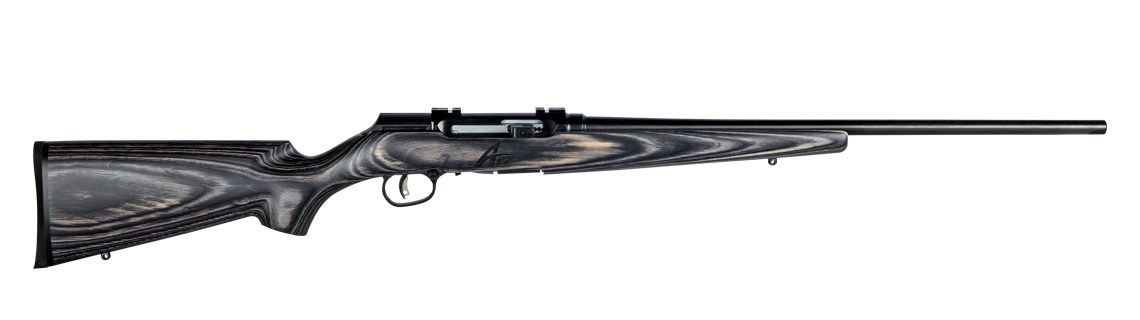
Savage delayed the bolt, and CCI matched the load. Savage’s A17, launched in January 2015, has what Savage calls a “delayed-blowback action”: “Delayed-Blowback Action Specifically Designed For High Performance Magnum Cartridges Chambered In 17 HMR,” in the words of its launch page. Savage today calls it “the first high-performance semi-automatic rimfire specifically designed for the 17 HMR cartridge” and says the delay “ensures safe, reliable cycling”.10 A delay is the engineering answer to the problem in §8.4: it keeps the bolt closed until pressure has dropped. CCI built a load for it: the A17 Varmint Tip, 17 grains at 2,650 fps, which CCI says it “literally built … around the A17 rifle from Savage Arms”, “optimized for feeding and function in the semi-automatic rifle”, with a “CCI-made and primed case” and an “exclusive headstamp”.11
And yet the warning stays. The same CCI page carries the same restriction as every other CCI .17 HMR load: “To avoid serious injury do not use in semi-automatic firearms without consulting with your firearms manufacturer.”11 Read literally, it is consistent: the firearm’s maker, Savage, has been consulted and says the A17 is designed for it. Read as a shooter reads a box, it is a load built for a semi-automatic that tells its buyer not to use it in one. The 50-round box of the A17 load is discontinued; the 200-round box remains.
Winchester locked the bolt. The .17 WSM was launched in 2013 in a bolt action built for it. Savage explains that “due to the high pressures of the 17 WSM, we needed a different locking system from our usual bolt action rimfire rifles”: rear lugs that rotate while the bolt body does not, and cock-on-close because the stronger rim needs a stronger firing-pin spring.12 That is a rifle maker designing for the cartridge’s pressure from the start, rather than adapting a .22 action. Gun Digest lists a semi-automatic among the first .17 WSM rifles, the Franklin Armory F17; it was not checked against Franklin Armory’s current pages.13
Today all three have Savage semi-automatics. In October 2026 Savage catalogues the A17 in .17 HMR, the A17 Sporter and A Series Target Thumbhole in .17 WSM, and the A Series Magnum, “Savage’s exclusive delayed blowback semi-automatic action”, in .17 HMR and .17 HM2.10 What the A Series Magnum’s HM2 version is matched to, and whether Savage recommends a specific Mach 2 load for it, was not found.
The B.MAG recall. The one .17 recall on Savage’s own pages is not about pressure at all. Savage recalled B.MAG bolts because the bolt “may inadvertently catch the safety button and slide it forward into the ‘fire’ position”, and retrofitted a new bolt handle and a blunt bolt cap.1
8.1.6 What an owner takes from this
- A bolt action, lever action or single shot is outside the problem. The warning’s own words say the ammunition “is suitable for use in quality firearms in good condition that are not semi-automatic.” My own rifle is a Savage 93R17 bolt action, and nothing in this volume touches it.
- A semi-automatic is safe with .17 ammunition when its maker says so, with the ammunition its maker names. For the Savage A17 that is CCI’s A17 load; Savage’s A17 manual says “for optimal performance with your A17, use CCI A17 ammunition”.14
- An older .17 HMR semi-automatic, or a .22 WMR self-loader rebarrelled to .17, is the case the warning was written for. Ask the maker. If the maker has said the rifle is not safe with the cartridge, do not fire it. Remington’s 597 HMR is the documented example: Remington told owners to stop using it.
- Read fired cases (Volume 4, §4.6). A bulged or ruptured rim, a smoked case body or a case blown forward at the shoulder in a self-loader means stop.
8.1.7 Bibliography
Footnotes
-
Savage Arms recall page, Internet Archive captures 2015-08-27 and 2019-07-19, as recorded in the Savage 93R17 dive’s research notes. ↩ ↩2
-
Remington Arms, “Safety Warning and Recall Notice: 17 HMR Ammunition and Model 597® 17 HMR Semi-Automatic”, remington.com/pages/news-and-resources/safety-center/safety-warning-recall-notice.aspx, Internet Archive capture 2010-01-17, read 2026-10-19 through the shared fetch engine. ↩
-
The Firearm Blog, “Why Remington recalled the 17 HMR Model 597”, 25 August 2009, and “The Remington 17 HMR Model 597 controversy”, 11 December 2009, thefirearmblog.com; gunnuts.net, “Remington 597 buyback”, 19 August 2009. Secondary; reader comments attributed as such. ↩ ↩2
-
“17 HMR Ammunition Product Warning”, federalpremium.com/safety-information/product-warnings/17-hmr-ammunition.html and remington.com/safety-information/product-warnings/17-hmr-ammunition.html, read 2026-10-19. ↩
-
US Patent 7,011,028 B1 (Hornady, filed 2003, granted 2006). ↩
-
Hornady, “17 HMR message from Steve Hornady”, hornady.com/message-17hmr-091509.php (Internet Archive capture 2009-09-27) and hornady.com/in-the-news/latest-news/17-hmr-notice (capture 2009-11-13). ↩
-
Hornady, “Product Recalls”, hornady.com/in-the-news/product-recalls, Internet Archive capture 2009-11-15. ↩
-
Courthouse News Service, “Exploding Guns”, 21 December 2011, courthousenews.com/exploding-guns/, read 2026-10-19. ↩
-
ANSI/SAAMI Z299.1 (2018 approval), velocity and pressure table p. 6; proof pressures p. 79. ↩
-
Savage Arms model pages for the A17 Sporter and the A Series Magnum, savagearms.com, read 2026-10-19; Savage A17 launch page, Internet Archive capture 2015-03-12, as recorded in the Savage 93R17 dive’s research notes. ↩ ↩2
-
CCI, “A17, 17 HMR, 17 Grain, Tipped Varmint”, parts 949CC and 950CC, cci-ammunition.com, read 2026-10-19. ↩ ↩2
-
Savage Arms, “Things You Should Know about the Savage BMAG”, savagearms.com blog, 29 August 2023. ↩
-
Gun Digest, “Ammo Brief: .17 Winchester Super Magnum Nails It”. Secondary. ↩
-
Savage A17/A22 owner’s manual (PDF created 2016-01-21), as recorded in the Savage 93R17 dive’s research notes. ↩
Comments (0)