Remington Nylon 66 · Volume 2
Selling the Gun of Tomorrow — Launch, Records and How Many Were Made
The 1959 launch and its claims, Tom Frye's 100,010-block exhibition, the lifetime stock guarantee, and every published production figure set side by side, including why the million-rifle total and its colour breakdown are not independent
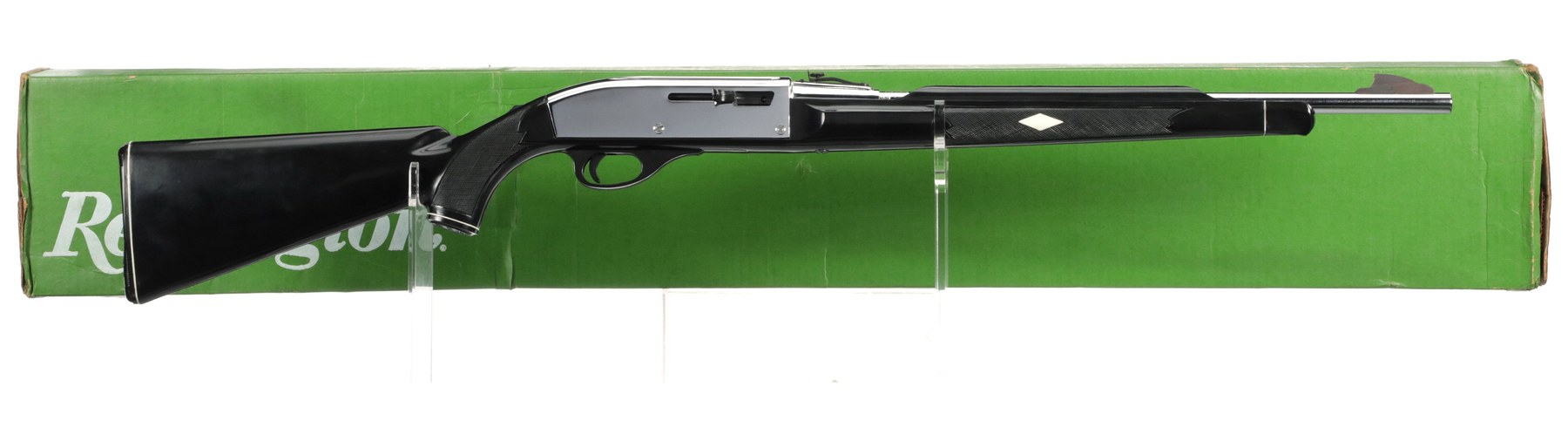
Remington’s problem in 1959 was not whether the Nylon 66 worked. Three years of trials had settled that (Volume 1). The problem was whether shooters would buy a rifle that every salesman who handled it called a toy. The company’s answer was to sell reliability, not novelty: a torture test in every advertisement, a lifetime guarantee on the stock, and an exhibition record set with three stock rifles. This volume covers that campaign, then turns to the numbers. How many Nylon 66s were made is a question with a maker’s answer, and that answer is more reliable than the colour-by-colour breakdown usually quoted with it.
2.1 A Plastic Rifle Sold on Reliability
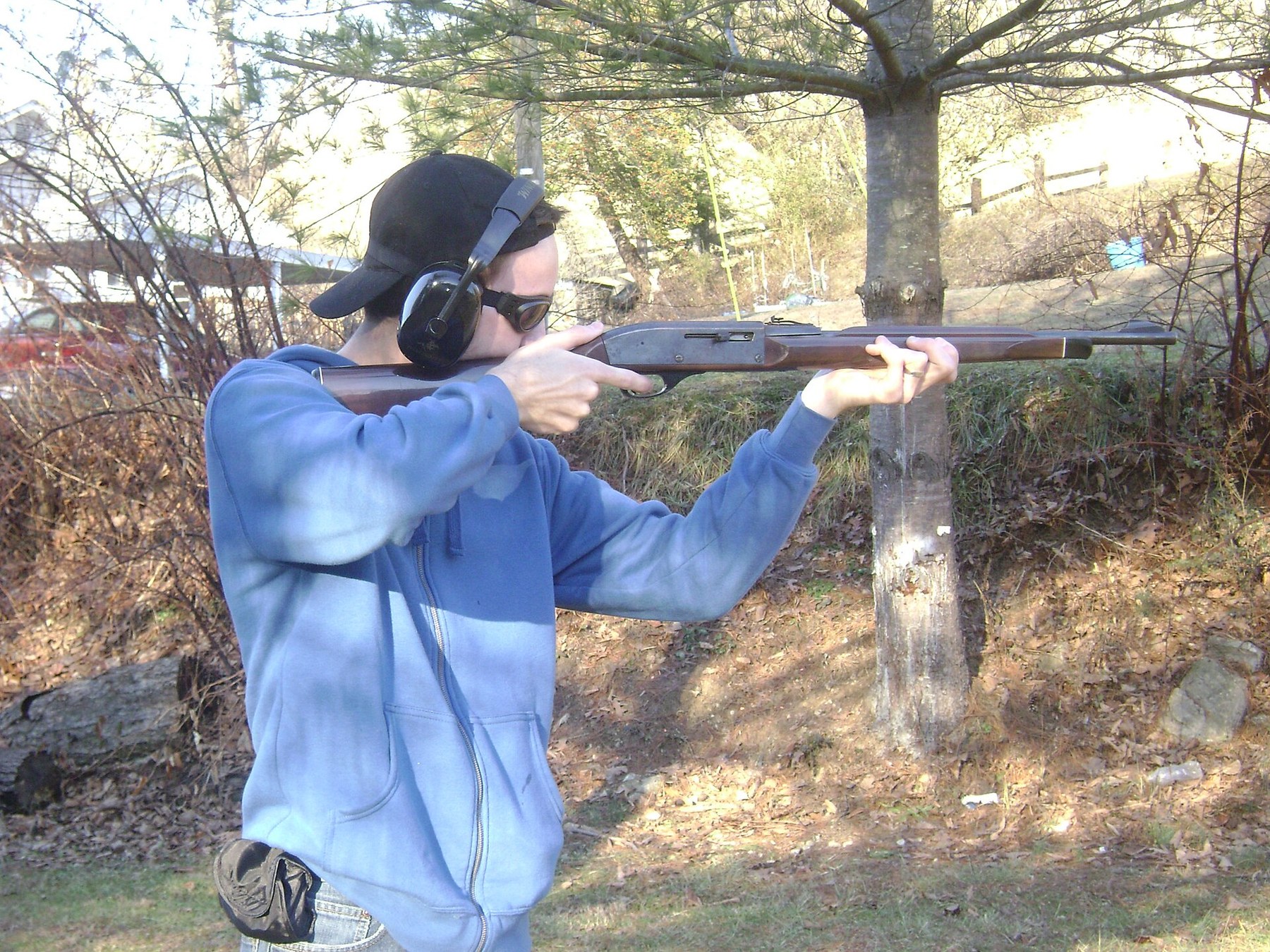
Marcot’s history describes the thinking. “A nylon gun had never before been made. Its appearance and feel would be significantly different from any other .22 on the market. Would the shooting public buy it? Remington hoped to gain acceptance through overwhelming evidence of the reliability and ease of use of the new gun.”1 The prototype’s 75,000 rounds with a malfunction rate of 0.005 percent, and the salesman who drove over a rifle and sank another in a lake, were the raw material. The rifle was called the “Gun Of Tomorrow” and was “introduced with an advertising blitz. Its dependability in adverse conditions was used as the primary selling point.”1
Simmons, writing thirty years later, thought reliability explained the rifle’s success: “Ever since the first 22 autoloading rifle came on the market, there has been a great doubt in the public’s mind about performance.” Even the Winchester Model 1903, with its own special ammunition, “could occasionally malfunction, especially if it was not cleaned often enough. The Remington Model 66, dirty or clean, wet or dry, just kept rolling along.”2
2.2 The Advertising Claims, Read Closely
Marcot quotes two lines of 1959 copy.1
This is the rifle trappers depend on from Hudson Bay to the Everglades. The only .22 that Alaskan fisherman find able to withstand the attacks of corrosive sea spray – To protect their nets from marauding sea lions!
Lubricant-free nylon ball bearings throughout the mechanism eliminate the need for lubricants of the functional parts of this rifle.
The first is a claim about corrosion, and it is partly right. DuPont’s data confirm that nylon “is not affected by electrolytic corrosion as found in and around salt water”.3 But the barrel, bolt, cover and springs are steel. Remington’s own instruction leaflet tells the owner to “wipe receiver cover and barrel with oil to prevent rusting” after wet weather.4 The stock survives salt spray; the rest of the rifle needs the same care as any other.
The second is loose wording. The rifle has no nylon ball bearings. Remington’s parts list for the Nylon 66 has exactly one ball in it, part 45, the “Safety Detent Ball”, and it is steel.4 The “bearings” in the advertisement are the grooves moulded into the nylon receiver, in which the steel bolt and striker slide. The patent calls them “tracks in the receiver section which support and guide the bolt and striker”.5 They are plain sliding surfaces, and their low friction is a property of the material, not of any rolling element. The claim that the functional parts need no lubricant is the substance, and Remington’s own manual repeats it carefully: “The nylon parts need no oil. Use oil sparingly on metallic action parts to prevent rust.”4 Volume 3 explains why that works and Volume 5 where it stops working.
The Nylon 66 was also promoted for use in the far north. Wikipedia repeats the claim that its oil-free action made it popular in arctic regions, citing a Cabela’s gun-library page.6 That page is a retailer’s description, not a sales record. The claim is plausible, since an unlubricated action cannot gum up in cold, and Remington’s manual recommends “dry graphite” in place of oil for shooting below freezing.4 But no documented survey of Nylon 66 use in the Arctic was located, and none is claimed here.
2.3 The Lifetime Stock Guarantee
Remington backed the stock in writing. Marcot gives the text and the period:
Between 1959 and 1969, Remington offered the following guarantee on all Nylon 66 rifle stocks: “We guarantee that this stock will not warp, crack, chip, fade or peel for the life of the rifle, or we will replace it free.”1
Simmons reproduces the decal that carried the guarantee. His caption reads: “Remington’s guarantee of the Nylon stock; this decal was on each one.”2 The guarantee’s list of five failure modes is a list of walnut’s failure modes. Warping, cracking, chipping and peeling finish were the complaints of a wood-stocked rifle, and the guarantee answered each one. It also covered more than a stock usually is: on this rifle the “stock” is the receiver.
Two qualifications apply for a modern owner. First, the guarantee’s end date of 1969 is Marcot’s; no Remington document stating the withdrawal was located. Second, stocks do crack. The salesman Conner cracked the fore-end of a prototype by dropping it on concrete in 1958 (Volume 1), and a Nylon 10C that Rock Island Auction sold in 2018 was catalogued with “Stock is cracked.”7 Volume 5 covers what can be done about it now.
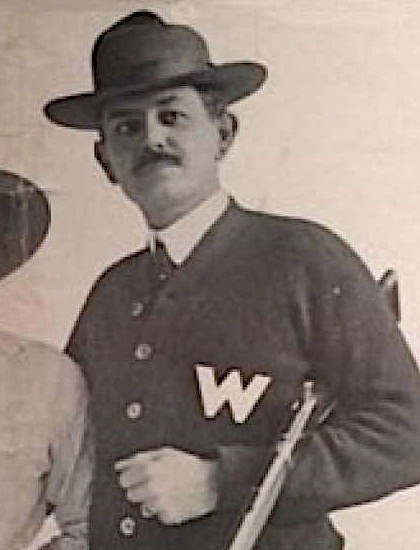
2.4 Tom Frye’s 1959 Exhibition
The best-known Nylon 66 story is an exhibition of shooting at hand-thrown blocks. Two published accounts exist, and they agree on the core numbers and differ on details:
Table 1 — The best-known Nylon 66 story is an exhibition of shooting at hand-thrown blocks. Two published accounts exist, and they agree on the core numbers and differ on details
| Detail | Marcot, American Rifleman, 2009 | Simmons, Gun Digest, 1991 |
|---|---|---|
| Shooter | Tom Frye, “a field representative for Remington" | "Mr. Tom Frye, a representative for Remington” |
| Year | 1959 | 1959 |
| Rifles | Three Nylon 66s | ”a set of three Remington Model 66 rifles” |
| Targets | 2½-inch wooden blocks tossed into the air | ”hand-thrown wooden blocks” |
| Shot at / hit | 100,010 / 100,004 (six misses) | 100,010 rounds; “only missed six” |
| Duration | 13 consecutive eight-hour days, about 1,000 shots an hour | ”14 days” |
| Per rifle | not stated | ”Each rifle fired 33,000 times and none had a malfunction” |
| Cleaning | ”cleaned only five times during the Marathon trial” | not stated |
| Record beaten | Ad Topperwein’s 1907 record: 72,500 blocks, nine misses | ”a record that still stands today” (1991) |
The arithmetic works. 100,010 rounds split over three rifles is 33,337 each, which matches Simmons’s round figure. Thirteen eight-hour days at 1,000 shots an hour is a capacity of 104,000, which accommodates Marcot’s total. The difference between thirteen days and fourteen is not resolved by either source, and both are given here. Neither source says where the exhibition was shot, and none is stated.
The point of the stunt was the rifles, not the marksmanship. Shooting a record at hand-thrown blocks proved Frye’s skill; firing 33,000 rounds through each rifle with, according to Simmons, no malfunctions, and cleaning it five times in the whole run, according to Marcot, proved the Nylon. Remington chose a record set half a century earlier by the exhibition shooter Ad Topperwein, which let the company show a plastic rifle outperforming the best-known shooting feat of the steel-and-walnut era.
2.5 Colours as a Sales Plan
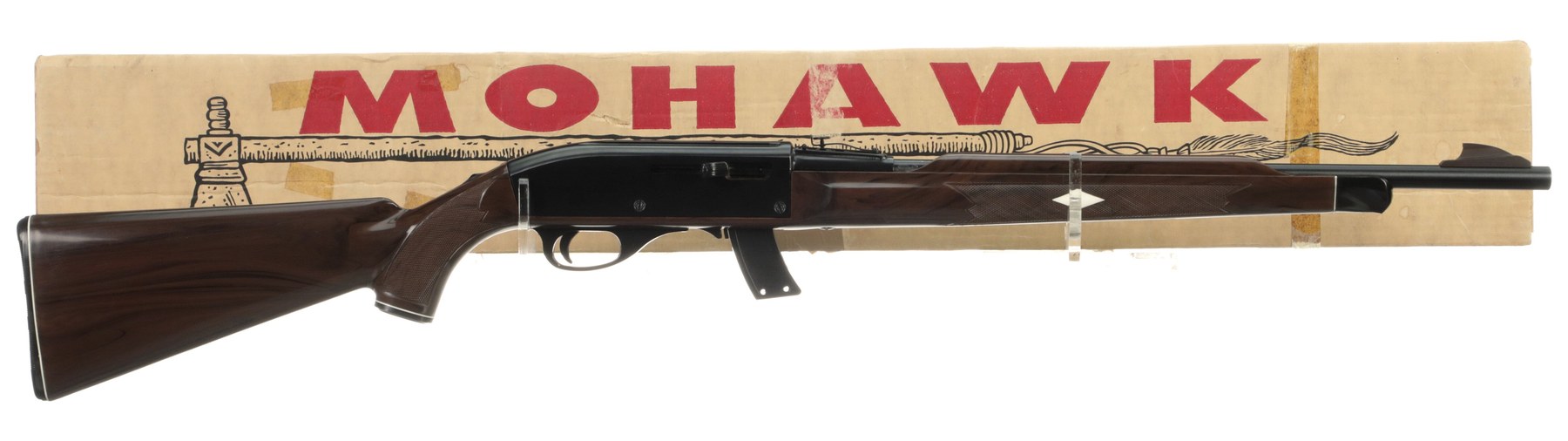
The Nylon 66 launched in two colours, and the plan for them was written down. Marcot reports that production “was scheduled to be 70 percent in Mohawk Brown and 30 percent in Seneca Green”, with the names “derived from the Mohawk and Seneca American Indian tribes that originally lived near what would become Ilion, N.Y.”1 Both colours had been tried in the January 1958 field trials, when the green was still “olive drab”.
The market did not accept the green. “Production rifles in Seneca Green were dropped in late 1962 because of limited demand,” according to Marcot. Remington’s later information packet gives 1961 as the discontinuation year.8 Simmons, who called the colour a “mottled dark olive”, also says 1961.2 The dates differ; the outcome is the same. Seneca Green ran for about three years and became the scarce colour.
What replaced it was the more dramatic combination. Apache Black arrived in 1962 with a black stock and a chrome-plated cover and barrel, “an impressive combination of colors”, in Simmons’s words. He adds that it “was also called the ‘Presentation’ grade”.2 Remington listed it at $54.95 against the brown gun’s $49.95. The colour and grade history is in Volume 4; the point here is that Remington used colour to sell the rifle from the start, and when the first alternative colour failed it went bolder, not safer.
2.6 List Prices, 1958 to 1987
Simmons compiled introduction years and the “list price then” for each model. His table is reproduced below with his years, which differ in places from Remington’s own documents (Volume 4).2
Table 2 — List Prices, 1958 to 1987
| Model | Introduced (Simmons) | List price then |
|---|---|---|
| Nylon 66 (Mohawk Brown) | 1958 | $49.95 |
| 66 Seneca Green | 1959 | $49.95 |
| 66 Apache Black | 1962 | $54.95 |
| 66 Gallery Special | 1962 | $59.95 |
| Nylon 76 | 1962 | $59.95 |
| Nylon 11 | 1962 | $36.95 |
| Nylon 12 | 1962 | $39.95 |
| Nylon 10 | 1962 | $25.95 |
| 150 Year Commemorative | 1966 | not given |
| Nylon 77 | 1970 | $54.95 |
| Mohawk 10-C | 1971 | $54.95 |
| Bicentennial Commemorative | 1976 | $84.95 |
| Black Diamond | 1978 | $84.95 |
| Apache 77 | 1987 | $109.95 |
Simmons noticed that “every price was 5 cents short of the next highest dollar”. The list price of a Nylon 66 barely moved in its first twenty years: $49.95 in 1959, $54.95 for a Nylon 66 in the 1964 price comparison recorded in the hub’s Ruger 10/22 dive, and $124 in the 42nd (1988) Gun Digest.2 By the end it was being discounted hard. Simmons found the K-Mart Apache 77 “on sale at K-Mart for the low price of $84.97” in September 1987, below its own list price and below the imported Brazilian copy on the same shelf.
2.7 How Many Were Made
Every published production total for the Nylon 66, with its source, is set out below. They are not averaged.
Table 3 — How Many Were Made
| Figure | What it counts | Source | Status |
|---|---|---|---|
| Approximately 1,050,350 | Nylon 66, 1959–1989 | Remington’s own model-history page, 2001–20139 | The maker’s figure. The best available. |
| ”more than 1,000,000 by 1991” | Nylon 66 | Marcot 20091 | Consistent with the above; the year conflicts (below). |
| 956,062 “by 1981” | Model 66, “1958–To Date” | Simmons 1991, from year-by-year figures ending in 19812 | A cumulative figure at 1981, not a total. |
| ”almost 80,000” in 1959; never under 20,000 a year through 1981; average “almost 40,000” | annual Nylon 66 production | Simmons 1991 | Annual figures; the underlying table was not published. |
| 1,050,350 | Nylon 66, 1959–1987 | McBain, NylonRifles.com 200710 | Remington’s number with a different end year. |
The maker’s figure and Simmons’s are compatible. Simmons had 956,062 made by the end of 1981. Adding about 94,000 more over 1982–1988 reaches Remington’s total, which is roughly 13,000 a year in the rifle’s last seven years. That matches his own observation that serial numbers in 1988 implied production of only “27,000 Nylons per year” across the whole family.
A rough cross-check comes from the serial numbers, which Volume 7 covers in full. McBain states that the serial series “were for all Nylon rifles, not just Nylon 66s”.10 The serial blocks recorded by Marcot and Simmons run 400000–473710 from late 1967 through 1968, 2100000–2599999 from December 1968 to February 1977, and A2100000 to about A2360000 by 1988.12 Together those account for about 834,000 numbers. That is the number of serialized Nylons of all models made from late 1967 onward, if every number was used. Everything made before October 1967, which includes the whole production of the Nylon 10, 11, 12 and 76 and eight years of Nylon 66s at up to 80,000 a year, carried no serial number at all. Several hundred thousand unnumbered rifles plus about 834,000 numbered ones is the right order of magnitude for a family whose flagship alone reached 1,050,350. The check is too coarse to confirm any figure to better than a hundred thousand, but it rules out gross error.
2.8 Why the Colour Breakdown Adds Up Too Well
Most accounts of the Nylon 66 quote a colour-by-colour production table. Its earliest located form is Gary McBain’s “Nylon Rifles – Facts and Figures” (2007), which says it was “gathered from the Remington web site as well as various publications” and warns that “no guarantee is given as to the accuracy”.10 Wikipedia’s table follows it.6 The Remington website pages located for this dive give the total only; they carry no colour breakdown.9
Table 4 — Why the Colour Breakdown Adds Up Too Well
| Nylon 66 variant | Quoted production |
|---|---|
| Mohawk Brown (66MB) | 716,492 |
| Apache Black (66AB) | 221,000 |
| Black Diamond (66BD) | 56,000 |
| Seneca Green (66SG) | 42,500 |
| Bicentennial (1976) | 10,268 |
| 150th Anniversary (1966) | 3,792 |
| Sum | 1,050,052 |
The six figures add up to 1,050,052, which is 298 short of Remington’s 1,050,350. Five of the six are round or near-round numbers; the Mohawk Brown figure is exact to the unit. That pattern suggests the Mohawk Brown count was derived by subtracting the others from Remington’s total, not counted. If so, the close fit is not evidence that the breakdown is accurate. It shows only that it was constructed to agree with the total.
Two of the figures have independent support. Simmons gives 42,500 for Seneca Green and 3,792 for the 150th Anniversary rifle in his 1991 table, which predates the website pages.2 The Apache Black, Black Diamond and Bicentennial figures were not found in any source earlier than McBain. The Gallery Special has no published count at all, and it cannot be part of the sum as given.
This dive quotes the variant figures with that caveat and treats them as indicators of relative rarity, not as counts. The ordering they give is corroborated by the auction market (Volume 7): Seneca Green and the 150th Anniversary rifle are scarce, Apache Black is common but sought after, and Mohawk Brown is everywhere.
2.9 When It Ended, and Why
The Nylon 66 has four published end dates, and one source explains three of them.
- 1987. Remington’s later information packet ends the Mohawk Brown and Black Diamond lines in 1987, and lists the K-Mart Nylon 77 from 1987 with no end.8
- 1988. Simmons reports that “Jack Heath of Remington Arms wrote me that the Model 66 was to be dropped from the Remington catalog in the year 1988, because the dies that make the plastic stock were wearing out and Remington does not feel justified in replacing them. The Apache 77 will still be available to large quantity buyers.” He also puts the serial numbers “in the last production year of 1988” in the A2360000 range.2 Rock Island Auction has catalogued a boxed Mohawk Brown Nylon 66 as “Manufactured in 1988”.7
- 1989. Remington’s model-history page gives 1989 as the year discontinued.9 McBain gives 1987–1989 for the Apache 77.10
- 1991. Marcot gives “more than 1,000,000 by 1991 when the Nylon 66 was discontinued”.1 No second source supports 1991.
Heath’s letter reconciles most of this. The catalogue rifle ended around 1987–88. Production of what could still be made on the worn tooling continued for volume buyers, chiefly K-Mart’s Apache 77, into 1989. The reason is the most instructive part. The rifle ended because its moulds wore out, not because demand disappeared. American Rifleman’s 2026 segment repeats the tradition that the Nylon 66 mould was “supposedly … one of the most intricate and expensive polymer molds made up until that point”;11 after thirty years it was no longer worth replacing for a rifle that listed at about $110. The one-piece moulding that made the Nylon 66 cheap to build (Volume 1) also meant that when the moulds wore out, the whole design went with them.
References
Footnotes
-
Roy Marcot, “The Remington Nylon 66”, American Rifleman, 27 August 2009. Archived: https://web.archive.org/web/20150303174642/http://www.americanrifleman.org:80/articles/2009/8/27/the-remington-nylon-66 , retrieved 2026-09-19. ↩ ↩2 ↩3 ↩4 ↩5 ↩6 ↩7 ↩8
-
Donald M. Simmons, “Those Plastic Remingtons”, The Gun Digest, 45th Edition (1991), including his tables “Years Introduced / List Price Then” and “Years Made / Quantity” and his acknowledgement of correspondence with Jack Heath of Remington Arms. Scan archived at https://web.archive.org/web/20100524123435/http://www.nylonrifles.com/Nylonpdf/PlasticRems.pdf , retrieved 2026-09-19. ↩ ↩2 ↩3 ↩4 ↩5 ↩6 ↩7 ↩8 ↩9 ↩10
-
DuPont, “Minlon and Zytel Design Information – Module II” (2001), section 5. Archived: https://web.archive.org/web/20151016093431/http://www.dupont.com/content/dam/dupont/products-and-services/plastics-polymers-and-resins/thermoplastics/documents/Zytel/Minlon%20Zytel%20Design%20Info%20Module%202.pdf . ↩
-
The instructions and parts list in the same Remington Nylon 66 information packet (archived PDF linked in the packet note above). ↩ ↩2 ↩3 ↩4
-
W. E. Leek and C. H. Morse, US Patent 3,023,527 (1962). https://patentimages.storage.googleapis.com/pdfs/US3023527.pdf . ↩
-
“Remington Nylon 66”, Wikipedia, raw text retrieved 2026-09-19. ↩ ↩2
-
Rock Island Auction Company lot pages, https://www.rockislandauction.com/detail/2017/531/ (Nylon 10C, 29 March 2018, “Stock is cracked”) and https://www.rockislandauction.com/detail/5027/757/ (Nylon 66 Mohawk Brown, 1 February 2026, “Manufactured in 1988”), retrieved 2026-09-19. ↩ ↩2
-
Remington Arms Company, “Nylon 66 Autoloading Rifle” information packet (Madison, NC address; includes “Nylon Series of 22 Rimfire Rifles” table, instructions, exploded view RF 21 and parts list RF 22). Archived PDF: https://web.archive.org/web/20110910092323/http://www.remington.com:80/~/media/Files/Owners-Manuals/Nylon%2066.ashx , retrieved 2026-09-19. ↩ ↩2
-
Remington Arms Company, “Nylon 66 Autoloading Rimfire Rifle”, model history page. Archived: https://web.archive.org/web/20121216202834/http://www.remington.com/products/archived/rimfire/autoloading/nylon-66.aspx , retrieved 2026-09-19. ↩ ↩2 ↩3
-
Gary McBain, “Nylon Rifles – Facts and Figures”, NylonRifles.com, 29 April 2007. Archived: https://web.archive.org/web/20100521055828/http://nylonrifles.com/NylonRifles/Articles/Entries/2007/4/29_Nylon_Rifles_-Facts_and_Figures.html , retrieved 2026-09-19. ↩ ↩2 ↩3 ↩4
-
“I Have This Old Gun: Remington Nylon 66”, American Rifleman (Evan Brune), archived 14 January 2026: https://web.archive.org/web/20260114153310/https://www.americanrifleman.org/content/i-have-this-old-gun-remington-nylon-66/ , retrieved 2026-09-19. ↩
Comments (0)