MAS FR-F1 and FR-F2 · Volume 3
The FR-F2, 1986–2023: Rebuild, Service and Replacement
How most FR-F2s were made from FR-F1s, the dates that conflict, where the rifle can actually be shown to have served, the foreign armies that bought it, and the 2018–2023 programme that replaced it with 2,620 semi-automatic SCAR-H PRs
3.1 The name, and two start dates
The rifle’s official name is given on an Armée de Terre identification poster of 2010: “FUSIL A REPETITION MODELE F2 — FRF2”, the model F2 repeating rifle.1 The same expansion appears in the procurement agency’s press releases of 2022 and 2023, which call it “fusil à répétition modèle F2 (FR-F2)”.2 So FR stands for fusil à répétition, repeating rifle, not for France, a point English-language sources often miss.
When it began depends on what is counted. The Direction générale de l’armement, announcing the arrival of the last replacement rifles in February 2023, said the FR-F2 had been “en usage dans les armées depuis 1986” (“in use in the armed forces since 1986”).2 The Forces Operations Blog, reporting the replacement tender in 2018, wrote that the FR-F2 “équipe depuis 1986 les tireurs d’élite des sections d’infanterie de l’armée de Terre” (“has equipped the marksmen of the army’s infantry platoons since 1986”), and American Rifleman agrees that it “entered service in 1986”.34 The Lithuanian Armed Forces, which bought FR-F2s, wrote in 2009 that “FR F-2 gaminamas Prancūzijoje nuo 1984 m.” (“The FR F-2 has been made in France since 1984”).5 Both can be true: work on the rifle and its first production in 1984, service entry in 1986. “Adopted in 1984”, which some references print, is not supported by anything read.
3.2 Rebuilt, not new
The single most useful fact about the FR-F2 comes from the Ministry of the Armed Forces’ history of French marksmen in Sarajevo: “L’essentiel des FR-F2 sont des FR-F1 modifiés par la manufacture d’armes de Saint-Étienne (MAS) dont le boîtier de culasse a été fraisé puis à nouveau usiné” (“Most FR-F2s are FR-F1s modified by MAS, whose receiver was milled and then re-machined”).6 Forgotten Weapons says the same in fewer words: the F2 “was an upgrade of the existing FR-F1 rather than a new manufacture”.7
How many were converted is uncertain. The only figure found, “3.500 environ ont été mis au standard Otan 7,62 en 1986 et 1987” (“about 3,500 were brought to the 7.62 NATO standard in 1986 and 1987”), comes from an unsourced French club site that also gives 7,500 for FR-F1s and FR-F2s together.8 The official record gives no fleet size. What can be said is that the replacement programme bought 2,620 rifles (below), which is consistent with a fleet of a few thousand but proves nothing about its size.
The rebuild matters to a collector and to a builder. A rebuilt FR-F2 carries a receiver first made in the 1960s or 1970s as an FR-F1, which raises a question about its US legal status that Vol 8 takes up. And the rifles marked “F.R. F2 - 7,62.N”, the marking Rock Island Auction transcribed from an imported example, are the converted rifles, whatever their receivers’ first identity.9
3.3 What the rebuild changed
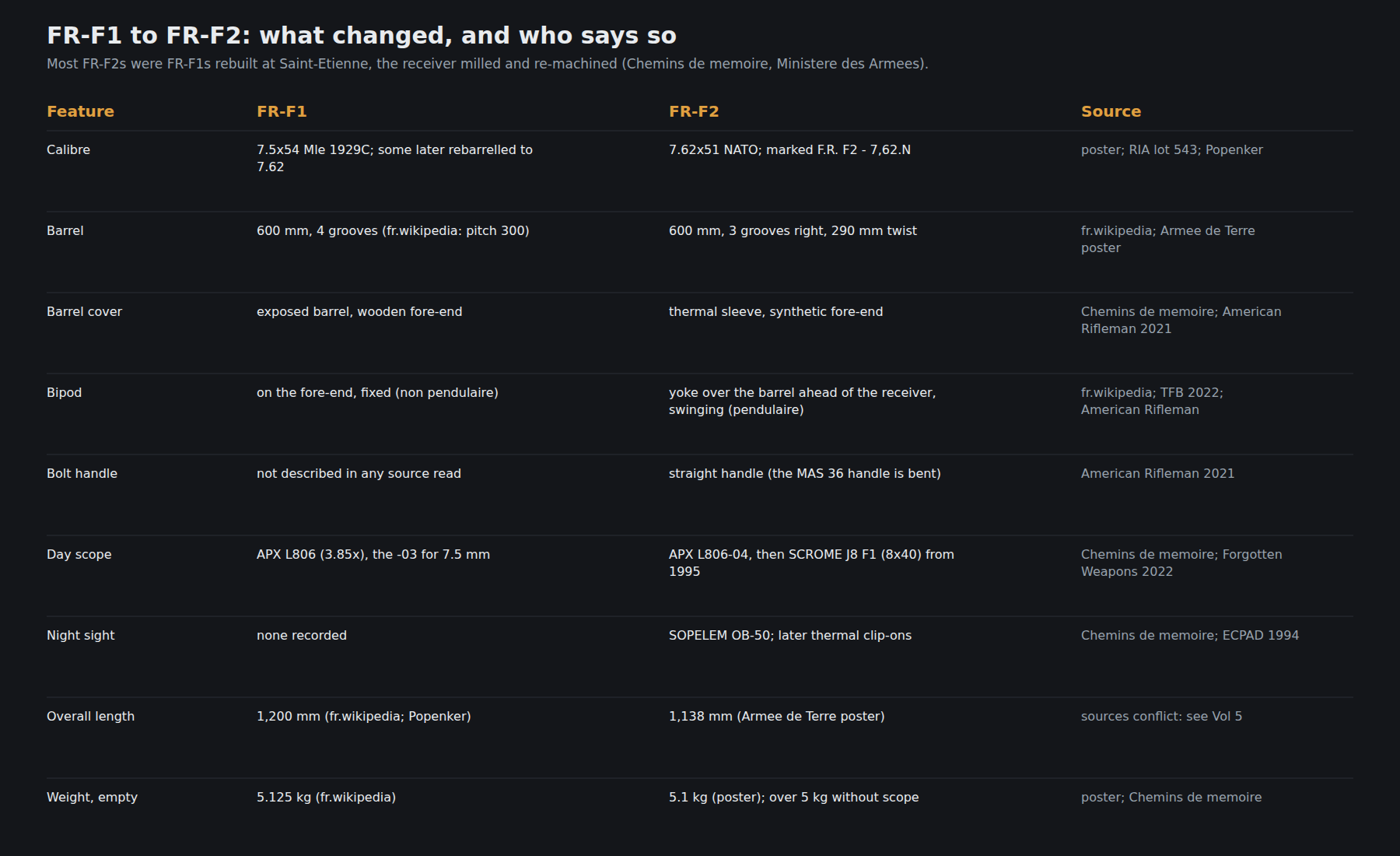
The changes, set out in detail in Vols 4 and 5, come down to five:
- Calibre. 7.62×51 NATO in place of 7.5×54, with a new barrel of 600 mm, three grooves, right-hand, 290 mm pitch, per the Armée de Terre poster.1
- The thermal sleeve. A cover over the whole barrel, described by the Ministry as “conçu pour diffuser et répartir uniformément la chaleur dégagée par le canon” (“designed to diffuse and spread evenly the heat given off by the barrel”), with “un fût anti-calorique” (“a heat-resistant fore-end”).6
- The bipod. Moved from a fixed fitting on the wooden fore-end to a yoke over the barrel ahead of the receiver, hinged above the barrel so that the rifle can swing on it. The Lithuanian Army’s explanation: “dvikojė atrama yra perkelta iš ginklo priekinės dalies arčiau šaulio. Tai padaryta tam, kad ginklas būtų stabilesnis šūvio metu, be to, atrama yra tvirtesnė” (“the bipod has been moved from the front of the weapon closer to the shooter, to make the weapon more stable when firing; the support is also sturdier”).5
- The bolt handle. Straight, where the MAS 36’s is bent (American Rifleman).4
- The optics. The APX L806-04 at first, then from 1995 the SCROME J8 F1 (Vol 7).610
3.4 The marksman’s place in the platoon
The Ministry’s Sarajevo history describes the organisation the FR-F2 served in, during the UN and NATO deployments of 1995–96: “les tireurs d’élite (TE) sont constitués en équipes de trois. Chaque section de combat possède une équipe, capable d’être articulée en « cellule anti-sniping » sur ordre du commandement” (“marksmen are formed into three-man teams; each combat platoon has one team, which can be formed into an anti-sniping cell on command”).6 Every infantry company held FR-F2s.
The words changed later. An Armée de Terre page of 2023 describes two separate posts: the tireur de précision, the precision shooter, open after selection in infantry and light cavalry regiments, and the tireur d’élite, a specialist post reached from the first, with further qualification training, a 48-hour survival test and loads of 45 to 55 kg.11 It says that “Depuis 2022” the precision shooters carry the SCAR-H. In the FR-F2’s era the platoon marksman with the F2 was a tireur d’élite; by 2023 the platoon marksman is a tireur de précision, and tireur d’élite names the long-range specialist. The 2010 poster already shows the “brevet de tireur de précision” badge next to the FR-F2, so the newer term was in use with the F2.1 When the change was made was not found.
3.5 Bosnia, 1994–1996
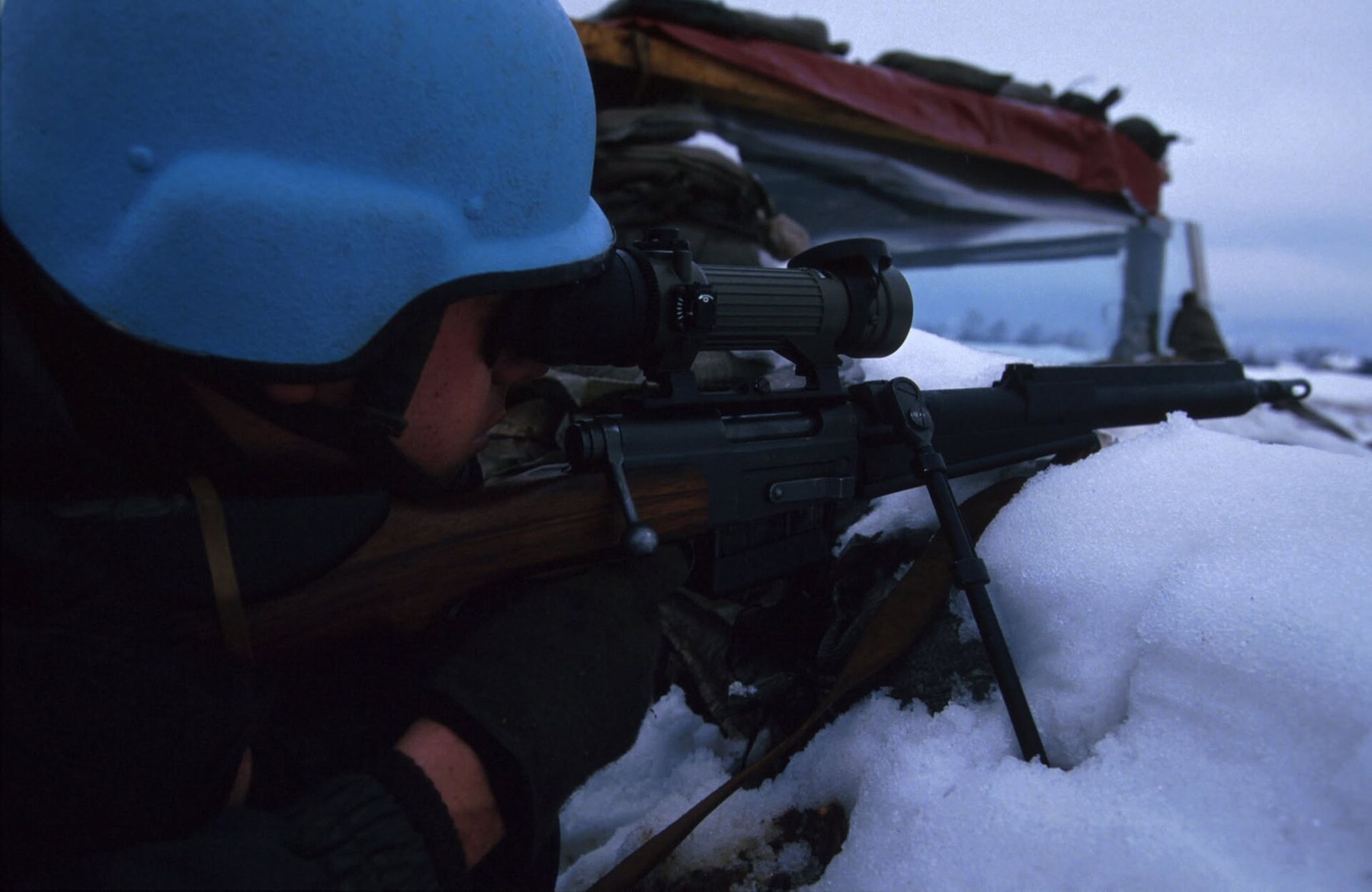
Bosnia is the FR-F2’s best-documented deployment. The Ministry’s own history states that every infantry company with the French battalions in Sarajevo held FR-F2s, issued “pour l’infanterie française, d’une lunette APXL 806-04 pour le tir de jour, et d’une lunette de tir de nuit SOPELEM OB-50” (“for French infantry, with an APX L806-04 day scope and a SOPELEM OB-50 night scope”).6 It adds the FR-F2’s reach as the army then saw it: “Bien que d’une portée efficace de 600 mètres, son calibre en 7,62 millimètres OTAN permet d’engager des cibles jusqu’à 850 mètres” (“although its effective range is 600 m, its 7.62 mm NATO calibre allows targets to be engaged out to 850 m”).6 ECPAD’s photograph of a marksman in Sarajevo in the spring of 1994 shows the rifle with the night sight.
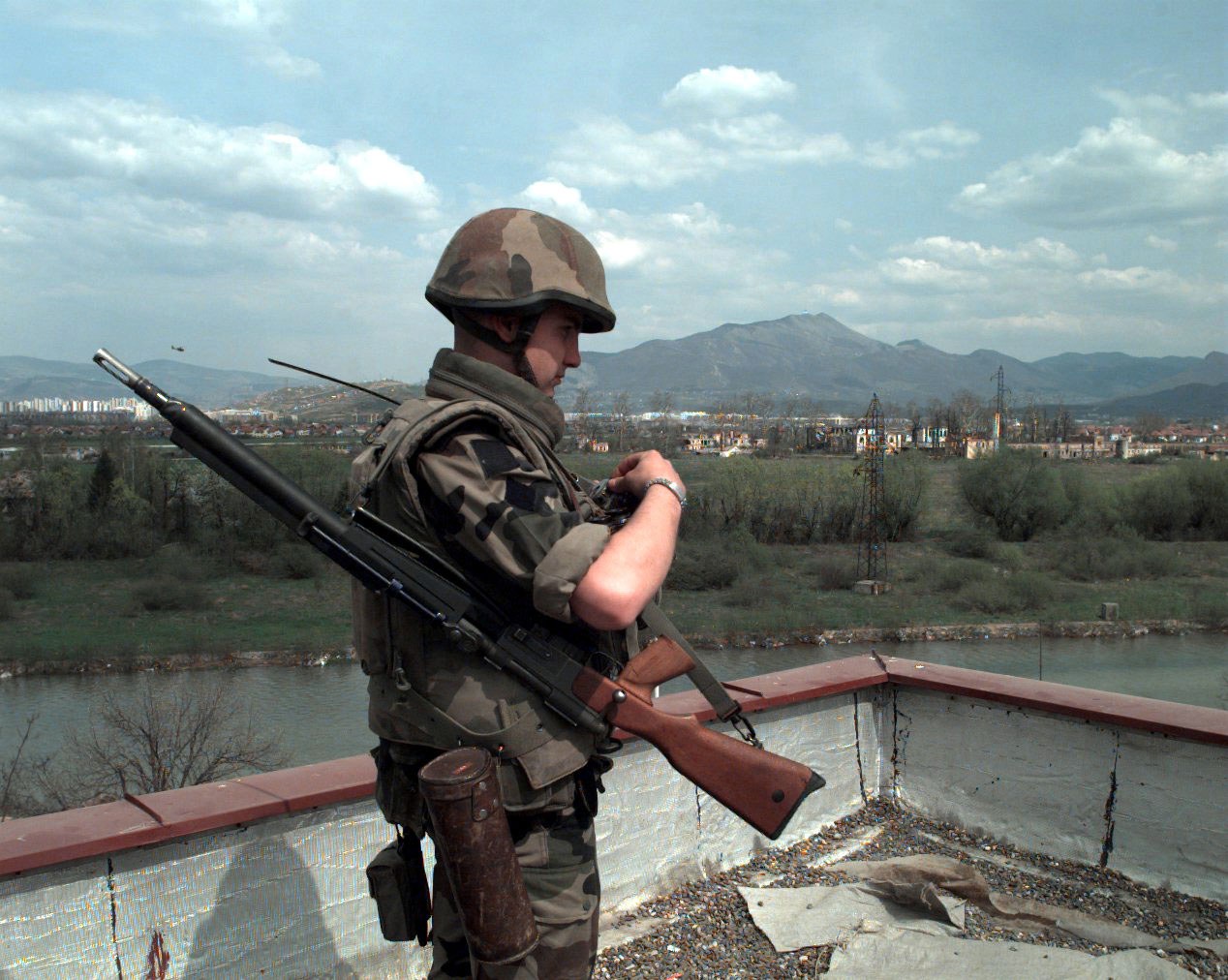
The same history notes that some units, such as those of the 9th Marine Infantry Division, received a 12.7 mm McMillan rifle in 1992; it calls the rifle a TAC-50, a model name usually dated to about 2000, so the designation may be anachronistic.6 The 12.7 mm rifles did a different job and did not replace the FR-F2.
3.6 Exercises and Afghanistan, 2001–2009
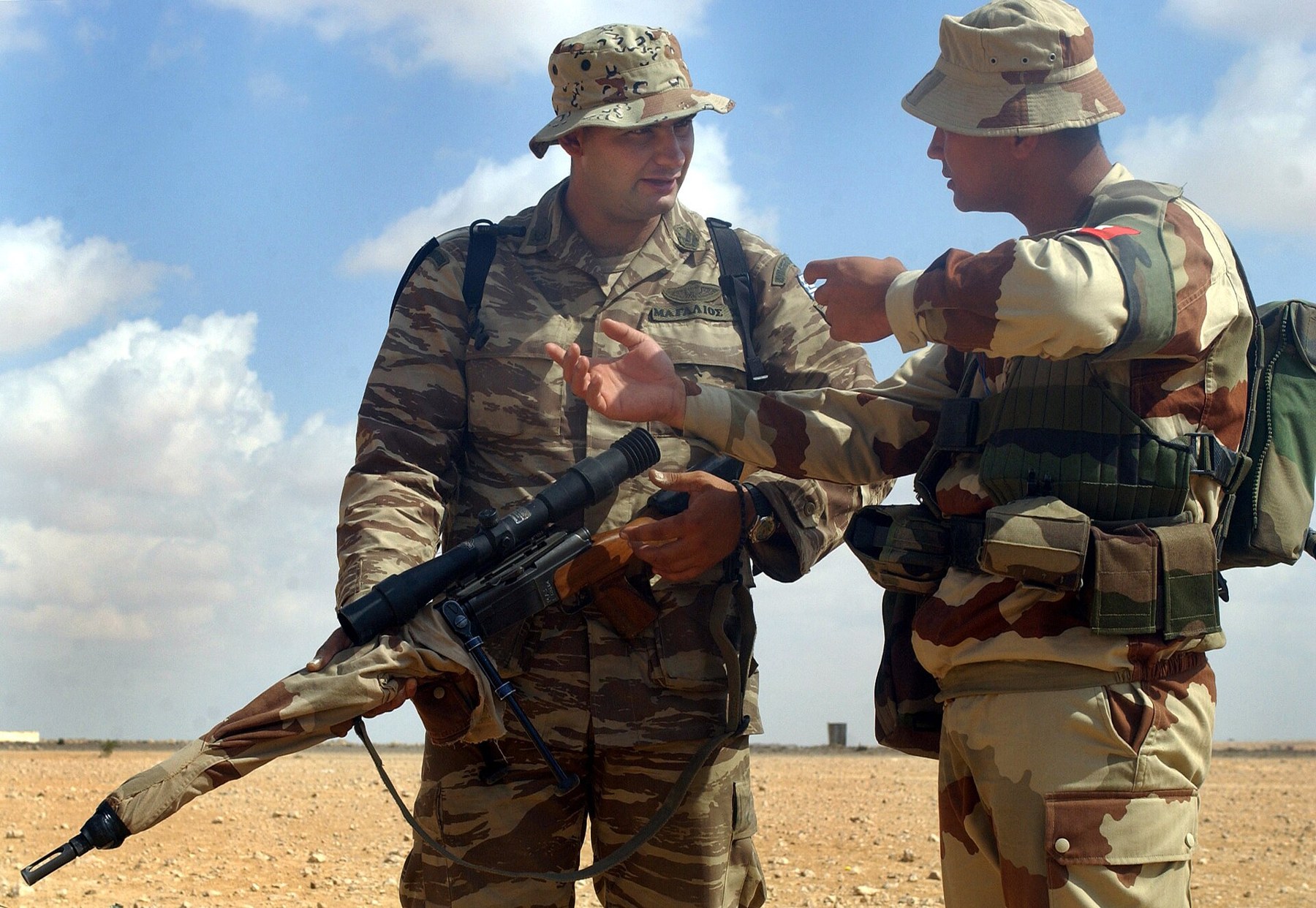
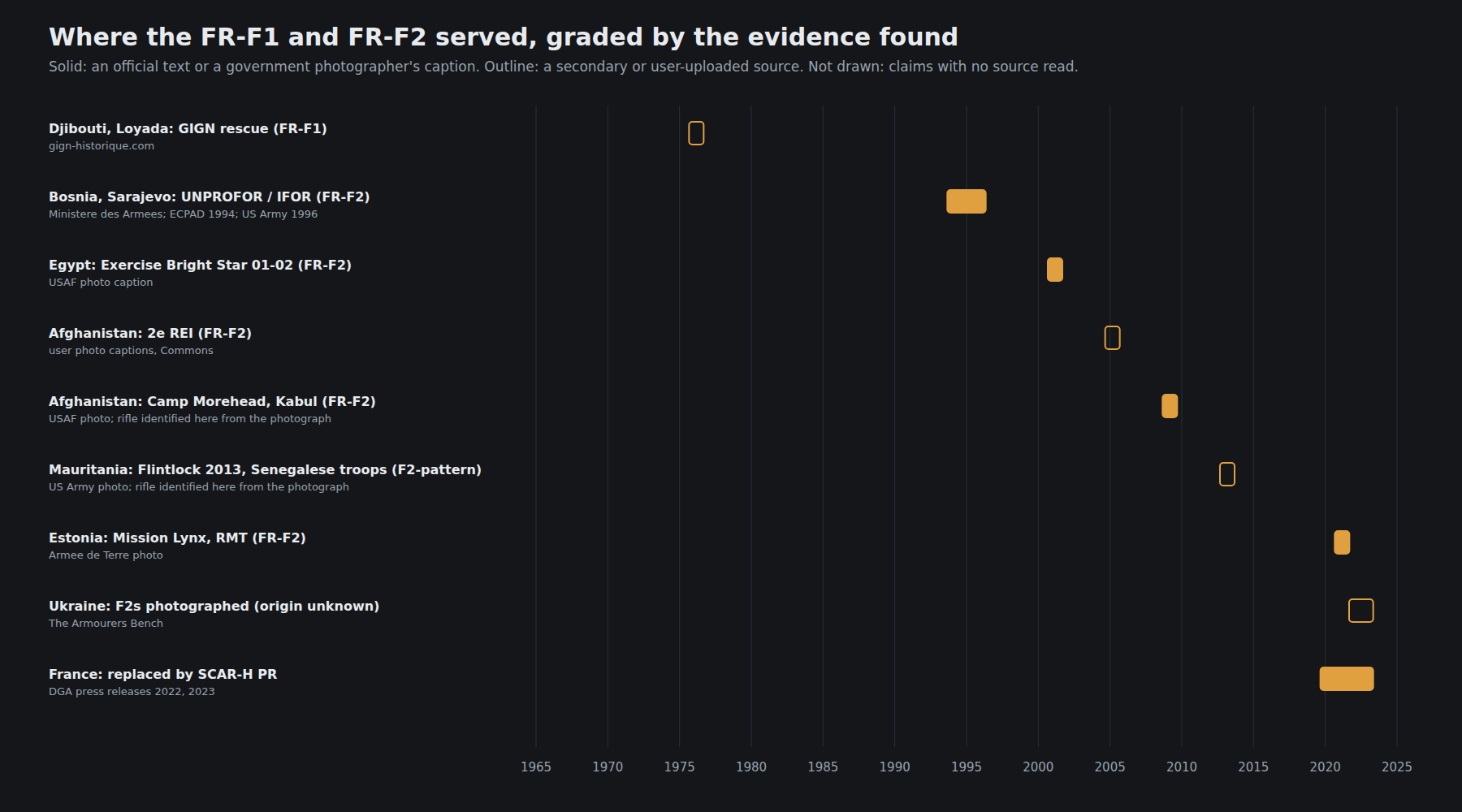
The US Air Force’s caption for Bright Star 2001 names the rifle outright: “A French sharp shooter explains the capabilities of his FR F2 sniper rifle to a fellow Greek sharp shooter.”12 Exercises are not operations, but the caption is a dated, government record of the rifle in use.
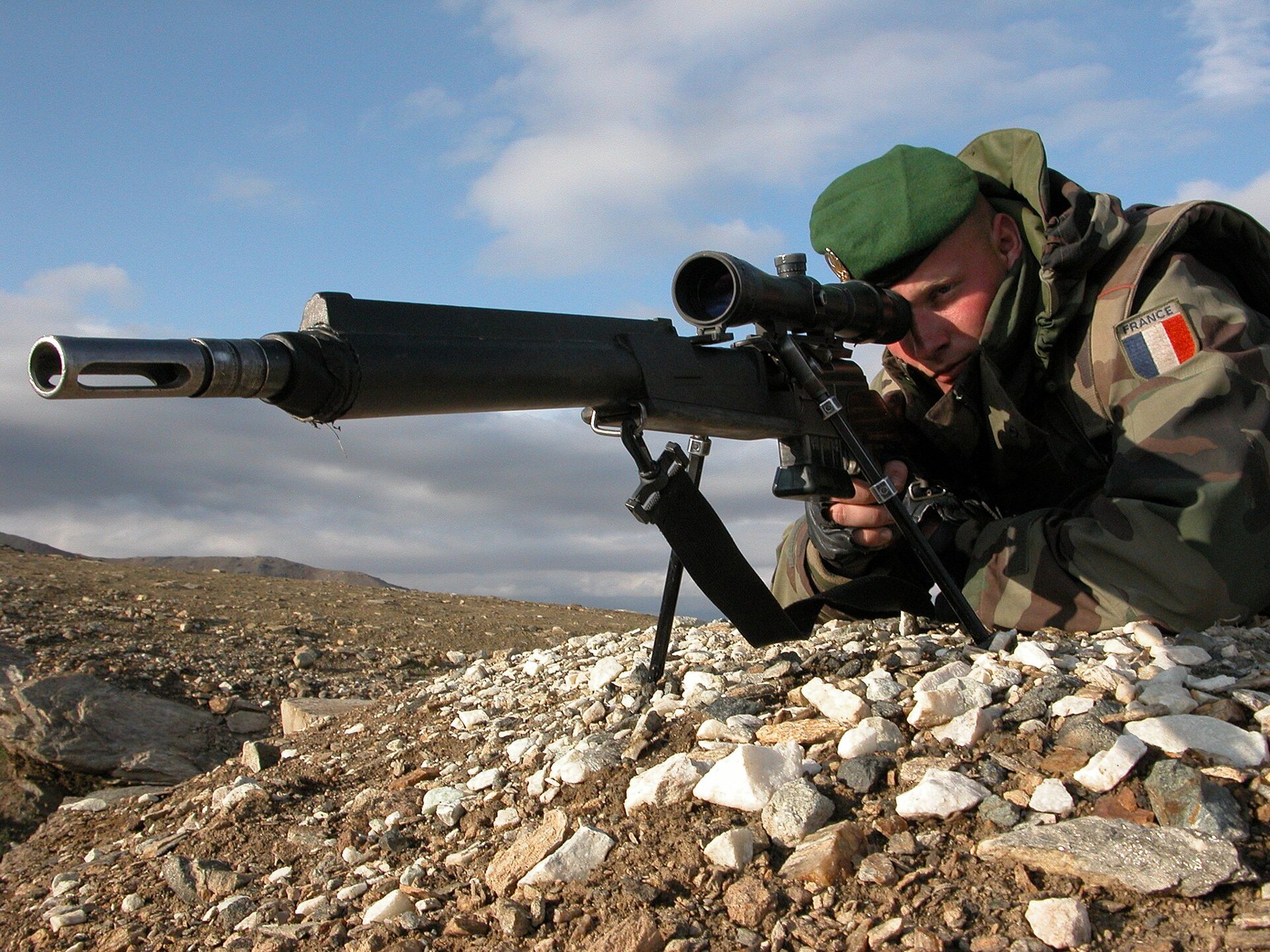
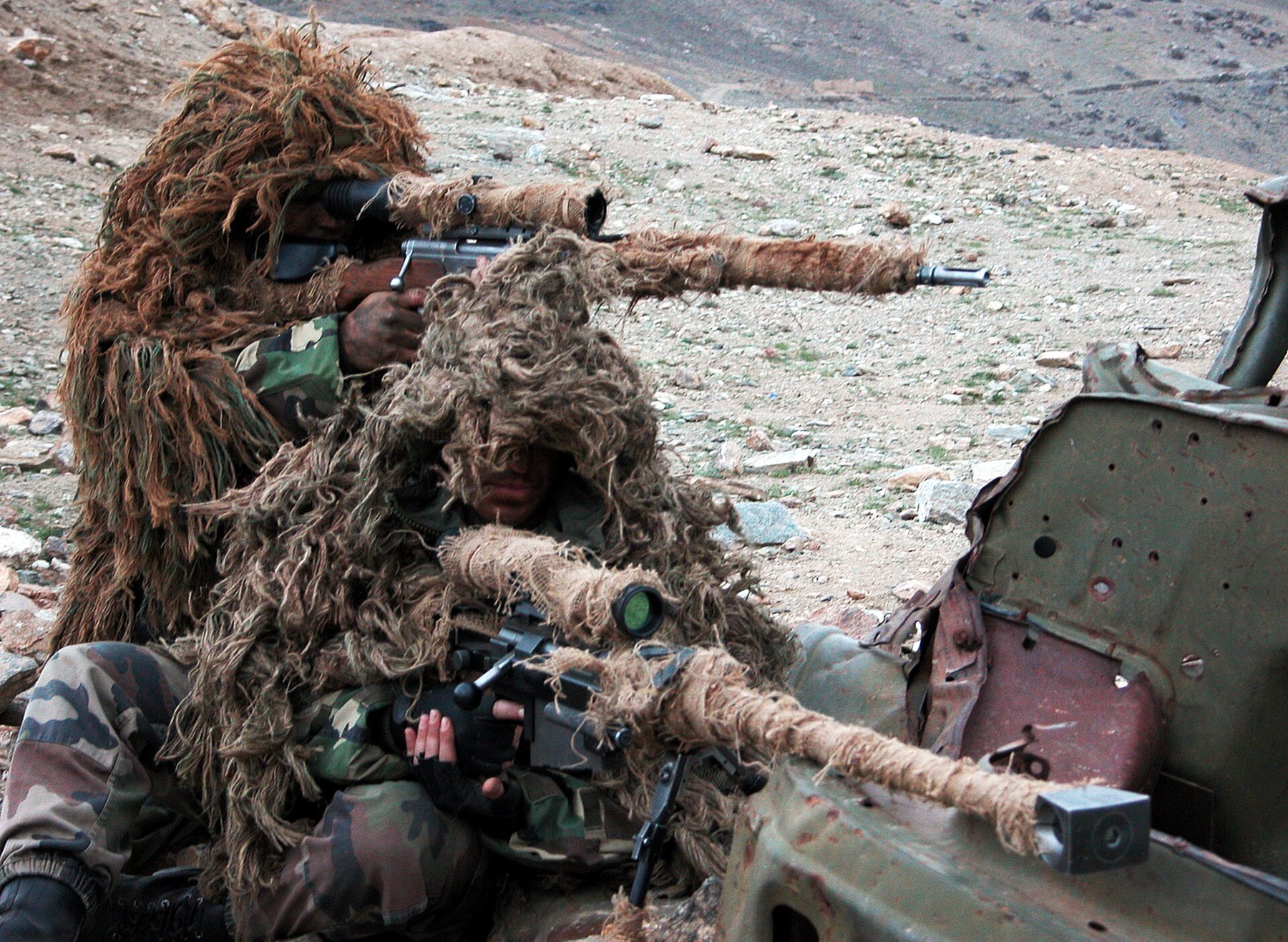
For Afghanistan, the evidence found is photographic. Two photographs uploaded by a former member of the 2e REI, dated March and April 2005, show the regiment’s marksmen with FR-F2s, in one case beside a PGM Hécate 12.7 mm rifle.13 They are an individual’s photographs and captions, not an official text, but the rifles in them are unmistakably FR-F2s.
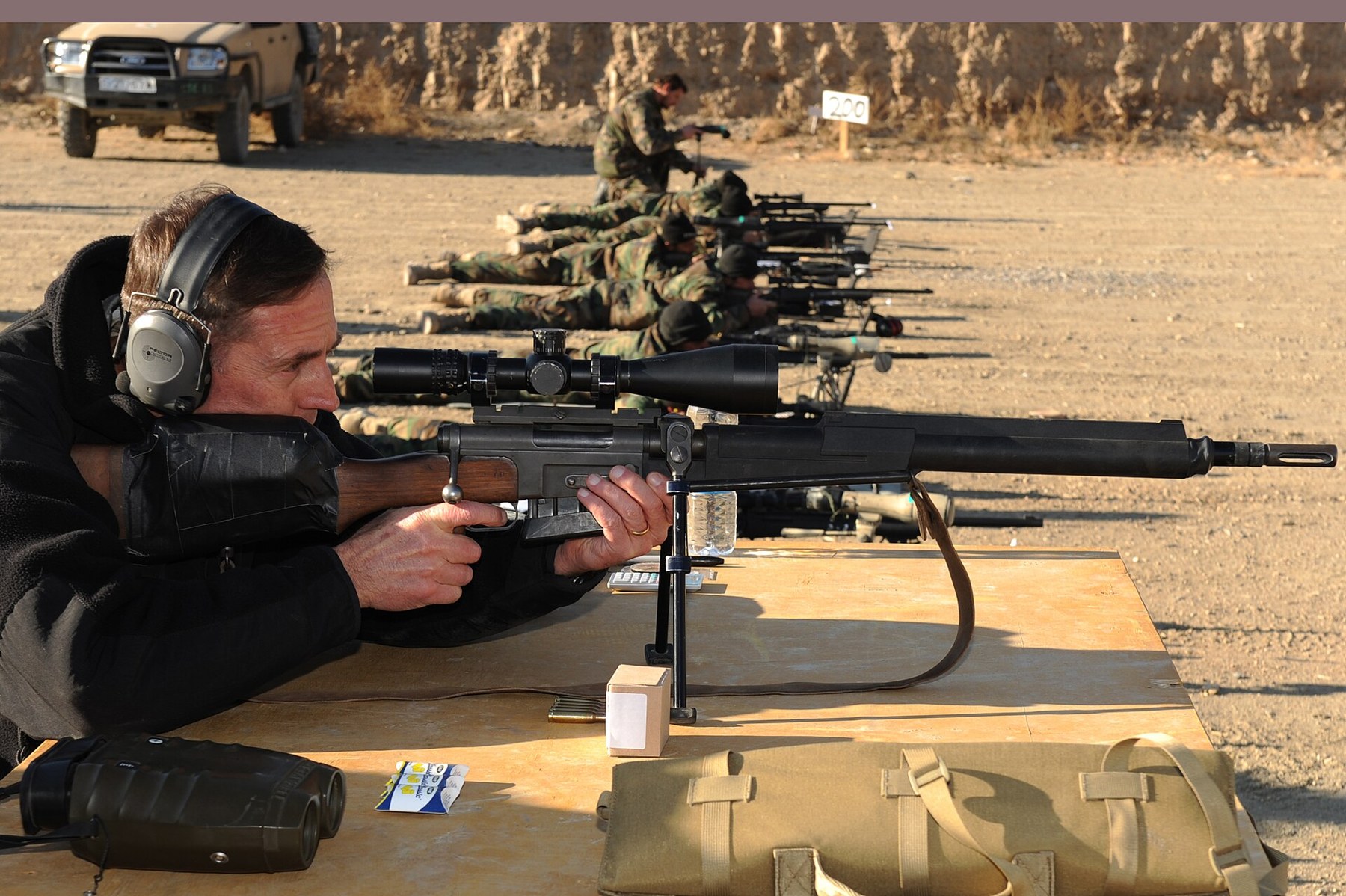
A US Air Force photograph of December 2009 shows General David Petraeus firing a rifle at Camp Morehead, Kabul, during a visit to the Afghan commando training school.14 The caption calls it “a sniper rifle”. The rifle in the photograph has the FR-F2’s sleeve, its bipod yoke ahead of the receiver, a straight bolt handle with a ball knob and a brown stock, and is identified here as an FR-F2 from the photograph; it carries a large modern variable scope, not a J8. The caption does not say whose rifle it was or why it was there.
3.7 The Sahel, and claims that could not be confirmed
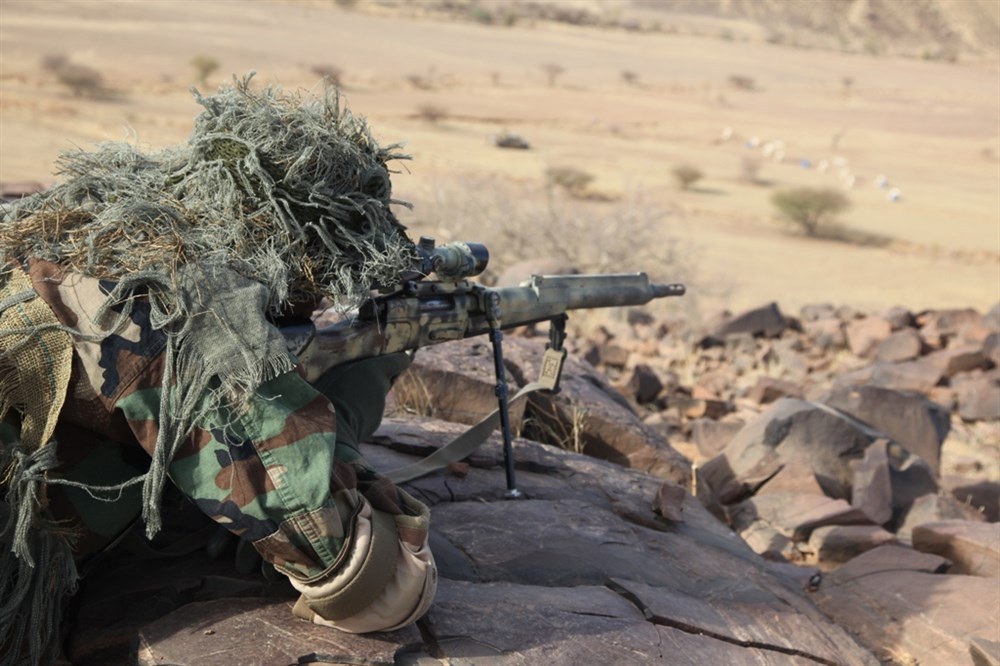
Several deployments are attached to the FR-F2 in secondary sources without evidence that could be checked.
Table 1 — The Sahel, and claims that could not be confirmed
| Theatre | Date | Evidence found | Status |
|---|---|---|---|
| Gulf War, Opération Daguet | 1990–91 | English Wikipedia list, no citation | Not confirmed |
| Côte d’Ivoire, Opération Licorne | 2003 | A Commons photograph of a 2e REI vehicle filed in the FR-F2 category; no rifle can be identified in it | Not confirmed; photograph not used |
| Mali, Opérations Serval and Panthère | February–March 2013 | A Voice of America video still of a French marksman; its caption does not name the rifle and the image is too small to identify it. The French Wikipedia carries a photograph captioned as an FR-F2 in Mali | Not confirmed from a primary source |
| Central African Republic, Sangaris | December 2013 | A VOA photograph filed in the FR-F2 category; no rifle identifiable | Not confirmed |
| Afghanistan, Kapisa and Surobi | 2008–12 | No source found | Not confirmed |
The Sahel deserves a sentence of its own because it is where the French Army used precision fire most in the FR-F2’s last decade. By 2020 the Army’s own photographs from Mali show its marksmen with other rifles: one captions a marksman of the 8e RPIMa “armed with a Sako TRG-42, cal 338 Lapua Magnum”.15
3.8 The last decade: Estonia and the ranges
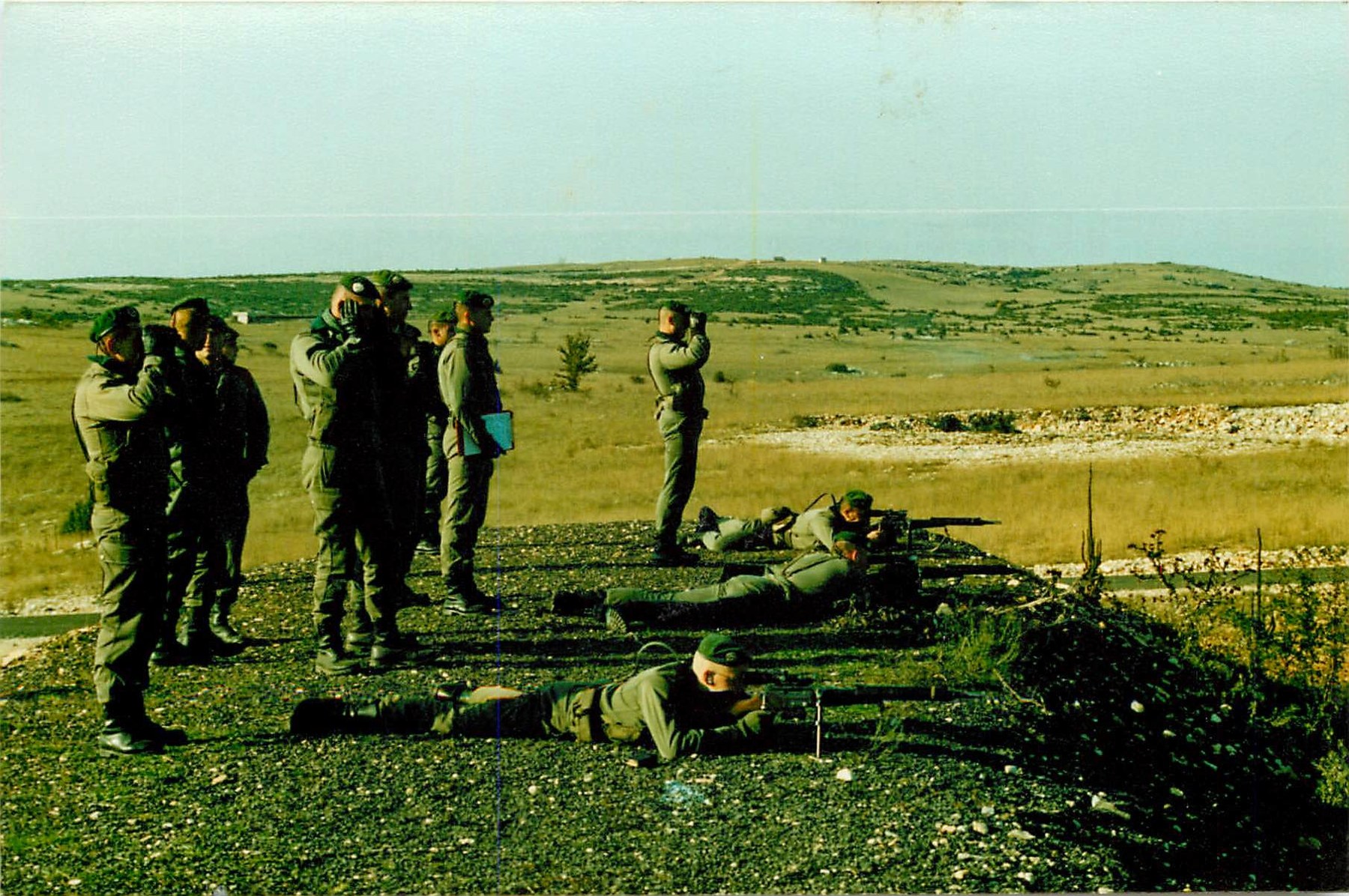
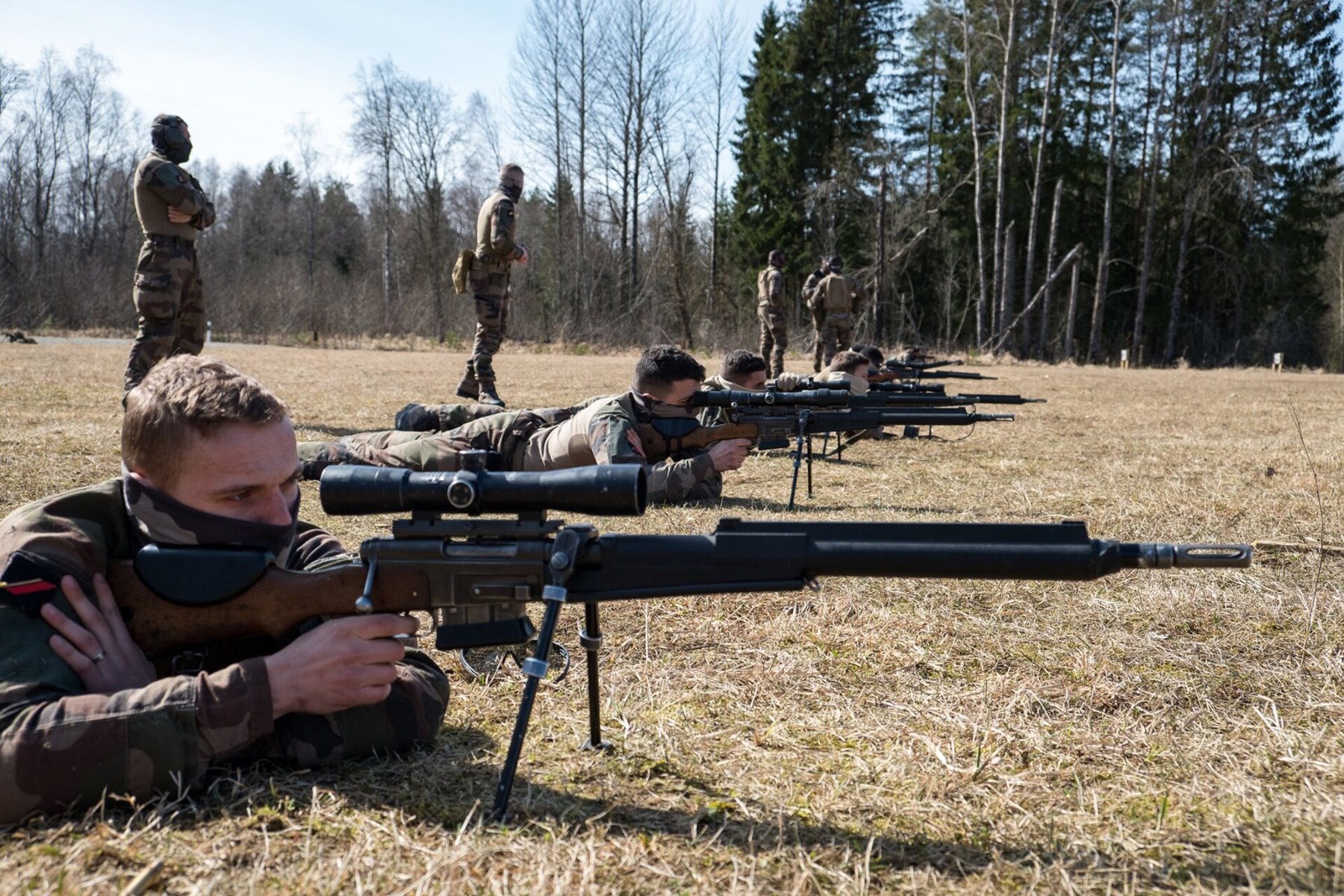
The FR-F2 stayed in the platoons until the very end. The Armée de Terre’s own photograph of the Régiment de marche du Tchad in Estonia in 2021, during NATO’s enhanced forward presence mission, captions its rifles as FR-F2s, and every rifle visible on that firing line has the sleeve and yoke.16 The Legion’s ranges in 2017 show the same.
3.9 Foreign users
Table 2 — Foreign users
| User | Evidence | Status |
|---|---|---|
| Lithuania | The Lithuanian Armed Forces’ own page on the “Snaiperinis šautuvas FR F-2”, 2009, with specifications | Confirmed (official) |
| Ukraine | The Armourers Bench documented FR-F2s in Ukrainian hands in March 2022 and October 2023, one with a SCROME J8 and one with a SAGEM Sword sight; their source is unknown, and a French government document of March 2024 counts only 30 “fusils de précision” sent between 1 March 2022 and 1 May 2024, without naming the type | Presence documented by a secondary source; origin unknown |
| Estonia | English Wikipedia, which says FR-F2s were replaced by Sako TRGs | Not confirmed |
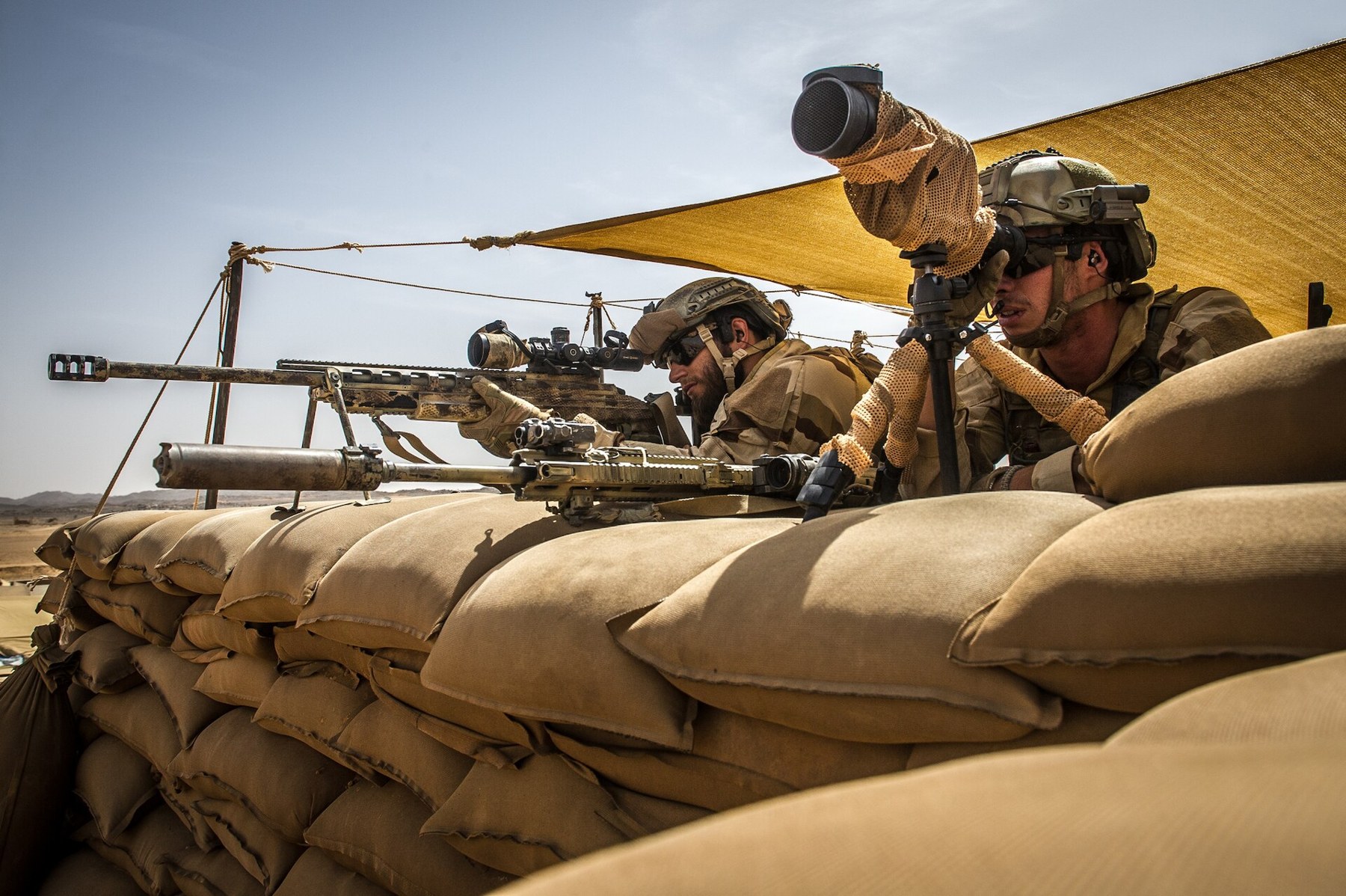
| Senegal | The Flintlock 2013 photograph above | Not confirmed |
Sources: Lithuanian Armed Forces;5 The Armourers Bench.17
The Lithuanian page also supplies specifications that differ from the French poster’s: 5.75 kg, 1,200 mm and four grooves, against the poster’s 5.1 kg, 1,138 mm and three grooves.51 Its four grooves are the FR-F1’s figure, which suggests its table was compiled partly from FR-F1 data. Vol 5 sets the figures side by side.
3.10 Replacement: the FPSA programme
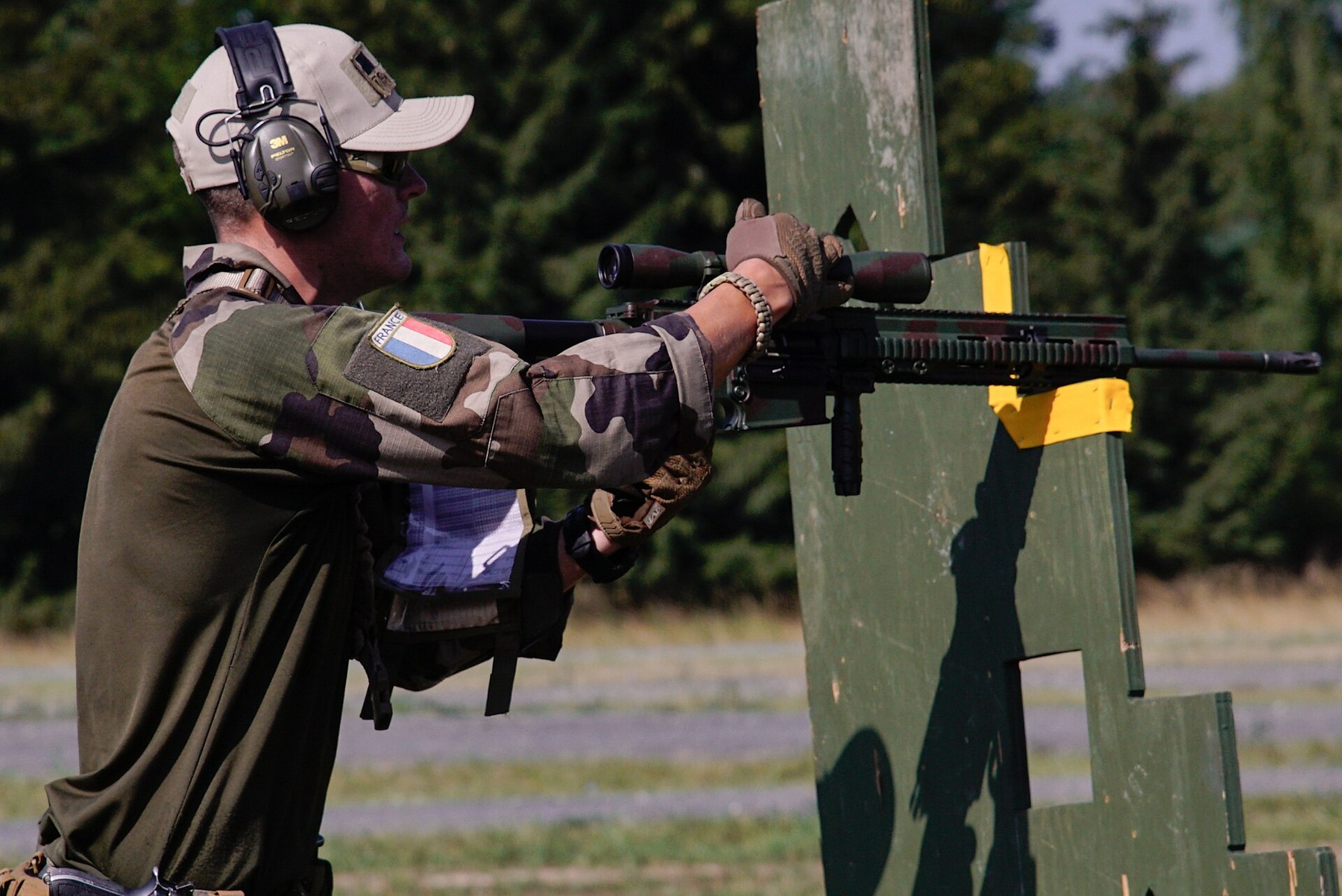
The replacement was announced in August 2018. The Forces Operations Blog headlined it “Le FR-F2 est mort, vive le FPSA !” and wrote of the end of the road for the FR-F2 “après trois décennies de bons et loyaux services” (“after three decades of good and loyal service”).3 The tender, published about 16 August 2018 with bids due on 5 October, asked for “2600 FPSA” (fusils de précision semi-automatiques), “1800 modules de visée en intensification de lumières” and “1000 modules de visée en infrarouge thermique” “devant être montés en tandem avec la lunette de jour” (“to be mounted in tandem with the day scope”), and “3,15 millions munitions perforantes et 3,15 millions munitions de précision” (“3.15 million armour-piercing and 3.15 million precision rounds”).3 The blog expected competitors “venant notamment d’Allemagne avec le HK-417 et de Belgique avec le FN SCAR SSR”.
The procurement agency tested the candidates in 2019 at its land-systems centre at Bourges with the army’s technical section, and on 13 December 2019 notified a contract to a Belgian-German group led by FN Herstal for up to €100 million and 2,620 rifles; the ministry announced it on 6 January 2020.182 The rifle was the FN SCAR-H PR. The agency’s release of February 2023 names the group: “OIP Sensor Systems et Telefunken-Racoms, associées à FN Herstal, Schmidt et Bender et MEN”, that is, the Belgian optronics maker, the German integrator, the rifle maker, the scope maker and the German ammunition maker.2
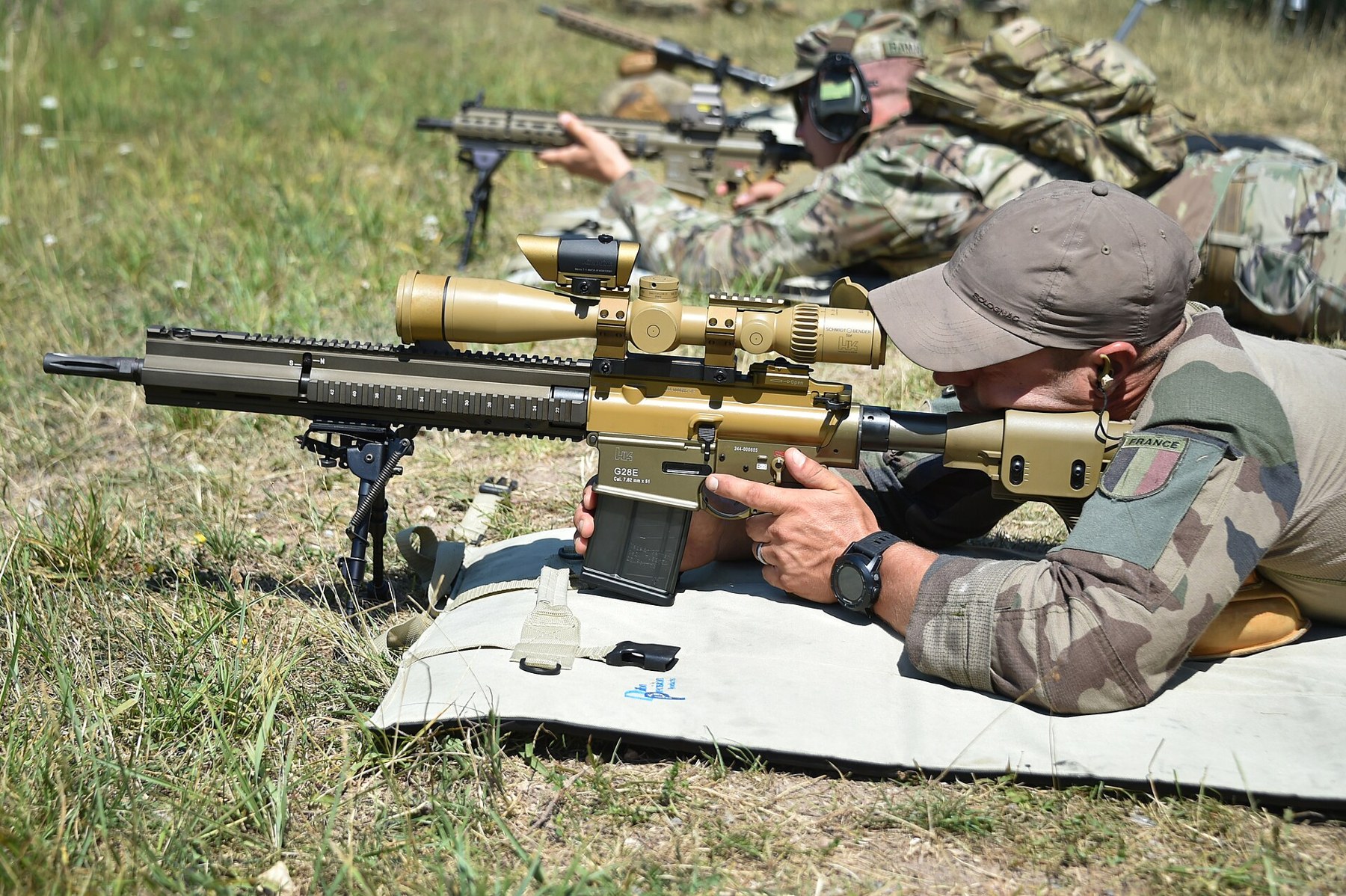
Deliveries ran from 2020. Zone Militaire reported in October 2021 that mountain troops were the first to be issued the new rifle, the 16e bataillon de chasseurs at Bitche receiving its SCAR-H PRs before the 13e bataillon de chasseurs alpins, “afin de remplacer les fusils FR-F2 alors en dotation” (“to replace the FR-F2 rifles then in service”).19 The last order, for 655 rifles, was placed in April 2022, and on 25 January 2023 the agency received “les 655 derniers fusils de précision SCAR” with the last 274 thermal and 441 image-intensifier modules: in all, 2,620 rifles, 1,096 infrared and 1,766 image-intensifier modules, plus armour-piercing ammunition.2
The agency’s two releases differ on one figure. The 2022 release contrasts the SCAR-H PR’s 800 m with 400 m for assault rifles; the 2023 release gives about 300 m “for other soldiers”.2 Both are given as stated.
English Wikipedia’s “1986 to 2019” for the FR-F2’s service is wrong at the end: 2019 is the contract date, and the rifle stayed in service until the replacements were delivered, the last of them in January 2023.
3.11 The interim rifles, and what the FR-F2 never did
The SCAR-H PR was not the first semi-automatic precision rifle in French hands. Joint Forces News reported in 2018 that the FR-F2, “an updated version of mid-1960s French rifle which entered service a little over 30 years ago”, had already been partly replaced in some frontline infantry units by the HK417; when and how many were bought was not found.20 McCollum records that the HK417 replaced the Air Force’s FR-G1 and FR-G2 from 2013 (Vol 2).21
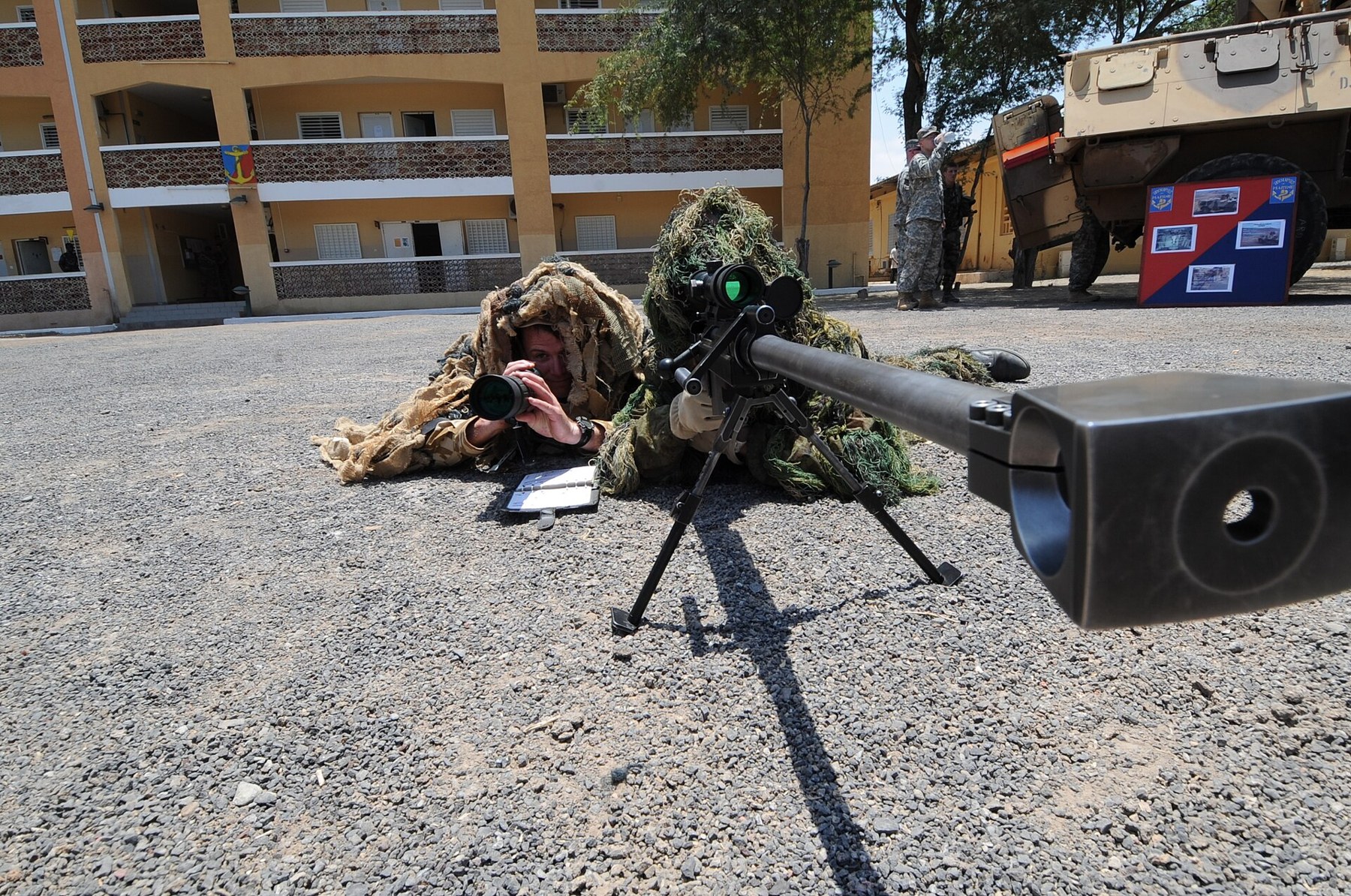
The FR-F2 was never the French Army’s long-range rifle. The 12.7 mm rifles, the McMillan from 1992 and the PGM Hécate II, did that job. US Air Force photographs of a French weapons display in Djibouti in 2009 show a Hécate II beside a placard reading “FR 12,7 F1”; the 2e REI photograph above shows one beside an FR-F2 in Afghanistan.22 The FR-F2 was the platoon’s precise rifle, out to 600 or 800 m depending on which official text is read (Vol 7).
3.12 After service
Decommissioned FR-F2s went to the commercial market. Navy Arms imported a batch into the United States in 2022 and was offering refurbished rifles in 2026 (Vol 8).23 Rock Island Auction’s catalogue for one imported example says the rifles served “until August 2018”; that is the date the replacement was announced, not the date the rifles left service, which ran on until 2023.9
3.13 What the record does not settle
Table 3 — What the record does not settle
| Question | Range of answers | Status |
|---|---|---|
| Start of the FR-F2 | Made from 1984 (Lithuanian Army); in service from 1986 (DGA, FOB, American Rifleman) | Both stated; not contradictory |
| How many FR-F1s were converted | About 3,500 in 1986–87 (unsourced club site) | No official figure |
| How many FR-F2s were newly made | Not stated anywhere read | Unknown |
| Gulf War, Côte d’Ivoire, Mali, Sangaris | Claimed, not shown | Not confirmed |
| Army HK417 purchases before the FPSA | ”Partly replaced in some units” (Joint Forces News, 2018) | Dates and numbers unknown |
| When the platoon marksman became a tireur de précision | Term in use with the F2 by 2010 | Date of change unknown |
| Estonia and Senegal as users | Wikipedia; one photograph | Not confirmed |
References
Footnotes
-
Armée de Terre, “Fusil à répétition modèle F2 — FRF2”, identification poster, SIRPA Terre 2010, COMWEB, CCH P. Pelletier, originally http://www.defense.gouv.fr/content/download/99365/963027/file/FRF2-2.pdf , read in the Internet Archive capture of 21 February 2011 on 2026-10-18 (copy in 02-inputs/manuals/). ↩ ↩2 ↩3 ↩4
-
Direction générale de l’armement, “La DGA commande les 655 derniers fusils de précision semi-automatiques de calibre 7.62 mm”, 28 April 2022, https://www.defense.gouv.fr/dga/actualites/dga-commande-655-derniers-fusils-precision-semi-automatiques-calibre-762-mm ; and “La DGA a réceptionné les 655 derniers fusils de précision SCAR”, 9 February 2023, https://www.defense.gouv.fr/dga/actualites/dga-a-receptionne-655-derniers-fusils-precision-scar ; both read 2026-10-18. ↩ ↩2 ↩3 ↩4 ↩5 ↩6
-
Nathan Gain, “Le FR-F2 est mort, vive le FPSA !”, Forces Operations Blog, 17 August 2018, http://forcesoperations.com/le-fr-f2-est-mort-vive-le-fpsa/ , read 2026-10-18. ↩ ↩2 ↩3
-
Martin K. A. Morgan, “The French FR F2 Sniper Rifle”, American Rifleman, 18 September 2021, https://americanrifleman.org/content/the-french-fr-f2-sniper-rifle , read 2026-10-18. ↩ ↩2
-
Lietuvos kariuomenė, “Snaiperinis šautuvas FR F-2”, page dated 2009-04-17, Internet Archive capture of 28 July 2010, read 2026-10-18. Translated for these volumes. ↩ ↩2 ↩3 ↩4
-
Commandant Julien Monange, “Le tireur d’élite français à Sarajevo”, Chemins de mémoire, Ministère des Armées, 2018/2019, https://www.cheminsdememoire.gouv.fr/sites/default/files/2019-06/tireur%20%C3%A9lite.pdf , read 2026-10-18. ↩ ↩2 ↩3 ↩4 ↩5 ↩6 ↩7
-
Ian McCollum, Forgotten Weapons, posts on the FR-F2 of 2021 and 2022 (see Vol 7 references), read 2026-10-18. ↩
-
tirsportifchabris.fr, “fusil sniper français FR-F1”, read 2026-10-18. Unsourced club blog. ↩
-
Rock Island Auction Company, catalogue for sale 4092, lot 543, FR-F2, https://cdn.rockislandauction.com/flipbooks/4092/BK1/files/basic-html/page472.html , read 2026-10-18. The serial is not reproduced here. ↩ ↩2
-
Ian McCollum, “Scrome J8: A Proper Scope for the FR-F2 Sniper”, Forgotten Weapons, 21 May 2022, https://www.forgottenweapons.com/scrome-j8-a-proper-scope-for-the-fr-f2-sniper/ , read 2026-10-18. ↩
-
Armée de Terre, “Être tireur d’élite et tireur de précision”, 3 February 2023, https://www.defense.gouv.fr/terre/actualites/etre-tireur-delite-tireur-precision , read 2026-10-18. ↩
-
US Air Force, SSgt Cherie A. Thurlby, photograph and caption, Exercise Bright Star 01-02, 16 October 2001, via Wikimedia Commons, “File:French Greek Bright Star 2001.jpg”, read 2026-10-18. ↩
-
davric, “FRF2 Afghanistan.JPG” and “TE 2REI Afghanistan.jpg”, Wikimedia Commons, uploaded 2007 from a personal collection, captions read 2026-10-18. ↩
-
US Air Force, Senior Airman Brian Ybarbo, “Gen. Petraeus visits commando training school”, DVIDS 232265, 16 December 2009, via Wikimedia Commons, read 2026-10-18. ↩
-
Armée de Terre, photograph of 8e RPIMa marksmen in Mali, 28 March 2020, via Wikimedia Commons, “File:French snipers.jpg”, caption read 2026-10-18. ↩
-
Armée de Terre (Jérôme Salles), photograph of the Régiment de marche du Tchad, Mission Lynx, Estonia, 2 May 2021, via Wikimedia Commons, “File:FR F2.jpg”, caption read 2026-10-18. ↩
-
The Armourers Bench, “French FR2 Sniper Rifles in Ukraine”, 15 October 2023, updated 7 June 2024, https://armourersbench.com/2023/10/15/french-fr2-sniper-rifles-in-ukraine/ , read 2026-10-18. ↩
-
Theatrum Belli, “Fusil de précision : le SCAR de FN Herstal remplacera le FR-F2”, 6 January 2020, https://theatrum-belli.com/fusil-de-precision-le-scar-de-fn-herstal-remplacera-le-fr-fr-2/ , reproducing the ministry’s communiqué; and La Libre Belgique / Belga, 6 January 2020; both read 2026-10-18. ↩
-
Laurent Lagneau, “Les fusils de précision SCAR-H PR commencent à entrer en dotation au sein des régiments d’infanterie”, Zone Militaire (opex360.com), 13 October 2021, https://www.opex360.com/2021/10/13/les-fusils-de-precision-scar-h-pr-commencent-a-entrer-en-dotation-au-sein-des-regiments-dinfanterie/ , read 2026-10-18. ↩
-
Bob Morrison, “France To Replace FR-F2 Sniper Rifle”, Joint Forces News, 21 August 2018, https://www.joint-forces.com/world-news/17008-france-to-replace-fr-f2-sniper-rifle , read 2026-10-18. ↩
-
Ian McCollum, “French Air Force Snipers: the FR-G1 and FR-G2”, Forgotten Weapons, 4 March 2020, read 2026-10-18. ↩
-
US Air Force, TSgt Joe Zuccaro, “French Weapons Display in Djibouti”, DVIDS 160351 and 160367, 19 March 2009, via Wikimedia Commons, read 2026-10-18. ↩
-
Doug E, “Newly Imported French FR F2 Sniper Rifles Available In The U.S.”, The Firearm Blog, 24 June 2022; Zac K, “[SHOT 2026] Navy Arms Raids France’s MilSurp Supply”, The Firearm Blog, 22 January 2026; both read 2026-10-18. ↩
Comments (0)