The AR-15 in 5.56 · Volume 7
Owning One — Maintenance, Wear, Ammunition, Magazines and the Michigan Position
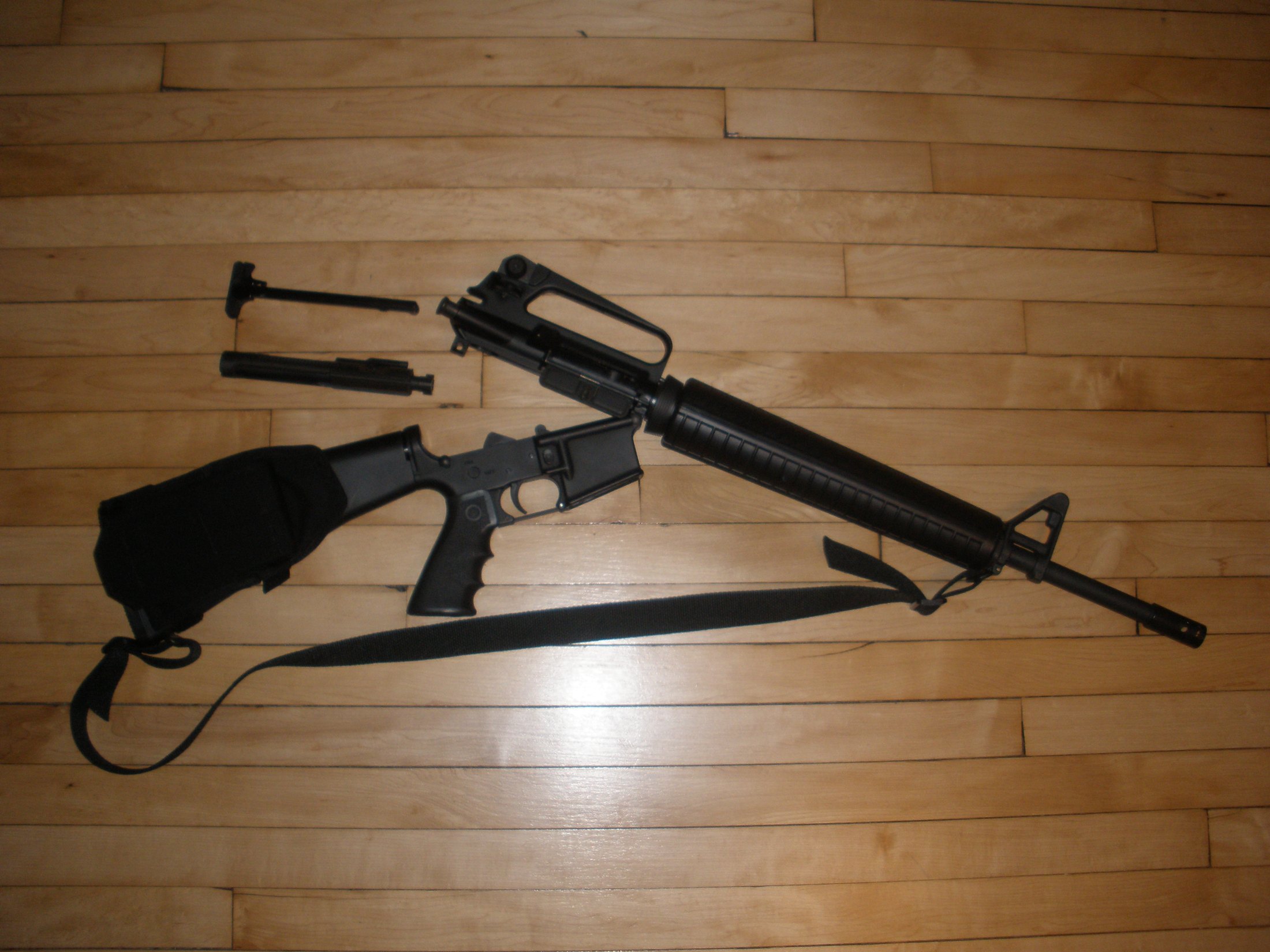
The AR-15 is an easy rifle to look after and an easy one to look after badly, in a specific and predictable way. Almost every owner cleans it more than it needs and lubricates it less than it needs, which is exactly backwards for this design.
That claim is not a preference. It follows from the mechanism established in Volume 1: the technical literature records that direct-gas operation “increases the amount of heat that is deposited in the receiver while firing, which can burn off and cover up lubricants,” with consequences for reliability and component life.1 The characteristic failure of the platform is a dry one. A visibly filthy AR-15 that is wet with oil will generally keep running; a spotless one that has been scrubbed dry will not.
7.1 Field Stripping
Two captive pins, and no tools.
- Confirm the rifle is unloaded: magazine out, bolt back, chamber inspected visually and physically.
- Push out the rear takedown pin. The upper hinges open on the front pivot pin.
- Draw the charging handle back; the bolt carrier group comes out with it, then the charging handle lifts clear.
- Strip the carrier group: firing pin retaining pin out, firing pin out the back, cam pin rotated a quarter turn and lifted, bolt forward out of the carrier.
That is complete access to everything that fouls. The rifle does not need to come apart further for routine maintenance, and the extractor should not be removed unless it is being serviced.
7.2 Cleaning — Where It Matters and Where It Does Not
Ranked by how much difference it makes.
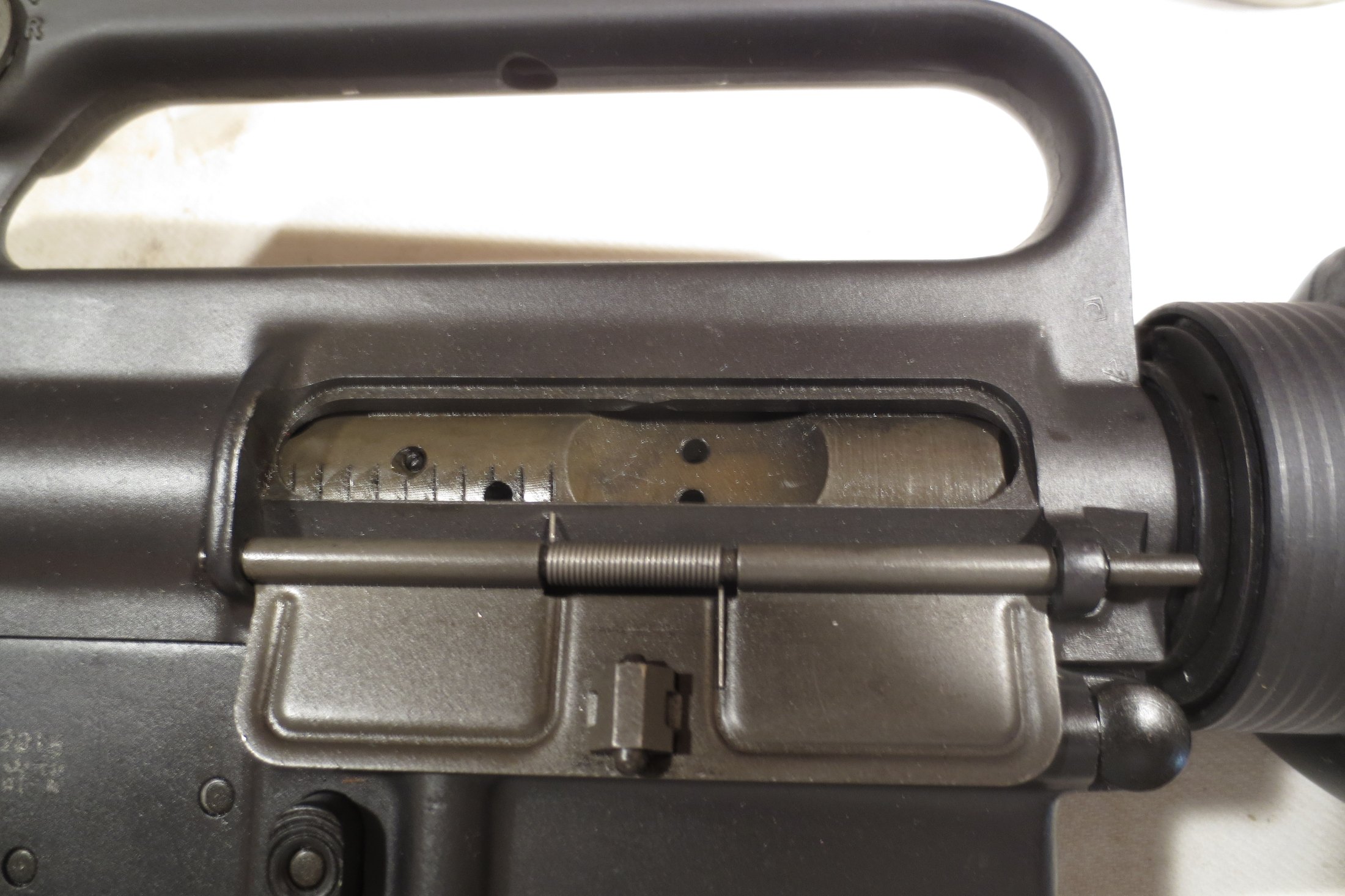
The bolt tail, the gas rings and the carrier interior. This is where combustion residue actually accumulates, for the reasons Volume 1 set out: gas enters the annulus between bolt tail and carrier, does its work, and vents into the receiver. Carbon builds as a hard glaze on the rear of the bolt and inside the carrier bore. This is the one area where scraping is genuinely worthwhile.
The bolt’s locking lugs and the barrel extension. Carbon and unburnt powder collect between the lugs and in the recesses they lock into. A build-up here is a real cause of sluggish lock-up.
The chamber. A dirty chamber causes extraction problems, and extraction problems on this platform are commonly misattributed to the extractor spring.
The bore. Worth cleaning, worth not obsessing over. A chrome-lined bore in particular is extremely tolerant.
The receiver interior. Carbon here is cosmetic. It can be wiped and ignored.
What does not need doing: stripping the rifle to components after every outing, removing the extractor routinely, or chasing every trace of carbon off a bolt tail. A carbon glaze that has stopped growing is doing no harm.
7.3 Lubrication
The more important half, and the one that is skimped.
Oil goes on: the bolt body and its lugs, the cam pin and its track, the outside of the carrier where it bears on the receiver rails, the charging handle, and lightly on the hammer and trigger pins.
The rifle wants to be visibly wet at those points. A light film is not enough on a design that boils lubricant off the working parts with every shot. The common failure sequence is: the rifle is cleaned thoroughly, lubricated sparingly because it looks clean, and then runs dry a few hundred rounds later.
Grease is defensible on the carrier rails and the bolt lugs, where it stays put. Oil is better everywhere that needs to flow into a joint.
Dust is the counter-argument — a wet rifle in fine dust makes a grinding paste. In dusty conditions the sensible posture is oil rather than grease, and more frequent attention rather than less lubricant.
7.4 Wear Points
The parts that wear out, in roughly the order they do.
Gas rings. Three rings on the bolt tail. They wear and lose their seal, and the classic check is to stand the stripped carrier group on its bolt face: if the bolt collapses into the carrier under the weight of the carrier alone, the rings have had it. They are cheap and are the first thing to replace on a high-round-count rifle.
The extractor spring and its insert. The spring goes soft. Symptoms are failures to extract and erratic ejection.
The buffer spring. Loses free length and tension over a long life.
The gas tube. Erodes at the gas block end eventually; very long-lived.
The bolt itself. The real service-life-limiting part, and it fails at the cam pin hole or at a locking lug. This is the argument for an MPI/HPT bolt from Volume 5 and for keeping a spare.
Castle nut staking. Not wear exactly, but worth re-checking, per Volume 5 section 5.8.
On replacement intervals: the round-count figures widely quoted for gas rings, extractor springs and bolts could not be verified against a manufacturer’s or an armourer’s published schedule for this dive, and none is printed here. The inspection tests above are observable and do not depend on a round count, which is the more useful discipline anyway.
7.5 Ammunition
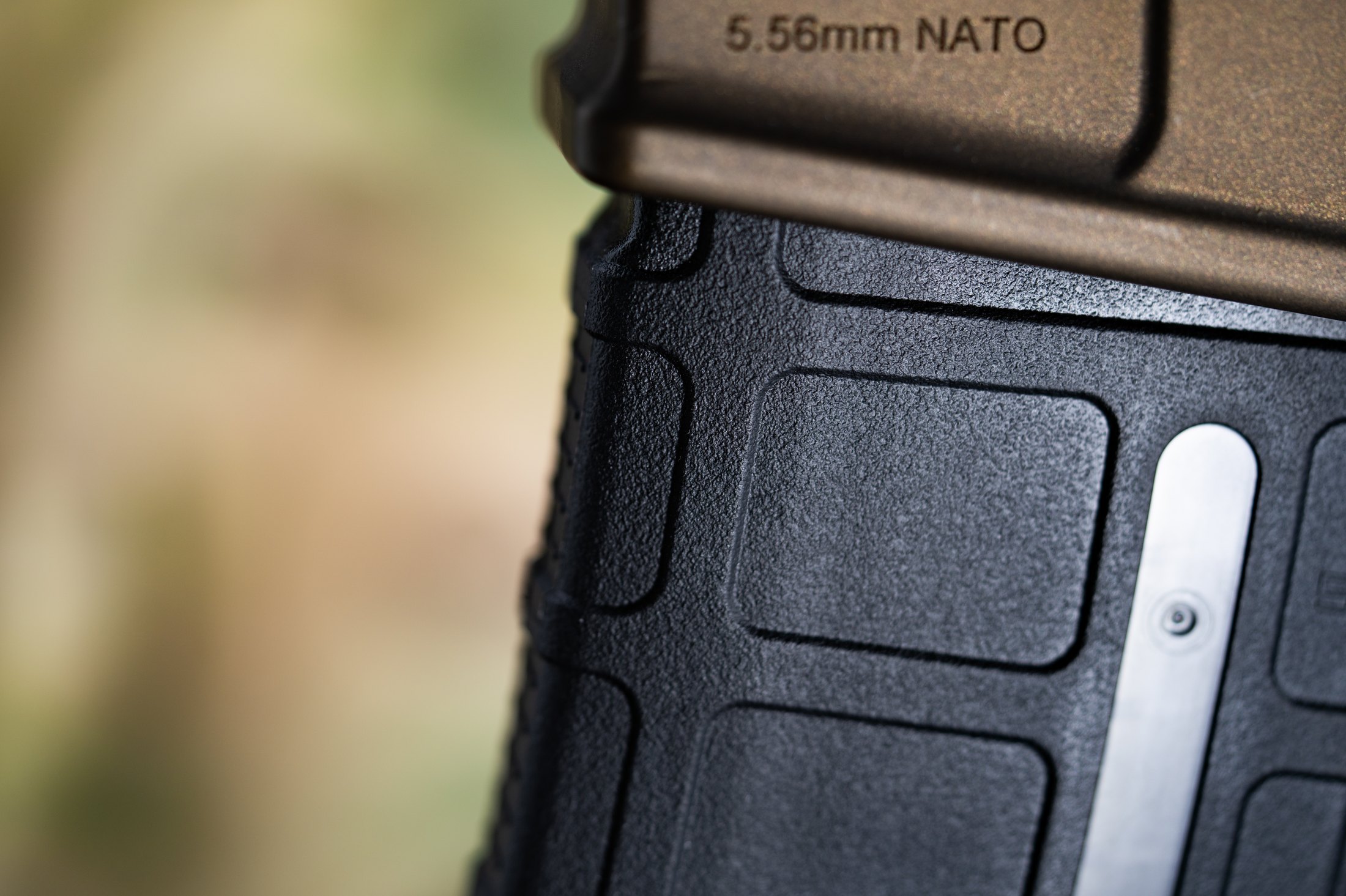
Volume 4 governs the safety question and is not repeated: match the ammunition to the chamber, and never put 5.56 NATO into a chamber marked .223 Remington.
Beyond that, the decision is bullet weight against twist rate, and Volume 3 governs that one. In summary:
55-grain ball, the M193-equivalent class, is the cheapest and most plentiful loading and will stabilise in any twist from 1:12 up. The original M193 cartridge was type-standardised in September 1963 and was optimised for a 20-inch barrel with a 1:12 twist.2
62-grain, the M855/SS109 class, with a steel penetrator tip over a lead core, adopted October 1980 under STANAG 4172.2 Standard in 1:7 and fine in 1:9.
69 to 77-grain match, of which the 77-grain Mk 262 built for the Mk 12 is the best-known,2 wants 1:8 or faster and is where a 1:7 barrel earns its keep. This is the loading a free-floated .223 Wylde barrel exists for.
M855A1 carries the caveat recorded in Volume 4 section 4.8: it is a 62-grain projectile with a 19-grain steel penetrator over a copper alloy core, adopted in 2010,2 and the widely repeated claims about elevated pressure and accelerated wear in commercial rifles could not be verified for this dive and are not quantified here.
Steel-cased ammunition is cheaper and dirtier. It is a false economy in a rifle with an expensive barrel and a reasonable one in a rifle used for volume practice; the substantive issue is that steel cases do not obturate as readily as brass, which puts more fouling into the chamber.
7.6 Magazines
Magazines are the single largest cause of malfunctions in this platform, by a margin that surprises people who have spent money on carriers and triggers. They are also the cheapest component to replace and the one most likely to be kept long past its useful life.
Two families dominate.
Aluminium USGI-pattern magazines are the service original. Reliable when new, and the failure mode is the feed lips spreading or denting. An aluminium magazine that has been dropped on its lips is suspect and cannot be reliably straightened.
Polymer magazines, of which the Magpul PMAG is the reference example, are more resistant to feed-lip damage and generally more tolerant of abuse.

Practices worth adopting:
Number them. A numbered magazine that causes a malfunction can be identified, set aside and confirmed rather than shuffled back into the bag to fail again in six months. This is the single highest-value habit in this volume.
Retire rather than repair. Feed lips, springs and followers are cheap; a magazine that has failed twice is a magazine to throw away.
Inspect the feed lips and follower. A follower that tilts or binds is on its way out.
Do not store them compressed for years if the spring matters, though this is a smaller effect than folklore suggests.
7.7 Storage, Transport and the Michigan Position
This section states the Michigan statutes that were read directly for this dive. The project’s legal posture page carries the general framing, and the statutes below are quoted because a rifle of this type is ordinary property in Michigan and the constraints that exist are narrow and specific.
7.7.1 Transport in a vehicle
MCL 750.227d is the provision that catches people, because it applies to ordinary rifles and has nothing to do with any licence. Subsection (1)(a) prohibits transporting or possessing in or upon a motor vehicle:
“A firearm, other than a pistol, unless the firearm is unloaded and is 1 or more of the following: (i) Taken down. (ii) Enclosed in a case. (iii) Carried in the trunk of the vehicle. (iv) Inaccessible from the interior of the vehicle.”3
A violation “is a misdemeanor punishable by imprisonment for not more than 90 days or a fine of not more than $100.00, or both.”3
Two points deserve emphasis. First, the conditions are alternatives — unloaded plus any one of the four. An unloaded rifle in a case satisfies it. Second, and this is the trap: a Michigan concealed pistol licence does not change this. The statute concerns a “firearm, other than a pistol,” and a CPL is a pistol licence. The rifle is transported under 750.227d regardless of what licence the driver holds.
7.7.2 Short-barrelled rifles
MCL 750.224b prohibits making, manufacturing, transferring or possessing a short-barrelled rifle, with subsection (2) making a violation a felony punishable by up to five years or $2,500 or both. Subsection (3) supplies the exemption that matters: it “does not apply to a short-barrelled shotgun or short-barrelled rifle that is lawfully made, manufactured, transferred, or possessed under federal law.”4
Subsections (4) and (5) then add Michigan-specific obligations. A lawful possessor must comply with the state registration requirements under MCL 28.422 and 28.422a, and for a weapon over 26 inches in length the owner must possess the federal registration and present it to an officer on request; failure is a state civil infraction with a fine up to $100 and immediate seizure, with 45 days to produce the federal registration or face forfeiture.4
The practical reading for the rifles documented here: all are 16 inches or longer and none is a short-barrelled rifle, so 750.224b does not apply to any of them. It applies to an owner who later decides to build or buy a shorter upper — which, as Volume 2 observed, is a bolt-on change on this platform and therefore an easier line to cross accidentally than on any other rifle. Registering the weapon federally must precede cutting or assembling anything, and that sequencing is the whole of the rule.
7.7.3 Possession by a minor
MCL 750.234f provides that “an individual less than 18 years of age shall not possess a firearm in public except under the direct supervision of an individual 18 years of age or older,” a misdemeanour punishable by up to 90 days, a fine not exceeding $100, or both.[^234f] Subsection (2) exempts possession in accordance with wildlife conservation and hunting or fishing licensing provisions, and possession at a recognised target range or trap and skeet grounds, provided the firearm is “enclosed and securely fastened in a case or locked in the trunk of a motor vehicle” while travelling to or from those facilities.[^234f]
The statute does not distinguish rifles from pistols — it applies to all firearms without differentiation by type.[^234f] The transport language in the range exception is worth noting because it mirrors the casing requirement of 750.227d, so a cased, unloaded rifle in a vehicle satisfies both provisions at once.
7.7.4 What Michigan does not require
Michigan requires no registration or permit for ordinary rifle ownership, and the rifles documented here are ordinary rifles.
Two negatives deserve a careful statement rather than a confident one. No Michigan statute imposing a magazine capacity limit, and no Michigan “assault weapon” classification, was located among the statutes consulted for this dive. That is a report of what was read, not an exhaustive survey of the Michigan Compiled Laws, and state firearms law changes. An owner making a decision on it should confirm the current position rather than rely on this paragraph.
7.7.5 Hunting
The Michigan hunting regulations could not be retrieved for this dive. The Department of Natural Resources pages and the commercial regulation summaries were attempted repeatedly and none returned. Consequently this dive states no caliber minimum, no zone rule and no magazine limit for hunting in Michigan, and asserts nothing about whether .223/5.56 is a legal deer cartridge in the state.
That gap is declared rather than filled from memory because hunting regulations are exactly the category where a confidently wrong sentence causes real harm, and because Michigan’s firearm deer zones have been revised within recent memory. The current Michigan DNR Hunting Digest is the authority and is revised annually.
7.8 Reading a Malfunction
Most AR-15 malfunctions are misdiagnosed, and they are misdiagnosed in a consistent direction: the owner blames the part that was most recently bought. The rifle actually supplies a good deal of diagnostic information, and the most useful of it is free.
The ejection pattern is a gas gauge. Brass leaving the port and landing in a consistent arc to the right and slightly rearward indicates a system that is running in the middle of its range. Brass thrown violently forward, dented on the deflector, indicates an over-gassed rifle — the carrier is moving too fast and the case is being ejected while there is still pressure behind it. Brass dribbling out and landing at the shooter’s feet, or the bolt failing to lock back on an empty magazine, indicates the opposite. This single observation narrows the field before anything is disassembled.
The ordering of causes, from most to least likely, for the two common complaints:
Failure to lock back, short-stroking, or sluggish cycling. First, the gas block alignment (Volume 5 section 5.4) — by a wide margin the most common cause on a fresh build, and the one least often suspected. Second, an unstaked or leaking carrier key (section 5.8). Third, worn gas rings, per the collapse test in section 7.4. Fourth, a buffer that is too heavy for the gas system. Only then the ammunition.
Failure to extract or erratic ejection. First, a dirty chamber — section 7.2 ranks this above the extractor for a reason, and it is routinely skipped because the chamber is awkward to see. Second, a tired extractor spring or missing insert. Third, the magazine.
Failure to feed. The magazine, first and usually last. Section 7.6 is the whole answer, and a numbered magazine set is what turns a recurring mystery into a single retired part.
The general rule that follows from all of the above: on this platform, suspect the interfaces before the components. Gas port to gas block, carrier key to gas tube, chamber to case, magazine to feed ramps. The expensive parts are rarely the problem, and the cheap adjustments are rarely checked.
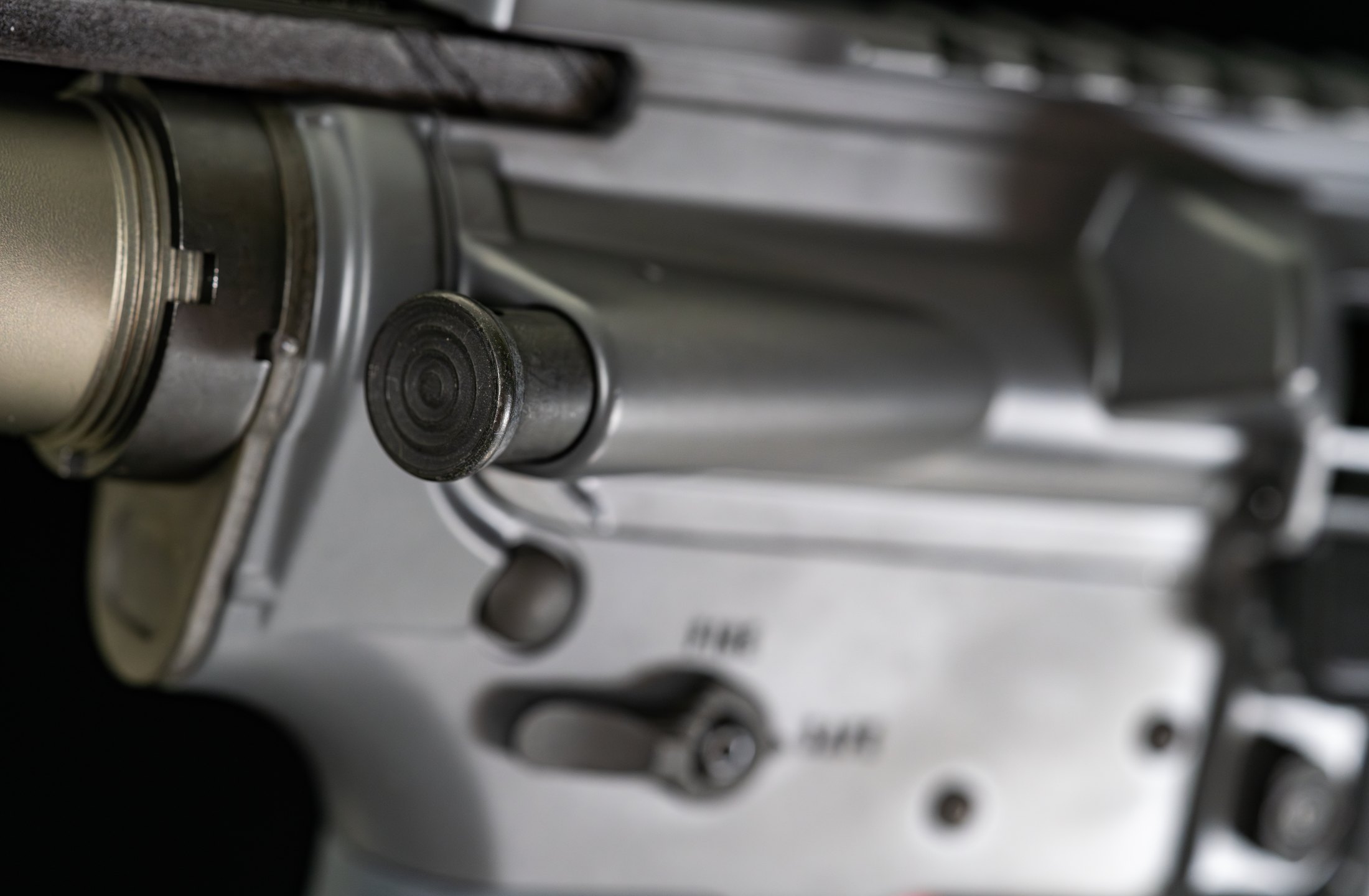
A note on the forward assist. It exists to push a bolt the last fraction into battery when a round has not quite seated. It is not a remedy for a fouled chamber or a damaged case, and using it to force a round onto an obstruction converts an easy malfunction into a difficult one. A rifle that needs the forward assist regularly is reporting a problem from the list above.
7.9 Records
The platform’s defining property — that the serialised part is a bracket and everything else bolts to it — makes record-keeping more useful here than on a conventional rifle.
Worth recording per rifle: which barrel is fitted and its chambering (Volume 4 section 4.7 is the reason), the twist rate, the gas system length, the bolt carrier group and whether its bolt is MPI/HPT, the trigger, the round count, and the date of the last headspace check.
The chambering entry is the one that earns the effort. A rifle that has had barrels swapped may carry markings that describe a configuration it no longer has, and the rifle cannot be interrogated about it once the barrel is inside a handguard.
Footnotes
-
“Gas-operated reloading”, English Wikipedia, consulted 2026-09-17, for the statement that direct impingement operation increases the heat deposited in the receiver and can burn off and cover up lubricants. ↩
-
“5.56×45mm NATO”, English Wikipedia, consulted 2026-09-17, for the M193 55-grain round type-standardised in September 1963 and optimised for a 20-inch barrel with 1:12 twist, the 62-grain M855/SS109 adopted October 1980 under STANAG 4172, the 77-grain Mk 262, and the M855A1 bullet construction and 2010 adoption. ↩ ↩2 ↩3 ↩4
-
Michigan Compiled Laws, MCL 750.227d, quoted from the text published at codes.findlaw.com, consulted 2026-09-17, for subsection (1)(a) and the subsection (2) penalty. ↩ ↩2
-
Michigan Compiled Laws, MCL 750.224b, quoted from the text published at codes.findlaw.com, consulted 2026-09-17, for the prohibition, the subsection (2) penalty, the subsection (3) federal-law exemption, and the subsection (4) to (6) registration, carry-the-registration and civil-infraction provisions. ↩ ↩2
Comments (0)