The AR-15 in 5.56 · Volume 2
The Lower Receiver — The Part That Is the Firearm, and What Mil-Spec Guarantees
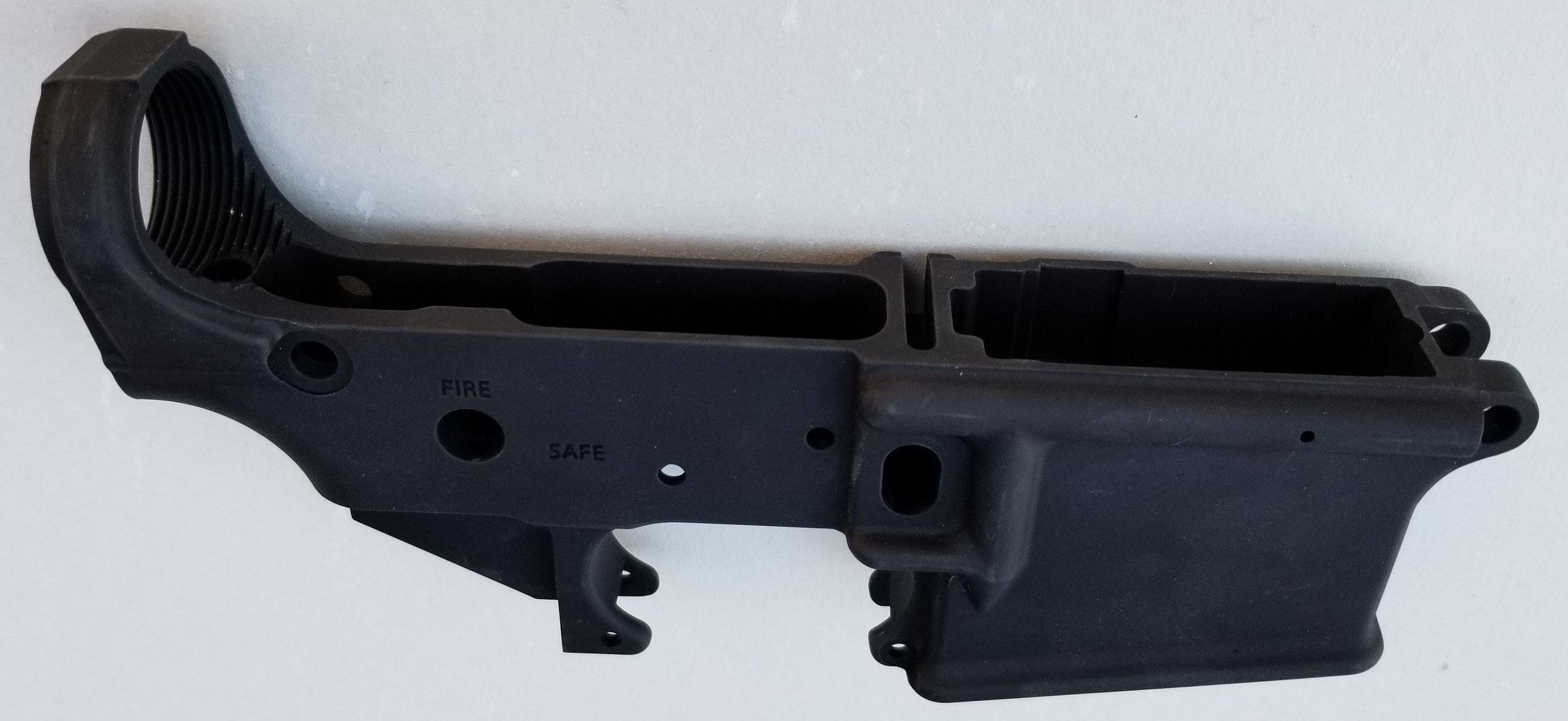
The lower receiver is the least mechanically interesting part of the rifle and by a wide margin the most consequential. It holds no pressure. It does not touch the cartridge. Nothing about it is stressed in any way that would trouble a competent casting, let alone a forging. What it does is locate the fire control group relative to the barrel, provide a grip and a stock, and carry the serial number — and it is the last of those that makes it the part people argue about.
It is also the part where the word “mil-spec” is deployed most heavily and means least. This volume separates the handful of places where that word is load-bearing from the large majority where it is decoration.
2.1 The Part That Is the Firearm
On an AR-15 the receiver is split into two halves joined by two captive pins. The upper carries the barrel, the bolt and the sighting system; the lower carries the fire control group, the grip, the magazine well and the stock. The reference literature states the legal position plainly: “a stripped lower receiver, one that is lacking the additional parts included in a completed lower receiver, is the only part of an AR-15–style rifle that needs to be transferred through a federally licensed firearms dealer under United States federal law.”1
The regulation behind that statement is worth reading directly rather than in summary, because it is more specific about this rifle than most people expect. 27 CFR § 478.12 defines the frame or receiver of a rifle as the part “that provides housing or a structure for the primary component designed to block or seal the breech,” and the rule’s own classification table records, for AR-15 and M16 variants, that “the receiver is the lower part of the weapon that provides housing for the trigger mechanism and hammer.”[^cfr] The regulation also treats the pistol-configured version as the same article for this purpose: “an AR-type firearm with a short stock (i.e., pistol grip) is a pistol variant of an AR-type rifle,” variants being weapons that use “a similar frame or receiver design irrespective of new or different model designations.”[^cfr]
Two further clauses matter to anyone buying an unfinished receiver. The definition reaches “a partially complete, disassembled, or nonfunctional frame or receiver … that is designed to or may readily be completed, assembled, restored, or otherwise converted to function as a frame or receiver” — but it excludes “a forging, casting, printing, extrusion, unmachined body … that has not yet reached a stage of manufacture where it is clearly identifiable as an unfinished component part.”[^cfr] The line between those two sentences is where the entire unfinished-receiver market sits, and it is a line drawn in terms of manufacturing stage rather than of any percentage figure. The commonly used phrase “80 percent lower” appears nowhere in the regulation, and no percentage threshold of any kind is stated in it.
This has three practical consequences that shape every other decision in these volumes.
A build is legally a single transaction. The lower is acquired through a dealer with the paperwork that implies. Barrels, bolts, handguards, triggers, stocks and complete upper receiver assemblies are not firearms and ship to the door.
One lower can be many rifles. A complete upper receiver group is a bolt-on assembly. The same registered lower can wear a 16-inch 5.56 upper on one weekend and something else entirely on the next, which is exactly how the Mk 18 works in service — the Close Quarters Battle Receiver is an upper receiver group that mates to an ordinary M4A1 lower, as Volume 1 set out.
The serial number does not travel with the barrel. Which means that the caliber marked on a barrel and the caliber the rifle “is” can diverge, and that a records-keeping habit matters more on this platform than on a conventional rifle. Volume 7 returns to this.
2.2 How a Lower Gets Made
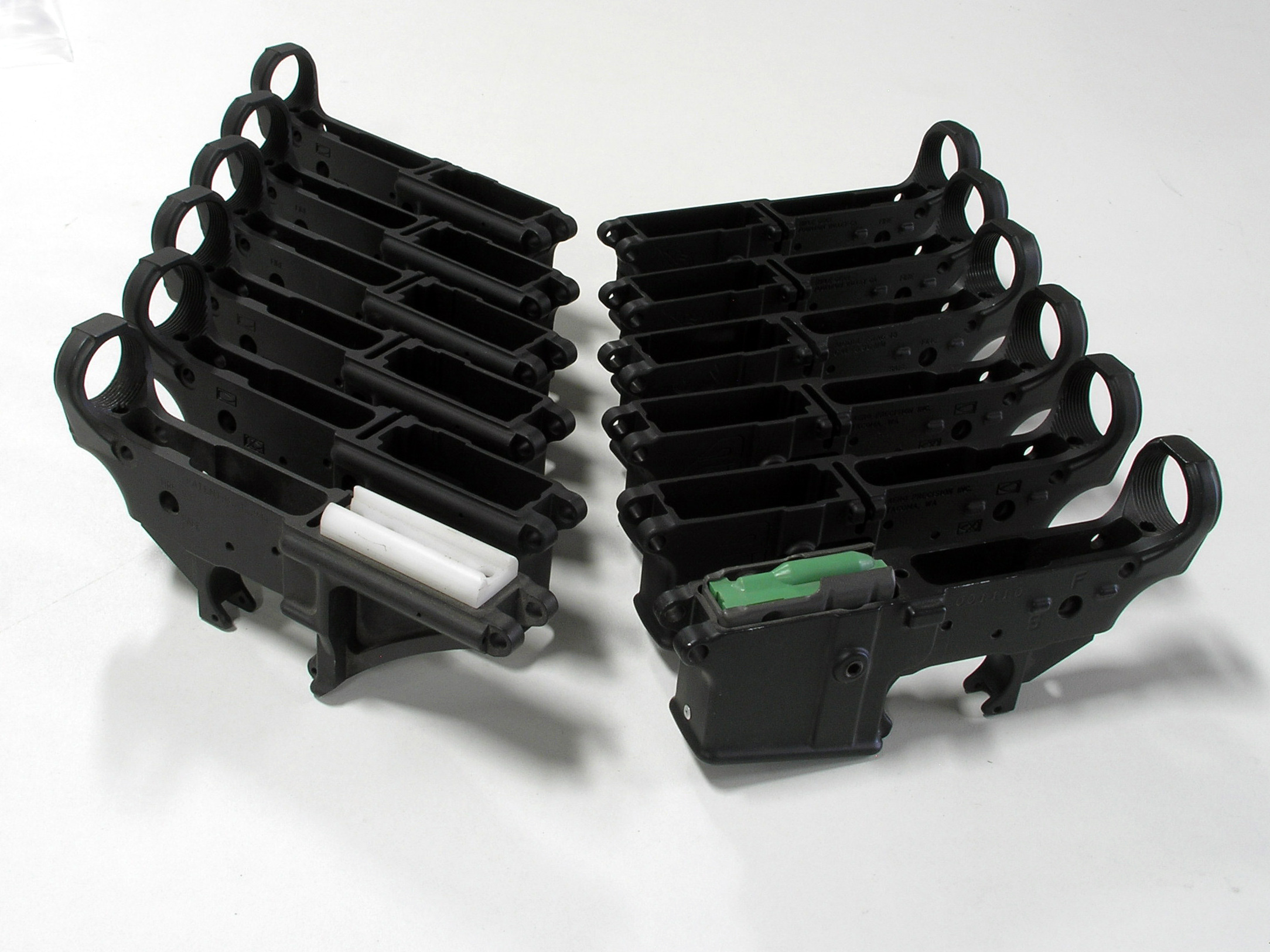
Four processes are in common use, and the differences between them are real but much smaller than the marketing around them suggests.
Forged. A slug of aluminium is die-forged to a rough receiver shape, then machined. This is how the service rifles were made and how the overwhelming majority of commercial lowers are made. Forging aligns the grain structure of the metal and work-hardens it, so a forged part is stronger for its weight than the same shape machined from plate. It is also, once the dies exist, dramatically cheaper per unit — which is the real reason it dominates.
Billet. The receiver is machined in its entirety from a solid block of aluminium. No forging dies are needed, so a small maker can produce a distinctive design without the tooling investment, and the process allows shapes a forging die cannot release — flared magazine wells, integral trigger guards, sculpted profiles. Black Rain Ordnance’s lowers are billet parts, and their visual distinctiveness is the point of them.
Cast. Molten aluminium poured into a mould. Cheaper still, and structurally the weakest of the three. Uncommon on current quality parts.
Polymer. Injection-moulded, sometimes with metal inserts at the high-wear points. Light and cheap; the failure mode when they fail is at the buffer tower and the takedown pin lugs.
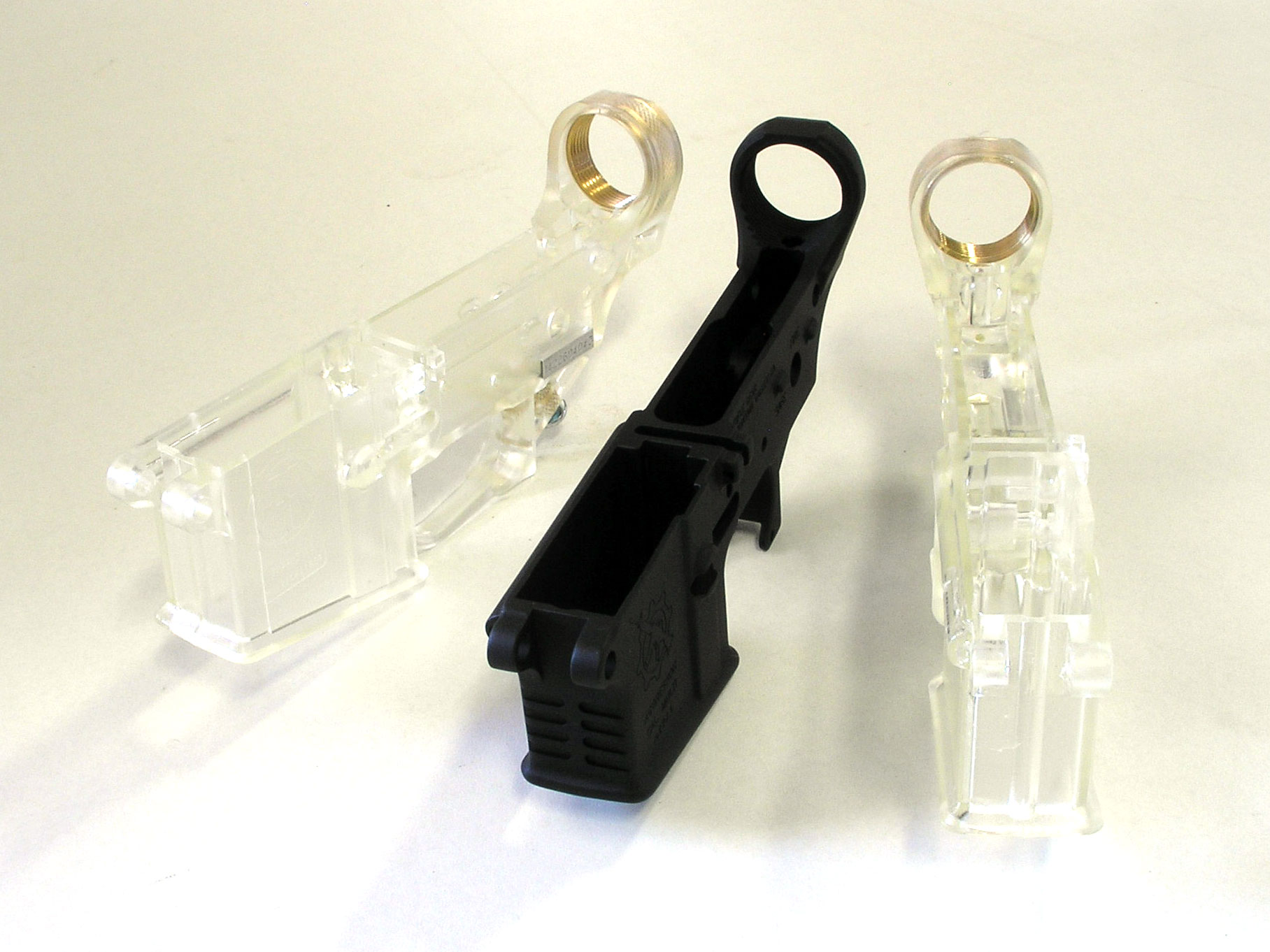
The honest summary is that for a semi-automatic rifle firing a 55,000 psi cartridge in which none of that pressure reaches the lower receiver, forged versus billet is a question of cost, appearance and tolerance consistency rather than of strength. A billet lower is not stronger because it was cut from solid; if anything the grain argument runs the other way. What a good billet lower can offer is tighter and more consistent machining, because it is cut in one setup from one block rather than machined onto a forging that varies slightly from die to die.
2.2.1 The alloy question, and what could not be verified
The aluminium alloy and temper in common use for these parts is very widely quoted, and this dive is not going to print the figure as fact, because it could not be confirmed from a maker’s own published specification. Aero Precision’s receiver pages, checked directly, say only that the parts are “machined to mil-spec dimensions” and disclose no alloy, no temper, no forged-versus-billet statement and no anodising specification.2 Several other makers’ public pages were checked with the same result.
That absence is itself worth noting. A specification that no maker publishes is not a specification a buyer can verify, and the reader should treat alloy and anodising claims encountered in retail listings with the same scepticism this dive applies to them.
2.3 What Actually Differs Between a Colt, a Smith & Wesson and a Black Rain Lower
This is the practical question behind the whole volume, and the answer is less dramatic than the price spread implies.
Dimensionally, in the places that matter, they do not differ. The fire control pin spacing, the pin diameters, the magazine well, the buffer tower thread and the takedown pin geometry are common across all three, which is precisely why parts interchange. If they differed in those places the aftermarket could not exist.
They differ in what comes in the box. The three configurations documented here occupy three different points on that axis:
- The Colt LE6920 arrives as a complete rifle. The lower is finished, fitted and function-checked by the factory, and nothing about it is a decision the owner made.
- A Smith & Wesson complete lower arrives with the fire control group, grip, trigger guard, stock and buffer assembly already installed. The buyer’s remaining work is entirely upper-side. This is the shortest path from a dealer transfer to a functioning rifle, and it removes the two assembly steps most likely to be done badly by a first-time builder — the fire control group and the buffer retainer.
- A Black Rain Ordnance lower is a billet receiver, acquired stripped. Every internal part is a separate decision and a separate purchase.
They differ in finish and appearance, which is where most of the price difference lives on a billet part.
They differ in what is guaranteed about them, and that is genuinely not nothing. A complete rifle from a large maker has been assembled and test-fired as a system by someone with a torque wrench and a headspace gauge. A stripped receiver has been inspected as a component.
2.4 The Fire Control Pocket
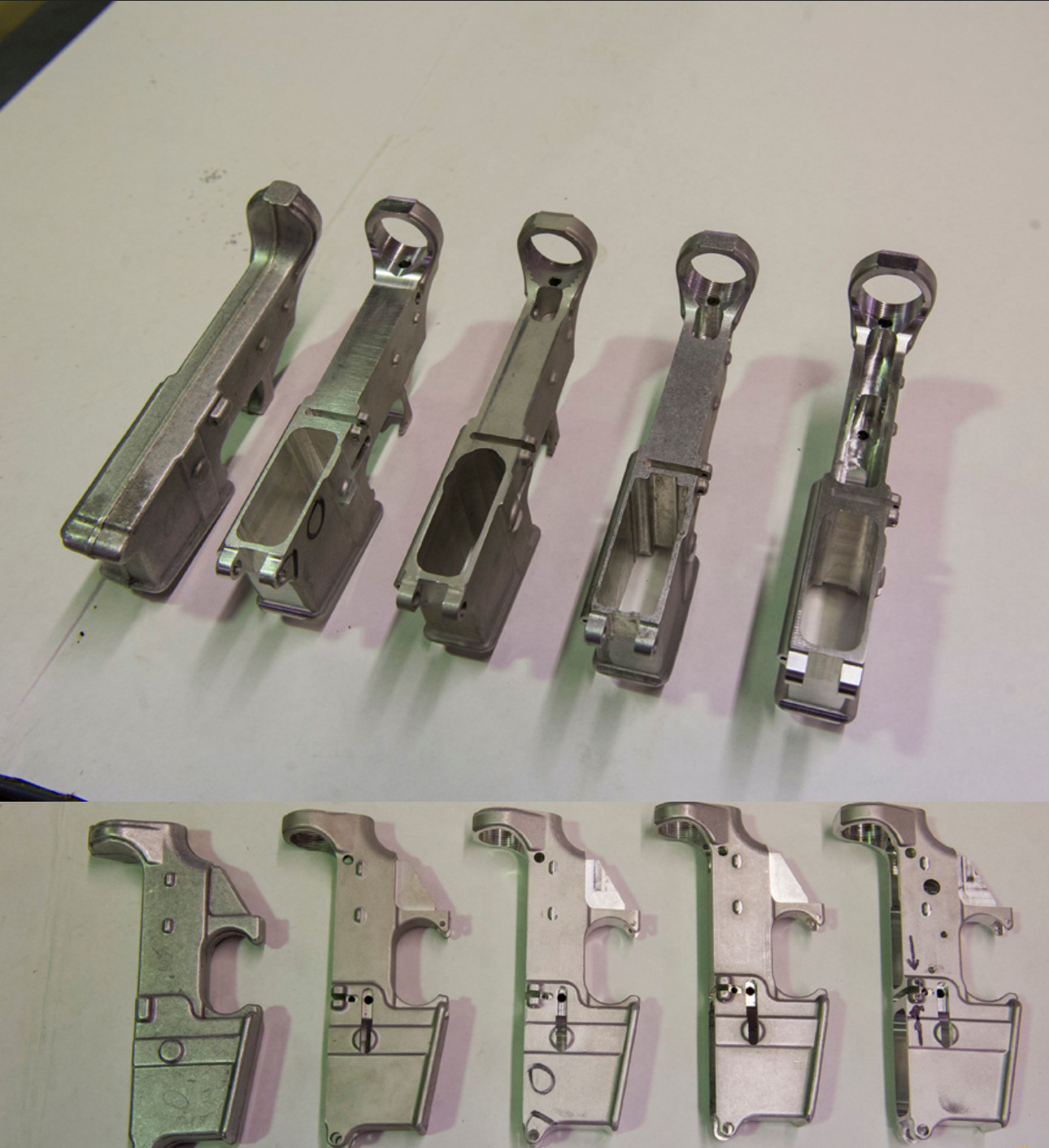
The one region of the lower where machining quality has a directly observable effect on how the rifle shoots is the fire control pocket — the cavity that holds the hammer, trigger, disconnector and selector, and the cross-holes that locate the hammer and trigger pins.
Three dimensions govern the trigger:
Pin spacing. The distance between the hammer pin and trigger pin holes sets the geometry of the sear engagement. It is common across the pattern; a receiver machined out of tolerance here produces a trigger that feels wrong and cannot be fixed by changing the trigger.
Pin hole diameter. The standard commercial diameter is common across makers. Colt’s large-pin rifles are the historically important exception and are dealt with in section 2.6.
Pocket depth and floor flatness. A drop-in trigger cassette sits on this floor. A pocket cut slightly shallow, or with a step where two tool paths met, is the usual cause of a cassette that will not seat squarely.
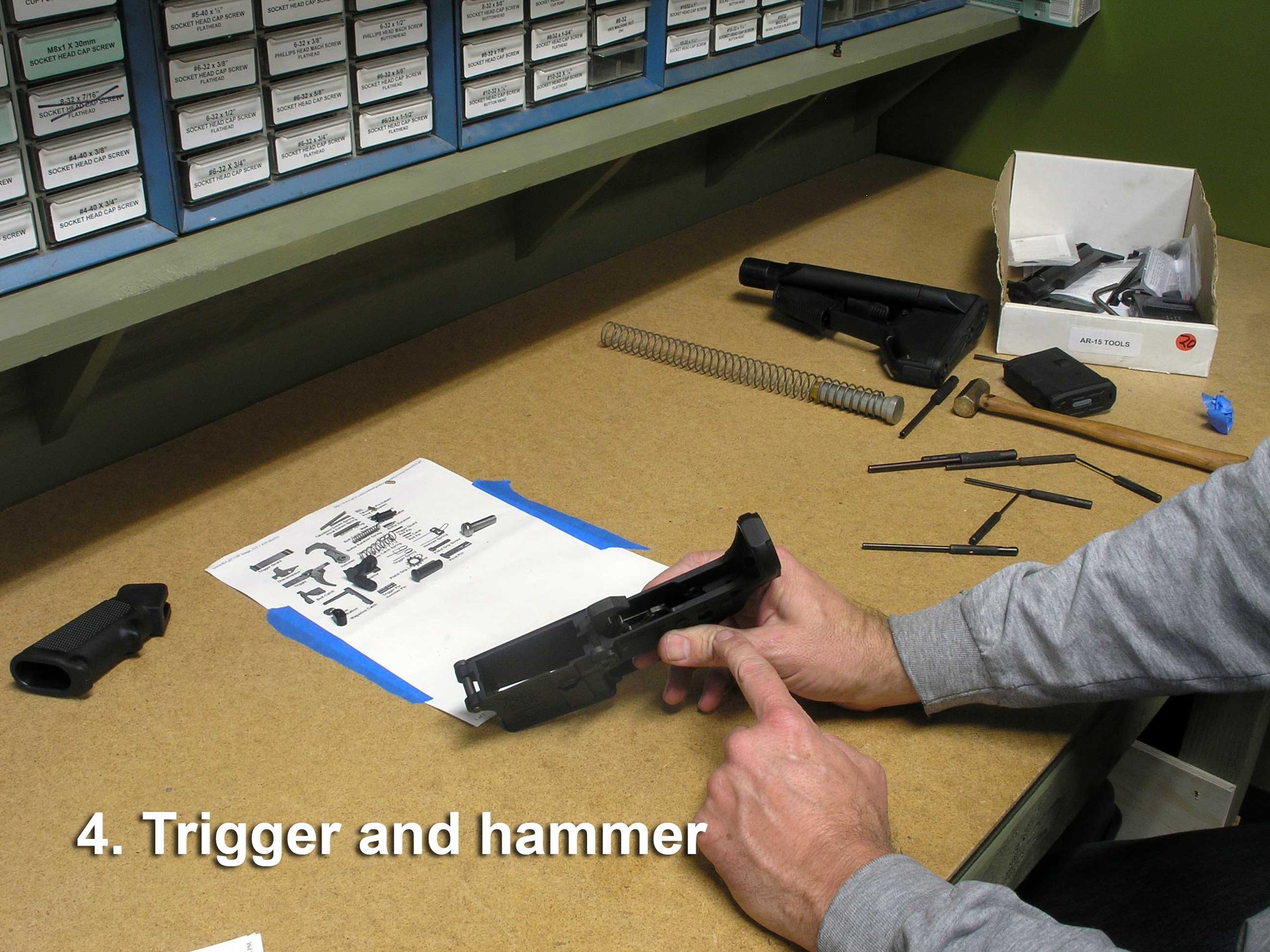
2.4.1 Semi-automatic fire control, and what is not in the pocket
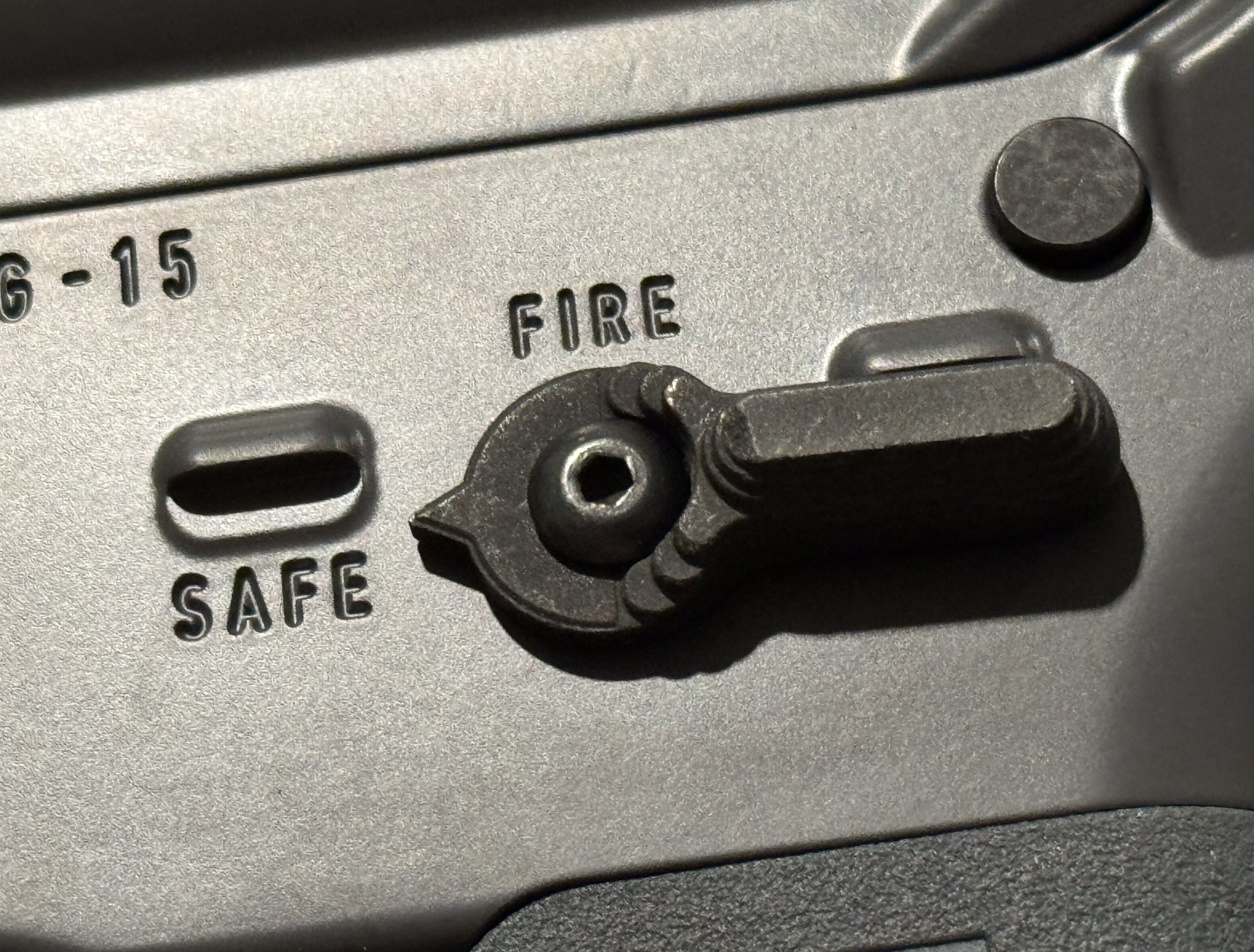
A commercial AR-15 lower has a two-position selector — safe and fire — and a fire control pocket machined without the additional cavity that a select-fire weapon’s auto sear occupies.
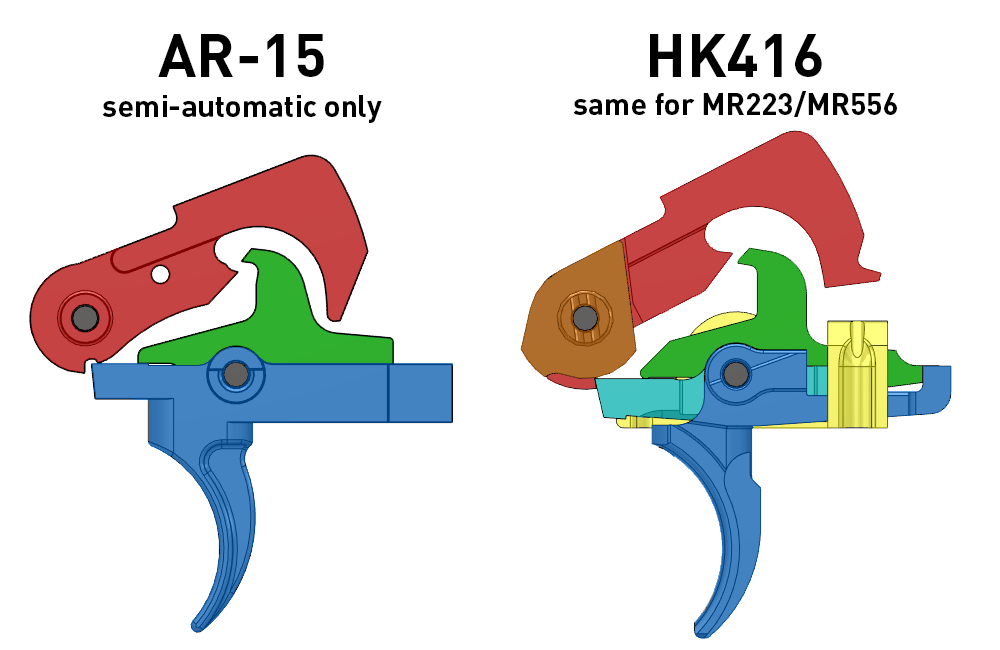
The mechanism is otherwise closely comparable to the service pattern, and a published comparison of the AR-15 fire control group against the HK416’s makes a useful reference for anyone who wants to see the parts laid out against a close relative.
2.5 The Mil-Spec Question
“Mil-spec” is used in the AR-15 market in three quite different ways, and conflating them is the source of most of the confusion.
Sense one: an actual dimensional standard that a part either meets or does not. There are a small number of these, and they are checkable.
Sense two: “dimensionally compatible with standard parts.” This is what Aero Precision means when it says its lowers are “machined to mil-spec dimensions, our lowers work with standard AR15 components and ensure the highest quality with a correct component interface.”2 Read the sentence: the claim being made is interoperability. It is a useful claim and an honest one, and it is not a claim about materials, hardness, testing or provenance.
Sense three: pure marketing. A word applied to a part because the word sells parts.
2.5.1 Where the word is genuinely load-bearing
The clearest case, and the one a buyer will actually trip over, is the receiver extension — the buffer tube. There are two incompatible diameters in circulation, and Magpul’s own published specification for the CTR Carbine Stock states the distinction directly: the stock “will only fit with the common Mil-Spec tube” at 1.148 inches diameter, and is not compatible with commercial-spec extensions at 1.170 inches.3
That is a real specification with a real consequence. A stock bought for one will not fit the other, and the difference is 0.022 inch — visible only when the two are side by side. It is the single most common ordering mistake in a first build.
The mil-spec tube is the smaller of the two, which surprises people. It is made from a forged and threaded blank; the commercial tube is extruded with a rolled thread and a slightly larger outside diameter. On a rifle that is going to be knocked about, the mil-spec tube is the better part, and it is also the one the great majority of quality stocks are cut for.
Magpul’s own framing of the problem is that “there are two basic sizes of M4 Carbine receiver extensions (buffer tubes): Mil-Spec and Commercial-Spec,” and the company sells the same stock in two separate part numbers accordingly.[^magpulsl] The list of makers it names as shipping mil-spec tubes is directly useful here, because it includes Colt, LMT, Ruger, S&W, SIG and others.[^magpulsl] Both the Colt carbine and the Smith & Wesson complete lower documented in these volumes therefore arrive on mil-spec extensions, and a stock bought for either will fit the other.
The comparable figures for the MOE SL Carbine Stock, for anyone weighing the two: part number MAG347, 9.3 oz alone and 13.1 oz with the receiver extension, length of pull about 10.9 inches collapsed and 14.2 inches extended, the same 3.3-inch adjustment range as the CTR.[^magpulsl]
For completeness, the Magpul CTR’s published figures are: part number MAG310, weight 8.9 oz alone and about 12.7 oz with the receiver extension, length of pull about 10.3 inches collapsed and 13.6 inches extended, an adjustment range of 3.3 inches, a chrome-silicon lock spring and a removable 0.3-inch rubber butt pad.3
2.5.2 Where the word guarantees nothing at all
It does not guarantee a material. As section 2.2 recorded, the makers checked do not publish alloy or temper.
It does not guarantee testing. No commercial maker is subject to a military acceptance process.
It does not guarantee a trigger. A mil-spec fire control group is a specific, deliberately heavy, deliberately crude trigger. “Mil-spec trigger” in a retail listing is very often a euphemism for “the cheapest one available,” and it is accurate.
It does not mean better. A number of the most worthwhile upgrades on this platform are specifically departures from the service specification — a free-float handguard, a better trigger, a nickel-boron carrier. Volumes 3, 5 and 6 are largely about deliberate deviations from mil-spec, and the deviations are the improvements.
The useful posture is narrow: treat “mil-spec” as a compatibility claim about dimensions, verify it where a dimension is checkable — the receiver extension above all — and disregard it entirely as a quality claim.
2.6 Colt’s Deliberate Incompatibilities
One genuine historical exception to interchangeability is worth knowing, because Colt lowers of certain vintages will not take standard parts, and buyers still get caught.
Colt made a series of changes specifically to stop a commercial semi-automatic rifle being assembled with select-fire components: “in order to prevent a civilian semi-automatic AR-15 from being readily converted for use with the select fire components, Colt changed a number of features.”4 The best-known is the receiver pin: “in 1966 the company replaced the front pin with a paired nut and screw hinge using a 0.315-inch-diameter pin to prevent shooters from being able to change receivers.”4
The consequence for a modern buyer is that a large-pin Colt lower will not accept a standard upper without an adapter, and a large-pin upper will not go onto a standard lower. Colt’s current commercial carbines are standard-pin parts, and the LE6920 documented here is an ordinary standard-pin rifle that takes any upper. But the large-pin rifles are still in circulation and are still sold second-hand, often without the seller knowing.
2.6.1 A note on Colt’s current catalogue
Colt’s own website was checked repeatedly during this dive and no current product page for the LE6920 could be located; the rifles shown in the current catalogue are a different and more recent line. Whether the LE6920 is formally discontinued, renamed, or simply absent from the consumer-facing site could not be established, and this dive does not assert any of those. The specification used throughout these volumes — a 16.1-inch M4-pattern carbine — is taken from the owner’s own record of the rifle rather than from a live catalogue entry.
2.7 What a Complete Lower Buys
Worth stating plainly, because the price difference between a stripped receiver and a complete lower is modest and the decision is usually made on the wrong grounds.
A complete lower removes four jobs: installing the fire control group, installing the safety selector and detent, installing the bolt catch, and installing the buffer retainer and spring. Of those, the fire control group is the one that determines how the rifle feels, and the buffer retainer is the one that most reliably fires a small spring across a workshop and is then never seen again.
Against that, a stripped receiver is the only route to a specific trigger, a specific grip and a specific stock without buying parts twice. The scratch builds documented here go that way deliberately.
The case for a complete lower is strongest for a first build. The case for a stripped one is strongest for a build where the trigger has already been chosen.
2.8 Inspecting a Lower
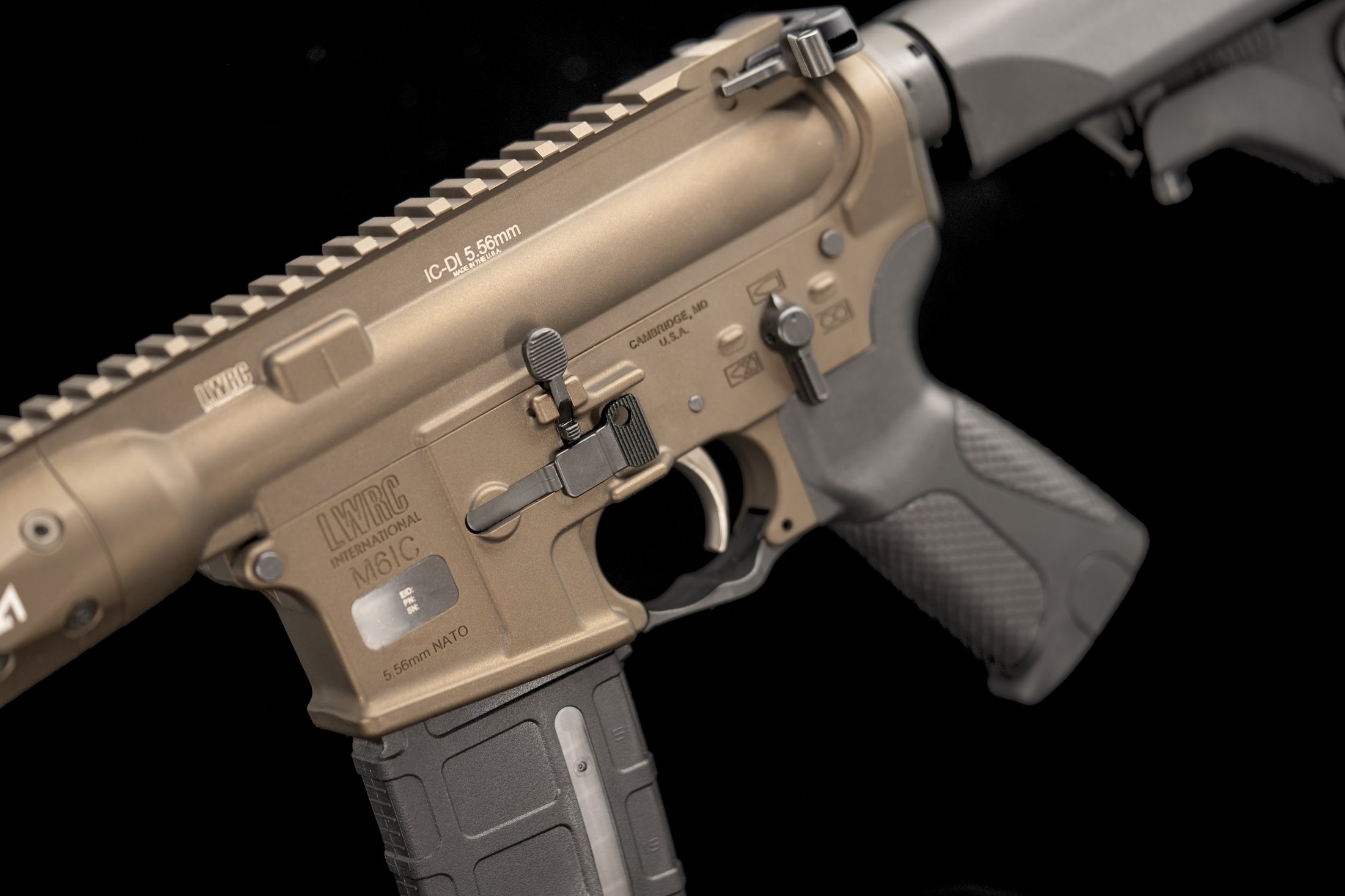
A short bench check, in the order worth doing it.
Look down the magazine well with the receiver held to a light. The walls should be clean and parallel. Tool chatter is cosmetic; a step is not.
Offer up a magazine. It should drop free under its own weight when the catch is released.
Check the buffer tower threads by starting a receiver extension by hand. It should start square and turn freely for several turns before any resistance.
Check the takedown and pivot pin holes by offering up an upper. The two should close without forcing and without perceptible slop. A little play between upper and lower is normal on this design and does not affect accuracy; the barrel is not located by the lower.
Check the fire control pin holes by pushing a pin through by hand. It should enter without a hammer.
Confirm the pin diameter before ordering anything else if the receiver is a Colt of unknown vintage — section 2.6.
Footnotes
-
“AR-15–style rifle”, English Wikipedia, consulted 2026-09-17, for the statement that the stripped lower receiver is the only part requiring transfer through a federally licensed dealer under US federal law, and for the two-part receiver description and the takedown pin arrangement. ↩
-
Aero Precision, AR15 receiver product category page, aeroprecisionusa.com/ar15, consulted 2026-09-17, for the quoted “machined to mil-spec dimensions” wording and for the absence of any published alloy, temper, forging or anodising specification. ↩ ↩2
-
Magpul Industries, “CTR Carbine Stock – Mil-Spec, Model MAG310”, magpul.com product page consulted 2026-09-17, for the 1.148-inch mil-spec versus 1.170-inch commercial receiver extension diameters and the statement that the stock fits only the mil-spec tube, and for the published weight, length-of-pull, adjustment range, lock spring and butt pad figures. ↩ ↩2
-
“Colt AR-15”, English Wikipedia, consulted 2026-09-17, for Colt’s deliberate changes to prevent conversion with select-fire components and the 1966 adoption of a 0.315-inch-diameter front pin. ↩ ↩2
Comments (0)