Whitney Wolverine · Volume 2
The Company — Hillson, Whitney, Galef, Lowe, and the End
How a machine shop financed a pistol factory on one distributor's letter, why a well-reviewed pistol lost money on every sale, and what the Eli Whitney name did and did not mean
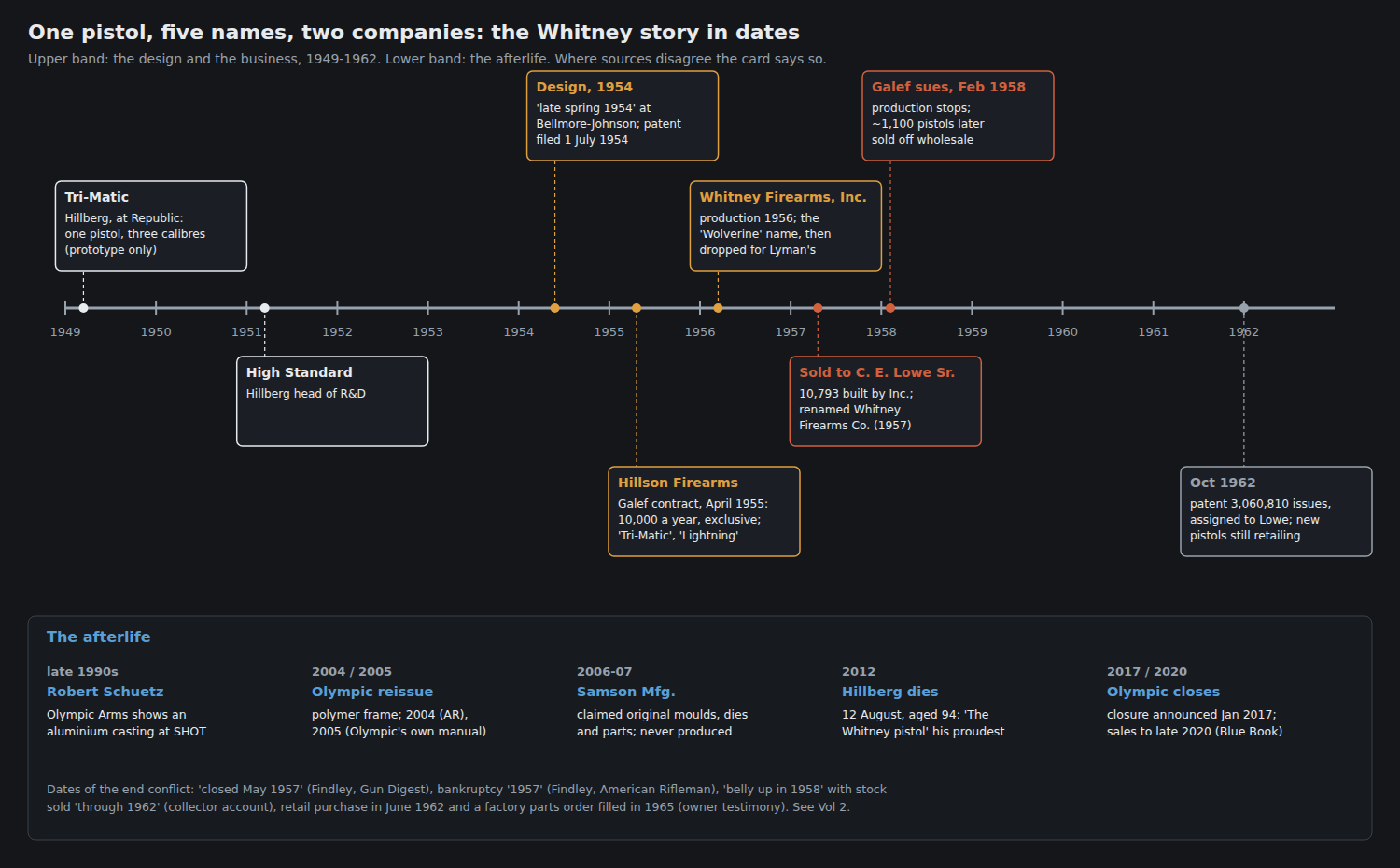
The Whitney pistol was a good design sold by a bad business arrangement. The design was finished in 1955, reviewed well in 1956, and out of production within about two years. What killed it was a contract, signed before a single production pistol existed, that set the price the maker would be paid, bound it to one distributor, and left the distributor free to stop buying. This volume sets out the business in order, with the sources’ figures kept apart where they disagree. The timeline figure below summarises it; the text gives the attributions.
Almost everything about the company’s finances comes from one source, Antonio Taglienti’s 2008 book, reached here only through the passages Rock Island Auction quotes and paraphrases. Where that is the case the text says so. The contemporary record — the 1956 and 1958 Guns articles and the advertising — is used wherever it exists.
2.1 The Short Version
Table 1 — The Short Version
| Date | Event | Source |
|---|---|---|
| Late spring 1954 | Hillberg designs the pistol at the Bellmore-Johnson Tool Co. | Guns, Aug 1956 |
| 1 July 1954 | Patent application for the action filed | US 3,060,810 |
| 1955 | First prototype, hand-made, serial 1, still called the Tri-Matic | RIA, citing Taglienti |
| April 1955 | Contract with J. L. Galef & Son: 10,000 pistols, then at least 10,000 a year, Galef the exclusive distributor | RIA, citing Taglienti |
| 1955–56 | Hillson Firearms renamed Whitney Firearms, Inc.; factory in North Haven, Connecticut | RIA, citing Taglienti; Guns, Aug 1956 |
| 1956 | Production; about 330 pistols a week by the summer, at a loss | RIA, citing Taglienti |
| 1957 | Company sold to Charles E. Lowe Sr.; 10,793 pistols built, 10,360 delivered to Galef; renamed Whitney Firearms Co. | RIA, citing Taglienti |
| February 1958 | Galef sues for breach of contract; production stops | RIA, citing Taglienti |
| March 1958 | Guns describes “the neat brick building carrying the mark ‘Whitney Firearms Company’” as one of Connecticut’s seven gun plants | Guns, Mar 1958 |
| After settlement | About 1,100 remaining pistols sold wholesale | RIA, citing Taglienti |
| 30 October 1962 | Patent issues, assigned to Lowe | US 3,060,810 |
2.2 The Eli Whitney Name: What Was Claimed and What Was True
The name was the company’s main marketing idea, and it needs checking rather than repeating.
What was claimed. The August 1956 Guns article opens: “In the shadow of the brownstone ruins of Eli Whitney’s old mill near New Haven, Conn., is rising today a gun dedicated to the highest principles of modern design”. Its title is “The Oldest Name in Guns Comes Back”.1 Galef’s “Modern as Tomorrow” advertisement carries a portrait of Eli Whitney, “father of the interchangeability system of gun parts”, and says the pistol “is manufactured in the shadow of the original Eli Whitney workshop” (Volume 4 shows it).2 The Guns cover of March 1958 put a Whitney pistol beside a portrait of Eli Whitney.3
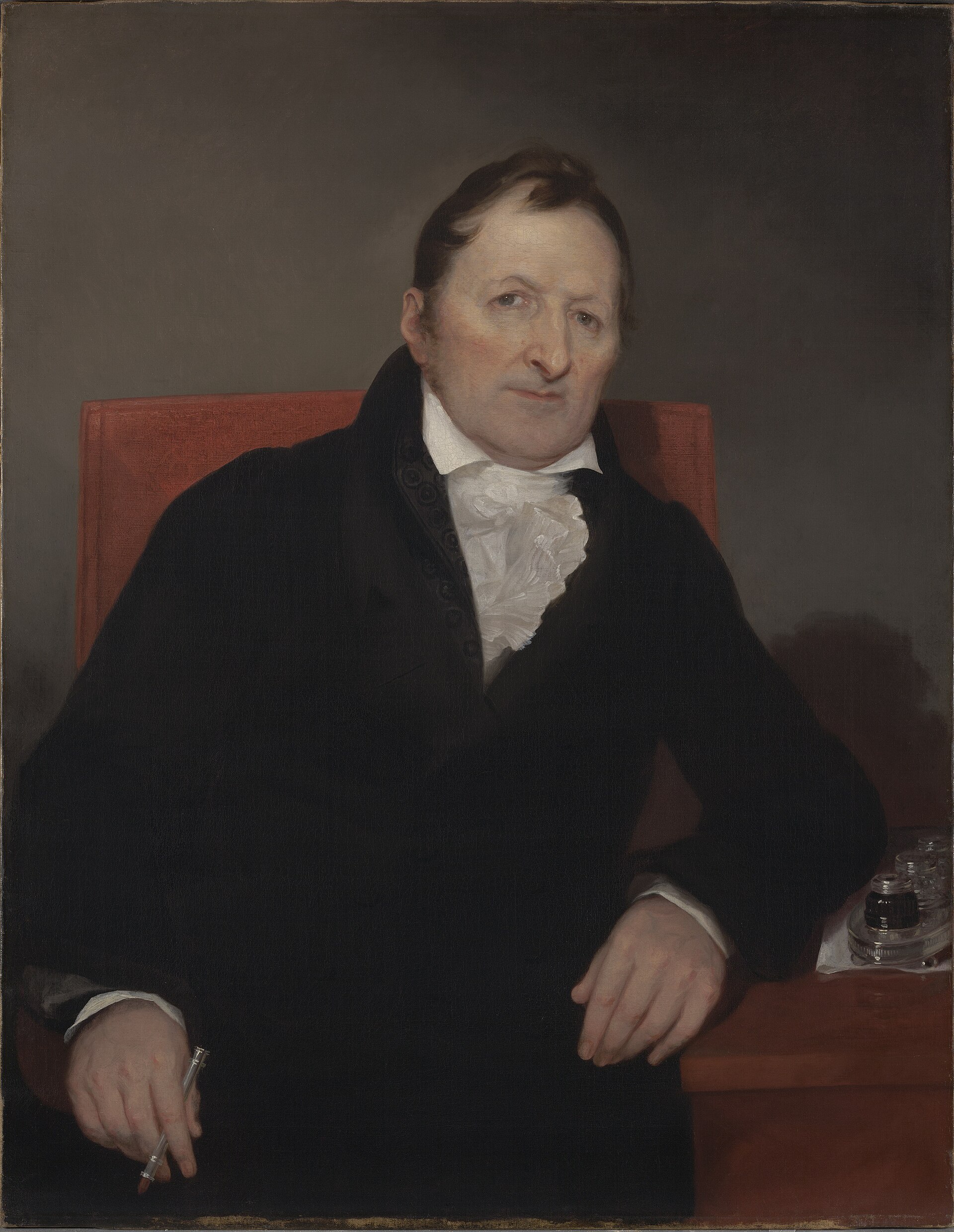
What was true. Every contemporary source that addresses the question says the connection was one of name and place only.
- Guns, 1956, in its second paragraph: the new company “has no corporate relationship with the old, long-defunct Whitney company, but they both are related in terms of visionary outlook and common location.”1
- The text of an exploded-view page on the pistol, reproduced by Rock Island Auction (Volume 6): “There was no connection between this firm and the Whitney Arms Co. which ceased operations in 1888.”4
- RIA’s account, from Taglienti: the name was chosen because it “was public property, enjoyed rich associations with American history and invention, and was already revered locally”. The company tried to buy the land of the old Whitney Armory, which was owned by the New Haven Water Company and not for sale, and built within about a mile of it instead — technically in North Haven, though the pistols and most of the company’s material say New Haven.5
- J. B. Wood, 2013: “The Whitney name was used because the company was located near the old Eli Whitney factory site.”6
So the Whitney pistol has no descent from Eli Whitney’s business, which ended as the Whitney Arms Co. in 1888, and nothing in any source here suggests otherwise. The name was chosen for its associations and its geography. Eli Whitney’s armory stood at Whitneyville in Hamden, where, as the 1958 Guns article put it, “machine manufacture of firearms with interchangeable parts began … in 1798, when Eli Whitney contracted to make 10,000 Model 1795 flintlock muskets”.3 How much of that reputation is deserved is a separate question. The hub’s Blanchard Lathe dive treats Whitney’s musket-contract mechanisation as the “(partly mythologized) opening act” of the American System, and nothing here depends on the legend being true: the pistol company used the legend, not the history.
Guns in 1956 did find one real kinship, and it is a good one. It illustrated “the first Whitney revolver”, made about 1849 by Eli Whitney’s son, and noted that its frame was cast to allow “the graceful handle shape … instead of the angular, expensive methods of fabricating the regular Colt pistol handle”. Casting, the article went on, “has proved good, for today’s needs, too.”1 Volume 4 comes back to that point, because it is the Whitney pistol’s own argument for itself.
2.3 Hillson Firearms and the Galef Contract
Bellmore-Johnson was a toolmaker and experimental shop. It made dies, tooling and prototypes; it had no factory for series production, no sales force and no marketing. RIA, following Taglienti, says Hillberg and Howard Johnson first wanted either to sell the design outright or to have it made by an established company on a royalty basis, and that the tool company decided to make it itself only after that failed to happen.5 Guns in 1956 put the same fact the other way: “Starting from scratch, without factory, machines, sales or work force or materials, their high standing in the industry enabled Bellmore Johnson to raise the capital necessary.”1
The capital came through a distributor. A friend referred Hillberg and Johnson to J. L. Galef & Son of New York, a firearms distributor. At a demonstration at a range, in RIA’s account, Galef was so impressed by how fast Hillberg could fire it that he “swore it was the fastest firing pistol he’d ever seen” — Hillberg tried to tell him that he could make most semi-automatics fire that fast — and ordered 10,000.5 The contract, drawn up in April 1955, committed Galef to 10,000 pistols and then to “no less than 10,000 in every subsequent calendar year”, and gave Galef the exclusive distributorship in return.5 With Galef’s signed letter the partners secured financing from the First National Bank and Trust Company of New Haven.5
The company that signed was Hillson Firearms — HILLberg and JohnSON — which intended to make a whole line of sporting arms with the .22 as its entry into the trade.5 It was renamed Whitney Firearms, Inc. when the factory site was chosen.5 Findley gives Hillberg’s title there as vice-president and chief engineer, and dates the company 1954–1957; American Rifleman in 2022 calls it “a subsidiary of Bellmore Johnson Tool”, as Guns did in 1956.781
2.4 The Money: $16.53, $29.65, $39.95
The single number that decided the company’s fate is the wholesale price. Taglienti, as quoted by RIA:
“It appears somewhat amazing in retrospect, that Johnson and Hillberg felt they could produce a pistol and wholesale it to the distributor for $16.53 each, and realize a reasonable profit from this, even considering the relative value of 1955 dollars. Nevertheless, their cost studies had shown this to be entirely possible, and they eagerly entered into the agreement.”5
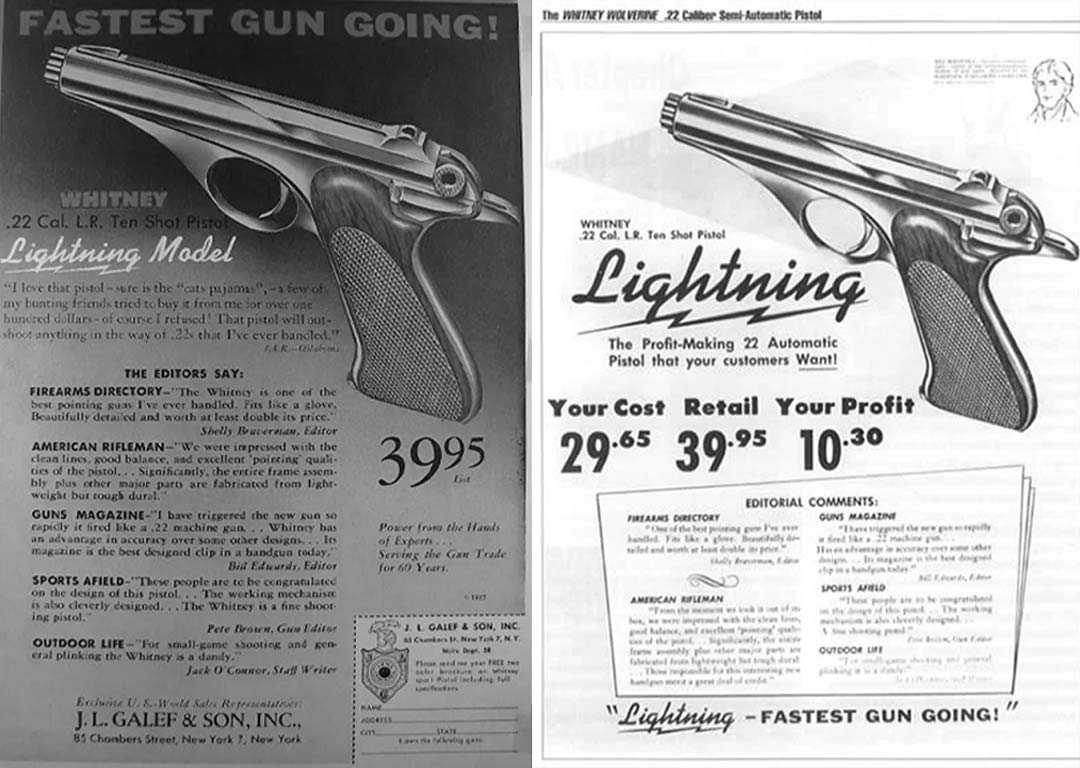
Galef’s own trade advertisement (hero image) gives the next two numbers: the dealer’s cost, $29.65, and the retail price, $39.95, leaving the dealer $10.30.2 Set side by side, those figures — each from a different source, so the comparison is only as good as both — divide a $39.95 pistol like this:
Table 2 — Galef's own trade advertisement (hero image) gives the next two numbers: the dealer's cost, $29.65, and the retail price, $39.95, leaving the dealer $10.30.[^ads] Set side by side, those figures — each from a different source, so the comparison is only as good as both — divide a $39.95 pistol like this
| Share | Per pistol | Of retail |
|---|---|---|
| Whitney Firearms (price paid by Galef) | $16.53 | 41 % |
| Galef (dealer cost less Whitney’s price) | $13.12 | 33 % |
| Dealer | $10.30 | 26 % |
The maker received less than half of the retail price of its own pistol, and its share was fixed by contract. The distributor’s share was nearly as large as the maker’s for handling the goods. The Guns article reported the company’s philosophy — “Low tooling and manufacturing costs aimed at a greatly reduced price sales potential” — and the cast frame was the means to it (Volume 4).1 It did not reduce cost enough.
2.5 Five Names in Two Years
RIA, following Taglienti, lists the names under which the pistol was offered:5
- Tri-Matic. Borrowed from Hillberg’s three-calibre pistol of 1949 (Volume 1) and used on the prototype. Guns in 1956 said the name served “to keep competitors guessing”.1
- Hillson-Imperial. One advertisement, while the company still bore the Hillson name; “likely the marketing efforts of someone at Galef”, in RIA’s words.
- Lightning. Galef’s, after the demonstration — “it shoots like lightning!” — used in Galef’s advertising (hero image) but, according to RIA, never on a pistol.
- Wolverine. Its origin is disputed. RIA gives two explanations without choosing: Galef’s taste for outdoor and animal names in his marketing, or Hillberg’s attachment to the University of Michigan’s football team. American Rifleman in 2022 and the Olympic Arms manual state the Michigan origin as fact; neither cites evidence.89 The name was dropped because the Lyman Gun Sight company, a few miles away, had already used “Wolverine” for one of its scopes, and — in RIA’s account — the owners were friends and Whitney gave way rather than fight.5 A collector’s account calls it a handshake “gentlemen’s agreement”; that detail is unconfirmed.10
- Whitney. What the pistol was called for the rest of its life. The later advertisements say “the Whitney” and nothing else.2
It is worth noticing that the August 1956 Guns article, written at the height of production, never uses the word “Wolverine”. It calls the pistol “the Whitney”, “the new Whitney gun” and “the Trimatic-Whitney”.1 The name by which collectors now know the pistol was one of the shorter-lived of the five. Volume 3 covers how the name change shows on the pistols and their boxes.
2.6 Production, Losses, and a Warehouse Full, 1956
Production began slowly in 1956 and rose. By the summer the factory was making about 330 pistols a week — and, RIA reports, “with each one, the company was losing money”. Taglienti’s figure for what would have saved it was an increase of about $3.00 per pistol in the contract price, which Galef had no reason to grant.5
Then Galef asked the company to hold back deliveries: its warehouse was full, and the pistols were not selling as fast as hoped. “This was a devastating blow to Whitney,” Taglienti writes. “They were locked into Galef by the exclusive distributorship contract and weren’t permitted to sell to anyone else. But now Galef didn’t want anymore!”5
The reason Galef’s stock was not moving came as a surprise to the makers. Galef sold by mail order, which was lawful and common before 1968, and Whitney found out only when warranty cards came back from buyers. It had expected its pistol in gun-shop windows and cases, and it had no say in how the distributor sold.5 Efforts to find other outlets — interest from the West Coast, from Sears and from Montgomery Ward, which would have paid Galef a royalty; an export deal to Mexico that failed on import rules — came to nothing.5 RIA adds that the company considered redesigning the pistol, “changing the very cosmetics which gave the Whitney its appeal”, and did not.5
The collector literature offers a further reason, and it is argued rather than documented: that the market was not ready for the look, and that an aluminium frame “may have felt ‘cheap’ and light to a market accustomed to heavy steel” (RIA); J. B. Wood wrote that “a science-fiction look may not have gone over so well with the good-old-boys”.56 Those are opinions. The contract is the documented cause.
2.7 The Competition
The competitor that every account names is the Ruger Standard, launched in 1949 at $37.50 and held at that price through the 1950s. American Handgunner: “To compete you had to make a basically sound, durable, reliable .22 sport pistol at a competitive price. Otherwise, Ruger would bury you.”11 The hub’s Ruger Mark III and IV dive covers the Standard’s launch price and the Woodsman and High Standard it undercut; the point here is only that the Whitney, at $39.95, cost $2.45 more than a pistol that was already established, stocked by dealers and backed by a company with a factory it owned.
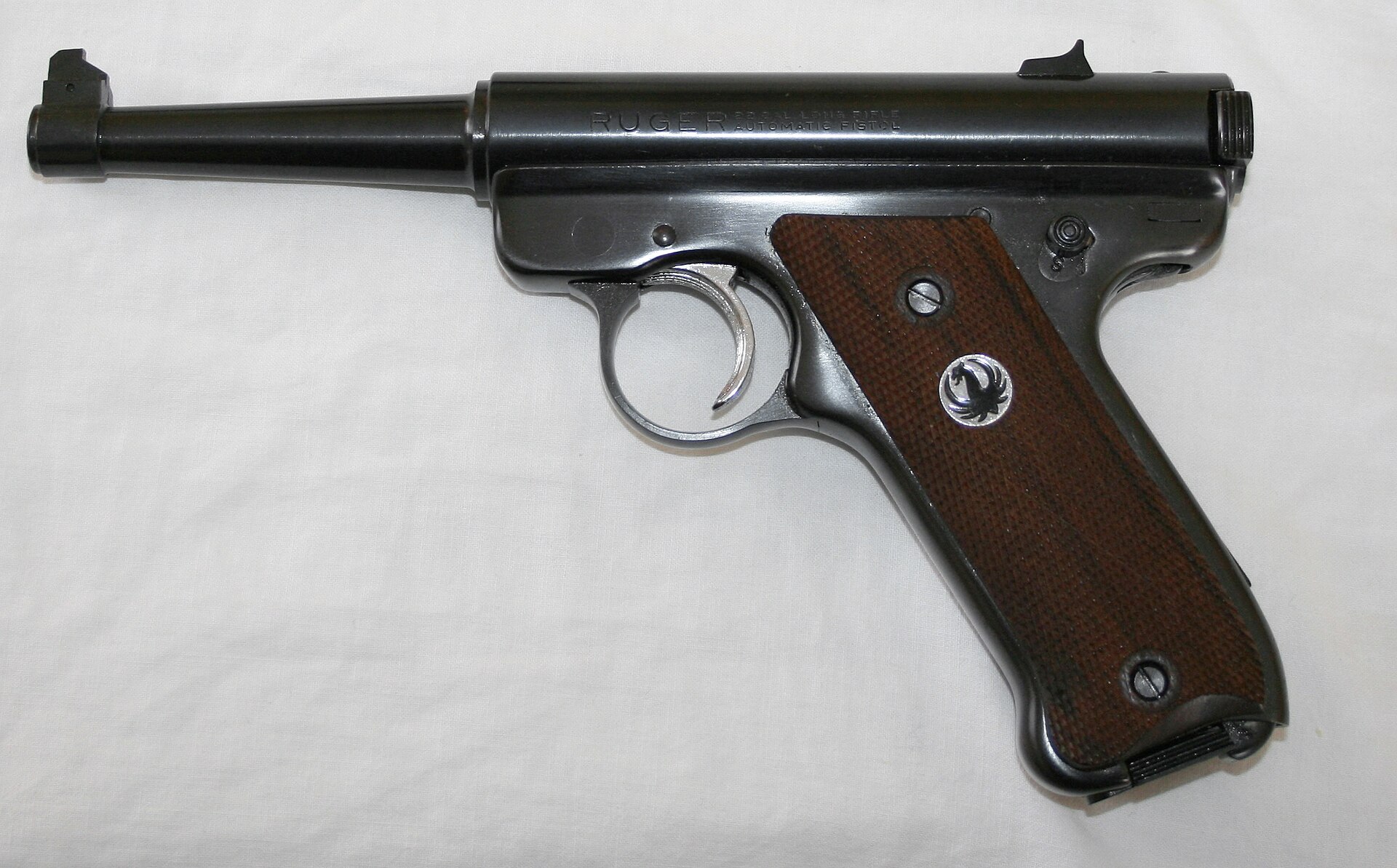
Wikipedia’s article says the Whitney was “under priced by $2.00 by both Ruger and Colt”; the Ruger half is roughly right ($2.45), but Colt’s .22 automatic of the day, the Woodsman, sold for about $60 by the NRA account used in the Ruger dive, so the Colt half does not hold for the Woodsman and is not repeated here.12 RIA’s list of competition includes other .22 automatics “obtained at the same cost or cheaper”, handguns that were “carried in stock and didn’t have to be ordered like the Whitney”, and cheap imports.5
2.8 Lowe, Whitney Firearms Co., and the Lawsuit, 1957–1958
In 1957 Hillberg and Johnson sold. The buyer was Charles E. Lowe Sr., a machinist with a shop in neighbouring Newington, Connecticut, who was, in RIA’s words, “made fully aware of the current company’s situation”. By then the partners had built 10,793 pistols, of which 10,360 had been delivered to Galef.5 Lowe renamed the business Whitney Firearms Co. — from “Inc.” — and resumed production, which picked up slowly while advertisements ran in the national magazines.5
In February 1958 Galef sued for breach of contract. Whitney’s position, as RIA summarises it, was that the old agreement had been satisfied by the delivery of 10,000 pistols, and that the new company was not the same business: Lowe had not bought the company but had personally bought the physical assets and patents, and leased them to the new company.5 The patent record is consistent with that last point: when Hillberg’s action patent finally issued in October 1962, it was assigned “by mesne assignments, to Charles E. Lowe, Sr., Wethersfield, Conn.”13
A month later, in March 1958, Guns published a cover story on Connecticut’s gun industry that described “the neat brick building carrying the mark ‘Whitney Firearms Company’” and listed Whitney among the state’s seven gun plants alongside Ruger, Colt, Winchester, High Standard, Mossberg and Marlin.3 That is the last contemporary picture of a working Whitney factory located here.
The suit, in RIA’s account, “threatened to go on for some time”, sales were slow, and if Galef won, the profits from pistols sitting in the warehouse would go to him. Production stopped. The case was eventually settled, “but all the excitement and energy surrounding the pistol had vanished”, and the company liquidated, selling the remaining 1,100 pistols wholesale to various distributors.5
The Firearm Blog, in 2021, reported that the assets “sold for $100,000, leaving founders $80,000 in debt”.14 That figure is not attributed to a source in the article and is repeated here only as that article’s claim.
2.9 When Did It End? Five Answers
The sources give five different ends, and they are not all describing the same event.
Table 3 — When Did It End? Five Answers
| Source | What it says |
|---|---|
| Findley, Gun Digest (2008/2012) | Whitney Firearms “closed May 1957”7 |
| Findley, American Rifleman (2024) | “1957: Whitney Firearms bankruptcy after producing 10,000 pistols”15 |
| RIA, following Taglienti | Sold to Lowe in 1957; production stopped after the February 1958 lawsuit; remaining stock liquidated afterwards5 |
| American Rifleman, 2022 | Production “only two years, from 1956-1957”; last aluminium-framed pistol in 19578 |
| Rock Island Auction lot descriptions; J. B. Wood | ”manufactured between 1955 and 1962”; “From 1955 to 1962, the production total was around 13,000”166 |
These reconcile once the events are separated. Whitney Firearms, Inc. — Hillberg’s and Johnson’s company — ended in 1957, whether described as closed, bankrupt or sold. Whitney Firearms Co. — Lowe’s — made pistols into early 1958, and its stock was sold off after that. The 1962 end date is a retail date, not a production date. It is supported by testimony: a buyer who purchased one new, at retail, from a Los Angeles gunshop in June 1962 after seeing Galef’s advertisements, and who had a replacement firing pin supplied by Whitney in 1965, with a dated receipt.17 That is one person’s account in a blog comment, not a document seen here, but it fits the liquidation. The two accounts that say the Whitney was “manufactured” until 1962 appear to have turned a sales date into a production date.
2.10 How Many Were Made? Three Answers
Table 4 — How Many Were Made? Three Answers
| Figure | Source | What it counts |
|---|---|---|
| 13,371 | Wikipedia, Forgotten Weapons, most collector accounts; traced to Taglienti (2008) | All pistols, both companies (“by two different companies”, Forgotten Weapons)1812 |
| “slightly more than 13,000”; “roughly thirteen thousand”; “around 13,000” | American Rifleman 2022; Olympic Arms manual; J. B. Wood | The same total, rounded896 |
| ”10,000” | Findley, American Rifleman 2024; Findley, Gun Digest (“Ten thousand pistols … shipped the first year”) | Whitney Firearms, Inc. only, or its first year157 |
| 10,793 built, 10,360 to Galef | RIA, following Taglienti | Whitney Firearms, Inc., to the 1957 sale5 |
| ”Only 14,000” / “14,000 or so” | a 2006 blog post; a fan wiki | Unsourced; not used17 |
On those figures, Lowe’s Whitney Firearms Co. would account for the difference between 10,793 and 13,371 — about 2,578 pistols — plus the presentation series (Volume 3). That is arithmetic on Taglienti’s numbers as others report them, and it assumes both figures count the same things. Findley’s “10,000” and Taglienti’s 10,793 are close enough to be the same count rounded. The two are not averaged here, and the 13,371 figure should be treated as Taglienti’s until his serial listing can be checked.
2.11 The Tooling Afterwards
Two later ventures claimed a link to the original tooling.
- Olympic Arms. J. B. Wood recalled that Bob Schuetz of Olympic Arms showed him “an aluminum frame casting” at a SHOT Show in the late 1990s and said he would bring the pistol back.6 The Olympic Arms manual says the maker could supply “many of the parts from the original Whitney Wolverine” for original pistols.9 Volume 7 covers the reissue. Where the aluminium casting Schuetz showed came from is not recorded.
- Samson Manufacturing Corp. Its web page in 2007 announced: “The Whitney Wolverine will be manufactured from original molds and dies … In addition, we have a huge inventory of original parts from the 50’s. This is from the original manufacturer with consecutive serial numbers starting from the last production model.”19 It never went into production; a correspondent quoted on a 2006 blog reported the company saying, “At this point, it looks like not”.17 What became of the “original molds and dies” is not known.
References
Footnotes
-
William B. Edwards, “The Oldest Name in Guns Comes Back”, Guns, August 1956, pp. 24–27, 66–69, https://web.archive.org/web/20160304110716/http://www.gunsmagazine.com/1956issues/G0856.pdf , retrieved 2026-09-19. ↩ ↩2 ↩3 ↩4 ↩5 ↩6 ↩7 ↩8
-
Period advertising by J. L. Galef & Son and Whitney Firearms, as reproduced in the RIA blog above (images read at full size, 2026-09-19). Individual advertisements are undated in the reproductions. ↩ ↩2 ↩3
-
Joseph B. Stephens, “Gun Traditions Never Die”, Guns, March 1958, pp. 12–15, 62 ff.; cover illustration of a Whitney pistol with a portrait of Eli Whitney. https://web.archive.org/web/2016/http://www.gunsmagazine.com/1958issues/G0358.pdf , retrieved 2026-09-19. ↩ ↩2 ↩3
-
Exploded-view and takedown page on the Whitney pistol, as reproduced in the RIA blog above. The original publication is not named by RIA; its layout matches the NRA’s “Firearms Assembly” series in American Rifleman, but that attribution is unconfirmed. ↩
-
Rock Island Auction Company, “Rise and Fall of the Whitney Wolverine” (first published 30 May 2014; updated), https://www.rockislandauction.com/riac-blog/rise-and-fall-of-the-whitney-wolverine , retrieved 2026-09-19. Draws on Antonio J. Taglienti, The Whitney Wolverine .22 Caliber Semi-Automatic Pistol (Andrew Mowbray, 2008); quotations attributed to Taglienti are as RIA prints them. ↩ ↩2 ↩3 ↩4 ↩5 ↩6 ↩7 ↩8 ↩9 ↩10 ↩11 ↩12 ↩13 ↩14 ↩15 ↩16 ↩17 ↩18 ↩19 ↩20 ↩21 ↩22 ↩23
-
J. B. Wood, “Writer gets his Whitney Wolverine after long wait for unusual .22”, TheGunMag, 29 July 2013, archived at https://web.archive.org/web/20160407182905/http://www.thegunmag.com/writer-gets-his-whitney-wolverine-after-long-wait-for-unusual-22/ , retrieved 2026-09-19. ↩ ↩2 ↩3 ↩4 ↩5
-
Don Findley, “Robert Hillberg, Firearms Designer, 1917–2012”, Gun Digest, https://gundigest.com/article/robert-hillberg-1917-2012 , consulted 2026-09-19. ↩ ↩2 ↩3
-
Guy J. Sagi, “Whitney Wolverine: Hillberg’s Space-Age Rimfire Pistol”, American Rifleman, 31 August 2022, https://www.americanrifleman.org/content/whitney-wolverine-hillberg-s-space-age-rimfire-pistol/ , consulted 2026-09-19. ↩ ↩2 ↩3 ↩4
-
Olympic Arms, Whitney Wolverine Owner’s Manual, Rev 7/05, https://web.archive.org/web/2016/https://www.vintagegunleather.com/gun-manuals/pdf_O/olympic_whitney_wolverine.pdf , retrieved 2026-09-19. ↩ ↩2 ↩3
-
“Ahead of its time: The Whitney Wolverine pistol”, Smith & Wesson Forum, archived 7 April 2015, https://web.archive.org/web/20150407043719/http://smith-wessonforum.com/lounge/210508-ahead-its-time-whitney-wolverine-pistol-pics-box-now-included.html . ↩
-
“Whitney Wolverine .22”, American Handgunner, https://americanhandgunner.com/better-shooting-our-experts/whitney-wolverine-22/ , consulted 2026-09-19 (author and date not captured). ↩
-
Wikipedia, “Whitney Wolverine”, consulted 2026-09-19. Used as a pointer to sources and, where noted, as the origin of a claim that is not repeated. ↩ ↩2
-
R. L. Hillberg, US Patent 3,060,810, issued 30 October 1962, https://patentimages.storage.googleapis.com/pdfs/US3060810.pdf . ↩
-
Luke C., “The Rimfire Report: The Space Age Whitney Wolverine 22LR Pistol”, The Firearm Blog, 18 October 2021, https://www.thefirearmblog.com/blog/2021/10/18/whitney-wolverine/ , consulted 2026-09-19. ↩
-
Don Findley, “Remembering Gun Designer Robert Lee Hillberg”, American Rifleman, 8 January 2024, https://www.americanrifleman.org/content/remembering-gun-designer-robert-lee-hillberg/ , consulted 2026-09-19. ↩ ↩2
-
Rock Island Auction Company lot descriptions for Whitney pistols, e.g. auction 1048 lot 993 (21 February 2025) and auction 4091 lot 666 (17 May 2024), https://www.rockislandauction.com/detail/1048/993/ and https://www.rockislandauction.com/detail/4091/666/ , retrieved 2026-09-19. ↩
-
“Whitney Wolverine Range Report”, Nurse With a Gun blog, 10 January 2006, and reader comments, http://xavierthoughts.blogspot.com/2006/01/whitney-wolverine-range-report.html , retrieved 2026-09-19. Blog posts and anonymous comments are used only as testimony, and are labelled as such. ↩ ↩2 ↩3
-
Ian McCollum, “Book Review: The Whitney Wolverine” and “Whitney Wolverine: Atomic Age Design in a .22 Rimfire” (16 March 2019), Forgotten Weapons, https://www.forgottenweapons.com/book-review-the-whitney-wolverine/ , consulted 2026-09-19. ↩
-
Samson Manufacturing Corp., “Coming Soon — The Whitney Wolverine!”, archived 31 May 2007, https://web.archive.org/web/20070531231836/http://www.samson-mfg.com/Whitney.htm , retrieved 2026-09-19. ↩
Comments (0)