Borchardt C-93 · Volume 1
Hugo Borchardt: Magdeburg, Bridgeport, Budapest, Berlin
The man behind the first commercially made self-loading pistol, from the American gun shops of the 1870s to a Berlin machine works in 1893, with every contested date shown as contested
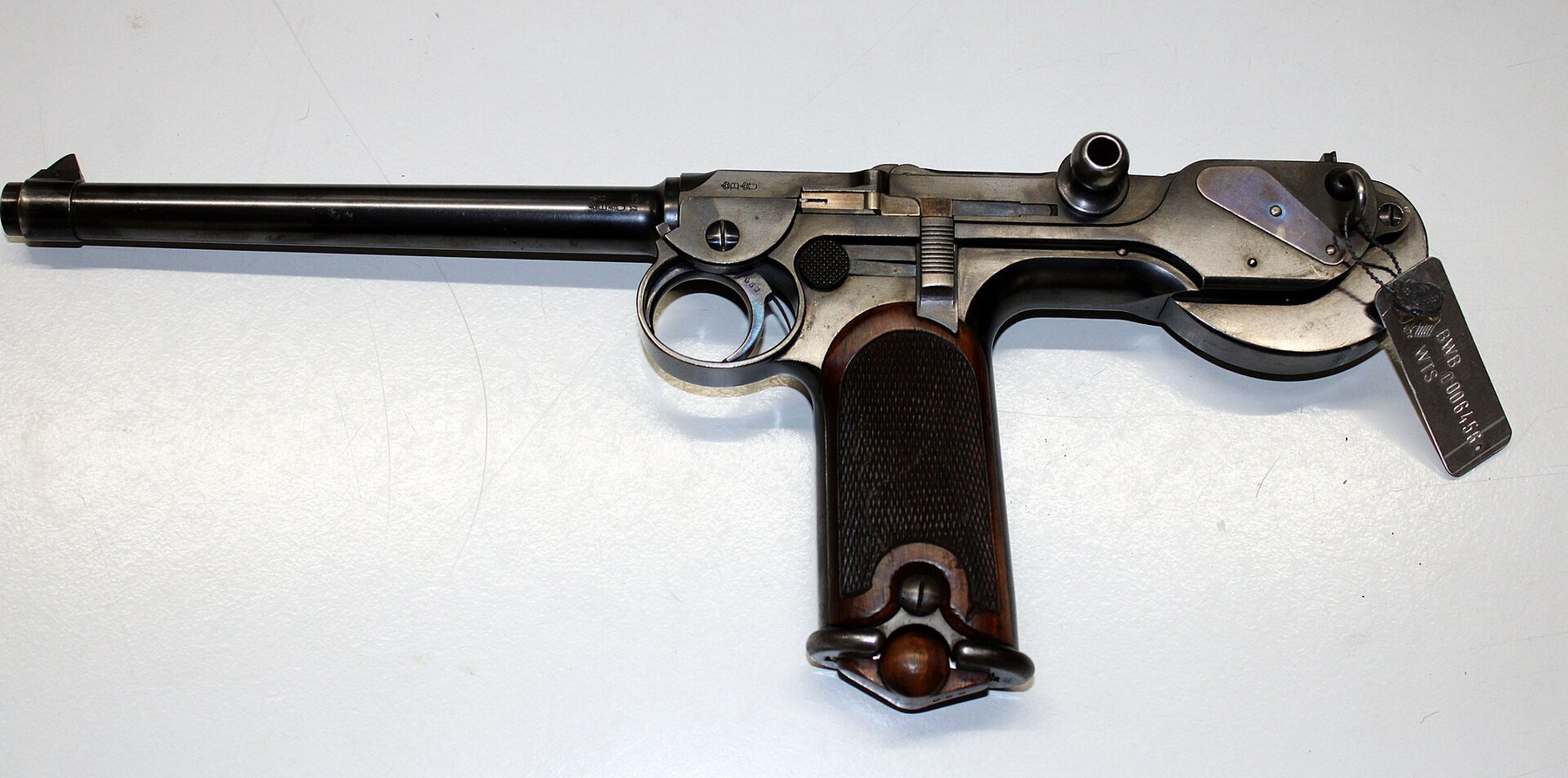
The Borchardt C-93 is the pistol every history of the self-loading handgun begins with, and almost nobody has fired one. Something over three thousand were made in Berlin between 1894 and the end of the 1890s, first by Ludwig Loewe & Co. and then by the company Loewe’s arms business became, Deutsche Waffen- und Munitionsfabriken. No army adopted it. It was too big, too heavy and too complicated for any service that tested it, and its designer refused to make it smaller. When the job of fixing it went to a Loewe employee named Georg Luger, the result was the Parabellum, the pistol the world calls the Luger, and the C-93 became a footnote with a famous child.
The footnote is worth a dive of its own, because almost everything about it is either misremembered or unexamined. Its closing spring is called a “clock spring” in the collector literature and a “mainspring” in some of the popular press, and the factory called it neither. Its barrel length is given in print as anything from 165 to 195 mm. Its toggle is routinely said to be Maxim’s toggle turned upside down, which nobody has documented from Maxim’s side. Its production end date, which decides whether a given gun is a federal antique in the United States, is not settled in any source available to this dive. And the man himself, who was an American citizen when he patented the pistol in ten countries in six weeks, is known mostly through two encyclopaedia articles and a handful of auction-house essays.
This first volume is about the man and the firm. Volume 2 takes up the pistol’s own commission, patents and production; Volume 3 its trials and the redesign that turned it into the Luger; Volume 4 its mechanism, part by part; Volume 5 its variants and how to tell them apart; Volume 6 its disassembly and care from the factory’s own instructions; Volume 7 its cartridge and how it shoots; Volume 8 the market and the law; and Volume 9 how one could be made today.
1.1 The C-93 in one table
Table 1 — The C-93 in one table
| Item | Value | Source |
|---|---|---|
| Inventor | Hugo Borchardt | US Patent 571,260 |
| Master patent | German DRP 75,837, dated 9 September 1893 | Recited in US 571,260 |
| US patent | 571,260, “Recoil Magazine-Pistol”, filed 21 October 1893, issued 10 November 1896 | The patent itself |
| Makers | Ludwig Loewe & Co., Berlin; then Deutsche Waffen- und Munitionsfabriken (DWM), Berlin | Markings; factory manuals |
| Production | About 3,000 in total, about 1,100 of them Loewe | Antaris, American Rifleman; see Volume 2 for the other figures |
| Operation | Short recoil, toggle lock breaking upward, striker fired | US 571,260; factory manuals |
| Cartridge | 7.65 mm Borchardt, 8-round detachable magazine in the grip | Factory manuals |
| Barrel | 190 mm standard; a 154 mm short barrel is documented | DWM and Loewe English manuals |
| Weight | 1,275 g (190 mm barrel) | DWM manual |
| Muzzle velocity | 400 m/s as printed by the factory; 1,300 ft/s per the US Navy in 1896 | DWM manual; ONI 1896 |
| Accessory | Detachable wooden board stock with leather holster | Factory manuals |
The figures in this table are the factory’s and the US Navy’s, not the numbers that circulate online. Where they disagree with each other, and with the encyclopaedias, the disagreement is carried into the volume that discusses the figure.
1.2 Who Hugo Borchardt was, and how much of it is known
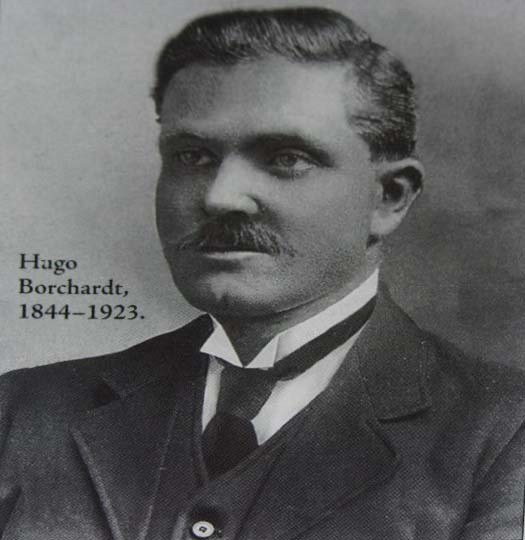
The documentary record of Hugo Borchardt’s life is thin and uneven. The firm parts of it are his patents, which state where he lived and who he worked for on the day he signed them, and a small body of company papers that have surfaced through the auction trade. Almost everything else rests on two encyclopaedia articles, the English and German Wikipedia entries, whose own sourcing is a single archived web biography and a 2010 Gun Digest anthology.12 This volume therefore distinguishes three grades of statement: what a patent or a period document says, what the secondary literature agrees on, and what is contested.
Birth. Both encyclopaedias give 6 June 1844, in Magdeburg in the Kingdom of Prussia.12 No primary record was located.
Citizenship. This is the most solid personal fact in the record and the most surprising. When he filed for the US patent on the pistol on 21 October 1893, Borchardt described himself as “a citizen of the United States, at present residing in the city of Berlin, in the Kingdom of Prussia, German Empire.”3 He said the same in 1910, giving his address as Kantstrasse in Charlottenburg.4 The inventor of the first commercially made German self-loading pistol was, on his own sworn statement, an American.
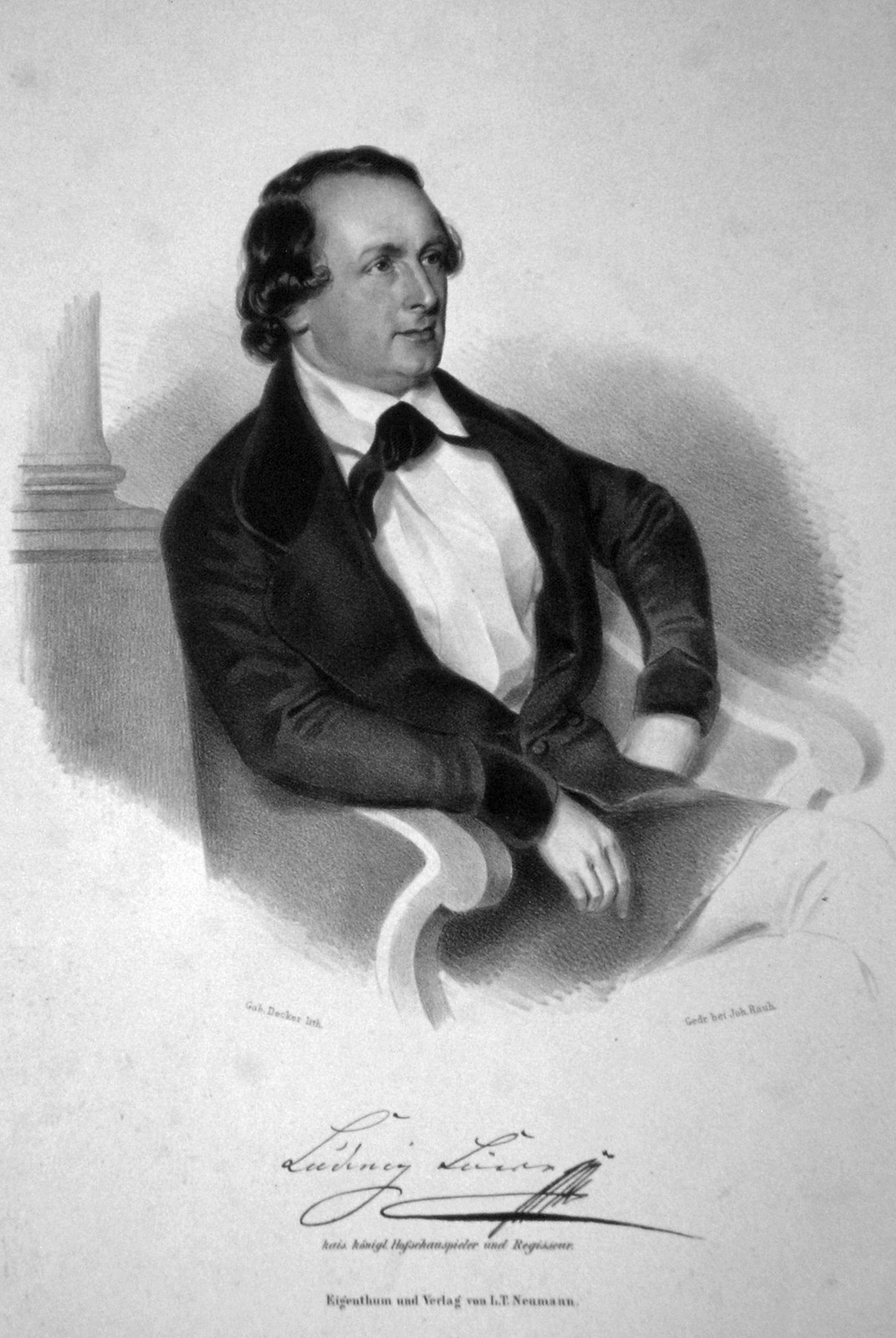
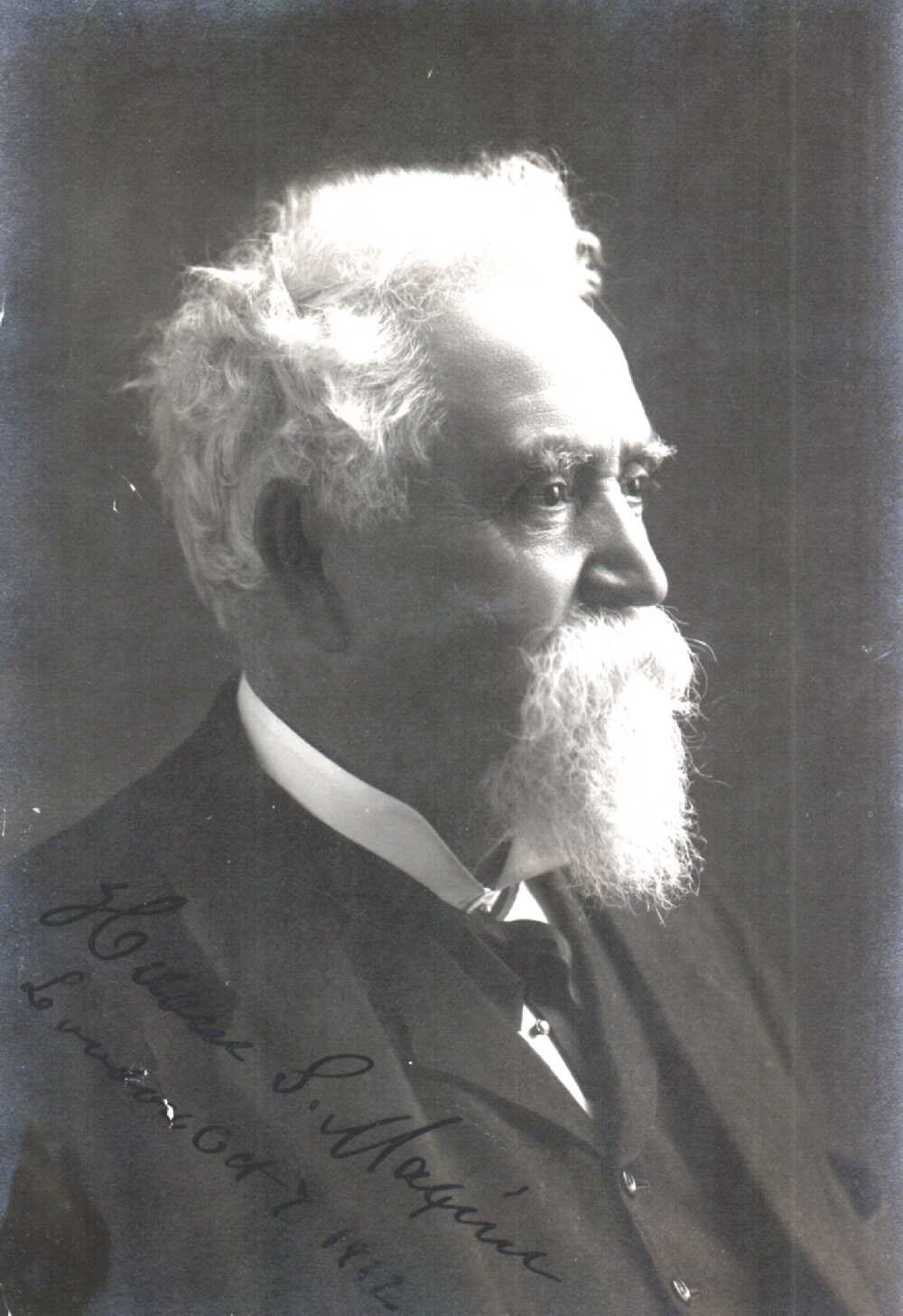
Death. The English and German Wikipedia articles both give 8 May 1924, in Berlin-Charlottenburg, of pneumonia.12 A collector page gives 8 May 1925, but the same page puts Loewe in Karlsruhe, which is wrong, and it is the weaker source. The portrait reproduced above, which Commons took from the Ukrainian Wikipedia without a source, is captioned 1844–1923. Three years are therefore in circulation; 1924 has the most support, and none has a primary citation in the sources consulted.
1.3 Emigration and the American shops
The encyclopaedias agree that Borchardt went to the United States in 1860, at about sixteen.12 What he did in his first decade there is not documented in the sources consulted.
His first recorded post is as superintendent of works at the Pioneer Breech-Loading Arms Company in Trenton, New Jersey. The date is contested: the English article says “by 1868”, the German article and Grace’s Guide say 1872.125 Grace’s Guide cites only Wikipedia, so it is not an independent witness.
The English article then places him as a foreman at the Singer Sewing Machine Company in 1874, followed by spells at Colt’s and at Winchester, without dates for the last two.1 Singer is worth noticing, because it connects to the firm that would eventually make his pistol. Ludwig Loewe & Co. of Berlin began in 1869 as a sewing-machine maker built on American machinery, and turned to machine tools and arms from there (see below). Borchardt arrived in Berlin with the same training as the firm that hired him: the American interchangeable-parts shop.
1.4 Winchester, 1876: the revolvers that were never made
The episode most often told about Borchardt’s American years is the Winchester revolver, and it is the one most in need of care.
The story, as told by Winchester historians, is that around 1876 Winchester set out to design a double-action revolver to show the Russian government, which was then buying large numbers of American arms. Two designs were produced. One had a fixed cylinder and a thumb-operated extractor; the other a swing-out cylinder with simultaneous extraction. A handful of the swing-out guns were completed, one going to the US Navy and one to Russian ordnance.6
Two things about that story are not settled. The first is the attribution. J. S. Robinson’s review of the Winchester revolvers, drawing on R. L. Wilson and on Watrous’s History of Winchester Firearms, states plainly that “there is no documentation to conclusively prove that the designs are by Hugo Borchardt”; the attribution rests on oral testimony from a Winchester employee and a later museum curator, and “neither the Borchardt nor Mason designs were ever patented.”6 A Rock Island Auction essay for the patent model of the swing-out revolver, citing Madis and Wilson, describes it as “designed by Hugo Borchardt and S. W. Wood”, and notes that the accompanying Navy correspondence credits the invention to “S. W. Woods”.7 The fairest summary is that Borchardt worked on Winchester revolver designs around 1876 together with Stephen W. Wood, and that how much of the work was his is not documented.
The second is the “gentleman’s agreement”. The tradition is that Winchester shelved its revolvers when Colt agreed to drop the Burgess lever-action rifle, each company leaving the other’s market alone. Whatever its truth, that tradition belongs to 1883–85, not to 1876; the Rock Island essay, citing Williamson’s history of Winchester, says “no formal agreement was made” and dates Colt’s withdrawal of the Burgess to early 1885.7 It has nothing to do with why Borchardt’s 1876 designs went no further, and it is not repeated here as an explanation of his career.
1.5 Sharps, Bridgeport: the Model 1878
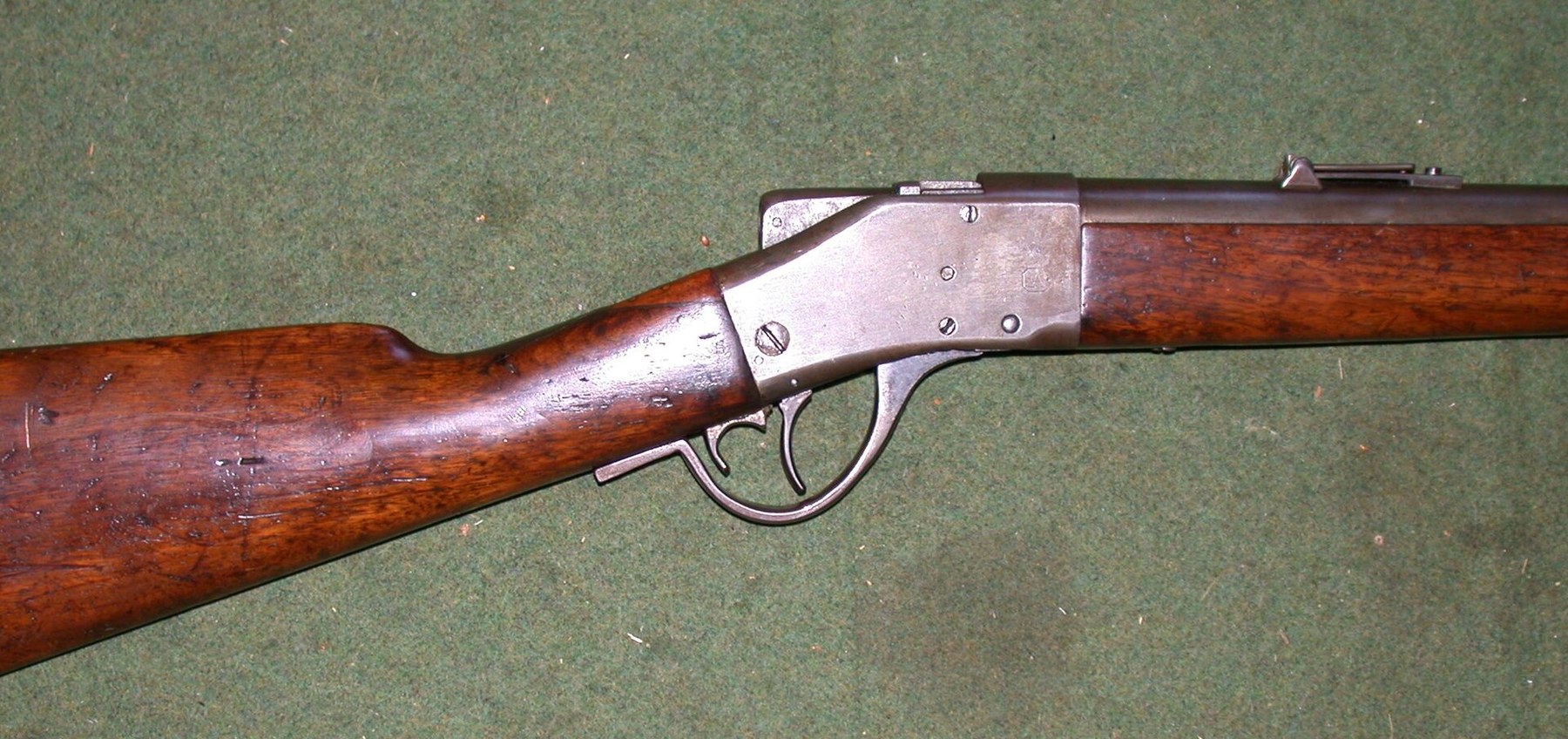
Borchardt’s American career is best documented at the Sharps Rifle Company in Bridgeport, Connecticut. Both encyclopaedias make him superintendent from 1 June 1876, and the English article adds treasurer.12 Two of his patents bear this out directly: US 185,721 and US 206,217, both “Improvement in breech-loading fire-arms”, were granted to “Hugo Borchardt, of Bridgeport, Connecticut”, as assignor to the Sharps Rifle Company.89 The first was filed on 17 October 1876; its issue date is 26 December 1876 on the patent record, against 26 September 1876 in the English Wikipedia list, and the patent record is preferred here. The second, filed 26 May 1877 and issued 23 July 1878, concerns an automatic safety.
Corroboration of a different kind came to market in 2025. A Rock Island Auction lot offering an unserialised Loewe tool-room prototype of the C-93 was sold together with seven Sharps Rifle Company paycheques made out to Hugo Borchardt, dated between 22 July 1876 and 31 March 1879, and a letter of March 1878 on Sharps letterhead from Borchardt to the company’s president, E. G. Westcott.10 Those papers put him on the Sharps payroll through at least the spring of 1879.
The rifle that carries his name, the Sharps-Borchardt Model 1878, is a hammerless falling-block single shot.11 Its significance for this dive is less the rifle itself than what it shows about the designer: a man who thought in terms of enclosed lockwork, in which the firing mechanism lives inside a moving block rather than hanging off the outside of the frame. The C-93 is built the same way, with its striker, spring and sear carried in and on a breechblock that moves inside a forked receiver.
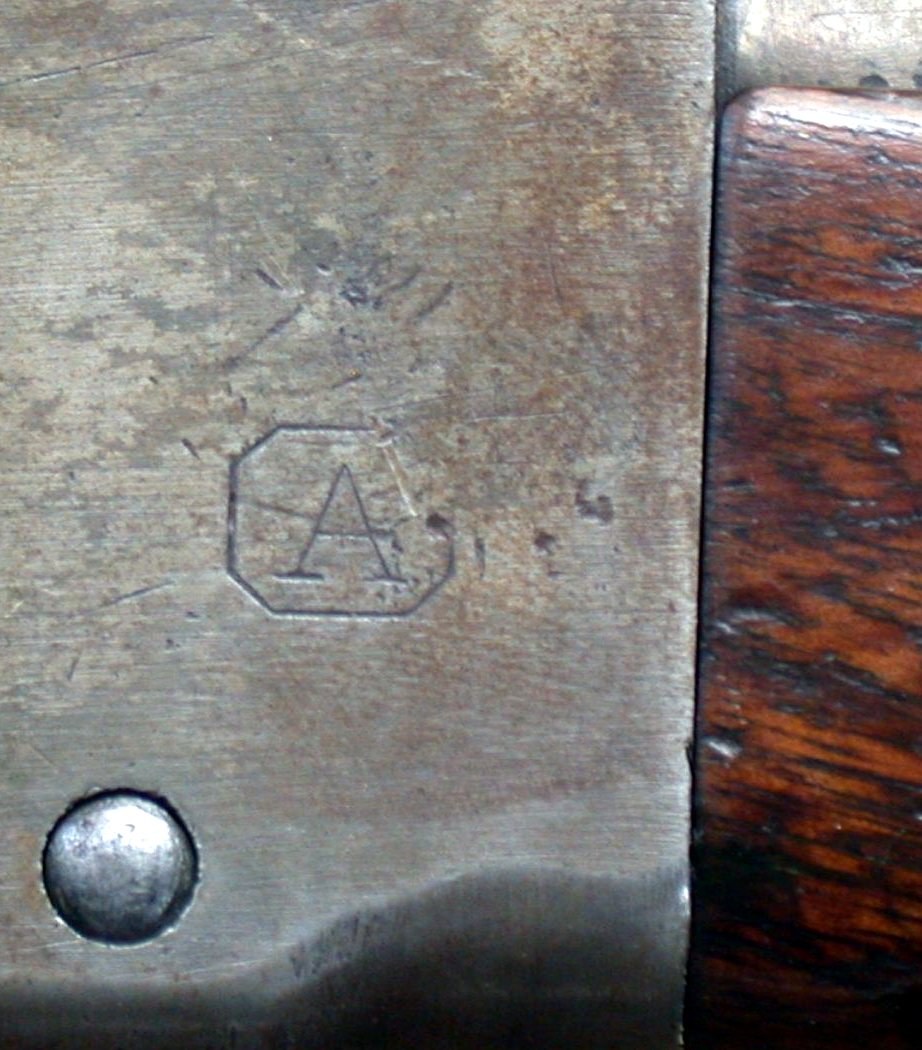
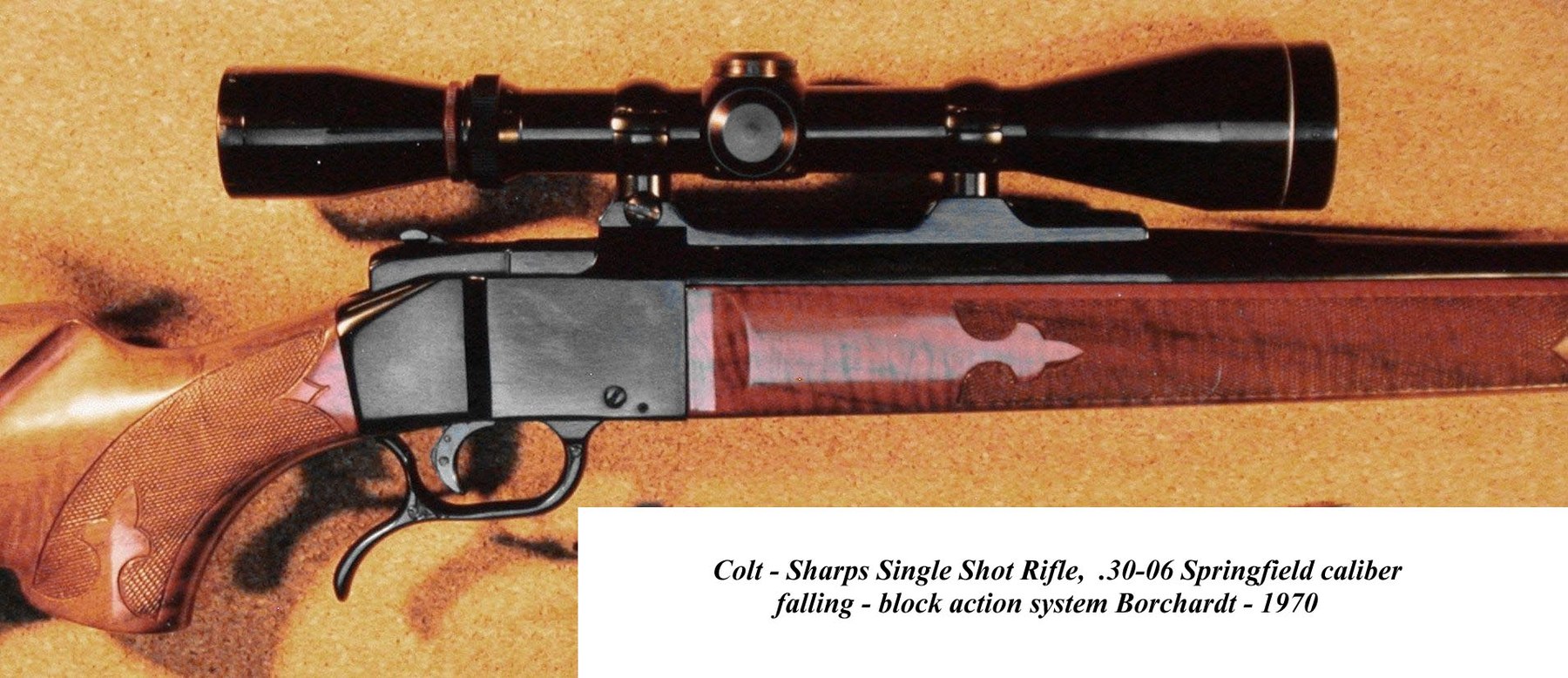
The falling-block action outlived the company. Sharps failed in 1881, and the action was revived in the twentieth century. A Commons photograph captioned by its uploader as a Colt-Sharps single-shot rifle in .30-06, “falling-block action system Borchardt”, dated 1970, records one such revival. The caption is the uploader’s; it has not been checked against Colt’s own records for this dive, and is reproduced here only as an example of the design’s afterlife.
1.6 Peekskill, Budapest and Remington: the gap years
The decade between the end of Sharps and Borchardt’s arrival in Berlin is the least well documented part of his life, and the sources contradict one another.
The encyclopaedias say that after Sharps closed in 1881 he went to Budapest, to the Fegyver- és Gépgyár Részvénytársaság (the Arms and Machine Works company), where he had become works director by 1890; and that he married Aranka Herczog there.12 None of that was confirmed on a primary page.
A patent cuts across it. US 273,448, “Detachable Magazine for Magazine-Guns”, was filed on 9 November 1882 and issued on 6 March 1883 to “Hugo Borchardt, of Peekskill, New York”, assignor to Joseph W. Frazier of New York.12 On his own patent filing, then, Borchardt was living in the Hudson valley in late 1882, a year after the Budapest move the encyclopaedias give. Either he moved later than they say or he moved back and forth; the record available here does not decide which. The patent is also the most likely concrete basis for the statement, made by Ian McCollum, that Borchardt worked on improvements to James Paris Lee’s box magazine, though McCollum names no patent.13
The English article adds a consultancy for Remington on the Lee rifle from 1890 to 1892, “for U.S. Army trials”; the German article says the work was for the US Navy and Marine Corps.12 Both are given here because neither was confirmed. What is clear from the next patent in the series is where he was by the autumn of 1893: in Berlin, at Königgrätzer Strasse 62, filing for a self-loading pistol.14
1.7 Ludwig Loewe & Co.: the firm that built the pistol
The C-93 was made by one of the most American-minded engineering firms in Europe, and that is not a coincidence.
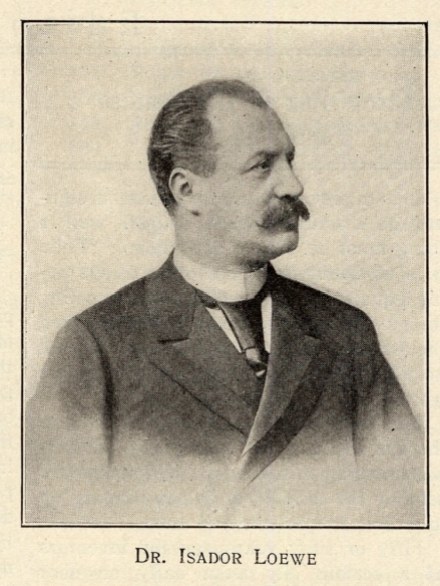
Ludwig Loewe (27 November 1837 to 11 September 1886) founded his company in 1869 to make sewing machines. According to the English encyclopaedia account, the import of American machine tools for that work “led to the development and manufacture of lathes, grinders and milling machines and other machine tools”, and Loewe built a new sewing machine on American precision machinery after a visit to the United States with his brother Isidor in 1870.15 An academic study of the firm by Wolfram Fischer treats Loewe as the leading case of American influence on German manufacturing before the First World War.16
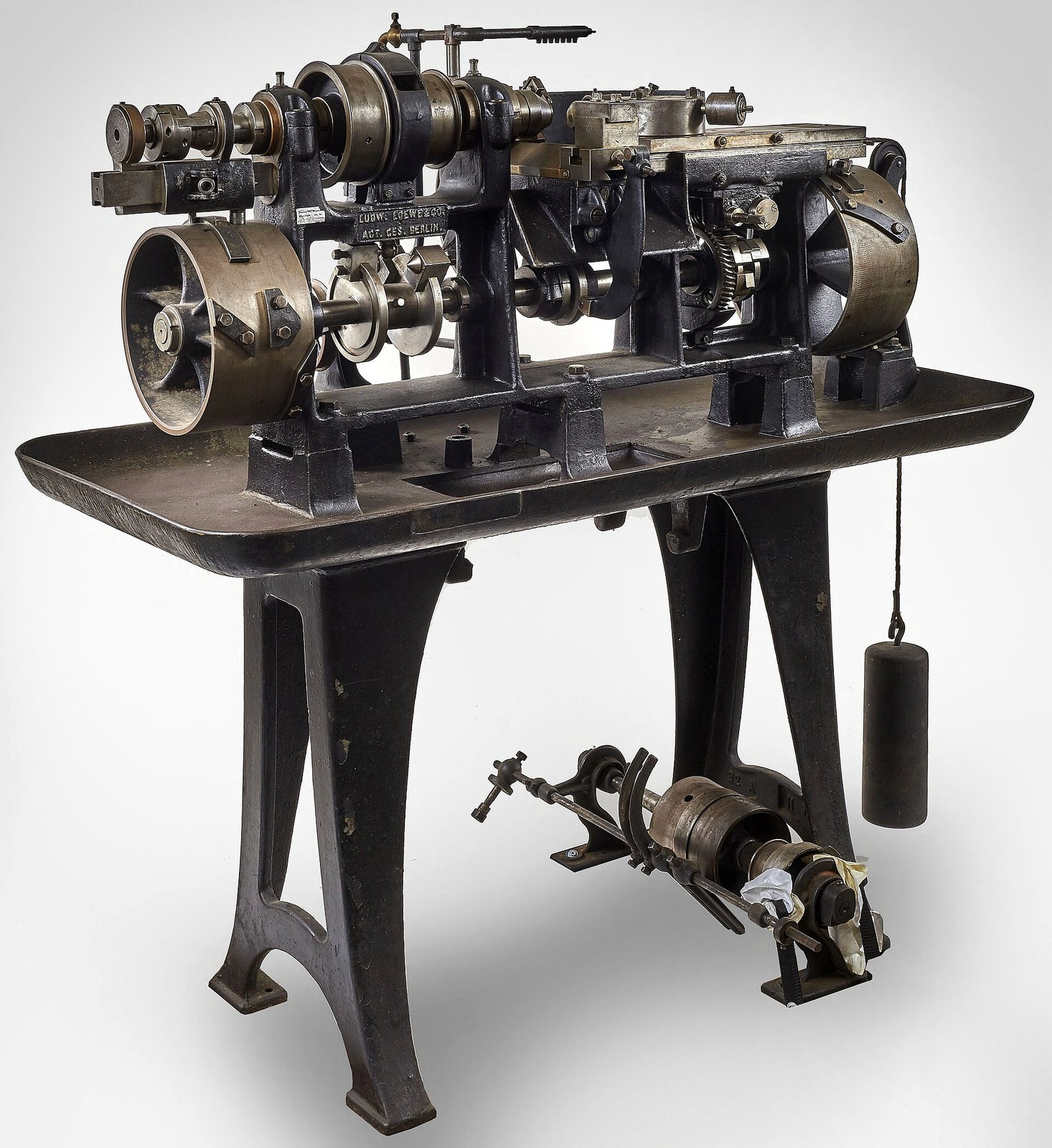
From sewing machines and machine tools the firm moved into arms. It agreed in 1872 to make rifles for the German army, made Mauser Model 71 parts for the Prussian arsenal at Spandau, obtained a majority share in Mauser of Oberndorf in 1887, and in 1889 was commissioned to make 300,000 of the new Model 88 rifle.15 After Ludwig’s death the business was run by Isidor Loewe, whose banking connections the same account credits with the firm’s rapid expansion.
A primary trace of the arms business at the moment the pistol was in production appears in the same US Navy intelligence publication that described the pistol in 1896. Its notes on Chile record that an order for 7 mm Mauser rifles, “60,000, it is believed”, was “being filled at the Loewe Works, Berlin”.17 The firm making Borchardt’s pistol was, in the same years, a mass producer of service rifles.
In 1896 Loewe’s arms business was combined with the Deutsche Metallpatronenfabrik of Karlsruhe, a cartridge works Loewe controlled, to form Deutsche Waffen- und Munitionsfabriken with its seat in Berlin.1516 The date is given variously as 1896, as November 1896 and as 1 January 1897; Volume 2 sets out the competing statements, because the change of name on the pistol follows it.
The Mauser connection matters to this dive in one specific way. The Mauser C96 dive records that Mauser was a Loewe and DWM asset, and that the group was struggling to sell Borchardt’s pistol when the Feederle brothers’ design came along; the C96’s first prototype fired the Borchardt cartridge.18 That material belongs to the C96 dive and is not repeated here.

1.8 Why a self-loading pistol in 1893
Two things were in the air in Berlin in 1893 that explain the commission: smokeless powder and Hiram Maxim.
Smokeless powder had arrived in service rifle cartridges at the end of the 1880s. It burned clean enough that a mechanism working from the energy of each shot could keep running without choking on fouling, and it delivered the high velocities that small, jacketed bullets needed. Every self-loading arm of the 1890s depends on it, and the C-93’s own factory manual makes the point indirectly when it claims that “the mechanism does not foul”.19
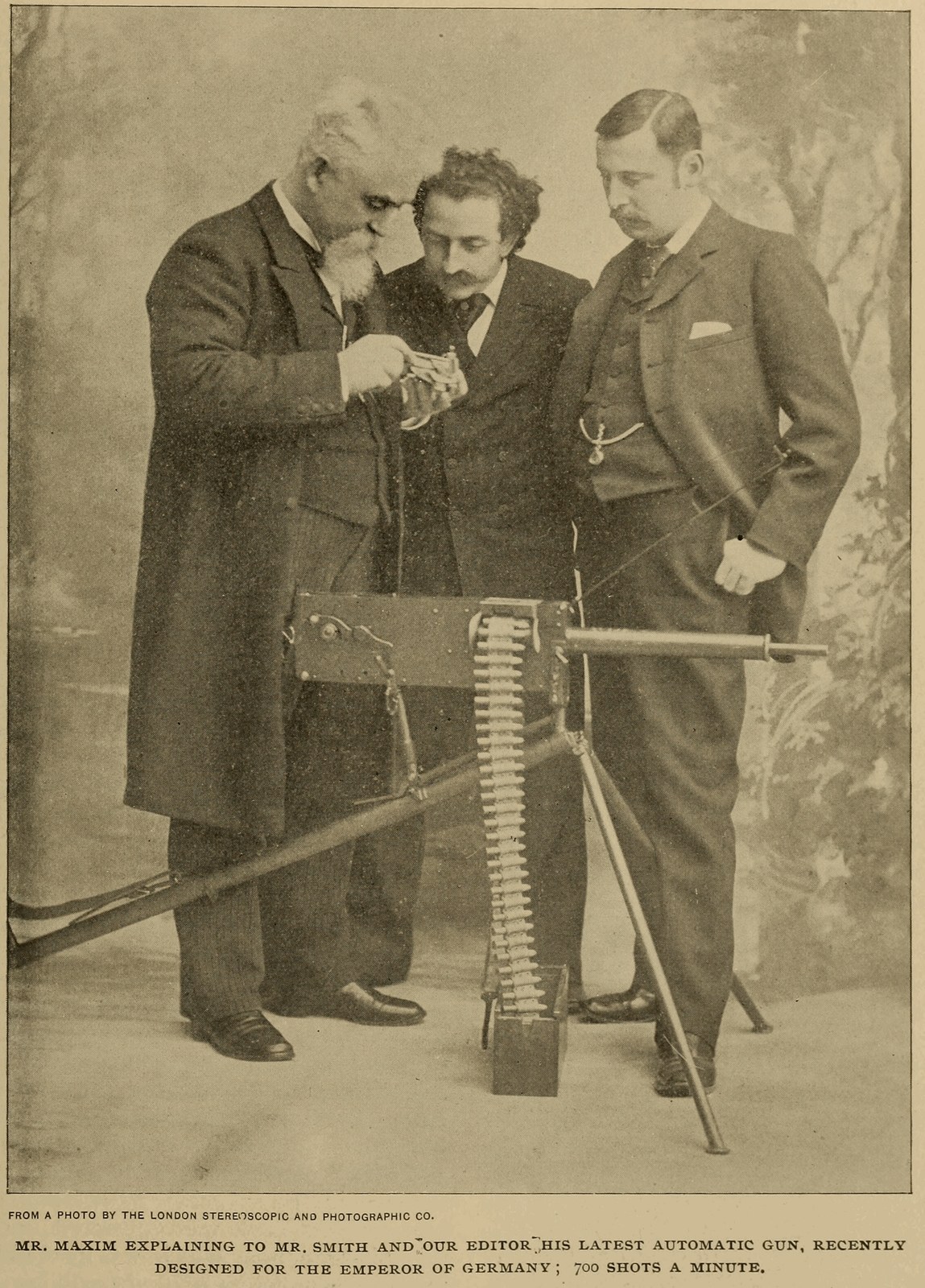
Maxim had shown from 1884 onward that recoil could do the work of loading, and his machine gun locked its breech with a toggle, a jointed pair of links that holds firm while straight and folds once broken. The C-93’s toggle is universally described as derived from Maxim’s.20 Borchardt’s own patent comes close to admitting it without naming anyone: it disclaims, as “broadly, old prior to my invention”, a firearm “having a longitudinally-movable barrel actuated by the recoil, a breech-bolt, links connecting said breech-bolt and barrel”.3 What he claimed as new was the particular way his links were folded, by rollers striking a curved surface, and the arrangement of springs, sear, magazine and grip around it. Volume 4 takes the mechanism apart; Volume 3 takes up the widely repeated statement that Borchardt’s toggle is Maxim’s turned upside down, which this dive could not source from Maxim’s side.
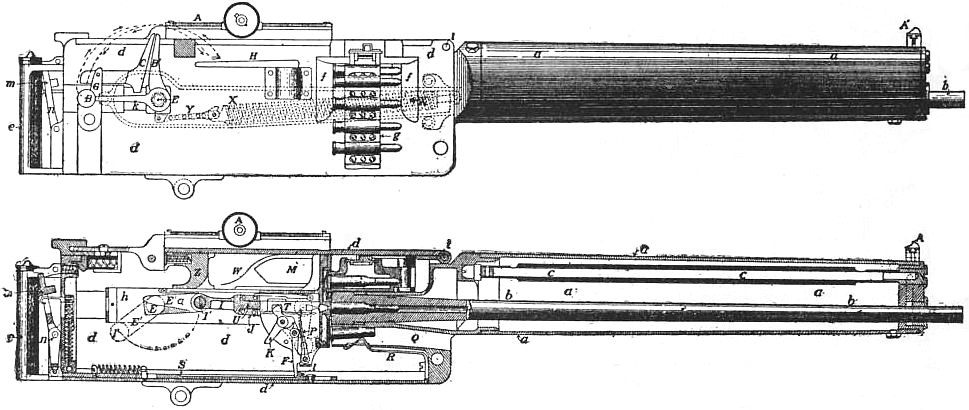
The other ingredient was a cartridge, and here the C-93 is unusual in that its designer had to supply one. Nothing suitable existed. The bottlenecked 7.65 mm Borchardt round, small-calibre, jacketed and smokeless, was made for the pistol by the Loewe group’s cartridge business; its later life as the 7.63 Mauser, and the line from it to the Tokarev, is told in the Mauser C96 dive’s cartridge volume. Volume 7 of this dive keeps to what a C-93 owner needs to know about it.
1.9 Later work, the rift with Luger, and death
Borchardt did not stop designing after the C-93, but what he designed afterward is known only from patents. German patent 227,078, filed in February 1909, covers an ejector arrangement “besonders für selbsttätige Feuerwaffen” with a longitudinally sliding breechblock.21 US 987,543, filed on 16 February 1910 and issued on 21 March 1911, covers a trigger mechanism that, in its own words, improves “the general construction of the trigger mechanism which was described in applicant’s German Patent No. 75837”, and is shown in “a Borchardt automatic pistol”.4 A Christie’s lot note on an experimental Luger rifle says Borchardt “initiated a series of designs from 1908 to 1913”, in the context of self-loading rifles.22 No built pistol from this period was located, and none is claimed here.
The English encyclopaedia also credits him with patents well outside firearms: a rock drill, a shirt-neck shaper, gas burners, ball bearings, a wire straightener and electrical apparatus, citing a 2010 Gun Digest anthology.1 They were not checked against patent records for this dive.
The relationship with Georg Luger is described in the secondary literature as bitter. A 2024 Rock Island Auction essay says that Borchardt “felt betrayed, claiming he wasn’t getting proper recognition or royalties … and that Luger had circumvented most of his patents”, and calls it “a lifelong rift”.23 The essay cites no source, and the claim is carried here as reported, not as established. What is documented is the sequence that produced the rift: Borchardt declined to make his pistol smaller, and the job went to Luger. That is the subject of Volume 3.
1.10 What this volume could not settle
- Borchardt’s death year. 1924 in both encyclopaedias; 1925 on a weak collector page; 1923 in a portrait caption of unknown origin.
- The start of his Pioneer Breech-Loading Arms post. 1868 or 1872.
- His share of the Winchester revolver designs, which were never patented and are attributed on oral testimony, jointly with S. W. Wood.
- The Budapest years. The encyclopaedias’ 1881 move conflicts with his own Peekskill patent filing of November 1882.
- The Remington-Lee consultancy of 1890–92, for the Army or for the Navy and Marines.
- Whether Loewe was a Maxim licensee in 1893, which would make the route of the toggle idea concrete.
- The non-firearm patents credited to him.
Each is stated as contested where it appears, and an edit that resolves one should cite the primary document that does it.
References
Footnotes
-
“Hugo Borchardt”, English Wikipedia, https://en.wikipedia.org/wiki/Hugo_Borchardt, consulted 2026-10-18. Birth, emigration, Pioneer, Singer, Colt, Winchester, Sharps, Budapest, Remington, death; the non-firearm patents, citing Shideler, The Greatest Guns of Gun Digest (2010). ↩ ↩2 ↩3 ↩4 ↩5 ↩6 ↩7 ↩8 ↩9 ↩10
-
“Hugo Borchardt”, German Wikipedia, https://de.wikipedia.org/wiki/Hugo_Borchardt, consulted 2026-10-18. ↩ ↩2 ↩3 ↩4 ↩5 ↩6 ↩7 ↩8
-
Hugo Borchardt, US Patent 571,260, “Recoil Magazine-Pistol”, application filed 21 October 1893, Serial No. 488,759, patented 10 November 1896. Google Patents, https://patents.google.com/patent/US571260A/en, PDF from patentimages.storage.googleapis.com, consulted 2026-10-18. The inventor’s statement of US citizenship and Berlin residence, the list of foreign patents, and the disclaimer of the broad moving-barrel toggle-linked arm as prior art. ↩ ↩2
-
Hugo Borchardt, US Patent 987,543, “Trigger mechanism for automatic firearms”, filed 16 February 1910, issued 21 March 1911. https://patents.google.com/patent/US987543A/en, consulted 2026-10-18. ↩ ↩2
-
“Hugo Borchardt”, Grace’s Guide to British Industrial History, https://www.gracesguide.co.uk/Hugo_Borchardt, consulted 2026-10-18. Cites only Wikipedia. ↩
-
J. S. Robinson, “Did You Know that Winchester Made a Revolver?”, Arms Collectors Guild Quarterly, reproduced at https://corregidor.org/acgq/web_redirect_3628.3645.8883/forum_pages/student%20of%20arms/robinson_0804.html, consulted 2026-10-18. Citing R. L. Wilson (1972) and Watrous, History of Winchester Firearms. ↩ ↩2
-
Rock Island Auction Company, lot 55-1045, “Winchester Borchardt pistol .32”, https://www.rockislandauction.com/detail/55/1045/winchester-borchardt-pistol-32, consulted 2026-10-18. Lot essay citing Madis p. 562, Wilson p. 319 and Williamson p. 111. ↩ ↩2
-
Hugo Borchardt, US Patent 185,721, “Improvement in breech-loading fire-arms”, filed 17 October 1876, issued 26 December 1876, assignor to Sharps Rifle Company. https://patents.google.com/patent/US185721A/en, consulted 2026-10-18. ↩
-
Hugo Borchardt, US Patent 206,217, “Improvement in breech-loading fire-arms”, filed 26 May 1877, issued 23 July 1878, assignor to Sharps Rifle Company. https://patents.google.com/patent/US206217A/en, consulted 2026-10-18. ↩
-
Rock Island Auction Company, lot 4095-1385, “Unserialized prototype Ludwig Loewe 1893 Borchardt pistol”, https://www.rockislandauction.com/detail/4095/1385/unserialized-prototype-ludwig-loewe-1893-borchardt-pistol, consulted 2026-10-18. Sold with Sharps paycheques of 1876–79 and a 1878 letter to E. G. Westcott. ↩
-
“Sharps-Borchardt Model 1878”, English Wikipedia, https://en.wikipedia.org/wiki/Sharps-Borchardt_Model_1878, consulted 2026-10-18. Hammerless falling-block action based on Borchardt’s patent; rifles marked “BORCHARDT PATENT”. ↩
-
Hugo Borchardt, US Patent 273,448, “Detachable Magazine for Magazine-Guns”, filed 9 November 1882, issued 6 March 1883, assignor to Joseph W. Frazier. https://patents.google.com/patent/US273448A/en, consulted 2026-10-18. ↩
-
Ian McCollum, “C93 Borchardt: The First Successful Self-Loading Pistol (at RIA)”, Forgotten Weapons, 29 November 2015, https://www.forgottenweapons.com/c93-borchardt-the-first-successful-self-loading-pistol-at-ria/, consulted 2026-10-18. ↩
-
H. Borchardt, Deutsches Reichspatent 75,837, “Selbstthätige, besonders als Repetirpistole verwendbare Feuerwaffe”, applicant address Berlin S.W., Königgrätzerstr. 62. Text at https://patents.google.com/patent/DE75837C/de, consulted 2026-10-18; date of 9 September 1893 from the recital in US 571,260. ↩
-
“Ludwig Loewe”, English Wikipedia, https://en.wikipedia.org/wiki/Ludwig_Loewe, consulted 2026-10-18. Dates, the 1869 founding, the American machine tools, the 1872 army agreement, Mauser 71 parts for Spandau, the 1887 Mauser majority, the 1889 order for 300,000 Model 88 rifles, Isidor Loewe, the 1896 formation of DWM, and Sigmund Loewe at Vickers, Sons & Maxim. ↩ ↩2 ↩3
-
Wolfram Fischer, “American influence on German manufacturing before World War I: the case of the Ludwig Loewe Company”, in L’américanisation en Europe au XXe siècle, vol. 1 (2002), pp. 59–69, https://books.openedition.org/irhis/1885, consulted 2026-10-18. ↩ ↩2
-
US Office of Naval Intelligence, General Information Series No. XV: Notes on the Year’s Naval Progress (Washington, July 1896), “Notes on Small Arms”, pp. 129–131 and plate. Internet Archive
generalinformati3533unit, consulted 2026-10-18. Public domain. ↩ -
Mauser C96, Vol 2: Design Rationale & Engineering History, this site. ↩
-
Deutsche Waffen- und Munitionsfabriken, Automatic Repeating Pistol, Borchardt Patent (Berlin, n.d., 1897 or later), English edition, p. 7. Scan circulated by Forgotten Weapons, consulted 2026-10-18. ↩
-
“Borchardt C-93”, English Wikipedia, https://en.wikipedia.org/wiki/Borchardt_C-93, consulted 2026-10-18. “The design is based upon the Maxim gun’s toggle lock mechanism” (uncited on the page). ↩
-
H. Borchardt, Deutsches Reichspatent 227,078, filed February 1909. https://patents.google.com/patent/DE227078C/de, consulted 2026-10-18. ↩
-
Christie’s, lot note for an experimental Luger rifle, https://www.christies.com.cn/lot/lot-272719, consulted 2026-10-18. ↩
-
Joe Engesser, “The Borchardt C93 Pistol”, Rock Island Auction Company blog, 14 October 2024, https://www.rockislandauction.com/riac-blog/borchardt-c93-pistol, consulted 2026-10-18. ↩
Comments (0)