Suppressor Law · Volume 8
Living With It — Engraving, Trusts, Repairs, Loss, and Constructive Possession
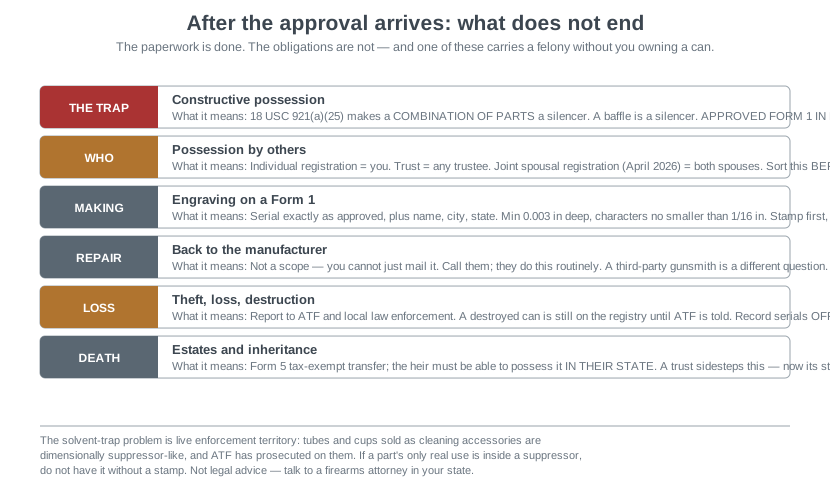
The approval arrives, you collect the suppressor, and the paperwork is done. The obligations are not. This volume is everything that comes after, including the one doctrine that turns an innocent parts bin into a federal felony.
Still not legal advice. Volume 1’s disclaimer applies to every line of this.
8.1 Engraving
Buying one (Form 4): the manufacturer engraved it. Your only job is to check that the manufacturer, model and serial number on the can match the approved stamp (Volume 4 §4.6). A mismatch is a paperwork problem, and you want to find it on day one.
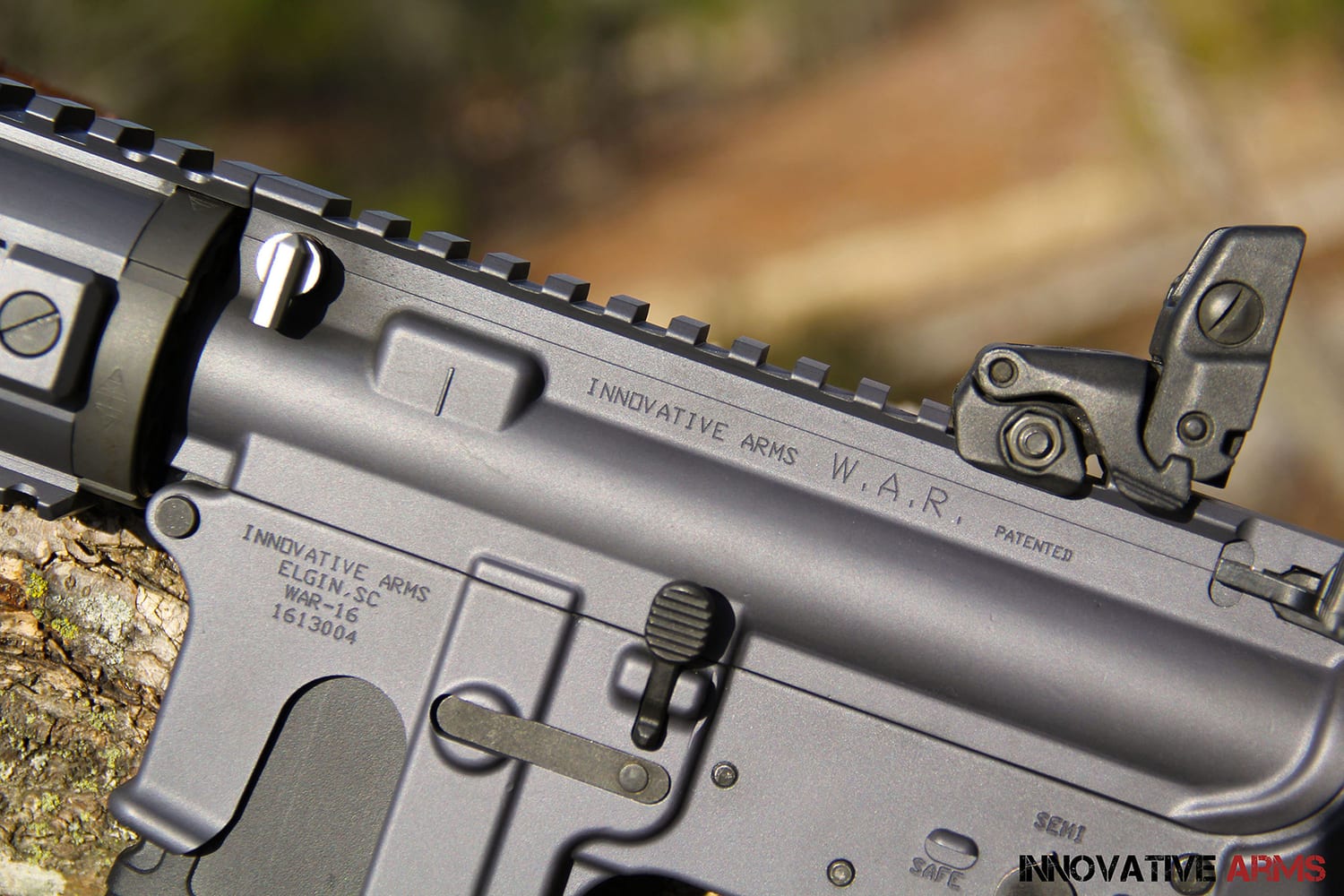
Making one (Form 1): you are the manufacturer, and the engraving is your responsibility.
Requirements as generally described:1
- Serial number — you choose it, you declare it on the Form 1, and it must be engraved exactly as approved on the stamp.
- Your name (or the entity’s), city, and state.
- Minimum depth 0.003 in; serial number characters no smaller than 1/16 in.
- Engraved on the tube, in a location that will not be obliterated in use.
The sequence matters and people get it backwards. File the Form 1, wait for approval, then build and engrave to match the approved stamp. Not the other way round.
A note on the April 2026 package: reporting indicates that converting an existing rifle to an SBR on a Form 1 would no longer require engraving a new serial number.2 That is an SBR provision. A suppressor made on a Form 1 still requires engraving. Do not read one across to the other.
And the obvious one: with a 100 W laser and a full shop, doing this well is trivially within reach. Doing it before the stamp arrives is not a shortcut; it is manufacturing an unregistered silencer.
8.2 Who May Possess It
The rule that catches people at the range.
Individual registration: legally, the item is registered to you. The generally accepted framing is that another person may fire it in your presence and under your direct supervision and control — handing it to a friend and walking away is where it stops being that. What you absolutely may not do is leave it with someone, lend it out, or let someone else keep it.
Trust registration: every named trustee may possess it independently, without you present. This is what trusts were always mainly for.
Joint spousal registration: new in the April 2026 package (Volume 3 §3.4) — married couples may jointly register on a Form 4, which addresses the most common case directly.2
The practical consequence: if more than one adult in your household will ever handle the suppressor without you standing there, sort out the registration structure before you file, not after. Changing it later means a new transfer.
8.3 Constructive Possession — The Trap
This is the most serious thing in the volume, and it is the one that catches otherwise careful people, because it does not require you to possess a suppressor at all.
The statutory basis. 18 U.S.C. § 921(a)(25) defines a firearm silencer to include “any combination of parts” designed or intended for use in assembling a silencer, and any part intended only for use in assembling or fabricating one.
What that means: the parts are the thing.
- A baffle is a silencer. An unregistered baffle is an unregistered silencer.
- A set of parts that could be assembled into a silencer, held by someone with the intent to do so, is a silencer — assembled or not, in one box or scattered across a shop.
- Intent matters, and intent is inferred from circumstances: what you bought, what you searched for, what else is on the bench, what you said in a forum post.
Why this matters specifically in a shop like this one. A lathe, a mill, tube stock, drill bits and an interest in suppressors are all entirely lawful. What creates exposure is a set of parts whose only plausible use is a silencer, held without an approved Form 1.
The “solvent trap” problem. Sold as bore-cleaning accessories, these are tubes with cups that are dimensionally suppressor-like. ATF has prosecuted on them, and the addition of a drilled cup — or evidence of intent to drill one — has been treated as making a silencer. This is a live enforcement area and a genuinely bad place to be casual. The safe posture is: if a part’s only real use is inside a suppressor, do not have it without a stamp.
The clean rule: approved Form 1 first, parts second. Not parts first while you wait. The paperwork is the permission to have the parts, not just the permission to assemble them.
8.4 Repairs and Returning It to the Manufacturer
You cannot simply mail a suppressor back like a scope. It is a registered NFA firearm.
The general framework:
- Returns to the original manufacturer for repair are handled under a specific procedure and are the ordinary, workable path. Contact the manufacturer first and follow their instructions — they do this routinely and they know the process.
- A repair that replaces the serialised component is not a repair; it is a new item, and it is a new registration.
- A third-party gunsmith is a different matter entirely from the original manufacturer, and the rules are not the same.
- Do not modify the registered item in ways that change what it is.
The rule of thumb: the manufacturer’s repair department has done this a thousand times and will tell you exactly what to send and how. Ask them. Do not improvise, and do not ask the internet.
This is directly relevant to an out-of-production can (Suppressors by Caliber, Volume 3): find out while the manufacturer is still trading what service they will perform, and get it in writing. Mack Brothers has a public record of continuing to service discontinued models, which is worth confirming for a Lima specifically before it is ever needed.
8.5 Loss, Theft, and Destruction
Theft or loss. Report it. NFA items stolen or lost must be reported to ATF, and to local law enforcement. Reporting promptly is both the legal obligation and the thing that protects you if the item turns up somewhere bad. This is why you record the serial number somewhere other than on the item (Volume 4 §4.6).
Destruction. A suppressor destroyed in a baffle strike or an over-pressure event is still on the registry until ATF is notified properly. There is a procedure. Follow it — do not simply throw the wreckage away and assume the registry sorts itself out.
Damage that is not destruction is a repair question (§8.4).
8.6 Estates and Inheritance
The part everyone postpones.
An NFA item does not simply pass to your heirs. It is registered property with a transfer process, and an executor cannot hand it over informally.
- Transfer to an heir is normally accomplished on a Form 5, which is a tax-exempt transfer for a decedent’s estate — and was tax-exempt even before 2026.
- The heir must be legally able to possess it, both federally and in their state. An heir in New Jersey cannot inherit your suppressor, full stop; the estate will have to sell or transfer it elsewhere.
- A trust largely sidesteps this, because the trust owns the item and the trust survives you. Successor trustees take over without a transfer occurring at all. This is now the strongest remaining argument for a trust, since the April 2026 package addressed the spousal-possession case that used to be the main one.
- An executor who does not know the item exists cannot handle it correctly. Write down what you own, where the stamps are, and who to call.
8.7 The Ongoing Checklist
Keep, permanently:
- The approved stamp — original secured, copy with the item
- Serial numbers recorded separately from the items
- Trust documents, if any, and a current schedule of assets
- A written note for your executor: what exists, where the paperwork is, who to contact
Verify, before doing the thing:
- Before letting anyone else handle it — is the registration structure right?
- Before travelling — every state on the route (Volume 7)
- Before buying parts — is the approved Form 1 in hand?
- Before sending it anywhere — has the manufacturer been called?
Report, promptly:
- Theft or loss, to ATF and local law enforcement
- Destruction, to ATF
- Change of address, per current ATF requirements for NFA registrants
8.8 The Five Sentences That Matter
- Approved Form 1 in hand before any parts exist. Constructive possession is the one that turns a hobby into a felony.
- Only the registered possessor may possess it — unless a trust or joint registration says otherwise.
- Repairs go back to the manufacturer, by their procedure, not by parcel post on a whim.
- Report theft, loss and destruction. The registry does not update itself.
- Write down what you own and where the stamps are, for the person who will have to sort it out.
8.9 Bibliography
Footnotes
-
NFA engraving requirements — serial number as declared and approved, plus maker’s name, city and state; minimum 0.003 in depth; serial characters no smaller than 1/16 in. Silencer Central, “Every NFA Engraving Requirement You Need to Know About.” https://www.silencercentral.com/blog/every-nfa-engraving-requirement-you-need-to-know-about/ ; Capitol Armory, “NFA Laser Engraving — Form 1.” https://www.capitolarmory.com/sbr-sbs-nfa-firearm-laser-engraving-form1.html ↩
-
DOJ / ATF 34 rule revisions announced 2026-04-29 — joint spousal registration; reduced trust fingerprint requirements; reported removal of new-serial engraving for Form 1 SBR conversions (an SBR provision, not a suppressor one). Silencer Shop, “ATF Rule Changes 2026.” https://www.silencershop.com/blog/atf-rule-changes-2026 ; SilencerCo, “ATF Announces 34 Rule Revisions.” https://silencerco.com/blog/atf-announces-34-rule-revisions-what-they-mean-for-suppressor-ownership ↩ ↩2
Comments (0)