Suppressor Law · Volume 2
History — Maxim, 1934, and the $200 That Never Moved
To understand why suppressors are regulated the way they are, you have to accept an uncomfortable fact: the regulation was not a response to a problem. There is no body of 1930s silencer crime that the National Firearms Act was answering. What there was, was a legal theory about what Congress could do, a political moment, and a list.
2.1 Maxim’s Invention
Hiram Percy Maxim — son of Hiram Stevens Maxim of the machine gun, and himself a founder of what became the American Radio Relay League — filed a patent for an “improvement in Silent Firearms” in June 1908. It was granted in March 1909.1
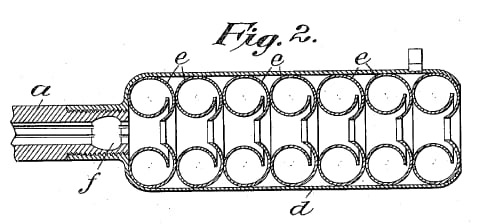
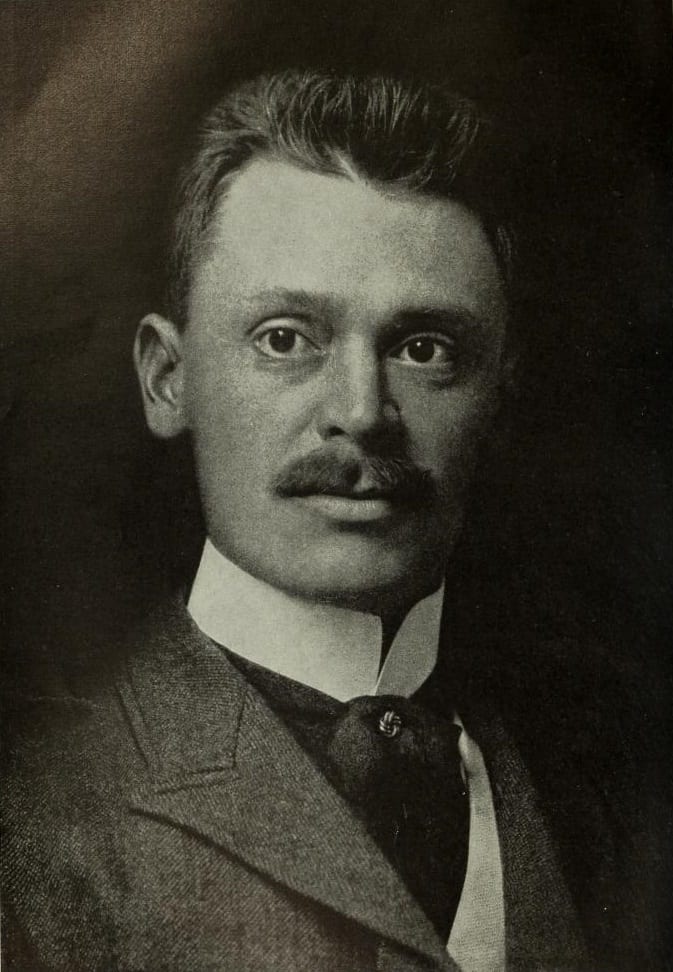
The design used curved vanes to create small vortices that captured and slowed the muzzle gas — recognisably the same idea as a modern baffle stack, arrived at from first principles. He formed the Maxim Silent Firearms Company in 1908, later incorporated as the Maxim Silencer Company.
Two things about the early period are worth knowing because they are so unlike the present:
They were sold openly, by mail, to anyone. Hardware stores, sporting goods catalogues, mail order. No form, no tax, no background check, no waiting.
They were marketed as a courtesy and a health product. Maxim’s advertising pitched the silencer to sportsmen on exactly the grounds the Hearing Protection Act pitches it today: protect your hearing, do not disturb your neighbours, be a considerate shooter.2 The argument has not changed in 118 years. Only its legal standing has.
Britain and much of Europe reached the same conclusion and never changed course. In New Zealand a suppressor is a hardware-store item. In Finland and Norway, using one is close to expected etiquette. The American position is the international outlier, and it dates precisely to 1934.
2.2 The National Firearms Act, 1934
The NFA arrived at the end of Prohibition, in an atmosphere shaped by the Thompson submachine gun, the Kansas City Massacre, and a Justice Department looking for federal tools against organised crime.
The constitutional problem Congress faced: in 1934 nobody believed the federal government had a general power to ban or license firearms. There was no accepted Commerce Clause theory that would carry it. What Congress unambiguously did have was the power to tax.
The solution: tax the items out of reach, and require registration as the machinery for collecting the tax. A $200 transfer tax, plus registration, plus approval before transfer.
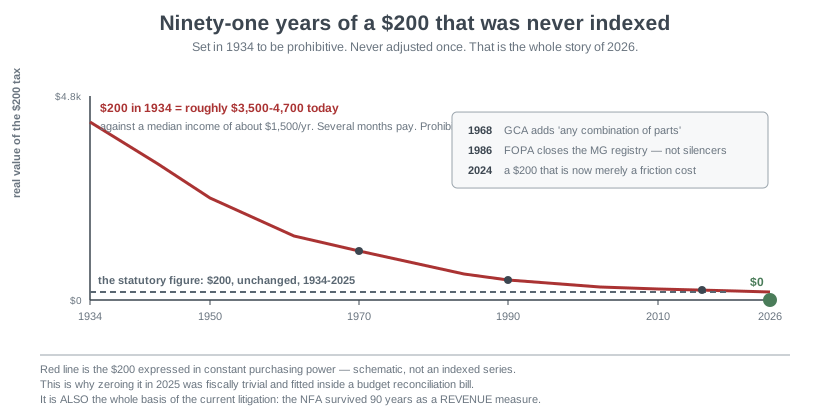
$200 in 1934 was prohibitive by design. Depending on which index you use, it is on the order of $3,500 to $4,700 in today’s money — against a median annual income of roughly $1,500. It was several months’ pay to buy a tube of metal. That was the point: a tax high enough to function as a ban, imposed under a power nobody disputed.
And silencers were on the list. Alongside machine guns, short-barreled rifles and shotguns, and a category that became “any other weapons.”
Why? The honest answer is that the historical record does not clearly support the popular explanation. The usual telling is Prohibition-era gangsterism, but contemporary sources note there is no significant documented body of crime committed with silencers from the period.3 Some accounts point to Depression-era poaching concerns; others to the simple fact that the bill was assembled as a list of “gangster weapons” and the silencer fitted the cultural image. What is certain is the fact of inclusion. The motive should be treated as contested, and this dive does not adjudicate it.
The effect was immediate and total. The commercial silencer business ended. Development stopped for decades. A technology that in 1930 was an ordinary sporting accessory became, by 1935, a curiosity that essentially nobody owned.
2.3 1968 and 1986
The Gun Control Act of 1968 brought silencers under a second regulatory regime. It defined “firearm silencer” and “firearm muffler” broadly — critically including combinations of parts designed or intended for the purpose, and any part intended only for use in assembling or fabricating one.4 This is the source of the constructive-possession doctrine in Volume 8, and it is why an unregistered baffle is legally a silencer.
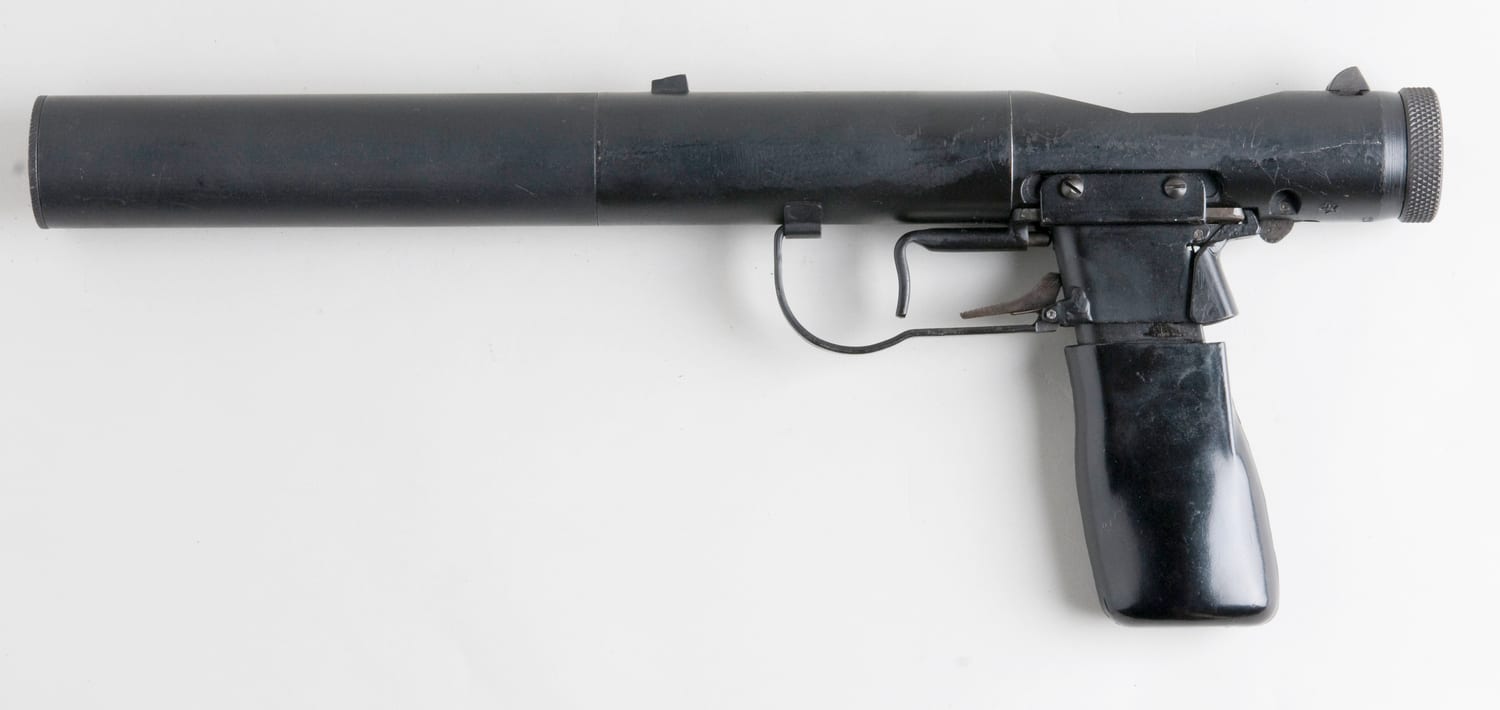
The GCA also imposed the interstate transfer structure: transfers go through licensed dealers, and a private individual generally cannot transfer an NFA item across state lines directly.
The Firearm Owners’ Protection Act of 1986 is remembered for closing the machine gun registry, which is why machine guns cost what they do. It did not do that to silencers. New silencers have been manufacturable and transferable continuously ever since — which is why a suppressor is a $500 item and a transferable machine gun is a $30,000 one, despite both sitting on the same NFA list.
2.4 The Tax That Never Moved
Here is the fact that explains 2026.
The $200 was set in 1934 and never adjusted. Not once, in ninety-one years. Every other figure in American public life was indexed, revised or inflated away; this one sat there.
The consequence is that its function inverted completely:
Table 1 — The consequence is that its function inverted completely
| Year | $200 in context |
|---|---|
| 1934 | ~$3,500–4,700 today. Several months’ median income. Prohibitive |
| 1970 | Roughly a month’s rent. Serious |
| 2000 | An annoyance |
| 2024 | About a third of the price of a mid-range suppressor. A friction cost |
By the 2010s the $200 was no longer a barrier to ownership. It was an administrative fee attached to a background check, and suppressor ownership had grown into the hundreds of thousands of units — because the thing that was actually deterring people was the wait, not the tax.
And that is why zeroing it in 2025 was fiscally trivial and politically achievable. The revenue had become negligible, so removing it fit inside a budget reconciliation bill — which is exactly how it happened, as a provision of the One Big Beautiful Bill Act rather than as standalone firearms legislation.
It is also the whole basis of the current litigation. The NFA survived ninety years of constitutional challenge as a revenue measure. Set the revenue to zero, and the plaintiffs in Volume 5 argue that what is left is a registration scheme with nothing holding it up. Whether that argument wins is unresolved. That it is now available is a direct consequence of a number that sat unchanged for ninety-one years and then went to nothing.
2.5 The Modern Rehabilitation
The gap between 1934 and now was filled slowly, by three forces:
Hunting. State after state legalised suppressor use for hunting through the 2000s and 2010s, on noise-and-hearing grounds. More than 40 states now permit it.5 Michigan’s authorisation dates to the mid-2010s. This normalised the object in the place it is most visible.
Hearing conservation. The public-health argument — that virtually every unsuppressed firearm exceeds the impulse threshold at which hearing damage accumulates, and that a suppressor is straightforwardly protective equipment — became the mainstream framing. It is the framing the Hearing Protection Act is named after (Volume 6).
Technology and price. Modern manufacturing made suppressors light, durable and affordable. The additive-manufacturing wave of the 2020s took the price floor down to $199 in 2026 (Suppressors by Caliber, Volume 1).
By the time the tax went to zero, the cultural argument had already been won in most of the country. The eight states that still prohibit civilian ownership (Volume 7) are the residue of the 1934 framing, not a live national consensus.
2.6 Bibliography
Footnotes
-
Hiram Percy Maxim, “improvement in Silent Firearms,” filed June 1908, granted March 1909; Maxim Silent Firearms Company formed 1908. Athlon Outdoors, “Hiram Percy Maxim: Inventor of the Maxim Silencer.” https://athlonoutdoors.com/article/hiram-percy-maxim/ ; SilencerCo, “Evolution of Suppressor Technology: Maxim to Current.” https://silencerco.com/blog/evolution-of-suppressor-technology-maxim-to-current ↩
-
Maxim silencer marketing to sportsmen on hearing-protection and noise-nuisance grounds. NRA Blog, “Suppressors: The History.” https://www.nrablog.com/articles/2016/10/history-of-suppressors/ ↩
-
National Firearms Act 1934; $200 transfer tax; sources note the absence of a significant documented body of silencer crime supporting the Prohibition-era rationale. Small Arms Review, “Silencers, the U.S. Army and the NFA: The Early History of Suppressors.” https://smallarmsreview.com/silencers-the-u-s-army-and-the-nfa-the-early-history-of-suppressors/ ; The Armory Life, “History of the Sound Suppressor.” https://www.thearmorylife.com/history-of-the-sound-suppressor/ ↩
-
18 U.S.C. § 921(a)(25), definition of “firearm silencer” / “firearm muffler,” including combinations of parts and parts intended only for assembling or fabricating a silencer. ↩
-
More than 40 states permit hunting with a suppressor as of 2026; see Volume 7. ↩
Comments (0)