Suppressor Law · Volume 1
Overview — What a Silencer Legally Is, and What Changed
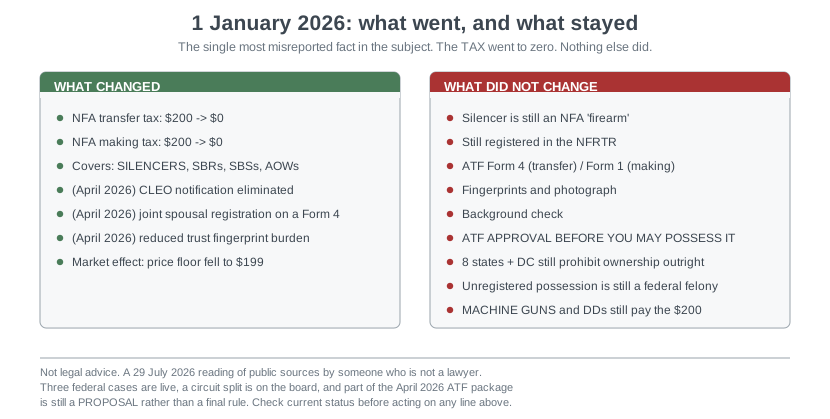
This is not legal advice. It is a reading of public sources on 29 July 2026 by someone who is not a lawyer, written for a personal reference project. Suppressor law is moving faster right now than at any point since 1934 — three federal cases are live, a circuit split is on the board, a thirty-four-item ATF rulemaking package landed in April, and two bills are pending in Congress. Anything here could be out of date by the time you read it. For anything that matters, talk to an attorney who practises firearms law in your state.
1.1 The One-Paragraph Summary
A silencer is a federally registered NFA item. To get one you file a form with ATF, submit fingerprints and a photograph, pass a background check, and wait for approval before you may take possession. That has been true since 1934 and it is still true today.
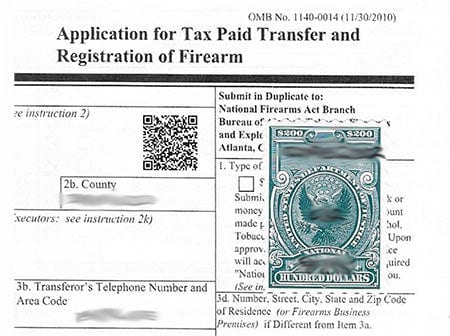
What changed on 1 January 2026 is the money. The One Big Beautiful Bill Act, signed 4 July 2025, set the NFA making and transfer tax to $0 for silencers, short-barreled rifles, short-barreled shotguns and any other weapons.1 The $200 that had stood unchanged since 1934 is gone.
The registration scheme is not gone. This is the single most widely misreported fact in the subject, and it is worth stating flatly because people are getting it wrong in both directions: the tax went to zero; the paperwork, the background check, the approval and the wait all remain.
1.2 Why “Silencer” and Not “Suppressor”
The statute says silencer. So does the Form 4. So did Hiram Maxim’s company.

26 U.S.C. § 5845(a)(7) includes “any silencer” in the definition of a “firearm” for NFA purposes, and 18 U.S.C. § 921(a)(25) defines a “firearm silencer” or “firearm muffler” as any device for silencing, muffling or diminishing the report of a portable firearm — including any combination of parts designed or intended for that purpose, and any part intended only for use in assembling or fabricating one.
That last clause matters and is covered in Volume 8. A baffle is a silencer. A tube is a silencer. A replacement wipe is a silencer. The law does not only regulate the finished object; it regulates the parts.
“Suppressor” is the industry’s later and more accurate word, since the devices do not silence anything. This dive uses silencer when the law is speaking and suppressor otherwise, and neither is a wrong word.
1.3 The Four Layers
Every question about suppressor legality has to be asked at four levels, and the answer at one level does not determine the answer at another:
Table 1 — Every question about suppressor legality has to be asked at four levels, and the answer at one level does not determine the answer at another
| Layer | What it decides |
|---|---|
| Federal — NFA | Whether you may possess one at all, and the process to get there |
| Federal — GCA | How it is transferred, by whom, across state lines |
| State | Whether your state permits civilian possession at all — 8 states plus DC do not |
| Local / use | Hunting regulations, range rules, discharge ordinances |
A suppressor that is perfectly legal federally is a felony in New Jersey. A suppressor that is legal to own in Connecticut may not be legal to hunt with there. State law is the layer that actually catches people, and it is Volume 7.
1.4 What This Dive Covers
Volume 2 is the history — Maxim’s 1909 patent, the 1934 National Firearms Act, why silencers were swept into it, and the $200 that was never adjusted for inflation in ninety-one years.
Volume 3 is the 1 January 2026 change in detail: exactly what the One Big Beautiful Bill Act did, what it did not do, who it did not cover, and the April 2026 ATF rulemaking package that followed it.
Volume 4 is the process as it exists today: dealer, kiosk, trust or individual, Form 4 versus Form 1, fingerprints, wait times, and what happens on approval.
Volume 5 is the litigation, which is the most volatile part of the whole subject. Peterson — all three versions of it — Comeaux, the Ninth Circuit split, and the three coordinated suits arguing that with the tax at zero the registry has lost its constitutional footing.
Volume 6 is the legislation: the Hearing Protection Act, the SHUSH Act, and what each would actually do.
Volume 7 is state law, including Michigan specifically, plus travel and hunting.
Volume 8 is living with it: engraving, trusts and estates, loaning, repair returns, loss and theft, and the constructive-possession trap.
1.5 The Five Things Most Often Got Wrong
“The tax stamp went away, so suppressors are unregulated now.” No. The tax went to $0. The registration, Form 4, fingerprints, background check and approval requirement are all intact. You still cannot take possession until ATF approves.
“The Fifth Circuit ruled suppressors aren’t protected by the Second Amendment.” That opinion was withdrawn on 17 June 2025.2 Anyone still citing it is citing a vacated opinion. What the Fifth Circuit later held is more interesting and is Volume 5.
“Machine guns got the zero tax too.” No. The Act covered silencers, SBRs, SBSs and AOWs only. Machine guns and destructive devices still carry the $200.1
“A trust is required.” Increasingly, no. Trusts solved specific problems — letting a spouse possess the item, estate handling, multiple users. The April 2026 ATF package proposes joint spousal registration on a Form 4, which removes the most common single reason people formed one.3 Trusts still do useful things; they are no longer close to mandatory.
“The chief law enforcement officer has to be notified.” Under the April 2026 package, the CLEO notification requirement is eliminated — the form goes directly to ATF.3
1.6 The Honest Framing
The suppressor’s legal position in 2026 is genuinely unusual, and it is worth understanding why everything is moving at once.
The National Firearms Act was written in 1934 as a tax measure. Congress in 1934 did not believe it could ban these items outright, so it taxed them at a rate meant to be prohibitive and required registration as the machinery for collecting the tax. That framing is what carried the NFA through its constitutional challenges for ninety years: it is a revenue statute, and Congress may tax.
In 2026 Congress set that tax to zero for silencers. The registration requirement remains, but the revenue purpose it was built to serve no longer exists for these items. Whether a registration scheme survives the removal of the tax it was built to administer is now an actual live question in three federal district courts, and the government’s answer — that the Commerce Clause supports it independently — is the argument the courts are being asked to evaluate.4
That is the story. It is not a prediction: none of those cases has produced a merits ruling, and a circuit split on a separate question is unresolved. But it explains why so much is happening at once, and why this dive will need revising.
1.7 Bibliography
Footnotes
-
One Big Beautiful Bill Act (H.R. 1), signed 2025-07-04; NFA making and transfer tax set to $0 for silencers, SBRs, SBSs and AOWs effective 2026-01-01; machine guns and destructive devices excluded. NSSF, “Now That the Dust Has Settled on The One, Big, Beautiful Bill.” https://www.nssf.org/articles/now-that-the-dust-has-settled-on-the-one-big-beautiful-bill/ ; Orchid Advisors, “2026 NFA Tax Stamp Changes.” https://orchidadvisors.com/2026-nfa-tax-stamp-changes/ ↩ ↩2
-
United States v. Peterson, No. 24-30043 (5th Cir.) — panel opinion of 2025-02-06 withdrawn 2025-06-17. Firearms Policy Coalition, “Fifth Circuit Withdraws Flawed Suppressor Decision.” https://www.firearmspolicy.org/fifth-circuit-withdraws-flawed-suppressor-decision-in-fpc-backed-challenge-to-nfa ; NRA-ILA, 2025-06-23. https://www.nraila.org/articles/20250623/us-court-of-appeals-backtracks-on-adverse-suppressor-ruling ↩
-
DOJ / ATF package of 34 final and proposed rule revisions, announced 2026-04-29. SilencerCo, “ATF Announces 34 Rule Revisions: What They Mean for Suppressor Ownership.” https://silencerco.com/blog/atf-announces-34-rule-revisions-what-they-mean-for-suppressor-ownership ; Silencer Shop, “ATF Rule Changes 2026.” https://www.silencershop.com/blog/atf-rule-changes-2026 ↩ ↩2
-
Roberts v. ATF, Brown v. ATF, Jensen v. ATF (consolidated with Silencer Shop Foundation v. ATF) — see Volume 5. ↩
Comments (0)