M40A1 — the Marine Sniper Rifle, and a Clone · Volume 7
Building a Clone — Donor, Action, Barrel, Stock, Bottom Metal and Rail
Replica or clone, the two build paths, and what a shop with a lathe, a mill and a CNC router can do that a parts order cannot
An M40 clone is a Remington 700 short action with the Marine Corps’s choices applied to it. Which choices — the A1’s or the A3’s, the originals’ or modern equivalents — is the first decision, and it decides most of the others. This volume sets out the pattern a builder is working to, the donor question, and then the work itself in the order a gunsmith would do it: the action, the barrel, the bedding and stock, the bottom metal, and the scope base. For each step it gives the from-parts path (buy the part, fit it) and the from-scratch path (make or finish it in the shop), because a shop with a lathe, a mill and a CNC router can do nearly all of it.
It does not restate headspace, chambering, or ring and rail theory. Those belong to the Headspace dive and the Types of Scopes dive, and are linked where they apply. Loading for the finished rifle belongs to The Reloading Bench.
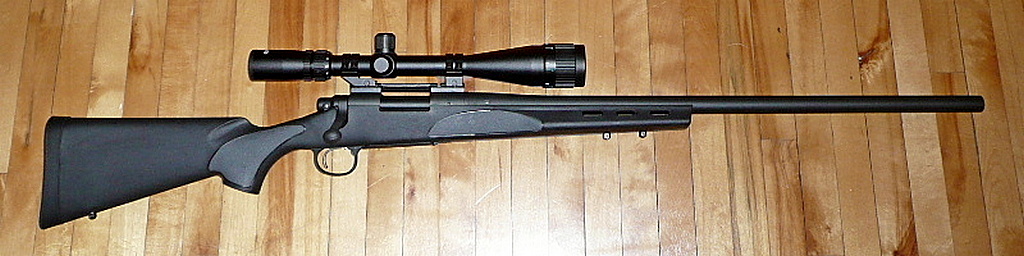
7.1 First Decide: Replica or Clone
McMillan, which made the A1’s stocks, draws the line in its own words (Volume 2): a replica is built “as close to the original M40a1 as is possible”, and will likely be “shot for accuracy one or twice and then reside in the display case”; a clone is built “to the basic specs as the M40a1” to be used like any other rifle, and “when challenged with some of the more difficult choices you should opt for ‘easy’”.1
The distinction is practical, not snobbish, because several A1 features are irreversible or inconvenient:
Table 1 — The distinction is practical, not snobbish, because several A1 features are irreversible or inconvenient
| A1 feature | Replica | Clone | Why it matters |
|---|---|---|---|
| Recoil lug welded to the receiver2 | yes | a surface-ground loose lug, or a pinned lug | A welded lug cannot be removed for a barrel change or re-ground |
| Magazine box welded to the receiver23 | yes | no | Irreversible; rules out most modern bottom metal |
| Stripper-clip slot in the receiver bridge3 | yes | optional | A cut in the receiver; harmless, but permanent |
| ”U.S.” marking above the serial3 | McMillan’s replica has it | no | A marking claim on a rifle the government never owned |
| Winchester Model 70-pattern steel floorplate guard4 | yes | modern steel or aluminium bottom metal | Detachable magazines are an A3/A5 feature |
| McMillan HTG, smooth, moulded camouflage3 | yes | HTG, or an A-4 | The A-4 is the A3/A5 stock (Volume 3) |
| 24-in stainless, 1:12, six grooves, recessed crown, bare muzzle53 | yes | often threaded | A threaded muzzle is an A5 feature |
| Unertl 10× on a one-piece base, no rail53 | yes | a variable scope on a canted rail | A rail is an A3 feature; a 20 MOA rail is no M40’s |
A clone that uses A3-pattern parts is still a clone. What it should not be called, without qualification, is a replica of either.
7.2 The Donor
Any Remington 700 short action will do; every M40 used one (Volume 4). The questions a builder asks of a donor are the same ones the Marine Corps’s repairmen would have asked, plus two that are specific to the 700’s history.
- Short action, .308 bolt face. The standard 7.62×51 bolt face. A donor in .223 or another small case needs a bolt or bolt-face change, which is gunsmith work.
- The receiver’s condition. The lug abutments, the threads and the face are all trued in the steps below; a donor with galled abutments or a damaged face costs more to true.
- Its trigger and its date. A 700 made from 1 May 2006 to 9 April 2014 with an X-Mark Pro trigger is in Remington’s recall population, and older rifles carry the Walker connector trigger that was the subject of the 2017 class settlement (Volume 6). The trigger will often be replaced in a clone build anyway, but the question has to be answered for the donor as it stands.
- Its bottom metal and stock. Usually discarded. The factory parts are not what an M40 used.
- Its barrel. Keep or replace — the most consequential donor question, below.
7.2.1 The SPS Varmint as a donor
The SPS Varmint is a popular choice, and the reasons and the traps are specific. From Remington’s own pages:
Table 2 — The SPS Varmint is a popular choice, and the reasons and the traps are specific. From Remington's own pages
| Legacy Remington (listing archived January 2016)6 | RemArms (listing, September 2026)7 | |
|---|---|---|
| .308 order number / SKU | 84218 | R84223 |
| Barrel | 26 in heavy contour, carbon steel, matte blue | 26 in heavy contour, carbon steel, matte black |
| Twist | 1:12 | 1:10, 5R rifling |
| Muzzle | not listed as threaded | ”Threaded Muzzle: … 5/8 x 24 (.308 Win …)” |
| Trigger | ”X-Mark Pro® externally adjustable trigger” | not named |
| Magazine | hinged floorplate, 4 rounds | hinged floorplate, 4 rounds |
| Stock | synthetic, overmoulded grip panels, vented beavertail fore-end | black synthetic, vented beavertail fore-end |
| Weight | 8½ lb | 8½ lb |
| Price | MSRP $761.00 (January 2016) | not shown on the page |
Three consequences for an M40 builder, all checkable against the rifle in hand:
- A legacy .308 SPS Varmint already has the M40A1’s twist — 1:12, the figure the Corps’s manual gives for the service rifle.5 That is a real reason to keep its barrel for a clone. A RemArms-era rifle does not: 1:10 is not an M40 figure.
- A RemArms-era .308 SPS Varmint is factory-threaded 5/8×24. A clone built on one has a threaded muzzle from the start; a clone built on a legacy rifle has one only if someone cut it.
- The factory barrel is carbon steel and 26 in. The A1’s was stainless and 24 in. Keeping the factory barrel means a clone that differs in length, material and finish; cutting it to 24 in and recrowning is a gunsmith’s afternoon, and it removes any factory thread along with the two inches.
Which of the two a given rifle is, is decided by its date of manufacture, which is recorded on the rifle’s paperwork, not by anything visible on the stock.
7.3 The Action — Truing and Lug Lapping
The M40A1’s action work, as McMillan describes it for a replica built after interviewing Quantico’s armorers: “a blue-printed Remington 700 short action that includes surface ground recoil lug; trued receiver face, threads, receiver lug shoulders and bolt head, and finally lapped bolt lugs.”3 That list is the job. What follows is the shop sequence it implies; no Marine Corps procedure document was located, so the order is the conventional one and the tolerances are left to the builder’s own standards rather than invented.
The datum. Everything is trued to the axis of the bolt raceway, not to the receiver’s outside, because the bolt’s axis is the axis the cartridge fires on. The receiver is held on a mandrel or fixture that locates in the raceway, or held in the lathe and indicated on the raceway at both ends.
1 — The lug abutments. The rear faces of the two lug recesses are cut square to the raceway axis, so that both lugs bear. This is done with a cutter working from inside the ring.
2 — The threads. The receiver’s internal barrel threads are single-pointed true to the axis, typically opening them slightly; the barrel’s tenon is then cut to the trued thread rather than to a nominal size.
3 — The receiver face. The front face, against which the recoil lug and barrel shoulder bear, is faced square.
4 — The bolt face and bolt nose. The bolt is held on its own axis and the face trued square, with the rim of the recess faced to match. Material removed from the face and abutments changes headspace — which is one reason truing and barrel fitting are one job, not two.
5 — Lapping the lugs. With the action in a fixture and a lapping compound on the rear of the bolt lugs, the bolt is worked under rearward load until both lugs show contact across their bearing faces. Lapping is the last step because it corrects what remains after the machining.
6 — The recoil lug. Surface-ground flat and parallel on both faces (the replica’s specification), or replaced with a thicker precision lug — or, for a replica, welded to the receiver as the A1’s was. A welded lug is the M40A1 pattern; it is also a decision that cannot be undone.2
7 — Optional A1 details. The stripper-clip slot and the “ejection port modification” McMillan mentions are milling operations on the bridge and port.3 Neither is dimensioned in any source consulted; a builder working to them needs an original or a verified drawing to copy.
Headspace on the finished action and barrel is set, measured and recorded as the Headspace dive sets out — its bolt-face volume covers exactly the chain these steps disturb: lug abutments, lugs, bolt face, barrel tenon and chamber shoulder.
From parts instead. The alternative to truing a factory receiver is to buy a trued one — “blueprinted” 700 actions are commonly offered by gunsmiths — or to buy a custom 700-footprint action. The latter is no longer a Remington, and a builder chasing the pattern should notice that the Corps never used anything but a Remington receiver.8
7.4 The Barrel
The A1 pattern: 24 in, stainless, 1:12 right hand, six lands and grooves, heavy contour, deep recessed crown, bare muzzle; Atkinson-made in the service rifles, finished in black oxide over bead-blasting.523 The contour is quoted in clone circles as a straight taper to about .940 in at the muzzle; no primary source for that dimension was found, and McMillan says only “M40A1 spec barrel contour”.3
The A3 pattern: 24 in, 1:12, five lands and grooves per the Corps’s own armory page — or Schneider, 25 in, six grooves per Jane’s (Volume 3).9
From parts. A pre-fit barrel for the Remington 700 short action — chambered, crowned, threaded for the action — is the common route, and M40-profile pre-fits are offered by clone-parts suppliers (the Suppressors by Caliber dive cites one); none was evaluated here. Whether a pre-fit headspaces correctly on a trued action depends on how much was taken off the face and abutments; the Headspace dive’s section on pre-fit barrels covers the check.
From scratch. A shop with a lathe can do the whole job from a stainless blank:
- Turn the contour between centres, with the bore on the centres so the outside is concentric to the rifling.
- Thread the tenon to the trued receiver’s threads, with the shoulder located so that the barrel, with the recoil lug in place, headspaces to the chamber reamer’s depth.
- Chamber with a reamer for 7.62×51 / .308, the barrel indicated on the bore at both ends of the headstock, and headspace set with gauges (Headspace).
- Crown with the recess the pattern calls for. The Corps’s reason for the recess was protection: “That’s why that barrel has a recess cut into it—so the crown is less prone to getting hit.”10
- Finish: bead blast and black oxide, for an A1; A3 barrels are described as “blackened stainless”.2
Twist and ammunition. 1:12 was chosen for M118’s 173-grain bullet and carried over to M118LR’s 175-grain.59 A clone built to shoot 175-grain match ammunition, as the rifle in Volume 8 is, is inside the load the pattern was designed for. Heavier bullets and subsonic loads are not, and the Suppressors by Caliber dive explains why a 1:12 .308 is a supersonic-only rifle behind a can.
Threading. A bare muzzle is the A1 and A3 pattern; a thread is the A5’s (Volume 3). If a clone is threaded — the reasons for and against are argued in the Suppressors dive — the thread must be cut concentric to the bore, not the barrel’s outside, or the can will sit off the bullet’s axis; How Suppressors Work covers the check.
7.5 Bedding
The pattern. The A1: “each stock is epoxy bedded for accuracy” — and, per McMillan’s replica built on Quantico’s procedures, “The action is hand bedded along with the 1 1/2” of barrel cylinder forward of the recoil lug. The remainder of the barrel is free-floated.”43 The A3: a McMillan A-4, aluminium pillars and glass bedding, barrel floated, per the reference summary.11
The A1’s 1½ in of bedded barrel shank is worth noticing. It supports the barrel’s heaviest section just ahead of the recoil lug, where a heavy barrel’s weight tries to lever the action in the stock; it is not the modern default of bedding the action alone and floating the whole barrel. A builder can reasonably do either. A replica should do the former.
The work. On a fibreglass stock, the sequence is the ordinary one: relieve the inlet for a bedding layer; install pillars at the guard-screw holes so the screws clamp metal to metal rather than compressing the stock; release-agent the barrelled action, its screws and the bottom metal; fill the recoil-lug seat and action area (and, for an A1 replica, the first 1½ in of barrel channel) with bedding compound; clamp with the guard screws just snug, not torqued, so the action is not bent into the bedding; clean the squeeze-out; let it cure fully before separating. The recoil lug’s front face should bear; its sides and bottom should have clearance, or the lug becomes a wedge. McMillan sells machined-in pillars pre-installed as an option on its stocks, listed at $28.00 on its HTG options page (as archived in 2020).12
Torque, afterwards. The A1’s guard screws went to 65 inch-pounds, and the Corps forbade the sniper to touch them.5 For any other stock and bottom metal, the stockmaker’s and bottom-metal maker’s figures apply (Volume 5).
7.6 The Stock
A1: the McMillan HTG. McMillan still has “a couple of the original molds so we can make stocks just like the Marines used”, smooth and untextured; it will not reproduce the early “smear” camouflage. For a replica it recommends steel inserts and Wichita swivels and the original Pachmayr pad; for a clone, ordinary studs.1
A3/A5: the McMillan A-4. Two service patterns (“Mod 1”, with the deep hook further back, of which “about 100-150” were made, and “Mod 2”), and McMillan’s own recommendation to shooters to buy the current A-4, whose cheekpiece “is much better” than the two-screw Marine one that “will continually come loose”.1
Neither. Modern chassis and stocks — the Marine Corps itself went to a folding chassis on the A6 (Volume 3). A chassis is a different rifle in the hand and outside either pattern.
7.6.1 Inletting a stock for detachable-magazine bottom metal
Fitting detachable-magazine bottom metal to a stock inletted for a floorplate — the job pending on the rifle in Volume 8 — is the stock work most likely to go wrong, because it removes material from the part of the stock that carries the action screws and the magazine well.
From parts. McMillan and the other stockmakers inlet for named bottom metal at the factory; ordering a stock pre-inletted for the specific bottom metal is the lowest-risk route. A stock already in hand goes back to its maker or to a stock-fitter for the same work.
From scratch, on a CNC router or mill. The job is well suited to a shop with CNC equipment, with three requirements that no program can supply by itself:
- The bottom-metal maker’s inletting drawing — outline, depths, screw locations — or a precise measurement of the part in hand. The inlet is cut to the part, not to a generic 700 footprint.
- A fixture that references the action’s axis, not the stock’s outside. A fibreglass stock’s exterior is a moulding; the inlet’s datum is the action centreline and the guard-screw hole positions established by the existing pillars or bedding.
- A plan for the bedding. Cutting the magazine well usually breaks into the existing bedding around the front guard screw. Leave the final fit to a skim of bedding compound rather than chasing a machined fit in fibreglass.
The work order: fixture and indicate; confirm screw-hole positions against the drawing; rough the magazine well and guard outline leaving a margin; fit the bottom metal and check that the guard screws align without side load and that the bolt stop release, the magazine latch and the trigger all clear; skim-bed the guard and lug area; torque to the maker’s figure; test-feed dummy rounds from the magazine before any live round. The owner of the rifle in Volume 8 records this step as pending, with the inletting party not recorded.
7.7 The Bottom Metal
A1: Winchester Model 70-pattern steel, “modified” and “cut about one inch to fit the Remington 700 action”, with the BDL magazine box welded to the receiver and socket-cap guard screws.4113
A3: D.D. Ross steel floorplate and guard, then, from 2007 according to the reference summary, the Badger Ordnance M5 detachable-magazine guard; A5: Badger detachable magazine throughout.1311
Clone choices. Steel floorplate bottom metal for the A1 look; Badger-pattern or other detachable-magazine bottom metal for the A3/A5 function. The choice decides the magazine the rifle takes, and the magazine decides the maximum cartridge length that will feed — which, for a handloader, is the real upper bound on seating depth (The Reloading Bench).
From scratch. A steel trigger guard and floorplate can be machined on a three-axis mill in several set-ups from bar, and the A1’s Winchester-derived shape is well within a capable shop. It needs an original or a verified drawing to copy — none was consulted for this volume — and, like any part that carries the guard screws, it must be flat where it bears on the stock and the receiver.
7.8 The Scope Base — and Why 20 MOA
What the M40s used. The A1: a one-piece base hand-fitted to the receiver, no rail, no cant; its elevation came from a ballistic cam in the Unertl cut for one load.53 The A3 and A5: an M1913 rail, 30 MOA by Badger’s own name for its USMC replacement rail, with a clip-slot lug and #8-40 screws.14
What a 20 MOA rail does. A canted rail tilts the scope’s axis down toward the muzzle, so the rifle’s 100-yard zero sits low in the scope’s elevation travel and more of that travel is left for dialling up to distance. The theory, and the caution that “20” is a round-number convention rather than an engineered optimum, are in the Types of Scopes dive and are not repeated here.
Choosing between them. The decision is not between patterns but between a scope and a rail. Badger’s figures give the cant exactly: its standard short-action 20 MOA rail is “20 MOA bias (5.81 mils)”; its USMC rail is “30 MOA bias (8.72 mils)”.14 A rail’s cant is useful only if the scope has enough elevation travel to zero with it: too much cant for a given scope and the rifle cannot be zeroed at 100 yards at all. So the rail and the scope are chosen together, and the scope is chosen first. That is not academic for the rifle in Volume 8, whose rail is on hand and whose scope is undecided.
Screws. Badger’s 20 MOA short-action rails are sold for the 700’s factory #6-48 screws (306-06, steel, and 306-06a, aluminium) or for #8-40 (306-06-8, steel); the USMC rail is #8-40 only and marked “Gunsmith required”.14 Opening a receiver to 8-40 is a drill-and-tap job on a fixture; it is also permanent. The factory holes are drilled close to the bolt raceway, and a new screw — or any screw in a new base — must be checked for length so that it does not reach into the bolt’s path (Volume 6).
Rings. Rings fix the tube diameter. A set of 1-in rings takes only 1-in scopes; the Schmidt & Bender of the A3/A5 is a 34 mm tube in Badger’s M40A3 rings (Volume 3). The choice of rings is therefore also, silently, part of the choice of scope.
Mounting and torque of rings and rail, lapping, and levelling the reticle are covered in the Types of Scopes dive.
7.9 A Worked Sequence
Pulled together, the order of work for a clone built on a factory 700 in a shop:
- Decide replica or clone, A1 or A3 parts — and write it down.
- Establish the donor: date of manufacture, trigger, twist, muzzle, bolt face. Run the ten-times bolt test (Volume 5).
- Choose the scope, then the rail and rings to suit it.
- Barrel off. True the action (abutments, threads, face, bolt face); lap the lugs; grind or replace the recoil lug.
- Barrel: keep and re-headspace, cut to length and recrown, or fit new; headspace to gauges and record it.
- Trigger: keep and verify, or replace — and run the manual’s checks with whatever is fitted.
- Bottom metal and stock: inlet as needed; bed (and pillar); torque.
- Rail and rings: fit, check screw lengths, torque.
- Function test: bolt closing test; feeding from the magazine with dummies; safety; ejection.
- Proof of accuracy: the Corps’s acceptance was three five-shot groups at 300 yards to one MOA for the A32 — a useful target for a clone’s first outing.
7.10 What Could Not Be Verified
- The A1 barrel contour as a dimension.
- Dimensions of the stripper-clip slot and the ejection-port modification.
- A Marine Corps procedure for truing or bedding. The steps above follow McMillan’s list of what was done and ordinary gunsmithing practice, not a Marine document.
- Guard-screw torque for the McMillan A-4 or any aftermarket bottom metal.
- Which pre-fit or aftermarket parts best match the pattern. No product is recommended.
7.11 Bibliography
Footnotes
-
McMillan, “M40a1 and M40a3/5 Specific Stocks”, company blog, 10 August 2017. Archived at https://web.archive.org/web/2020id_/https://mcmillanusa.com/m40a1-m40a35-specific-stocks/ (consulted 2026-09-19). ↩ ↩2 ↩3
-
Brian C. Sheetz and Doug Wicklund, “Long-Range Warriors: The USMC M40 Rifles”, American Rifleman, February 2001 — the welded lug and magazine box; the Atkinson barrels; the A3’s acceptance test. https://www.americanrifleman.org/content/long-range-warriors-the-usmc-m40-rifles/ ↩ ↩2 ↩3 ↩4 ↩5 ↩6
-
McMillan, press release, 5 November 2010, “McMillan Announces the Limited Edition of the M40A1 Commemorative Marine Corps Sniper Rifle Package” — the replica’s specification. Archived at https://web.archive.org/web/2015id_/http://mcmillanusa.com/documents/Final%20McMillan%20M40A1%20Release.pdf ↩ ↩2 ↩3 ↩4 ↩5 ↩6 ↩7 ↩8 ↩9 ↩10 ↩11 ↩12 ↩13
-
Headquarters, U.S. Marine Corps, Fact File, “M40A1 Sniper Rifle”, last modified 15 December 1995. Archived at https://web.archive.org/web/20070225004953/http://www.hqmc.usmc.mil/factfile.nsf/7e931335d515626a8525628100676e0c/03ae5c82962bc0f48525627b006d3126?OpenDocument ↩ ↩2 ↩3
-
Headquarters, U.S. Marine Corps, FMFM 1-3B, Sniping, 1981, reissued as MCWP 3-15.3 (2004) — the M40A1’s tabulated data and scope. Internet Archive item
mcwp-3-15.3-sniping-2004. ↩ ↩2 ↩3 ↩4 ↩5 ↩6 ↩7 -
Remington Arms, “Model 700 SPS Varmint”, product page archived 20 January 2016 — specifications table and features. https://web.archive.org/web/20160120193845/http://www.remington.com:80/rifles/bolt-action/model-700/model-700-sps-varmint ↩
-
RemArms, “Model 700 SPS Varmint”, product page consulted 2026-09-19 — features and the .308 row (R84223). https://www.remarms.com/rifles/bolt-action/model-700/model-700-sps-varmint ↩
-
Scott R. Gourley, “Marine Corps Seeks M40A5 Sniper Rifle Support”, Defense Media Network, 21 July 2009 — the “standard Remington Model 700 Short Action receiver”. https://www.defensemedianetwork.com/stories/marine-corps-seeks-m40a5-sniper-rifle-support/ ↩
-
Weapons Training Battalion, Camp Lejeune, “M40A3 Sniper Rifle”, archived 17 September 2008. https://web.archive.org/web/20080917175809/http://www.lejeune.usmc.mil/wtbn/wtbn_mcb_clnc_m40a3_sniper_rifle.htm ↩ ↩2
-
Leatherneck, April 2009, p. 36. Archived at https://web.archive.org/web/20110713194328/http://www.leatherneckmagazine-digital.com/leatherneckmagazine/200904/?pg=36 ↩
-
“M40 rifle”, English Wikipedia, wikitext consulted 2026-09-19 — the Winchester guard “cut about one inch”; the A3’s pillars and bedding; the Badger M5 guard from 2007. ↩ ↩2 ↩3
-
McMillan, “Hunting Options (for HTG)”, options and prices page, archived 2020 — “Pre-Installed Machined-in Pillars $28.00”. https://web.archive.org/web/2020id_/https://www.mcmillanusa.com/hunting-options-for-htg/ ↩
-
United States Marine Corps Scout/Sniper Association, “The M40A3”, archived 22 June 2009. https://web.archive.org/web/20090622131913/http://www.usmcscoutsniper.org/hogsden/the-m40a3.htm ↩
-
Badger Ordnance, Remington scope rails, product pages consulted 2026-09-19 — 306-06 (steel, #6-48, 20 MOA, “20 MOA bias (5.81 mils)”, $165.00); 306-06a (aluminium, 20 MOA, $165.00); 306-06-8 (steel, #8-40, 20 MOA, $165.00); 306-06-A3 (USMC, #8-40, clip slot, “30 MOA bias (8.72 mils)”, “Gunsmith required”, $195.00). https://www.badgerordnance.com/shop/mounts/manufacturer/remington.html ↩ ↩2 ↩3
Comments (0)