MP 40 · Volume 6
Owning One Today in the United States
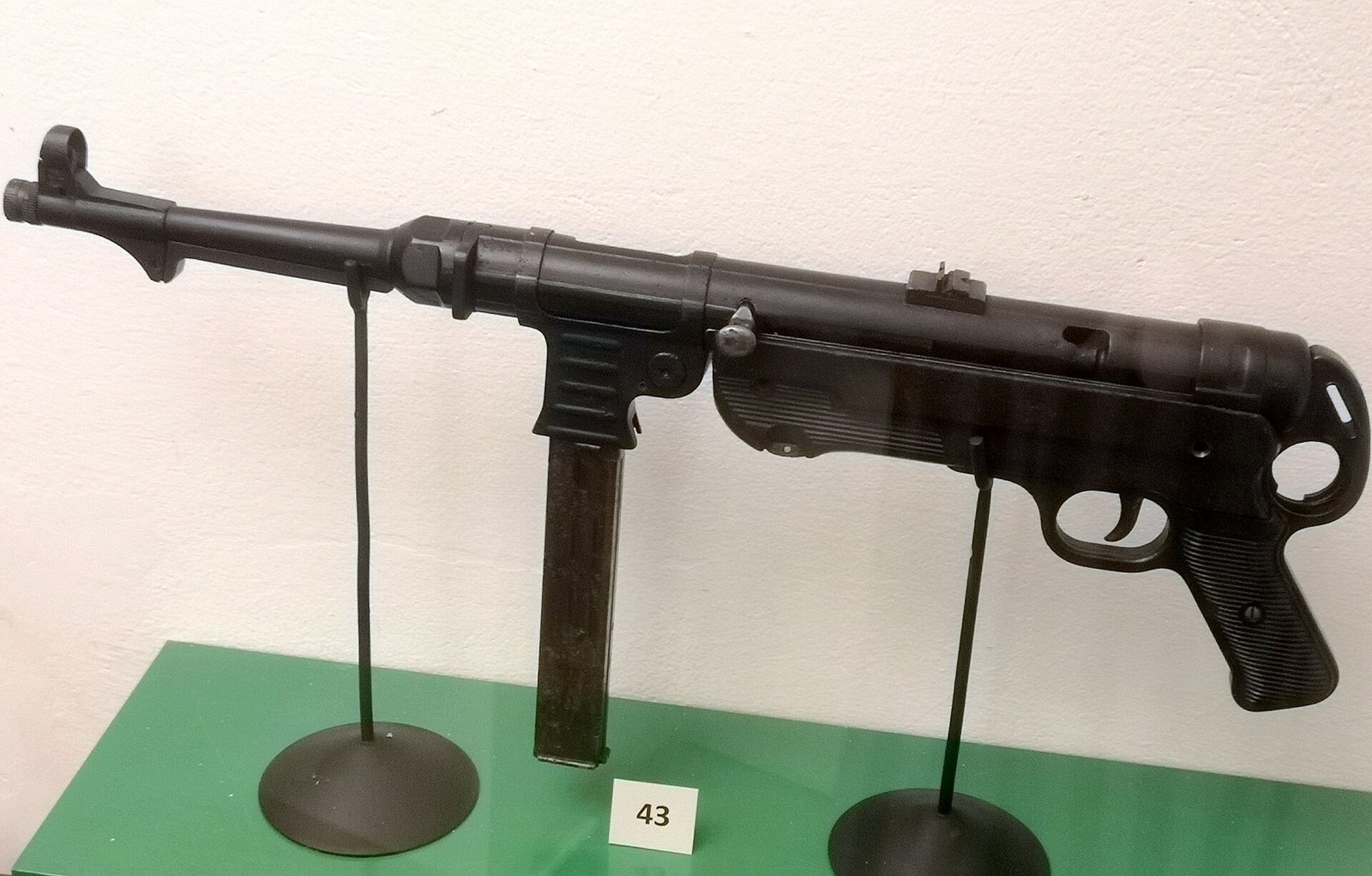
This volume answers one question precisely: what can a private person in the United States lawfully acquire that is an MP 40, or resembles one, and what is each of those things in law?
The answer separates into four categories that are frequently confused with one another: a registered transferable machine gun, a dealer sample, a semi-automatic reproduction, and an inert object. They are not points on a spectrum of cost. They are different legal things, and the differences matter more than the prices.
Nothing here is legal advice. The statutory text is quoted so a reader can take it to someone qualified rather than take this page’s word for it.
6.1 The Arithmetic — and Why It Comes Out Differently Here
This hub’s FN P90 dive turns on an arithmetic argument that produces an empty set. The same arithmetic, applied to the MP 40, produces a real object — and the contrast is the clearest way to explain the rule.
One: the register closed on 19 May 1986. The Firearm Owners Protection Act was signed that day, and its § 922(o) provides:
“(1) Except as provided in paragraph (2), it shall be unlawful for any person to transfer or possess a machinegun. (2) This subsection does not apply with respect to— (A) a transfer to or by, or possession by or under the authority of, the United States or any department or agency thereof or a State, or a department, agency, or political subdivision thereof; or (B) any lawful transfer or lawful possession of a machinegun that was lawfully possessed before the date this subsection takes effect.”1
The provision arrived as the Hughes Amendment — House Amendment 777 to H.R. 4332, which “modified the act to ban the civilian ownership of new machine guns” and passed the House by voice vote on 10 April 1986.2 The effect is that the pool of machine guns a private citizen may acquire was frozen at whatever was lawfully registered on that date, and nothing manufactured afterwards can enter it.
Two: an MP 40 is a machinegun within the statutory definition. Under 26 U.S.C. § 5845(b) a machinegun is “any weapon which shoots, is designed to shoot, or can be readily restored to shoot, automatically more than one shot, without manual reloading, by a single function of the trigger.”3 An MP 40 has one fire mode and it is that one.
Three — and this is where it diverges from the P90 — the MP 40 was built between 1940 and 1944.
A P90 cannot be transferable because it did not exist before 1986. An MP 40 predates the cutoff by more than forty years. Examples were imported and registered in the decades when that was lawful, and those examples remain transferable to this day. A transferable MP 40 is a real, purchasable object. It is not, in the P90’s sense, an impossibility; it is a scarce antique in a closed register.
Scarce is doing considerable work in that sentence. The reference literature records that approximately 175,000 automatic firearms have been registered with ATF, and that the limited supply available to civilians “has caused an enormous increase in their price, with most costing in excess of $10,000.”2 That observation is general to the category and long predates the current market.
What a transferable MP 40 costs today could not be verified in this work. Auction results exist, but no source consulted supplied a figure with an attribution that could be checked, and this dive does not invent price ranges. A buyer should take current realised prices from auction-house archives rather than from any general reference, this one included.
6.2 The Four Categories
6.2.1 Transferable
A machine gun lawfully registered and possessed before 19 May 1986, which may still be transferred between private citizens subject to ATF approval and the transfer tax.1 The pool is closed and shrinks by attrition; a weapon destroyed, or surrendered, or lost to a prohibited-person event, is not replaced.
6.2.2 Pre-1986 dealer sample
A machine gun imported or made before the cutoff and held by a licensee. Depending on how and when it entered the country and was registered, some of these can move to individuals and some cannot. The distinction is documentary rather than mechanical, and it is exactly the sort of thing a buyer must have a dealer confirm from the paperwork rather than infer from the weapon.
6.2.3 Post-1986 dealer sample
A machine gun made after the cutoff, held by a federal firearms licensee with the appropriate Special Occupational Tax status, for the purposes the licence contemplates. It belongs to the licensed business and never becomes available to a private citizen. It does not become transferable through the licensee’s retirement, death or sale.
6.2.4 Everything else
Semi-automatic reproductions, replicas, parts and inert objects — § 6.4 onward.
6.3 The Transfer, and the Tax That Did Not Change
A transfer of a registered machine gun between private parties runs on an ATF Form 4, with approval required before the weapon moves.
The transfer tax on a machine gun is still $200, and this is a point on which recently-written material is frequently wrong. Public Law 119-21, enacted 4 July 2025, amended 26 U.S.C. §§ 5811 and 5821 to reduce the making and transfer tax to $0 for short-barrelled rifles and suppressors — but the $200 rate survives for machineguns and destructive devices.4 Registration, the approval requirement, and the approval-before-transfer sequence are unchanged for every category.
Anyone reading a 2025-or-later article that says “the NFA tax is now zero” should check which item class it is talking about. For this weapon it is not.
6.3.1 What to check on the paperwork
Volume 3’s serial-number finding becomes concrete here, and it is the single most MP 40-specific piece of advice in this volume.
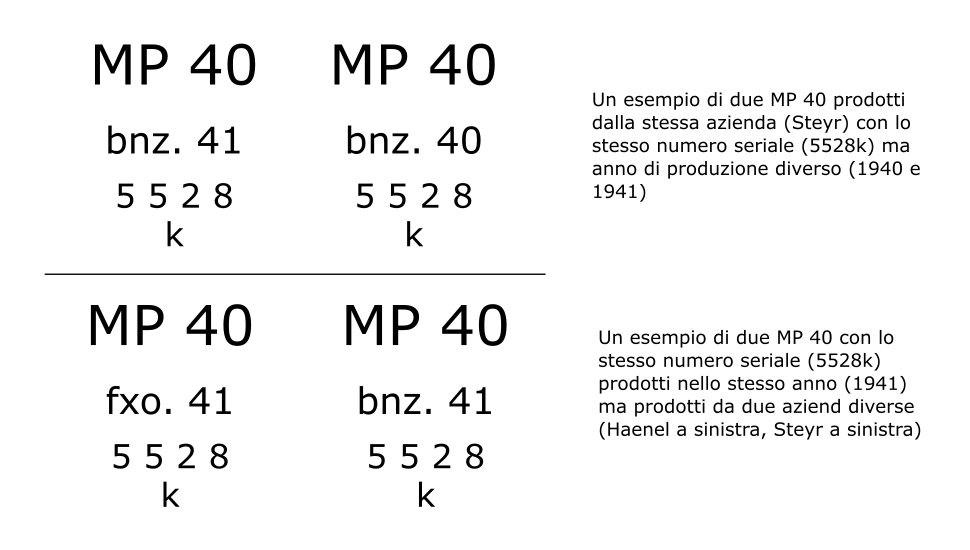
A registered machine gun is identified on its registration by serial number. Volume 3 documented that MP 40 serial numbers repeat — the same number and suffix appears on weapons from the same maker in different years, and on weapons from different makers in the same year.5 The unique identifier is the combination of maker code, year and serial.
The practical consequence: when examining a transferable MP 40, read the full receiver marking — code, year and serial together — and satisfy yourself that it agrees with the registration document. A registration recording only a serial number describes something that, on this particular weapon, could describe more than one gun. A mismatch between paper and metal on a registered machine gun is not a clerical annoyance; it is a serious problem, and it is worth discovering before money moves rather than afterwards.
6.4 Semi-Automatic Reproductions
The accessible route to something that looks and handles like an MP 40 is a semi-automatic reproduction, and this is the area where this dive found the published record thinnest.
What could be verified. German Sport Guns GmbH, founded in 2002 by Dietmar Emde, Manfred Nienhaus and Michael Swoboda and based at Ense-Höingen, is a manufacturer specialising in .22 LR firearms for sport shooting and plinking. Its catalogue includes the GSG-MP40P, described as “a 9mm, semi-automatic pistol lookalike of the MP 40 submachine gun.”6
What could not be verified. A .22 rimfire MP 40 reproduction is very widely referred to, and this dive expected to document one. It could not. The manufacturer’s own site returned an error and the United States importer’s site refused automated access during this work, and the one reference source consulted “does not mention an MP 40 replica in .22 LR caliber — only the 9mm GSG-MP40P model.”6 No product name, model number, calibre or price for a .22 rimfire MP 40 is stated in these volumes, because none could be sourced. A rimfire version may well be in current production; a reader should confirm it from the manufacturer or importer directly. This hub has shipped invented model numbers before, and the correct response to an unverifiable product is silence about its details rather than a plausible guess.
6.4.1 The trap in the word “pistol”
The verified product is described as a pistol, and that word is load-bearing.
A semi-automatic MP 40 lookalike sold as a pistol has no stock. An MP 40’s defining external feature is its folding stock. The conjunction is an obvious temptation and an obvious hazard:
- Under 18 U.S.C. § 921, a short-barrelled rifle is a rifle with a barrel under sixteen inches, and a weapon made from a rifle which as modified is under twenty-six inches overall.7 Attaching a stock to a pistol with a short barrel makes exactly that, and doing so without an approved registration is a felony.
- Constructive possession is real, as this hub’s shared legal posture records: possessing a pistol together with the parts that would make it an NFA item can constitute possession of that item even if the parts have never been assembled.8
The lawful route to a stocked short-barrelled version is an approved ATF Form 1 before any parts are brought together — and per § 6.3, the making tax for a short-barrelled rifle is now $0, though the registration and approval-first requirements are entirely unchanged.4
6.5 Parts Kits, Replicas and Deactivated Guns
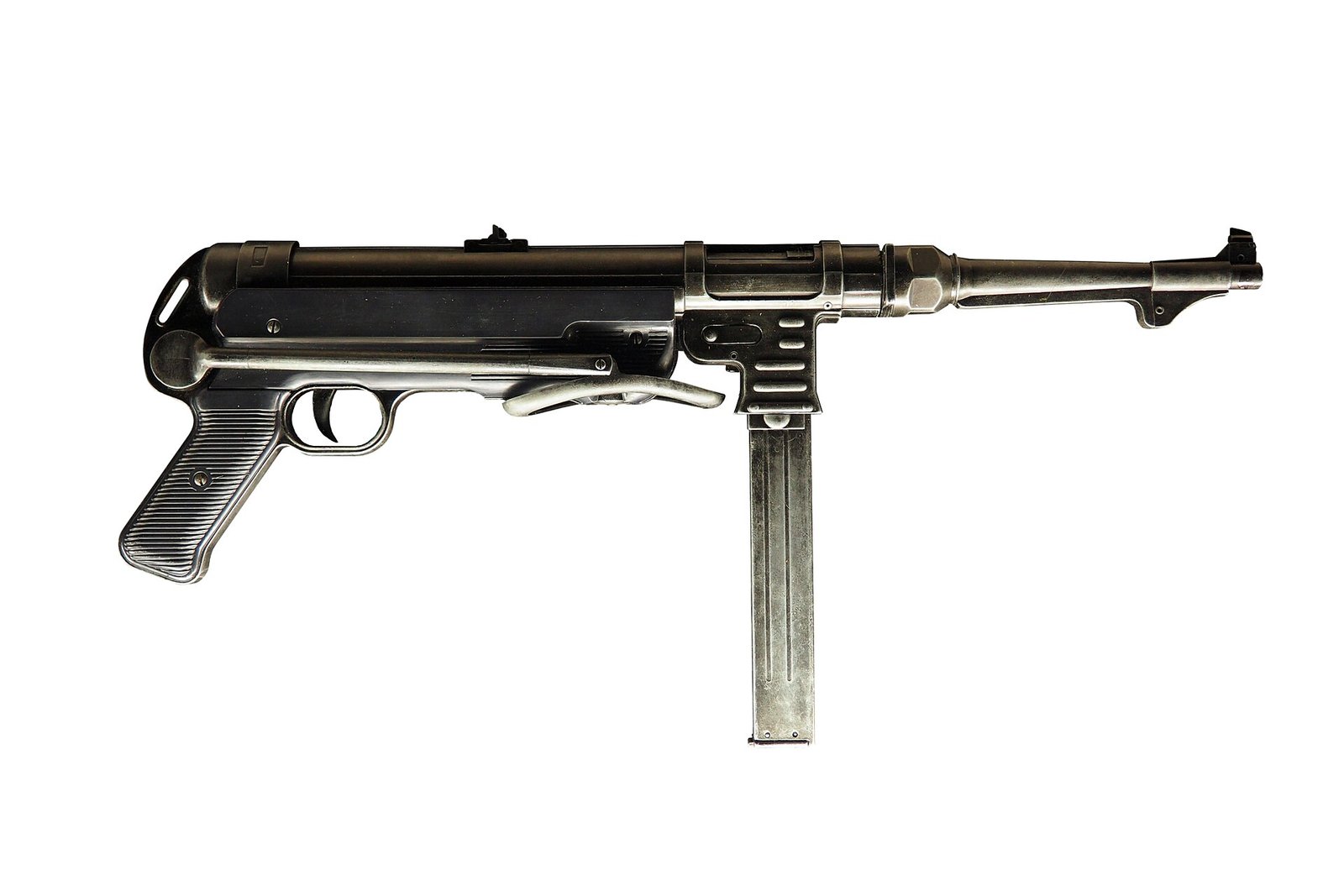
Parts kits. A demilled MP 40 parts kit contains everything except a functional receiver, because the receiver is the firearm — federal law defines a firearm to include the frame or receiver.8 A kit is a box of parts; it becomes a legal problem only in combination with a receiver, and for a machine gun there is no lawful way to supply that combination to a private person. § 922(o) bars manufacture as firmly as it bars transfer.1 A parts kit is therefore a source of spares for a registered weapon, a display item, or the basis of a semi-automatic build on a US-made semi-automatic receiver — and that last path carries the 27 CFR § 478.39 imported-parts question and a closed-bolt requirement that are outside this volume’s scope.
Replicas. A non-firing replica that physically cannot chamber or fire a cartridge is not a firearm federally, but it is an imitation firearm and falls under 15 U.S.C. § 5001 and the associated marking rules, with several states imposing further restrictions on possession and transport.8
Deactivated guns are the trap in this section. European deactivation certificates do not travel. As this hub’s shared legal posture puts it, “Federal: depends on the deactivation standard. Many ‘deactivated’ specimens still count as firearms federally; UK/EU deactivation standards do not.”8 A weapon sold in Europe as lawfully deactivated may, on arrival in the United States, still be a machine gun in law — which for an MP 40 is the worst possible category to discover late. A deactivated MP 40 offered from overseas is a legal question, not a purchase.
6.6 Michigan
Michigan is the reference jurisdiction for this hub, and its machine-gun provision is worth reading in the original because its drafting is unusual.
MCL 750.224 prohibits, at subsection (1)(a), “a machine gun or firearm that shoots or is designed to shoot automatically more than 1 shot without manual reloading, by a single function of the trigger.”9 Subsection (2) makes a violation a felony “punishable by imprisonment for not more than 5 years, or a fine of not more than $2,500.00, or both.”9
The exception is at subsection (3)(c):
“(3) Subsection (1) does not apply to any of the following: … (c) A person licensed by the secretary of the treasury of the United States or the secretary’s delegate to manufacture, sell, or possess a machine gun, or a device, weapon, cartridge, container, or contrivance described in subsection (1).”9
Note what that exception is framed around. It turns on federal licensing, not on a general “lawful under federal law” clause. The contrast within Michigan’s own code is instructive: for short-barrelled rifles, MCL 750.224b(3) provides plainly that “Subsection (1) does not apply to a short-barreled shotgun or short-barreled rifle that is lawfully made, manufactured, transferred, or possessed under federal law.”10 The legislature wrote a simple federal-lawfulness exemption for one class and a federal-licensee exemption for the other.
This dive does not resolve how § 750.224(3)(c) applies to a private individual who holds a registered transferable machine gun rather than a federal licence. It is a real question of Michigan law on which the statutory language is not obviously dispositive, and it is precisely the question a Michigan buyer needs answered by a Michigan lawyer before committing five figures to a weapon. The statutory text is quoted above so it can be taken to one.
For the semi-automatic reproduction route, the relevant Michigan provision is the short-barrelled rifle section, and its two Michigan-specific duties are easy to miss. MCL 750.224b(4) requires a person lawfully possessing an SBR “that is 26 inches or less in length” to comply with MCL 28.422 or 28.422a; subsection (5) requires a person possessing one “greater than 26 inches in length” to carry a copy of the federal registration while transporting or using it and to produce it to a peace officer on request.10 A stocked MP 40 reproduction would be well under 26 inches folded and around 33 inches extended, which puts the overall-length question squarely in play.
6.7 What Could Not Be Verified
- Current market prices for a transferable MP 40. No checkable attribution was found; the only figure quoted here is the reference literature’s general observation that most transferable machine guns cost in excess of $10,000.2
- Any .22 rimfire MP 40 reproduction, including whether one is currently produced, by whom, and under what model designation. Two manufacturer and importer sites were unreachable to automated access during this work.
- The precise application of MCL 750.224(3)(c) to a private registered owner in Michigan.
- How many MP 40s sit in the US registry. The 175,000 figure is for all registered automatic firearms, not for this model.2
6.8 Bibliography
Footnotes
-
18 U.S.C. § 922(o), quoted from the statutory text; the Firearm Owners Protection Act was signed on 19 May 1986, which is the date the subsection takes effect. ↩ ↩2 ↩3
-
“Firearm Owners Protection Act”, English Wikipedia, consulted 2026-09-17 — the Hughes Amendment as House Amendment 777 to H.R. 4332 banning civilian ownership of new machine guns and its passage by voice vote on 10 April 1986; the figure of approximately 175,000 automatic firearms licensed by ATF; and the observation that limited civilian supply “has caused an enormous increase in their price, with most costing in excess of $10,000.” ↩ ↩2 ↩3 ↩4
-
26 U.S.C. § 5845(b), definition of “machinegun.” ↩
-
26 U.S.C. §§ 5811 and 5821 as amended by Public Law 119-21, enacted 4 July 2025 — the making and transfer tax reduced to $0 for short-barrelled rifles and suppressors, with $200 surviving for machineguns and destructive devices, and registration and approval requirements unchanged. ↩ ↩2
-
Wikimedia Commons, File:Loghi MP40 (It).jpg by Lory Tek, CC BY-SA 4.0 — a schematic of MP 40 receiver markings showing serial 5528k on two Steyr weapons of different years and on a Haenel and a Steyr weapon of the same year. Discussed in full at Volume 3 § 3.7. ↩
-
“German Sport Guns”, English Wikipedia, consulted 2026-09-17 — the company’s 2002 founding by Dietmar Emde, Manfred Nienhaus and Michael Swoboda, its base at Ense-Höingen, its specialisation in .22 LR firearms, and the GSG-MP40P described as “a 9mm, semi-automatic pistol lookalike of the MP 40 submachine gun.” The same source does not list any .22 LR MP 40 product. ↩ ↩2
-
18 U.S.C. § 921, definition of “short-barreled rifle.” ↩
-
Firearms/_shared/legal_ethics.md, this hub’s standing legal posture — the definition of a firearm as including the frame or receiver, the reality of constructive possession, the treatment of non-firing replicas as imitation firearms under 15 U.S.C. § 5001, and the warning that many “deactivated” specimens still count as firearms federally and that UK and EU deactivation standards do not satisfy US law. ↩ ↩2 ↩3 ↩4 -
MCL 750.224, The Michigan Penal Code (Act 328 of 1931) — subsection (1)(a) prohibiting a machine gun, subsection (2) penalties, and the subsection (3)(c) exemption for a person licensed by the Secretary of the Treasury of the United States or the Secretary’s delegate to manufacture, sell or possess a machine gun. ↩ ↩2 ↩3
-
MCL 750.224b, The Michigan Penal Code (Act 328 of 1931) — subsection (1) prohibiting short-barrelled rifles and shotguns, subsection (3) exempting those lawfully made, manufactured, transferred or possessed under federal law, subsection (4) requiring compliance with MCL 28.422 or 28.422a for weapons 26 inches or less in length, and subsection (5) requiring possession and production of the federal registration for weapons greater than 26 inches in length. ↩ ↩2
Comments (0)