MP 40 · Volume 3
How It Is Made — Stamping, Phenolic Resin, and Three Factories
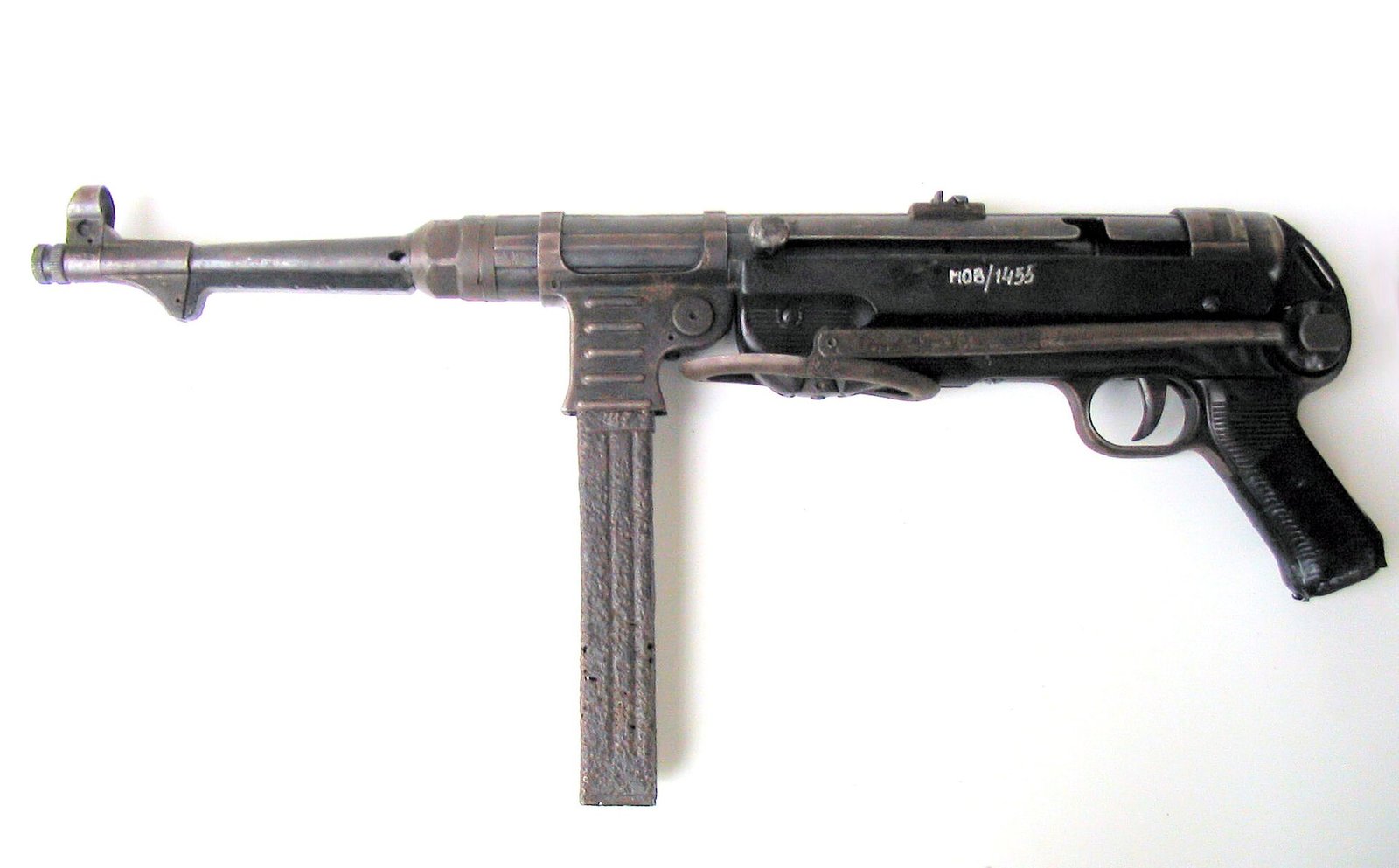
The MP 40 shoots no better than the MP 38. It is the same mechanism, in the same calibre, at the same rate, with the same sights and the same magazine. Volume 1 established that; this volume is about why it was worth building anyway.
Germany replaced a good weapon with an identical weapon because the first one was made the wrong way. That is the entire subject here, and it is the reason the MP 40 matters in the history of manufacturing more than it does in the history of shooting.
3.1 The Decision: Presses Instead of Machinists
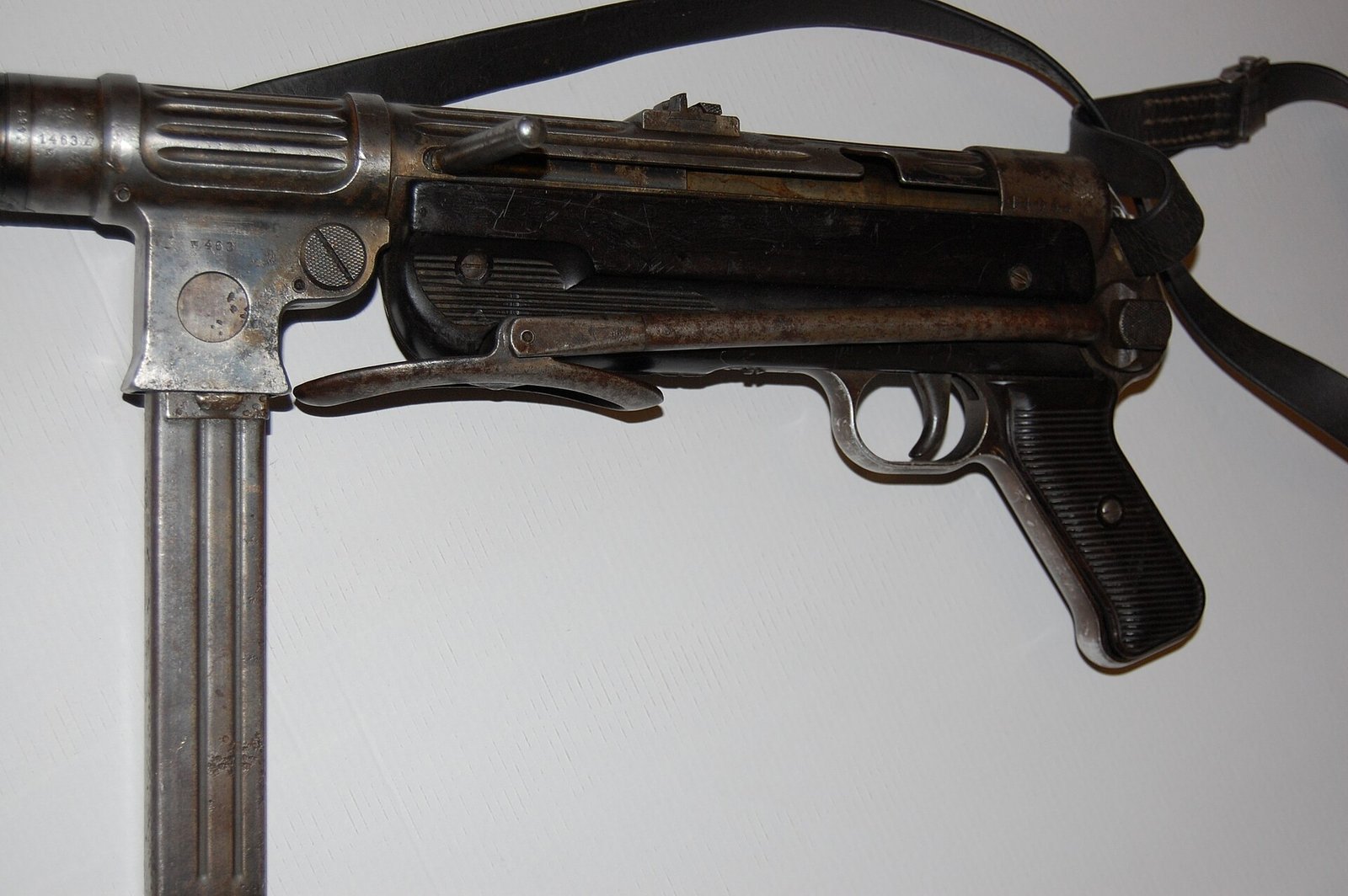
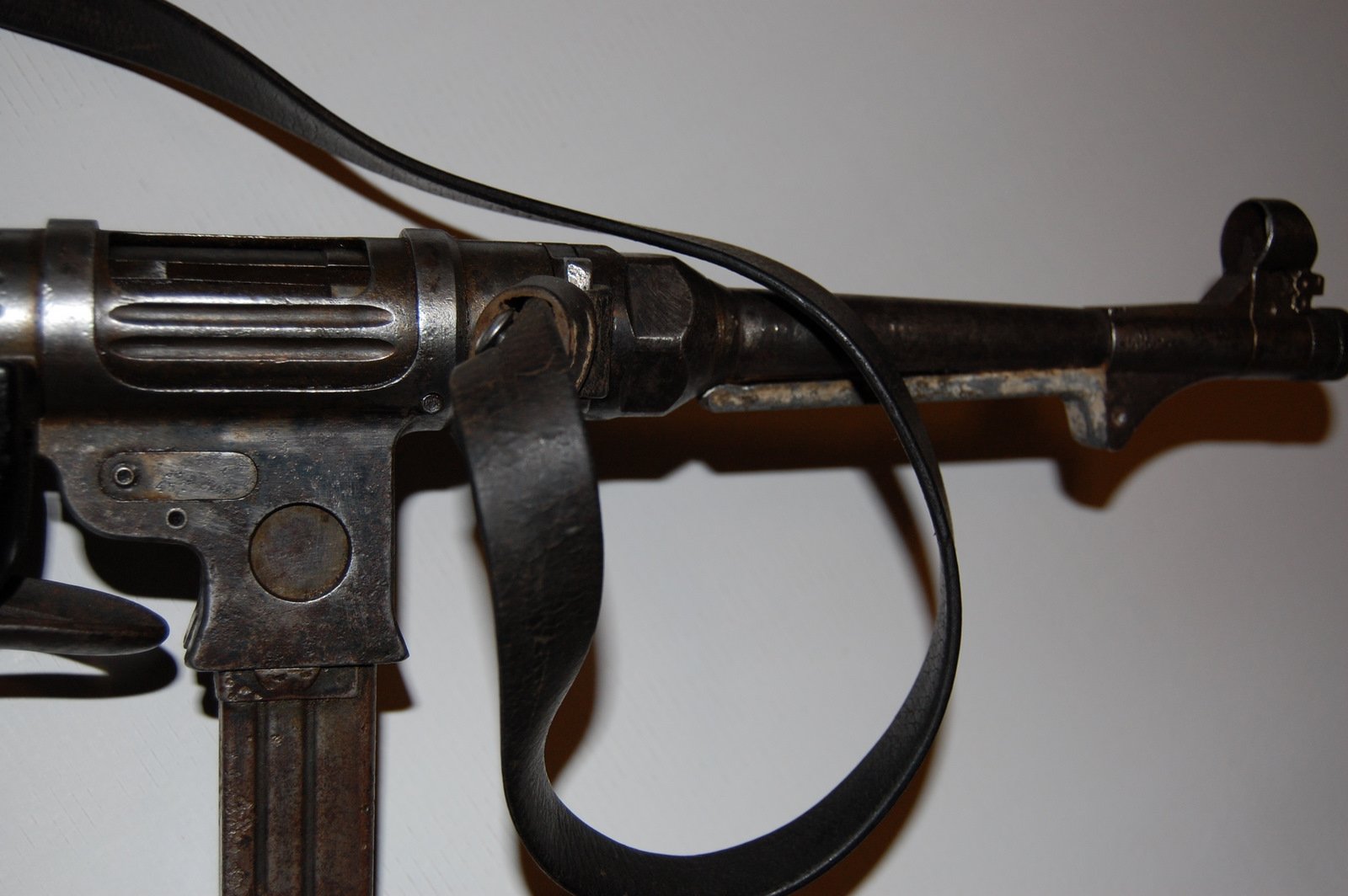
The MP 38 was made by chip-cutting. Its receiver began as a solid steel bar and became a receiver by having metal removed from it, on machines, by people who knew how to run them. The longitudinal flutes along its receiver — the identifying feature of the model — are the visible record of that process.
A machined receiver has two costs, and in 1939 the second one was the one that bit. The first is material waste. The second, and far more serious, is that it consumes machine time and skilled labour — the two resources a war economy exhausts before it exhausts steel. Every hour a lathe or a mill spends cutting flutes into a submachine gun receiver is an hour it is not spending on an aero engine, a gun barrel or a gearbox, and every trained machinist standing at it is a trained machinist not standing somewhere else.
The MP 40 answers that. The reference literature describes the model sequence as successive simplifications, the MP 40 being “a further simplification of the MP 38, with certain cost-saving alterations, most notably in the more extensive use of stamped steel rather machined parts.”1 The German account names the methods directly: sheet-metal stamping and spot welding in place of the MP 38’s chip-removing machining.2
The substitution is not a matter of degree. A press and a die make a part in one stroke, they make the next one identically, and they can be operated by someone trained in days rather than years. The skill migrates from the worker to the tooling. That is the transaction the MP 40 represents, and it is the same transaction Britain made with the STEN and the Soviet Union made with the PPSh-41 at almost the same moment — three countries independently discovering that the submachine gun is the small arm most tolerant of being pressed out of sheet.
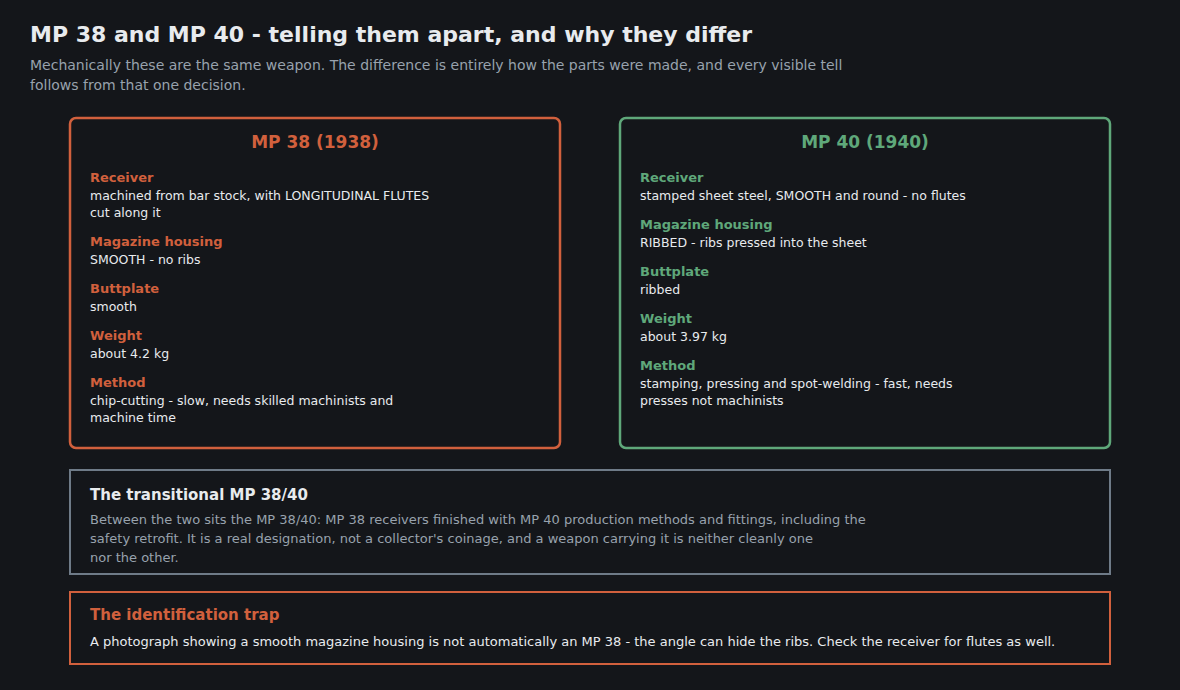
The result in the hand was a weapon that had lost about a quarter of a kilogram — from roughly 4.2 kg to 3.97 kg — and lost nothing else.2
3.2 The Receiver
The MP 40’s receiver is a tube of sheet steel, rolled and welded, smooth on the outside because nothing was cut into it.
This is the primary identification feature and it works in both directions: flutes mean MP 38, a smooth round receiver means MP 40. It is more reliable than the magazine housing, for reasons the next section explains.
It is also the component that sets the limits of the design. A rolled sheet receiver is strong enough in the axis that matters — it contains a blowback bolt reciprocating along its length, and the pressure it must resist is modest — but it is not stiff against bending or against loads hung off its side. Volume 1 recorded the consequence: when the MP 40/I hung two loaded magazines from a widened housing, the added weight “often contributed to creases or other damage to the magazine well and ejection port areas.”3 The receiver failed at exactly the thing sheet steel is bad at, and the failure is a direct consequence of the manufacturing choice that made the weapon cheap.
3.3 The Magazine Housing, and the Ribs
The MP 38’s magazine housing is smooth. The MP 40’s has ribs pressed into it.
The ribs are a stiffening feature, and they exist because the housing is now pressed sheet rather than a more substantial machined part. Pressing a rib into a panel raises its resistance to bending enormously for no added material — it is the oldest trick in sheet-metal design, and it appears on the MP 40 for exactly that reason. It is also a useful reminder that “simplified” does not mean “cruder”: the ribbed housing is a more sophisticated piece of engineering than the smooth one it replaced, because it does the same job with less.
On the number of ribs, this dive declines to assert. The reference literature gives four transverse ribs.2 The specimens photographed for this dive show a stack of horizontal ribs pressed into the housing sides, and a reliable count could not be taken from the available photographs. The figure of four is recorded here as sourced, not as verified by inspection.
The identification trap. A photograph showing what appears to be a smooth magazine housing is not automatically an MP 38. The ribs are shallow, they catch light only from certain angles, and a three-quarter view, a dark print or a weapon held against a soldier’s body can hide them completely. Volume 1’s rack photograph is the correct discipline: check the receiver for flutes as well, because a machined flute is deep enough to read in almost any photograph in which the receiver is visible at all. This dive rejected several otherwise attractive candidate photographs on exactly this ground.
3.4 The Furniture: “Bakelite”, Carefully
The MP 38 had already done the harder thing two years earlier, and it is the change people notice least. It has no wood on it anywhere. The grip frame and forearm are moulded plastic, at a date when every other submachine gun in the world — the MP 18, the MP 28,II, the Thompson, the Suomi, the PPD — wore walnut.
The German account gives the reason without sentiment: the designer abandoned traditional wood furniture and fitted the weapon instead with bakelite grip panels and stock components, because the material was cheap and quick to manufacture.2
What the material actually is. Bakelite is polyoxybenzylmethyleneglycol anhydride — a thermosetting phenol formaldehyde resin, formed by a condensation reaction of phenol with formaldehyde, developed by Leo Baekeland in Yonkers, New York in 1907 and patented on 7 December 1909.4 It is produced by compression moulding under heat and pressure, at around 150°C, which yields a product that is “extremely hard and both infusible and insoluble.”4 It resists heat, it is a poor conductor of electricity, it holds its moulded shape and it resists scratches and solvents. It is also inflexible and brittle, and it is characteristically dark in colour because of its fillers.4
Every one of those properties matters on this weapon:
- It is moulded, not carved. A wooden grip frame is shaped by a skilled hand or a copying lathe; a phenolic one comes out of a die. This is the same substitution as stamping the receiver, applied to a different material.
- It resists heat. The forearm of an open-bolt submachine gun sits close to a barrel that gets hot quickly at 500 rounds per minute.
- It is dimensionally stable. Wood swells, shrinks and warps with humidity; a resin moulding does not, which matters for a weapon issued from Norway to North Africa.
- It is brittle. This is the bill. Volume 7 takes up what that means for a surviving specimen, because a cracked phenolic grip frame is one of the commonest faults on the weapon and it cannot be sanded, glued and refinished the way a cracked stock can.
A note on the word. “Bakelite” is used loosely, in collector usage and in the reference literature alike, for a family of dark moulded thermosets. True Bakelite is distinguishable from later phenolic and urea-formaldehyde resins, which could achieve brighter colours where Bakelite typically appeared in dark shades.4 Whether the furniture on any particular MP 40 is Bakelite specifically, or another phenolic formulation, is not something this dive can settle from photographs; the safe and accurate description is moulded phenolic resin, and that is the term used through these volumes.
3.5 The Stock, the Barrel and the Resting Bar
The folding stock is the feature that justified the weapon’s existence to the units that got it. It is described in the reference literature as the first collapsible metal shoulder stock on any submachine gun — a priority claim this dive flags as difficult to verify and repeats with that caution.2 Its construction is tube and stamping, hinged under the receiver, and it takes the weapon from 833 mm to 630 mm.1
The barrel is the exception to everything in this volume. At 251 mm it is a conventionally rifled, conventionally machined component, and it could not have been anything else. Nothing about pressing sheet steel produces a bore. On a weapon whose design philosophy is the elimination of machining, the barrel and its collar remain stubbornly machined parts, and they are where the weapon’s remaining precision work went.
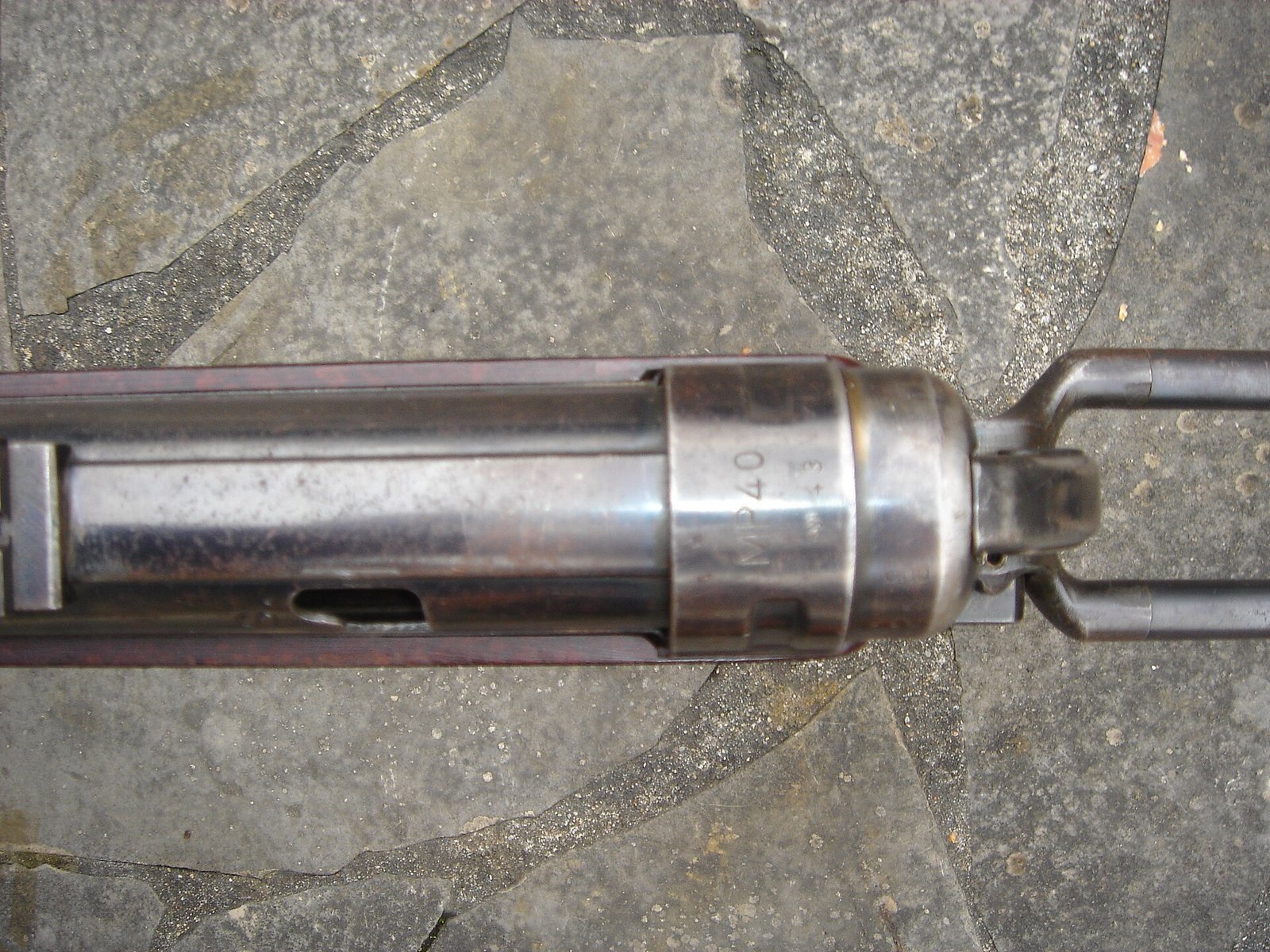
The resting bar is the hooked bar beneath the barrel, inherited from the EMP 36 along with the rest of the external configuration.5 It is designed to hook over the lip of a vehicle firing port or the edge of a hatch, steadying the weapon and stopping it sliding forward. It is a small detail that says a great deal about who the weapon was expected to be issued to, and Volume 5 returns to it.
3.6 Three Factories
Three firms built the weapon: Erma, C.G. Haenel and Steyr.1 Steyr was the largest producer by volume and the last to stop, ceasing manufacture in October 1944.2
That the work was split three ways is itself part of the manufacturing story. A design built from stampings, pressings and spot welds is a design that can be dispersed — the tooling can be duplicated, the parts can be made in different places, and the output is interchangeable in a way that hand-fitted machined work is not. Volume 1’s production figures, whichever of the three is preferred, describe an output that no single plant could have produced.
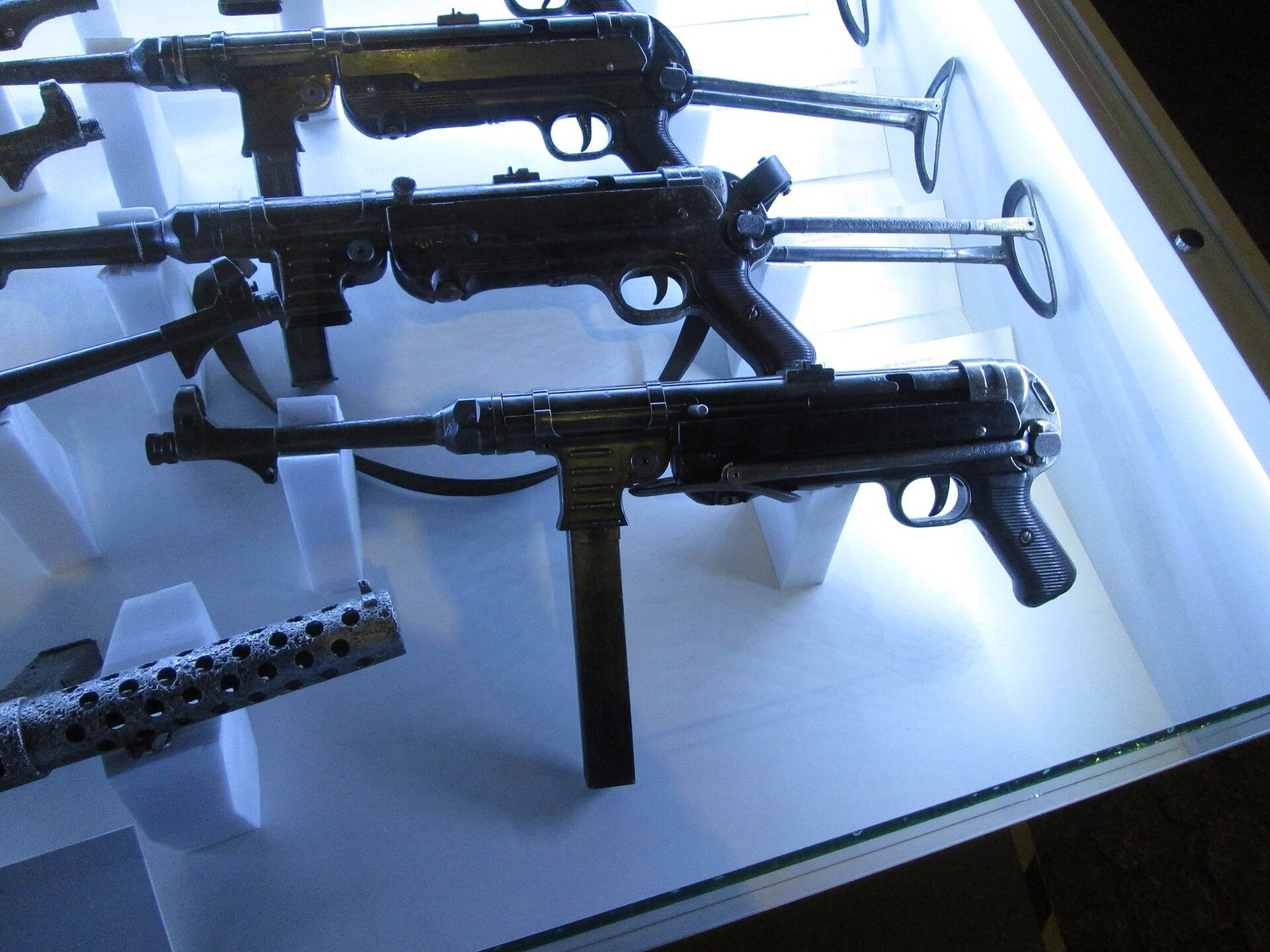
The maker codes. German wartime production marked receivers with three-letter manufacturer codes rather than company names, a deliberate security measure. The codes associated with this weapon are:
Table 1 — The maker codes. German wartime production marked receivers with three-letter manufacturer codes rather than company names, a deliberate security measure. The codes associated with this weapon are
| Code | Manufacturer |
|---|---|
| ayf | Erma, Erfurt |
| bnz | Steyr |
| fxo | C.G. Haenel, Suhl |
The evidential position on this table is exactly as Volume 1 stated it, and it is worth restating rather than letting it harden. No authoritative published code table was located during this work. The mapping rests on photographic and collector evidence: a specimen documented in detail by its photographer as “MP40 — Erma, 1943 manufacturing” is catalogued under the code ayf, and a collector’s schematic of receiver markings reproduces bnz and fxo markings with accompanying text identifying them as Steyr and Haenel respectively.67 The table is well attested and is used throughout these volumes, but it has not been checked against a primary reference and a reader relying on it for a purchase should confirm it independently.
3.7 The Serial Number Trap
The same collector’s schematic that supplies the code evidence carries a finding with real consequences for identification, and it deserves its own section because it inverts an assumption most buyers bring to a military weapon.
The schematic reproduces four receiver markings. Two read MP 40 / bnz. 41 / 5528 k and MP 40 / bnz. 40 / 5528 k — two weapons from the same firm, Steyr, carrying the same serial number and suffix but different production years, 1940 and 1941. The other two read MP 40 / fxo. 41 / 5528 k and MP 40 / bnz. 41 / 5528 k — two weapons carrying the same serial number in the same year, 1941, made by two different firms, Haenel and Steyr.7
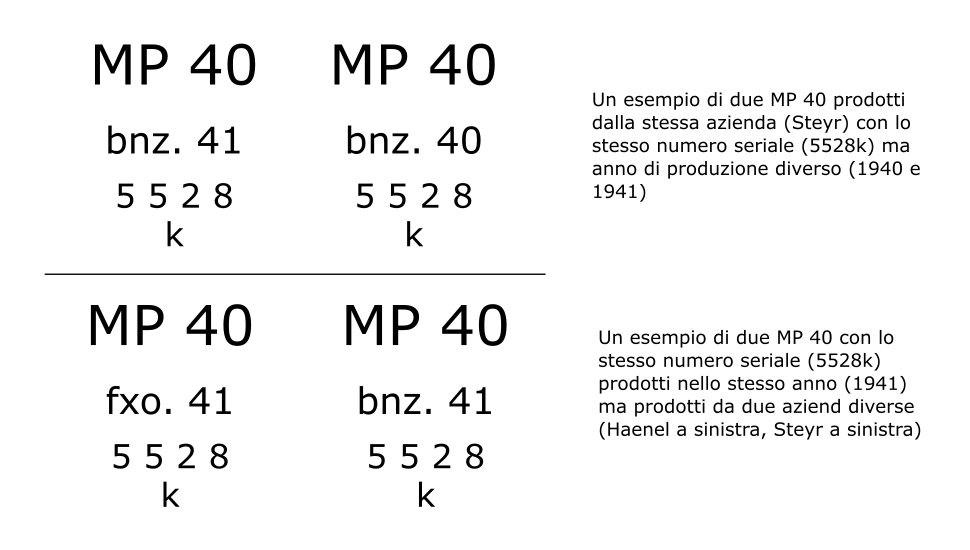
The consequence: an MP 40 serial number does not identify a weapon. Each maker ran its own serial blocks with letter suffixes, and the blocks repeated across firms and across years. The unique identifier is the combination of code, year and serial, and a listing, a registration document or a catalogue entry that records only the number has recorded something that could describe several different weapons.
This matters in two practical places. Volume 6 covers the first: a United States registered transferable machine gun is identified on its registration by serial, and a mismatch between paper and metal is a serious problem — so the code and year on the receiver are not optional details to note. Volume 7 covers the second: on a weapon whose parts were serialised to the gun, “matching numbers” is a claim that has to be read against the code and year as well as the digits.
A note on the source: the schematic’s Italian caption for the second pair reads “Haenel a sinistra, Steyr a sinistra” — “Haenel on the left, Steyr on the left”. The second “sinistra” is evidently an error for “destra”, right. The substance of the example is unaffected, but the slip is recorded here because this dive is relying on the document.
3.8 What This Bought, and What Could Not Be Established
The manufacturing case for the MP 40 is normally made with numbers: unit cost, man-hours per weapon, cost against the model replaced. Those numbers exist for the weapon’s contemporaries and this dive can give them.
- The STEN Mk II cost £2 6s in 1942, and between 3.7 and 4.6 million were built across all variants, about two million of them Mk IIs.8
- The Thompson cost the US Army $200 per gun in 1921 and $225 in 1928; by spring 1942 it was $70, and by February 1944 the M1A1 was $45 each.9
For the MP 40, no unit cost or labour figure could be verified. Figures are quoted in circulation, but no source consulted in this work supplied one with an attribution that could be checked, and this dive does not repeat unsourced numbers for a weapon whose production total already comes in three incompatible versions. The statement that the MP 40 was cheaper and faster to build than the MP 38 is well supported; any specific figure for how much cheaper should be treated as unverified until a source is produced.
What can be said without a cost figure is structural, and it is the more useful claim anyway. The MP 40 moved a weapon from a process limited by skilled labour to a process limited by tooling and press capacity. That is a change in what constrains output, not merely in what it costs, and it is why Germany, Britain and the Soviet Union all arrived at pressed-sheet submachine guns within about three years of one another. The STEN is the same argument taken further and faster, by a country with less time — and Volume 5 makes that comparison honestly, including the parts of it that do not favour the German weapon.
3.9 Bibliography
Footnotes
-
“MP 40”, English Wikipedia, consulted 2026-09-17 — the description of the MP 40 as a further simplification of the MP 38 through more extensive use of stamped steel rather than machined parts, the manufacturers Erma, Haenel and Steyr, and the 833 mm and 630 mm lengths and 251 mm barrel. ↩ ↩2 ↩3
-
“MP 40” and “MP 38”, German Wikipedia, consulted 2026-09-17 — sheet-metal stamping and spot welding in place of chip-removing machining, the machined and longitudinally fluted MP 38 receiver and its smooth magazine housing, the MP 40’s ribbed magazine housing given as four transverse ribs and its ribbed buttplate, the weight change from about 4.2 kg to 3.97 kg, the substitution of bakelite for wood as cheap and quick to manufacture, the claim that the MP 38’s stock was the first collapsible metal shoulder stock on a submachine gun, and Steyr as the largest producer, ceasing in October 1944. ↩ ↩2 ↩3 ↩4 ↩5 ↩6
-
Forgotten Weapons, “MP-40/I: The Dual-Magazine Experimental MP-40”, https://www.forgottenweapons.com/mp-40i-the-dual-magazine-experimental-mp-40/ — the creasing and damage to the magazine well and ejection port areas caused by the extra weight on the relatively thin receiver tube. ↩
-
“Bakelite”, English Wikipedia, consulted 2026-09-17 — the identification of Bakelite as a thermosetting phenol formaldehyde resin formed by condensation of phenol with formaldehyde, Leo Baekeland’s development of it in Yonkers in 1907 and patent of 7 December 1909, compression moulding at around 150°C producing a product “extremely hard and both infusible and insoluble”, its heat and electrical resistance, inflexibility and brittleness, and its distinction from later phenolic and urea resins which could achieve brighter colours. ↩ ↩2 ↩3 ↩4
-
Forgotten Weapons, “Erma EMP36: External Form Factor of the MP40”, https://www.forgottenweapons.com/erma-emp36-external-form-factor-of-the-mp40/ — the EMP 36 as the source of the external form factor of the MP 38 and MP 40, including the pistol grip, underfolding stock and muzzle rest system. ↩
-
Wikimedia Commons, File:MP 40 AYF 2.JPG and File:MP 40 AYF 3.JPG, photographs by Quickload, CC BY-SA 3.0 — a specimen documented by its photographer as “MP40 — Erma, 1943 manufacturing” and catalogued under the code ayf. ↩
-
Wikimedia Commons, File:Loghi MP40 (It).jpg by Lory Tek, CC BY-SA 4.0 — a schematic of MP 40 receiver markings reproducing “MP 40 / bnz. 41 / 5528 k”, “MP 40 / bnz. 40 / 5528 k” and “MP 40 / fxo. 41 / 5528 k”, with accompanying Italian text identifying bnz with Steyr and fxo with Haenel and explaining the duplication of serial numbers across makers and across years. ↩ ↩2
-
“Sten”, English Wikipedia, consulted 2026-09-17 — the Mk II unit cost of £2 6s in 1942 and total production of 3.7 to 4.6 million across all variants, of which about two million were Mk IIs. ↩
-
“Thompson submachine gun”, English Wikipedia, consulted 2026-09-17 — unit costs of $200 in 1921, $225 in 1928, $70 in spring 1942 and $45 for the M1A1 in February 1944. ↩
Comments (0)