MP 40 · Volume 2
The Schmeisser Question — Who Designed It, and Where the Name Came From
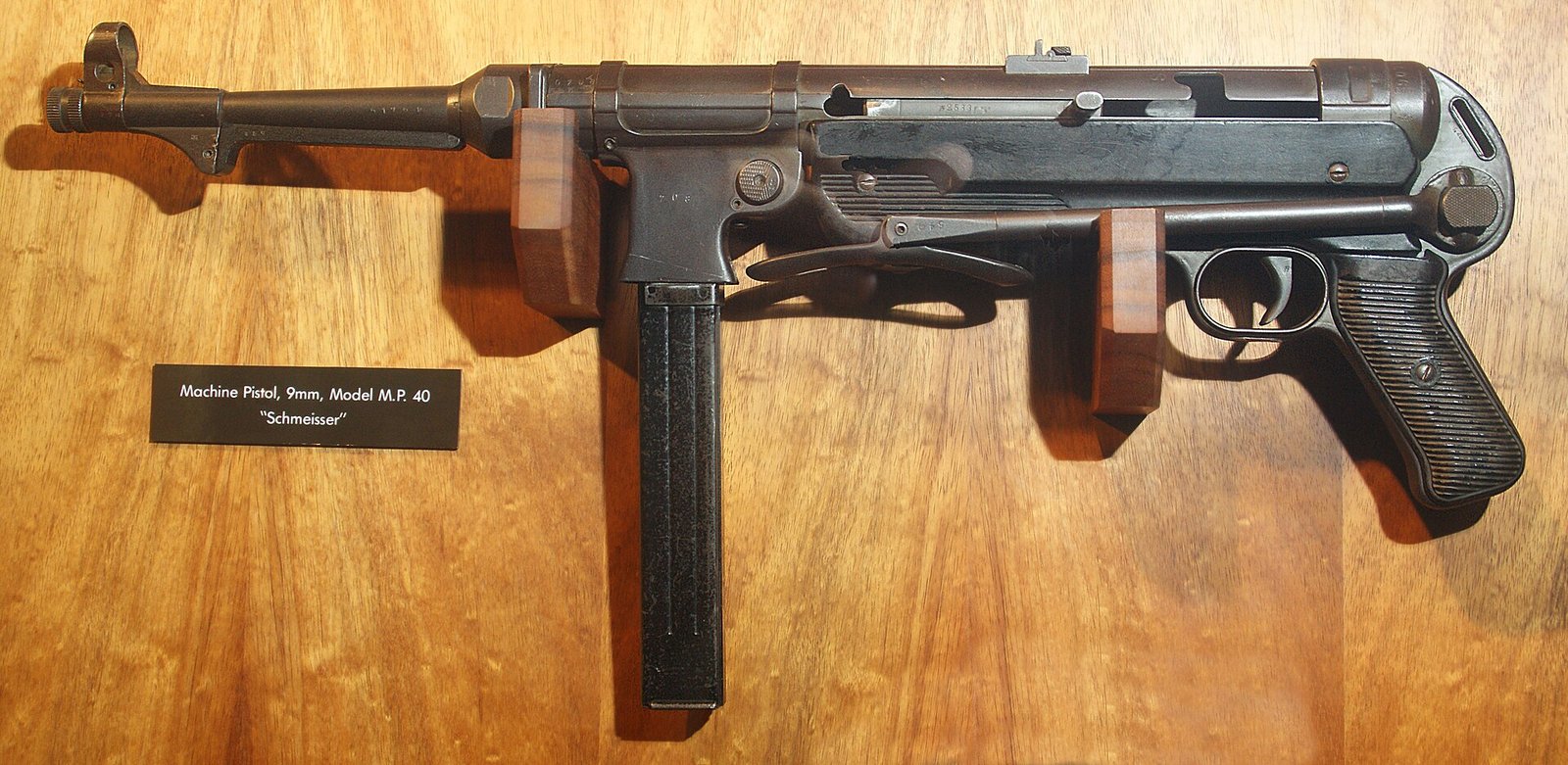
Almost everyone who can name this weapon calls it a Schmeisser. Allied troops called it that during the war, novelists and film-makers have called it that ever since, auction listings call it that, and — as the photograph above shows — museums put the name on the card next to the glass.
Hugo Schmeisser did not design the MP 40.
That correction is easy to state and is stated constantly. What is harder, and what this volume is for, is that the usual form of the correction is also wrong — it overshoots. The standard reply holds that Schmeisser had nothing whatever to do with the weapon beyond a magazine patent, and the surviving prototype evidence does not support that either. The truth sits between the myth and its rebuttal, and it is more interesting than both.
2.1 What Would Settle It
Three distinct questions get collapsed into one and produce three different answers.
- Who designed the weapon that was adopted as the MP 38 and simplified into the MP 40? This is a question about a design programme and its prototypes.
- Did any part of the MP 38/40 originate with Hugo Schmeisser? This is a question about specific components and can be answered by examining surviving prototypes.
- Why is it called a Schmeisser? This is a question about how a name travelled, and it has nothing to do with either of the first two.
Answering them separately is the whole method of this volume. The popular claim confuses 3 with 1. The standard correction answers 1 correctly and then over-answers 2.
2.2 What Hugo Schmeisser Actually Designed
Hugo Schmeisser (24 September 1884 – 12 September 1953) was born in Jena, the son of Louis Schmeisser (1848–1917), who was himself “one of the best-known weapons designers in Europe.”1 He worked in Suhl, the centre of the German gun trade, and from around 1920 he was associated with C.G. Haenel Waffen- u. Fahrradfabrik, a partnership that lasted some twenty years and survived several corporate restructurings through the Second World War.1
His attributed designs are substantial:
Table 1 — His attributed designs are substantial
| Weapon | Date | Note |
|---|---|---|
| MP 18 | 1917 | The first mass-produced submachine gun; about 17,000 built to the figure in his biography, about 37,000 for the MP 18/I in the weapon’s own reference entry12 |
| MP 28,II | 1920s | Roughly 80,000 made; widely used by German police and exported12 |
| MP 41 | 1941 | About 26,500 made, largely for export1 |
| MkB 42(H) | from 1938 | The Haenel machine carbine, the direct ancestor of the assault rifle |
| StG 44 | 1943 onward | Described as “arguably Schmeisser’s most important weapon development”1 |
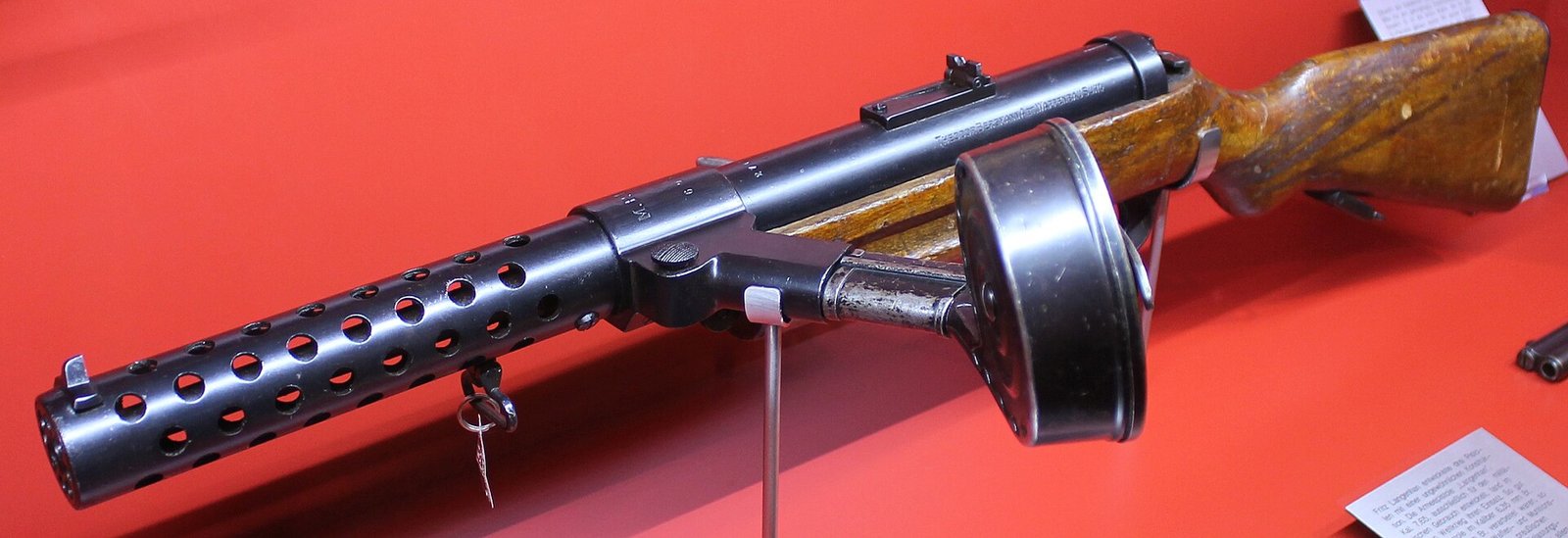
This is the part the myth gets right in spirit. Schmeisser is not a minor figure whose name was attached to a weapon by accident of celebrity. He invented the class. The MP 18 “was highly influential on subsequent small arms design; it formed the basis of most submachine guns manufactured during the first half of the 20th century.”2 A soldier in 1943 calling a German submachine gun a Schmeisser was making an error of fact on top of a sound intuition about lineage.
He also has a far stronger claim on a different weapon. The StG 44, which changed infantry small arms permanently, is his. The MP 40, which did not, is not.
2.3 The Standard Correction
The correction as it is normally given appears in almost identical words across the reference literature:
“The Allies often referred to the MP 40 as the ‘Schmeisser’, after the firearms-designer Hugo Schmeisser (1884-1953). In 1917, Schmeisser had designed the MP 18, which was the first mass-produced submachine gun. He did not, however, have anything to do with the design or development of the MP 40, although he held a patent on the magazine.”3
And, in his biography:
“Schmeisser had no role in the development of the MP-40 submachine gun despite its nickname ‘Schmeisser’, although he held a patent on the magazine.”1
The positive attribution goes to Heinrich Vollmer at Erma, as Volume 1 sets out: Berthold Geipel’s Erma developed the MP 36 prototype, Vollmer worked on the design and submitted a prototype in 1938 answering the Heereswaffenamt’s request, and it was adopted as the MP 38.3 The German biographical account of Vollmer states the position bluntly — the weapons became internationally known as “Schmeisser-MP” because Hugo Schmeisser supplied the magazine component, though Vollmer was the actual designer.4
On question 1, this is correct and this dive does not dispute it. The MP 38 and MP 40 were Erma weapons, developed under Vollmer, from an Erma prototype lineage that began with the EMP and ran through the EMP 36. Nobody at Haenel ran that programme.
2.4 Where the Standard Correction Overshoots
The phrase that does not survive examination is “did not have anything to do with the design or development.”
Volume 1 introduced the 1938 trials. Two prototypes competed: Erma’s EMP 36, designed by Vollmer, and the Schmeisser MK 36,II, designed by Hugo Schmeisser at Haenel — a simple blowback weapon with a full wooden stock in 9×19mm, of which two examples survive in the Royal Armouries collection.5
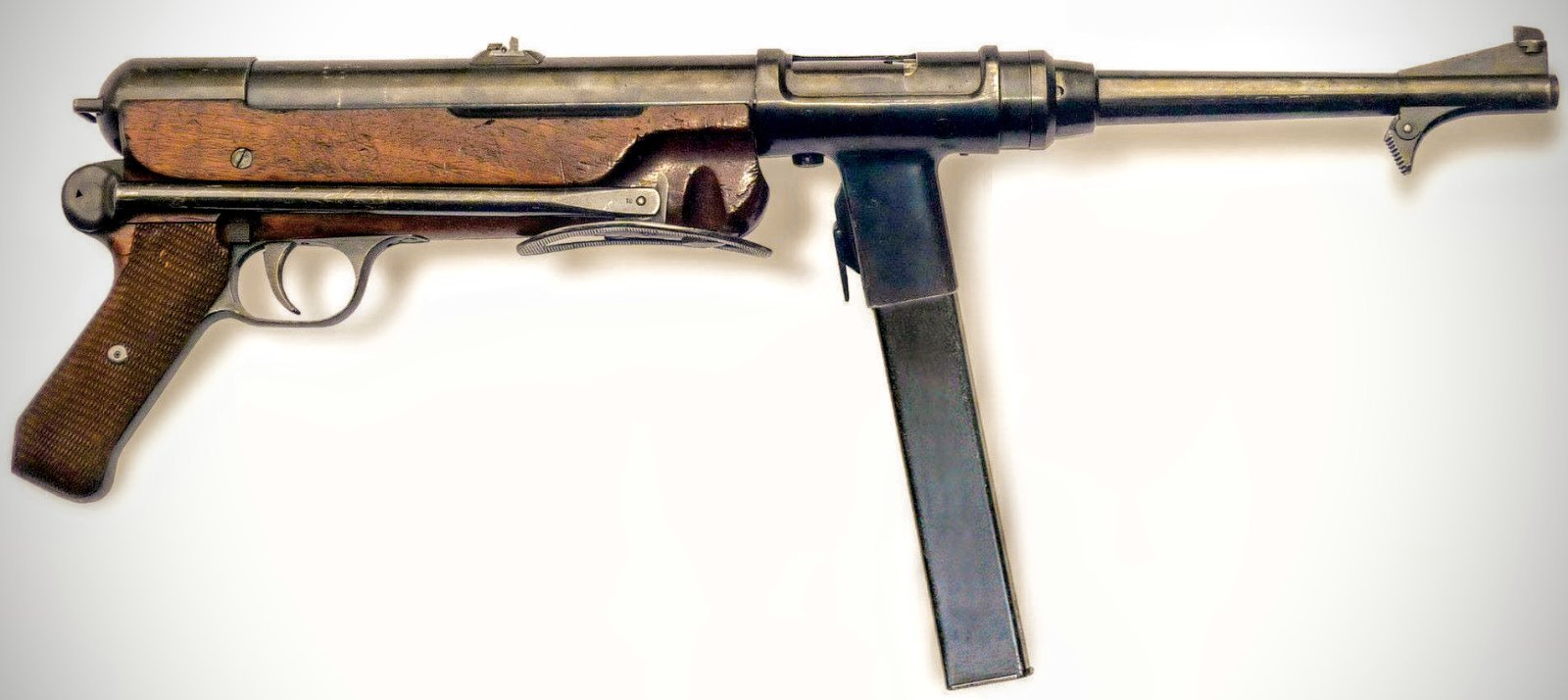
The outcome of those trials, as recorded by those who have examined the surviving prototypes, was not a selection but a merger:
“Ultimately, the result of testing of the Erma and Schmeisser prototypes was a combination of their features into a hybrid design. The Erma provided the external form factor, and the Schmeisser contributed the internal mechanics for the MP38 and in turn MP40.”6
And from the examination of the Haenel prototype itself:
“the Schmeisser gun was simple and effective mechanically (except for that weird safety), and it ultimately contributed its magazine, bolt, and fire control system to the MP38 and MP40 design.”5
Magazine, bolt, and fire control system is not nothing. Those three assemblies are, between them, most of what a blowback submachine gun is as a mechanism. If that account is right, Schmeisser’s contribution to the MP 38 and MP 40 was not a single patented magazine but the working core of the weapon, arrived at through a competitive trial whose result was a hybrid.
This dive does not claim to have resolved the two accounts. They come from sources that are, in their respective domains, reliable: a general encyclopaedic reference on one side and a specialist examination of surviving prototypes on the other. What can be said with confidence is this:
- The MP 38/40 development programme was Erma’s, under Vollmer. Not disputed by any source consulted.
- The external configuration — grip, folding stock, magazine well, resting bar — came from Erma’s EMP 36. Stated directly by the prototype examination and consistent with the photographic record.6
- A Schmeisser prototype competed in the same trials and specialist examination attributes the internal mechanics of the adopted weapon to it. Stated directly, and not contradicted by the general references, which simply do not address the MK 36,II at all.65
- The general references’ phrase “nothing to do with the design or development” is therefore too strong, and appears to be a compression of the narrower and defensible claim that Schmeisser did not run the programme and did not design the weapon as adopted.
A reader who wants one sentence should have this one: the MP 40 is Vollmer’s and Erma’s weapon, but calling Schmeisser’s involvement nil requires ignoring the prototype that the adopted design’s internals are attributed to.
2.5 The Magazine, and the Marking
Now question 3 — how the name travelled — because this is where the myth was actually manufactured.
Every source consulted agrees on one specific fact: Schmeisser held a patent on the magazine.134 The MP 18’s post-1920 conversion to straight box magazines produced magazines “similar to those later employed in the MP 40,”2 and the straight box magazine in 9×19 is the component his patent covered.
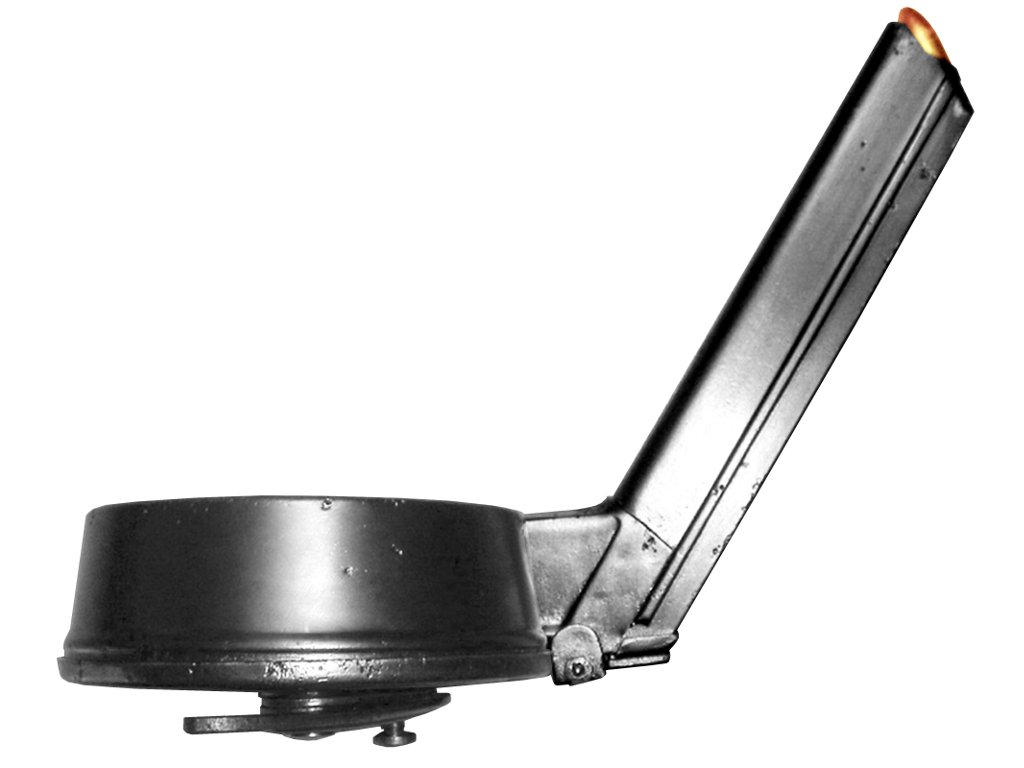
The consequence is recorded plainly: the patent is why these weapons became “internationally known as ‘Schmeisser MPs’.”1 The German account puts the same causation the other way round — the guns were called Schmeisser-MP because Schmeisser supplied the magazine component, although Vollmer designed them.4
The usual telling of this story says that the name spread because Schmeisser’s patent was stamped on the magazine itself, so that an Allied soldier picking up a captured weapon and looking at the most-handled part of it read the name Schmeisser and applied it to the gun. That explanation is coherent, it is consistent with everything the sources do say about the patent and about the name’s international spread, and it is repeated almost universally.
It could not be verified in this work. No source consulted for this dive states the text of the marking, reproduces it photographically, or cites the patent number. The sources establish that he held the magazine patent and that the patent is why the name attached; they do not establish the physical mechanism by which it attached. The marking explanation is therefore recorded here as the standard account, well supported in its premises and plausible in its conclusion, but not confirmed by direct evidence available to this dive — and a reader who wants that last step nailed down should look for a photograph of a marked wartime magazine rather than take this page’s word for it.
What can be said without qualification is that the name rode in on the magazine. Every account agrees on that much, whatever the precise mechanism.
2.6 The MP 41 — Schmeisser’s Own MP 40, and the Lawsuit
There is a weapon that Hugo Schmeisser did design out of the MP 40, and its existence is the cleanest evidence in this whole argument — because it shows what he did when he actually worked on this weapon, and because of how it ended.
In 1941 Schmeisser designed the MP 41: “an MP 40 upper receiver with a lower receiver and stock assembly of an MP 28/II submachine gun.”7
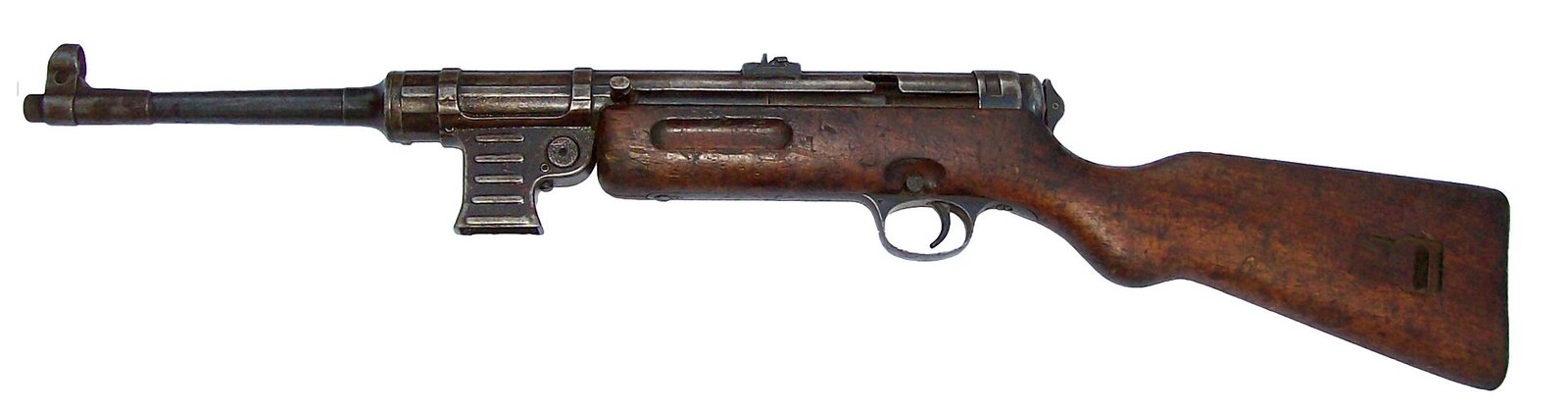
It was manufactured at Haenel under Schmeisser as chief designer. It was issued principally to SS and police units and supplied to Romania as a German ally.7 Roughly 26,500 were made, largely for export.1 Unlike the MP 40, it had a selector permitting single shots as well as automatic fire.4
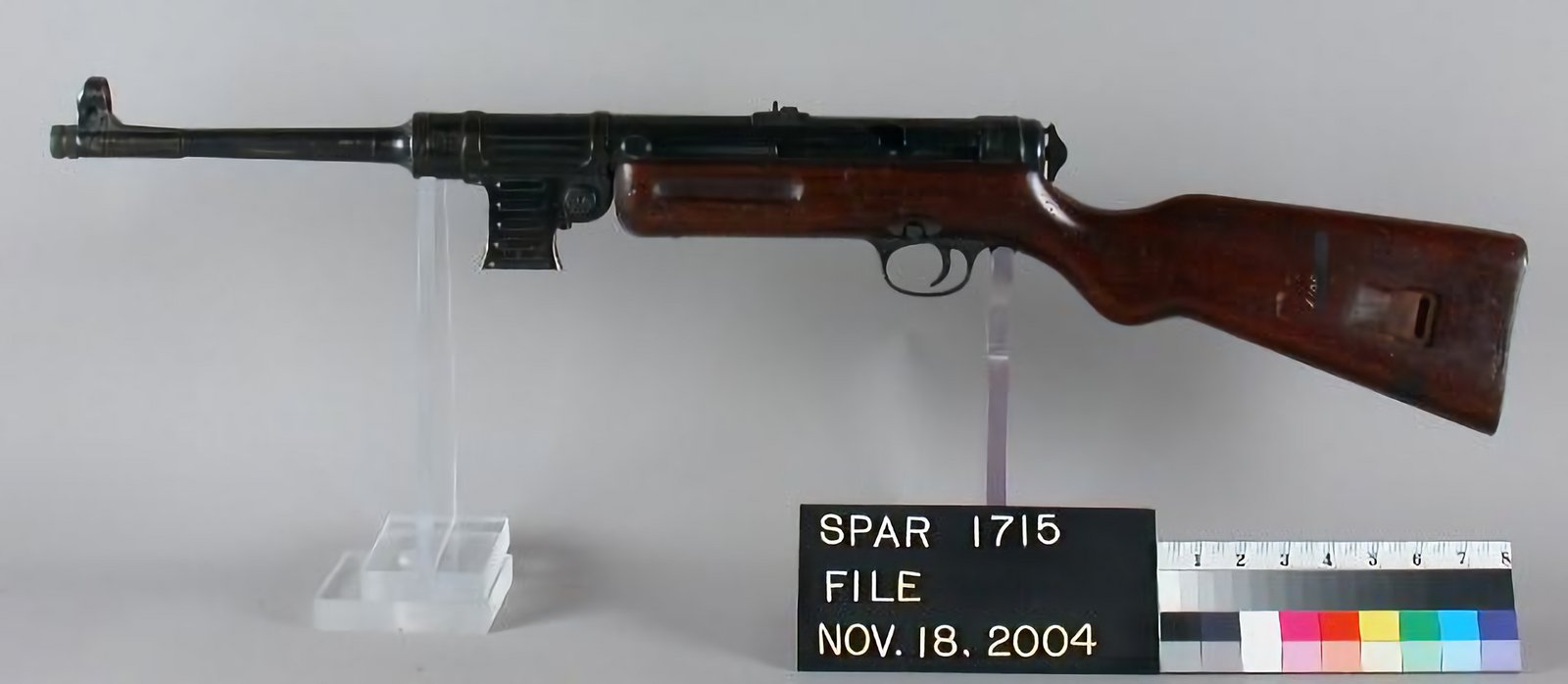
Then Erma sued. “Later in 1941, rival company Erma Werke sued Haenel, at which Schmeisser was Chief Designer, for patent infringement. Production subsequently ceased on the MP 41.”7
This is worth dwelling on, because it disposes of the myth by a route that requires no technical argument at all. Erma and Haenel were legal adversaries over this design, and Erma was the party asserting ownership of it. A weapon that Schmeisser had designed could not have been the subject of a successful infringement action brought against Schmeisser’s own employer by the firm that made it. The corporate history contradicts the popular attribution directly: the MP 40’s proprietor, in the view of a court sufficient to stop production, was Erma.
2.7 Why the Allies Adopted the Name
Three things converged.
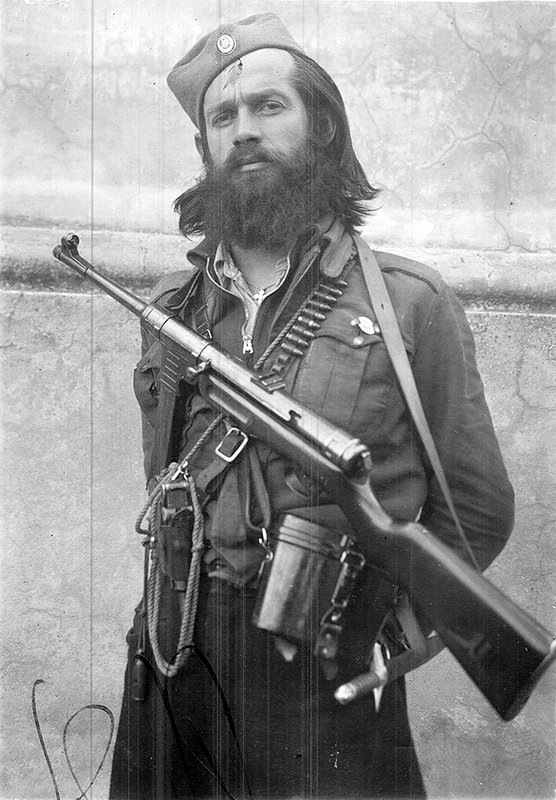
The name was already attached to the class. German submachine guns had been “Schmeissers” in loose usage since the MP 18 and MP 28,II, both genuinely his and both encountered by Allied and colonial forces well before 1939. The MP 28,II in particular was exported widely and used in the Spanish Civil War and by police forces across Europe.
The magazine carried the name into the hands of the people doing the naming. Whatever the exact marking, the sources are unanimous that the patent is the reason the weapons became internationally known as Schmeisser MPs.14
And nothing on the weapon offered a competing name. German wartime production marked receivers with three-letter manufacturer codes — ayf, bnz, fxo — rather than company names, as Volume 1 records and Volume 3 examines. A captured MP 40 does not say Erma on it anywhere. It does not say Vollmer. A soldier looking for a name to call the thing found, on the sources available to him, exactly one.
The misattribution is not a failure of intelligence or of curiosity. It is what happens when the only human name on an object belongs to someone who did not make it.
2.8 What Schmeisser Did Afterwards
The end of the story is a small correction to a different piece of folklore.
From 1945 to 1952 Schmeisser worked in the Soviet Union at factory No. 74 — Izhmash — as one of five appointed German designers.1 This period is the seed of the persistent claim that he was the real author of the AK-47, a claim this dive does not take up beyond noting one unflattering detail from the record: Soviet assessments of him were not admiring, describing him as “practical” but lacking formal training.1 He returned to Germany and died in Suhl on 12 September 1953.
The man whose name is on a million weapons he did not design spent his last working years being condescended to in a country that would take credit for a weapon he probably did not design either.
2.9 The Verdict
On the popular claim — “the MP 40 is a Schmeisser” — the answer is no, and it is not close. The programme, the prototype lineage, the external design and the corporate ownership were Erma’s under Heinrich Vollmer. Erma sued Haenel over it and won a cessation of production. Schmeisser never worked for Erma and never ran the project.
On the standard correction — “Schmeisser had nothing to do with it but a magazine patent” — the answer is that this is overstated. A Schmeisser prototype, the MK 36,II, competed in the trials that produced the adopted design, and specialist examination of the surviving prototypes attributes the magazine, bolt and fire control system of the MP 38 and MP 40 to it. The general reference works that carry the “nothing to do with it” phrase do not discuss the MK 36,II at all, which is consistent with the phrase being a compression rather than a considered rebuttal of the prototype evidence.
On the name — the magazine did it. Every source agrees the patent is why the weapons became known internationally as Schmeissers. The specific mechanism usually given, a Schmeisser patent marking on the magazine body, is plausible and universally repeated but was not verified here.
And on the weapon that should carry his name: the StG 44. It is the more important design by a wide margin, it is unambiguously his, and almost nobody calls it a Schmeisser.
2.10 Bibliography
Footnotes
-
“Hugo Schmeisser”, English Wikipedia, consulted 2026-09-17 — his dates and birthplace, his father Louis Schmeisser, the C.G. Haenel association from around 1920, the list and production figures of his designs including about 17,000 MP 18s and about 26,500 MP 41s largely for export, the statement that he “had no role in the development of the MP-40 submachine gun despite its nickname ‘Schmeisser’, although he held a patent on the magazine”, the attribution of the design to Heinrich Vollmer, the observation that the magazine patent is why the weapons became “internationally known as ‘Schmeisser MPs’”, the StG 44 as his most important development, and his 1945–1952 work at Soviet factory No. 74 with the Soviet assessment of him. ↩ ↩2 ↩3 ↩4 ↩5 ↩6 ↩7 ↩8 ↩9 ↩10 ↩11 ↩12 ↩13
-
“MP 18”, English Wikipedia, consulted 2026-09-17 — Schmeisser’s authorship within a Bergmann team in 1917, MP 18/I production of about 37,000 and MP 28,II production of about 80,000, the post-1920 conversion to straight box magazines “similar to those later employed in the MP 40”, and the statement that the MP 18 “formed the basis of most submachine guns manufactured during the first half of the 20th century”. ↩ ↩2 ↩3 ↩4
-
“MP 40”, English Wikipedia, consulted 2026-09-17 — the Allied use of the name “Schmeisser”, the quoted statement that Schmeisser “did not, however, have anything to do with the design or development of the MP 40, although he held a patent on the magazine”, and the Erma, Geipel, MP 36 and Vollmer development sequence. ↩ ↩2 ↩3
-
“Heinrich Vollmer” and “MP 40”, German Wikipedia, consulted 2026-09-17 — Vollmer as the actual designer of the MP 38 and MP 40, the account that the weapons became known as “Schmeisser-MP” because Schmeisser supplied the magazine component, and the MP 41’s wooden furniture and single/automatic fire selection. ↩ ↩2 ↩3 ↩4 ↩5
-
Forgotten Weapons, “Schmeisser MK-36,II – The Mechanics of the MP40”, https://www.forgottenweapons.com/schmeisser-mk-36ii-the-mechanics-of-the-mp40/ — the MK 36,II as Hugo Schmeisser’s Haenel prototype of the mid-1930s, the two surviving examples at the Royal Armouries in 9×19mm and 9×25mm, the unexplained magazine safety, and the quoted statement that it “contributed its magazine, bolt, and fire control system to the MP38 and MP40 design.” ↩ ↩2 ↩3
-
Forgotten Weapons, “Erma EMP36: External Form Factor of the MP40”, https://www.forgottenweapons.com/erma-emp36-external-form-factor-of-the-mp40/ — Vollmer’s authorship of the EMP 36, and the quoted statement that the trials produced “a combination of their features into a hybrid design. The Erma provided the external form factor, and the Schmeisser contributed the internal mechanics for the MP38 and in turn MP40.” ↩ ↩2 ↩3
-
“MP 41”, English Wikipedia, consulted 2026-09-17 — the quoted description of the MP 41 as “an MP 40 upper receiver with a lower receiver and stock assembly of an MP 28/II submachine gun”, manufacture at Haenel under Schmeisser as Chief Designer, issue principally to SS and police units and supply to Romania, and the quoted account of Erma Werke’s 1941 patent-infringement suit against Haenel and the subsequent cessation of MP 41 production. ↩ ↩2 ↩3
Comments (0)