FN P90 & PS90 · Volume 7
Owning One — Takedown, Maintenance, Buying Used and Feeding It
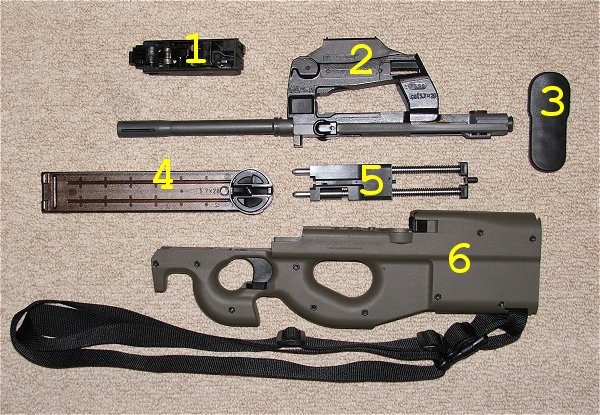
The PS90 is easier to take apart than almost any conventional rifle and harder to clean than most. Both facts follow from the same design decision: the weapon is a shell containing a small number of large groups, which come out quickly, and the shell itself is an awkward shape to get a brush into.
Everything procedural in this volume comes from FN’s own owner’s manual rather than from secondary sources.1
7.1 Field Stripping
FN’s procedure, in order, with the manual’s own cautions.1
Before anything. Carry out the safety checks; remove the magazine and completely unload the weapon.
1. Cock the hammer. Pull the cocking handle completely rearward and release it. The manual is explicit about why this matters: it is only possible to remove the moving parts group and the hammer group when the hammer is at the lowered, cocked position. And then a second caution follows immediately — from that point on, do not pull the trigger, because doing so returns the hammer to its raised, decocked position and the disassembly will not proceed.
This is the one place a first-time owner goes wrong, and the manual anticipates it: if the trigger has been pulled after the moving parts are out, the fix is to reassemble the weapon, cock it again with the cocking handle, and start over.
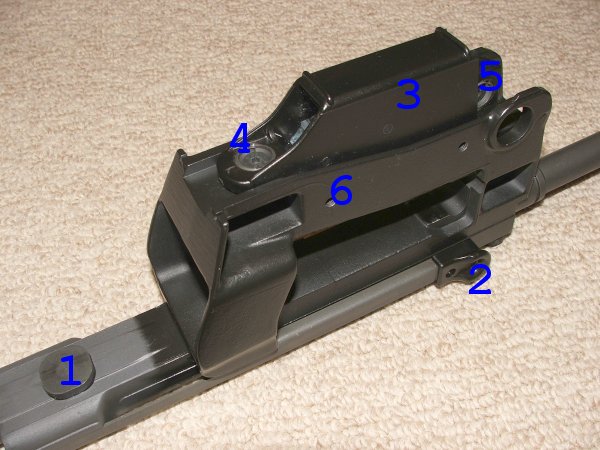
2. Release the barrel support and upper rail group. Push down on the barrel support lock, move the group slightly forward, then slide it completely out of the frame.
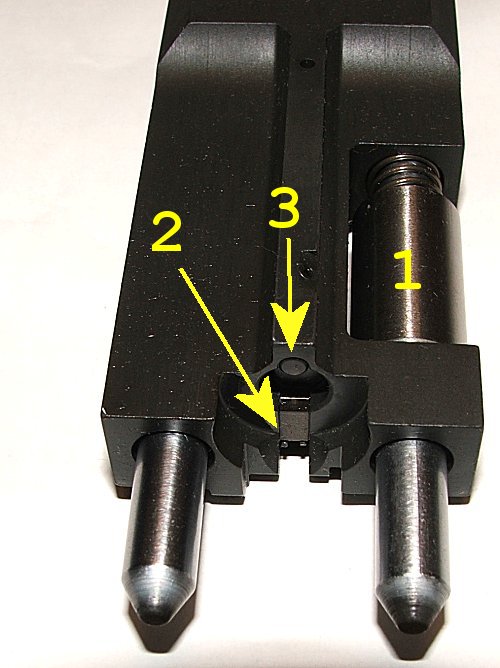
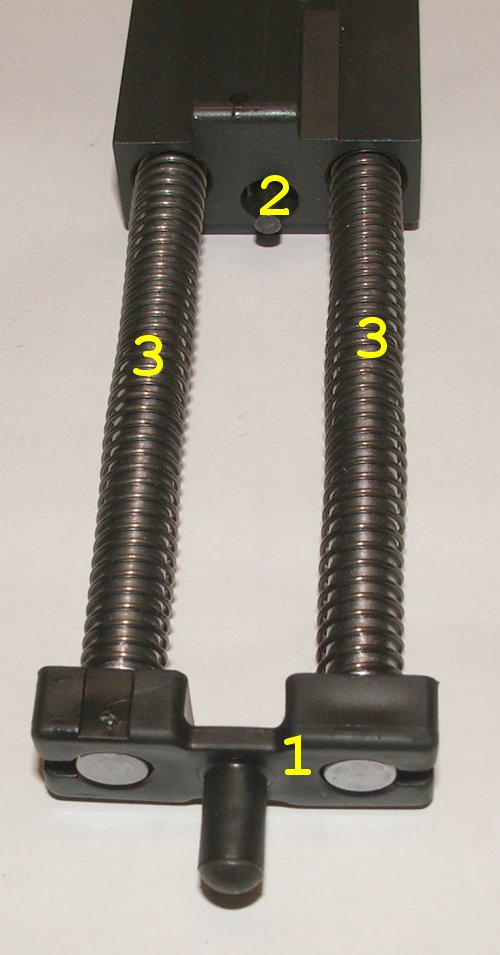
3. Remove the moving parts group. Push it forward through the magazine opening, then carefully slide it out of the frame.
4. Remove the butt plate. At the rear, slide the butt plate up and off the frame.
5. Remove the hammer group. Raise the hammer group release lever, pull the hammer group slightly rearward to release it, then slide it completely out of the frame.
That is the whole field strip, and FN states that “this level of disassembly is sufficient to perform thorough cleaning: further disassembly should only be carried out by a FN Recommended Service Center / your departmental armorer.”1
7.1.1 Reassembly, and the four points FN flags
The manual gives the reverse order with four specific cautions, each of which exists because it is a known way to get it wrong:1
- Ensure all components are perfectly clean.
- Ensure each group locks into position as it is reinstalled.
- When reinserting the hammer group, hold the hammer group release lever at the raised position.
- When reinstalling the moving parts group, hold it so that the raised surface is on top. When reinserting the barrel support and upper rail group, press the barrel support lock.
And then the step most owners skip: after reassembly with an empty magazine, point the weapon in a safe direction and pull the trigger to decock the hammer — having first confirmed that both the magazine and the chamber really are empty. A weapon put away cocked is a weapon with a compressed spring and a surprise waiting.
7.2 Stripping the Magazine
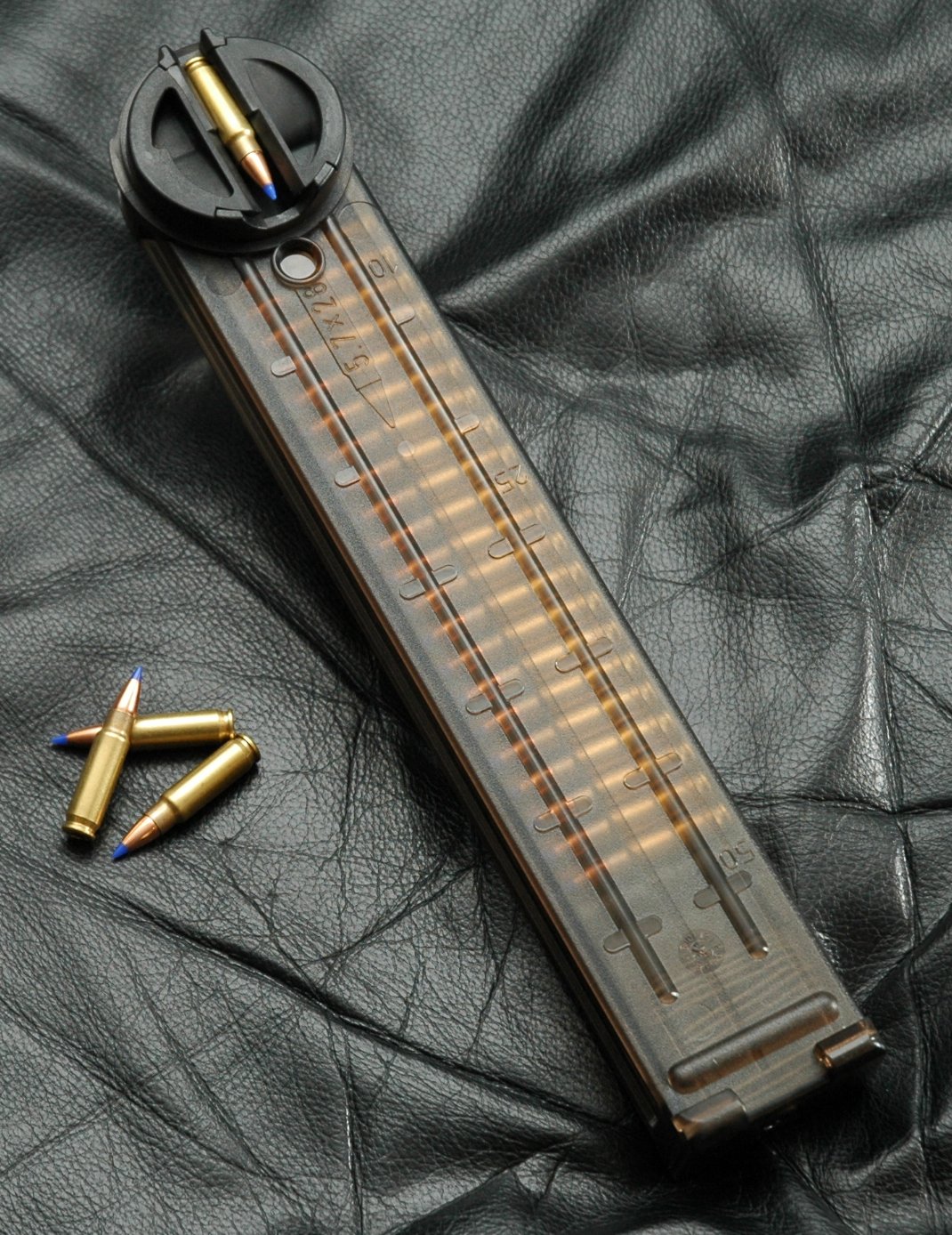
The magazine is a mechanism and FN documents its disassembly separately.1
Procedure. With the magazine removed and unloaded, press on the magazine bottom lock through the hole in the magazine bottom plate, using a finger. Holding the lock in, slide the bottom plate sideways until it disengages from the magazine body. The manual warns explicitly that the bottom lock is under the force of the follower spring — this is a part that will leave at speed if it is released carelessly.
Then carefully release the pressure on the follower assembly, take the follower assembly out of the body, and incline the body to remove the two rollers.
Reassembly requires that the two rollers are inserted one behind the other into the body, that the follower assembly is oriented correctly — the manual points to a pictogram moulded onto the side of the magazine body for this — and that the bottom plate can only be slid back when the bottom lock is pushed and held flush with the edge of the body. Confirm the bottom plate locks.
Why this matters more than on a conventional magazine. The rollers and the follower are the mechanism that turns each cartridge through ninety degrees. Grit in there is not cosmetic. The translucent body makes fouling visible, which is a useful early warning that no conventional magazine offers.
7.3 Cleaning, and What the Bullpup Layout Costs
The manual carries separate cleaning and lubrication procedures for before firing and after firing, and requires that the before-firing procedure has been carried out before the weapon is used.1
The specific difficulties of this weapon.
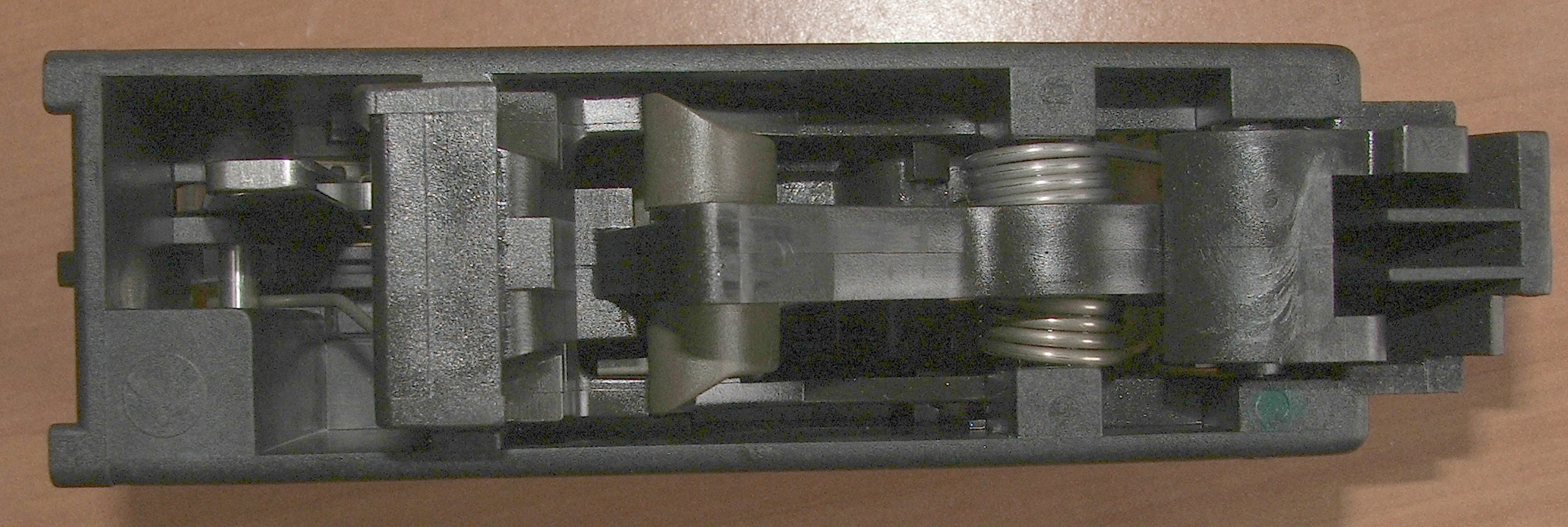
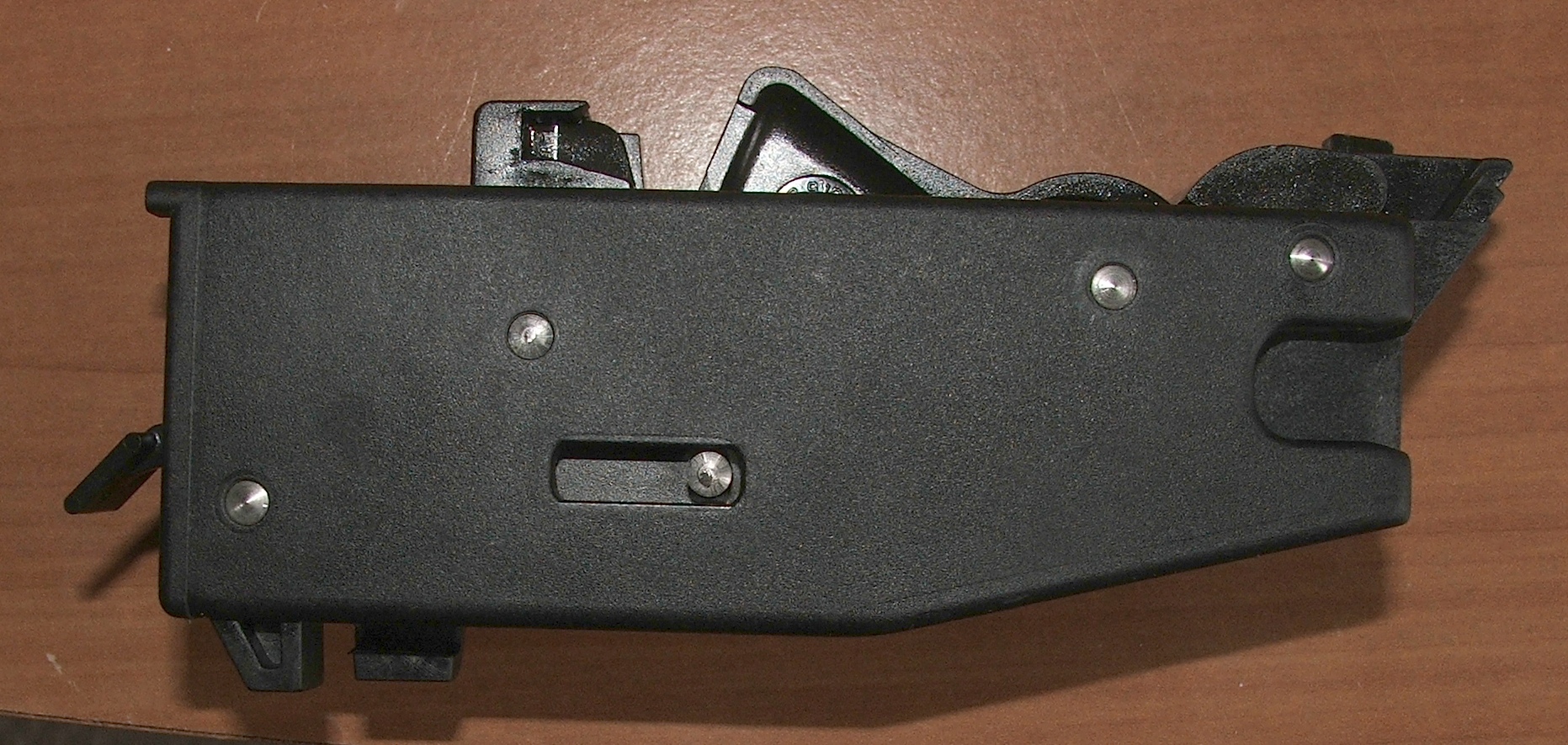
- The frame is a long closed shell. With the groups out, the inside of the frame is accessible but awkward — it is a deep, narrow box rather than an open receiver.
- The ejection chute runs the length of the grip area and accumulates the residue of everything that has passed through it. It is a natural place for fouling to build and an easy place to overlook.
- Barrel cleaning is from the muzzle. With the barrel support group out of the frame, the barrel is accessible as a separate assembly, which is better than cleaning a bullpup in one piece — but a bore guide and a rod discipline matter, because muzzle-end cleaning is where crowns get damaged.
- The magazine needs attention on a schedule, as § 7.2 sets out.
The cartridge’s own contribution. The 5.7×28 is a small-capacity centrefire round and the PS90 is a blowback action, which means the action opens while pressure is still meaningful and blows a share of combustion residue back into the receiver. This is characteristic of blowback designs generally and is the mechanism behind a dirty action rather than a defect of this weapon.
A manual instruction worth quoting because it surprises people. FN’s technical specification section carries the direction: “Only use specially coated factory loaded ammunition,” warning that “the use of any non-factory loaded and coated ammunition can result in pressures leading to personal injury as well as to damage to the firearm.”1 The 5.7×28’s projectiles are polymer-coated, and FN’s position on hand-loaded or uncoated ammunition in this weapon is unambiguous. Anyone who reloads should read that sentence before deciding it does not apply to them.
7.4 What FN Restricts, and the Warranty Position
The manual states that the weapon’s warranty does not cover firearms that have “been modified (removal of metal from the barrel, modifications of the firing mechanism),” and that parts and labour to restore the weapon to original specification are payable by the owner.1
Two practical readings follow. A Form 1 short-barrel conversion removes metal from the barrel and should be assumed to end the factory warranty; that is a cost of the conversion in Volume 4 that is easy to forget. And modifications of the firing mechanism — the trigger work discussed in Volume 6 — sit in the same sentence.
FN’s service route is the FN Product Service Center, with the manual directing law-enforcement users to their departmental armorer, and giving a customer service line and a service/repair form available from FN’s website.1 The manual’s instruction to never return ammunition with a firearm is standard and worth repeating.
7.5 Wear Points and Known Issues
What FN documents. A barrel service life of 20,000 rounds for the platform.2 That is a long life for a chrome-lined hammer-forged barrel firing a small-capacity cartridge, and for almost every civilian owner it is effectively “the barrel will outlast the ammunition budget.”
What the design suggests, labelled as inference. In a straight blowback action the recoil spring and the bolt’s bearing surfaces do all the work of controlling the action, so the recoil spring assembly is the component most likely to need attention with high round counts. The magazine’s rotating feed mechanism is the second candidate, being the only part of the weapon doing something mechanically unusual. Neither of these is a documented failure mode; they are the places to look first.
What could not be verified. No documented pattern of recalls, service bulletins, or characteristic failures for the PS90 was located during this work. That is not the same as there being none, and the absence should be read as a gap in this dive rather than as a clean bill of health.
7.6 Buying Used — What to Inspect
The PS90 has been sold in the United States since 2005, so the used market now spans two decades and three configurations.
Establish which configuration it is, from the weapon rather than the listing.
- Barrel length settles PS90 versus P90 immediately — and if a private seller is offering something with a 10-inch barrel and no registration paperwork, the conversation is over.
- The selector settles it definitively. S and 1 only is a PS90; S, 1 and A is a machine gun and its transfer is governed by everything in Volume 4.
- Sight housing identifies the generation. A moulded reflex housing means a Standard or USG pattern; a Picatinny rail means a TR or current Standard. The USG (discontinued 2011) and PS90 TR (discontinued 2013) are the two variants a used buyer will encounter that are no longer made.2
Mechanical checks.
- Strip it. The field strip in § 7.1 needs no tools and takes under a minute, and it exposes the inside of the frame, the moving parts group and the hammer group. A seller who will not permit it is telling the buyer something.
- Check the ejection chute for accumulated fouling, which is a direct readout of how the weapon has been maintained.
- Cycle the action with the cocking handle on both sides, and confirm the selector indexes positively between S and 1.
- Check the magazine body for cracks and the translucent polymer for crazing, and confirm the bottom plate is locked. Magazines are a consumable in a way the weapon is not.
- Look at the muzzle brake and the crown, which are exposed on this weapon in a way they are not on a conventional carbine with a long handguard.
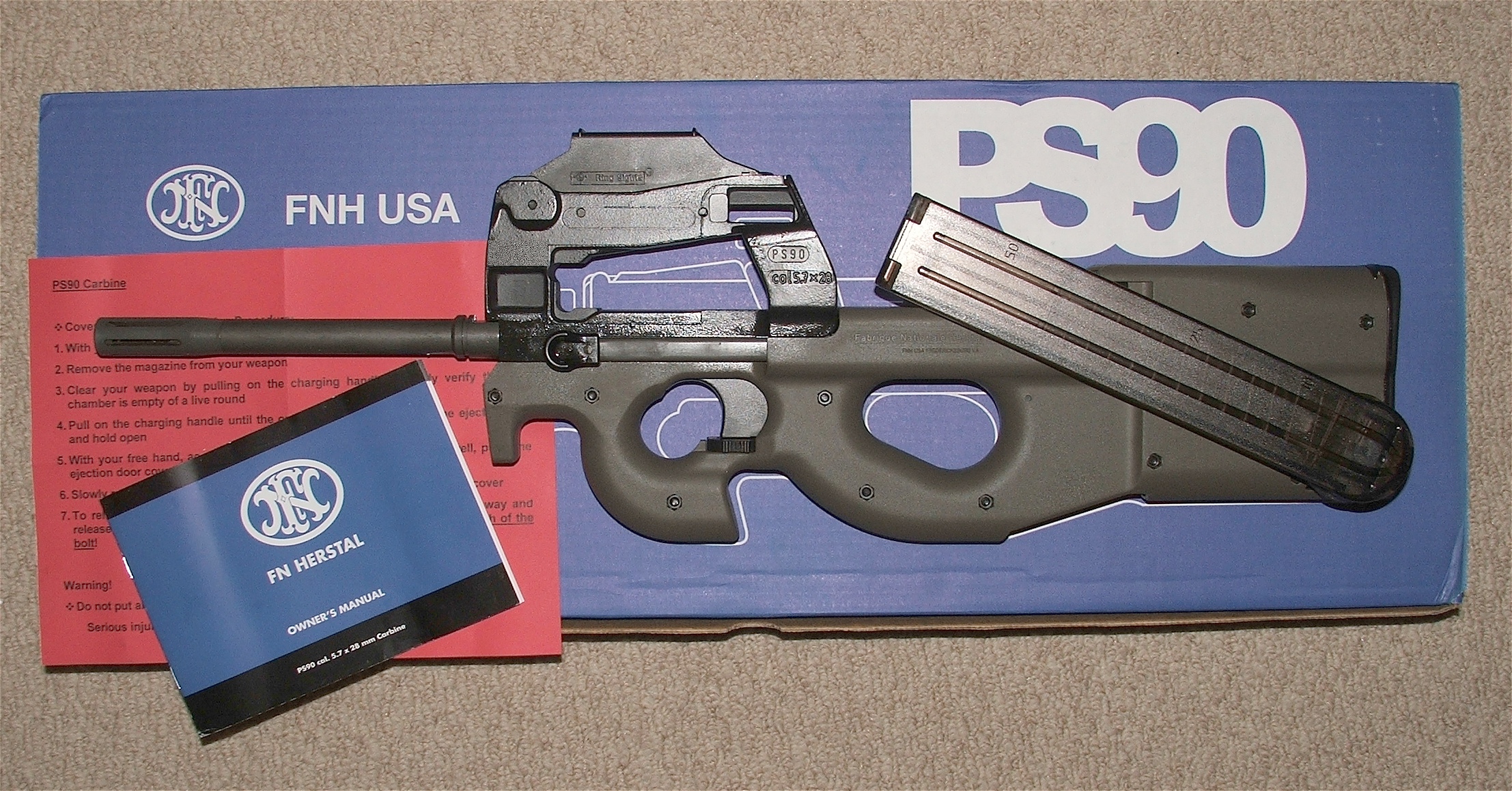
Paperwork and price. A standard PS90 is an ordinary rifle transfer. FN’s current MSRP for the PS90 Standard is $2,330.00, which is the reference point a used price should be measured against.3
7.7 What It Costs to Feed
Ammunition is the real cost of this weapon, and the arithmetic is unforgiving.
The following are current retail listings for 5.7×28, taken from one large online retailer during this work and given as a snapshot rather than as a market survey.4 Prices are for in-stock items.
Table 1 — 7.7 What It Costs to Feed
| Load | Quantity | Price | Cost per round |
|---|---|---|---|
| FN SS197SR, 40 gr V-Max | 500 | $273.99 | 54.8¢ |
| Fiocchi, 40 gr FMJ | 450 | $259.99 | 57.8¢ |
| Fiocchi, 40 gr FMJ | 150 | $88.99 | 59.3¢ |
| Fiocchi, 40 gr polymer tip | 50 | $29.99 | 60.0¢ |
| Fiocchi, 40 gr polymer tip | 500 | $299.99 | 60.0¢ |
| FN, 40 gr V-Max | 50 | $31.95 | 63.9¢ |
| FN, 27 gr lead-free JHP | 500 | $479.95 | 96.0¢ |
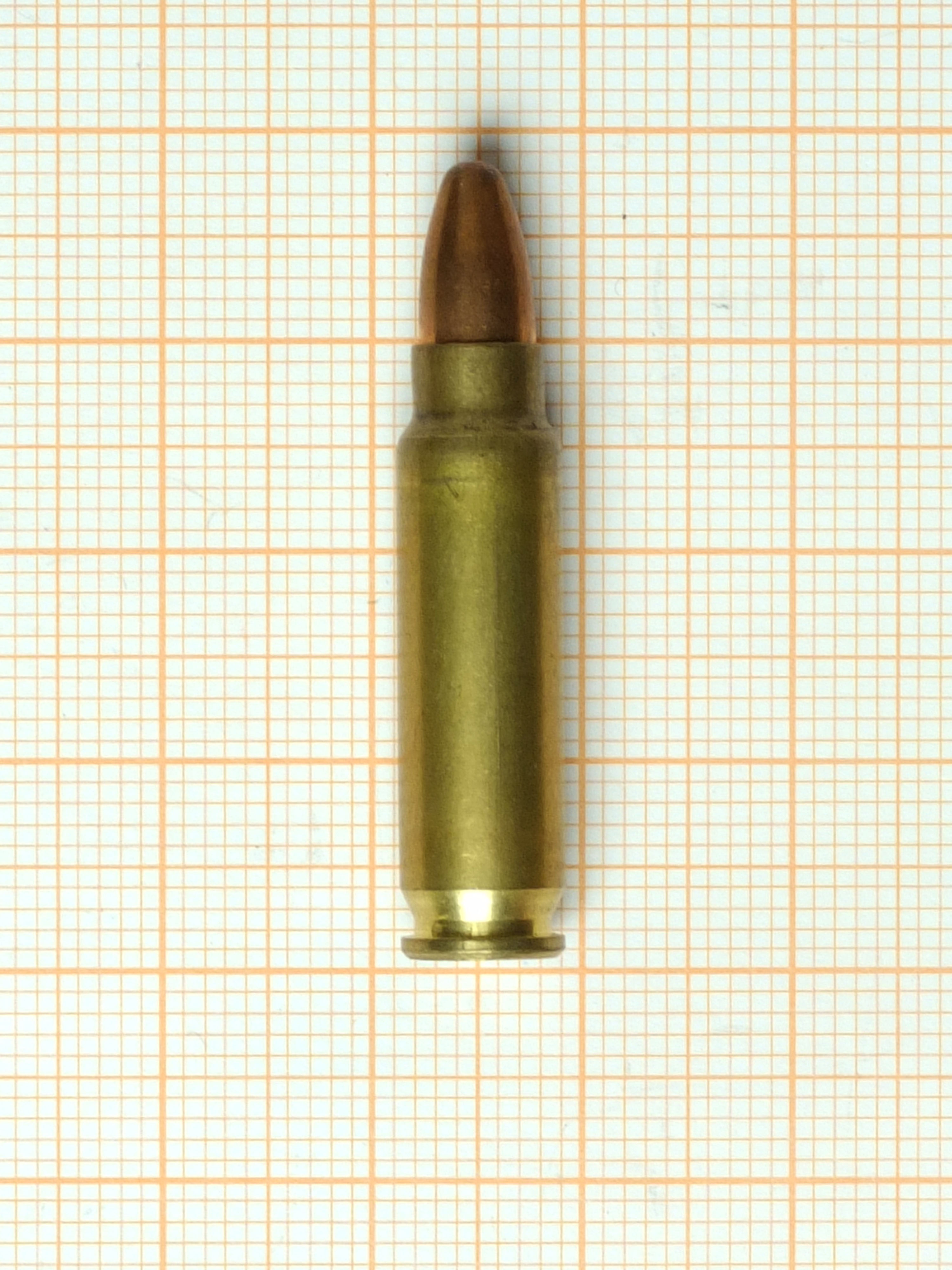
What that means in practice. Practice ammunition runs roughly 55 to 65 cents a round, and the lead-free hollow points run to about 96 cents. Bulk buying saves real money — the 500-round cases are the cheapest per round in every line — but the floor is high.
The number that matters is per magazine. A single 50-round magazine costs $27 to $32 to fill with practice ammunition. That is the figure a prospective owner should sit with, because it is the one that governs how often the weapon actually gets shot. A range session that would be unremarkable with a .22 or a 9 mm carbine is a meaningful expense with this one.
For comparison across this hub’s other dives, 5.7×28 sits well above 9×19 and 5.56×45 in cost per round and is in the same territory as premium defensive pistol ammunition — while being the practice ammunition for this weapon rather than the premium option.
A note on availability. The listings above show several loads in stock in quantity from at least three makers (FN, Fiocchi and Federal), which is a healthier supply picture than this cartridge has had historically. FN’s own current line runs to five products (Volume 2), and the growth of 5.7×28 handguns from several manufacturers has broadened the market considerably. Availability is not currently the constraint; price is.
7.8 A Worked Round-Count Budget
The cost per round in § 7.7 is abstract until it is attached to a year of ownership, so here is the arithmetic made concrete. Figures use 57 cents a round, the approximate midpoint of the practice-ammunition range.
Table 2 — 7.8 A Worked Round-Count Budget
| Usage pattern | Rounds per year | Ammunition cost |
|---|---|---|
| Occasional — one 50-round magazine a month | 600 | about $340 |
| Regular — two magazines a month | 1,200 | about $685 |
| Frequent — 200 rounds a month | 2,400 | about $1,370 |
Two observations follow, and both are more useful than the per-round figure.
The weapon is cheap relative to its appetite. At the frequent tier, a PS90 owner spends more than half the weapon’s $2,330 MSRP on ammunition every year.3 Very few rifles have that property; it is a characteristic of the cartridge, not of FN’s pricing.
The 20,000-round barrel life is effectively unreachable at civilian volumes. At the frequent tier it represents more than eight years of shooting.2 For almost every private owner, the barrel is not a consumable and should not be treated as one when evaluating a used weapon.
7.9 Storage and Transport
Nothing here is exotic, but two points are specific to this weapon.
Store it decocked. The manual’s reassembly sequence ends by directing that the weapon be decocked by pulling the trigger on an empty chamber, after confirming both the magazine and the chamber are empty.1 A weapon put away cocked sits with a compressed spring and with the mechanism in the state that makes disassembly impossible without cycling it first.
It does not fit conventional rifle cases well. At 26.23 inches overall it is far shorter than a conventional carbine, which is helpful, but at 2.3 inches wide with a magazine on top it is a bulky shape rather than a slim one.3 A case sized for the length will often be wrong for the profile.
Magazines deserve their own storage thought, being both the expensive consumable and the part with internal mechanism. Storing them loaded is a matter on which reasonable owners disagree; storing them clean is not.
7.10 The Closing Position
The PS90 is a well-made, genuinely unusual weapon with three real virtues — handling, ambidexterity, and a 50-round magazine that costs nothing in bulk — and three real costs: a heavy trigger that cannot be designed out of the layout, a fixed length of pull that cannot be adjusted, and ammunition at roughly sixty cents a round.
It is not a precision rifle and does not try to be. It is a 200-metre carbine that handles better than anything of comparable length, and for a left-handed shooter it is close to unique.
The buying decision set out across these volumes reduces to this. There is no select-fire P90 available and there never will be, so the comparison a buyer is actually making is between an unmodified PS90, a rail-and-optic PS90, and a Form 1 short-barrelled PS90 — and the first of those, which requires no paperwork from anyone, has the best ballistics of the three.
7.11 What Could Not Be Verified
- Any recall, service bulletin or documented failure pattern for the PS90, in either direction.
- Parts availability and pricing for PS90 spares, which could not be established from FN or from a verified distributor during this work.
- Cleaning interval guidance beyond the manual’s before-firing and after-firing procedures; FN does not publish a round-count service interval.
- Whether the used market distinguishes the discontinued TR and USG variants in price. No verified pricing data was located.
Sources
Footnotes
-
FN Herstal / FN America, FN PS90 Owner’s Manual, document 1605_PS90_Owners_Manual_v3, https://fnamerica.wpenginepowered.com/wp-content/uploads/2016/10/1605_PS90_Owners_Manual_v3.pdf — § 5.1 field stripping the carbine and its cautions, § 5.2 disassembling the magazine including the follower-spring warning and the two rollers, § 6 cleaning and lubrication before and after firing, § 11 technical specifications and the coated-ammunition warning, the warranty and modification language, and the service and repair policy. ↩ ↩2 ↩3 ↩4 ↩5 ↩6 ↩7 ↩8 ↩9 ↩10
-
“FN P90”, English Wikipedia, consulted 2026-09-17, for the 20,000-round barrel service life and the PS90 TR (discontinued 2013) and PS90 USG (discontinued 2011) variant status. ↩ ↩2 ↩3
-
FN America, “FN PS90 Standard”, https://fnamerica.com/products/rifles/fn-ps90-standard/ — MSRP $2,330.00. ↩ ↩2 ↩3
-
Ammo.com 5.7×28mm category listings, consulted 2026-09-17, for the in-stock products, quantities, prices and per-round costs tabulated in § 7.7. Velocity figures published alongside those listings are deliberately not used here; see Volume 2 § 2.3 for the reason. ↩
Comments (0)