FN P90 & PS90 · Volume 5
Shooting It — Ergonomics, the Trigger, and the Ninety-Degree Rotation
The P90 layout produces a shooting experience that is genuinely unlike anything else, and the reactions to it divide along a predictable line: the handling is almost universally praised and the trigger is almost universally criticised. Both reactions are correct, and both have specific mechanical causes that are worth understanding rather than merely reporting.
This volume is written primarily about the PS90, because that is the weapon a reader can actually shoot, with the differences from the P90 noted where they matter.
5.1 The Magazine, and What Happens Inside It
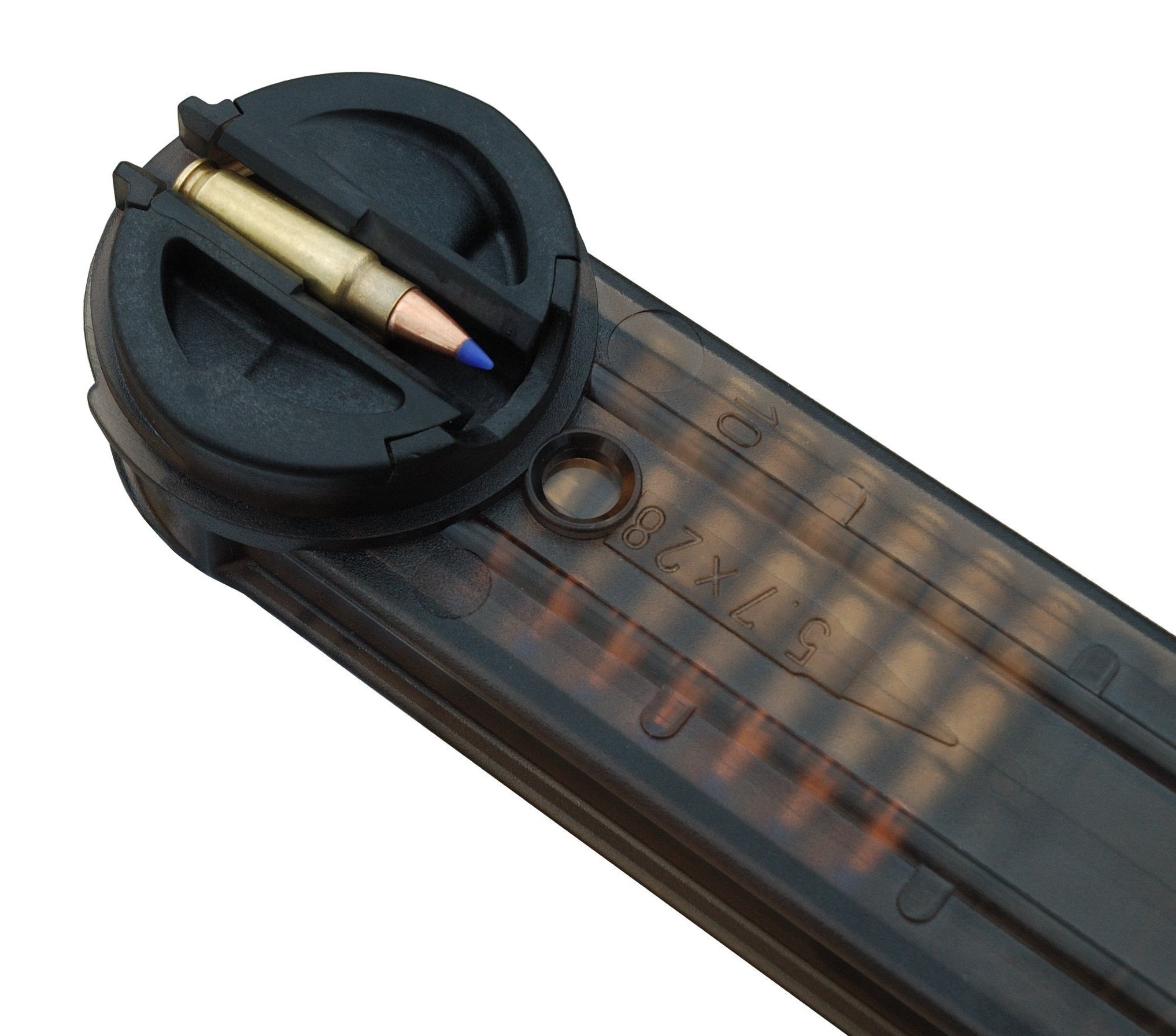
The most-asked question about this weapon is how a cartridge lying sideways on top of the receiver ends up pointing down the barrel. The answer is a purpose-built rotating feed mechanism protected by US Patent 4,905,394.1
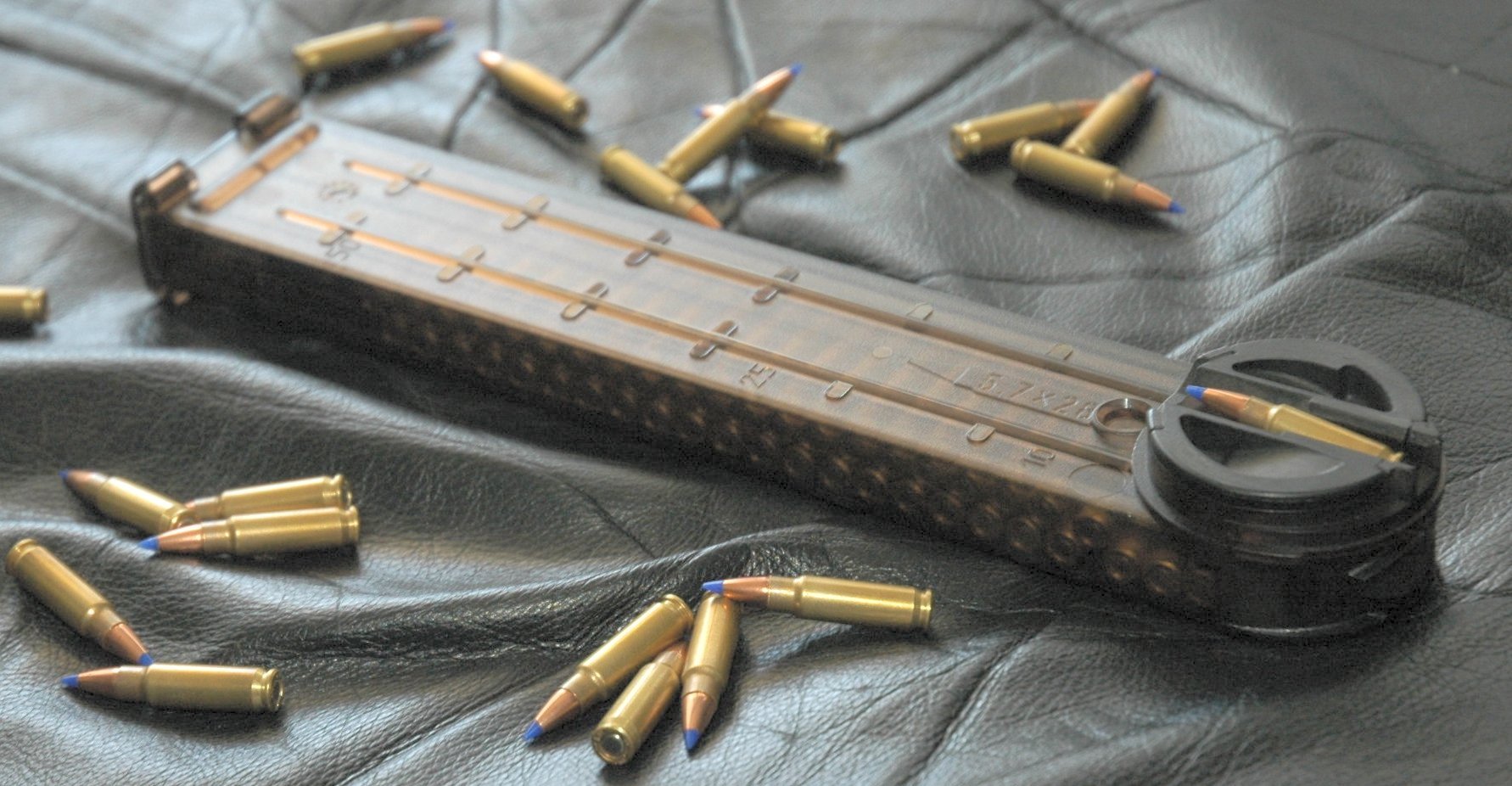
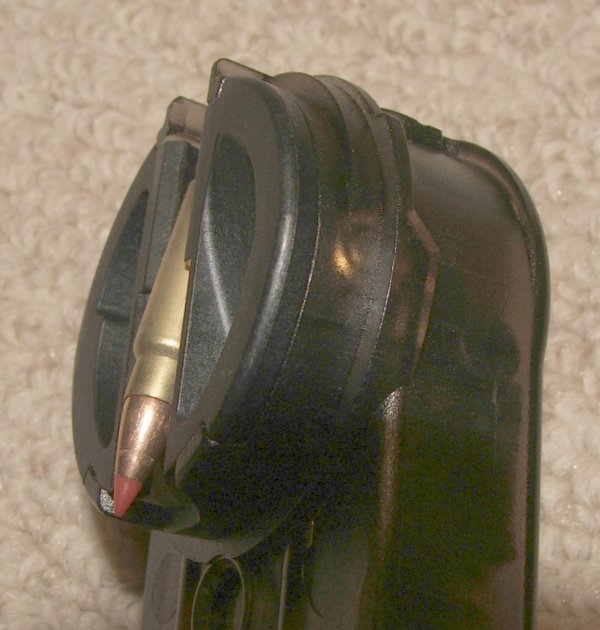
The geometry. The magazine is a long translucent polymer box lying flat along the top of the shell. Cartridges sit inside it transversely — perpendicular to the bore — in two columns, with the follower pushing them rearward along the body rather than upward. At the rear of the magazine is a spiral feed ramp. As each cartridge reaches it, the ramp turns the round through ninety degrees, from lying across the weapon to pointing forward, and delivers it into the feed position above the bolt.
Why it is done this way. Fifty rounds is the whole point. A conventional 50-round box magazine would protrude far enough below the weapon to destroy the compactness that justifies the design; laid flat along the top, fifty rounds add nothing below the shooter’s hand. The rotation is the price of that, and it is paid inside the magazine rather than by the action — the bolt sees a conventional cartridge presented conventionally.
What it means in practice.
- The magazine is a machine, not a box. Its internals are a follower assembly and two rollers, as the field-stripping procedure in Volume 7 sets out. There is more to go wrong than in a conventional magazine, and there is correspondingly more reason to keep it clean.
- Loading is slow. Rounds are pressed down into the magazine through the top against the follower spring, and doing fifty of them is a chore. Loading aids exist for exactly this reason.
- The translucent body is a real feature. A glance shows the remaining rounds without removing anything. It is the single most-praised small detail of the design.
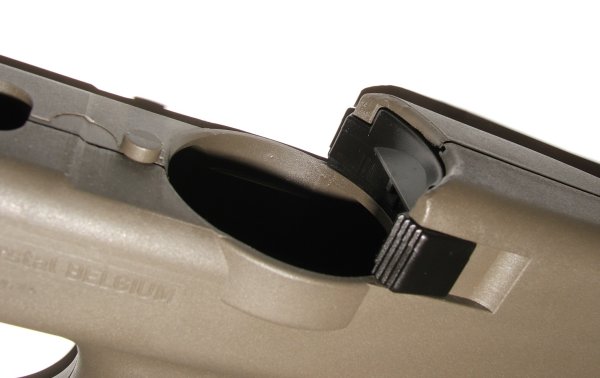
- Magazine changes are not fast. The magazine sits on top of the weapon and is released by a catch behind it; it does not drop free of its own weight, and the replacement has to be positioned and rocked into place rather than driven home. Anyone expecting AR-15 reload speed will be disappointed, and this is a characteristic of the design rather than a defect to be fixed.
5.2 The Trigger, and Why It Has That Reputation
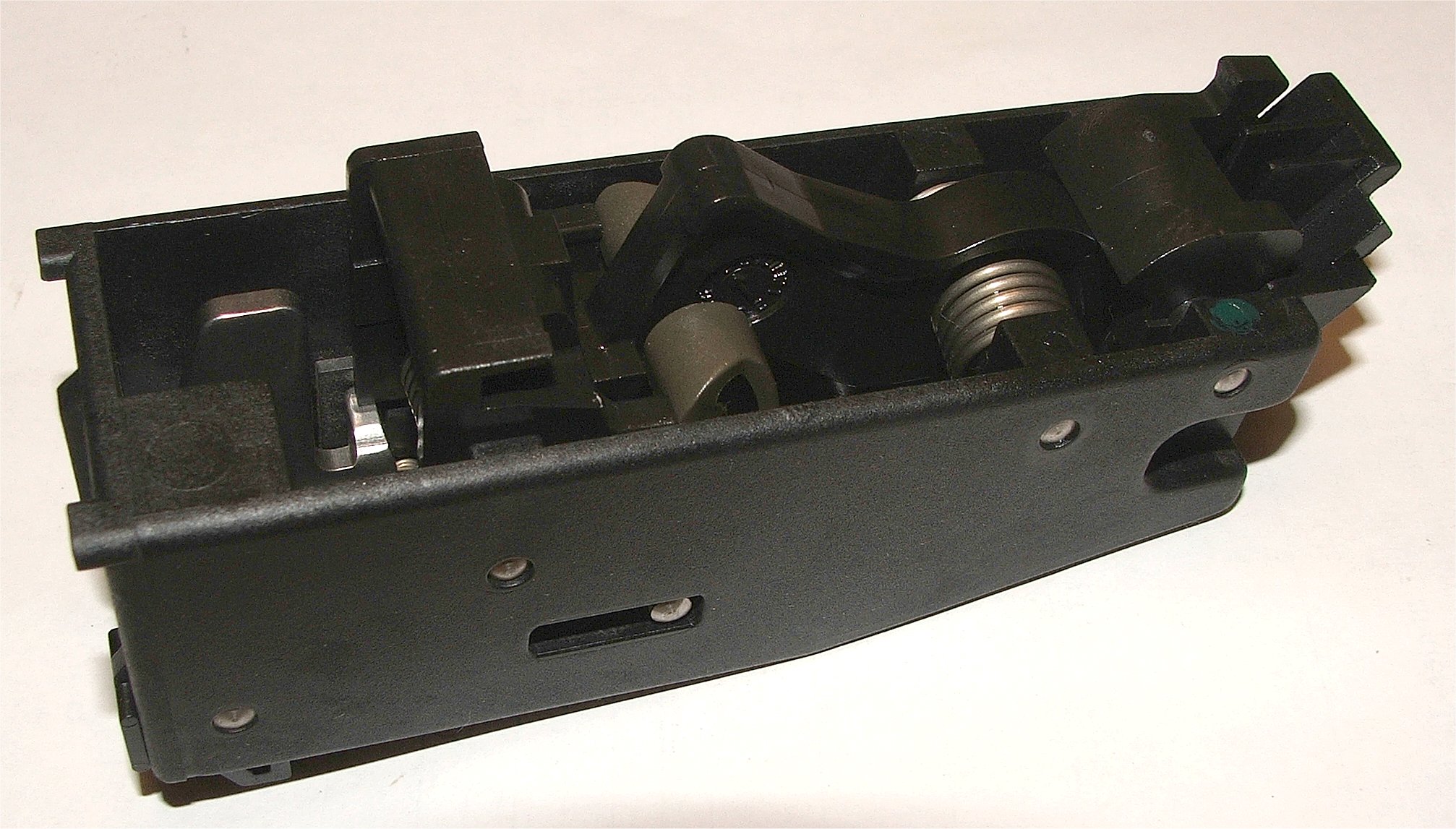
FN publishes the PS90’s trigger pull as 6 to 11 pounds.2 That is a wide band and a heavy one by any sporting standard, and it is the single most common complaint about the weapon.
The cause is structural rather than a matter of manufacturing care. In a bullpup the firing mechanism sits behind the trigger, so the trigger cannot act on the sear directly; it acts through a long linkage running rearward inside the shell. The general principle is well established: bullpups “need a much longer trigger-sear linkage due to the trigger’s forward position, so they tend to have stiffer, less precise triggers.”3 Every joint and bearing surface in that linkage adds friction, lost motion and variability, and the result is a trigger that feels vague and heavy compared with a conventional rifle where the finger is essentially pressing on the sear.
What this means for the shooter. The trigger is not an accuracy limit at the ranges this weapon is for. At 25 to 100 yards, against the kind of target a 200-metre-effective-range carbine is aimed at, an 8-pound trigger with some creep costs very little. It becomes the dominant limitation exactly when the shooter tries to use the PS90 as a precision rifle, which is not what it is.
What can be done about it is the subject of Volume 6, and the honest summary given there is that the aftermarket for this specific problem could not be catalogued from verifiable sources.
5.3 Ejection, and Why It Matters More Than It Sounds
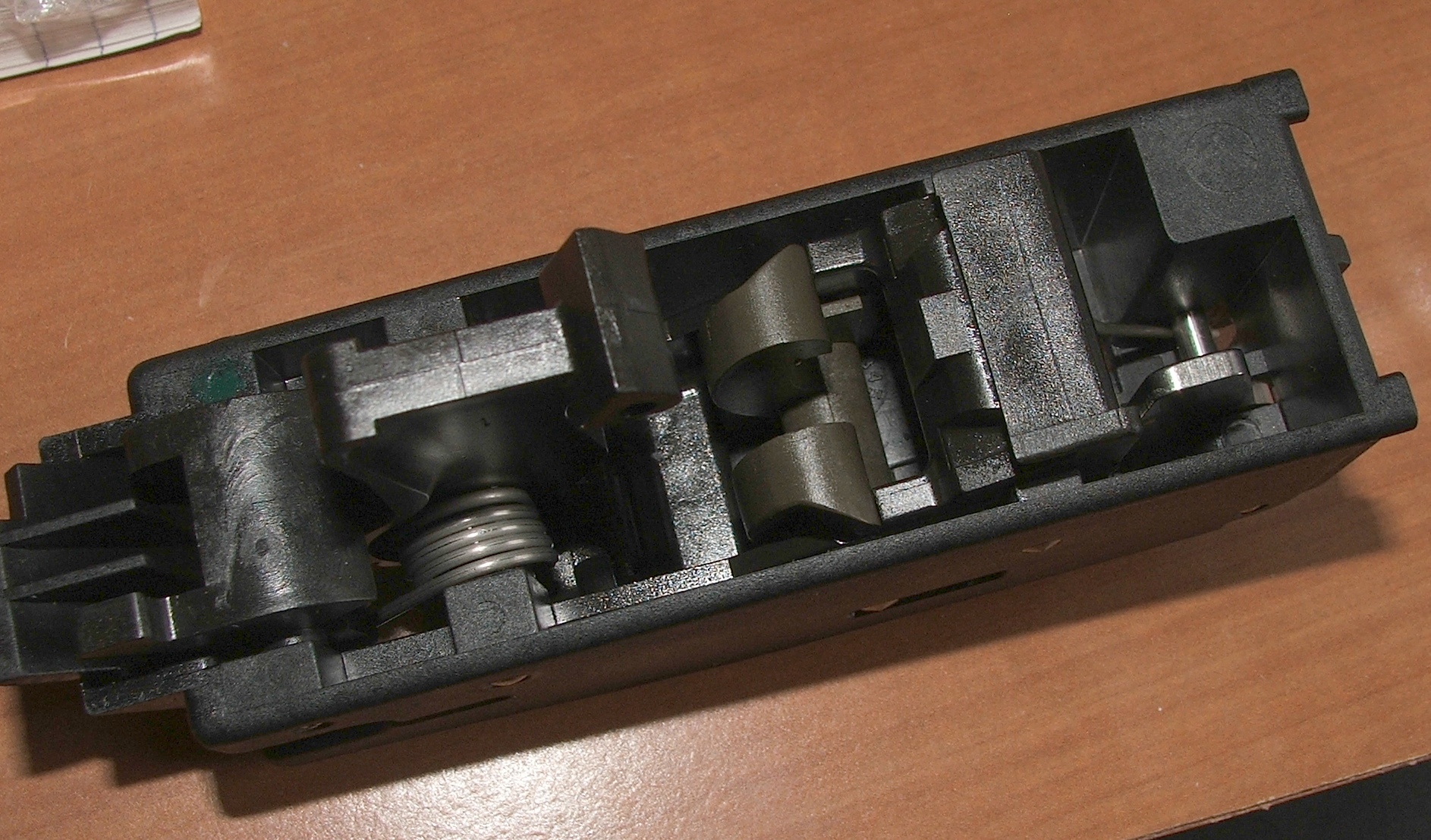
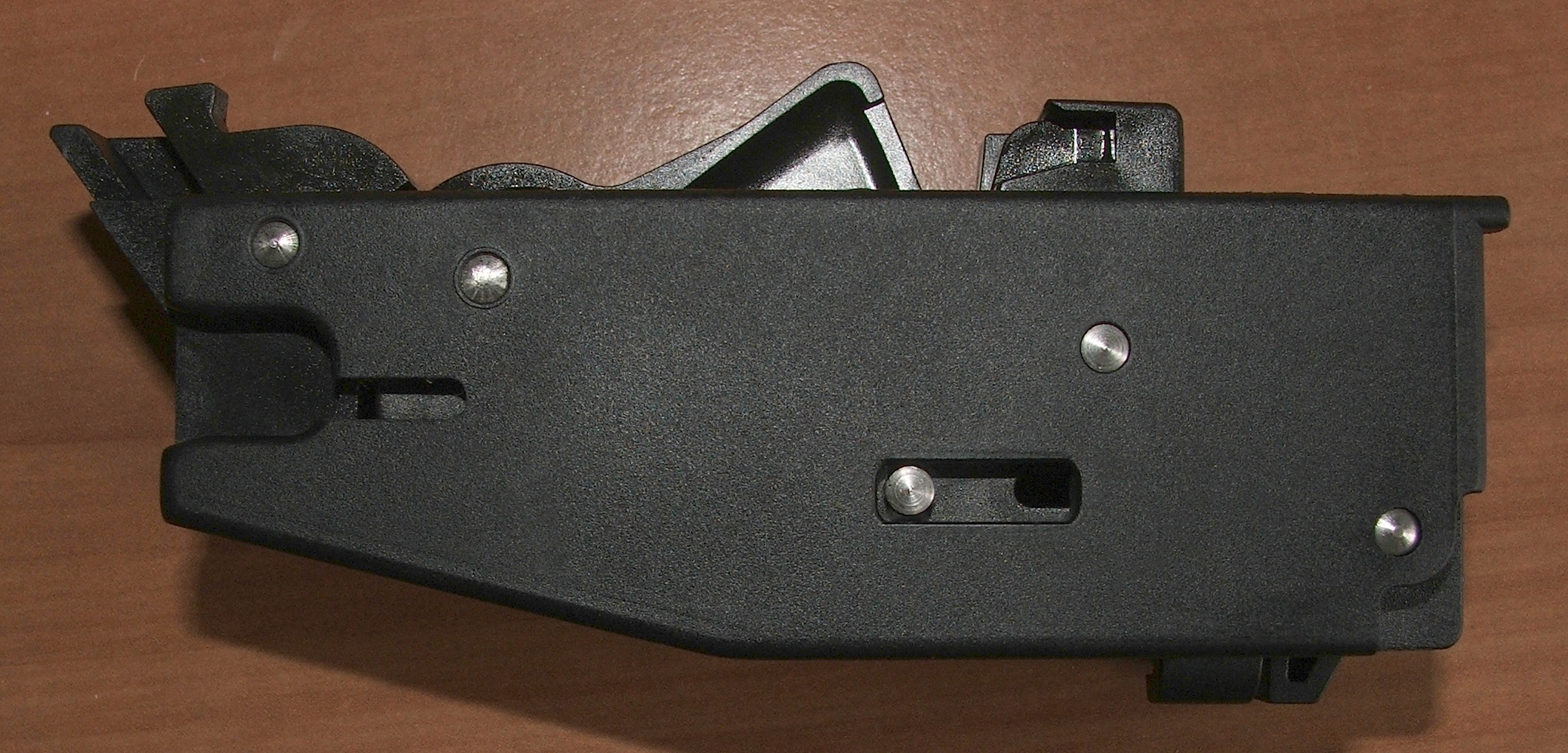
Spent cases leave the weapon downward, through a chute that exits behind the pistol grip.
On a conventional bullpup, ejection is the feature that makes the layout hostile to half the population. The ejection port sits alongside the shooter’s cheek, so a left-handed shooter gets hot brass in the face, and shooting from the “wrong” shoulder around a corner is not an option. Designers have addressed this with switchable bolts, forward ejection chutes and ambidextrous kits, all of which are workarounds.
The P90 does not have the problem at all. Nothing is ejected near anyone’s face, from either shoulder, and no part of the weapon needs to be reconfigured for a left-handed user. Combined with charging handles on both sides, a magazine release usable from either hand, and a selector operated by the trigger finger, the claim that this is a genuinely ambidextrous weapon is one of the few marketing claims in this dive that survives scrutiny intact.4
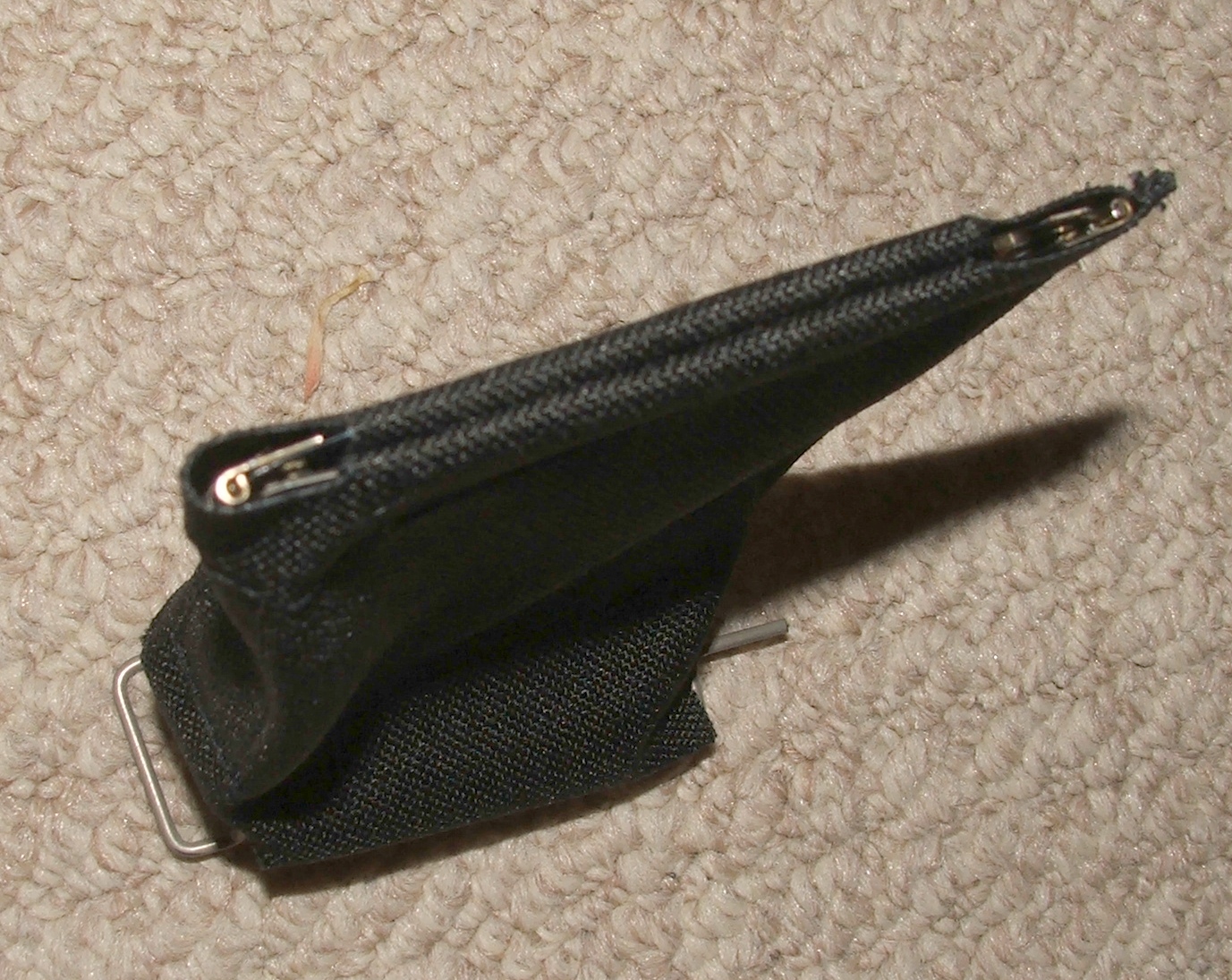
The cost is where the brass goes. It falls straight down: into a vehicle footwell, onto the floor, onto the shooter’s own feet when shooting prone, and into whatever is beneath the weapon. For range use this mostly means the cases end up in a pile underneath rather than scattered to one side, which brass-collecting reloaders regard as an advantage. For shooting from inside a vehicle or over a barricade it is a real consideration, and it is why the factory accessory list includes a case collector.
5.4 Handling
Balance. The weight sits between the hands, over the shooter’s centre, because the action and the magazine are both behind and above the grip. The weapon points quickly and holds still without effort, and it transitions between targets faster than its weight suggests. This is the part everyone likes.
The hoop. The enormous trigger-guard loop is also the support-hand position. The hand wraps the front of it, which puts the support arm in a natural place and gives a solid grip on a weapon with no conventional forend. A hand stop at the front prevents the support hand from travelling forward past the muzzle — a real concern on a weapon this short, where the muzzle is only a few inches ahead of the hand.4
Recoil. Minimal, and this is the cartridge rather than the weapon. A 27 to 40-grain bullet at these velocities generates very little impulse, and the straight-line layout sends what there is directly into the shoulder rather than over the top of a stock. The practical consequence is that the sights barely move between shots.
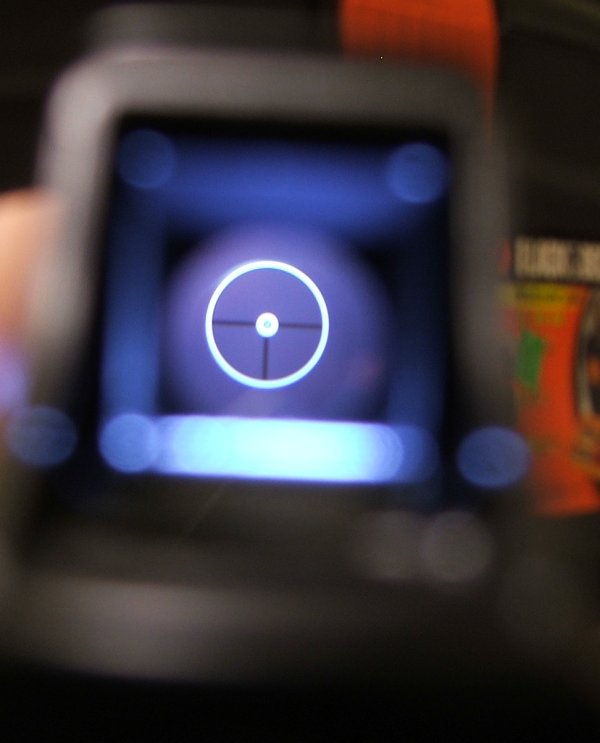
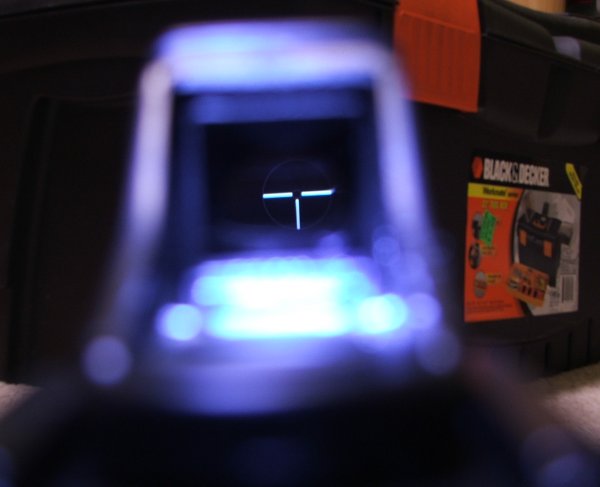
Sights. On a Standard or USG pattern, the fixed reflex sight is fast and coarse — exactly right for close work and limiting past 100 yards. On a rail-equipped pattern the shooter fits whatever they like, which is why the TR generations exist.
The things that are genuinely awkward. The magazine change, as above. Cleaning, which is Volume 7’s subject and which the bullpup layout does not help. And the fact that the weapon is wide — 2.3 inches — which is unremarkable in the hand and noticeable in a case.
5.5 Accuracy — What Is Realistic
What FN publishes. An effective range of 200 metres for both the P90 and the PS90, and nothing about group sizes.24
What could not be verified. No independently measured accuracy data — group sizes at stated distances from a rest with named ammunition — was located during this work from a source meeting this dive’s standard. Several published reviews were sought and could not be retrieved. Rather than reproduce a number of unknown provenance, this volume states the position: the PS90’s mechanical accuracy is not documented here.
What can be said on the physics, clearly labelled as inference. Three things push in opposite directions and it is worth being explicit about which is which.
- The 16-inch barrel is cold hammer-forged and chrome-lined, with a 14.8-inch rifled length and a 1:9 right-hand twist in eight grooves.2 That is an entirely conventional, well-made barrel specification.
- The closed-bolt action is a real advantage over the open-bolt submachine guns the design replaced.
- The trigger, at 6 to 11 pounds through a bullpup linkage, is the practical limit on what a shooter will extract from the first two, and the sight radius on the iron sights is short.
The reasonable expectation, stated as an expectation and not as a measurement, is a weapon that shoots considerably better than its trigger makes it feel, and that is limited in practice by the shooter and the optic rather than by the barrel. Anyone wanting a number should generate it themselves; see the figure slot below.
What the cartridge does downrange is set out in Volume 2 and bears directly here: the trajectory is flat inside 100 yards and the light bullets shed velocity quickly afterwards. Federal’s published figures for a 40-grain load show it dropping from 1,655 ft/s at the muzzle to 1,179 ft/s at 100 yards from a short test barrel — a loss of roughly 29 per cent of muzzle velocity in 100 yards.5 A PS90 starts faster and the proportional loss is similar. This is a 200-metre weapon because the cartridge says so, not because the sights or the barrel run out first.
5.6 Which Version Suits Which Task
The comparison is narrower than it looks, because Volume 4 has already established that only one of these is purchasable. What follows is therefore mostly a guide to configuration.
A standard PS90, unmodified. Requires no paperwork, has the best ballistics of any configuration in this dive by virtue of its 16-inch barrel, and is the most useful version of the weapon for a range or general-purpose owner. Its disadvantage is length — at 26.23 inches it is still far shorter than a conventional carbine, but it is a third longer than a P90.
A PS90 with a rail and an optic. The same weapon with the limitation of the fixed sight removed. For any shooting past close range this is the configuration that matters, and it is Volume 6’s main subject.
A Form 1 short-barrelled PS90. Buys the original 500 mm package and the handling that goes with it, at the cost of registration, the 27 CFR 478.39 parts question, Michigan’s MCL 28.422 cross-reference, and a measurable amount of velocity. It is the right answer for someone who specifically wants the P90 form factor and is prepared to do the paperwork properly.
A suppressed PS90. Covered in Volume 6, cross-referenced to the existing suppressor dives rather than re-derived. The short summary is that the host is straightforward and the caliber rating question is the one that matters.
For a left-handed shooter, any of the above, with no modification and no compromise. This is the one category of buyer for whom the P90 layout is not a preference but a genuine functional advantage, and it should be said plainly: there is no other weapon of this general type that treats a left-handed shooter as well.
5.7 Zeroing, Offset, and the High Sightline
The PS90’s optic sits high above the bore, for the structural reason given in Volume 6: the magazine occupies the space directly over the receiver, and the rail has to go above the magazine.
The consequence is a larger mechanical offset than most shooters are used to. At very close range the bullet strikes meaningfully below the point of aim, converging with the line of sight at whatever distance the weapon is zeroed and crossing it thereafter. A shooter zeroed at 50 yards will hit low at 5 yards by roughly the height of the sight above the bore — a real consideration for a weapon whose natural habitat is close range.
This is not a defect and it cannot be modified away. Any optic mounted on a PS90 sits above the magazine. The correct response is to know the offset and hold for it at contact distance, which is a training matter rather than an equipment one.
Zero distance. Given a 200-metre effective range, a cartridge that sheds velocity quickly, and a weapon used mostly inside 100 yards, a zero in the 50-to-100-yard band keeps the trajectory within a useful window across the weapon’s whole practical envelope. This dive does not publish a specific recommended zero, because the right answer depends on the load and the optic height, and both vary.
5.8 The Fifty-Round Magazine as a Practical Property
It is easy to treat the capacity as a specification rather than as something that changes how the weapon is used, and it is worth being explicit about what it does.
It removes the reload from most sessions. Fifty rounds is a full range session’s worth of shooting for many people, and in any scenario the weapon was designed for, it is a great deal of ammunition without a magazine change — which matters especially because, as § 5.1 sets out, the magazine change is the least graceful thing the design does. FN’s answer to an awkward reload was to make reloads rare.
It weighs and costs what it weighs and costs. Fifty rounds of 5.7×28 is light, which is one of the cartridge’s genuine advantages. It is also, per Volume 7, $27 to $32 to fill.
The translucent body changes the ritual. Round count is a glance rather than a procedure, and a partly-loaded magazine advertises itself. This is a small thing that owners consistently rate highly.
5.9 Left-Handed Shooting, Properly Considered
This deserves its own treatment because it is the one area where the P90 layout is not a matter of taste.
A conventional bullpup puts the ejection port beside the shooter’s face. The workarounds — a reversible bolt, a swappable ejection block, a deflector, a dedicated left-hand configuration — all share two problems: they require the weapon to be set up for one shooter, and they make shooting from the opposite shoulder around cover either unpleasant or impossible.
The P90 has neither problem. Cases go down, away from both cheeks. The charging handles are on both sides. The magazine release is reachable from either hand. The selector is under the trigger finger, whichever hand that is. A left-handed shooter picks up a PS90 and shoots it, and so does a right-handed shooter who needs to fire from the left shoulder — with no parts changed and no compromise accepted.
For a shooter who has spent years working around right-handed firearms, this is not a feature on a list. It is the reason to own this weapon rather than another one.
5.10 What Could Not Be Verified
- Any independently measured accuracy figure for the PS90, as set out in § 5.5.
- A measured trigger pull from an independent reviewer. The 6-to-11-pound figure is FN’s own published specification, which is a manufacturer’s tolerance band rather than a measurement of a particular weapon.
- Magazine loading rates or the effectiveness of specific loading tools, no verifiable source having been located.
Sources
Footnotes
-
US Patent 4,905,394, covering the P90’s horizontal top-mounted magazine and its rotating feed, as cited in the reference literature consulted 2026-09-17. ↩
-
FN Herstal / FN America, FN PS90 Owner’s Manual, 1605_PS90_Owners_Manual_v3, § 11 technical specifications — trigger pull 6 to 11 lb, barrel 16.1 in with 14.8 in rifled length, 8 grooves, 1:9 in right-hand twist, effective range 200 m; and FN America’s PS90 Standard product page for the cold hammer-forged, chrome-lined barrel and ported muzzle brake. ↩ ↩2 ↩3
-
“Bullpup”, English Wikipedia, consulted 2026-09-17, for the trigger-linkage explanation and the general bullpup ergonomic trade-offs (ejection near the face, shorter sight radius, less intuitive magazine changes). ↩
-
“FN P90”, English Wikipedia, consulted 2026-09-17, for the downward ejection chute behind the grip, the ambidextrous control layout, the hand stop at the front of the trigger-guard hoop, and the 200 m effective range. ↩ ↩2 ↩3
-
Federal Premium, American Eagle 5.7×28mm 40-grain FMJ (AE5728A) published ballistics — 1,655 ft/s at the muzzle and 1,179 ft/s at 100 yards from a 4.8-inch test barrel. ↩
Comments (0)