FN P90 & PS90 · Volume 2
The 5.7×28mm — Every Loading, and the Armour Argument in Full
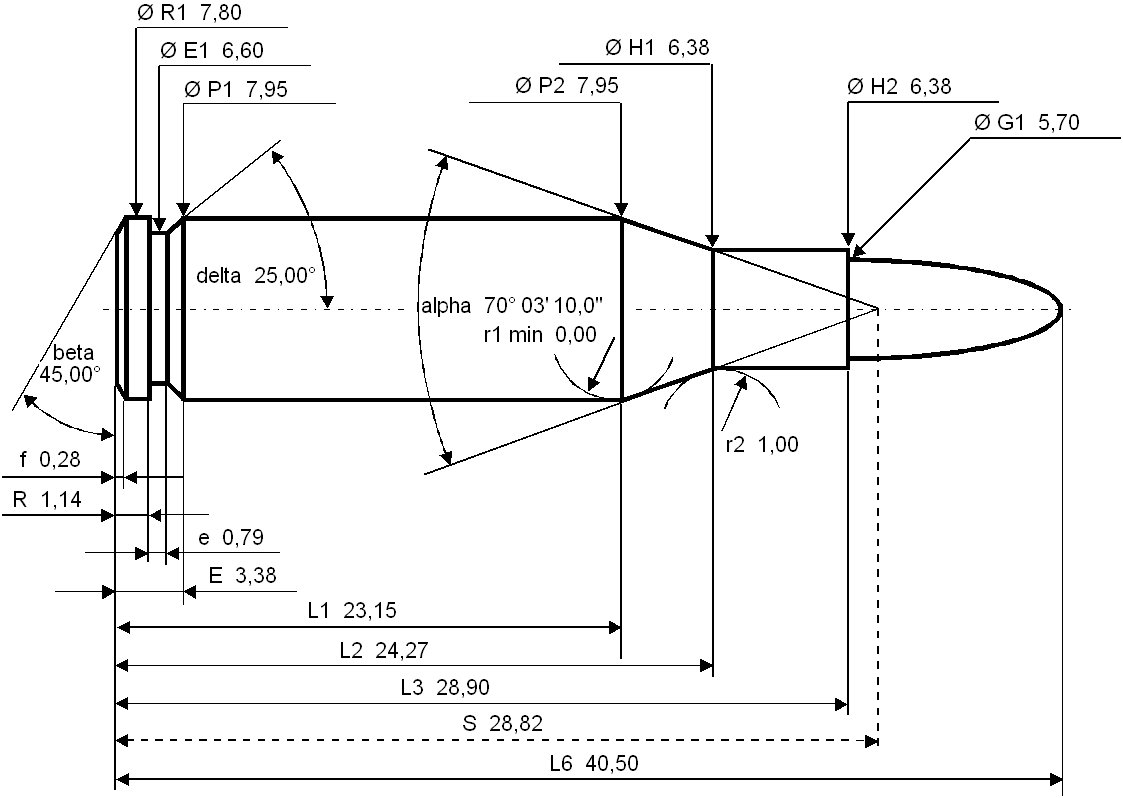
Almost every argument about the P90 and the PS90 is really an argument about this cartridge, and almost none of those arguments engage with what has actually been measured. The 5.7×28mm attracts confident nonsense in both directions: that it is an armour-defeating wonder round, and that it is an expensive .22 Magnum. Both positions survive because the evidence is scattered, some of it is thirty years old, and the most decisive part of it concerns ammunition that an ordinary buyer cannot legally purchase.
This volume separates the record from the assertions. The structure is deliberate: every loading first, then ballistics by barrel length, then terminal performance, then the armour question, then the press panic — because the panic is only intelligible once the loadings are clear.
2.1 The Cartridge Itself
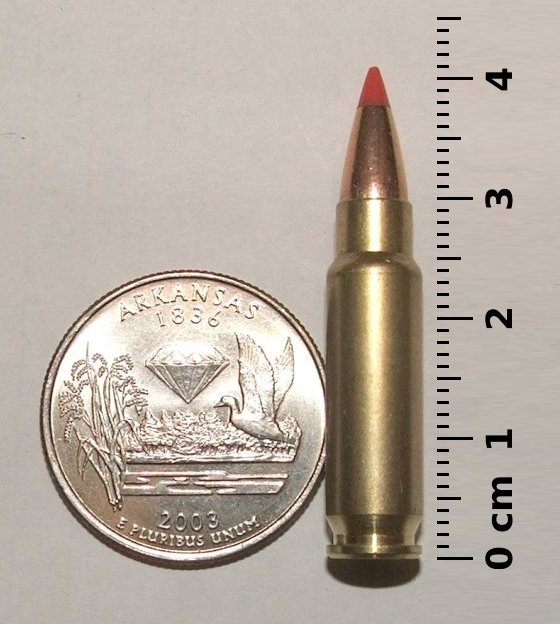
The 5.7×28mm is a bottlenecked centrefire cartridge firing a .224-inch class projectile from a case 28.8 mm long, to a loaded overall length of 40.5 mm. It is dimensionally a small rifle cartridge and functionally a pistol cartridge, which is exactly what the requirement in Volume 1 asked for.
Two consequences follow from those proportions and both matter more than any ballistic figure.
It is tiny. Fifty rounds in a P90 magazine occupy less space and weight than thirty rounds of 5.56×45. The entire case for the weapon’s 50-round capacity in a 500 mm package rests on this.
It is a centrefire cartridge in a rimfire-sized package. That has a practical consequence for anyone suppressing one, and it is already settled elsewhere in this hub rather than re-derived here: the Suppressors by Caliber dive files the 5.7×28 in its rimfire-can tier alongside .22 LR, .22 WMR and .17 HMR, and states plainly that because it is a centrefire round in a rimfire-sized body it needs an explicit manufacturer rating and must not be assumed safe in a can rated only for .22 LR. Volume 6 returns to suppressor host considerations; the caliber question belongs there and is not restated.
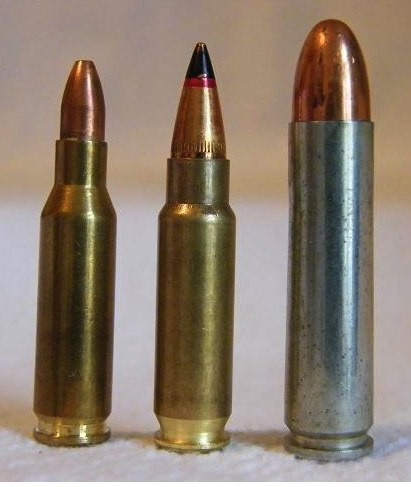
The idea is older than the cartridge. The problem the 5.7×28 addresses — arming people who are not riflemen with something better than a pistol but smaller than a rifle — produced the .30 M1 Carbine half a century earlier, for exactly the same population of drivers, crews and support troops. The comparison below is instructive precisely because the two cartridges are recognisably attempting the same job with forty years of propellant and projectile development between them: the M1 Carbine round is fatter, heavier and slower; the 5.7×28 is a small-calibre, high-velocity answer to the same question, sized to let fifty rounds ride on top of a weapon rather than thirty in a box below it.
2.2 Every Loading FN Has Made
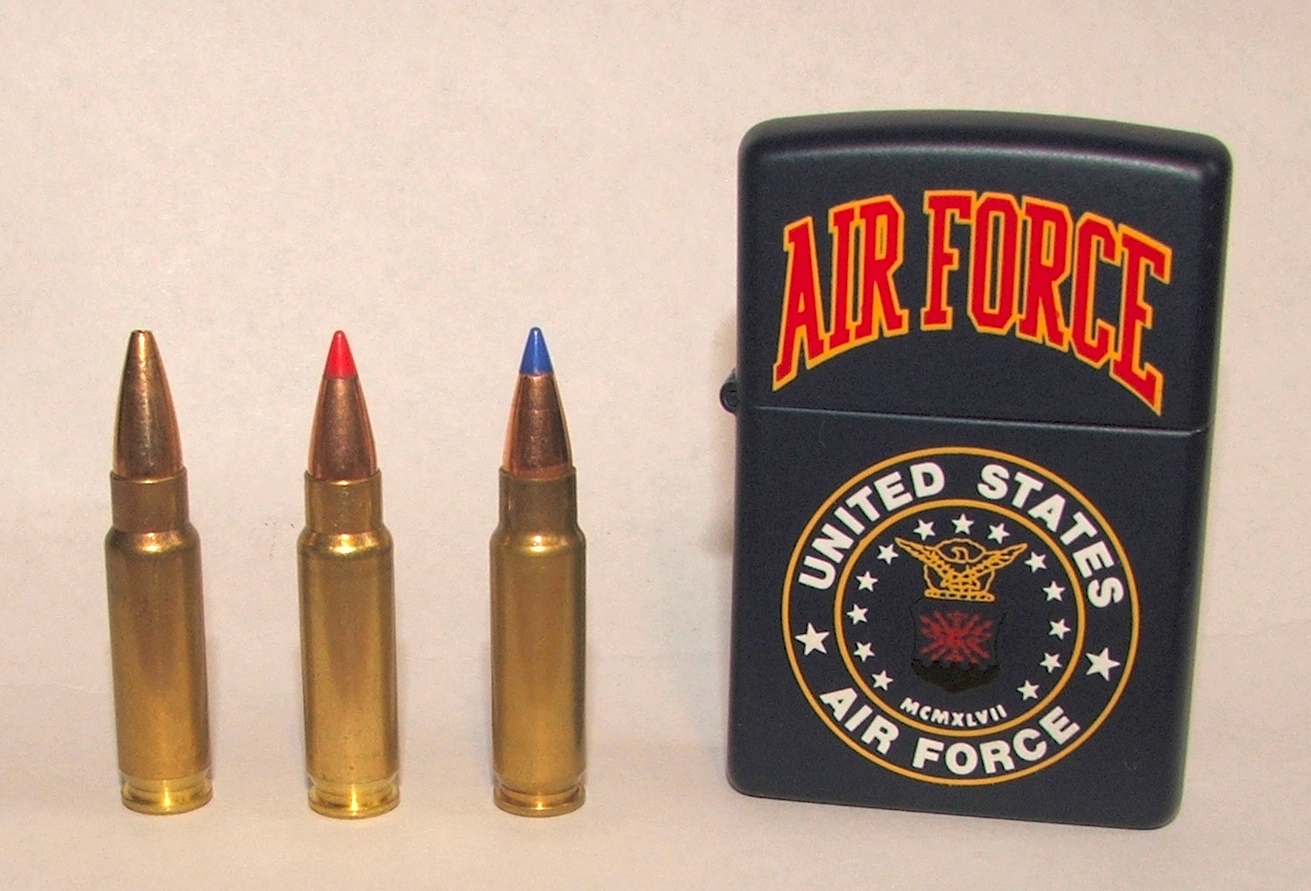
The following consolidates the loading record as reported in the reference literature, with muzzle velocities as quoted from the P90’s 263 mm barrel unless otherwise stated.1 Current products are cross-checked against FN America’s own product pages.2
Table 1 — 2.2 Every Loading FN Has Made
| Designation | Bullet | Muzzle velocity (263 mm) | Status | What it is for |
|---|---|---|---|---|
| SS90 | 1.5 g (23 gr) | 850 m/s (2,800 ft/s) | Discontinued 1994 | The original service load; replaced by the SS190 |
| SS190 | 2.0 g (31 gr), aluminium and steel core | 716 m/s (2,350 ft/s) | Restricted — military and law enforcement | The military duty round; the armour-penetrating one |
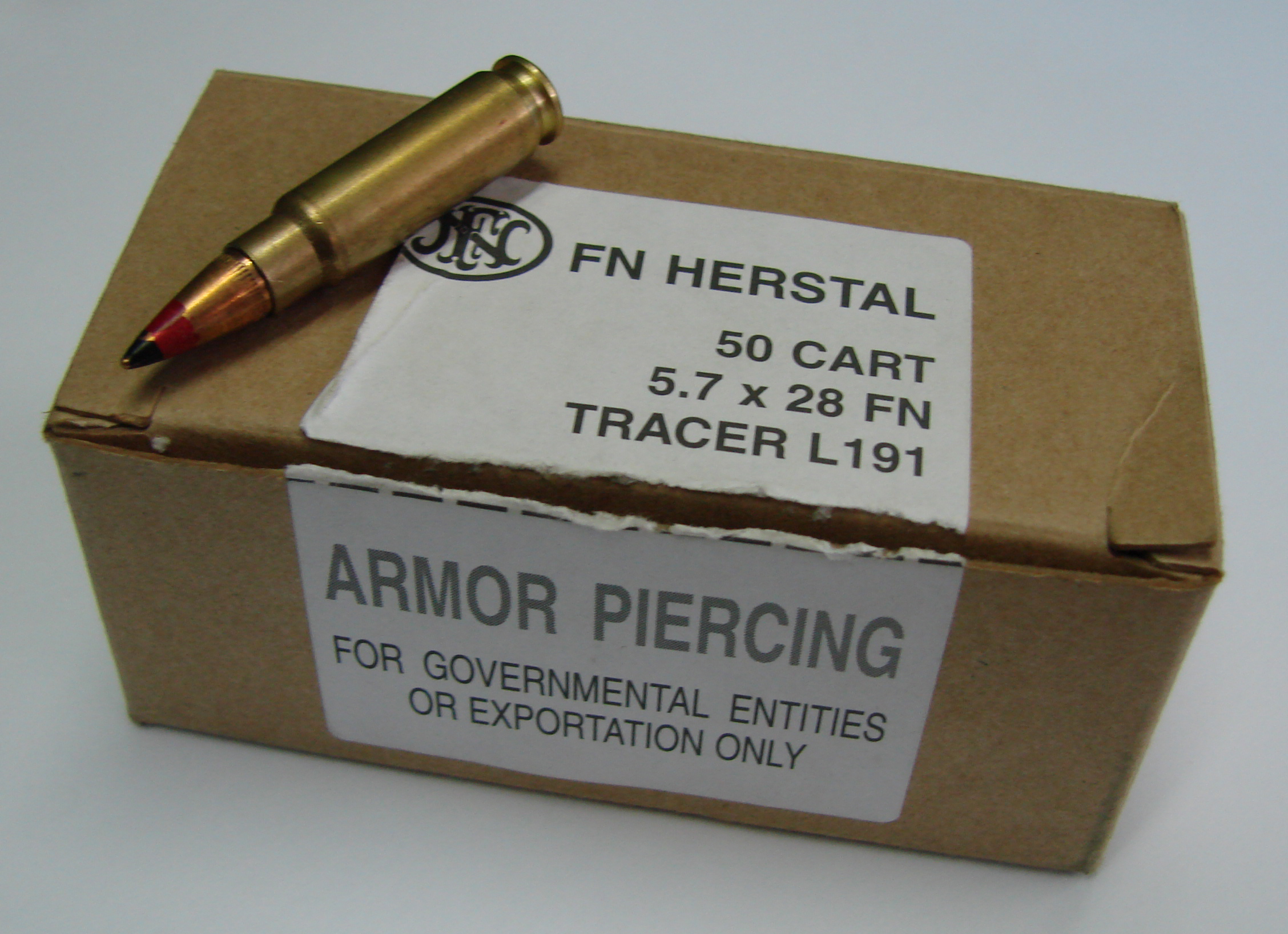
| L191 | 2.0 g (31 gr) tracer | 716 m/s (2,350 ft/s) | Restricted | Tracer companion to the SS190, matched ballistics |
| SS192 | 1.8 g (28 gr) JHP | 716 m/s (2,350 ft/s) | Discontinued 2004 | Commercial hollow point, withdrawn amid the armour controversy |
| SB193 | 3.6 g (56 gr) | 305 m/s (1,000 ft/s) | Restricted | Subsonic, for suppressed use |
| T194 | 1.8 g (28 gr) | 716 m/s (2,350 ft/s) | Discontinued 2002 | Training |
| SS195LF | 1.7 g (27 gr) JHP, aluminium core, lead-free | 777 m/s (2,550 ft/s) | Current, commercial | Lead-free sporting hollow point |
| SS196SR | 2.6 g (40 gr) V-Max | 549 m/s (1,800 ft/s) | Discontinued | Predecessor of the SS197SR |
| SS197SR | 2.6 g (40 gr) Hornady V-Max | 594 m/s (1,950 ft/s) | Current, commercial | The standard sporting load |
| SS198LF | 1.8 g (28 gr) | 792 m/s (2,600 ft/s) | Restricted — law enforcement only | LE duty hollow point, green tip |
| AE5728A | 2.6 g (40 gr) TMJ | 584 m/s (1,915 ft/s) | Federal/Fiocchi, from 2012 | Bulk practice |
Two current FN products post-date most published loading tables and are verified here directly from FN America’s own catalogue:2
- FN DFNS (SS200) — a 30-grain jacketed hollow point whose core is described by FN as a copper-tin powder, “designed to expend energy quickly and efficiently.” Available commercially as well as to law enforcement and military. This is FN’s current defensive offering.
- FN GUNR (SS201) — a 40-grain full metal jacket with a brass case and boxer primer, which FN describes as having “comparable felt recoil, velocity and accuracy” to the SS197SR. This is FN’s current practice load.
FN’s current commercial line is therefore five items: SS195LF, SS197SR, DFNS SS200, GUNR SS201, plus SS198LF which FN lists as law-enforcement and military only.2
Where the classification line falls, and why it is not where people assume. The restricted loads are restricted by FN’s own distribution policy and, in the SS190’s case, by an ATF classification as armour-piercing handgun ammunition. The commercial loads — SS195LF, SS196SR, SS197SR and AE5728A — are classified by ATF as not armour piercing.1 The distinction is therefore not “military versus civilian versions of the same thing”; the commercial loads are materially different cartridges with different cores, and the difference is exactly the thing the armour argument turns on.
2.3 Ballistics by Barrel Length — the P90’s 10.4 Inches Against the PS90’s 16
This is the comparison a buyer actually needs and it is the one the published data handles worst. What follows is explicit about which figures are measured, which are derived, and which could not be verified.
The anchor points that are solid.
- FN’s published P90 figure for the SS190 is 716 m/s (2,350 ft/s) from the 263 mm (10.4-inch) barrel.1
- FN’s published figure for the SS195LF is 777 m/s (2,550 ft/s), quoted in the cartridge literature as being from the same 263 mm barrel.1
- Federal’s published data for the American Eagle 40-grain load gives 1,655 ft/s and 243 ft·lbf from a 4.8-inch test barrel, falling to 1,179 ft/s and 124 ft·lbf at 100 yards.3
A conflict worth naming. The reference literature attributes the 777 m/s SS195LF figure to the P90’s 263 mm barrel in its cartridge tables, while the P90 article attributes the same 777 m/s figure specifically to the PS90 with SS195LF.1 Those cannot both be correct, and the discrepancy could not be resolved against a primary FN document. The figure is therefore reliable as “SS195LF, roughly 777 m/s, from one of the two barrels” and no more precise than that.
The general rule, and its honest error bar. The reference literature states that PS90 carbine velocities run approximately 60 m/s (about 200 ft/s) higher than the P90’s, and Five-seveN pistol velocities 60–90 m/s lower.1 That is a single blanket figure applied across all loadings, which is not how barrel-length gain actually behaves — it varies substantially with powder burn rate and bullet weight — but it is the only published quantification located.
Applying it gives the following, and the derived column is explicitly derived, not measured:
Table 2 — Applying it gives the following, and the derived column is explicitly derived, not measured
| Loading | P90, 10.4 in (published) | PS90, 16 in (derived at +60 m/s) |
|---|---|---|
| SS190 | 716 m/s (2,350 ft/s) | ~776 m/s (~2,546 ft/s) |
| SS195LF | 777 m/s (2,550 ft/s) | ~837 m/s (~2,746 ft/s) |
| SS197SR | 594 m/s (1,950 ft/s) | ~654 m/s (~2,146 ft/s) |
What the barrel length is really worth. Three inferences are safe. First, the gain from 10.4 to 16 inches is real but modest in proportional terms — on the order of 8 to 10 per cent — because the 5.7×28’s powder charge is small and largely burnt early. Second, the Federal figure is the useful sanity check in the other direction: the same 40-grain bullet that makes roughly 1,655 ft/s from 4.8 inches of pistol barrel is making something in the region of 2,100 ft/s from the PS90’s 16 inches, which is a far larger proportional gain from 4.8 to 16 inches than from 10.4 to 16. The cartridge does most of its accelerating early. Third, and most practically: every velocity printed on a 5.7×28 box is a pistol or short-barrel number unless it says otherwise, and a PS90 owner reading a box will systematically under-read what the carbine is doing.
An explicit caution about retailer-published velocities. Several large retailers list muzzle velocities per product. Those figures were reviewed during this work and at least one was internally inconsistent — a 40-grain load listed above 2,000 ft/s, which is not credible for that bullet weight from any 5.7×28 barrel. Retailer specification blocks are frequently mis-keyed between adjacent products. No retailer velocity figure is relied on in this volume; only FN’s and Federal’s own published data is used.
What could not be verified. Published velocity data from Hornady and Speer for their 5.7×28 offerings could not be retrieved from those manufacturers during this work, and no independently chronographed P90-versus-PS90 comparison using the same ammunition on the same day was located. A reader who wants a true barrel-length curve for this cartridge will not find one in the published literature; it does not appear to exist.
2.4 Terminal Performance
Two pieces of gelatin data recur in the literature and both concern the restricted SS190 rather than anything a civilian can buy:1
- Houston Police Department SWAT testing recorded penetration depths of 28 to 34 cm (11 to 13.5 in) in ballistic gelatin.
- The Royal Canadian Mounted Police, in 1999, firing at 25 m through a Level II Kevlar vest, recorded an average penetration of 25 cm (9.8 in) in gelatin behind the vest.
Both figures sit inside the 12-to-18-inch window that the FBI protocol treats as adequate, which is a meaningful finding: the military load is not a wounding failure. The RCMP figure is the more interesting of the two because it is a through-armour result, and it is discussed again below.
The dismissive case, stated fairly. The 5.7×28 launches a very light bullet. A 27 to 40-grain projectile carries modest energy by any rifle standard — Federal’s own 40-grain figure is 243 ft·lbf at the muzzle from a short barrel, which is in the same territory as a .22 WMR and below a typical 9×19 load. Anyone arguing that the cartridge is under-powered relative to a rifle is arguing something true.
The countervailing case, also stated fairly. Energy is a poor single predictor of terminal effect, the projectiles are long for their calibre and are reported to yaw early, and the gelatin depths above are not the signature of an ineffective round. The cartridge also produces very little recoil, which in a 50-round magazine is a genuine tactical property rather than a comfort feature.
The honest synthesis is that the load dominates the cartridge. A 40-grain V-Max sporting round, a 27-grain lead-free hollow point and a 31-grain steel-cored military round are three quite different terminal propositions that share a case. Arguments that treat “5.7” as a single performance entity — in either direction — are arguing about a case head.
2.5 The Armour Question, Kept in Two Halves
This is where nearly all public discussion of the cartridge goes wrong, and the error is always the same: the word “armour-piercing” is used as though it had one meaning. It has two, they are unrelated, and a round can satisfy either without the other.
2.5.1 The physical question: what will it actually defeat
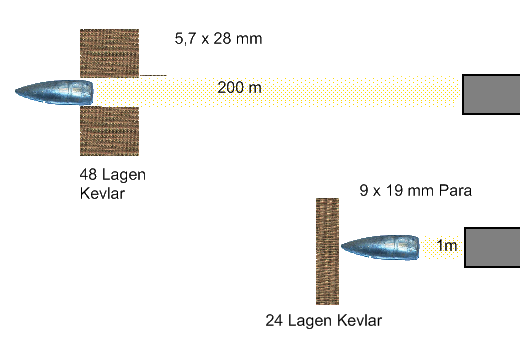
The design target was the NATO CRISAT standard — Collaborative Research Into Small Arms Technology — whose target is defined under STANAG 4512 as a 1.6 mm titanium plate (UK IMI Ti 318) backed by 20 layers of Kevlar (UK/SC/4468).4 That is a specific, published, checkable object, and it is what the 5.7×28’s military loading was built to beat.
The reported result is that the SS190 fired from the P90 will defeat the CRISAT target, or a Level IIIA Kevlar vest, at 200 m.1 Taken at face value, that is a serious capability: Level IIIA is the top of the soft-armour scale and is what most body armour worn without rigid plates amounts to.
Three qualifications belong immediately next to that claim, and they are routinely dropped:
- It is the SS190 doing it, and the SS190 has a steel penetrator in an aluminium core. The defeat is a function of that core, not of the cartridge’s shape or its velocity alone.
- Commercial loads do not do this. FN’s own testing of the SS192 hollow point found it would not penetrate a Level IIIA vest from the Five-seveN, and ATF classified the commercial loadings as not armour piercing.1
- Soft armour is not plate armour. Nothing in the record suggests a 5.7×28 of any loading defeats a rifle-rated ceramic or steel plate, and the physics make it implausible. The capability being described is defeat of soft armour, which is the armour the requirement in Volume 1 was actually aimed at.
2.5.2 The legal question: what the statute actually says
In the United States “armor piercing ammunition” is a defined term, and the definition at 18 U.S.C. § 921(a)(17)(B) turns on construction and materials, not on performance:
“(i) a projectile or projectile core which may be used in a handgun and which is constructed entirely (excluding the presence of traces of other substances) from one or a combination of tungsten alloys, steel, iron, brass, bronze, beryllium copper, or depleted uranium; or (ii) a full jacketed projectile larger than .22 caliber designed and intended for use in a handgun and whose jacket has a weight of more than 25 percent of the total weight of the projectile.”5
Subparagraph (C) then exempts, among other things, “a projectile which the Attorney General finds is primarily intended to be used for sporting purposes.”5
Read those two together and the whole regulatory shape of this cartridge becomes clear. The test is what the core is made of and whether it may be used in a handgun. Because a handgun — the Five-seveN — is chambered for 5.7×28, every loading of the cartridge falls within reach of the definition, which is precisely why a cartridge designed for a shoulder weapon ended up being regulated as handgun ammunition. The SS190 and L191 are classified by ATF as armour piercing; the sporting loads, with aluminium or polymer-tipped cores, are not.1
The consequence is the sentence most press coverage never prints: the armour-defeating 5.7 and the purchasable 5.7 are not the same ammunition, and never have been.
2.6 The Press Panic, With Dates
The controversy has a documented chronology, and setting it out in order makes clear how much of it concerned ammunition nobody could buy.
2004 — the SS192 is withdrawn. FN discontinued the SS192 hollow point “after being met with controversy regarding its alleged armour-piercing abilities.”1 The round ATF had classified as not armour piercing, and which FN’s own testing said would not defeat a IIIA vest, was removed from the market because of an argument about armour penetration.
20 January 2005 — an ATF open letter. The literature records an ATF open letter of this date addressing the cartridge’s classification.1 Its specific reasoning could not be retrieved in full during this work and is therefore not characterised here beyond its existence and date.
February 2005 — the Brady Campaign claim. The Brady Campaign alleged that commercially available SS192 ammunition penetrated Level IIA Kevlar vests in testing, and characterised the Five-seveN as a potential “cop-killer” weapon.6 The National Rifle Association responded that the testing “may not have adhered to standard testing procedures” and that FN offered armour-piercing varieties only to military and law enforcement customers.6
Two things about that exchange deserve to be said plainly, because partisans of both sides omit one of them. The Brady claim concerned Level IIA, the lowest soft-armour rating, not the Level IIIA that the SS190 claim concerns — a materially weaker assertion than the headlines implied. And the NRA’s rebuttal, while correct about distribution policy, does not address the fact that a commercially sold round penetrating any rated vest is a reasonable thing to be interested in.
2005 to 2010 — three failed bills. The Protect Law Enforcement Armor Act was introduced repeatedly with this cartridge in view: H.R. 1136 and S. 527 in 2005, H.R. 1784 in March 2007, and H.R. 6030 in July 2010. None proceeded to a vote.6
November 2009 — Fort Hood. Major Nidal Hasan used a Five-seveN pistol in the shooting at Fort Hood that killed 13 and wounded 29. The incident reignited the controversy and prompted petitions to the President from gun-control organisations.6 It is worth noting what the event does and does not establish about the cartridge: it was a pistol used against unarmoured people at close range, a task at which many cartridges are lethal, and it is not evidence about armour penetration.
What the record does not contain. No Congressional finding, no ATF reclassification of the sporting loads, and no published independent test showing a commercially available 5.7×28 loading defeating Level IIIA armour was located. The cartridge’s commercial loads have been classified as not armour piercing throughout, and that classification has never been reversed.
2.7 Corrections Ledger
The claims below circulate widely and are wrong, incomplete, or unverifiable as usually stated.
“The 5.7 is an armour-piercing round.” Incomplete to the point of being false as a general statement. One military loading with a steel penetrator is classified as armour piercing and is not sold commercially. The loads on a dealer’s shelf are classified as not armour piercing, and FN’s own testing of the discontinued SS192 found it would not defeat a Level IIIA vest.
“The 5.7 is just a .22 Magnum.” Wrong in the ways that matter. It is a centrefire cartridge on a bottlenecked case running substantially higher pressure, and its military loading produced 28 to 34 cm of gelatin penetration in police testing. The resemblance is one of bullet diameter and nothing else.
“The P90 was designed to defeat body armour, so it will defeat body armour.” Two different claims. The design intent is documented — the CRISAT target under STANAG 4512 is a published specification. Whether a given weapon and load defeats a given vest depends entirely on which load, and the answer for everything a civilian can buy is no.
“The ‘90’ in P90 is the year.” No. The development programme was Project 9.0, and production happened to begin in 1990.1
“NATO adopted the 5.7×28 in 2021” / “in 2020.” Sources disagree. FN America’s product pages say standardised by NATO in 2020; the reference literature says February 2021.12 This could not be resolved against a primary NATO document.
Retailer velocity figures. As set out in § 2.3, at least one large retailer’s listed muzzle velocity for a 40-grain load was not credible for that bullet weight. Box and listing velocities for this cartridge should be treated as approximate and barrel-length-unspecified unless the source states the test barrel.
Sources
Footnotes
-
“FN 5.7×28mm” and “FN P90”, English Wikipedia, consulted 2026-09-17, for the loading table (designations, bullet weights, muzzle velocities from the 263 mm barrel, introduction and discontinuation dates), the ATF classifications of each loading, the Houston Police SWAT and 1999 RCMP gelatin results, the CRISAT and Level IIIA penetration claim for the SS190 at 200 m, FN’s own testing of the SS192 against Level IIIA, the SS192 withdrawal in 2004, the 20 January 2005 ATF open letter, the ~60 m/s carbine velocity differential, and the February 2021 NATO standardisation date. ↩ ↩2 ↩3 ↩4 ↩5 ↩6 ↩7 ↩8 ↩9 ↩10 ↩11 ↩12 ↩13 ↩14
-
FN America product pages for FN SS195LF, FN SS197SR, FN SS198LF, FN DFNS SS200 and FN GUNR SS201, https://fnamerica.com/products/5-7x28mm/ — bullet weights and styles as quoted (27 gr jacketed aluminium-core hollow point lead-free; 40 gr Hornady V-Max; 27 gr jacketed aluminium-core hollow point, law-enforcement restricted, green tip; 30 gr jacketed hollow point with copper-tin powdered core; 40 gr full metal jacket), availability statements, and the “standardized in 2020 by NATO” claim. ↩ ↩2 ↩3 ↩4
-
Federal Premium, American Eagle 5.7×28mm 40-grain FMJ (AE5728A) product data — 1,655 ft/s and 243 ft·lbf at the muzzle from a 4.8-inch test barrel, 1,179 ft/s and 124 ft·lbf at 100 yards. ↩
-
CRISAT target definition under STANAG 4512 — 1.6 mm titanium (UK IMI Ti 318) plus 20 layers of Kevlar (UK/SC/4468) — as recorded in the reference literature consulted 2026-09-17. ↩
-
18 U.S.C. § 921(a)(17)(B) and (C), quoted from the Legal Information Institute text. ↩ ↩2
-
“FN Five-seven”, English Wikipedia, consulted 2026-09-17, for the February 2005 Brady Campaign claim regarding SS192 and Level IIA vests, the NRA response, the PLEA Act bills (H.R. 1136 and S. 527 in 2005, H.R. 1784 in March 2007, H.R. 6030 in July 2010), and the November 2009 Fort Hood shooting and its aftermath. ↩ ↩2 ↩3 ↩4
Comments (0)