SIG P320-M17 · Volume 7
Dot, Mount and Light — a Red Dot That Does Not Ride the Slide
The DeltaPoint Pro 6 MOA, the Leupold rail mount, the non-reciprocating optic, and the TLR-1 HL
Three of the items fitted to the pistol documented here are about seeing: a Leupold DeltaPoint Pro reflex sight with a 6 MOA dot, the Leupold mount that puts it on a Picatinny rail, and a Streamlight TLR-1 HL weapon light. All three were installed as of September 2026.1
The optic’s theory — how a collimated dot works, why astigmatism smears it, what an open emitter costs — belongs to the Scopes dive, Volume 5 and is not repeated here. The comparison with the 3 MOA DeltaPoint Micro on the M&P Shield in the same collection belongs to the M&P Shield dive. What this volume covers is what is specific to this pistol: a dot that sits on a chassis rather than on the slide, why a 6 MOA dot was a reasonable choice for it, and the light.
7.1 The DeltaPoint Pro, from Leupold’s Own Pages
Leupold currently offers the DeltaPoint Pro in two dot sizes, 2.5 MOA and 6 MOA; its series page lists no others. The 6 MOA version in black is Part # 181105, $449.99 on Leupold’s page on 19 September 2026, and Leupold’s description is aimed squarely at this use: “Designed for competitive speed shooting and personal defense, the newest DeltaPoint Pro model features a large 6 MOA red dot that excels at rapid, close-range target engagement.”2
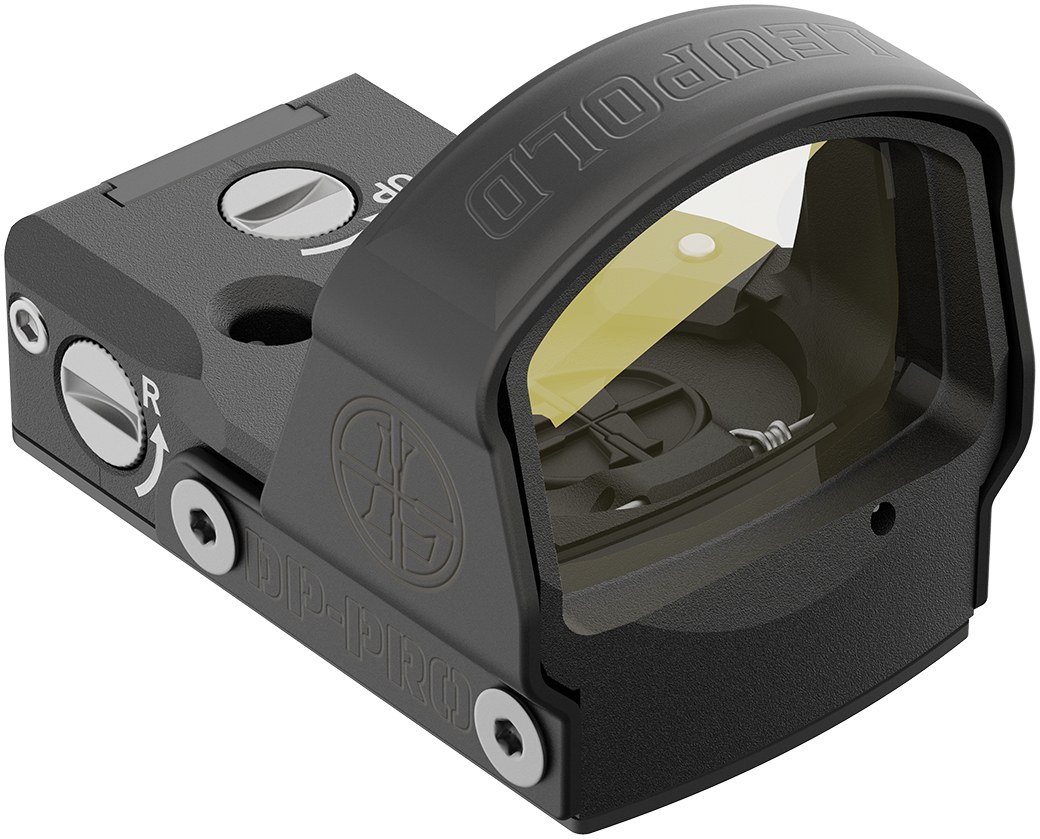
Table 1 — The DeltaPoint Pro, from Leupold's Own Pages
| Leupold’s figure | |
|---|---|
| Dot | 6.0 MOA (also offered: 2.5 MOA) |
| Window | 25.7 × 17.5 mm (1.01 × 0.68 in) |
| Battery | one CR2032, 3 V; top-access compartment — “so you don’t have to re-zero after a battery change” |
| Battery life (6 MOA page) | 1,600 h low · 1,000 h medium · 300 h high |
| Illumination settings | 8 |
| Adjustment | 1 MOA per click, 40 MOA per revolution, 60 MOA total travel |
| Size / weight | 1.82 × 1.31 × 1.30 in; 1.9 oz with battery |
| Housing | ”rugged aluminum housing and steel sheath” |
| Water | waterproof to 33 ft |
| Motion sensor | shuts the dot off after five minutes without movement and “reactivates instantly as soon as movement is detected” |
Sources: the 6 MOA product page and the DeltaPoint Pro instruction manual (Leupold part #120278).23
Two details from the manual are worth knowing because they are not obvious. The motion sensor will not wake a sight that has been switched off by hand — “The motion sensor will NOT reactivate the DeltaPoint Pro if it has been turned off manually.” And Leupold specifies how the sight is fixed to its plate: two M4×0.7 Torx screws at 25 in-lb, with a T-15 driver supplied in the box.3
⚠ A 7.5 MOA triangle version once existed. Leupold’s own 2022 blog refers to “a 2.5-MOA red dot model or a 7.5-MOA inscribed red delta model.” It is not on Leupold’s current series page or in the current manual. When it was discontinued could not be established.
7.2 MOA Against 3 MOA — What the Numbers Mean on a Pistol
A minute of angle is an angle, so the patch of target a dot covers grows with distance: one MOA subtends 1.047 inches at 100 yards. The arithmetic for the two dot sizes in this collection is below and in the figure.
Table 2 — 6 MOA Against 3 MOA — What the Numbers Mean on a Pistol
| Distance | 6 MOA dot covers | 3 MOA dot covers |
|---|---|---|
| 7 yd | 0.44 in | 0.22 in |
| 15 yd | 0.94 in | 0.47 in |
| 25 yd | 1.57 in | 0.79 in |
| 50 yd | 3.14 in | 1.57 in |
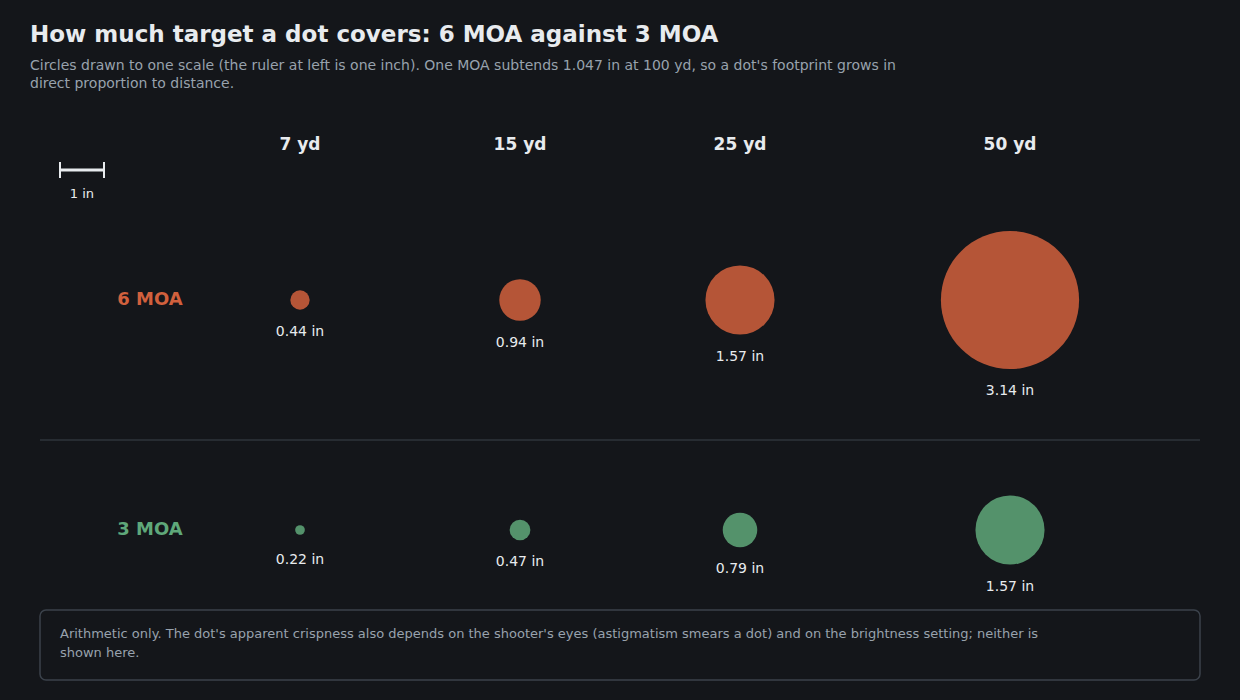
Three things follow, and they are the actual trade.
At pistol distances both dots are small. A 6 MOA dot covers under half an inch at 7 yards and just over an inch and a half at 25. Neither hides a man-sized target at any distance a pistol is ordinarily used; the question is not whether the dot obscures the target but how fast the eye finds it and how precisely it can be placed.
The larger dot is easier to find. When the pistol is presented and the dot is not exactly where the eye expected it, a larger, brighter mark is picked up sooner. That is Leupold’s own framing — “rapid, close-range target engagement” — and it is the reason large dots are popular on defensive and practical-competition pistols.
The smaller dot places the shot more precisely at distance. At 25 and 50 yards a 3 MOA dot lets the shooter hold on a smaller point. For a pistol shot deliberately at small targets, that is worth more than acquisition speed.
A dot of either size also looks larger than its nominal size to many eyes, and for an astigmatic eye it may not look like a dot at all. That is optics rather than arithmetic, and it is covered in the Scopes dive, Volume 5.
Why the two pistols in this collection differ is consistent with their jobs, but the choice is the owner’s and is not recorded. The P320 in its chassis is a braced, two-handed, rail-equipped pistol with a light; the M&P Shield is a slim carry pistol whose optic mounts in the rear-sight dovetail. The M&P Shield dive sets out its DeltaPoint Micro’s side of the comparison.
7.3 Where the Dot Sits — on the Chassis, Not the Slide
The commercial P320-M17’s slide is cut for an optic: SIG’s page describes the slide as having “the same optic cut as specified by the MHS contract,” listed with an optic footprint SIG calls “PRO.”4 A DeltaPoint Pro on a P320 would ordinarily go there, on the slide.
On the pistol documented here it does not. It sits on a Leupold Picatinny mount on the Raider X’s top rail, and Flux lists that rail among the chassis’s features as a “Built in non reciprocating optic mount.”5 The chassis’s top rail runs above the slide, fixed to the chassis, and the slide reciprocates beneath it.

That single fact changes several things.
Table 3 — Where the Dot Sits — on the Chassis, Not the Slide
| Slide-mounted optic | Chassis-mounted (this pistol) | |
|---|---|---|
| What the optic experiences | the slide’s full acceleration, forward and back, every shot | the chassis’s recoil only |
| Dot during recoil | rides the slide; leaves the window and returns | stays on the frame’s line; the slide moves under it |
| Height above the bore | as low as the slide cut allows | higher — the rail sits above the slide |
| Iron-sight relationship | co-witness possible with tall sights | the slide’s sights are below the rail line |
| Removing the slide | optic comes off with the slide | optic stays; Flux notes toolless takedown is retained unless an optic or tall sights are on the slide |
| Zero | tied to slide-to-barrel fit | tied to the chassis rail and to how the FCU and barrel sit in the chassis |
Sources: the Raider X product page and FAQ for the chassis side.56 The rest is geometry.
The height is the one cost worth quantifying, and it has not been measured. Any sight above the bore produces a close-range offset: at contact distance the bullet strikes below the dot by roughly the sight height, and the offset shrinks toward the zero distance. The higher a sight sits, the larger that offset. Because the dot on this pistol rides a rail above the slide rather than in a cut in it, its height over bore is greater than a slide-mounted DeltaPoint Pro’s would be. The figure is a measurement, not a research question, and it is listed as owed.
7.3.1 Which Leupold mount
Leupold sells two mounts that put a DeltaPoint Pro on a Picatinny rail, and the record for this pistol names “a Leupold Picatinny rail mount for the DPP” without a part number:7
- DeltaPoint Pro Low Profile Picatinny Mount, Part # 184098, $109.99 (shown out of stock on 19 September 2026) — “This mount will secure a DeltaPoint Pro to a MIL-STD-1913 Picatinny rail.” One-piece aluminium, 1.55 oz.
- DeltaPoint Pro Cross Slot Mount, Part # 120056, $69.99 — “designed to fit on any Picatinny, Weaver, cantilever rail, or base that doesn’t require a riser.” 1.3 oz. Leupold’s manual calls it the “reversible cross-slot mount.”
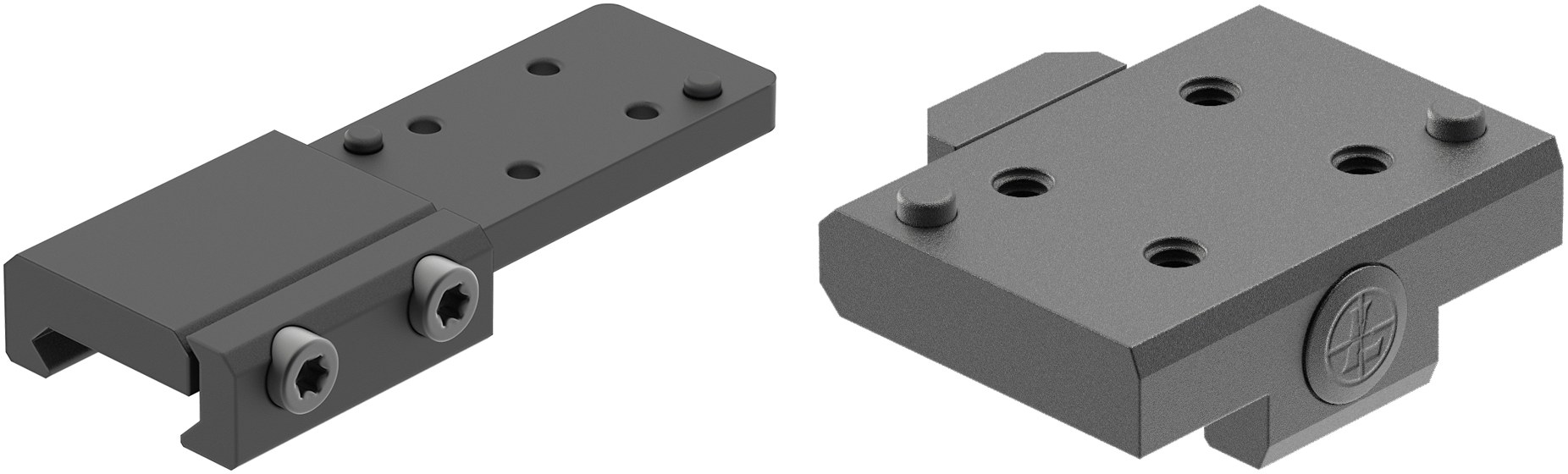
Which of the two is fitted is not recorded, and is not inferred here. The name on the record matches the Low Profile Picatinny Mount more closely; the part itself will say.
7.4 The Light — Streamlight TLR-1 HL
The TLR-1 HL is Streamlight’s full-size rail light, and the maker’s specification line is short: “1,000 lumens; 1.5 hour run time; 20,000 candela; 283m beam distance,” powered by two CR123A lithium cells.8
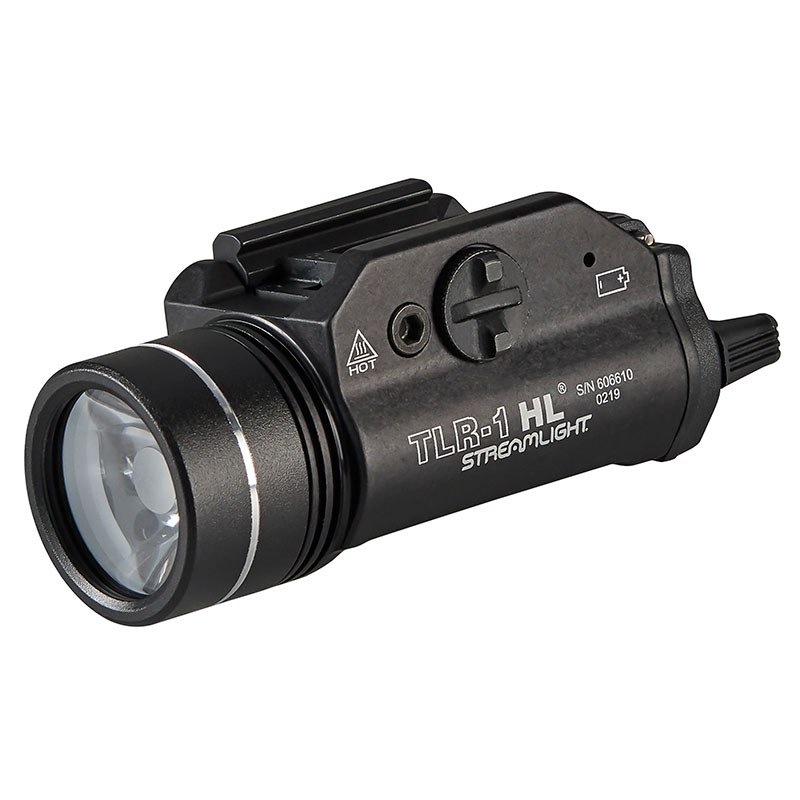
Table 4 — The Light — Streamlight TLR-1 HL
| Streamlight’s statement | |
|---|---|
| Output | 1,000 lumens, 20,000 candela, 283 m beam |
| Run time | 1.5 h |
| Power | two 3 V CR123A lithium |
| Body | ”6,000 Series machined aircraft aluminum with black anodized finish” |
| Size / weight | 3.39 in; 4.32 oz |
| Water | IPX7 |
| Controls | ”Ambidextrous momentary/constant-on operation”; “User-programmable strobe” |
| Mounting | rail-grip clamp; keys supplied for Glock-style, MIL-STD-1913, Beretta 90two, S&W SW99, TSW “and SIG SAUER P320 rails” |
On the Raider X the light clamps to the chassis’s underside rail, which Flux describes as a “standard 1913 picatinny cut, so any 1913 pistol light will fit.”6 The P320’s own grip module has an integral 1913 rail as well, so the light would move back to the grip module unchanged if the pistol were ever returned to it.
⚠ The output depends on when the light was made. Streamlight announced on 21 January 2020 that the TLR-1 HL (with three other models) “now delivers 1,000 lumens.” The release does not state the earlier figure, and the lower outputs commonly quoted for earlier TLR-1 HL lights could not be confirmed on a Streamlight page.9 The owner’s record gives 1,000 lumens; a light bought before 2020 might not match it. Streamlight also makes a TLR-1 HL-X (multi-fuel, 2024) and a TLR-1 HP; both are different lights.
7.4.1 The light and the pedal
The TLR-1 HL’s switches are paddles at the rear of the light, worked by the support-hand thumb or the trigger-hand index finger. The Forward Operating Pedal on the same chassis is a place for the support-hand thumb to push down against muzzle rise (Volume 4). The two therefore compete for the same digit: a thumb on the pedal is not on the light switch. How the owner runs both is not recorded; it is noted here because it is the kind of interaction a parts list does not reveal and a range session does.
References
Footnotes
-
The unit documented here: owner’s inventory sheet (last modified 2026-09-17), updated by the owner 2026-09-19. Recorded in the dive’s
00-inventory/. ↩ -
Leupold & Stevens, “DeltaPoint Pro 6 MOA,” Part # 181105, $449.99; description, housing, battery and battery-life statements quoted. https://www.leupold.com/deltapoint-pro-6-moa (accessed 2026-09-19). Series listing: https://www.leupold.com/shop/red-dots/series/deltapoint-pro . ↩ ↩2
-
Leupold & Stevens, DeltaPoint Pro instruction manual, part #120278 (artwork 120279P), linked from the 6 MOA product page. Source of window, dimensions, weight, adjustment, waterproofing, motion-sensor and mounting-screw statements. https://www.leupold.com/media/manuals/DeltaPoint_Pro_Manual_French_120279P.pdf (accessed 2026-09-19). ↩ ↩2
-
SIG Sauer, P320-M17 product page (Internet Archive capture of 19 July 2026 of https://www.sigsauer.com/p320-m17.html; sigsauer.com refuses automated requests), and “SIG SAUER Brings the U.S. Army’s M17 to the Commercial Market,” 18 July 2018. ↩
-
Flux Defense, “Raider X P320” product page, feature list quoted. https://fluxdefense.com/shop/raider-x (accessed 2026-09-19). ↩ ↩2
-
Flux Defense, “Frequently Asked Questions,” items 23 and 27. https://fluxdefense.com/frequently-asked-questions (accessed 2026-09-19). ↩ ↩2
-
Leupold & Stevens, “DeltaPoint Pro Low Profile Picatinny Mount,” Part # 184098, https://www.leupold.com/deltapoint-pro-low-profile-picatinny-mount ; “DeltaPoint Pro Cross Slot Mount,” Part # 120056, https://www.leupold.com/deltapoint-pro-cross-slot-mount (both accessed 2026-09-19). ↩
-
Streamlight, “TLR-1 HL” product page and product information sheet; specification, mounting and construction statements quoted. https://www.streamlight.com/products/detail/tlr-1-hl (accessed 2026-09-19). ↩
-
Streamlight, “Streamlight® Upgrades Lumens Of Popular TLR® Models,” press release, 21 January 2020. https://www.streamlight.com/community/newsletters-press/press-release/streamlight-upgrades-lumens-of-popular-tlr-models (accessed 2026-09-19). ↩
Comments (0)