Remington XP-100 · Volume 5
Caliber Selection by Task
Silhouette, varmint, target and big game — argued from the numbers, with Michigan law and ammunition supply weighed explicitly
Everything below is argued from Vol 4’s table. Where a recommendation rests on an estimated rather than a measured figure, it says so.
5.1 The four tasks, and what each one actually asks for
Table 1 — 5.1 The four tasks, and what each one actually asks for
| Task | What it demands | What it does not care about |
|---|---|---|
| Silhouette | Enough retained momentum at 200 metres to knock down a steel ram; precision; a stock and weight that suit offhand shooting | Bullet expansion; ammunition cost per round |
| Varmint and predator | Precision at 100–250 yards; flat trajectory; frangible bullets; low blast and recoil for spotting one’s own hits | Energy beyond a few hundred foot-pounds |
| Target and benchrest | Precision, and nothing else | Energy, trajectory, terminal performance |
| Big-game handgun hunting | Energy and penetration at realistic range; a bullet built to hold together; legality | Extreme precision; flat trajectory beyond 150 yards |
The XP-100’s chamberings do not spread evenly across those four. Two of them are excellent at one task each, one is adequate at three, and several are collectable objects that are poor shooting propositions. Saying which is which is what this volume is for.
5.2 Silhouette
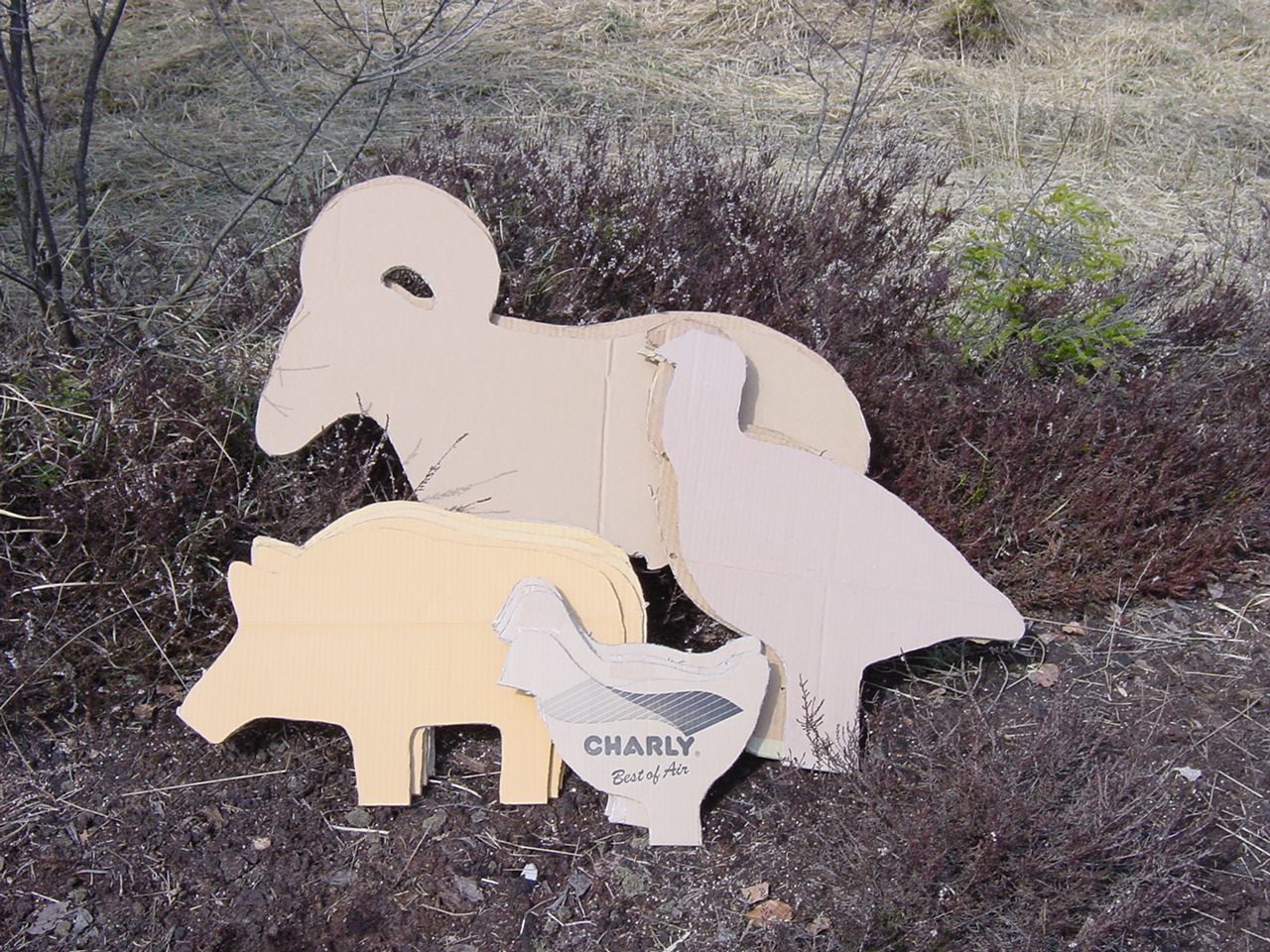
The game’s requirement is unusual: a hit that does not topple the target does not score. That makes momentum at 200 metres the governing quantity, not accuracy and not muzzle energy.
The .221 Fireball fails this test, and the failure is documented twice. American Handgunner in 1979: the Fireball “was a good, flat-shooting cartridge. But, neither the factory nor the handloaded round had enough stuff for the punch that was needed to always knock ‘em flat… the metal menagerie wasn’t impressed by that 50 grain pill.” Gun Digest in 2020, independently: the Fireball “soon developed a reputation for lacking enough punch to reliably tip over 200-meter rams.” Two accounts forty-one years apart, agreeing.
The 7mm BR Remington is the answer, and it was engineered to be. Vol 4 §4.8 puts four converging sources at 2,200–2,350 ft/s with a 139–140-grain bullet from 15 inches, for roughly 1,500–1,700 ft·lbf — about double the Fireball’s muzzle energy, from a pistol of similar weight, with a bullet nearly three times as heavy. Heavy bullets retain momentum; that is the whole mechanism.
Remington’s own sequence confirms the reasoning: the Silhouette model of 1980 arrived with a longer barrel and a new cartridge at the same time (Vol 1 §1.8), because the game needed both.
7mm-08 and .308 will also do it, with margin to spare — 1,880 and roughly 1,935 ft·lbf respectively — at a cost in recoil and blast that a competitor firing forty rounds in a match will feel and a casual shooter will not enjoy.
Silhouette verdict: 7mm BR Remington, on the numbers, without qualification. Whether a buyer should act on that verdict is a different question, and §5.6 answers it differently.
5.3 Varmint and predator
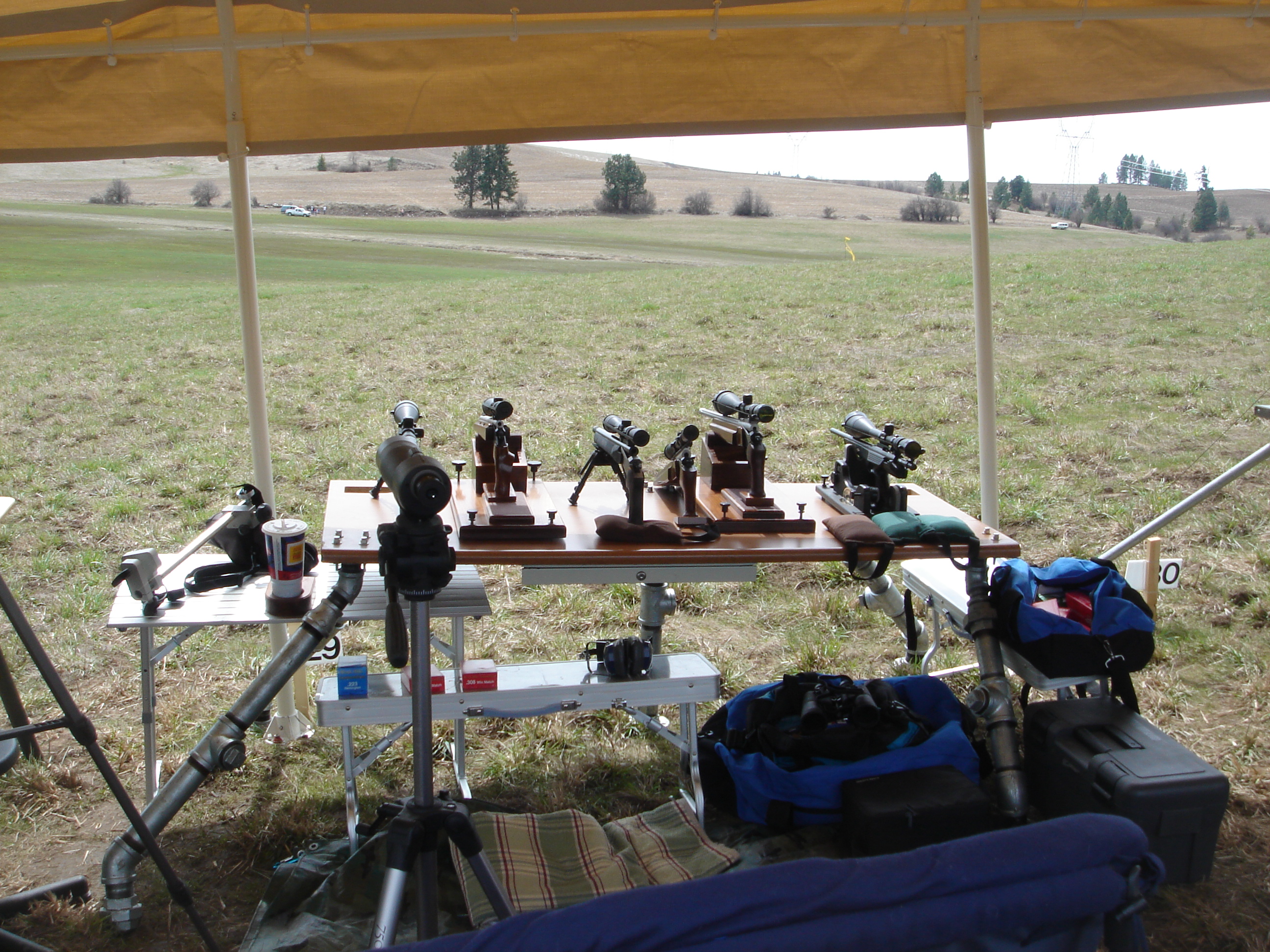
This is the task the XP-100 was designed for, and the one where it still has no real competition in its class.
The .221 Remington Fireball wins it. The argument is four-part and each part is sourced:
- It is the only chambering matched to the barrel. 2,600–2,700 ft/s with a 50-grain bullet from 10¾ inches (Vol 4 §4.6), achieved with a case designed for that length rather than borrowed from a rifle.
- It is the least unpleasant to shoot. The efficiency that gives it 90 percent of .223 velocity on 60 percent of the powder also gives it the least muzzle blast in the family (Vol 4 §4.15) — which matters more in varminting than anywhere else, because a shooter who cannot spot his own impact cannot correct.
- It is accurate enough that the cartridge is not the limit. Gun Digest’s 0.59-inch group from a 45-grain Hornady Hornet softpoint over 18.5 grains of Alliant 2400; American Handgunner’s “less than one inch groups” in 1979.
- The guns exist. .221 Fireball ran 1963–1985, twenty-two catalogue years against two to eight for everything else (Vol 2). It is the XP-100 a buyer can actually find.
The one real caveat is terminal, and Gun Digest’s owner states it from experience: a 10¾-inch barrel “gives up about 500 to 600 fps” against a 24-inch rifle, and “what this indicates is uncertain terminal performance when shooting sturdier bullets.” His answer is bullet selection — “highly frangible pills with either polymer tips or aggressive hollow-points or those with Hornet labels,” and 40-grain bullets for small varmints. That is a handloading answer, and it is the right one.
.223 Remington is the pragmatic alternative and the better choice for a buyer who does not handload: ~2,840–3,069 ft/s from the 14½-inch Varmint Special (Vol 4 §4.5), factory ammunition everywhere, and a bullet selection nothing else can match.
Varmint verdict: .221 Fireball if handloading; .223 Remington if not.
5.4 Target and benchrest
A short section, because the honest answer is that the chambering barely matters.
6mm BR Remington is one of the most accurate cartridges ever standardised, and in an XP-100 it is a pure target proposition. .223 Remington is nearly as good and infinitely better supplied. 7mm BR shares the 6mm BR’s case virtues.
The limit on an XP-100’s paper accuracy is not the cartridge. It is the shooter’s ability to hold a four-pound pistol at arm’s length, which is why serious target and silhouette shooters rebuilt these guns with heavy barrels, heavy stocks and two-handed grips from 1978 onward (Vol 3 §3.7, Vol 7).
Target verdict: buy the gun, not the chambering. A .223 with a good barrel and a proper rest will out-shoot the buyer.
5.5 Big-game handgun hunting
Here the numbers do the work, and they separate the field cleanly.
Table 2 — 5.5 Big-game handgun hunting
| Chambering | Barrel | Muzzle energy | Status | Verdict |
|---|---|---|---|---|
| .221 Fireball | 10¾ in | 750–810 ft·lbf | Measured | No. Varmint cartridge, varmint bullets |
| .223 Rem | 14½ in | 985–1,151 ft·lbf | Interpolated | No, for the same reason |
| 7mm BR | 15 in | 1,495–1,706 ft·lbf | Measured | Yes, to 200 yards. Accurate’s own words: “suitable for hunting of deer-sized game within 200 yards” |
| 7mm-08 | 15 in | ~1,880 ft·lbf (120 gr) | Measured in an XP-100 | Yes. The best-documented big-game option |
| .308 Win | 14½ in | ~1,935 ft·lbf (150 gr) | Estimated | Yes. The most energy of any chambering with a defensible figure |
| .35 Remington | 14½ in | No data found | Class argument only | Probably yes, and probably the gentlest of the four — but chronograph it |
| .260 Rem | — | No data found | Class placement | Should behave like the .308 |
Three things a buyer should weigh that the energy column does not show.
Recoil in a four-pound gun is not the same conversation as recoil in an eight-pound rifle. The XP-100 weighs about 3.75 lb (Vol 3 §3.10). Free recoil energy scales inversely with gun weight, so the same .308 load that is mild in a 9-lb rifle delivers something in the region of twice the recoil energy from this pistol — and it arrives through a grip rather than a shoulder. This is why the custom trade invented the two-handed “Push Me-Pull You” stock in 1978 rather than simply fitting bigger barrels (Vol 3 §3.7).
Bullet construction matters more than energy. At 2,400 ft/s from 14½ inches, a .308 bullet is arriving at close-range impact velocities that most .30-calibre hunting bullets are designed for. At 200 yards it is not. A bullet chosen for a 2,700 ft/s rifle muzzle velocity may not open at pistol-barrel velocities at range.
The .35 Remington is the interesting one and the one nobody has data on. Vol 4 §4.12 makes the class argument — a low-pressure, large-bore, short cartridge loses least to a short barrel, exactly as Accurate says of the .30-30 in a 14-inch Contender — and then declines to give a number, because no measured pistol-barrel figure for it could be found anywhere. That is a genuine gap, and it is a gap in the literature rather than in this dive’s research.
Big-game verdict: .308 Winchester or 7mm-08 Remington on the numbers; .35 Remington on the mechanism, unverified.
5.6 Factor (a): ammunition, brass and dies today
This is the factor that overturns the task-by-task verdicts above, and it should.
The tiering is set out in Vol 2 §2.13 with an explicit statement of what it does and does not claim: it is a structural classification — whether a cartridge is a current mainstream commercial round, a surviving specialist round, or one whose supply depends on forming brass from another case — not a survey of retail stock, which was not attempted and which any buyer can check in five minutes.
Table 3 — 5.6 Factor (a): ammunition, brass and dies today
| Tier | Cartridges | Consequence for a buyer |
|---|---|---|
| 1 — Mainstream | .223, .308, .22-250, 7mm-08 | Buy the gun, shoot it the same week |
| 2 — Current but specialist | .221 Fireball, .35 Rem, .260 Rem, .250 Savage | Buy brass when it appears rather than when it is needed; expect handloading to be normal |
| 3 — Handloading proposition | 7mm BR, 6mm BR | Handloading is mandatory; for 7mm BR, brass forming may be too |
The 7mm BR is where this bites hardest, and it inverts §5.2’s verdict for most buyers. The 7mm BR is unambiguously the right silhouette cartridge and unambiguously the hardest one to feed. Accurate’s manual, written when the cartridge was healthy, felt the need to reassure readers that “The 7mm BR unprimed cases are now available from Remington” — a sentence written only about a cartridge whose brass was a known problem. Remington is no longer the company that wrote it.
So: an XP-100 in 7mm BR is a handloading project before it is a shooting gun. For a buyer who already loads and wants the silhouette configuration, that is a feature. For a first XP-100, for someone who does not load, it is a gun that will sit in a safe waiting for brass.
The same logic, more gently, applies to the .221 Fireball. It is a supported cartridge with a real future — the Model 700 has been chambered for it since 2002, the CZ 527 was, Thompson/Center offered barrels — but it is a specialist round with few loadings. A buyer should plan to handload it. Given that the cartridge’s terminal performance from a short barrel wants specific frangible bullets anyway (§5.3), that is not a hardship; it is the same decision twice.
5.7 Factor (b): the .308 commonality argument
For a buyer who already owns a .308 Winchester bolt-action rifle, a .308 XP-100 is the only chambering in the family that costs nothing extra to feed. Specifically:
- Brass is shared. The same cases, the same lot, the same trim length, the same case prep.
- Dies are shared. No new die set, no new shell holder.
- Bullets are shared. The same components already stocked for the rifle.
- Load data is shared in the sense that matters — the same manuals, the same powders, the same pressure signs — though the pistol’s velocities are not the rifle’s, which is the point of Vol 4 §4.10 and a reason to chronograph rather than assume.
- The learning is shared. A shooter who already knows what his .308 rifle likes starts a long way up the curve.
That is a real and substantial argument, and it is the strongest case any chambering in this family has for a buyer in this specific position. It deserves to be weighed against three facts that cut the other way:
- The gun barely exists. .308 Winchester was Custom Shop only, 1992–1994 on Remington’s record (Vol 2 §2.9) — two or three years of made-to-order production. It is among the scarcest chamberings in the family, and scarcity sets the price (Vol 6).
- Shared brass does not mean shared load. A 14½-inch barrel changes the powder choice. Slow powders that work in a 24-inch rifle are exactly the ones that waste their charge in a pistol (Vol 4 §4.2); a .308 XP-100 wants faster powders and its own load development. The shared components are the saving; the shared recipe is not.
- It is the hardest-recoiling and loudest option in the family with a defensible number (§5.5, Vol 4 §4.15).
The honest weight to give this factor: it is a strong argument for a second XP-100 and a weak one for a first. It lowers the running cost of a gun that is hard to find and expensive when found. It does not lower the acquisition cost, and acquisition is the binding constraint on this platform.
5.8 ⚠ Michigan: buying a pistol
An XP-100 is a pistol in law, not a rifle, notwithstanding that it is a bolt action firing a rifle cartridge. In Michigan that classification does real work, in both directions.
A licence to purchase is required unless an exemption applies. MCL 28.422(1)(a): “a person shall not… Purchase, carry, possess, or transport a pistol in this state without first having obtained a license for the pistol as prescribed in this section.” The licence is issued by the local police commissioner or chief, or the county sheriff outside an organised police department’s jurisdiction, to a qualified applicant. Qualification criteria are set out at MCL 28.422(3) and include age — 18 or older, or 21 or older if the seller is federally licensed — United States citizenship or lawful admission, Michigan residency, and the absence of various disqualifying orders and charges.
The licence is short-lived. MCL 28.422(4): “A license is void unless used within 30 days after the date it is issued.”
Who is exempt. MCL 28.422a(1) lists the individuals who do not need the section 2 licence: a CPL holder (with narrow exclusions for emergency licences and receipts), a federally licensed firearms dealer, and a currently employed licensed or certified police officer.
Exempt or not, a pistol sale generates a record. Both routes end in the same place. Under MCL 28.422(5) the seller completes the licence forms describing the firearm and, for a pistol, returns one copy to the licensing authority within 10 days. Under MCL 28.422a(2), an exempt purchaser’s seller completes “a record in triplicate on a form provided by the department of state police,” and forwards one copy to the local police department or county sheriff within 10 days. A seller who fails to do either is responsible for a state civil infraction with a fine of up to $250.
Michigan has a pistol database, and this is where “registration” actually happens. MCL 28.422(6) and 28.422a(3) both require the receiving authority to enter the information into the pistol entry database within 10 days where it has the ability to do so electronically, and to forward the paper copy to the Michigan State Police within 48 hours. The purchaser may obtain a copy of what was entered to check it, for a fee of not more than $1.00.
The 30-day carry window. Both sections provide that the purchaser “may carry, use, possess, and transport the pistol for 30 days beginning on the date of purchase or acquisition only while… in possession of” the licence or record copy — and that after that period the paperwork need not be carried.
⚠ What could not be confirmed. The Michigan State Police pistol sales record is widely referred to by a form number; the statutory text quoted above does not name it, and the MSP’s own firearms pages returned HTTP 403 to every automated request made for this dive. The form number is therefore not stated here. Nothing in this section should be treated as legal advice, and a buyer should confirm the current procedure with the issuing agency — which is, conveniently, the same agency that issues the licence.
5.9 ⚠ Michigan: hunting with one
Michigan’s deer regulations are unusually favourable to an XP-100 right now, and one of the reasons is brand new.
Legal firearms for deer during a firearm deer season, quoted verbatim from the 2026 Michigan Deer Hunting Regulations Summary:
“Legal firearms include: • A shotgun. • A rifle of any caliber larger than a .22-caliber rimfire. • A muzzleloading firearm, including black powder handguns, loaded with black powder or a commercially manufactured black powder substitute. • A handgun of any caliber larger than a .22-caliber rimfire.”
🔴 The limited firearms deer zone has been eliminated. From the same digest’s front-page summary of changes: “The limited firearms deer zone has been eliminated. Beginning Sept. 12, 2026, hunters can use all legal firearms across the Lower Peninsula.”
This is a correction to something a great many Michigan hunters still believe. The long-standing rule that southern Michigan was shotgun country — later relaxed to admit certain straight-walled rifle cartridges — no longer exists. Any advice written before 2026 about which XP-100 chambering is legal in Zone 3 is out of date, and the received wisdom about straight-walled cartridges in southern Michigan should be retired.
Handgun-specific rules while hunting, from the same digest:
”• A person must be at least 18 years old to hunt with or possess a handgun. • Handguns cannot be borrowed or loaned to another person other than provided for under a CPL. • While in the field, handguns must be carried in plain view. • Carrying a handgun in a holster in plain view is permitted.”
The digest notes those rules “may not apply to those having a concealed pistol license or specifically exempt by law from a CPL and carrying their handgun in accordance with their license or exemption.”
Archery season is where an XP-100 gets caught. “During the archery deer seasons, you cannot possess or carry afield a pistol, revolver or other firearm while bow hunting for deer,” subject to listed exceptions that include being properly licensed for a concurrent firearm season and pistols carried under a CPL. And in both the archery and the artificial-light passages the digest is emphatic about the limit of a CPL: “a concealed pistol license does not authorize the individual to use the pistol to take game except as provided by law.” A CPL lets a hunter carry it; the hunting licence and season rules decide whether it may be fired at a deer.
⭐ Vehicle transport is where being a pistol pays off. The digest: “handguns… must be unloaded in the barrel and magazines and in a closed case designed for the storage of firearms and cannot be readily accessible to any occupant of the vehicle. These rules do not apply to a pistol carried under authority of a concealed pistol license or properly carried under authority of a specific exception.”
This inverts the familiar Michigan problem. MCL 750.227d governs firearms other than a pistol in a vehicle, so a CPL does not reach a rifle. An XP-100 is a pistol, so for a CPL holder it travels under the pistol rules — which are, in a vehicle, considerably easier. A buyer who holds a Michigan CPL and has been living with the rifle-transport rules will find this the most pleasant surprise in the whole legal picture.
One more restriction worth knowing: “You cannot use a centerfire rifle or centerfire pistol to take an animal during nighttime hours in any state park or state recreation area.”
⚠ What could not be confirmed, and it is not trivial. The phrase “a handgun of any caliber larger than a .22-caliber rimfire” is ambiguous on its face. Read one way, “larger than a .22-caliber” would exclude every .224-inch bullet — which would disqualify the .221 Fireball and the .223 Remington. Read the other way, and this is plainly the drafter’s intent, the qualifier “rimfire” is doing the work and the clause excludes .22 rimfire specifically while admitting any centrefire. The second reading is almost certainly correct — the digest applies the identical phrasing to rifles, where excluding all .22 centrefires would outlaw the .223 Remington for deer, which no one believes Michigan has done — but the wording will not settle it by itself, and a hunter intending to take a deer with a .221 Fireball or .223 XP-100 should get the DNR’s answer in writing before the season rather than after.
That is a legal question. The separate question of whether 780 to 1,150 ft·lbf with a varmint bullet is an adequate deer load is not a legal question, and §5.5 answers it: no.
5.10 🔴 The conclusion
Stated plainly, because a hedge here would be useless.
5.10.1 Buy a .221 Remington Fireball single-shot XP-100 first.
Five reasons, in order of weight:
- It is the one a buyer can actually find. Twenty-two catalogue years, 1963–1985, against two to eight for everything else. Availability is the binding constraint on this platform, and no other chambering comes close.
- It is the only chambering designed for the barrel it is in. Every other XP-100 cartridge is a rifle cartridge fired from a short barrel and paying for it. The Fireball is a cartridge designed around a 10¾-inch barrel, which is why it loses least and blasts least (Vol 4 §4.6, §4.15).
- It is the best varmint and predator chambering in the family, which is the task the pistol is genuinely best at and the one where it still has no competition in its class.
- Its supply is specialist but real — tier 2, not tier 3. It is not the 7mm BR.
- It is the gun in its original form. A .221 Fireball XP-100 with a nylon centre-grip stock is unambiguously a factory XP-100, which in a market as full of rebarrels and custom rebuilds as this one is worth something on its own (Vol 6).
5.10.2 The conditional answers
If the buyer does not handload and does not intend to start: .223 Remington, in a 14½-inch Varmint Special. It gives up the design elegance and gains a supply chain that will never be a problem.
If big game is the actual objective: .308 Winchester, and the commonality argument in §5.7 is the reason — but this is a second purchase, made opportunistically when a Custom Shop gun surfaces, not a target to hold out for. Holding out for a two-year Custom Shop chambering is how a buyer ends up owning nothing.
If silhouette is the objective and the buyer already handloads: 7mm BR Remington, without reservation. If the buyer does not already handload, this chambering is the wrong first gun no matter how right the cartridge is.
Not recommended in any scenario: .22-250 Remington. It is the chambering that surrenders the most of what it was built to deliver (Vol 4 §4.11), and its rarity means paying a Custom Shop premium for the privilege.
5.10.3 What this means for the single-shot versus repeater question
Vol 6 answers it properly, but the chambering analysis already points one way: the .221 Fireball, the chambering this volume recommends, was never offered in the XP-100R. A buyer who follows this conclusion is buying a single-shot by construction. That is not an accident of the recommendation — it reflects that the single-shot is the gun Remington made for twenty-two years and the repeater is the gun it made for one.
5.11 References (Vol 5)
- Michigan Department of Natural Resources, 2026 Michigan Deer Hunting Regulations Summary. Legal firearms for deer; the elimination of the limited firearms deer zone; handgun restrictions while hunting; archery-season firearm prohibition; vehicle transport of handguns; the state-park night restriction.
- Michigan Compiled Laws, MCL 28.422 (Act 372 of 1927, as amended) — licence to purchase, carry, possess or transport a pistol; qualifications; the 30-day licence validity; the 10-day seller return; the pistol entry database; the 30-day carry window.
- Michigan Compiled Laws, MCL 28.422a — individuals not required to obtain a licence (CPL holders, federally licensed dealers, police officers); the seller’s triplicate record; the 10-day forwarding requirement; penalties.
- Accurate Arms, Per-Caliber Guide, handgun section: “7mm BR Remington” (deer-sized game within 200 yards; the brass-availability remark), “7mm-08 Remington” (XP-100, 15 in), “.30-30 Winchester” (T/C, 14 in).
- American Handgunner, January/February 1979. The Fireball’s failure on 200-metre rams; the two-handed stock design.
- Patrick Meitin, “Remington XP-100: The Successful Experiment,” Gun Digest, 26 October 2020. The 200-metre ram reputation; bullet-selection practice for a short-barrelled Fireball; the 0.59-inch group.
- Vol 2 for the chambering years and the availability tiering; Vol 4 for every velocity and energy figure quoted here.
Comments (0)