.300 Blackout AR Pistol · Volume 7
Owning One — Maintenance, Ammunition, and What It Is Actually For
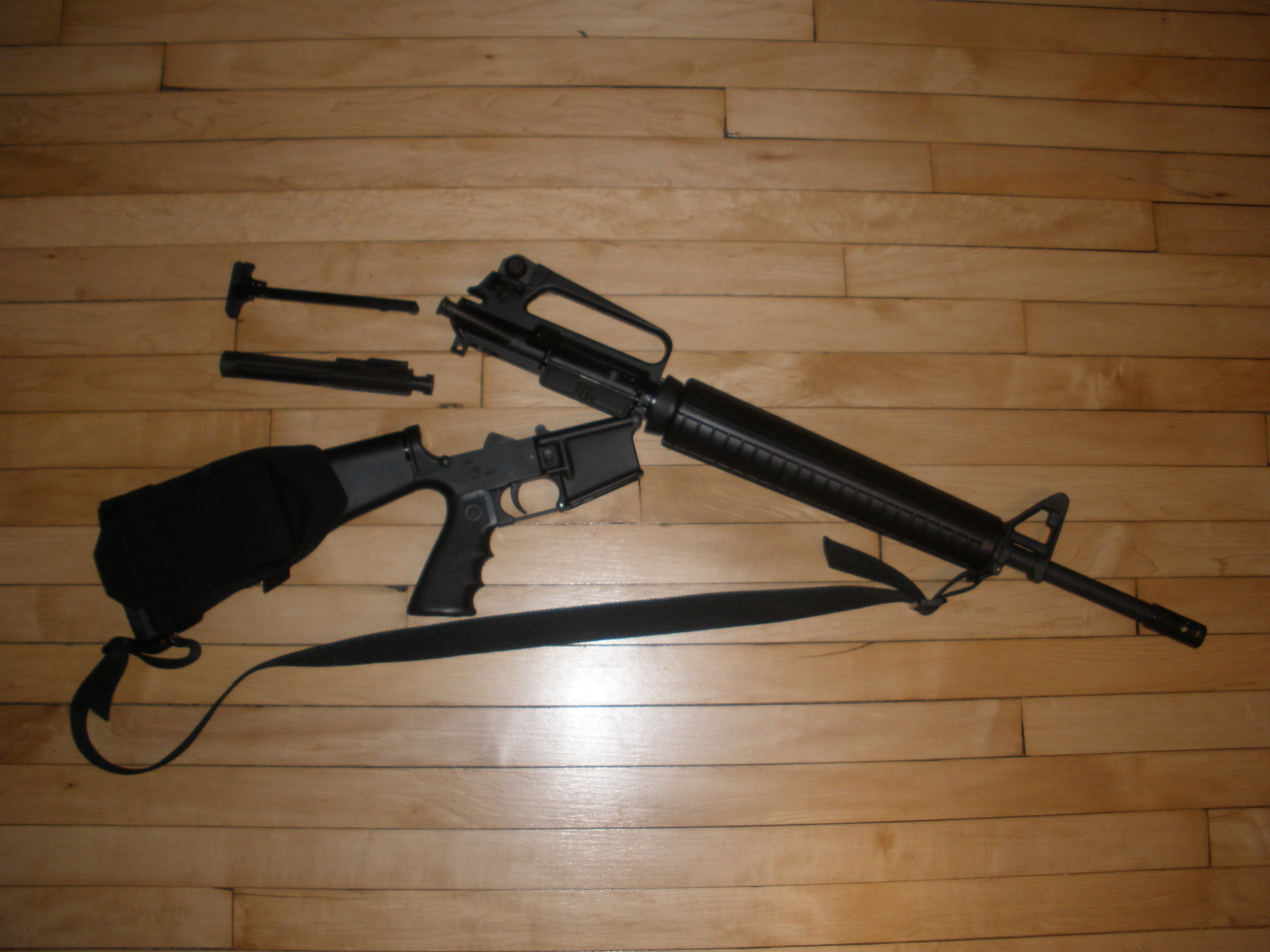
The preceding six volumes covered what the cartridge is, what a short barrel does to it, how to make one rifle digest two very different loads, where the law stands, what a suppressor changes, and how the thing is built. This volume covers what it is like to own — what wears out, what it costs to feed, and the honest answer to what the platform is actually good for.
7.1 The Parts Replacement Schedule
AAC published a replacement schedule for its .300 Blackout upper, broken out by intensity of use. It is reproduced in full because published round-count guidance for this cartridge is otherwise almost nonexistent.1
Table 1 — 7.1 The Parts Replacement Schedule
| Part | Recreational use | Hard use / competition | Mission-critical use |
|---|---|---|---|
| Gas tube | When it fails | 10,000 rounds | 5,000 rounds |
| Extractor | When it fails | 10,000 rounds | 5,000 rounds |
| Gas rings | 10,000 rounds | 5,000 rounds | 5,000 rounds |
| Bolt | When it fails | 10,000 rounds | 5,000 rounds |
| Extractor spring / insert / O-ring | 15,000 rounds | 5,000 rounds | 5,000 rounds |
| Ejector spring | 15,000 rounds | 10,000 rounds | 5,000 rounds |
| Barrel | 50,000 rounds | 35,000 rounds | 20,000 rounds |
| Action spring | 15,000 rounds | 10,000 rounds | 5,000 rounds |
⚠ This is the manufacturer’s schedule for its own barrel and its own components, published in 2010, and it is reported as such. AAC described its barrel as 4150 CMV “specially processed to have up to 60% more life than a chrome-lined barrel,” which is a claim about that particular barrel and not about .300 Blackout barrels generally.1 A different maker’s barrel will have a different life.
What the table is genuinely useful for is its shape rather than its numbers. Three observations survive the caveat:
The barrel outlasts everything by a wide margin. Even at the most demanding column, the barrel is expected to go four times as far as the bolt. .300 Blackout is a low-velocity, moderate-pressure cartridge and it is not hard on throats. For a recreational owner the barrel is effectively a lifetime part.
The consumables are the springs and the gas rings, and they are cheap. An owner who replaces the gas rings, extractor spring and action spring on a schedule will avoid most of the intermittent-malfunction problems that get blamed on ammunition.
⭐ And the column that matters is the first one. For any realistic private owner, “recreational use” is the applicable column, and it says most of these parts run until they fail. The practical maintenance posture is therefore inspect and replace on symptom, not on a calendar — with the exception of gas rings, which have an actual interval.
Headspace after any change. AAC’s instruction is unconditional: “Always check headspace after changing a bolt, barrel, or barrel extension.”1 The Headspace dive owns the method and the gauges, including the finding that the major gauge makers disagree about where FIELD sits.
7.2 Cleaning a Suppressed Gas Gun
The maintenance difference between this weapon and an ordinary AR is not the cartridge. It is the suppressor.
A suppressor raises back-pressure, which drives more gas back down the gas tube and into the receiver (Volume 5 §5.4). The consequences are cumulative and predictable:
- The bolt carrier group gets filthy, faster and more thoroughly than on an unsuppressed rifle. Carbon builds on the carrier’s gas key seal area, in the carrier’s interior, and on the bolt tail.
- 🔴 The gas rings and the bolt tail are where it matters. Carbon accumulating behind the gas rings is the single most common cause of a suppressed AR gradually losing its ability to cycle the weakest load it fires — which on a .300 Blackout is the subsonic load, which is the load it was built for. A .300 Blackout pistol that used to cycle subsonic and no longer does is usually dirty, not broken.
- Subsonic ammunition is dirtier still. Low pressure means less complete combustion. Suppressed subsonic is the dirtiest thing this rifle does.
The practical routine: clean the bolt carrier group properly — meaning the bolt out of the carrier, the gas rings off, and the carbon off the bolt tail — at intervals set by how much suppressed subsonic has been fired, not by round count generally. The upper receiver’s interior and the charging handle groove collect the rest of it.
⚠ Whether to clean the suppressor depends entirely on whether it can be opened. Sealed centerfire rifle cans are not user-serviceable and should not be opened; take-apart designs are a different question. How Suppressors Work Volume 5 covers take-apart versus sealed and how to clean one without ruining it.
7.3 Ammunition — Availability Is Genuinely Good
The supply position for .300 Blackout has changed substantially since the cartridge was introduced, and old complaints about it being a boutique round no longer hold.
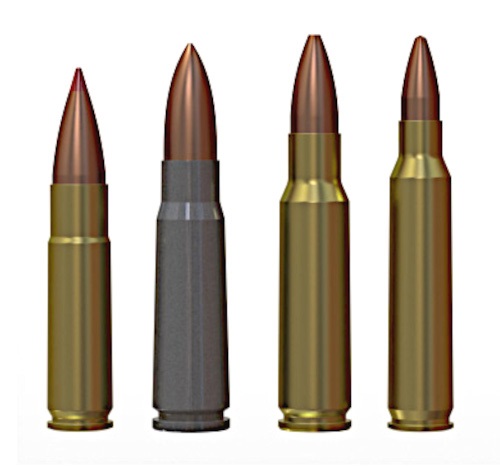
A single 2026 test sourced thirteen different factory loads for the cartridge from mainstream manufacturers — Winchester, Hornady, Magtech, Sellier & Bellot, Federal, Barnes and others — spanning 110 to 208 grains, in both supersonic and subsonic.2 That is not a boutique cartridge. That is a cartridge with a supply chain.
Practical observations on feeding one:
- Both ends of the range are stocked. Subsonic loads from 190 to 220 grains and supersonic loads from 110 to 150 grains are routinely available from more than one maker each, which is the thing that was not true a decade ago.
- ⚠ It is more expensive than 5.56, and materially so. It uses more lead and more copper per round for a cartridge made in far smaller volume. No specific price is published here because ammunition prices move faster than this series can track, but the direction is settled and the gap is not small.
- ⭐ The subsonic loads are the expensive ones, which is unfortunate because they are the ones this weapon exists to fire. Anyone shooting subsonic in volume will reach the handloading question quickly, and Volume 3 §3.5 carries the developer’s own load data and its warnings.
- 🔴 Verify the headstamp on every box, and keep .300 Blackout ammunition physically separated from 5.56. Volume 6 §6.7 explains what is at stake.
A buying note that follows from Volume 2. Advertised velocities for .300 Blackout are measured in a 16-inch SAAMI test barrel, which is unusually honest as advertised figures go — but they are still not 8-inch figures. Expect roughly the 7.5-inch column from Volume 2 §2.3, which for a 110-grain load means about 2,055 fps rather than the 2,375 fps on the box.
🔴 And check subsonic loads against the sound barrier from the actual barrel. Two loads sold as subsonic measured supersonic or marginal from a 16.5-inch barrel (Volume 2 §2.7). From 8 inches they are comfortably subsonic — which is an argument for the short barrel, not against those loads.
7.4 What the Platform Is Actually Good At
Stated plainly, because the published enthusiasm for this cartridge is not calibrated.
7.4.1 It is genuinely excellent at three things
Being a short, quiet, capable weapon. This is the whole design brief and it delivers on it completely. A suppressed 8-inch .300 Blackout is shorter overall than a bare M4 carbine, produces more muzzle energy from 8 inches than 5.56 does from 14.5, and — with subsonic ammunition — is quiet in a way no 5.56 rifle can ever be. Nothing else that runs on an AR-15 lower does this.
Short-range hunting with the right bullet. Inside roughly 150 yards, a supersonic .300 Blackout with an expanding bullet is a capable deer cartridge, and Michigan’s 2026 regulatory change means the whole Lower Peninsula is now open to it (Volume 4 §4.10). The heavy-for-calibre bullet and the modest velocity make it forgiving on meat.
Being a conversion rather than a purchase. An owner with AR-15 lowers already has most of a .300 Blackout. That was the design brief and it remains the cartridge’s most underrated practical virtue.
7.4.2 It is mediocre or worse at four things
Distance. Velocity falls away quickly and the trajectory is steep — closer to 7.62×39 or .30-30 than to anything in the .223 family. Past 150 yards it is working hard, and 6.5 Grendel and 6mm ARC beat it substantially in both external and terminal ballistics.2
Volume shooting. It costs meaningfully more per round than 5.56 and always will.
Being a general-purpose rifle. At 16 inches, 5.56 does most rifle work better and cheaper. The case for .300 Blackout is entirely a case about short barrels and suppressors.
🔴 Coexisting carelessly with 5.56. This is a real cost of ownership and not a footnote. Owning both cartridges imposes a discipline that must be designed into how the weapons are stored, marked and loaded (Volume 6 §6.7). An owner unwilling to implement that discipline should own one cartridge or the other.
7.4.3 The honest summary
.300 Blackout is not a better rifle cartridge. It is the correct answer to a specific and narrow question — how to make an AR-15 short and quiet without changing anything but the barrel — and within that question it has no real competition. Judged as a general-purpose cartridge it is mediocre and expensive. Judged as what it is, it is close to perfect, and an 8-inch braced pistol is the most complete expression of it available.
7.5 What This Series Could Not Establish
Collected here because a reader is entitled to know where the gaps are rather than discovering them.
- ⚠ Measured velocities from an 8-inch barrel. Volume 2 §2.9 publishes interpolated figures between measured 7.5-inch and 10.5-inch data and labels them as interpolation. No published 8-inch dataset was located.
- ⚠ Gas port diameter for an 8-inch .300 Blackout barrel. Maker-specific, frequently unpublished, and no figure is printed (Volume 3 §3.7).
- ⚠ Sound-pressure figures for a suppressed 8-inch .300 Blackout from any source using a consistent methodology. Only AAC’s own 126 dB figure for its own combination is quoted, attributed (Volume 5 §5.2).
- ⚠ Feyachi RS-28 specifications. Product existence confirmed from the manufacturer’s catalogue; no dot size or window dimension published, because the manufacturer’s specification page could not be retrieved (Volume 6 §6.5).
- ⚠ Whether an 8-inch braced AR pistol measures over or under 26 inches overall, which determines which subsection of MCL 750.224b would apply if the weapon were a rifle. It is a measurement on the individual weapon (Volume 4 §4.9).
- ⚠ How Michigan authorities treat braced pistols after the federal vacatur. No Michigan appellate decision, attorney-general opinion or Michigan State Police guidance was located; the MSP’s own pages returned HTTP 403 to every automated request (Volume 4 §4.9).
- ⚠ Whether Michigan’s six-round semi-automatic hunting restriction applies to a semi-automatic pistol (Volume 4 §4.10).
- ⚠ Current ammunition prices. Deliberately not published; the direction of the comparison against 5.56 is settled, the magnitude moves too fast.
7.6 The Series in One Page
Table 2 — 7.6 The Series in One Page
| Volume | The thing worth keeping |
|---|---|
| 1 | The cartridge exists to satisfy a constraint — same bolt, same magazines, barrel only — not to be a better rifle round |
| 2 | 🔴 238 fps gained from 7.5 to 16.5 inches, against ~700 for 5.56. 5.56 needs 14.5 inches to match .300 BLK’s energy at 7.5 |
| 3 | 🔴 Do not enlarge the gas port to cycle subsonic — change the powder. The offset between loads is ~3 inches at 50 yards |
| 4 | 🔴 The 2023 brace rule was vacated 13 June 2024 and ATF says it never actively enforced it. The removal is still only proposed. A Form 1 costs $0 |
| 5 | The can is not an accessory here — the cartridge was designed around it. The suppressor must be rated for a short barrel |
| 6 | 🔴 A .300 Blackout round chambers in a 5.56 rifle and destroys it. Colour the magazine wells, not just the magazines |
| 7 | Excellent inside 150 yards, short and quiet; mediocre and expensive at everything else — and it has no competition at its own job |
7.7 Bibliography
Companion dives referenced in this volume: How Suppressors Work Volume 5 (cleaning take-apart versus sealed suppressors); Headspace (gauges and method); Suppressors by Caliber Volume 5 §5.2.1 (the layered magazine-discipline mitigation restated in Volume 6 §6.7).
Footnotes
-
Advanced Armament Corp., 300 AAC BLACKOUT Owner’s Manual Supplement (© 2010). Source of the complete parts replacement schedule reproduced in §7.1, the 4150 CMV barrel processing claim, and the headspace instruction. https://advanced-armament.com/wp-content/uploads/300BLK-AAC-Upper.pdf ↩ ↩2 ↩3
-
Chris Baker, “300 Blackout Ballistics by Barrel Length: What the Data Told Us,” Lucky Gunner Lounge, 25 August 2026. Source of the thirteen-load factory availability survey and bullet-weight span used in §7.3, the advertised-versus-measured velocity comparison, and the assessment of .300 Blackout against 6.5 Grendel and 6mm ARC in §7.4. https://www.luckygunner.com/lounge/300-blackout-ballistics/ ↩ ↩2
Comments (0)