.300 Blackout AR Pistol · Volume 6
Building and Running One — Controls, Tuning, Optics, and the 5.56 Danger
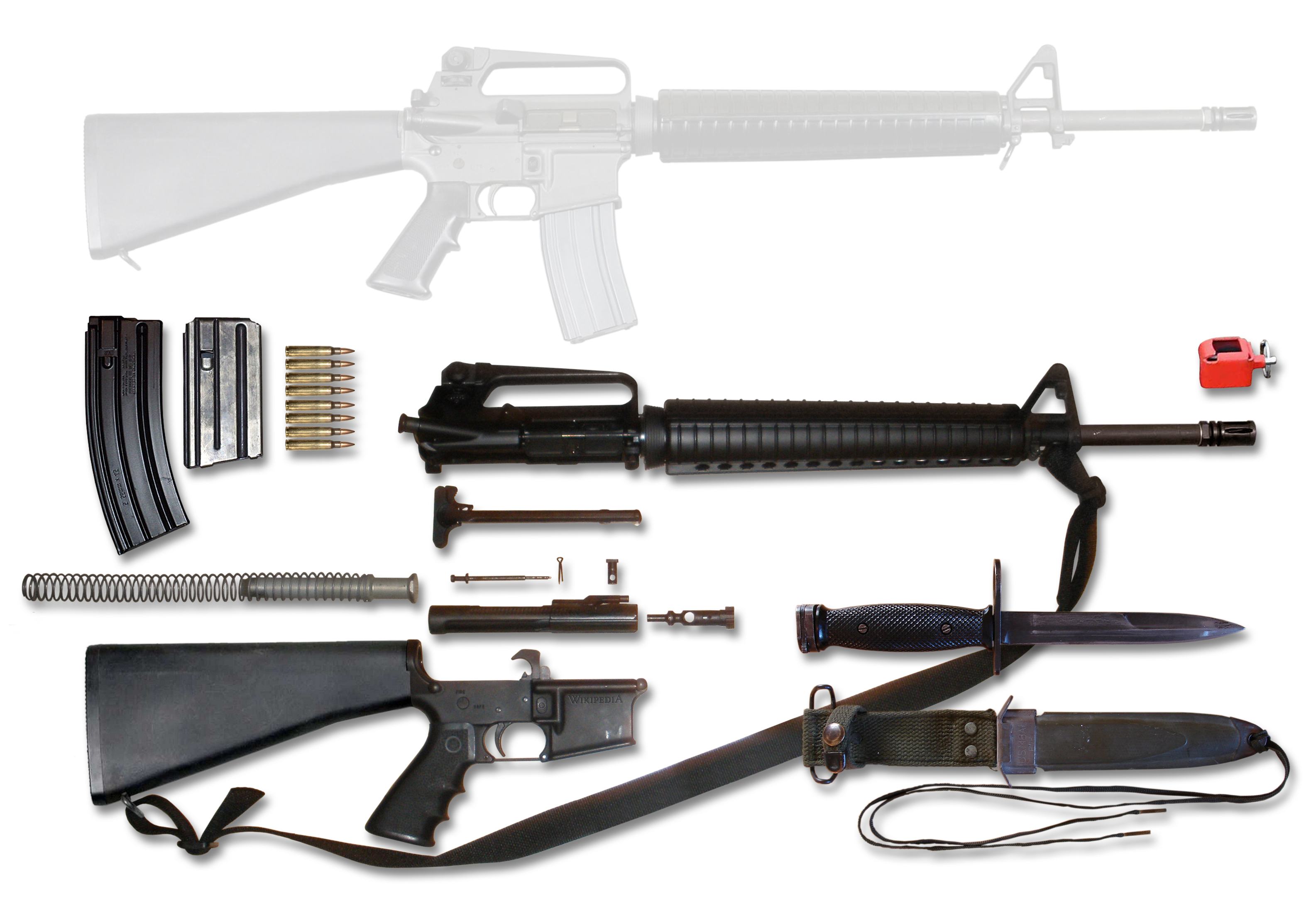
The pistols documented in this series are home builds: Black Rain Ordnance lower receivers, 8-inch .300 Blackout barrels, stabilising braces on collapsible receiver extensions, Magpul B.A.D. Levers on the bolt catch, and Feyachi RS-28 reflex sights. This volume covers what goes into a build like that, what has to be tuned rather than merely assembled, and — at §6.7 — the one hazard on this platform that will destroy a rifle and can injure the person holding it.
6.1 What a .300 Blackout Build Actually Is
Starting from a 5.56 AR-15, the conversion is a barrel. Starting from parts, it is an ordinary AR build with one part ordered in a different chambering.
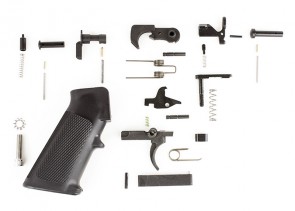
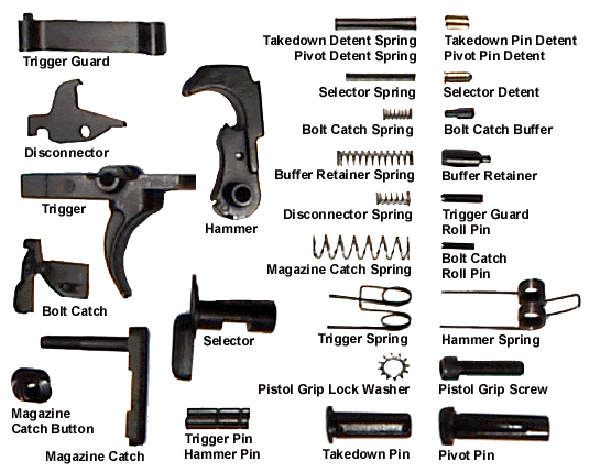
Carried over unchanged from any AR-15: the lower receiver and its complete parts kit; the upper receiver; the bolt; the bolt carrier; the charging handle; the magazines; the buffer tube and its hardware; the takedown and pivot pins.
Specific to .300 Blackout: the barrel — and with it the gas system length, which on a short barrel is pistol-length, and the muzzle thread, which is conventionally 5/8×24.
Worth specifying deliberately rather than accepting by default: the buffer weight and action spring (Volume 3 §3.5), and whether the gas block is fixed or adjustable (Volume 3 §3.7 and Volume 5 §5.4).
6.2 The Lower — and the Marking That Tells You Nothing
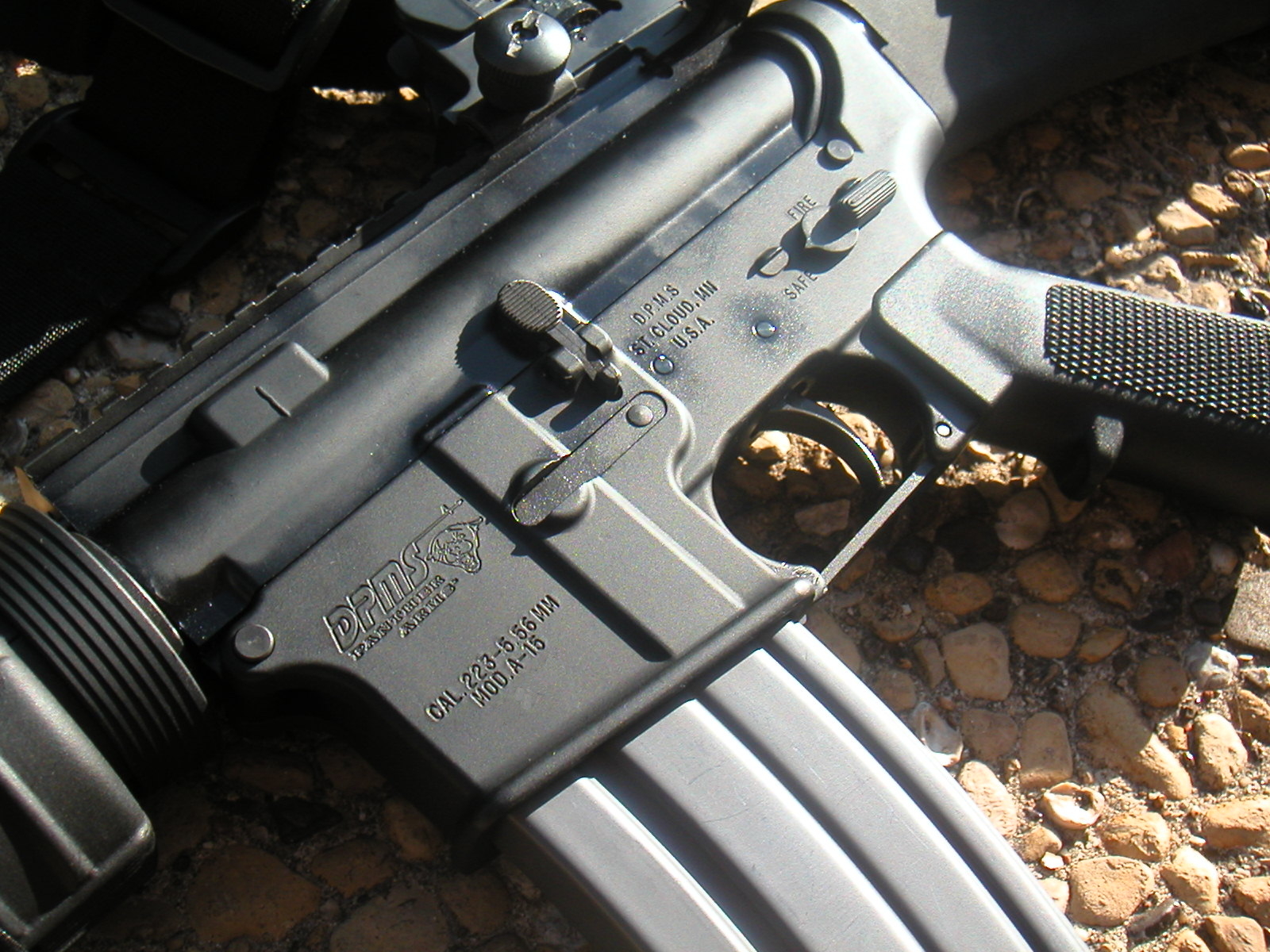
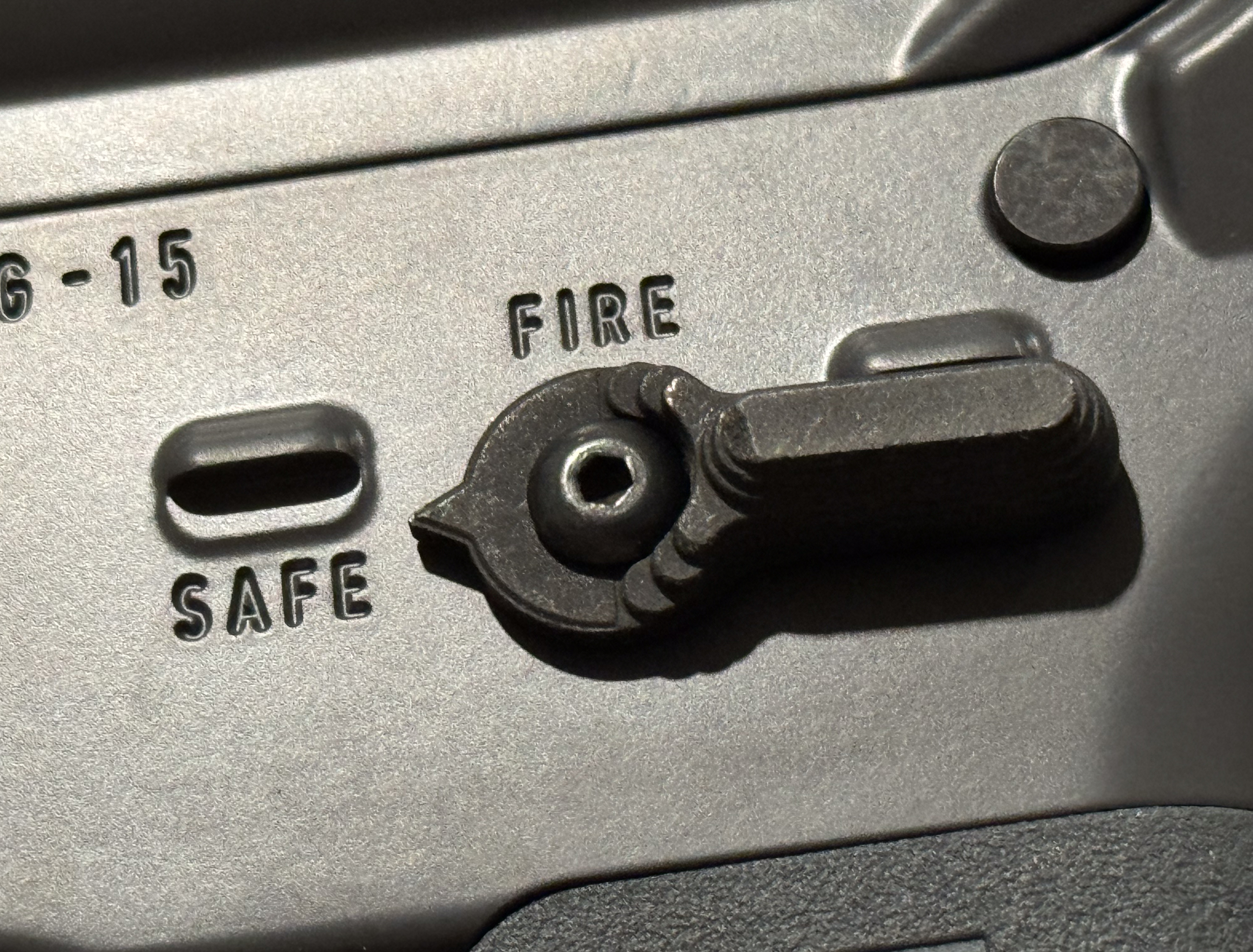
The lower receivers used in these builds are Black Rain Ordnance billet receivers, marked multi-calibre.
That marking is ordinary, it is legally sensible, and it is the first link in the hazard chain that §6.7 is about. A multi-calibre lower is marked that way precisely because the lower does not determine the chambering. It will accept any upper. So the part of the weapon the shooter looks at while inserting a magazine carries no information about what cartridge the weapon fires.
Worth stating in those terms, because it is the structural reason the .300 Blackout hazard is hard to design out: on an AR, the only part that knows the chambering is the barrel, and the barrel is inside the upper receiver, where nobody is looking during a reload.
6.3 The B.A.D. Lever and the Controls
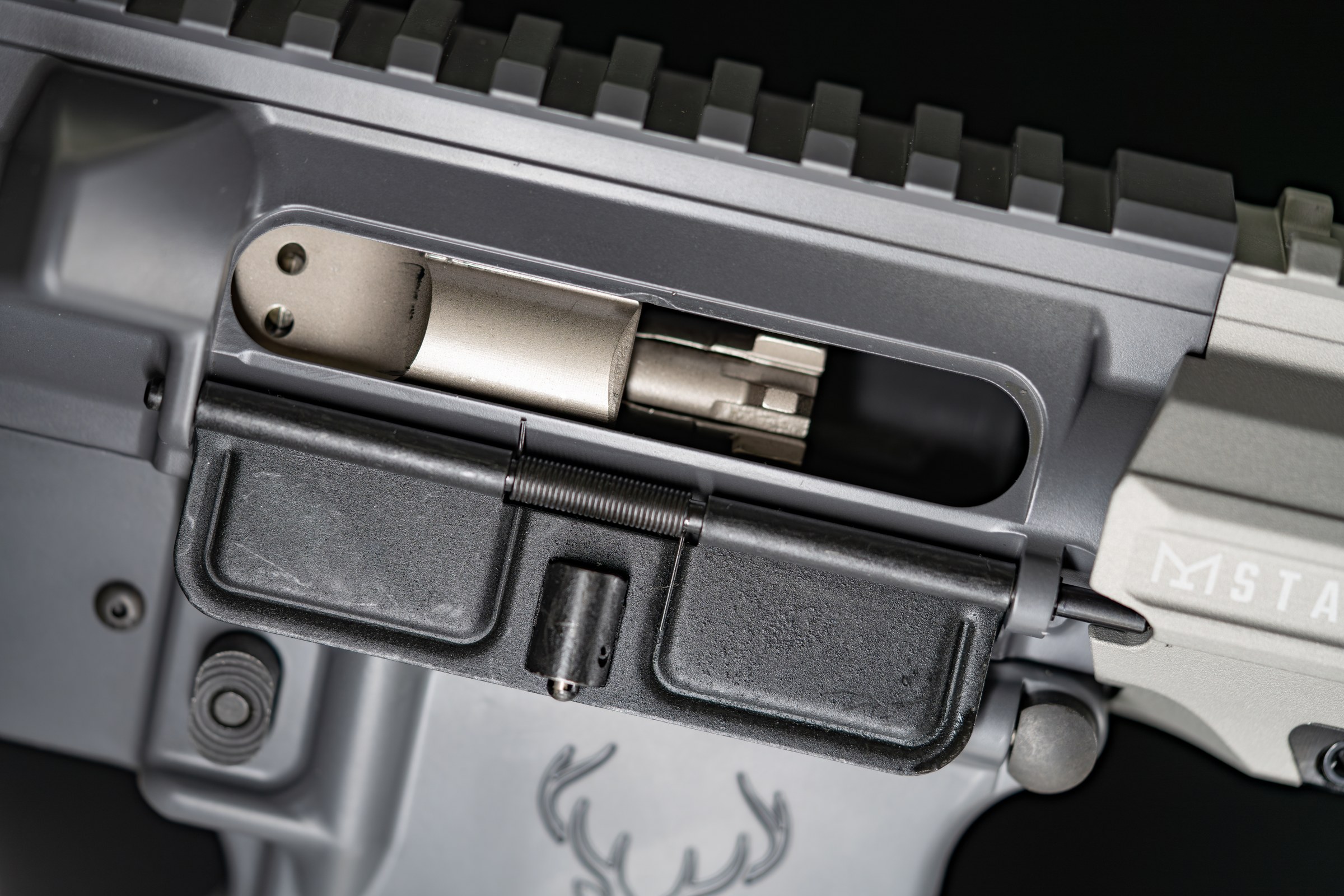
The Magpul B.A.D. Lever — Battery Assist Device, AR15/M4, model MAG980 — is fitted to these builds. From Magpul’s own product documentation: it is “designed to considerably improve the speed and efficiency of the AR15/M4 bolt catch,” is made from mil-spec anodised aluminium, “attaches to the existing bolt catch paddle via one screw,” and carries a “thin, anti-snag profile and textured surface” that “still allows for traditional manipulation of the bolt catch while maintaining unobstructed access to the trigger.” It carries NSN 1005-01-591-6130.1
⭐ A correction worth recording: the part number is MAG980. The B.A.D. Lever is frequently cited under other Magpul part numbers in secondary listings and in parts spreadsheets. The number verified against Magpul’s own product page for the AR15/M4 B.A.D. Lever is MAG980.
What it does mechanically. It extends the bolt catch paddle around the right side of the receiver so the trigger finger can release the bolt without the firing hand leaving the grip, and — the less-discussed half — so the bolt can be locked to the rear with the firing hand during a malfunction clearance.
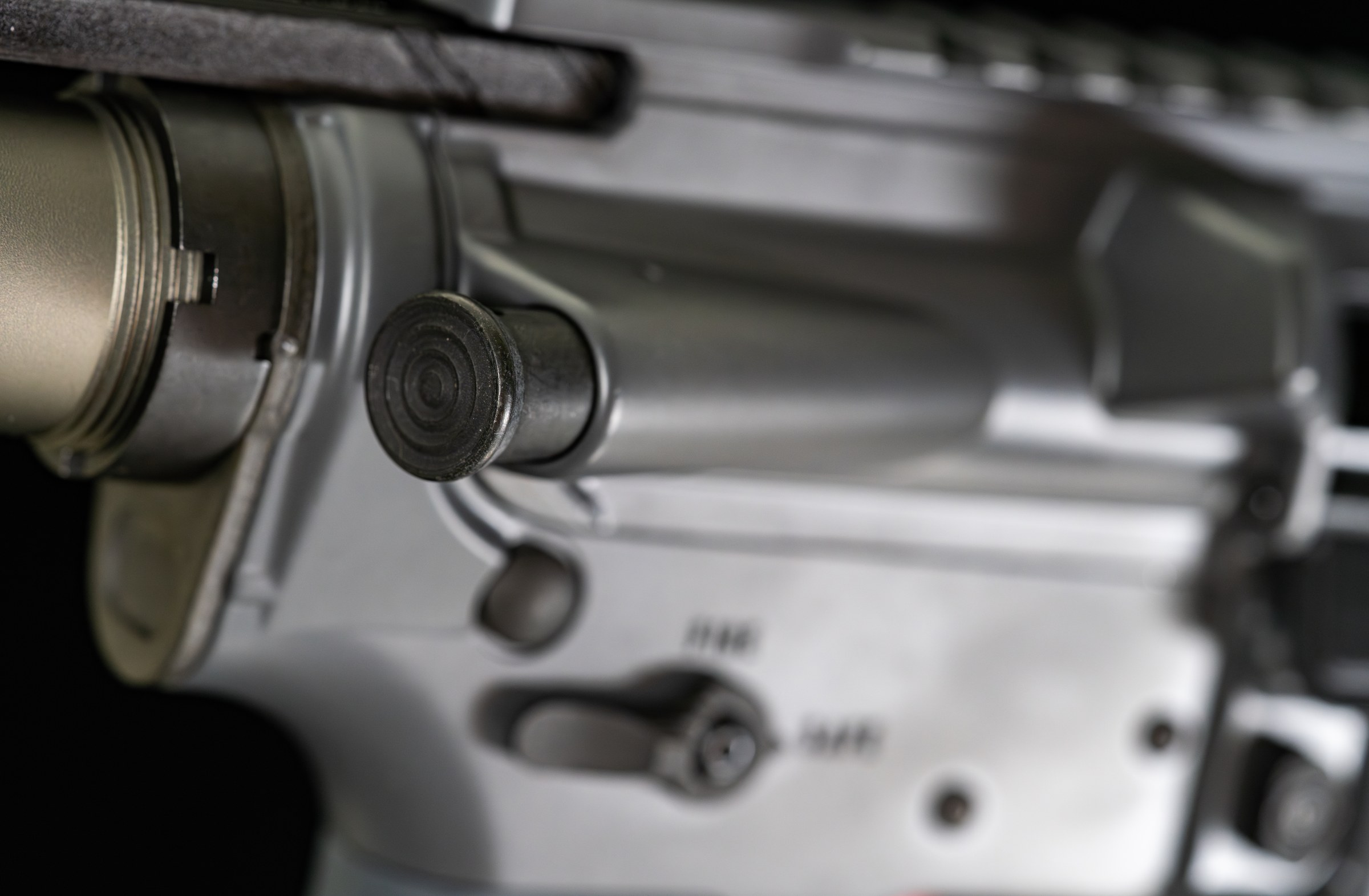
Why it earns its place specifically on this weapon. Volume 3 §3.6 established that the characteristic .300 Blackout subsonic malfunction is a failure to lock back, which shades into a failure to feed. A weapon whose most likely stoppage is a short-stroke is a weapon where the bolt catch is manipulated often — to lock the bolt back to inspect, to clear, to check a chamber. On a braced pistol held one-handed or awkwardly, being able to do that without breaking the firing grip is a real ergonomic gain rather than a gadget.
⚠ The trade, stated because Magpul states it. The lever adds a projection on the right side of the receiver that was not there before. Magpul’s own description emphasises an “anti-snag profile” and “unobstructed access to the trigger,” which is an acknowledgement that both are things a device in this position can get wrong. It is also listed as compatible with mil-spec forged uppers and lowers; billet receivers vary in their receiver-wall geometry, so fit on a billet lower should be confirmed rather than assumed.
6.4 Buffer and Spring — The Tuning That Is Not Optional
Volume 3 §3.5 carries the developer’s table; it is restated here because it is a build decision rather than a shooting decision.
Table 1 — 6.4 Buffer and Spring — The Tuning That Is Not Optional
| Component | AAC’s recommendation |
|---|---|
| Action spring | Standard USGI M4, or HK416 |
| Buffer, general purpose | H2, 4.6 oz (130 g), or HK416 |
| Buffer, if not shooting subsonic unsuppressed | H3, 5.5 oz (155 g) |
| 🔴 Never | A solid 9mm buffer — “may cause bolt bounce”2 |
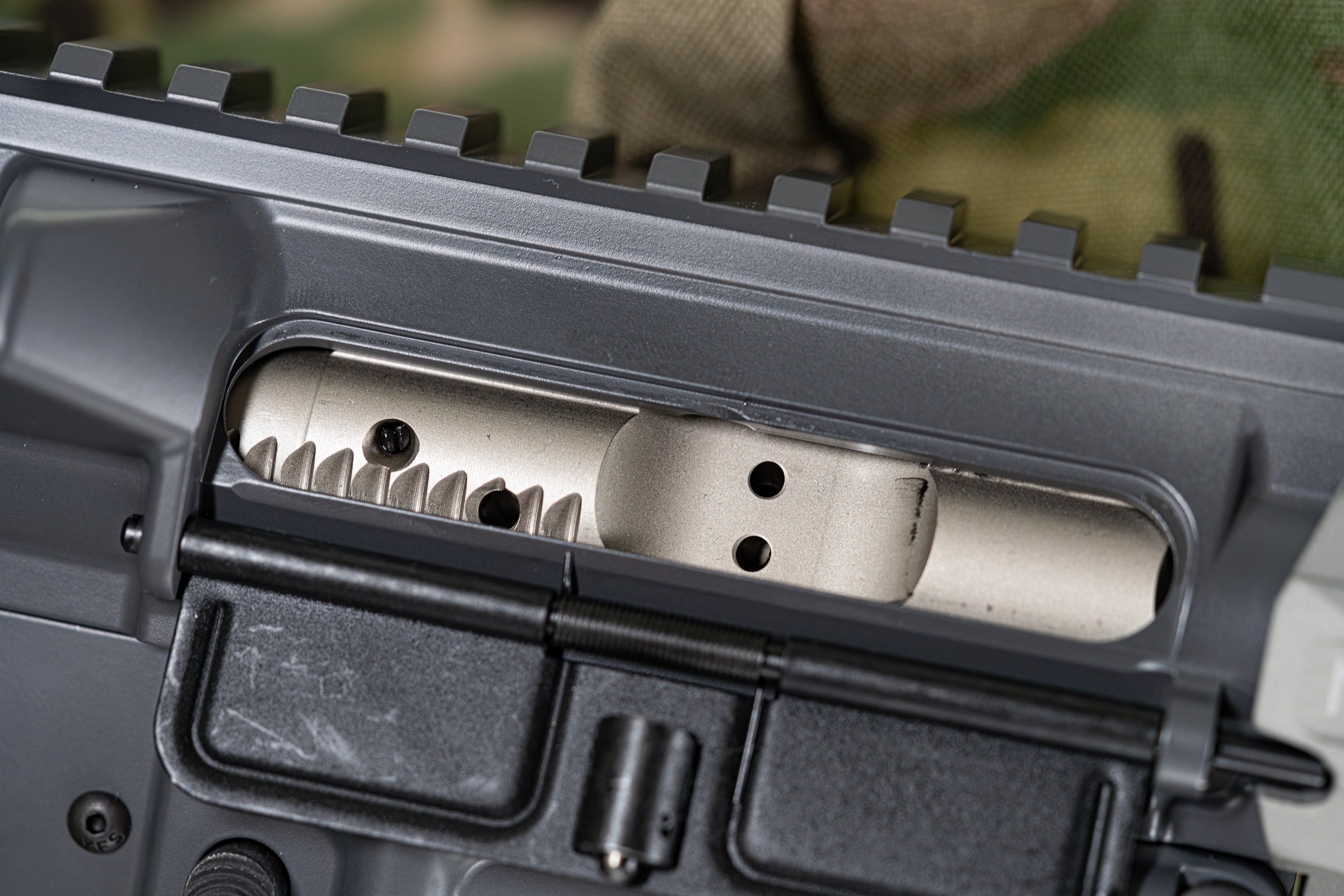
The practical build order matters. Assemble with an H2 and the standard spring, then shoot the ammunition that will actually be used — subsonic, supersonic, suppressed and unsuppressed — and observe whether the bolt locks back on the last round in each case. That single observation is the cheapest diagnostic available and it is the leading indicator of everything else.
- Locks back on all four combinations: leave it alone.
- Fails to lock back on subsonic unsuppressed only: this is the expected and acceptable failure. Decide whether that combination matters.
- Fails to lock back on anything else: the rifle is under-gassed and needs investigation before it needs parts.
- Brass landing forward of 3 o’clock, or the case rim showing ejector swipe: over-gassed, which is the suppressed-supersonic corner of Volume 5’s four-way table.
🔴 And AAC’s warning bears repeating in a build volume, because the wrong fix is the popular one: do not enlarge the gas port to make subsonic cycle. It buys subsonic function at the cost of hyper-cycling every supersonic round the weapon will ever fire.2
6.5 Optics on a Short Barrel
These builds carry Feyachi RS-28 reflex sights — a red-dot with an adjustable red/green reticle.3
Why a reflex sight is the right category for this weapon. An 8-inch braced pistol is a short-range weapon by construction. It is fired at distances where a magnified optic is an obstacle, from positions where the brace is against a forearm or a shoulder and head position is inconsistent. A reflex sight is parallax-tolerant, has no eye-relief requirement, and works with the inconsistent cheek weld a braced pistol produces. It is the correct answer to the ergonomics.
🔴 And it is the wrong answer to Volume 3’s problem, which is worth being honest about. A .300 Blackout firing both supersonic and subsonic ammunition has two zeroes separated, at 50 yards, by something in the region of three inches vertically — the measured figure from a 16-inch rifle in Volume 3 §3.3. A single dot offers nothing to hold with. There are no subtensions, no hash marks, no second aiming point. A shooter who changes load has to hold off by an estimated amount against a featureless dot, which is the least precise correction method available.
Three coherent responses, in order of practicality:
- Zero for the load the weapon will actually fire, and accept that the other load is an approximation. For a suppressed pistol that means zeroing for subsonic.
- Record the offset as a written dope entry — on a card, on the weapon, in a case — rather than relying on recall. Volume 3’s whole argument is that memory is what fails under pressure.
- Consider an optic with a reticle rather than a dot if switching loads is genuinely routine. This is a real capability gain and it costs the parallax tolerance that made the reflex sight right in the first place. It is a trade, not an upgrade.
⚠ No specification figures for the Feyachi RS-28 are published in this volume. The product was confirmed to exist in the manufacturer’s own catalogue as the “Feyachi RS-28 Reflex Sight — Adjustable Red/Green Reticle,” but the manufacturer’s detailed specification page could not be retrieved for this dive, and a dot size or window dimension quoted from a retailer listing would be the kind of unverified figure this hub has shipped wrongly before. Dot size in particular determines how precisely the sight can be used at distance and should be taken from the manufacturer.
6.6 Muzzle Device and Threads
The conventional .300 Blackout thread is 5/8×24, matching .308 rather than 5.56’s 1/2×28.
⭐ This is a safety feature and worth understanding as one. The thread pitch makes it mechanically impossible to fit a 5.56-bore suppressor to a .300 Blackout muzzle, or a .30-calibre can to a 5.56 muzzle, without a deliberate adapter. Given that a .30-calibre bullet through a .224 bore is the failure mode §6.7 is about, a thread standard that physically separates the two is doing genuine work.
It does not prevent the chambering error, which happens at the magazine, not at the muzzle.
6.7 🔴 The Genuine Danger — .300 Blackout in a 5.56 Chamber
This is the most dangerous thing on this platform. It has destroyed a great many rifles. It has nothing to do with suppressors, barrel length, braces or the law, and it is the one section of this series that should be read by anyone who owns both a .300 Blackout and a 5.56 upper.
6.7.1 The mechanism
A .300 Blackout cartridge is a 5.56 case, shortened and necked up. Its case head, rim and extractor groove are dimensionally identical to 5.56. Its case is shorter than a 5.56 case.
Put a .300 Blackout round in a 5.56 magazine and it will feed. Chamber it in a 5.56 barrel and the case — being shorter than the chamber was cut for — will enter far enough that the bolt can rotate and lock. The weapon will feel, to the person holding it, exactly like a rifle that has chambered a round correctly. There is no resistance to warn anyone.
What is now sitting in front of the case mouth is a .308-inch bullet aligned with a .224-inch bore.
On firing, the bullet cannot pass. The bore is a plug. Chamber pressure, which would ordinarily peak around 55,000 psi and then fall as the bullet accelerates and the volume behind it grows, instead rises against an obstruction that does not move. The result is a catastrophic overpressure event — a destroyed barrel and upper receiver, frequently a destroyed lower, a magazine blown out of the well, and a real risk of injury to hands, face and eyes.
The hazard is one-directional. A 5.56 cartridge is longer than a .300 Blackout chamber is cut for, so it will generally not chamber in a .300 Blackout barrel; the bolt will not close and the error announces itself. It is the short round in the long chamber that hides.
6.7.2 What SAAMI says, and it is the governing principle
SAAMI’s advisory on interchangeability states the rule in terms that could have been written for this cartridge:4
“Remember – just because a round of ammunition can fit into a firearm’s chamber, barrel, or action – this does not necessarily mean that it is safe to use that ammunition in that firearm. Again, always verify that the ammunition to be used matches the markings on the firearm.”
And on method:
“The best way to verify that you are using the correct ammunition is to check the head stamp on the ammunition to confirm that it matches the markings on the firearm.”
⭐ The negative evidence is as strong as the positive. The same advisory publishes what SAAMI considers the complete list of acceptable alternate cartridge-and-chamber combinations, and the list has four entries: three in the .22 rimfire family, one for .280 Ackley Improved, and .300 AAC Blackout ↔ .300 Whisper. That is all of them.4
5.56 and .300 Blackout do not appear together on that list, and the list is exhaustive by its own terms — “These acceptable alternate cartridge/chamber combinations are limited to only the following.” An owner looking for authority that the two are not interchangeable has it from the standards body itself, in a document that demonstrably does list .300 Blackout where interchange is acceptable.
6.7.3 Why the usual advice is not enough
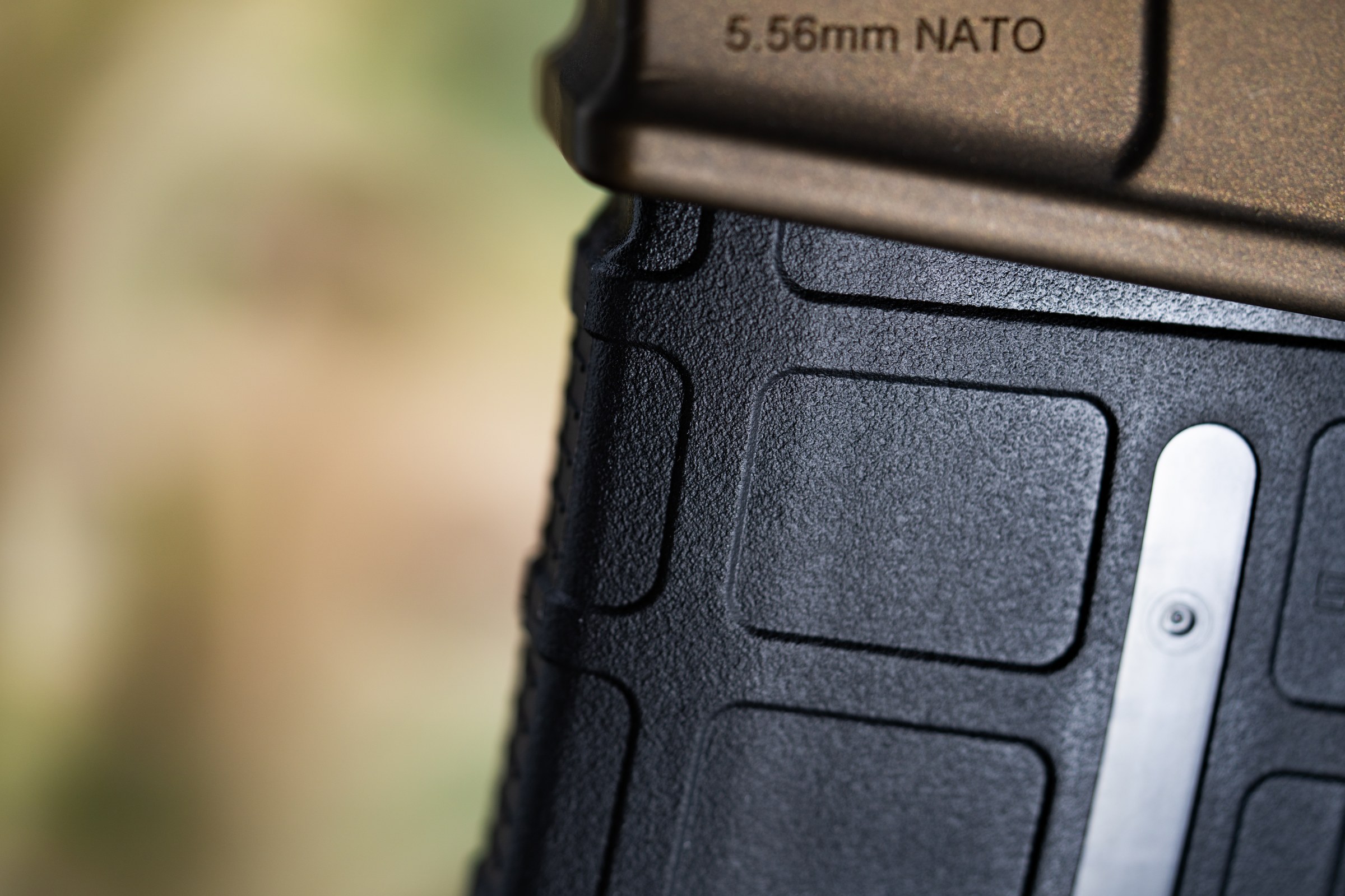
The standard guidance is “colour-code your magazines.” That is one layer and it is the weakest one, for a reason worth spelling out: a magazine is a loose object. It travels between rifles, gets picked up in a hurry, gets loaned, gets loaded by someone else, and ends up in a range bag with other magazines. A correctly coloured magazine in the wrong rifle is still a correctly coloured magazine.
The Suppressors by Caliber dive, Volume 5 §5.2.1, sets out the layered mitigation this series endorses, and it is reproduced here because this is the volume where it belongs:
- Colour-code the magazines. The usual advice, and the first layer.
- ⭐ Colour-code the magazine wells to match. This is the layer most people skip and it is the one that does the work. It converts the check from “is this the right magazine?” — a memory question — into “do these two colours agree?” — a perceptual question that can be answered in bad light, in a hurry, without reading anything and without remembering which rifle is in hand.
- Never store the ammunition or the loaded magazines in the same boxes. Separation at the source, so the wrong round is never within reach of the wrong magazine.
- Mark the upper receivers as well, since on an AR the barrel is the only part that differs and the upper is the part that carries it.
The general principle, which generalises well past this cartridge: the safeguards that work are the ones that do not depend on remembering. Colour agreement is perceptual. Recalling which rifle takes which round is a memory check, and memory is what fails when a person is cold, rushed, tired or talking to somebody.
6.7.4 Marking conventions that actually help
- The barrel is marked, and it is the only part that is authoritative. On an AR the marking is typically on the barrel extension area or forward of the gas block, and on a build with a full-length handguard it may be invisible without removing the handguard. Worth checking what a given build actually shows.
- Mark the upper externally if the barrel marking is hidden. A permanent label, an engraved plate or a paint mark on the upper receiver is a small job that puts the chambering where the shooter can see it.
- Headstamps differ, and SAAMI’s advice is to use them. .300 Blackout brass is headstamped as such by every major maker. 🔴 But a headstamp check happens at loading time, not at chambering time, and the cartridges that cause this accident are usually loose rounds or pre-loaded magazines.
- Dedicate magazines and never cross-load them — which is layer 3 restated as a habit rather than as a storage rule.
6.7.5 The one-line version
🔴 A .300 Blackout round will chamber in a 5.56 rifle, will give no warning that anything is wrong, and will destroy the rifle when the trigger is pulled. The mitigations that work are the ones that do not require anyone to remember anything.
6.8 Assembly Notes Specific to This Build
Headspace. AAC’s own manual is blunt about this and it applies to any build: “Always check headspace after changing a bolt, barrel, or barrel extension.”2 The Headspace dive owns the method, the gauges and the disagreement between gauge makers about where FIELD sits.
Gas block alignment. On a short barrel with a pistol-length system there is very little margin. A gas block that is not square and not concentric on the port is the most common cause of a rifle that cycles intermittently for no discoverable reason. AAC specifies 35–40 inch-pounds on gas block set screws with oil on the threads, and explicitly recommends against thread-locking adhesive — “because then you will not be able to remove the screws.”2
Extractor. AAC recommends the standard extractor spring with a blue insert and an O-ring, and recommends against extra-power extractor springs “because they are under higher stress and will likely break sooner.” Its own testing recorded four uppers completing 12,000 rounds and two completing 18,000 rounds with no extractor-spring failures on the standard arrangement.2
Magazines. Standard USGI or Magpul PMAG, at full capacity, no follower change.2 A magazine with a standard mil-spec 17-7 stainless spring “may be stored fully loaded with 30 rounds indefinitely,” and AAC notes that chrome silicon springs do not resist taking a set better than mil-spec ones “regardless of how they have been marketed.”2
6.9 Bibliography
Footnotes
-
Magpul Industries, “B.A.D. Lever® – Battery Assist Device – AR15/M4,” model MAG980. Source of the quoted product description, the single-screw attachment to the existing bolt catch paddle, the anti-snag profile and unobstructed trigger access language, the mil-spec anodised aluminium construction, the mil-spec forged upper and lower compatibility statement, and NSN 1005-01-591-6130. Retrieved from an archived capture of the manufacturer’s product page. https://magpul.com/bad-lever-battery-assist-device-ar15-m4.html ↩
-
Advanced Armament Corp., 300 AAC BLACKOUT Owner’s Manual Supplement (© 2010). Source of the buffer and action-spring table; the warning against enlarging the gas port; the headspace instruction; the 35–40 inch-pound gas block set-screw torque and the recommendation against thread-locking adhesive; the extractor spring guidance and the 12,000 and 18,000 round test results; and the magazine compatibility and spring-storage statements. https://advanced-armament.com/wp-content/uploads/300BLK-AAC-Upper.pdf ↩ ↩2 ↩3 ↩4 ↩5 ↩6 ↩7
-
Feyachi, product catalogue listing for the “Feyachi RS-28 Reflex Sight – Adjustable Red/Green Reticle.” Existence and product name confirmed from the manufacturer’s own catalogue search; no specification figures are quoted, because the manufacturer’s detailed specification page could not be retrieved for this dive. https://www.feyachi.com/ ↩
-
SAAMI, Generally Accepted Firearms and Ammunition Interchangeability, dated 10/8/2021. Source of both quoted passages in §6.7 and of the complete four-entry table of acceptable alternate cartridge and chamber combinations, which the document states is “limited to only the following.” https://saami.org/publications-advisories/advisories/ ↩ ↩2
Comments (0)