.300 Blackout AR Pistol · Volume 4
The Legal Volume — Braces, SBRs, the Rulemakings, and Michigan
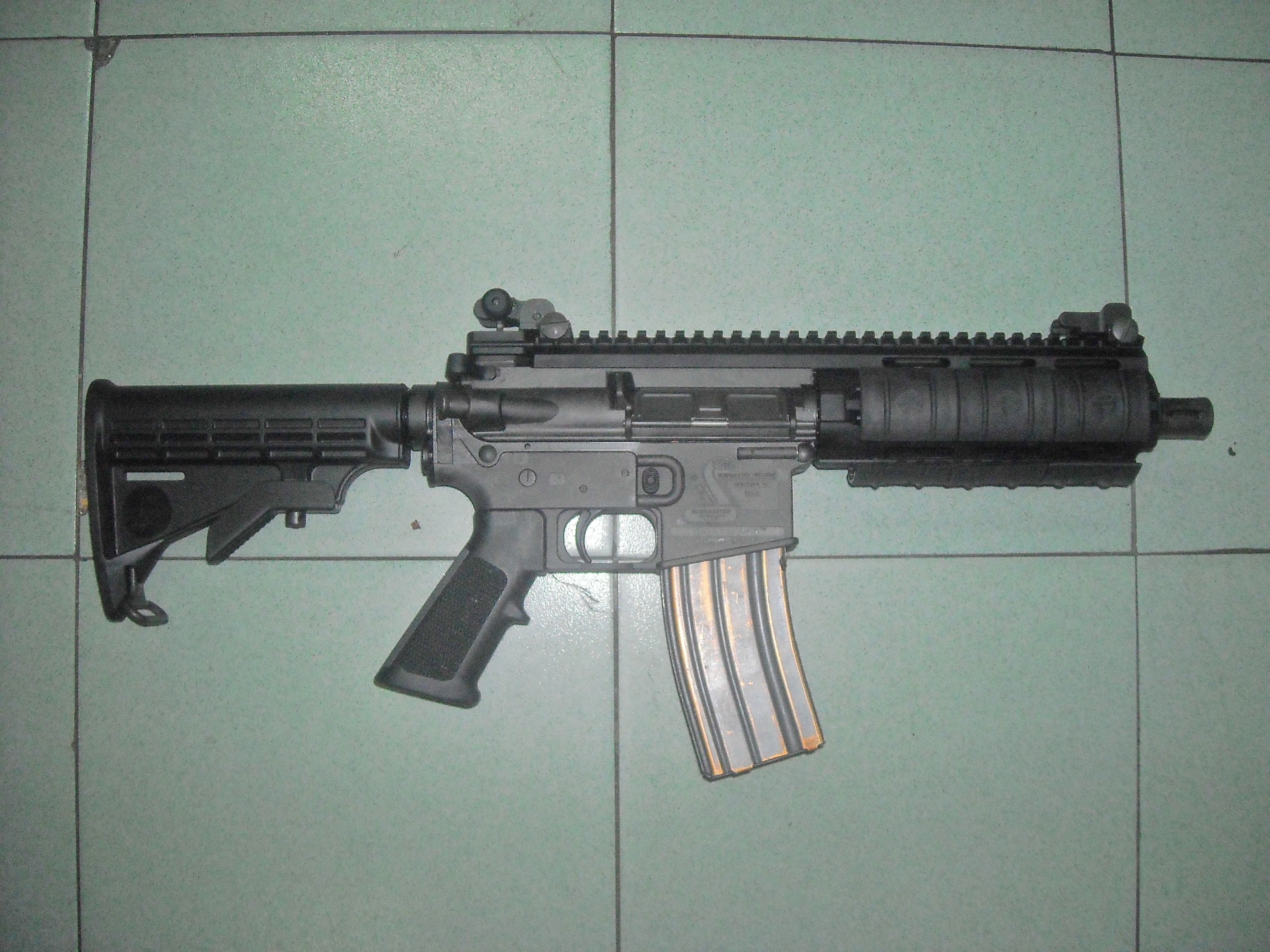
This volume is tracked to primary sources throughout — the Federal Register, the Michigan Compiled Laws as published by the Michigan Legislature, and court decisions as recited by the agency itself. It does that because the legal history of the stabilising brace is the most widely and confidently misreported subject in this field, and because almost every secondary summary available is either out of date, written to advocate, or both.
🔴 Nothing in this series is legal advice. The law described here is federal and Michigan law as it stood when this was written; it changes, and one of the things this volume documents is a rulemaking that is still open.
4.1 Two Objects That Look Identical
Federal law distinguishes a pistol from a short-barrelled rifle, and the distinction determines whether an object is an ordinary firearm or a registered National Firearms Act item.
The regulatory definition of “rifle” in 27 CFR 479.11 — quoted here from the Federal Register text of the 2026 proposed rule, which sets out the wording that would be restored — is:
“A weapon designed or redesigned, made or remade, and intended to be fired from the shoulder and designed or redesigned and made or remade to use the energy of the explosive in a fixed cartridge to fire only a single projectile through a rifled bore for each single pull of the trigger, and shall include any such weapon which may be readily restored to fire a fixed cartridge.”1
The operative phrase is “intended to be fired from the shoulder.” A rifle with a barrel under 16 inches, or an overall length under 26 inches, is a short-barrelled rifle and an NFA item. A weapon with the same barrel that is not designed and intended to be fired from the shoulder is a pistol, and is not.
A stabilising brace sits precisely on that line. It is a device attached to the rear of the receiver extension, originally developed to let a shooter with limited hand strength stabilise a heavy pistol against the forearm. It also, inevitably, provides a surface that a shoulder can rest against.
The entire legal history that follows is an argument about that surface.
4.2 The 2023 Rule — What It Actually Did
On 31 January 2023 the Department of Justice published a final rule, “Factoring Criteria for Firearms With Attached ‘Stabilizing Braces’,” at 88 FR 6478–6575, Docket No. ATF 2021R-08F, AG Order No. 5589-2023, RIN 1140-AA55. It was effective on the day of publication, with a 120-day compliance period.2
The rule amended the definition of “rifle” in 27 CFR 478.11 and 479.11 so that a braced weapon counted as a rifle when a set of factors indicated it was designed and intended for shoulder fire. Rather than the point-scoring worksheet that had appeared in the proposal, the final rule wrote the factors into the regulatory text. As the 2026 proposal summarises them, they included the weapon’s weight and length, its length of pull, whether the sights or optic required shoulder fire to use as designed, “whether the surface area that allows the weapon to be fired from the shoulder is created by a buffer tube, receiver extension, or any other accessory, component, or other rearward attachment that is necessary for the cycle of operations,” the manufacturer’s marketing materials, and information showing likely use in the general community.1
Owners of affected firearms who did not wish to register them were given four options, quoted from the 2026 proposal’s own account of the 2023 rule:1
“(1) remove the short barrel and attach a 16-inch or longer rifled barrel to the firearm; (2) permanently remove and dispose of, or alter, the ‘stabilizing brace’ such that it cannot be reattached; (3) turn the firearm into the local ATF office; or (4) destroy the firearm.”
That is the rule as written. What happened to it is a different matter entirely.
4.3 The Litigation, Case by Case
The account below is taken from ATF’s own recitation in the 2026 proposed rule, which is the most authoritative single summary available because it is the agency describing the litigation it lost.1
The Fifth Circuit. William T. Mock, Maxim Defense Industries LLC and the Firearms Policy Coalition moved in the Northern District of Texas to preliminarily enjoin the rule.
Table 1 — 4.3 The Litigation, Case by Case
| Date | What happened |
|---|---|
| 30 March 2023 | District court denies the preliminary injunction — Mock v. Garland, 666 F. Supp. 3d 633 (N.D. Tex. 2023) |
| 23 May 2023 | A Fifth Circuit motions panel issues an injunction pending appeal as to the plaintiffs — Mock v. Garland, No. 23-10319, Dkt. 52 |
| 31 May 2023 | Further injunctions follow — Second Amend. Found. v. ATF, No. 3:21-CV-0116-B, 2023 WL 4504587 (N.D. Tex.); order in Britto v. ATF, No. 2:23-CV-019-Z (N.D. Tex.) |
| by mid-June 2023 | ATF is enjoined as to “two manufacturers and their customers, four nationwide advocacy groups and their members, one state’s employees and agencies, and eight individuals” |
| 1 August 2023 | Fifth Circuit reverses the denial, holds plaintiffs likely to prevail on the merits, remands — Mock v. Garland, 75 F.4th 563 (5th Cir. 2023) |
| 8 November 2023 | A separate N.D. Tex. court universally stays the rule nationwide under 5 U.S.C. § 705 — Britto v. ATF, 2023 WL 7418291 |
| 🔴 13 June 2024 | The Mock court grants plaintiffs’ summary judgment, denies the Government’s, and universally vacates the final rule — 2024 WL 2982056 (N.D. Tex.) |
| 26 August 2024 | Fifth Circuit dismisses the pending preliminary-injunction appeals as moot — Watterson v. ATF, No. 23-11157, 2024 WL 3935446 |
| 17 July 2025 | The Government’s remaining appeal is dismissed by joint stipulation — Mock v. Bondi, No. 24-10743 (5th Cir.), Dkt. 80 |
The Eleventh Circuit. On 26 January 2024 the Middle District of Florida granted a preliminary injunction that, in the agency’s words, “has effectively prevented the Government from enforcing the 2023 final rule against the named plaintiffs and past and future customers of the plaintiffs residing in Florida,” finding the rule likely violated the APA’s notice-and-comment requirement — Colon v. ATF, No. 8:23-CV-223-MSS-UAM, 2024 WL 309975.1
The Eighth Circuit. On 9 August 2024 the Eighth Circuit found challengers likely to succeed on the merits and remanded — Firearms Regul. Accountability Coal. v. Garland, 112 F.4th 507, 526 (8th Cir. 2024). The plaintiffs subsequently filed a voluntary dismissal (D.N.D., 20 November 2024).1
Every one of those challenges was brought under the Administrative Procedure Act. The cases were not decided on Second Amendment grounds. They were decided on how the rule was made.
4.4 Where It Stands — In the Agency’s Own Words
This is the part that secondary sources get wrong, so it is quoted rather than paraphrased. ATF’s own characterisation, published in the Federal Register on 6 May 2026:1
“In sum, in less than four months after the effective date of the 2023 final rule, ATF had been enjoined from enforcing it against several groups of plaintiffs, and on November 8, 2023, it was universally vacated. Because of the ongoing litigation and the various injunctions, for all intents and purposes, ATF has never actively enforced the 2023 final rule. In other words, no further classifications were issued as to industry members or the public and no one was investigated based solely on possessing a braced firearm.”
And on its present operative effect:
“Following the rule’s vacatur, ATF has been prevented from enforcing the rule nationwide, so revising the relevant definitions will provide clarity and confirm for regulated parties that the 2023 regulation change is no longer in effect.”
The abstract of the proposed rule states the position in one sentence: “Several courts have enjoined, stayed, or vacated the final rule, which has rarely been in effect.”1
🔴 So the settled position is this: the 2023 brace rule was universally vacated on 13 June 2024, ATF is prevented from enforcing it nationwide, and the agency itself says it never actively enforced it. An attaching brace does not, by operation of that rule, make a pistol into a short-barrelled rifle, because that rule has no operative effect.
⚠ Note the internal inconsistency in ATF’s own text, which is reproduced here rather than smoothed over. The passage quoted above says the rule “was universally vacated” on 8 November 2023 — but 8 November 2023 is the date of the Britto nationwide stay under 5 U.S.C. § 705, and the narrative elsewhere in the same document, together with the case citation, places the vacatur at 13 June 2024 in Mock. The better reading is that the sentence conflates the stay with the vacatur. This series treats 8 November 2023 as the date the rule was universally stayed and 13 June 2024 as the date it was vacated, and flags that the agency’s own summary sentence is imprecise.
4.5 The 2026 Proposal — And Why “Proposed” Matters
On 6 May 2026, ATF published “Removing Factoring Criteria for Firearms With Attached ‘Stabilizing Braces’” at 91 FR 24453–24462, Docket No. ATF-2026-0335, ATF No. 2025R-11P, RIN 1140-AA98. Comments closed 4 August 2026.1
What it proposes: to delete the two paragraphs the 2023 rule added to the definitions of “rifle” in 27 CFR 478.11 and 479.11, returning both to the pre-2023 wording, which tracked the statutory language without further elaboration. ATF’s stated reasons are the confusion the 2023 rule generated, “the courts’ conclusions that it was arbitrary and capricious,” notice concerns, the benefits of case-by-case classification — and, bluntly, that “it is a waste of resources to continue defending and trying to enforce the 2023 final rule.”1
🔴 This is a notice of proposed rulemaking. It is not a final rule. As of this writing the comment period has closed and no final rule removing the criteria has been identified. That means the 2023 regulatory text remains printed in 27 CFR 478.11 and 479.11 while being judicially unenforceable — an odd state of affairs, and precisely the one ATF says the proposal exists to tidy up.
⚠ This is the part most likely to be out of date by the time anyone reads it. A final rule may have issued. Check the current text of 27 CFR 478.11 and 479.11, and the docket, before relying on any of this.
What has not changed at all: the statutes. The NFA and the Gun Control Act definitions are untouched by any of this. A weapon that genuinely is designed and intended to be fired from the shoulder, with a barrel under 16 inches, is a short-barrelled rifle regardless of what the regulations say about braces — because that is what the statute says. The vacated rule was an attempt to tell people how the agency would decide that question. Removing it does not remove the question.
4.6 What a Form 1 Costs Now — $0, and Only That Changed
For anyone who would rather register an SBR than rely on the brace analysis, the arithmetic changed completely on 1 January 2026.
The One Big Beautiful Bill Act (H.R. 1), signed 4 July 2025, set the National Firearms Act making and transfer tax to $0 for suppressors, short-barrelled rifles, short-barrelled shotguns and any other weapons, effective 1 January 2026. NSSF’s account of the provision is direct: “the Senate ended up including language to reduce the NFA tax on suppressors and short-barreled rifles and short-barrel shotguns and ‘any other weapons’ to $0 from $200,” and “those tax reductions will take effect Jan. 1, 2026.”3
Machine guns and destructive devices still carry the $200.
🔴 The tax went to zero. Nothing else did. A Form 1 to make an SBR still requires registration in the National Firearms Registration and Transfer Record, fingerprints, a photograph, a background check, and — critically — ATF approval before the weapon may lawfully be made. The approval-before-metal sequence is unchanged, the wait is unchanged, and unregistered possession is still a federal felony. The Suppressor Law dive, Volume 3, works through exactly what did and did not change and is the fuller treatment.
What this does to the decision. Before 2026, choosing a braced pistol over a registered SBR saved $200 and a wait. Now it saves only the wait and the paperwork. For an owner who finds the brace question uncomfortable, a Form 1 is now free in money terms, and that is a genuinely different calculus than the one most published advice was written under.
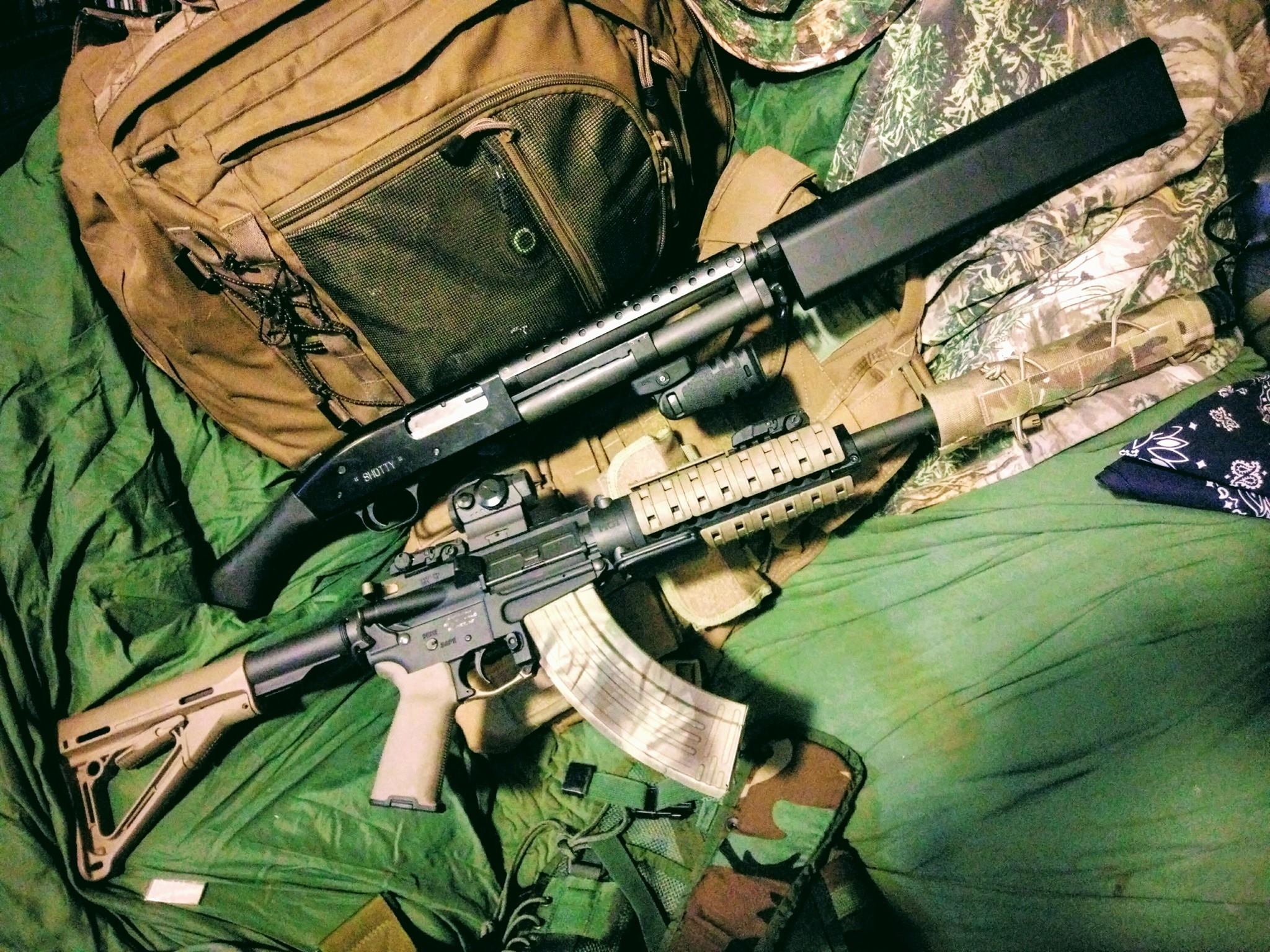
4.7 Michigan — MCL 750.224b, Quoted
Michigan has its own short-barrelled rifle statute, and it is quoted here from the Michigan Legislature’s own publication of the Michigan Compiled Laws, complete through PA 91 of 2026.4
MCL 750.224b, from the Michigan Penal Code, Act 328 of 1931:
“(1) A person shall not make, manufacture, transfer, or possess a short-barreled shotgun or a short-barreled rifle.
(2) A person who violates subsection (1) is guilty of a felony punishable by imprisonment for not more than 5 years or a fine of not more than $2,500.00, or both.
(3) Subsection (1) does not apply to a short-barreled shotgun or short-barreled rifle that is lawfully made, manufactured, transferred, or possessed under federal law.
(4) A person, excluding a manufacturer, lawfully making, transferring, or possessing a short-barreled shotgun or short-barreled rifle that is 26 inches or less in length under this section shall comply with section 2 or 2a of 1927 PA 372, MCL 28.422 and 28.422a.
(5) A person who possesses a short-barreled shotgun or short-barreled rifle that is greater than 26 inches in length under this section shall possess a copy of the federal registration of that short-barreled shotgun or short-barreled rifle while transporting or using that short-barreled shotgun or short-barreled rifle and shall present that federal registration to a peace officer upon request by that peace officer.”
Subsection (6) makes a violation of (5) a state civil infraction with a fine of not more than $100, makes the weapon subject to immediate seizure, and gives the possessor 45 days to display the federal registration to the seizing agency, after which the weapon is subject to forfeiture. Subsection (7) applies MCL 776.20 to subsection (3).
History: Add. 1978, Act 564, Imd. Eff. Dec. 29, 1978; Am. 2008, Act 196, Eff. Jan. 7, 2009; Am. 2014, Act 63, Imd. Eff. Mar. 27, 2014.
The structure of the Michigan scheme, stated plainly:
- Michigan bans short-barrelled rifles outright at subsection (1), with a felony penalty.
- Subsection (3) then exempts anything lawful under federal law — so a properly registered federal SBR is lawful in Michigan.
- Subsections (4) and (5) then split those lawful weapons by overall length, at a 26-inch threshold, and impose different obligations on each side of it.
4.8 Michigan — The 26-Inch Cross-Reference, and What It Drags In
Subsection (4) is the one that matters for a compact weapon, and it is the reason MCL 28.422 appears in this volume at all.
A lawfully possessed short-barrelled rifle that is 26 inches or less in overall length must comply with MCL 28.422 — Michigan’s pistol licence-to-purchase statute. That is a deliberate legislative choice: Michigan treats a very short long gun the way it treats a pistol.
MCL 28.422(1) provides:5
“(1) Except as otherwise provided in this act, a person shall not do either of the following: (a) Purchase, carry, possess, or transport a pistol in this state without first having obtained a license for the pistol as prescribed in this section. (b) Purchase a firearm that is not a pistol in this state without first having obtained a license for the firearm as prescribed in this section…”
The section goes on to set the qualifications for a licence at subsection (3) — including that the applicant be “18 years of age or older or, if the firearm is a pistol and the seller is licensed under 18 USC 923, is 21 years of age or older” — and provides that “a license is void unless used within 30 days after the date it is issued” (subsection (4)). Subsection (5) requires the seller to return a copy to the licensing authority within 10 days for a pistol, and subsection (6) requires entry into the pistol entry database within 10 days and forwarding to the Michigan State Police within 48 hours. The purchaser may carry the weapon for 30 days from acquisition while in possession of a copy of the licence.5
MCL 28.422a lists those exempt from the section 2 licence — most relevantly, holders of a Michigan concealed pistol licence — but an exempt purchaser’s seller still completes a record in triplicate and forwards a copy within 10 days.
4.9 🔴 The Question This Volume Cannot Settle
Here is where the honest answer is that it depends, and that nobody has published the answer for this configuration.
The Michigan scheme in §4.7 is keyed to short-barrelled rifles. A braced pistol is not a rifle — that is the whole point of the federal analysis in §4.1 to §4.5. If the weapon is a pistol, MCL 750.224b does not reach it at all, and the applicable Michigan law is the pistol law: MCL 28.422 in its own right, plus Michigan’s pistol transport and carry rules.
But if the weapon is a rifle — because it is genuinely designed and intended for shoulder fire, which is a statutory question that survives the vacatur of the 2023 rule — then it is an unregistered short-barrelled rifle, and MCL 750.224b(1) makes that a five-year felony with no federal-law exemption available under (3), because there is no federal registration to be lawful under.
These are the two possible characterisations, and they are very far apart. One is an ordinary pistol. The other is a felony.
Three specific things could not be resolved for this volume and are stated as open rather than guessed:
-
⚠ Whether an 8-inch-barrelled AR pistol with a collapsible receiver extension measures over or under 26 inches overall. It is close. An 8-inch barrel plus an AR-15 upper and lower plus a receiver extension is in the region of 25 to 27 inches depending on the brace, the receiver extension and — critically — whether the brace is collapsed or extended, which on a collapsible extension changes the answer. No figure is published here because it is a measurement, not a research question, and it must be made on the individual weapon. Note also that Michigan’s statute does not, in the text quoted above, say whether the measurement is taken collapsed or extended.
-
⚠ How Michigan authorities treat a braced pistol after the federal vacatur. No Michigan appellate decision, attorney-general opinion or Michigan State Police guidance addressing braced pistols specifically was located for this dive. The Michigan State Police firearms pages returned HTTP 403 to every automated request made, and the question was not resolved from any primary Michigan source.
-
⚠ Whether MCL 28.422 requires a licence for an AR-style pistol as a “pistol.” The Michigan definition of “pistol” and how it applies to an AR-pattern pistol was not resolved from the primary text for this volume. This is a live practical question with a felony on one side of it, and the correct route is a written answer from the licensing authority, not an inference from a series like this one.
The defensible practical posture, stated as posture and not as advice: an owner in Michigan with a braced .300 Blackout pistol is relying on the weapon being a pistol rather than a rifle. That characterisation is currently well supported federally — the rule that said otherwise was vacated and is unenforceable. It is not equally well documented at the Michigan level, and an owner who wants certainty rather than a good argument has an option that did not used to be cheap: register it on a Form 1, which since 1 January 2026 costs $0 in tax, and land squarely inside MCL 750.224b(3).
4.10 Michigan Hunting — A 2026 Change That Invalidates Older Advice
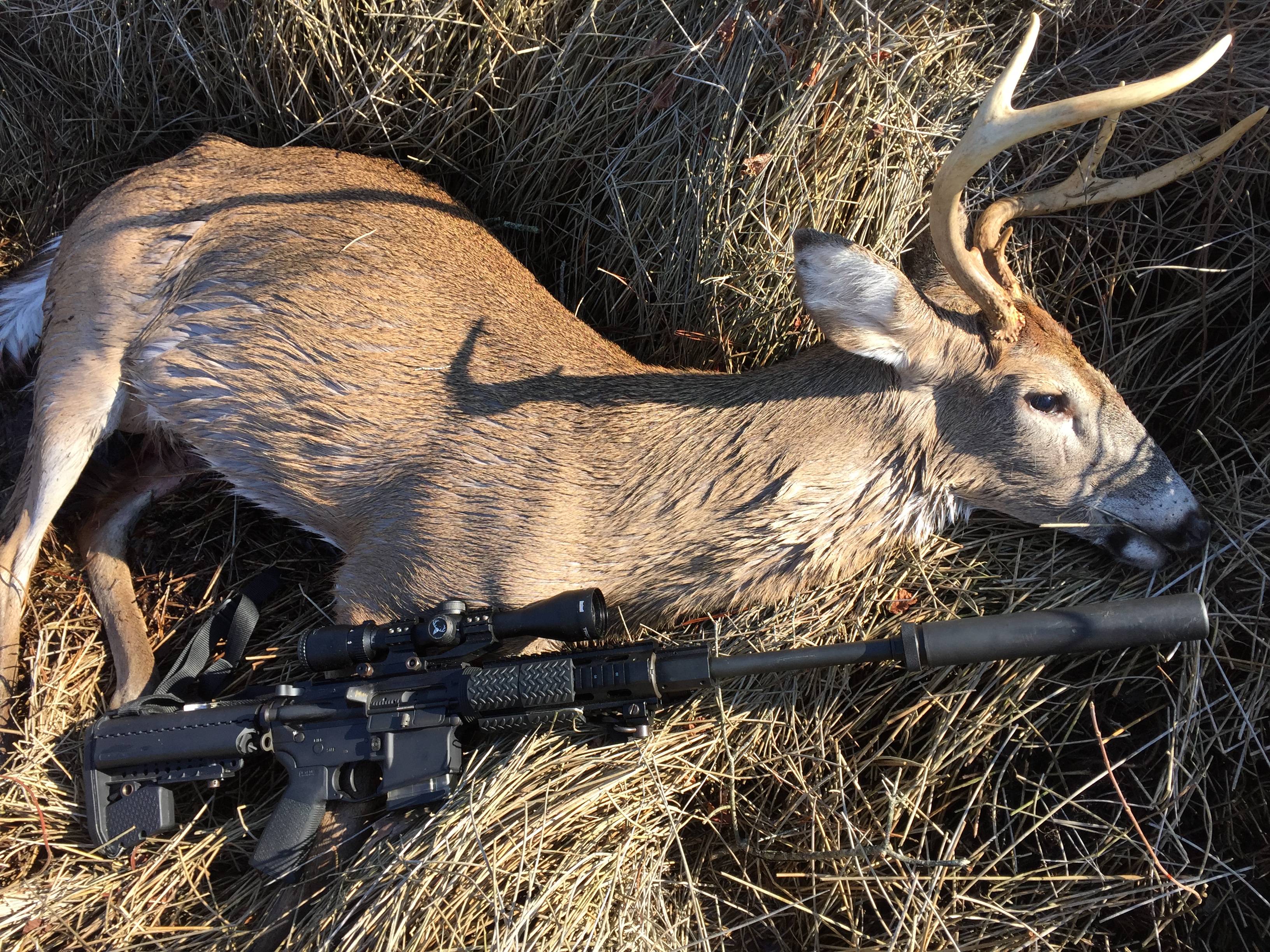
🔴 Michigan’s limited firearms deer zone has been eliminated. From the 2026 Michigan Deer Hunting Regulations Summary: “The limited firearms deer zone has been eliminated. Beginning Sept. 12, 2026, hunters can use all legal firearms across the Lower Peninsula.”6
This retires a very large body of received wisdom. For decades southern Michigan was shotgun country, later relaxed to admit certain straight-walled rifle cartridges. That zone no longer exists. Any article written before 2026 explaining which cartridges are permissible in southern Michigan is out of date, and the straight-walled-cartridge folklore should be retired with it.
The digest’s list of legal firearms for a firearm deer season includes “a rifle of any caliber larger than a .22-caliber rimfire” and “a handgun of any caliber larger than a .22-caliber rimfire.”6
⚠ That phrasing is ambiguous on its face — read literally, “larger than a .22-caliber” would exclude every .224-inch centrefire. The drafter’s evident intent is that “rimfire” does the limiting work, excluding .22 rimfire while admitting centrefires. .300 Blackout is a .308-inch bullet and sits nowhere near the ambiguity, so the question does not bite here; it is flagged because the same clause governs other weapons in this collection.
Suppressed hunting is lawful in Michigan for all game and all seasons with no additional permit — see the Suppressor Law dive, Volume 7, which owns the Michigan suppressor material and the vehicle-transport trap that goes with it.
⚠ One restriction that could matter and was not resolved for this volume: Michigan’s Wildlife Conservation Order has been summarised elsewhere in this collection as making it unlawful to hunt with a semi-automatic rifle holding more than six rounds in barrel and magazine combined. Whether and how that provision applies to a semi-automatic pistol was not established here. Anyone intending to hunt with one of these should get that answer from the current digest before the season.
4.11 What Is Settled, What Is Contested, What Is Open
Table 2 — 4.11 What Is Settled, What Is Contested, What Is Open
| Question | Status |
|---|---|
| Was the 2023 brace rule vacated? | ✅ Settled. Universally vacated 13 June 2024, Mock v. Garland, 2024 WL 2982056 (N.D. Tex.) |
| Is ATF enforcing it? | ✅ Settled. ATF: “prevented from enforcing the rule nationwide”; “has never actively enforced” it |
| Has the rule been formally removed from the CFR? | 🔴 No. A proposal to remove it published 6 May 2026; comments closed 4 Aug 2026; no final rule identified |
| Does the NFA still define short-barrelled rifles? | ✅ Settled. Untouched by any of this; the statute is unchanged |
| What does a Form 1 for an SBR cost? | ✅ Settled. $0 tax since 1 January 2026; every other requirement unchanged |
| Does Michigan ban SBRs? | ✅ Settled. MCL 750.224b(1), 5-year felony, with (3) exempting those lawful under federal law |
| Is an 8-inch braced AR pistol over or under 26 inches? | ⚠ Open — it is a measurement. Determines MCL 750.224b(4) vs (5) if the weapon is a rifle at all |
| How does Michigan treat braced pistols post-vacatur? | ⚠ Open. No Michigan primary source located |
| Is southern Michigan still a limited firearms zone? | ✅ Settled — and it changed. Eliminated effective 12 September 2026 |
4.12 Bibliography
Footnotes
-
Department of Justice, Bureau of Alcohol, Tobacco, Firearms, and Explosives, “Removing Factoring Criteria for Firearms With Attached ‘Stabilizing Braces’,” notice of proposed rulemaking, 91 FR 24453 (6 May 2026), Docket No. ATF-2026-0335; ATF No. 2025R-11P; RIN 1140-AA98; comments closed 4 August 2026. Primary source for every case citation, date and quotation in §4.2 through §4.5, including the 479.11 rifle definition, the factoring criteria, the four owner options, the full litigation recitation, and the quoted statements that ATF “has never actively enforced the 2023 final rule” and “has been prevented from enforcing the rule nationwide.” https://www.federalregister.gov/documents/2026/05/06/2026-08930/removing-factoring-criteria-for-firearms-with-attached-stabilizing-braces ↩ ↩2 ↩3 ↩4 ↩5 ↩6 ↩7 ↩8 ↩9 ↩10
-
Department of Justice, Bureau of Alcohol, Tobacco, Firearms, and Explosives, “Factoring Criteria for Firearms With Attached ‘Stabilizing Braces’,” final rule, 88 FR 6478 (31 January 2023), Docket No. ATF 2021R-08F; AG Order No. 5589-2023; RIN 1140-AA55; effective 31 January 2023; 120-day compliance period. https://www.federalregister.gov/documents/2023/01/31/2023-01001/factoring-criteria-for-firearms-with-attached-stabilizing-braces ↩
-
National Shooting Sports Foundation, “Now That the Dust Has Settled on The One, Big, Beautiful Bill.” Source of the quoted description of the NFA tax reduction to $0 for suppressors, short-barrelled rifles, short-barrelled shotguns and any other weapons, and of the 1 January 2026 effective date. https://www.nssf.org/articles/now-that-the-dust-has-settled-on-the-one-big-beautiful-bill/ ↩
-
Michigan Legislature, Michigan Compiled Laws, MCL 750.224b (The Michigan Penal Code, Act 328 of 1931), as published by the Legislative Service Bureau, complete through PA 91 of 2026. Quoted verbatim. History: Add. 1978, Act 564, Imd. Eff. Dec. 29, 1978; Am. 2008, Act 196, Eff. Jan. 7, 2009; Am. 2014, Act 63, Imd. Eff. Mar. 27, 2014. https://www.legislature.mi.gov/Laws/MCL?objectName=mcl-750-224b ↩
-
Michigan Legislature, Michigan Compiled Laws, MCL 28.422 (1927 PA 372, as amended), complete through PA 91 of 2026. Source of the quoted subsection (1), and of the qualification, 30-day validity, 10-day seller return, pistol entry database and 30-day carry provisions at subsections (3) through (6). MCL 28.422a, referenced at §4.8, lists those exempt from the section 2 licence. https://www.legislature.mi.gov/Laws/MCL?objectName=mcl-28-422 ↩ ↩2
-
Michigan Department of Natural Resources, 2026 Michigan Deer Hunting Regulations Summary. Source of the quoted elimination of the limited firearms deer zone effective 12 September 2026 and of the legal-firearms list. The DNR’s own web pages returned HTTP 403 to automated requests made for this dive; the quotations are as recorded in the sibling treatment of the same digest elsewhere in this collection. ↩ ↩2
Comments (0)