.300 Blackout AR Pistol · Volume 2
Barrel Length Is the Whole Point — Velocity Against Length, Measured
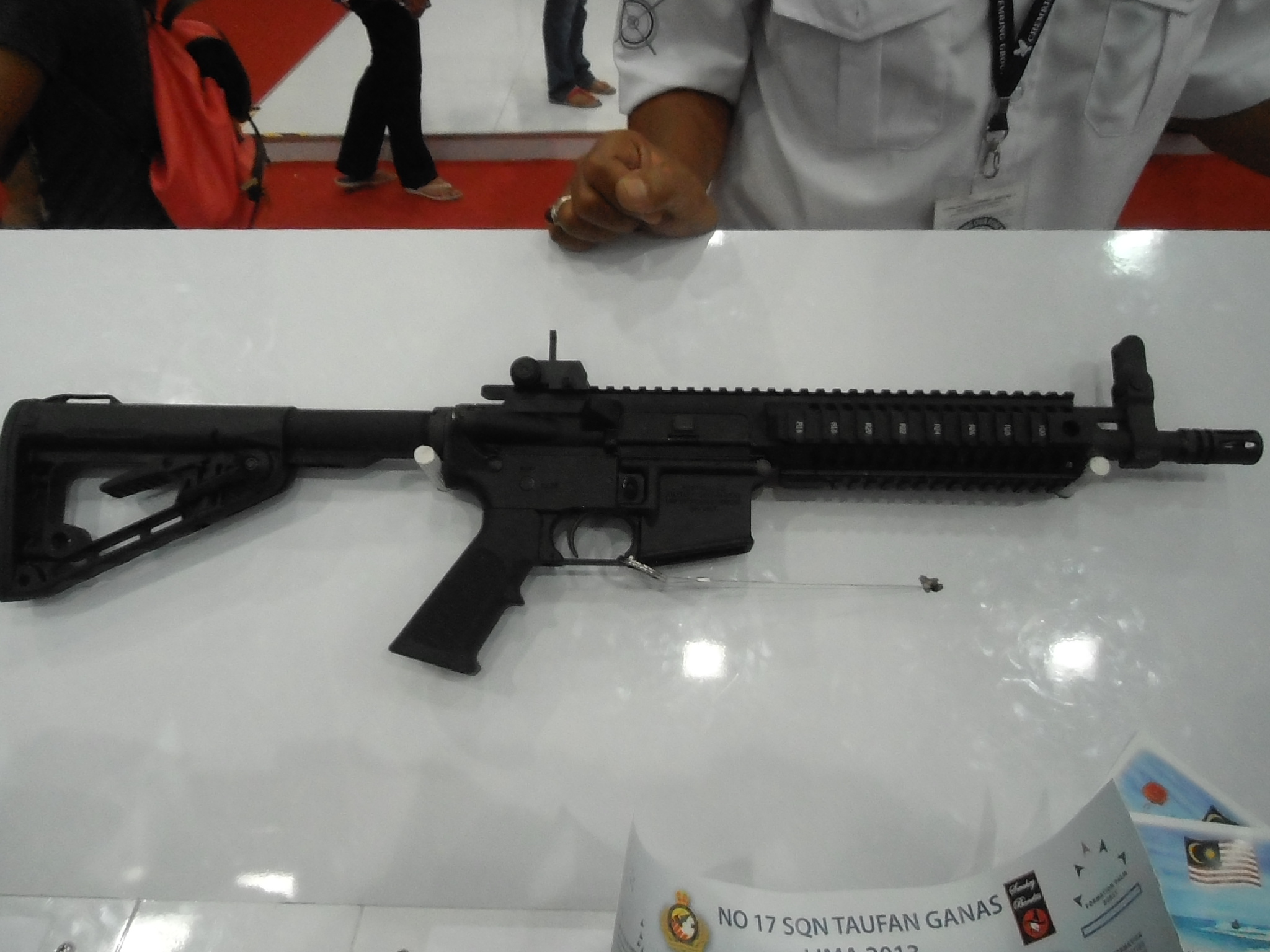
This is the technical volume, and the claim it exists to test is the one every .300 Blackout advertisement makes: that the cartridge gives up almost nothing in a short barrel, where 5.56 gives up a great deal.
The claim is true. It is also usually stated without numbers, which makes it indistinguishable from marketing. This volume puts numbers on it, from independent chronograph tests, and then explains the mechanism.
2.1 What “Efficient” Has to Mean to Be Worth Saying
.300 Blackout is described as efficient so routinely that the word has gone soft. It has a precise meaning here and only one: the powder charge finishes its useful work early, so extending the barrel adds little, and shortening it costs little.
That is a statement about a curve. Muzzle velocity plotted against barrel length rises steeply at first, then flattens. Where the flattening happens is the property in question. For 5.56 it happens late; for .300 Blackout it has essentially already happened by the time the barrel is long enough to hold a gas system.
So the useful test is not “what velocity does a 9-inch barrel give” but “how much velocity does the tenth inch add, and the eleventh, and the sixteenth”. A cartridge whose curve is already flat at 8 inches is not being compromised by an 8-inch barrel. It is being used as designed.
2.2 How the Two Datasets Were Produced
Two independent tests underpin this volume. Their methods differ, and the difference matters when comparing them.
The .300 Blackout data comes from a 2026 Lucky Gunner test of 13 factory loads across three barrels — 7.5-inch 1:7 (DPMS), 10.5-inch 1:7 (PSA) and 16.5-inch 1:6 (Sig) — measured with a Garmin Xero C1 Pro at the muzzle, five shots averaged per load and barrel.1
⚠ These are three different barrels, not one barrel cut down. That is a real methodological limitation: barrel-to-barrel variation, chamber and throat differences and twist differences (1:7 against 1:6) are all inside the numbers. The trend across a 9-inch span and 13 loads is robust; any single pairwise difference is not.
The 5.56 data comes from a rifleshooter.com cut-down test in which one Remington 700 barrel, 1:12 twist, was cut back an inch at a time from 26 inches to 16.5 inches, then mounted on a bolt-action pistol and taken from 14 inches to 6 inches, measured on a MagnetoSpeed V3, five shots per length per load (three for one load with limited ammunition).2 3
⚠ The 1:12 twist is wrong for the heavier bullets and the author says so; a 68-grain match bullet tumbled at short lengths. The velocity figures remain usable — velocity is a function of pressure and volume, not stability — but nothing about accuracy should be read out of that test.
Neither test is a laboratory standard. Both are honest, documented and repeatable, which is more than most published barrel-length material manages.
2.3 The .300 Blackout Numbers
All figures in feet per second, five-shot averages.1
Table 1 — 2.3 The .300 Blackout Numbers
| Load | Bullet | 7.5 in | 10.5 in | 16.5 in | Gain 7.5→16.5 |
|---|---|---|---|---|---|
| Winchester 200 gr Open Tip | 200 | 989 | 1,048 | 1,082 | +93 |
| Hornady 190 gr Sub-X | 190 | 1,028 | 1,082 | 1,107 | +79 |
| Magtech 200 gr FMJ | 200 | 1,017 | 1,097 | 1,139 | +122 |
| Hornady Frontier 208 gr FMJ | 208 | 1,047 | 1,082 | 1,099 | +52 |
| Sellier & Bellot 200 gr FMJ | 200 | 988 | 1,034 | 1,087 | +99 |
| American Quality 147 gr FMJ | 147 | 1,679 | 1,785 | 1,880 | +201 |
| Winchester 147 gr FMJ | 147 | 1,747 | 1,847 | 1,949 | +202 |
| Hornady 110 gr V-Max | 110 | 2,055 | 2,229 | 2,376 | +321 |
| Sellier & Bellot 147 gr FMJ | 147 | 1,846 | 1,971 | 2,088 | +242 |
| Federal American Eagle 150 gr FMJ | 150 | 1,680 | 1,813 | 1,910 | +230 |
| Federal Fusion 150 gr SP | 150 | 1,713 | 1,853 | 1,958 | +245 |
| Barnes VOR-TX 120 gr TAC-XT | 120 | 1,920 | 2,026 | 2,135 | +215 |
| Barnes VOR-TX 110 gr TAC-XT | 110 | 2,052 | 2,189 | 2,297 | +245 |
The headline number: across the eight supersonic loads, going from 7.5 inches to 16.5 inches bought an average of 238 fps — a 13% increase for nine extra inches of barrel.1
Read that as a rate and it is about 26 fps per inch, and falling as the barrel gets longer.
2.4 The 5.56 Numbers, Which Are the Whole Comparison
The same question asked of 5.56 gives a completely different answer, and the cut-down test gives it per inch, which is the most useful form.3
Average velocity lost per inch of barrel removed:
Table 2 — Average velocity lost per inch of barrel removed:
| Load | 26 → 16.5 in | 14 → 6 in |
|---|---|---|
| Remington UMC 55 gr | 22.5 fps/in | 106.0 fps/in |
| Federal XM193 55 gr | 25.7 fps/in | 104.6 fps/in |
| Winchester M855 62 gr | 30.3 fps/in | 87.5 fps/in |
| Black Hills 68 gr Heavy Match | 22.8 fps/in | 82.4 fps/in |
That table is the argument. For 5.56, the cost of removing an inch of barrel roughly quadruples once the barrel is short — from about 23 to 30 fps per inch in the long range, to 82 to 106 fps per inch below 14 inches. The author’s own summary of the dataset is that there is “an increase of velocity loss per inch of barrel at shorter lengths.”2
For .300 Blackout there is no equivalent cliff. The curve is, in the Lucky Gunner author’s phrase, “flat the whole way.”1 Comparing the two tests at the same span, 5.56 gained on average around 700 fps going from 7 inches to 16 inches, against .300 Blackout’s 238 fps — nearly three times as much, for the same nine inches.1
⚠ Those two figures come from different tests with different barrels and different methods, and should be treated as an order-of-magnitude comparison rather than a precise ratio. The direction and the rough size of the gap are well supported by both datasets independently.
2.5 The Comparison That Actually Decides Things
Velocity alone is misleading across a bullet-weight range this wide. Energy is the fairer comparison, and it is where the short-barrel case stops being interesting and becomes decisive.
From the same test:1
- .300 Blackout, eight supersonic loads, 7.5-inch barrel: 999 ft·lbf average.
- 5.56, 7-inch barrel: 628 ft·lbf average.
- 5.56 needs a 14.5-inch barrel to reach .300 Blackout’s 7.5-inch number.
That last line is the one worth committing to memory. A 5.56 rifle must be roughly twice as long in the barrel to deliver the muzzle energy a .300 Blackout delivers from 7.5 inches. In a weapon whose entire purpose is to be short, that is not a marginal advantage.
⚠ Muzzle energy is a poor proxy for terminal effect and 37% more of it does not mean 37% more effect on a target. The honest use of these numbers is comparative and directional, and the Lucky Gunner author makes the same caveat.
2.6 Why It Works — The Mechanism
The arithmetic above is a consequence of three design choices, all of them forced by the constraint described in Volume 1.
A small case volume filled with fast powder. .300 Blackout uses a shortened case with a modest charge of fast-burning powder — the propellants recommended by the developer for supersonic loads are Hodgdon H110 and Lil’Gun, both of which are magnum pistol powders in most other applications.4 Fast powder finishes burning early. There is very little unburnt propellant left to waste past 9 inches, because there was not much to begin with.
A heavy bullet with a large base area. Pressure acts on the base of the bullet. A .308-inch bullet presents roughly 1.9 times the base area of a .224-inch bullet — the ratio of the squares of the diameters. For the same chamber pressure, the larger bullet receives proportionally more force. The .30-calibre bullet therefore extracts useful work from a given pressure more readily, and it does not need a long barrel to do it.
A low expansion ratio by design. 5.56 achieves its velocity by accelerating a light bullet over a long distance with a large charge. That strategy is extremely effective in a 20-inch barrel and progressively less effective as the barrel shortens, because the acceleration is still happening when the barrel ends. .300 Blackout is deliberately the opposite trade: less total energy available, but nearly all of it delivered early.
The trade is exactly what one would expect. .300 Blackout gives up top-end performance it was never going to use, in exchange for keeping almost all of its performance where the barrel is short. That is not efficiency in the abstract. It is a specific optimisation for a specific length.
2.7 The Inversion Nobody Expects: A Longer Barrel Can Be Worse
For the subsonic loads, the relationship between barrel length and performance runs backwards, and this is the most practically important finding in the whole dataset.
A subsonic load has to stay below the speed of sound — roughly 1,100 to 1,125 fps in ordinary conditions — because the entire point is to avoid the sonic crack. But a longer barrel makes a bullet faster. Push a subsonic load through a long enough barrel and it stops being subsonic.
That is not hypothetical. It happened twice in this test, at 16.5 inches:1
Table 3 — 2.7 The Inversion Nobody Expects: A Longer Barrel Can Be Worse
| Load | 7.5 in | 10.5 in | 16.5 in | Status at 16.5 in |
|---|---|---|---|---|
| Magtech 200 gr FMJ | 1,017 | 1,097 | 1,139 | 🔴 Supersonic |
| Hornady 190 gr Sub-X | 1,028 | 1,082 | 1,107 | 🔴 Marginal — at the threshold |
Both loads are sold as subsonic. Both are comfortably subsonic from 7.5 and 10.5 inches. From a 16.5-inch barrel, one of them is over the line and the other is sitting on it.
🔴 The practical consequence: a shooter who buys “subsonic” ammunition for a 16-inch .300 Blackout may be firing supersonic ammunition through a suppressor and wondering why it is loud. And a load sitting at 1,107 fps is worse than one comfortably over, because it will cross the threshold intermittently with temperature, lot variation and individual barrel — producing a rifle that is quiet on some shots and cracks on others.
A short barrel is not a compromise for subsonic use. It is the correct choice, and a long one is the error. The margin that an 8- or 9-inch barrel provides below the sound barrier is a feature that is bought with barrel length, not despite it.
2.8 Every Factory Velocity Figure Is a 16-Inch Number
A detail that quietly invalidates a lot of casual comparison.
SAAMI’s default velocity-and-pressure test barrel for centerfire rifle cartridges is 24 inches. .300 AAC Blackout is one of a short list of explicit exceptions, and its standard test barrel is 16.000 inches.5
Two things follow.
Box velocities for .300 Blackout are already short-barrel figures, which is unusual and which is why advertised numbers for this cartridge look more honest than they do for most others. The Lucky Gunner test bears this out: measured 16.5-inch velocities generally landed within a few percent of advertised, while a 110-grain load advertised at 2,375 fps measured 2,376 fps at 16.5 inches — and 2,055 fps at 7.5 inches.1
But they are still not 8-inch figures. A shooter reading 2,375 fps off a box and expecting it from an 8-inch barrel is going to be roughly 300 fps disappointed. The honest expectation from a short barrel is the 7.5-inch column of the table in §2.3.
2.9 So Why 8 Inches, and What Does It Cost?
The pistols documented in this series carry 8-inch barrels. AAC’s own barrel assembly for the cartridge was 9 inches in 1:8 twist.4 The independent test brackets both, at 7.5 and 10.5 inches.
Interpolating between those two columns — and interpolation is what this is, stated as such rather than dressed up as measurement — an 8-inch barrel should sit close to the 7.5-inch figures, perhaps 15 to 30 fps above them for a supersonic load.
Table 4 — 2.9 So Why 8 Inches, and What Does It Cost?
| Load | Measured 7.5 in | Measured 10.5 in | 8 in, interpolated |
|---|---|---|---|
| Hornady 110 gr V-Max | 2,055 | 2,229 | ≈ 2,084 |
| Federal Fusion 150 gr SP | 1,713 | 1,853 | ≈ 1,736 |
| Hornady 190 gr Sub-X | 1,028 | 1,082 | ≈ 1,037 |
| Magtech 200 gr FMJ | 1,017 | 1,097 | ≈ 1,030 |
⚠ Those four numbers are arithmetic, not measurement, and the interval between the measured points is three inches across two different barrels. They are offered as an expectation, not a specification. The only way to know what an individual 8-inch barrel does with an individual load is to chronograph it, and that is the gap a FIGURE SLOT at the end of this volume asks to be filled.
What the extra inch costs, in plain terms: somewhere around 25 to 40 fps of muzzle velocity against a 9-inch barrel on a supersonic load, and essentially nothing on a subsonic one. Against the roughly 100 fps per inch that 5.56 would surrender at the same length, that is a rounding error.
What it buys: an inch of overall length in a weapon whose defining virtue is being short — and, when a suppressor is fitted, an inch of the can’s length paid for out of the barrel’s.
And what it costs that is not velocity, and matters more:
🔴 A short barrel is a materials problem for the suppressor, not just an acoustic one. An 8-inch barrel dumps far more unburnt propellant and far higher residual pressure into a suppressor’s blast chamber than a 16-inch barrel firing the same round, and this is dramatically worse with supersonic loads than subsonic ones. Any suppressor fitted to a barrel this short must be rated for it. That rating is a statement about materials — superalloy or 17-4 blast baffle territory — and not a marketing claim. Volume 5 and the How Suppressors Work series cover the mechanism.
⚠ Gas port timing gets harder as the barrel gets shorter, because the dwell time between the port and the muzzle shrinks. This is why short .300 Blackout barrels use pistol-length gas systems as a matter of course, and it is the subject of Volume 3.
2.10 The Volume in One Table
Table 5 — 2.10 The Volume in One Table
| Question | .300 Blackout | 5.56 NATO |
|---|---|---|
| Velocity gained, ~7.5 in → ~16.5 in | +238 fps average (13%) | ≈ +700 fps |
| Velocity lost per inch, short barrels | ≈ 26 fps/in and falling | 82–106 fps/in |
| Muzzle energy at ~7.5 in | 999 ft·lbf average | 628 ft·lbf average |
| Barrel needed to match BLK’s 7.5-in energy | 7.5 in | 14.5 in |
| SAAMI test barrel | 16 in | 24 in |
| Effect of a longer barrel on subsonic loads | 🔴 Can push them supersonic | No subsonic loads exist |
The conclusion, stated without hedging: an 8-inch .300 Blackout barrel is not a short-barrel compromise. It is the length the cartridge was designed around, and the velocity curve was flat before the barrel got that short.
2.11 Bibliography
Footnotes
-
Chris Baker, “300 Blackout Ballistics by Barrel Length: What the Data Told Us,” Lucky Gunner Lounge, published 25 August 2026, updated 10 September 2026. Source of the complete 13-load velocity and energy tables, the three test barrels (7.5 in 1:7 DPMS, 10.5 in 1:7 PSA, 16.5 in 1:6 Sig), the Garmin Xero C1 Pro five-shot method, the 238 fps / 13% average supersonic gain, the ~700 fps 5.56 comparison figure, the 999 vs 628 ft·lbf muzzle-energy comparison, the 14.5-inch equivalence, and the identification of the Magtech 200 gr and Hornady 190 gr Sub-X loads going supersonic or marginal from the 16.5-inch barrel. https://www.luckygunner.com/lounge/300-blackout-ballistics/ ↩ ↩2 ↩3 ↩4 ↩5 ↩6 ↩7 ↩8
-
“223 Remington/5.56mm NATO barrel length and velocity: 26 inches to 6 inches,” rifleshooter.com, December 2015. Source of the combined dataset, the single-barrel cut-down method, the 1:12 twist caveat, the MagnetoSpeed V3 chronograph, the four test loads, and the statement that velocity loss per inch increases at shorter lengths. https://rifleshooter.com/2015/12/223-remington-5-56mm-nato-barrel-length-and-velocity-26-inches-to-6-inches/ ↩ ↩2
-
“223 Remington/5.56mm NATO Barrel length versus Velocity — Short Barrels — 6 to 14 inches,” rifleshooter.com, November 2015. Source of the per-inch velocity-loss figures in §2.4 for both the 14→6 inch and 26→16.5 inch ranges, and of the bolt-action-pistol method for the short lengths. https://rifleshooter.com/2015/11/223-remington5-56mm-nato-barrel-length-versus-velocity-short-barrels-6-to-14-inches/ ↩ ↩2
-
Advanced Armament Corp., 300 AAC BLACKOUT Owner’s Manual Supplement (© 2010). Source of the 9-inch 1:8 barrel assembly specification and of the recommended supersonic propellants (H110, Lil’Gun). https://advanced-armament.com/wp-content/uploads/300BLK-AAC-Upper.pdf ↩ ↩2
-
SAAMI, ANSI/SAAMI Z299.4 (2025 edition). Source of the 16.000-inch velocity-and-pressure test barrel for 300 AAC Blackout as an explicit exception to the 24-inch centerfire rifle default, and of the 55,000 psi maximum average pressure. https://saami.org/technical-information/ansi-saami-standards/ ↩
Comments (0)