Stonewall Creek 4-Gauge Blunderbuss · Volume 8
Loading, Firing & the Coach-Gun Experience
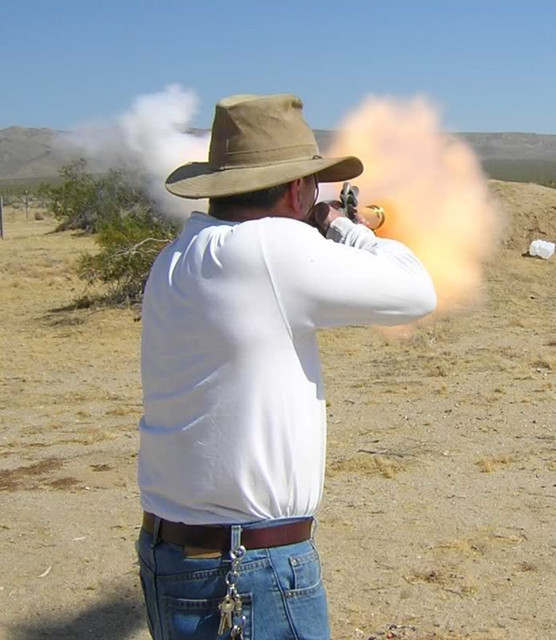
This is the volume the whole build has been aiming at: actually loading and firing a 4-gauge coach gun. Everything general about black-powder loading, misfire drill, and range safety lives in the Traditions Blunderbuss dive — cross-reference it and treat its rules as fully in force here. This volume does not repeat them; it covers what is different about handling a massive big-bore, where the ordinary rules bite hardest, and how to manage the recoil that four ounces of lead delivers to your shoulder.
8.1 Loading a 4-bore, step by step
The sequence is the standard muzzleloader drill, but every step is bigger and the consequences of a mistake are larger. Load at the bench or the line, muzzle downrange, lock at half-cock, following the discipline from the Traditions dive:
- Confirm the gun is empty and clear. Run the marked ramrod down; know where “empty” reads on it. On a big bore it is easy to double-charge if you lose track — never assume, always check.
- Snap a cap or flash the pan on an empty bore if you want to clear oil and confirm ignition path (optional but sensible on a flintlock after cleaning).
- Measure one charge of Fg from a separate measure — never pour from a flask or horn directly down the barrel. Start near the bottom of your worked-up range. Pour the measured charge down the muzzle.
- Seat the projectile firmly onto the powder. Patched round ball, or the shot column (over-powder wad, shot, over-shot card) — start it at the muzzle and ram it all the way down until it bottoms on the powder with no gap. Confirm against your ramrod mark. This matters more on a 4-bore than anywhere: a four-ounce ball short-started off the charge in an inch bore is a burst-barrel hazard. Down, firm, confirmed — every time.
- Prime. Bring the lock to full cock only when you are ready to fire; prime the pan with a thin line of 4Fg banked away from the vent, and close the frizzen.
- Present, aim, fire. More on the aiming and the recoil below.
Between shots, pick the vent clear and swab the bore as needed — a fouled big bore loads hard and can trap embers. If you swab, run a damp then dry patch and let the bore cool enough that the next charge doesn’t cook off on loading.
8.2 Handling something this size
A 4-gauge buss is a big, heavy, muzzle-forward object, and that changes how you handle it before the trigger is ever pulled:
- It is front-heavy and long-nosed. The mass of a one-inch brass barrel sits well forward. Mount it deliberately, get a firm forward hand well back from that heavy muzzle, and don’t let the nose wander — a gun this heavy swings slowly and stops slowly.
- Muzzle control is non-negotiable and harder. Because the gun is unwieldy, the cardinal rule — muzzle always in a safe direction — takes real attention. Never let that big bell sweep the line, yourself, or a bystander while you load, prime, or shift grip.
- Give it room. The muzzle blast off a 4-bore is enormous (look at the figure). Keep everyone well back and to the side, not just behind you; the flame and unburned powder throw far.
8.3 Managing the recoil
This is the part no .54 prepares you for. A four-ounce ball on 150-plus grains of powder produces recoil roughly in proportion to the eight-times-greater projectile-and-powder mass — a hard, heavy shove, not a sharp crack. Manage it deliberately:
- Work up to it. As Volume 7 said, climbing the charge ladder is also climbing the recoil ladder. Shoot the lightest working loads first and learn the gun’s push before you ask more of it. There is no prize for starting heavy.
- Mount it solidly. A firm, high shoulder pocket, the buttplate seated hard into the shoulder (not held off it, which lets the gun get a run at you), body weight forward into the gun, and a firm grip. A loose mount is how a big bore bruises or cuts.
- Consider a recoil pad or a padded shooting shirt for extended sessions — this is a legitimate accommodation, not a lack of nerve. The heavy loads especially will remind you they are there.
- Stance forward. Weight on the front foot, lean into the shot, and let your whole body — not just your shoulder — absorb the push. Rock back on your heels and a heavy charge will move you.
- Ears and eyes, always. The report is prodigious. Double up on hearing protection.
Do this right and the recoil is manageable and, frankly, part of the fun — builders who shoot these guns describe them as a genuine blast to fire. Do it carelessly and a 4-bore will hurt you.
8.4 Misfires and hangfires — the Traditions rules, magnified
A big charge and a flintlock mean flashes in the pan and the occasional slow ignition are part of the game. Follow the Traditions dive’s misfire and hangfire drill exactly — the short version, which matters more on a heavy charge: on a misfire or flash-in-the-pan, keep the muzzle downrange and wait (a full count — a hangfire can cook off seconds later), then re-prime and try again; clear the vent; and only after repeated failures and a proper wait do you treat it as a loaded, un-fired gun and deal with the ball. Never peer down the bore, never turn the gun on yourself, never rush a hangfire. With a four-ounce ball seated on 150 grains, patience is not optional.
8.5 The coach-gun experience
When it all comes together — a well-tuned Chambers lock throwing a hard shower, a worked-up buck-and-ball load seated firm, a solid mount — the 4-gauge Stonewall Creek does the thing you built it to do: a fistful of lead leaves that brass bell in a rolling ball of orange fire and white smoke, and the gun shoves back into your shoulder like the coach gun it is. This is the blunderbuss the Traditions kit only hints at — right in size, right in lock, right in finish, and a genuine shooter. It took a phone call, a long wait, a scarce Rayl barrel, and real gunsmithing to get here. Fired safely and respected for what it is, it is worth every bit of it.
Sources
Traditional black-powder shooting practice; American Longrifles forum; Muzzleloading Forum; Stonewall Creek Outfitters.
Comments (0)