Stonewall Creek 4-Gauge Blunderbuss · Volume 5
Finishing the Stock: Aqua Fortis on Figured Maple/Walnut, Done Right
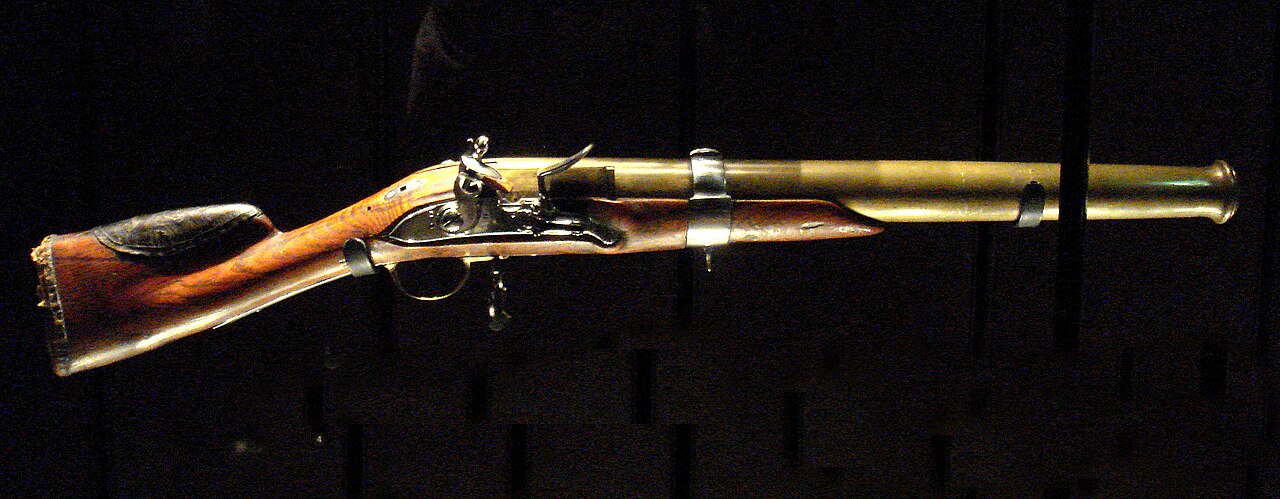
The Traditions dive covers stock finishing for a plain hardwood stock: whisker, stain, oil. That base method is assumed here — cross-reference the Traditions Blunderbuss dive, Volume 7, for the general whisker-and-oil groundwork. This volume goes somewhere that dive can’t: aqua fortis on figured maple or walnut, which is where the whole technique earns its reputation and where a Keck precarve in a curly wood becomes something special. If your stock is plain, the Traditions method serves. If it has figure, read on — because aqua fortis is the finish that sees figure and throws it into relief in a way an ordinary stain never will.
5.1 What aqua fortis actually is, and why it suits figured wood
Aqua fortis is an iron-nitrate solution — traditionally iron dissolved in nitric acid — used as a wood stain on curly maple and figured walnut for two and a half centuries. It is not a pigment stain. Applied wet it barely colors the wood at all; the color develops only when you heat the treated surface, at which point a chemical reaction “blushes” the wood from a dull greenish-tan to a rich reddish amber-brown.
The reason it is the finish for figure is that the reaction is uneven in exactly the right way. Curly and fiddleback figure is a series of alternating grain slopes; the aqua fortis and the heat take differently on the end-grain slopes than on the flat runs, so the figure develops dark-light contrast — the curl “pops” as bands of deep color against lighter ground, with a three-dimensional shimmer (chatoyance) as light moves across it. An ordinary stain floods the surface evenly and flattens figure; aqua fortis does the opposite. On a figured Keck stock this is the difference between a nice buss and a stunning one.
5.2 Prepare the wood as if the finish depends on it — it does
Aqua fortis is merciless about surface prep because it develops with the grain and reveals every scratch. Before any solution touches the wood:
- Final-scrape and sand the whole stock to a uniform, high surface — work up through the grits and do not leave cross-grain scratches, which will develop as dark lines forever after.
- Whisker the wood. Wet the bare stock with distilled water, let it dry so the raised fibers (“whiskers”) stand up, then knock them back with fine paper or a scraper. Repeat two or three times until wetting no longer raises the grain. This is the same whiskering the Traditions dive describes, and it is doubly important here: if you raise grain after staining you’ll sand through the color.
- De-whisker and dust off completely. The surface you stain is the surface you keep.
5.3 Apply, blush, and control the color
Work over the whole stock in even strokes; do not stop mid-panel. The base method — cross-linked to the Traditions dive — is whisker, apply, then finish; the figured-wood refinements are in how you blush and control it.
- Flood on the aqua fortis with a brush or swab, wetting the wood evenly and fully. It will look weak and greenish — that is correct. Let it dry.
- Blush it with heat. This is the step that makes or breaks it. Play a heat source evenly over the surface — a heat gun, or traditionally an open flame or hot air — and watch the color bloom from pale to amber to red-brown as the iron nitrate reacts. Even heat is everything. Move constantly; a spot held too hot scorches to a dead brown-black, a spot left cool stays pale, and either shows against the figure. Bring the whole stock up together to the depth you want.
- Read the figure as it comes up. On curl, you’ll see the bands separate — darker on the end-grain slopes, lighter on the flats. If the contrast is where you want it and the ground color is right, stop heating. If you want it deeper, a second light application and blush builds color; sneak up on it rather than overshooting, because you cannot easily lighten it.
- Neutralize. The reaction is acidic; left active it will keep working and can dull or over-darken. Wash the blushed stock with a mild alkaline neutralizer — a baking-soda-and-water wipe, or lye water in the old tradition, applied evenly — to arrest the acid and set the color. Some builders find a light neutralizing wipe also warms the tone slightly; test on scrap. Let it dry fully.
- Fine-card lightly if the surface raised at all under the wet steps — a very light pass with worn fine paper or 0000 steel wool, just enough to smooth, not enough to cut color — and dust off.
5.4 Then oil — and let the figure breathe
Aqua fortis colors; oil brings the depth and chatoyance to life and protects the wood. Use a traditional hand-rubbed oil finish — boiled linseed, tung, or a period-style stock oil — built in many thin coats, each rubbed in hard and wiped nearly dry, each allowed to cure before the next. Thin coats are the rule: figure lives in the way light enters the wood and reflects back, and a thick, plasticky film kills that. A dozen thin, well-rubbed coats over days will out-glow three heavy ones every time. Rub the final coats to a soft, hand-oiled sheen rather than a gloss; a warm satin is period-correct for a mid-1700s buss and it flatters curl far better than a shine.
5.5 Two cautions specific to this finish
Test on scrap of the same wood first. Aqua fortis strength, your wood, and your heat all interact; a test board of the same maple or walnut tells you the color and how hard to blush before you commit the irreplaceable stock. And keep the acid off the metal and out of the mortices — mask or keep solution away from inletted brass and the barrel channel; iron nitrate will stain and attack metal, and you don’t want it wicking into a lock mortice.
Done right on a figured Keck stock, this is the finish that makes people pick the gun up. The Traditions method gives you a respectable plain stock; aqua fortis, blushed evenly and oiled patiently, gives figured wood the deep, three-dimensional glow that a mid-eighteenth-century coach gun deserves.
Sources
Traditional gunstock finishing practice; American Longrifles forum; Stonewall Creek Outfitters.
Comments (0)