Stonewall Creek 4-Gauge Blunderbuss · Volume 1
Overview: The 4-Gauge Kit and Why It's a Different Animal
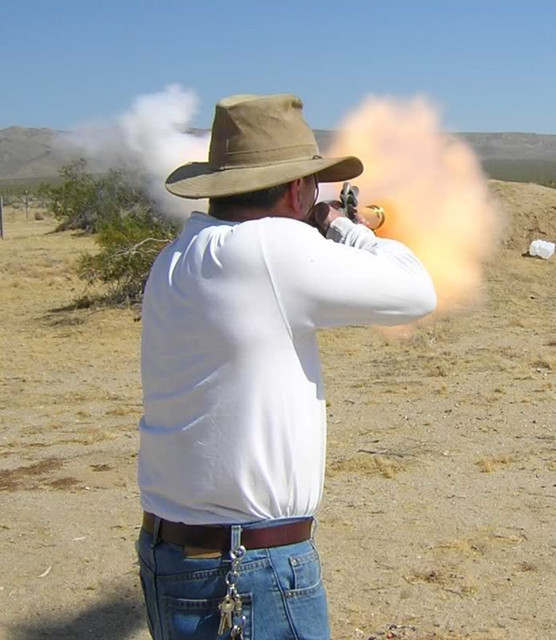
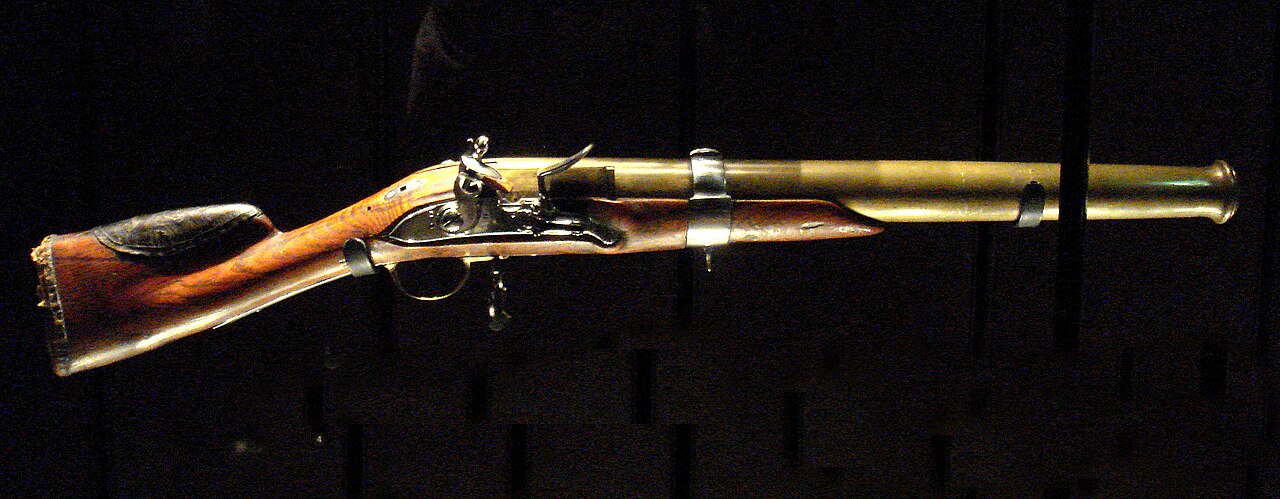
This dive is about one very specific, very uncommon build: the Stonewall Creek Outfitters 4-gauge blunderbuss — a big-bore, roughly 1.05-inch smoothbore coach gun assembled on an Ed Rayl 4-bore brass barrel, a Jim Chambers round-face English flintlock, correct brass castings, and a Keck precarve stock. It is the piece that the affordable Traditions .54 kit only gestures toward. Where the Traditions dive is a friendly weekend project, this is a real gunsmithing job on a real coach gun — and, as you’ll read in a moment, a genuine grail item that you cannot simply add to a cart.
If you have already worked through the Traditions Blunderbuss dive, read this as the “do it right, do it big” companion volume. This series does not repeat the shared black-powder, safety, and general finishing groundwork covered there; it cross-links it and spends its pages on what makes this kit a different animal.
1.1 The honest availability reality, stated first
Before anything else, understand what you are chasing. The Stonewall Creek 4-gauge blunderbuss is not a standing catalog item. The company’s current website lists rifle barrels, locks, and custom guns — and has no blunderbuss product page at all. There is no “buy now.” To get one you phone Stonewall Creek Outfitters at 434-993-3557 and ask to be put on a list.
The kit is built in tiny batches, and the batches are gated entirely by one bottleneck: Ed Rayl 4-bore brass barrels. Rayl (W.E. Ray) is essentially the sole maker of these barrels, they are produced in very small numbers, and everything downstream waits on them. The forum record is consistent and sobering:
- 2013 — builders were adding their names to a waiting list for the kit “when they become available.”
- 2014 — one builder reported waiting over a year and a half for delivery.
- January 2017 — after speaking with owner Troy Roope, a builder reported that Stonewall Creek then had two blunderbuss kits in walnut plus a couple of spare Rayl barrels and buss stocks on hand, and called them “likely the last of these kits.”
That was nearly a decade ago. Treat lead times of one to one and a half years as normal, treat availability as something you confirm by phone, and do not assume the kit is still being assembled at all until Stonewall Creek tells you so.
1.2 On price — do not quote a firm number
The most-cited figure is about $975, from a 2017 forum discussion referencing the Stonewall Creek website. That number is stale and indicative only — there is no live price published today. Confirm the current price and availability with Stonewall Creek directly before you count on anything. Anyone who tells you a firm 2026 price without having called is guessing.
If a purchasable, in-catalog premium buss is what you actually want, this is the wrong dive. Point yourself instead at the sibling Rifle Shoppe Ketland Blunderbuss dive: an investment-cast .75-caliber parts set that you can order today (call to confirm stock), at a known price, without a Rayl-barrel lottery. It is more handwork than this precarve but far less of a hunt. The Stonewall Creek kit is a grail; the Rifle Shoppe set is a project you can start next month.
1.3 Why 4-gauge is a different animal from the .54
The number “4 gauge” (or “4 bore”) is a bore measured by how many round balls of that diameter make a pound: four balls to the pound. That works out to a bore of roughly 1.052 inches, and a single round ball weighing about four ounces — near 1,750 grains of lead.
Set that against the Traditions .54. A .54 round ball weighs about 230 grains. The 4-bore ball is on the order of eight times the projectile mass. This is not a bigger version of the same experience; it is a categorically different gun. Historic blunderbusses were big bell-mouths meant to throw a handful of buck-and-ball at short range from a moving coach or a ship’s deck — and the 4-gauge Stonewall Creek is that gun, at that scale, not a modest smoothbore wearing a decorative flare. One builder simply described the assembled piece as “MASSIVE,” and another summed the shooting up as going through a lot of powder and lead but being a blast to fire.
1.4 What you are actually signing up for
Because this is a precarve kit and not a raw parts set, the wood arrives already shaped and roughed — but “precarve” is not “drop-in.” You will still inlet the barrel channel to a big, short barrel, fit and tune a Chambers lock, bench-fit and shape brass castings, finish figured wood properly, and finish the metal. Stonewall Creek grades the kit “advanced,” and Volume 4 makes the case that the grade is mostly there to keep beginners off a scarce and valuable Rayl barrel rather than because the joinery is exotic. The most experienced builders on record say the work is no harder to learn on a buss than on a fowler — the barrel is simply bigger.
1.5 Where this dive goes from here
- Volume 2 — what’s actually in the kit: the Rayl barrel, the Chambers lock, the Keck precarve, and the brass.
- Volume 3 — the Chambers round-face English lock, why it matters, and how to tune it.
- Volume 4 — fitting the precarve: inletting the barrel channel, tang, lock, and furniture.
- Volume 5 — finishing figured maple or walnut with aqua fortis, done right.
- Volume 6 — polishing the brass barrel and browning the steel furniture.
- Volume 7 — feeding a 4-gauge: powder, big ball, and shot.
- Volume 8 — loading, firing, and surviving the coach-gun experience.
Throughout, every charge is a starting reference, not a prescription. The shared safety and loading discipline lives in the Traditions dive; this series assumes you have read it and builds on it.
Sources
Stonewall Creek Outfitters; American Longrifles forum; Muzzleloading Forum; Ballistics By The Inch.
Comments (0)