Stonewall Creek 4-Gauge Blunderbuss · Volume 6
Browning the Big Barrel: Period Rust-Brown on a 4-Bore Brass Barrel
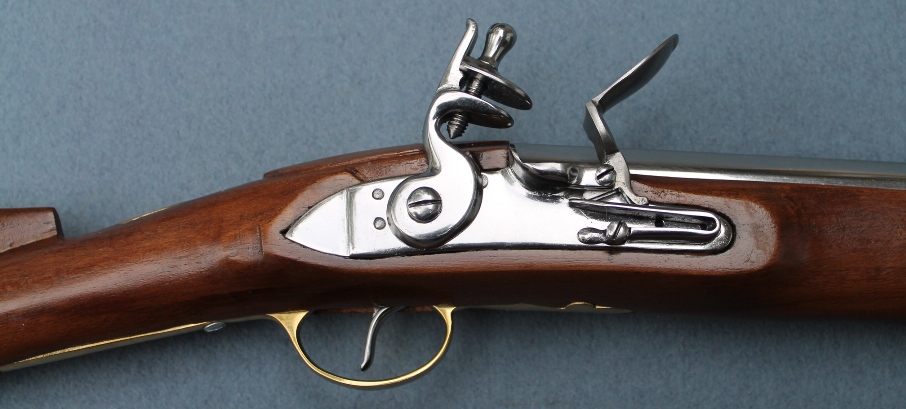
Here is the single most important correction in this whole dive, and the reason this volume exists as its own chapter: the Rayl barrel on the Stonewall Creek kit is brass, not steel. Everything you know about bluing and browning a barrel — everything the Traditions dive, Volume 8, teaches — is about steel. You cannot rust-brown brass and you cannot blue it; brass does not rust, and the rust-and-convert chemistry that browns or blues steel has nothing to bite on. So this volume splits cleanly in two: how to finish the brass barrel (polish and, if you want, patinate it), and how to brown or blue the steel furniture using the methods the Traditions dive already covers, adapted to small parts.
Cross-reference the Traditions Blunderbuss dive, Volume 8, for the full rust-browning and slow-rust-bluing procedures — the chemistry, the carding cycles, the degreasing discipline. This volume tells you which of those apply to which parts on a brass-barrelled buss, and how to make brass look right.
6.1 The brass barrel: polish, not blue
Brass is a copper-zinc alloy. It does not form a protective iron oxide because it has no iron; instead, left alone, it slowly develops a copper-based tarnish and, over long exposure, a patina. There is no “browning” step for it. Your decisions are two: how bright to polish it, and whether to age it.
Cleaning up the casting/turning surface. The Rayl barrel comes turned; dress out any tool marks and even the surface with progressively finer abrasive — draw-filing only if needed to true a flat, then working up through wet-or-dry paper (say 220 → 400 → 600 and beyond), always in one direction along the barrel so the scratch pattern is uniform. Mind the flared bell: its compound curve is easy to dish or facet, so back your paper with something conforming and keep the strokes following the form.
Choosing a final sheen. A period English coach gun’s brass was typically a warm, softly polished surface — not a mirror, not a chrome-shop glare. You can take it anywhere from a satin (stop around 600–800 grit, then a gray Scotch-Brite or fine steel wool for an even matte-satin) to a bright polish (up through finer grits and a buffing compound). A warm satin-to-semi-bright reads most correct for a mid-1700s buss; a blinding mirror looks modern. Whatever you choose, finish the whole barrel to one consistent sheen, bell included.
Aging, if you want it. Fresh-polished brass is bright yellow; an antique buss is mellower. If you want to knock the newness off, you can:
- Let it age naturally — brass mellows on its own with handling and time, the no-risk option.
- Chemically patinate it with a brass-aging solution (liver of sulfur or a commercial brass antiquing solution), applied controlled and then cut back on the high spots with fine steel wool so the recesses stay dark and the surfaces brighten — the classic “aged but handled” look. Test on scrap or a hidden spot first; patina solutions move fast on brass and are easy to overdo.
Protecting it. Brass needs no rust protection, but polished brass tarnishes. A thin coat of a microcrystalline wax (or a clear lacquer, if you want to freeze the finish and don’t mind that it’s non-traditional) keeps a polished barrel from clouding. Wax is the reversible, period-friendly choice; renew it occasionally. And of course keep the bore swabbed and lightly oiled after shooting like any muzzleloader — brass fouls and pits from neglect even if it doesn’t rust.
6.2 The steel parts: this is where browning lives
The steel on this gun — principally the lock (frizzen, cock, plate, springs), the breech tang, the barrel-retaining hardware, screws, and the touch-hole/vent liner — is what you actually brown or blue, and here the Traditions Volume 8 methods apply directly. The lock is usually left in its own finish or given a light appropriate treatment (an already-finished Chambers lock often needs nothing but degreasing), but any bright steel furniture and hardware you may want to brown to match a period gun.
Because these are small parts, adapt the Traditions method in three ways:
- Rust browning small steel parts. Follow the Traditions cold rust-brown procedure — degrease obsessively, apply a thin coat of a browning solution (Laurel Mountain Forge is the builders’ favorite), let it rust in a warm, humid spot, then card off the loose scale, and repeat over several 3-hour cycles to a deep even brown, then neutralize and oil. On small parts the cycles go faster and are easier to control than a whole barrel, but the degreasing rule is even less forgiving — a fingerprint on a screw head is the whole surface.
- Slow rust blue, if you prefer blue-black steel. Same rust-and-card process, boiled in distilled water each cycle to convert the rust to black magnetite — again straight from Traditions Volume 8, just on small parts.
- Cold blue for touch-up. For screws or a quick job, a cold blue (Perma Blue, Oxpho-Blue) is fast and fine on hardware, if less authentic — as covered in the Traditions volume.
The one rule that dominates all steel finishing: degrease. Wipe every steel part to bare metal with acetone or denatured alcohol, handle it only with clean gloves, and keep browning solution off the brass — solution meant for steel will stain and discolor brass, so mask or keep the brass barrel well away while you work the steel parts. Oil the finished steel to arrest and protect.
6.3 The bottom line for a brass-barrelled buss
- The barrel is brass — do not blue or brown it. Polish it to a warm, even, period sheen, optionally patinate it to age it, and wax it to hold the finish.
- The steel parts — lock hardware, tang, screws, liner — are what browning and bluing are for; use the Traditions Volume 8 methods, adapted to small parts, and degrease relentlessly.
- Keep the two chemistries apart: rust-browning solution belongs on steel only; never let it touch the brass barrel.
Get this distinction right and the gun looks correct: warm brass barrel and furniture, subdued browned or naturally-finished steel, all of a piece — a mid-eighteenth-century coach gun, not a modern reproduction.
Sources
Stonewall Creek Outfitters; Laurel Mountain Forge; traditional brass-finishing practice; American Longrifles forum.
Comments (0)