Stonewall Creek 4-Gauge Blunderbuss · Volume 3
The Jim Chambers Round-Face English Lock: Why It Matters, and Tuning It
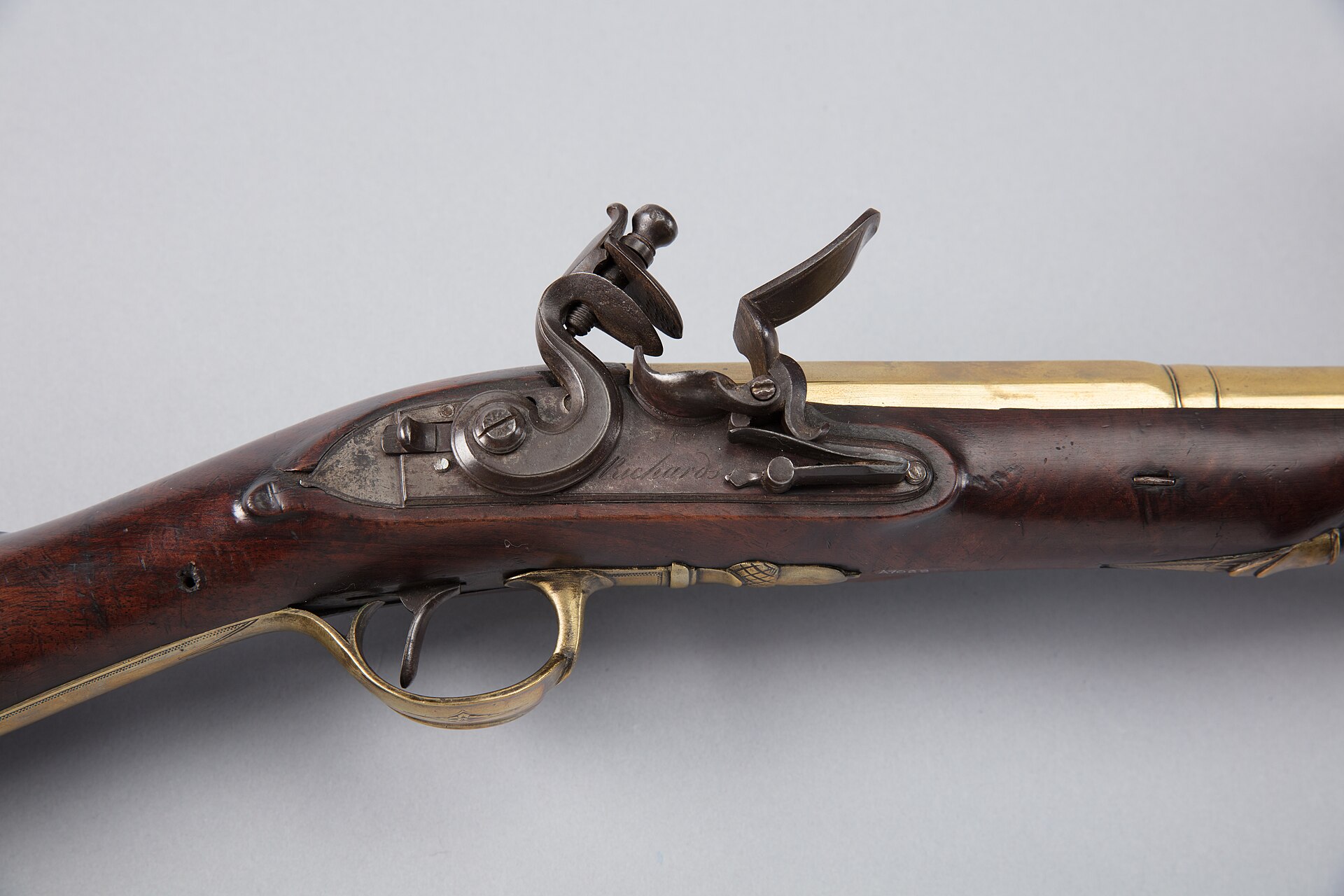
On a flintlock, the lock is the whole argument. A blunderbuss can have a magnificent barrel and correct furniture and still be a frustration to shoot if the lock is slow, soft, or unreliable. The reason the Stonewall Creek kit specifies a Jim Chambers round-face English lock is that it removes that variable: it is one of the best sparkers available, out of the box. This volume covers why it earns that reputation and how to tune it so it lives up to it.
3.1 The naming, first
Say it correctly in your own records: the lock is a Chambers round-face English flintlock, and Jim Chambers Flintlocks now operates as Calvary LLC. Ownership changed; the lock did not. The design and tooling carried over, so “Chambers round-face English” and “Calvary round-face English” name the identical lock. Track of the Wolf and other suppliers list it under both associations. If you are ordering a replacement spring, a frizzen, or a spare lock, either name gets you the right part.
3.2 Why this lock is worth the kit’s premium
Three things make a Chambers lock a top-tier sparker rather than a decorative one:
It is precision-made from good steel. The internals are CNC-cut and the wear parts — frizzen, tumbler, sear — are high-carbon steel, properly heat-treated. A soft frizzen is the single most common reason a flintlock sparks poorly and then stops sparking; the Chambers frizzen is hardened to throw a hot, consistent shower of sparks and to keep doing it after hundreds of strikes.
The geometry is right. The cock falls on an arc that lands the flint on the frizzen face at the correct angle, scraping a long curl of steel into the pan rather than glancing off. Fast lock time and reliable ignition are as much about geometry as metallurgy, and Chambers designed this one to spark, not just to look period.
It is proven. The number worth remembering is a documented run of a Chambers round-face English lock firing 671 times on ten flints without a single misfire — roughly 67 shots per flint, with no failures across the whole string. That is the standard this lock can hold when it is set up right. Your job in tuning is not to fix a bad lock; it is to make sure nothing you do during the build degrades a good one.
3.3 Tuning it: the short, real list
A Chambers lock generally does not need “fixing.” It needs not to be ruined, and it benefits from a few small adjustments. Work on the lock removed from the stock, over a soft surface, and go slowly — you are refining a good part, not reworking a rough one.
Frizzen spring tension. The frizzen spring should be strong enough to hold the frizzen closed against the flint’s first bite so the flint scrapes a full curl of steel, but no stronger than that. Too heavy and it fights the cock, slows lock time, and beats up flints; too light and the frizzen flips open early and you get sparks but a poor shower into the pan. Most builders find the Chambers spring close to right as delivered. If you lighten it, do it by carefully thinning and polishing the spring’s bearing, a little at a time, testing by feel — the frizzen should snap open crisply when struck, not sluggishly and not so easily it opens under its own weight tipped forward.
Flint bedding and knapping. How you seat the flint matters as much as the lock. Wrap the flint in thin leather (or sheet lead), clamp it in the jaws so it sits level and square to the frizzen, and set the flint-to-frizzen gap so that at the moment the flint first contacts the frizzen face, the cock still has travel left to scrape down the full face. Bevel up or bevel down are both workable; try both and keep whichever throws the hotter shower on your lock. Keep the edge sharp by knapping — a light tap with a knapping tool or the back edge of a knife to renew a fresh, keen edge — and expect somewhere on the order of dozens of shots per flint before it needs a knap or a turn.
Pan and vent. The pan should be clean, dry, and lightly primed — a thin line of fine priming powder banked away from the vent, not a heaping pan, so the flash has an open path to the touch-hole. On this build the touch-hole/vent liner geometry matters because you are igniting a very large main charge; a coned vent liner speeds ignition. Keep the vent clear with a pick between shots, and prime with fine (4Fg) powder for the fastest flash to the main charge.
Do no harm during the build. Two build-stage cautions. When you inlet the lock (Volume 4), bed the lockplate fully but keep wood and finish out of the internals — a stray chip of wood or a bead of stock oil in the mainspring or sear can cause a stall that reads as a “bad lock.” And degrease the frizzen face before shooting: any oil there kills sparks. Wipe it to bare, clean steel.
3.4 What good looks like
Set up correctly, this lock should: cock and half-cock with clean, positive clicks; hold on half-cock without creeping; snap the cock over fast; throw a dense, bright shower of sparks squarely into the pan; and fire the pan the instant the sparks land. Dry-fire it (frizzen closed, pan empty, flint in) into a dim corner and watch the sparks — they should rain down into where the pan is, not forward off the muzzle end or up over the top. If they do, and the frizzen snaps crisply, the lock is ready.
The payoff is real: with a properly bedded, degreased, well-flinted Chambers lock, your big-bore buss will ignite as reliably as any flintlock made — which, on a gun that takes real effort to load, is exactly what you want. The last thing you need after seating four ounces of ball on 150 grains of powder is a lock that flashes in the pan.
Sources
Jim Chambers Flintlocks / Calvary LLC; Stonewall Creek Outfitters; Track of the Wolf.
Comments (0)