Original Consoles · Volume 1
Why the Console Cannot Read a Modern Gun — Two Families of Console, Three Ways Round, and What Has Actually Been Built
An original NES, PlayStation or Saturn expects its own gun and nothing else; which consoles want numbers and which want a pulse timed to their own picture; the translators, the timing boxes and the LED in the barrel; and a register of every project and product that makes a modern gun play on real hardware
This dive is about playing light-gun games on the original consoles, the real NES, Master System, Mega Drive, Saturn, PlayStation, PlayStation 2, Dreamcast, Xbox, PlayStation 3 and Wii, with a modern gun and a modern television. It is the last of the console-side questions in Platform Support; the PC, Linux and MiSTer each have their own dive, and on all three the console is emulated, so the gun only has to be a mouse. On real hardware it does not.
The gun in question is first the one being built for this category: a Raspberry Pi Pico running a private fork of OpenFIRE, a camera that sees infrared emitters at the screen, and a regulated 24 V solenoid. Sinden, GUN4IR, Retro Shooter and Blamcon are covered for comparison. Nothing in this dive has been built or measured for the project; where a bench result belongs, the text says what to capture.
1.1 What this dive covers
Table 1 — 1.1 What this dive covers
| Topic | Where it lives |
|---|---|
| Making a modern gun play on original console hardware: the routes, the adapters, the protocols at the depth an adapter needs, setup, per-game notes, a “where it runs” table | This dive |
| The history and catalogue of the original console guns | Console Light Guns |
| How a cathode-ray-tube gun measures time; why flat panels break it | CRT Timing |
| Repairing original guns, gutting their shells, classic guns on flat panels with scalers and HDMI mods | Modding Classic Light Guns |
| The same consoles emulated on an FPGA, with original or modern guns | MiSTer FPGA |
| Arcade boards and cabinet I/O | Arcade Hardware |
| What the gun’s firmware sends and accepts | Open-Source Firmware, Volume 6 and Our Firmware |
The volumes:
- This one: the problem, the two families of console and the register of what exists.
- The PlayStations: the GunCon and GunCon 2 imitated, which is the open, well-trodden route.
- The latch consoles: timing boxes that fake a cathode-ray tube’s light pulse for the NES, Master System, Mega Drive, Saturn, the Konami guns and the Dreamcast.
- Xbox, PlayStation 3, Wii and the modern consoles, and the controller adapters that do not help.
- The project’s gun on original hardware: a console box or a console mode in the gun, licences, the vendor ID, and a bench plan.
- Where it runs: console by console and game by game.
1.2 Two separate problems
Two different things stop a modern gun working on an original console, and every product in this dive solves one, the other or both.
The display. The original guns, up to and including the GunCon 2, measure time against a cathode-ray tube’s scanning beam: the photodiode sees the spot where the beam is, at the instant the beam is there. A flat panel holds a whole frame and shows it late, so the timing no longer means anything. That is the subject of CRT Timing, Volume 6, and what can and cannot be rescued with the original gun is Modding Classic Light Guns, Volume 5. A modern gun, which finds the screen with a camera, has no problem with the display at all.
The protocol. A modern gun has the opposite problem. It knows exactly where it points on any screen, but no original console has any way to be told. The consoles’ gun inputs are not general-purpose pointer inputs; each console expects one particular gun, speaking one particular electrical language, and many of them expect it to behave like a light sensor in front of a cathode-ray tube.
So the job of everything in this dive is translation: take the position a modern gun already knows, and present it to the console in the form that console’s own gun would have used.
1.3 The console only knows its own gun
On a PC, a light gun is a mouse that reports absolute coordinates, and every program reads it the same way (PC (Windows), Volume 1). No original console works like that. Three examples show the range:
- The PlayStation 2 has two USB ports, but its light-gun games do not look for a mouse. They look for a device that enumerates as the Namco GunCon 2, vendor 0x0B9A and product 0x016A (Modding Classic Light Guns, Volume 2, §2.3), a vendor-specific device rather than a standard HID mouse, and read six bytes from it (Volume 2).
- The original PlayStation’s GunCon answers on the controller port with its own device code, “5A63h=Namco Lightgun”, and coordinates counted in 8 MHz clocks from horizontal sync (PSX-SPX).
- The Master System, Mega Drive and Saturn guns send no coordinates at all. They pull a line on the controller port when they see light, and the console freezes its own beam counters at that instant (CRT Timing, Volume 5).
A USB mouse plugged into any of these does nothing, and an OpenFIRE gun is, to anything that does not know better, a USB mouse, keyboard and gamepad (Open-Source Firmware, Volume 6).
1.4 Two families: who computes the aim point
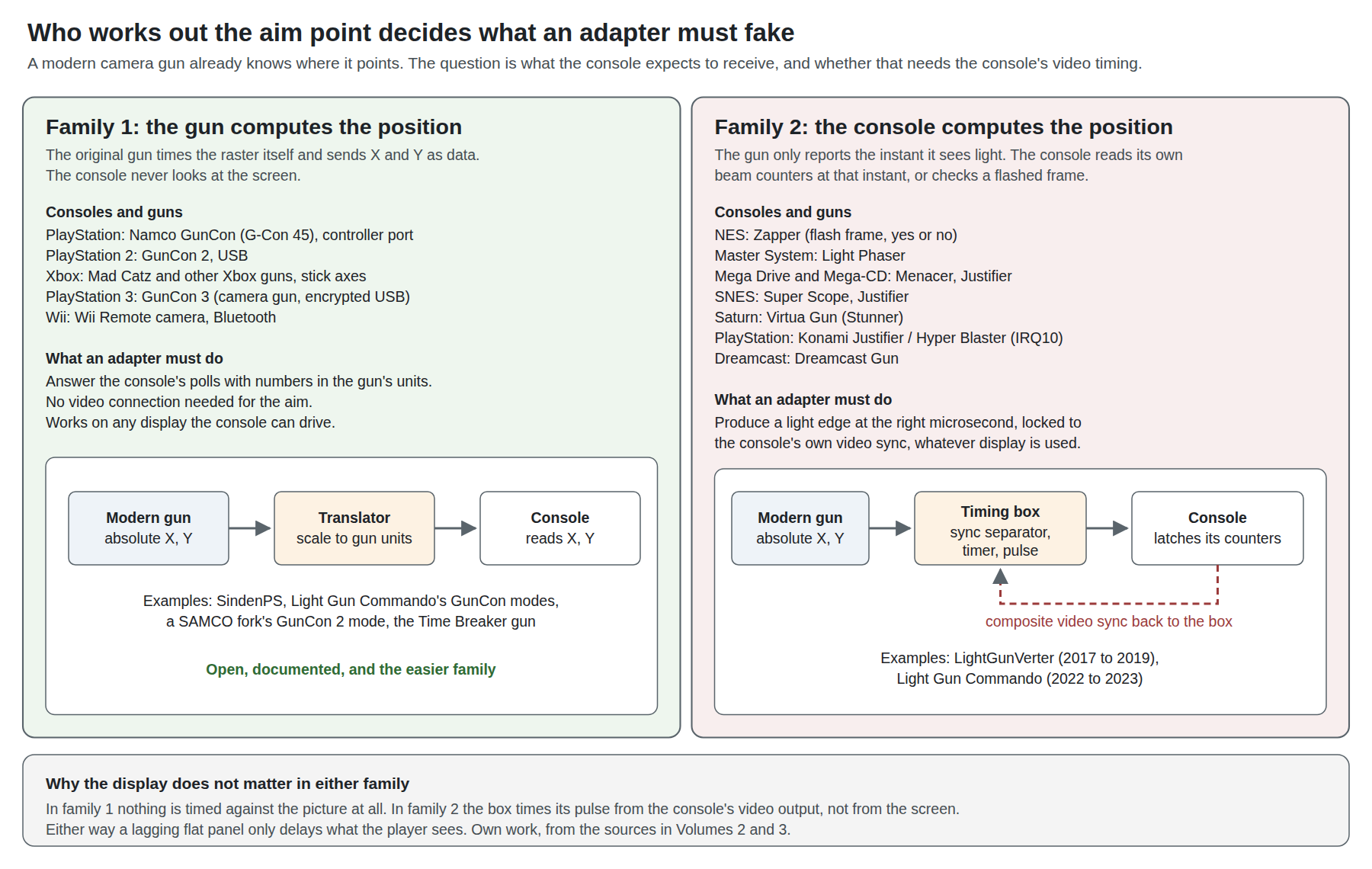
The line that divides the consoles is the one Ben Ryves drew when he started his own adapter in 2022: “Imitating a Guncon is easy as it reports coordinates to the console, most other light guns send timed pulses when their sensor detects light” (benryves.com, 13 December 2022). His fuller explanation is the clearest short statement of it: the GunCon “handles the position calculation within the gun itself and then transfers the coordinates directly to the console over the standard controller protocol”, while most other guns “just send a pulse on a dedicated ‘light gun’ input pin” and “rely on the console to handle the position calculation”.
Family 1, the gun computes the position. The PlayStation’s GunCon and the PlayStation 2’s GunCon 2 take a feed of the console’s composite video, time the raster themselves and send X and Y as data. The Xbox guns do the same, reporting the position on the left stick’s axes and needing a sync feed on the controller cable (Volume 4). The GunCon 3 and the Wii Remote have cameras and never needed a cathode-ray tube. For all of these, an imitation only has to answer the console with numbers. It needs no video connection for the aim, and it works on whatever display the console is driving. This family is the subject of Volume 2 (PlayStations) and Volume 4 (Xbox, PlayStation 3, Wii).
Family 2, the console computes the position. The Master System’s Light Phaser, the Mega Drive’s Menacer and Justifier, the SNES Super Scope, the Saturn’s Virtua Gun, the Dreamcast Gun and Konami’s Justifier and Hyper Blaster on the PlayStation all signal the instant they see light; the console latches its counters, or, on the PlayStation, a software interrupt routine reads two timers (CRT Timing, Volume 5). The NES Zapper is a variant: the game flashes a white box and asks whether the gun sees light in that frame (CRT Timing, Volume 4). An imitation here must produce an electrical edge at the right time, measured against the console’s own video output, to a fraction of a line. That is harder, but it has been done, twice, and Volume 3 reads both designs.
The display drops out in both families. In family 1, nothing is timed against the picture. In family 2, the imitation takes its timing from the console’s composite video signal, not from the screen, so it works the same whether that signal ends at a cathode-ray tube or a 4K panel. A lagging panel delays only what the player sees, exactly as it does on a PC. This is why an original NES can play Duck Hunt on a flat panel through a timing box (Volume 3), when no change to the Zapper itself can make it work (Modding Classic Light Guns, Volume 5, §5.3).
1.5 Three ways round
Every working route found falls into one of three patterns.
Table 2 — 1.5 Three ways round
| Route | What it does | Console families | Examples |
|---|---|---|---|
| Translate | A small adapter answers the console’s polls in the console gun’s own protocol, using coordinates from a modern gun | Family 1 | SindenPS (PlayStation and PlayStation 2), the GunCon modes of Light Gun Commando, a SAMCO firmware fork’s GunCon 2 mode, the commercial Time Breaker gun |
| Time | A box separates sync from the console’s video and pulls the console’s light-gun line at the instant the beam reaches the aim point | Family 2 (and family 1 through a GunCon-shaped “smart cable”) | LightGunVerter, Light Gun Commando |
| Flash the original gun | The same box drives an LED pressed into the barrel of an original gun, so the gun’s own photodiode sees the flash a cathode-ray tube would have given it | Any CRT-era gun, both families | LightGunVerter’s universal cable; Ben Ryves’s 2015 DC-LiGuE for the Dreamcast |
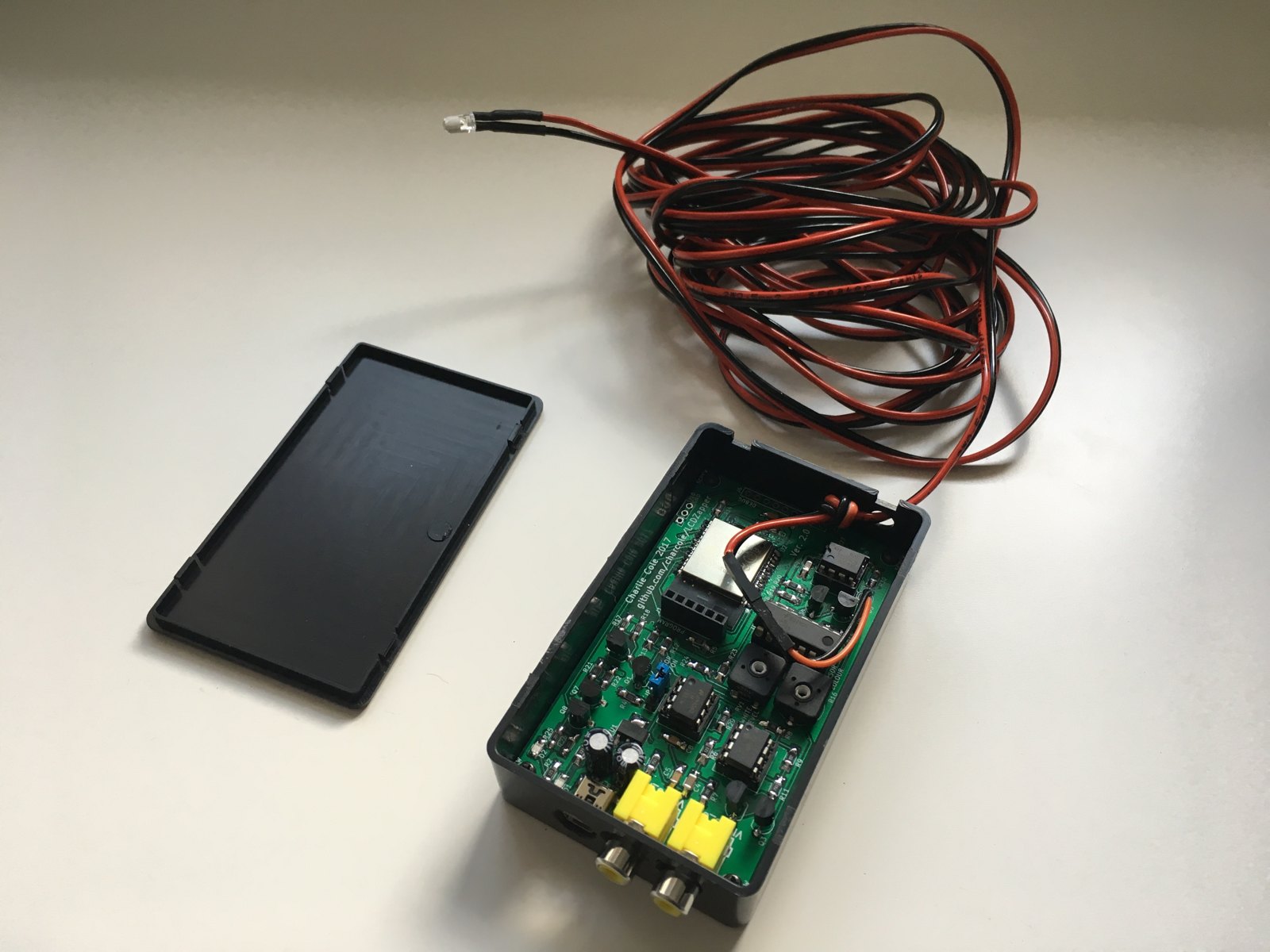
The third route is the most general and the least elegant: it reuses the original gun’s electronics as an expensive photodiode, and the modern sensor (in both published designs a Wii Remote) has to be fixed to the original gun. It also works with every console the box can see the video of, because it reproduces what the gun was designed to see. The LightGunVerter’s own page called it the “Nostalgic” option: “By placing one end into the barrel of your light gun and securing a Wiimote to it you get the full retro experience” (lightgunverter.com, captured 2020).
There is a fourth way round that is not in this dive: abandon the original console and emulate it, on a PC, a Raspberry Pi or a MiSTer. That is what PC (Windows), Linux and Retro Distros and MiSTer FPGA cover. MiSTer is the closest relative of a timing box: its cores fire the emulated console’s sensor line from their own raster counters (MiSTer FPGA, Volume 1, §1.4), which is exactly what a timing box does to a real console from outside.
1.6 What has actually been built
Every project and product found that makes a modern or substitute aiming device play on an original console, as of 2026-10-24:
Table 3 — Every project and product found that makes a modern or substitute aiming device play on an original console, as of 2026-10-24
| Project or product | Years | Aim source | Consoles (as stated by its author or seller) | Route | Licence or status |
|---|---|---|---|---|---|
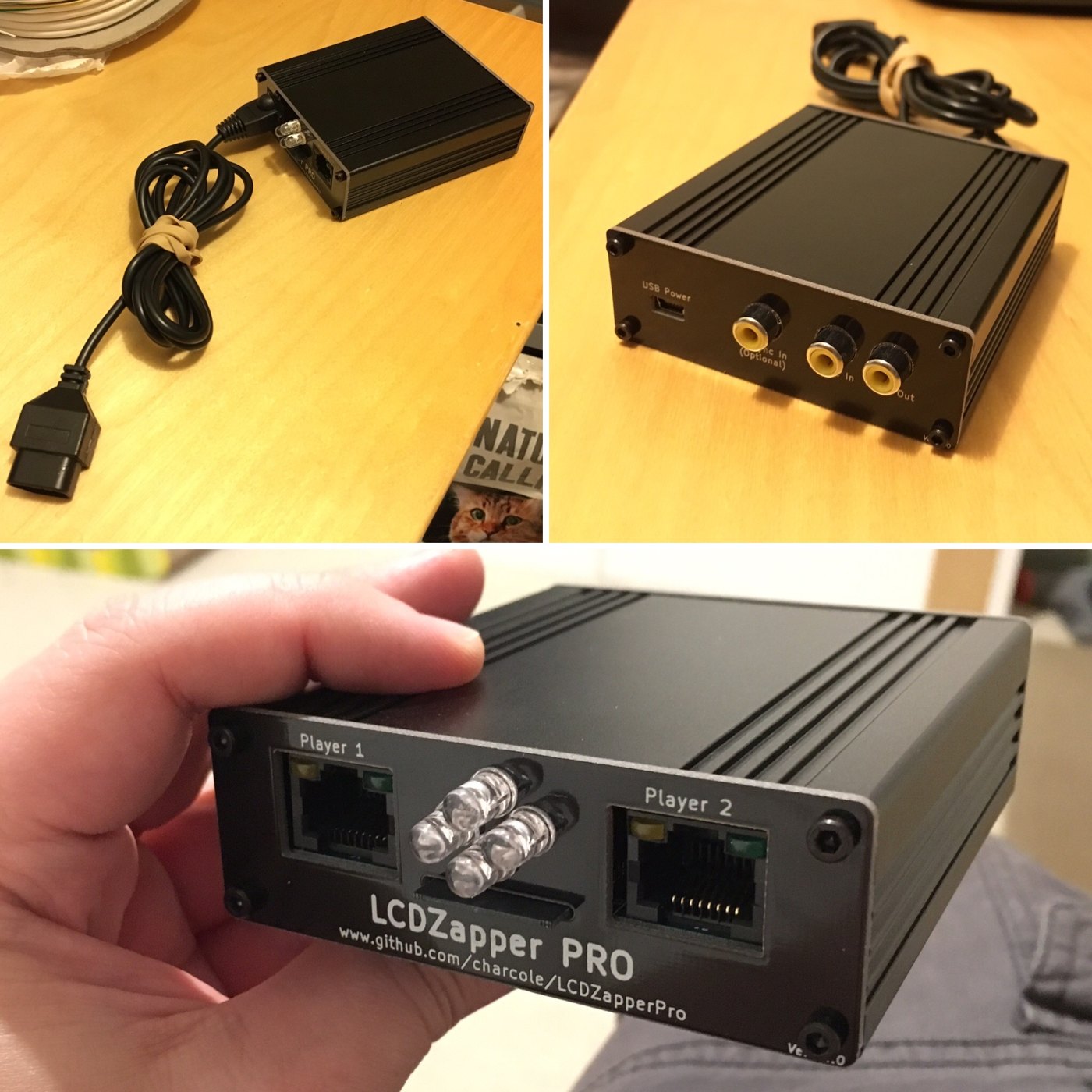
LightGunVerter (Charlie Cole), repository charcole/LCDZapper | 2016–2020 (last firmware 1.1, 4 January 2019) | Wii Remote | ”NES, Master System, Saturn, PSX, PS2, Dreamcast and even arcade machines”; cables for NES, SMS, Saturn, GunCon 2; universal LED | Time; flash the original gun; GunCon 2 smart cable | Open source, Creative Commons BY-NC 3.0 (“you can make your own but you can’t make them and sell them”); preorders taken 2017–2019; the product site no longer answers |
| Light Gun Commando (Ben Ryves) | 2022–2023 | Wii Remote, four IR LEDs round the screen | Master System, Mega Drive and Mega-CD (Justifier), PlayStation (GunCon, Hyper Blaster), PlayStation 2 (GunCon 2), Saturn (Virtua Gun), Dreamcast, Xbox | Time; translate | Described in a journal series; no source or schematics published in the entries read |
| SindenPS (th3drk0ne), from the earlier Sinden console adapter | 2025–2026 (repository created 3 December 2025, last push 10 October 2026) | Sinden gun, read by a Raspberry Pi | PlayStation (G-Con 45), PlayStation 2 (G-Con 2) | Translate | ”SindenPS Fair Use Licence”: personal, educational and non-commercial use; its PlayStation firmware is a derivative of LightGunVerter’s GunCon cable code, CC BY-NC 3.0 |
SAMCO fork with GunCon 2 mode (88hcsif, IR-Light-Gun) | 2021 | The gun’s own IR camera | PlayStation 2 | Translate, inside the gun | LGPL-2.1; tested on an ItsyBitsy M4 only; needs the sensor bar position and screen size hard-coded |
| Time Breaker LightGun (seller listings; the launch article’s image carries an Intec Gaming logo) | 2026 (due 1 March 2026) | IR camera gun and a sensor at the top of the television | PlayStation, PlayStation 2 (and PlayStation 2 games on backward-compatible PlayStation 3s, per the seller) | Translate (by inference) | Commercial, closed; $129.99 at Stone Age Gamer, read 2026-10-24 |
Three things stand out.
Both timing boxes used Wii Remotes, for the same reason: the Wii Remote is a cheap, mass-produced IR camera with a Bluetooth link, and both designers wanted the aim to arrive wirelessly at a box under the television. Neither was built around a USB gun. A box built for this project would read a USB gun instead (Volume 5), which removes the Bluetooth stack and the Wii Remote’s narrow field of view, a limitation the LightGunVerter instructions mention (“The Wiimote has rather a narrow field of view so if the corners aren’t detected try moving further back”).
Everything open is non-commercial. The one complete open design (LightGunVerter) and the most-used one (SindenPS, which descends from it) both forbid commercial use. Only the protocol facts, which are documented independently (PSX-SPX for the PlayStation, PCSX2 and RPCS3 for the PlayStation 2 and 3, Ben Ryves’s notes for the Xbox), are free to build on. That matters to a project that may sell kits (decision D11), and Volume 5 takes it up.
The PlayStations are the only well-served consoles. Four of the five entries cover them; for the latch consoles there are two designs, one dormant since 2020 and one never published.
1.7 The makers of modern guns, console by console
What each maker of a modern gun says about original consoles, read on the maker’s own pages on 2026-10-24:
Table 4 — What each maker of a modern gun says about original consoles, read on the maker's own pages on 2026-10-24
| Gun | Original-console support | Source |
|---|---|---|
| OpenFIRE (the project’s base) | None upstream. The firmware’s issue tracker has no console request; its host modes are mouse, gamepad and MiSTer | TeamOpenFIRE OpenFIRE-Firmware issues; Open-Source Firmware, Volume 6 |
| Sinden | PlayStation and PlayStation 2 through an adapter built by the owner (SindenPS); the Arduino firmwares come with Sinden’s own driver package | Sinden wiki, “OG Console Setup Guide”; SindenPS README credits “MrLightgun: For creating the Sinden Lightguns and the firmwares for the Arduinos” |
| GUN4IR | None found for consoles. Its maker’s GUN2CRT goes the other way, putting an original GunCon on USB hosts with a CRT (Modding Classic Light Guns, Volume 5, §5.7) | Forum announcement, 2021 |
| Retro Shooter RS3 Reaper | None. “Compatible with PC, Mini-PCs, Raspberry Pie, and Pandora 10th” | retroshooter.com, RS3 Reaper 2 page |
| Blamcon | None. Guns “for use with PC, Mac, and Linux systems”; its GunCon 1 and NES Zapper items are shell conversions, not console support | blamcon.com |
So of the modern guns, only Sinden reaches real consoles, only the PlayStations, and only through a do-it-yourself adapter that is not for sale.
1.8 What this means for the project’s gun
The project’s gun computes its own aim, in the gun, and reports it over USB as absolute coordinates. That makes it the ideal input for a family-1 translator, better than a Sinden, whose camera images are processed by a driver on a host computer (which is why SindenPS needs a Raspberry Pi in the middle). An OpenFIRE gun needs no host at all: a microcontroller with a USB host port can read its position directly and answer a PlayStation. The same box, given a sync separator and a timed output, can serve the latch consoles. Volume 5 works the design through, sets out the in-gun alternative (a GunCon 2 mode in the fork, as the 2021 SAMCO fork did), and explains why that alternative should stay a bench feature: it means the gun enumerating with Namco’s vendor ID.
None of this is on the critical path. The first build is a printed MP7 for a Windows PC (decision D35; PC (Windows)). The original-console routes are a later experiment, which is how Modding Classic Light Guns, Volume 5, §5.9 already ranked them.
1.9 Why this, and why not the others
For playing original-console gun games with a modern gun, the routes compare like this:
Table 5 — For playing original-console gun games with a modern gun, the routes compare like this
| Route | For | Against | Verdict |
|---|---|---|---|
| Translator (family 1) | Protocols fully documented in open sources; tiny hardware; works on any display; two players are easy | Covers only the PlayStations, Xbox, PlayStation 3 and Wii | First choice where it applies |
| Timing box (family 2) | The only route for the NES, Master System, Mega Drive, SNES, Saturn, Dreamcast and the Konami PlayStation guns | Needs the console’s video; per-console delay tuning; no open, commercially usable design | Second step, after a translator works |
| LED into an original gun | Works with any CRT-era gun on any console the box sees | Needs the original gun and a modern sensor strapped to it; reuses the original gun as a light sensor | Bench reference only |
| Emulation (PC, Pi, MiSTer) | Everything works today with the project’s gun | It is not the original console | Covered by the other Platform Support dives |
| Original gun on a CRT | Exactly as designed | Needs a working CRT; not the project’s gun | Console Light Guns, Modding Classic Light Guns |
1.10 What could not be verified
- Whether any LightGunVerter units shipped beyond the preorder page captured in 2020; the product site no longer answers.
- Whether Light Gun Commando’s source has been published anywhere since the 2023 entries.
- The maker of the Time Breaker gun. The launch article’s header image carries an “intec GAMING” logo, but no maker’s page for the gun was found, and how it presents itself to each console is not documented.
- Sinden’s Konami Justifier support. SindenPS ships a
KONAMI.hexfirmware and a “Konami Interface Board” drawing; a search summary of the live wiki calls Justifier support a prototype, which the archived page read here does not mention.
Sources
- Charlie Cole,
charcole/LCDZapper(LightGunVerter): README,Firmware/main/main.cpp,LICENSE.txt, “LightGunVerter Instructions.pdf”, images; created 2016-08-29, last push 2020-08-12, last firmware commit 2019-01-04; read 2026-10-24. https://github.com/charcole/LCDZapper - LightGunVerter product page, Internet Archive capture (© 2017–2019), read 2026-10-24. http://www.lightgunverter.com/
- Ben Ryves, “Light Gun Commando: LCD-compatible light gun support for original console hardware?”, 13 December 2022, read 2026-10-24. https://benryves.com/journal/3763182 ; and the series index. https://benryves.com/journal/tags/Light_Gun_Commando
- th3drk0ne,
sindenps: README,LICENSE,Firmware/PSX/; created 2025-12-03, last push 2026-10-10; read 2026-10-24. https://github.com/th3drk0ne/sindenps - Sinden Lightgun wiki, “OG Console Setup Guide”, Internet Archive capture, read 2026-10-24 (the live page refuses automated access). https://www.sindenwiki.org/wiki/OG_Console_Setup_Guide
- 88hcsif,
IR-Light-Gun(SAMCO fork), README andGuncon/, 2021, read 2026-10-24. https://github.com/88hcsif/IR-Light-Gun - Stone Age Gamer, “Time Breaker Light Gun - PlayStation, PlayStation 2”, read 2026-10-24. https://stoneagegamer.com/time-breaker-light-gun-playstation-playstation-2.html
- 李文恩 (Li Wen-en), T客邦, Time Breaker LightGun article, 26 February 2026, read 2026-10-24. https://www.techbang.com/posts/128067-time-breaker-lightgun-lcd-ps2-shooter
- Martin Korth (nocash), PSX-SPX, “Controllers and Memory Cards”, lightgun sections, read 2026-10-24. https://psx-spx.consoledev.net/controllersandmemorycards/
- Retro Shooter, RS3 Reaper 2 product page, read 2026-10-24. https://retroshooter.com/?p=22789
- Blamcon, home page, read 2026-10-24. https://blamcon.com/
- TeamOpenFIRE,
OpenFIRE-Firmwareissue tracker (searched for “guncon”, “PS2”, “console”), read 2026-10-24. https://github.com/TeamOpenFIRE/OpenFIRE-Firmware/issues
Comments (0)