Airsoft Gas · Volume 7
Cheatsheet & Quick Reference
7.1 How to Use This Sheet
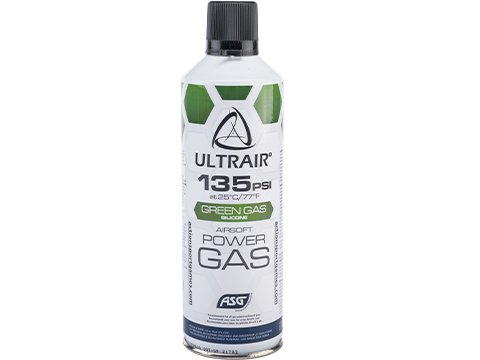
This is the laminate-ready synthesis of Volumes 1–6: the numbers distilled into scannable tables. Everything here is sourced upstream; contested values are marked approx. When a field rule and this sheet disagree, the field rule wins.
7.2 Propellant by Gun
Table 1 — Propellant by Gun
| Gun type / rating | Recommended propellant | Notes |
|---|---|---|
| Plastic-slide / Japanese pistol (Tokyo Marui, Maruzen) | HFC-134a (blue) | Low pressure by design; green gas batters the slide |
| Metal-slide GBB pistol / GBBR, green-gas rated | Green gas (or raw propane + adapter) | The hobby’s center of gravity; self-lubricating |
| Green-gas gun, budget running cost | Raw propane + adapter | Same chemistry, far cheaper per fill; meter oil (Vol 6) |
| Gun explicitly CO₂-rated (metal) | CO₂ | Higher FPS + cold-weather margin; dry, needs manual oil |
| ”Red-gas compatible” legacy gun | Green gas (modern stand-in) | Red gas (HCFC-22) phased out in US |
| AEG converted to pneumatic / competition rig | HPA | Regulated air; temperature- and tempo-proof |
Iron rule: never feed a gun gas above its rating. CO₂ (~830 psi) into a green-gas body (~1/7th of that) = burst hazard.
7.3 Pressure & Temperature
Vapor pressure climbs steeply and non-linearly with temperature. Green gas = propane (same curve).
Table 2 — Pressure & Temperature
| Temp | Propane / green gas (psig) | CO₂ (psia) |
|---|---|---|
| 0 °C | ~53 (approx) | ~506 |
| 10 °C | 77 | ~653 |
| 20 °C | ~105 | ~831 |
| 30 °C | ~141 | ~1046 |
| 31 °C (CO₂ critical) | — | ~1071 (critical point) |
| 40 °C | ~186 (approx, extrapolated) | supercritical — no vapor pressure |
- CO₂ above 31.0 °C (87.8 °F) goes supercritical — no single vapor pressure; container pressure then tracks fill density.
- CO₂ sits ~5–7× above propane at every temperature (e.g. 20 °C: 831 vs ~120 psia).
- Hot-day rule: pressure (and FPS) spike — re-chrono, you may climb past the limit.
- Cold-day rule: green gas sags hard (~half its 20 °C pressure at 0 °C → soft, short-stroking guns); CO₂ holds up far better.
7.4 FPS & Joules
Anchor: 0.20 g @ 328 FPS (100 m/s) = 1.00 J. Energy E = ½·m·v²; curve is steep because velocity is squared.
Table 3 — FPS & Joules
| FPS (0.20 g) | m/s | Joules |
|---|---|---|
| 328 | 100.0 | 1.00 |
| 350 | 106.7 | ~1.14 |
| 400 | 121.9 | ~1.49 |
| 450 | 137.2 | ~1.88 |
| 500 | 152.4 | ~2.32 |
- Typical green-gas pistol band: ~280–330 FPS on 0.20 g (~1.0–1.3 J). CO₂ pistols run hotter, ~350–400+ FPS.
- Representative field limits (typical — varies by field, state, country):
Table 4 — - Representative field limits (typical — varies by field, state, country)
| Class | FPS (0.20 g) | Joule equiv. | MED |
|---|---|---|---|
| Pistol / sidearm | ≤350 | ~1.14 J | often none |
| AEG / standard rifle | ≤400 | ~1.49–1.6 J | short or none |
| Indoor / CQB | 300–350 | ~0.84–1.14 J | tighter, often semi-only |
| DMR / sniper | 450–500 | ~1.88–2.8 J | ~100 ft (≈30–40 m) |
- UK joule regime: ~1.14 J full-auto, ~2.32 J semi/bolt (≈350 and ≈500 FPS lines).
- Joule creep: heavier BBs can read higher energy with no mechanical change — worst in GBBR/HPA and short barrels. Fields chrono joules on a heavy BB for this reason.
7.5 Adapters & Silicone
Table 5 — Adapters & Silicone
| Item | Detail |
|---|---|
| Reference adapter | Airsoft Innovations “GunGas” (not “Power Up”) — Kit ~$17, High Strength + Oil Pump ~$35 (approx) |
| Fallback (usually in stock) | Generic polymer / CNC-aluminum, ~$12–15 — prefer a polymer-tipped probe (metal probes damage fill valves) |
| Propane bottle fitting | CGA600, 16.4-oz (1 lb) Coleman-style throwaway |
| Silicone dosing (conservative default) | Lead with mfr’s ~2 drops per 10 fills; per-fill label figures (~3 drops/fill) are widely considered too heavy |
| Over-oiling symptom | Oil reaching the hop/barrel → inconsistent hop, wild flight. Oil O-rings/seals/sliders only — never the bucking or bore |
| Vendor shortlist | Evike, Airsoft GI, Amazon (also Airsoft Megastore, Airsoft Station, Fox Airsoft, RedWolf) |
7.6 Safety Quick-Ref
- Eye pro, always — rated sealed eyewear, on the field to off. A ~1 J BB blinds.
- Never put CO₂ in a green-gas-only gun — ~60 bar into a ~1/7th-rated body is “a bomb.” Match gas to rating, every time. Mags are not cross-compatible.
- Red gas / CO₂ crack ABS — high pressure shatters plastic slides and blows seals; full-metal is effectively a prerequisite for sustained CO₂.
- Storage / heat: keep cans, propane bottles, and CO₂ capsules cool, dry, out of sunlight — heat raises pressure (a capsule in a hot car is a hazard).
- Punctured CO₂ capsule: don’t leave it pierced in a mag more than ~1–2 days — sustained pressure + cold cycling hardens and cracks O-rings.
- Partial-vent mags for storage — leave a little gas in each green-gas mag so seals stay seated under slight positive pressure (do not store fully charged).
- Flammability: propane / green gas are flammable; CO₂ is inert.
- Transport: pressurized gas generally can’t be shipped or flown — buy at the destination (verify carrier/IATA rules).
Comments (0)