Chinese Type 63 Rifle · Volume 3
The Production Collapse, the Withdrawal, and Where the Rifles Went
How a well-reviewed rifle was redesigned on the factory floor during the Cultural Revolution: the pressed-in barrel, the riveted receiver of thirteen parts, more than 700 drawing changes, the zero that would not hold and the sparks in the shooter's face; the withdrawal of 1978, the brief revival for the 1979 war, the Type 81 that actually replaced it, and the rifles' later life in Vietnam, Cambodia, Albania and beyond
3.1 The short version
The Type 63 that went into series production in 1969 was not the rifle that had been certified in 1963. Under a war-scare production target and the Cultural Revolution’s campaign of “technical revolution” on the shop floor, the factories changed the design without trials or approval: by one official account, more than 700 changes to the drawings “in a short time”.1 Two of the changes did most of the damage. The barrel was pressed into the receiver and held by one 4 mm pin instead of being screwed in. The forged receiver was replaced by an assembly of thirteen stampings held by rivets, which bent during manufacture and in service. Rifles zeroed on the range would not hit the target a few days later. The stocks cracked, the paint fell off, and sparks blew back from the gas block into soldiers’ faces. Nine of China’s twelve military regions reportedly asked to have their old rifles back. In 1978 the PLA withdrew the Type 63 and returned to the SKS and the AK. A modified version was briefly produced again for the war with Vietnam in 1979. The real successor was the Type 81, certified in 1981.21
Large numbers were given away or sold abroad: to North Vietnam, where it is the K63 and still a militia training rifle, to the Khmer Rouge, and above all to Albania.234
3.2 1969: a war footing
1969年,在”备战、备荒、为人民”的方针指导下,63式自动步枪开始投产。在一个万人工厂,接到的任务是年产数十万支63式自动步枪,生产准备、工艺,工装准备都是昼夜进行……
“In 1969, under the guiding policy of ‘prepare for war, prepare for famine, for the people’, the Type 63 automatic rifle went into production. A factory of ten thousand workers was given the task of producing several hundred thousand Type 63 automatic rifles a year. Production preparation, process planning and tooling went on day and night …”2
The author does not name the factory. A Chinese weapons-encyclopedia page names three Chongqing plants as makers, the Chongqing Air Compressor Factory, Jialing and Jianshe (重庆空压厂,嘉陵厂,建设厂). It cites nothing, and no other source confirms the list.5 The 2003 account says only “the rifle factories” (各枪厂).1
3.3 No production certification
The 1993 article is precise about what was skipped:
63式自动步枪没有履行生产定型程序,没有经过一切改进都要通过试验鉴定的手续,没有严格经过驻厂军代表审批产品资料修改工艺变化等程序。
“The Type 63 did not go through the production-certification procedure. It did not go through the rule that every improvement must pass trials and appraisal, and it did not strictly go through the resident military representative’s approval of changes to the product documentation and the process.”2
The same passage explains that quality regulations had been abolished, or were not enforced because “nobody managed them and nobody carried them out”. It is careful not to blame the workers: “most of the staff and the resident military representatives wanted with all their hearts to make the Type 63 well”. The changes came out of a mass campaign to raise productivity and save labour hours, under the slogan “take product design as the centre, carry out a great technical revolution” (以产品设计为中心,大搞技术革命). “Some of the changes were good, saving hours or improving performance, but several had bad consequences.”2
3.4 Seven hundred changes
The 2003 account puts a number on it:
然而,63式自动步枪生不逢时,其生产装备的高峰期正处于”十年动乱”中,一切正常秩序均被打乱,更改审批制度形同虚设,一切经过试验的规定也未能遵守,以致在短时间内更改产品设计图达700多处。
“But the Type 63 was born at the wrong time. The peak of its production and issue fell in the ‘ten years of turmoil’ [the Cultural Revolution], when all normal order was overturned, the system for approving changes existed only in name, and the rule that everything must be proved by trials was not observed. The result was that more than 700 changes were made to the product drawings in a short time.”1
“After this series of major revisions,” it continues, “the Type 63 that was produced was unrecognisable” (已经面目全非了).1
The 1993 article does not give a count. It describes the changes that mattered.
3.5 The barrel joint
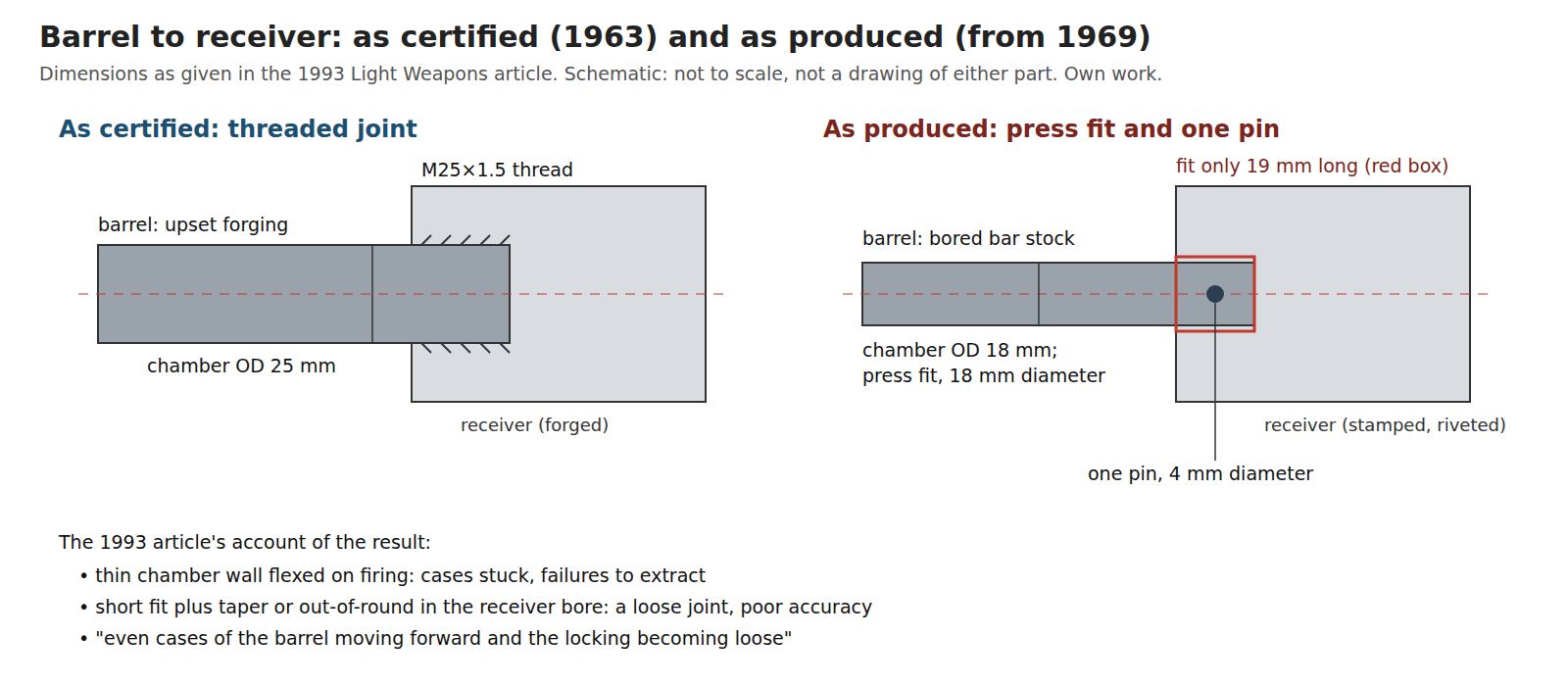
枪管与机匣联接,由M25×1.5的螺纹改成为直径18mm的压配合联接,只打一颗直径4mm的销子固定。
“The barrel-to-receiver joint was changed from an M25×1.5 thread to a press fit of 18 mm diameter, held only by a single pin of 4 mm diameter.”2
The purpose was to save material and machining. The barrel could be made from plain bar stock, bored, instead of a forging upset at one end, and the threads on both barrel and receiver were eliminated. “In theory the change was feasible,” the article says, “but the parameters chosen for the Type 63 were extremely unreasonable.”2 It lists three faults:
- The chamber wall was too thin. “The outside diameter of the barrel at the chamber went from 25 mm to 18 mm. The wall was reduced far too much and deformed elastically on firing, so cases very easily stuck to the chamber, causing failures to extract” (枪管弹膛部份外径由25mm改变18mm,壁厚减少太多,射击时产生弹性变形,弹壳极易贴膛,造成不抽壳现象).
- The engagement was too short. “The fit length between barrel and receiver was also too short, only 19 mm in all”, and with the receiver’s end chamfered, “the actual contact length was less than 19 mm”. Any taper or out-of-roundness in the bore of the receiver meant a loose fit.
- One pin was not enough. A single 4 mm pin “was not secure either”, so that accuracy suffered, “and there were even cases of the barrel moving forward and the locking becoming loose” (甚至有枪管前移,闭销变松的现象).2
The SKS dive, Volume 7, records the same economy on the Chinese SKS: the threaded joint was “replaced by a pressed and pinned barrel”. The difference on the Type 63 was the parameters, not the principle. The 1993 article says so explicitly: neither the press-fitted barrel nor the riveted receiver “shows that these two technologies are infeasible”; both were later used “without obstruction” on several new Chinese weapons. They failed on the Type 63 because its design and the parameters chosen did not suit them.2
3.6 The riveted receiver
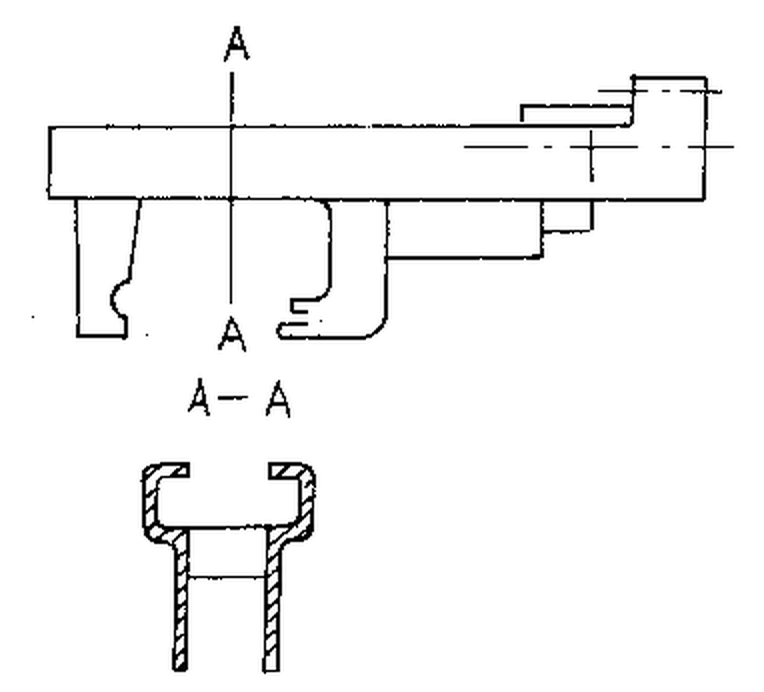
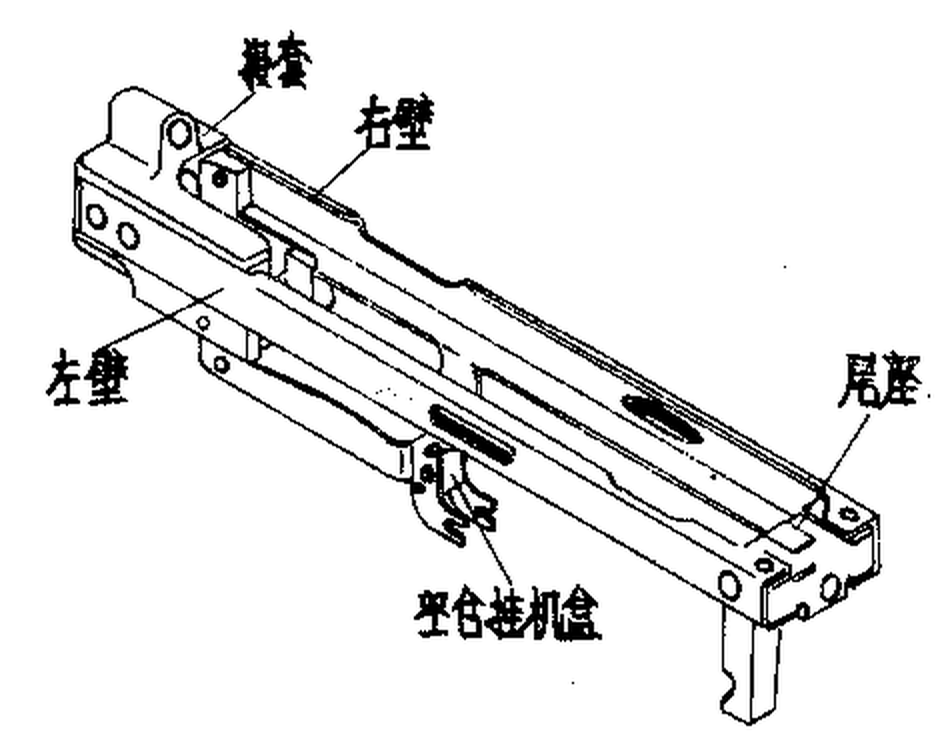
The forged receiver was replaced by a stamped and riveted one. The article accepts that such receivers were “the result of technical progress”, because they avoided “peeling the skin and digging out the heart” of a forging. But the Type 63’s receiver had a complicated shape designed to be machined, and to reproduce its features in sheet metal took many parts:
改变后的冲铆机匣结构也很复杂,是由节套、左右壁、尾座、挂机盒、铆钉等13个零件拼凑而成的。
“The stamped-and-riveted receiver that replaced it was also very complex, pieced together from 13 parts, including the trunnion, the left and right walls, the rear block, the hold-open housing and the rivets.”2
What followed, in the article’s account:2
- The receivers would not stay straight. “The receiver was distorting at every stage of manufacture: in stamping, in machining, in hardening, in assembly. It was straightened at every stage.” Extra straightening operations were added, but each one could undo dimensions set by the operations before it.
- They moved in service. “Rifles also distorted in use with the troops. The symptom was poor accuracy, and especially that a rifle which had passed its zeroing would, after being put away for a few days, no longer hit the target” (射校合格的枪,放一些日子再打就不上靶了).
- Tolerances could not be held. The rails’ main slot, specified at “31 +0.17 mm” wide, “could not be achieved except by straightening, and it would go back again in production and use”. Its symmetry about the bore “could not be corrected at all, and was sometimes out by more than 1 mm”.
- The locking shoulders were weakened. The riveted construction weakened the locking bearing surfaces in the trunnion, and the receiver walls developed “tears in stamping, cracks that were not easily noticed”. The service life could not reach the 15,000 rounds required, “and there was no way to fix it, so the life requirement had to be changed to 10,000 rounds” (只好更改寿命要求为10000发).
3.7 Knock-on changes
Because the receiver changed, every part that touched it had to change, and under the same campaign every other part was being changed as well. “This produced the problem that the parts of the rifle no longer worked together.” The article’s examples:2
- The carrier’s guides were shortened by 6 mm to simplify them, and the carrier “came off its rails while moving in the receiver’s guides, causing very poor accuracy and sticking”.
- The carrier’s top, originally three arcs, became “two straight lines and one arc, like a roof”, which, on a carrier that was already low and wide, “looked very ugly”.
- The charging handle changed from a hollow cylinder with a flange at its end to a solid cone, “which also affected appearance and handling”.
- The finish changed from black oxide to electrophoretic paint (电泳涂漆). The process had not been mastered, so the paint varied in colour and thickness and “adhesion was very poor”. With the troops it came off “in patches”, which ruined both rust protection and appearance.
Volume 4 uses these changes, the roof-shaped carrier, the solid conical handle, the rivets and the paint, as identification marks for early and late rifles.
3.8 Three phases of quality
The 1993 author insists that not every Type 63 was bad, and divides production into three phases:2
- The first two years, made to the certified drawings: “this part of the rifles was of fairly good quality”.
- The decline. As output rose and changes accumulated, the problems emerged, peaking in 1974, when “the troops’ complaints were strong”.
- The quality campaign. A two-year quality campaign (质量攻关) followed. It “took some remedial measures, but could no longer change the overall picture”. Rifles made after it were better again; for example, dispersion “R50 stabilised at about 5.5 cm”.
3.9 What the troops said
The 1993 article:
据说全国12个军区中就有9个军区打报告要求换枪。他们说:“昨天刚射校好的枪,今天就打不上靶了”……
“It is said that of the 12 military regions in the country, 9 submitted reports asking for the rifle to be replaced. They said: ‘A rifle zeroed only yesterday cannot hit the target today’ …”2
The slogan that went round was 还我半自动, “give us back our semi-automatic”.2 The 2003 account records another soldiers’ saying: 坐不得车,过不得夜, “it can’t ride in a truck and it can’t sit overnight”. It meant that a zeroed rifle shifted after transport or a night in the rack.1 And one soldier’s verdict is quoted in the 1993 article: 这支枪很蠢, “this rifle is clumsy”, or more bluntly, “stupid”.2
The figure of nine regions out of twelve is introduced with 据说, “it is said”. The author reports it, but not as a documented fact.
3.10 The faults that were in the design
The 1993 article separates the faults of production from three that were in the design itself.2
The concept. “The Type 63 inherited all the characteristics of the old-style rifle, putting the emphasis on long range and the bayonet, and ignoring the need to be short and light; its firepower was also clearly insufficient, and the whole rifle was long and heavy.” It came only with a fixed wooden stock, which was awkward for troops riding in vehicles and fighting in jungle, mountains and trenches. “Troops felt no great change,” the author adds; “it was just a matter of swapping a semi-automatic that fired single shots for an automatic.” A folding-stock version was made for airborne troops, “but because the technology was immature it was not successful” (Volume 4 shows it).
The sparks. The gas block worked as the piston’s cylinder, with the piston and regulator plug inserted from the front, so hot gas and burning residue escaped backwards as sparks, “some reaching the shooter’s face, even injuring the eyes”. The article quotes a leader of the PLA General Logistics Department: “It did what the enemy could not do” (起了敌人起不到的作用). The fix was a sleeve over the piston (Volume 2).
The stock. The wide, low carrier needed a wide receiver, “(40 mm)”, and the stock’s sides, which wrap around it, “are only 4 mm thick; such thin wood inevitably cracks”. The 2003 account agrees that stocks cracked at the neck and the sides.1
3.11 Withdrawal, 1978
1978年,上级根据部队意见,作出了撤装63式自动步枪的决定。部队不得不重新换上56式半自动步枪,工厂又恢复了半自动步枪生产。
“In 1978, in response to the troops’ opinions, higher authority decided to withdraw the Type 63 automatic rifle. The troops had to change back to the Type 56 semi-automatic rifle, and the factories resumed production of the semi-automatic rifle.”1
The 1993 article puts the irony in one line: the Type 63 was produced to replace the SKS, “but in the end it was the Type 63 that was stopped and withdrawn, and the Type 56 semi-automatic rifle that was produced and issued again. It went round in a circle and came back to where it started” (转了个圈又回到原地).2
Both accounts also say the cause was not only quality. The 2003 account: “the direct cause of withdrawal was poor quality, but there was also an underlying cause: tactical thinking had changed, and the Type 63 could no longer meet the changed requirements.”1
3.12 The 1979 revival
China’s war with Vietnam in February and March 1979 brought the rifle back briefly. The 1993 article (as reproduced) says the troops reported that the SKS lacked sustained fire and that there were not enough Type 56 AKs. Stored rifles and an intact production line were still available, so production restarted with three changes:2
- The magazine well and catch were modified so that the rifle would take the starred 20-round magazine and the Type 56 and 56-1 AK magazines. The text explains that the original well “had a relief at its rear for the bolt hold-open; to use a Type 56 submachine gun magazine in an original Type 63, the hold-open must first be removed”.
- The recoil spring was wound from better wire to make it stronger.
- The bolt’s tolerances were tightened and the firing pin’s heat treatment improved.
The troops reported that the improved rifle’s accuracy compared with the SKS’s and that its sustained fire was better. But it was too long, and it caught on branches in the jungle, and AK magazines worked loose in it and fell out. “The brief resumption of production during the war did not change the Type 63’s fate, and production soon stopped again.”2

(The reproduction on 枪炮世界 also carries a combat anecdote from 1979, two improved rifles at 300 metres, which the page itself labels an internet rumour. It is not repeated.)
3.13 What replaced it: the Type 81
我国第一个班用枪族于1981年设计定型,命名为81式7.62MM班用枪族。……从1983年起全军装备,全面替代了56式武器。
“Our country’s first squad weapon family was design-certified in 1981 and named the Type 81 7.62 mm squad weapon family … From 1983 it was issued to the whole army, completely replacing the Type 56 weapons.”1
The 1993 article: “In 1981 the Type 81 family was certified and issued, and the Type 63 finally left active service.” Stocks went to militia armouries, and a considerable number went abroad as exports and aid.2
So the answer to “what followed the Type 63?” is, in order: the Type 56 SKS and Type 56 AK again (1978), the improved Type 63 briefly (1979), and the Type 81 (1981, issued from 1983). There is no Chinese “Type 68” in that sequence. The Western “Type 68” is this rifle under another name (Volume 1). A Chinese blog repost adds that the Type 81 inherited the Type 63’s idea of keeping the working parts close to the bore axis.6
3.14 How many were made
The sources do not agree, and the figures are given side by side, not averaged:
Table 1 — The sources do not agree, and the figures are given side by side, not averaged
| Source | Total | Wording |
|---|---|---|
| 《轻兵器》 1993 (from inside the programme) | “several million” | 共生产了数百万支, 1969–1978 |
| Sina / 《舰船知识》 2003 | ”more than one million” | 各枪厂在几年内生产一百多万支, “in a few years” |
| Chinese blog repost | ”over a million” | 上百万支 |
| McCollum, Forgotten Weapons 2024 | ”about a million" | "as best as I can tell” |
| Popenker, Modern Firearms | ”well over 1 million" | "it is believed” |
| BICC SALW Guide | ”approximately six millions” | — |
Two of these can be read together. The 2003 figure counts production “in a few years”, which may be a part of the run, and the 1993 figure covers the whole run, so they need not contradict each other. Nothing in either says so, however. The six million in the BICC guide has no stated source. The guide also says that Norinco “developed” the Type 63, which cannot be right, since China North Industries Corporation was formed in 1980, after production had ended. A Chinese web article hostile to the rifle gives “hundreds of thousands” and questions every larger figure. No production record by year or by factory was found.
3.15 Vietnam: aid, capture and the K63
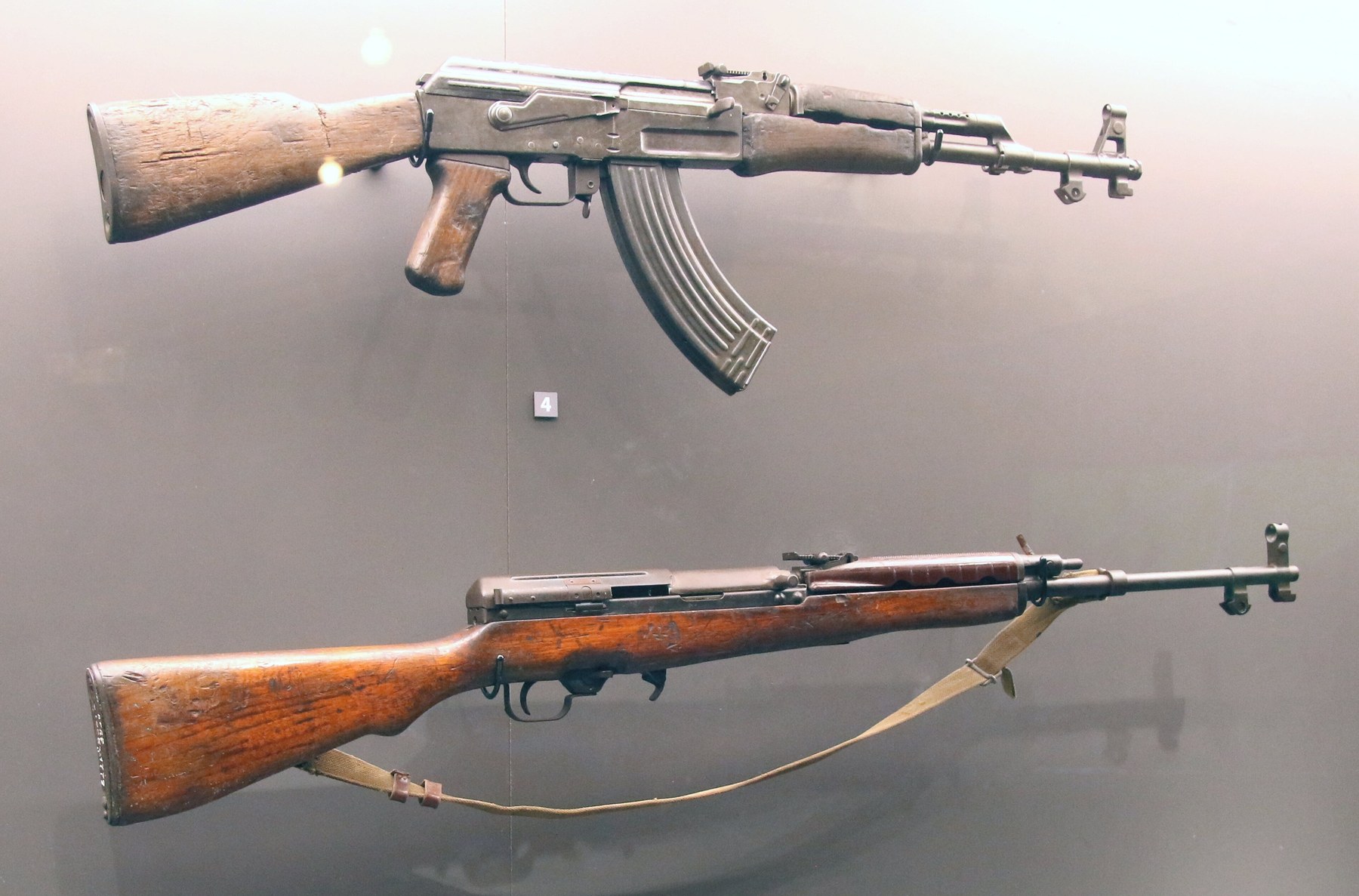
The 1993 article says the rifle “was used in aid to Vietnam against the United States” (曾被用于援越抗美), and that “American and Australian soldiers, on first meeting the Type 63, thought it was an SKS that could fire bursts, and later called this rifle the Type 68”.2 McCollum, SinoDefence and others agree that it went to North Vietnam.39 No source found gives quantities or dates of delivery.
In Vietnam the rifle is the K63, and it is still a militia training weapon. A report in the Vietnamese army’s newspaper Quân đội nhân dân on militia in Bắc Kạn province, published around 2017, has the women of the city’s self-defence force “huấn luyện bắn súng K63”, training on the K63 rifle, and shows militia on the range with it.4 The Vietnam Military History Museum in Hanoi shows one beside a Type 56 AK.
3.16 The Americans’ rifle
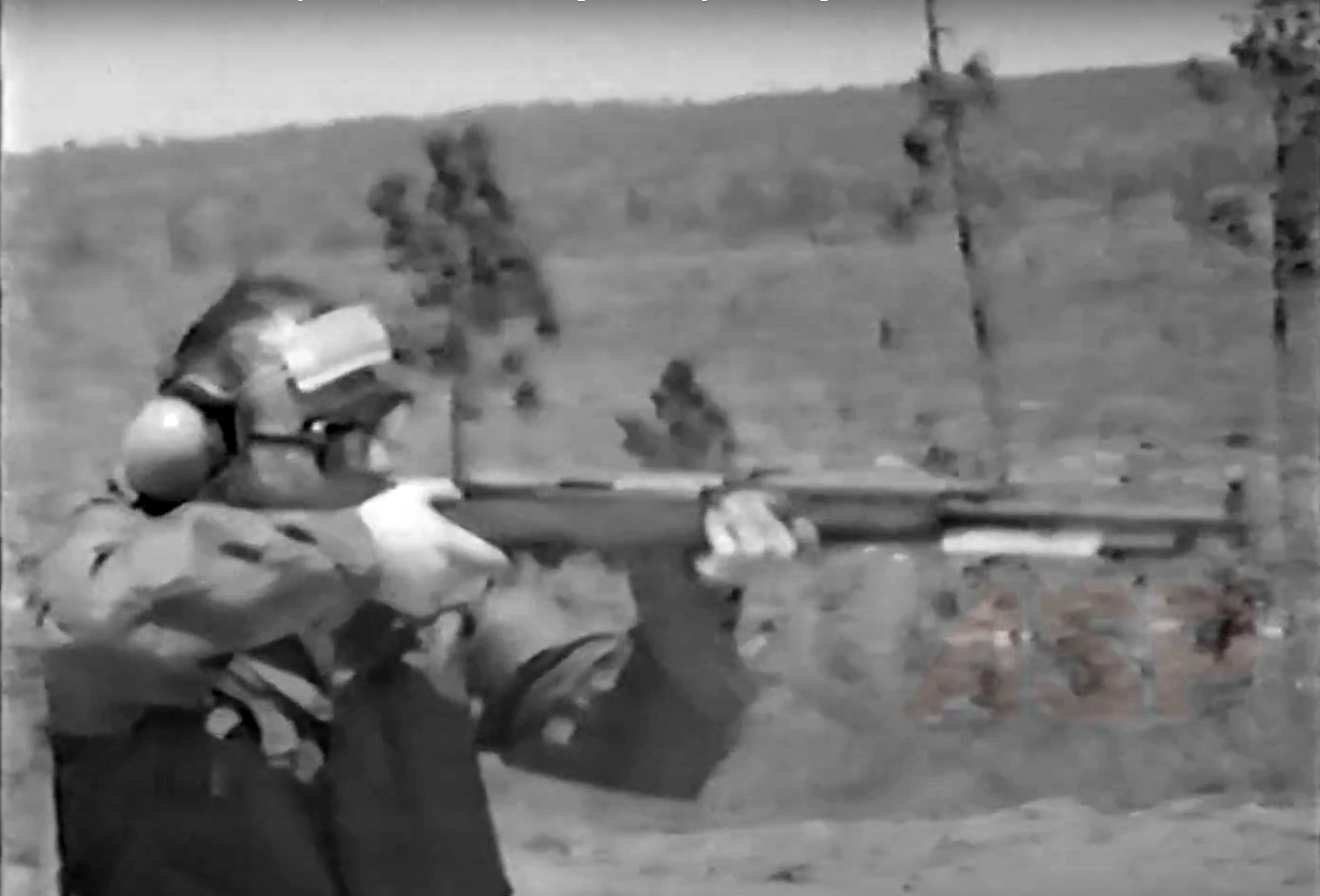
US forces captured examples. The US Marine Corps National Museum lent one for Iannamico’s 2009 article, and the trigger-group photograph that went with it came from Aberdeen Proving Ground.10 The US Army’s Foreign Science and Technology Center demonstrated the “Type 68” to Special Forces at Fort Bragg in 1974, on the range among other foreign weapons, and its stills are among the few public-domain moving pictures of the rifle in use.11 The Defense Intelligence Agency included it in its 1983 identification guide.12 The US Army’s 1967 identification guide for Communist small arms has no entry for it. That fits the Chinese dating of series production to 1969.13
The date matters for the law. The only window in which a private American could register a war-trophy machine gun closed on 1 December 1968 (Volume 6), before the series production the Chinese sources describe.
3.17 Cambodia, Albania and after
Cambodia. The 1993 article: after China and Vietnam fell out, “the Type 63 was also used in aid to Cambodia against Vietnam”. In context that means the Khmer Rouge.2
Albania. “A lot of Type 63s were sent to Albania after their removal from Chinese service,” McCollum writes.3 The Chinese encyclopedia page also calls Albania the biggest user outside China.5 No Albanian source was found. Albania matters for one legal point. The US removed Albania from its list of countries proscribed for arms imports in 1995, but that has no effect on a select-fire Type 63 stored there, as Volume 6 explains.14
Afghanistan, Kosovo and Africa. The 1993 reproduction says that some went to factions in Afghanistan, and its captions show the rifle in “war zones in Africa” and with the Kosovo Liberation Army.2 SinoDefence lists Afghanistan and “some African countries”. The BICC guide records the rifle in six countries without naming them in the text read for this dive.98

Australia, unconfirmed. A Chinese encyclopedia page says that Type 63s were exported in the early 1990s “to Australia and to the North American civilian market” with their selectors welded for semi-automatic fire; that a 1993 examination found they could be converted back; and that customs tried to recover them, without success in every case.5 The Internet Movie Firearms Database says semi-automatic surplus rifles went to Australia before the 1996 restrictions. No Australian government source was found, and the Australian parliament’s database refused automated searches. The story is reported here as unverified. No evidence was found that any Type 63 was imported into the United States.
3.18 What the 1993 author concluded
The 1993 article ends with the lessons, and they are worth quoting because they are the reason the article was written:
虽然63式步枪只存在了十多年,但其失败的经历对我国在武器计划的论证、研制、定型、生产、装备全过程提供了实践经验和教训,使军品研制逐步定向规范化、制度化。
“Although the Type 63 existed for only a little over ten years, its failure provided practical experience and lessons for the whole process of a weapon programme in our country, from study, development and certification to production and issue, and it made military product development gradually more standardised and institutionalised.”2
The 2003 account draws the same two lessons in so many words: a weapon needs a proper tactical and technical study of the requirement before it is designed, and once certified, it must be produced strictly to the certified documents.1
3.19 What could not be verified
- The factories. The three Chongqing plants are named by one uncited page.5
- Production totals. Above; no record by year or by factory.
- “Nine of twelve military regions.” Reported by the 1993 author as hearsay (据说).
- Deliveries to Vietnam, Cambodia and Albania. No dates or quantities found.
- The Australian semi-automatic imports and recall. One Chinese encyclopedia page and IMFDB; no Australian primary source.
- A “63-1” improved model. Named only by a 2026 web article with no sources, and not used.
References
Footnotes
-
“资料:新中国步枪发展历程——自制阶段”, 《舰船知识》 via 千龙新闻网, Sina Military, 22 July 2003, http://mil.news.sina.com.cn/2003-07-22/138626.html (accessed 2026-10-20). Translations for this dive. ↩ ↩2 ↩3 ↩4 ↩5 ↩6 ↩7 ↩8 ↩9 ↩10 ↩11 ↩12
-
向军 (Xiang Jun), 我国63式7.62mm自动步枪盛与衰, 《轻兵器》 (Light Weapons) 1993 no. 6, reproduced with its figures on 枪炮世界, “63式自动步枪”, http://pewpewpew.work/china/rifle/1963/63.htm (accessed 2026-10-20). The 1979 section of the reproduction is probably drawn from the page’s second credited source, 枪火 and 蓝云, “中国63式自动步枪”, 《轻兵器》 2002 no. 5. Translations for this dive. ↩ ↩2 ↩3 ↩4 ↩5 ↩6 ↩7 ↩8 ↩9 ↩10 ↩11 ↩12 ↩13 ↩14 ↩15 ↩16 ↩17 ↩18 ↩19 ↩20 ↩21 ↩22 ↩23 ↩24 ↩25 ↩26
-
Ian McCollum, “Type 63: China Makes an AK/SKS Hybrid”, Forgotten Weapons, 2024, https://www.forgottenweapons.com/type-63-china-makes-an-ak-sks-hybrid/ (accessed 2026-10-20). ↩ ↩2 ↩3 ↩4
-
“‘Sao vuông’ Việt Bắc”, Quân đội nhân dân, about 2017, https://ct.qdnd.vn/phong-su-dieu-tra/sao-vuong-viet-bac-521206 (accessed 2026-10-20). “Sao vuông”, the square star, is the militia’s cap badge, not a rifle. ↩ ↩2
-
中华网武器大全, “63式自动步枪”, https://m.junshi.china.com/wuqi/13461.html (accessed 2026-10-20). Uncited; used only where labelled. ↩ ↩2 ↩3 ↩4
-
孤独的老顽童, 昙花一现的中国63式自动步枪, NetEase News repost, undated, https://m.163.com/news/article/BAS2K42S00014OVF.html (accessed 2026-10-20). ↩ ↩2
-
Maxim Popenker, “Type 63 assault rifle (China)”, Modern Firearms, https://modernfirearms.net/en/assault-rifles/china-assault-rifles/type-63-eng/ (accessed 2026-10-20). ↩
-
Bonn International Centre for Conflict Studies, SALW Guide, “Norinco Type 63”, https://salw-guide.bicc.de/en/weapon/view/102 (accessed 2026-10-20). ↩ ↩2
-
SinoDefence.com, “Type 63 Rifle”, last updated 24 June 2006, https://web.archive.org/web/20070820155744/http://www.sinodefence.com/army/small_arms/type63rifle.asp (accessed 2026-10-20). ↩ ↩2
-
Frank Iannamico, “Chinese 7.62x39mm Type 68 Rifle”, Small Arms Review vol. 12 no. 11, August 2009, https://smallarmsreview.com/?p=15367 (accessed 2026-10-20). ↩
-
US Army Foreign Science and Technology Center, “Special Forces Foreign Weapons Demonstration”, Fort Bragg, 1974, film; stills on Wikimedia Commons, https://commons.wikimedia.org/wiki/File:Aiming_the_Chinese_Type_68_rifle.jpg (accessed 2026-10-20). ↩
-
US Defense Intelligence Agency, Small Arms Identification and Operation Guide, Eurasian Communist Countries, 1983, plate “Type 68”, negative 511408, https://commons.wikimedia.org/wiki/File:Diatype63.png (accessed 2026-10-20). ↩
-
US Army Foreign Science and Technology Center, Small Arms Identification and Operation Guide: Eurasian Communist Countries, FSTC-CS-07-35-66, 1967, https://archive.org/details/fstc-cs-07-35-66-small-arms-identification-and-operation-guide-eurasian-communist-countries (text searched 2026-10-20: Chinese entries include the Type 50 and Type 56 weapons; there is no Type 63 or Type 68 rifle; its “Type 63” is the North Korean carbine). ↩
-
Bureau of Alcohol, Tobacco and Firearms, “Importation of Arms, Ammunition and Implements of War”, T.D. ATF-367, 60 FR 47866, 15 September 1995, https://www.federalregister.gov/documents/1995/09/15/95-22942 (accessed 2026-10-20). ↩


Comments (0)