The Rifle Shoppe Ketland Blunderbuss · Volume 5
Inletting from Scratch: Barrel, Tang, Lock & Furniture into a Plank
This is the volume that defines the Rifle Shoppe 821 and separates it from every precarve kit. The stock is a plank — shaped to the outside profile of the gun, but with no barrel channel, no lock mortise, no ramrod hole, and no drilled pins. You cut all of it, from solid walnut, referencing each metal part against the wood with inletting black. It is exacting, unhurried work, and it is where the gun is truly made. Do not rush any of it; a scraped-too-deep mortise cannot be un-scraped.
5.1 The method: inletting black and patience
The whole discipline rests on one technique. You coat the metal part with a thin film of inletting black (lampblack, Prussian blue, or a marking soot), set it into its rough recess, and press or tap it gently. Where the metal touches wood, it leaves a black mark. You remove wood only where the black transfers, a whisker at a time, with sharp chisels, gouges, and scrapers ground to match the part’s contours. Re-black, re-seat, re-read, remove. The part sinks into the wood by controlled fractions until it beds fully and flush. The two rules that govern every mortise in this build: cut only what the black tells you to, and sneak up on final depth — the last few thousandths are removed by scraping, not chiseling. Sharp tools are non-negotiable; a dull chisel crushes and tears end-grain instead of slicing it, and torn walnut in a mortise is permanent.
5.2 Barrel channel first
The barrel is the datum for the whole gun, so it is inletted first and everything else references it. Establish the centerline of the plank precisely and lay out the channel from it. Rough the channel with a barrel-inlet scraper or a router bit taken to a hair above the line, then switch to inletting black on the barrel and take it down until the barrel beds along its full length with even contact — no rock, no gap, the barrel’s flats bearing on wood. The 15½-inch coaching barrel is short, which is a small mercy compared to inletting a fowler, but its flare and any octagon-to-round transition mean the channel section changes along its length, so read the black carefully at the transition. Set the barrel to its correct depth in the stock — deep enough that the wood supports it and the sight line and furniture come out right, not so deep that you bury a flat. Once the barrel beds, mark and cut the lug mortises and cross-pin (or key) locations that hold it down; drill those carefully, as they must line up through the wood and the barrel lugs exactly.
5.3 Breech and tang
With the barrel bedded, inlet the breech and tang. The tang is the tail of the breech that extends back over the wrist and takes the rear screw; it must bed flush along its whole length and follow the wrist’s curve, because it both locates the barrel longitudinally and carries recoil back into the stock. This is delicate end- and side-grain work at the wrist — the gun’s weakest region — so inlet the tang to full, even contact with no gaps under its edges, and lay out the tang screw so it lands correctly into the trigger plate below. A gappy or poorly bedded tang is both ugly and structurally weak.
5.4 The lock mortise
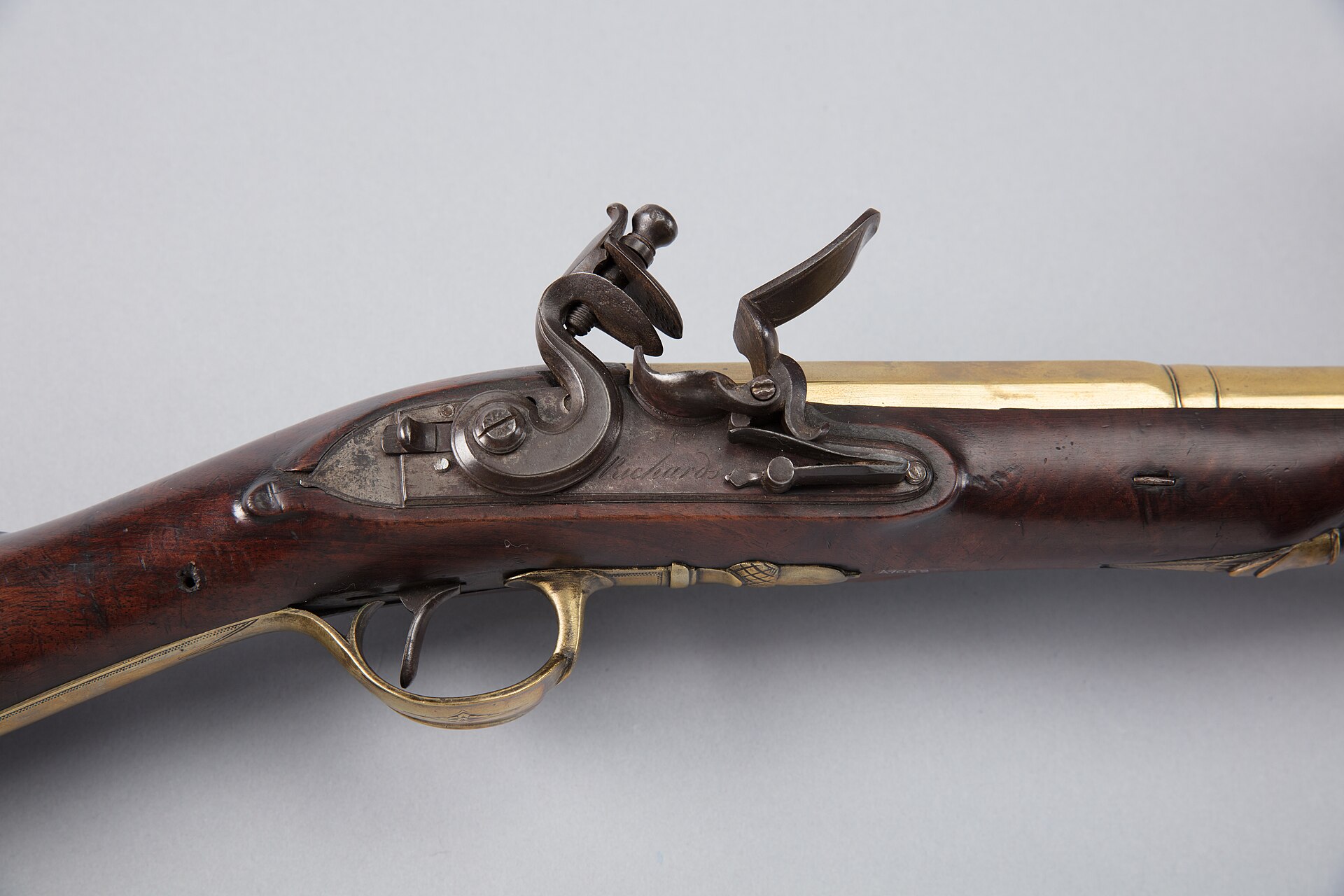
The lock mortise is the most three-dimensional inletting on the gun. You are not cutting a simple recess — you are cutting a flat seat for the lockplate at the surface, and behind it a cavity that clears the tumbler, sear, bridle, mainspring, and their sweep as the lock works. Inlet the plate first to a flush, even seat using black on its inner face and edges. Then, with the plate seated, black the internals and relieve the wood behind each one so nothing binds or rubs through the lock’s full travel from cock to fired — the tumbler and mainspring in particular sweep an arc that must be cleared. Fit the lock so it drops in and seats fully home, the plate flush with the wood, and the mechanism cycles freely with the lock in place. Then locate and inlet the sideplate opposite, and drill the lock-bolt holes through both — square through the wood so the bolts pull the lock and sideplate together true.
5.5 Ramrod channel and pipes
The ramrod work is fussy in its own way. You must bore the ramrod hole — a long, straight hole drilled the length of the forestock beneath the barrel channel, parallel to the bore — then cut the open ramrod groove where the rod rides exposed, and inlet the ramrod pipes (thimbles) that guide it. The long hole is the classic trap: it must run straight and parallel or the rod binds or breaks through into the barrel channel. Take it slow with a proper long bit, check alignment constantly, and let the pipes and the entry establish the line. The brass-tipped tapered ramrod supplied with the set seats through the pipes to the entry.
5.6 Furniture: buttplate, guard, trigger
With the working parts in, inlet the buttplate to the butt (following the curve of the comb and toe so it caps the wood cleanly), the trigger guard with its bow standing off the wood for the finger and its tangs bedded flush, the trigger and trigger plate positioned so the trigger trips the sear with correct engagement and pull, and the touch-hole liner into the barrel at the pan. Each is black-and-scrape work like everything before it, and each is drilled and pinned or screwed only after it beds flush. The trigger location is the one to fuss over — it ties the lock’s sear to the shooter’s finger, and getting the engagement and pull right is what makes the finished gun pleasant to fire.
5.7 Then shape the whole
Only once everything is inletted do you carry the final shaping of the stock — refining the plank’s profile down to final dimension around the seated hardware, blending the wood into the buttplate, lock panels, and tang, and easing the wrist and forend to the Ketland’s lines. Shape to the metal, not away from it: the wood should meet each part cleanly with no proud step and no gap. This is slow, and it is the difference between a gun that looks built and one that looks assembled. When the wood is shaped and every part beds, you are ready to finish — Volume 6.
Sources
General muzzleloader stockmaking and inletting practice (inletting black, barrel-channel and lock-mortise technique, ramrod-hole boring, furniture fitting); The Rifle Shoppe catalog (cat. 821 stock supplied as a shaped, un-inletted plank).
Comments (0)