The Rifle Shoppe Ketland Blunderbuss · Volume 2
The Ketland Pattern: An Authentic English Coaching Blunderbuss
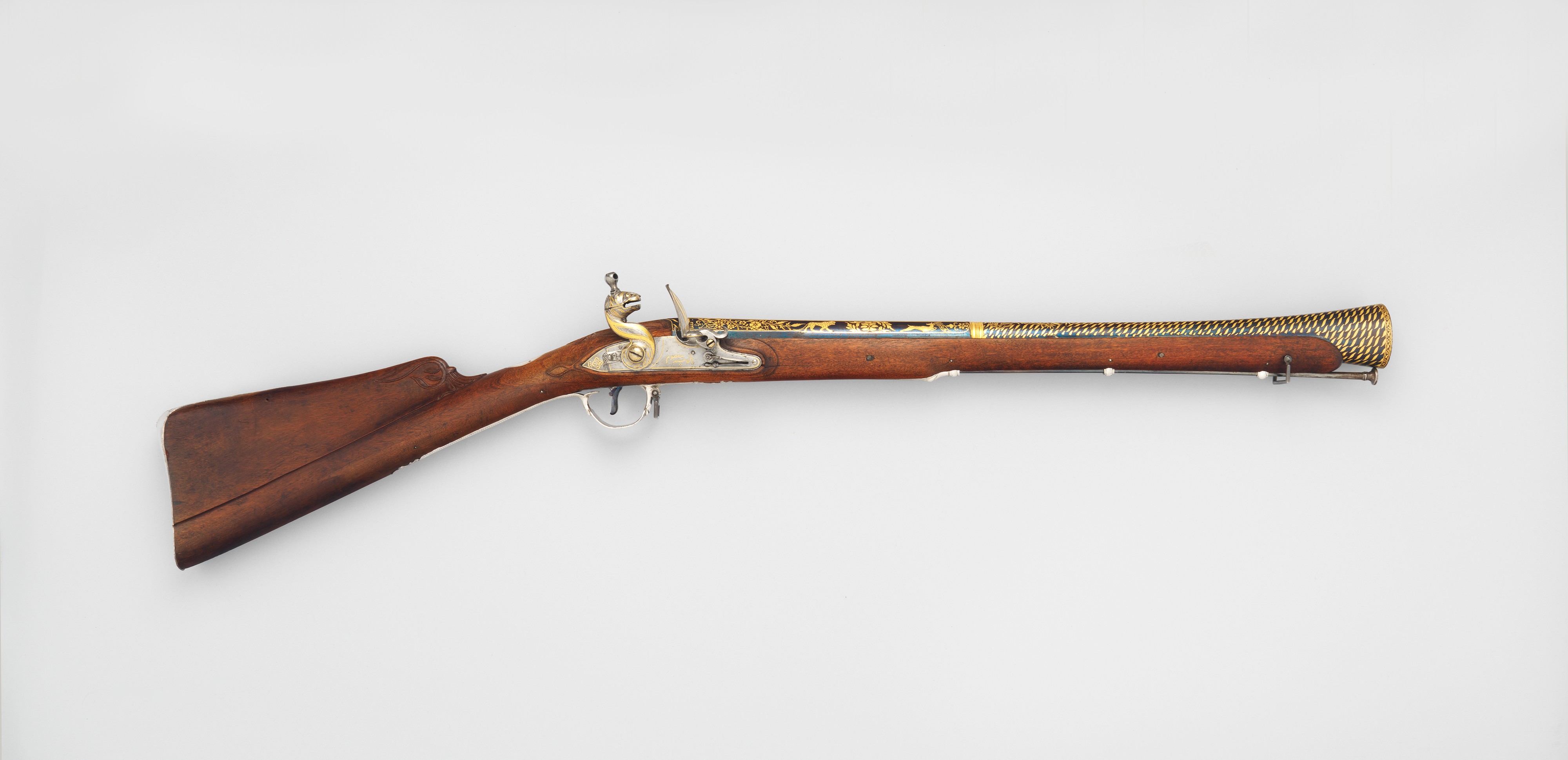
The single fact that separates the Rifle Shoppe 821 from every drop-together buss kit is that it is not a “blunderbuss” in the abstract — it is a copy of a specific documented Ketland arm. To build it well, and to make sensible decisions about finish and detail later, it helps to know who the Ketlands were and what an English coaching blunderbuss actually was. This volume is the history that makes the fidelity meaningful.
2.1 Who the Ketlands were
The Ketland name runs through the English gun trade for roughly a century, straddling the second half of the eighteenth century and the first decades of the nineteenth. The family firm — traced through Thomas Ketland and his sons and the various partnerships that carried the name (Ketland & Co., Ketland & Walker, and related houses) — worked out of Birmingham and London, the two poles of the English trade. Birmingham was the workshop city, where locks, barrels, and furniture were forged and finished by specialist outworkers; London was where the finest guns were assembled, engraved, and sold under a maker’s name. The Ketlands operated as makers and factors in that system: they built and finished arms, and they also supplied locks and complete guns into the export and government trades. A very large volume of Ketland-marked locks and guns reached North America, both before and after the Revolution, which is precisely why the name is so familiar to American builders and collectors today — a Ketland lock on a Pennsylvania fowler or trade gun is an ordinary sight.
For this dive’s purposes the important thing is that “Ketland” denotes a real, prolific, well-regarded English trade house, not a marketing flourish. A gun copied from a Ketland original is copied from mainstream best-practice English gunmaking of its era.
2.2 What an English coaching blunderbuss was
The blunderbuss — the name is usually derived from the Dutch donderbus, “thunder-gun” — is a short, large-bore, muzzle-loading smoothbore whose barrel flares at the muzzle into a bell or trumpet. By the middle of the eighteenth century it had settled into a well-defined role in England: the close-range defensive gun. A guard riding the box of a mail or stage coach carried one because it could be loaded quickly on a lurching vehicle — the flared muzzle funnels a charge poured in a hurry — and fired once, at close range, at a highwayman closing on the coach. The Royal Mail issued them. Naval and merchant ships kept them in the arms chest for repelling boarders across the few feet of a ship’s rail, where a scatter of shot into a press of men was worth more than a single aimed ball. Innkeepers, householders, and gamekeepers owned them for the same close, one-shot logic.
Two persistent myths deserve correcting here because they affect how a builder thinks about the gun. First, the bell muzzle does not spread the shot into a wide cone; the pattern is governed by the powder charge, the shot, and the bore, not by the last inch of flare. The bell’s real jobs are fast loading and intimidation — a yawning brass mouth pointed at you is a powerful argument. Second, the coaching buss was not a toy or a mere ornament. A .75-bore gun throwing a handful of buckshot or a heavy ball at across-the-coach distance was a serious weapon, and the surviving examples are solidly, seriously built.
2.3 The .75 coaching profile
The 821’s specification — .75 caliber, a 15½-inch barrel — is exactly right for the type. Three-quarter-inch bore is the classic English coaching size, comfortably in the range between a heavy pistol and a musket, sized to load with a patched ball a shade under bore or, more typically, with a charge of shot or buck-and-ball. The stubby 15½-inch barrel is the coaching length: short enough to swing and bring to bear from a cramped seat or a companionway, front-heavy enough with the brass bell to point naturally at close range. This is not a long fowler cut down; it is a purpose-built short gun, and building it you will feel how deliberately compact and handy the proportions are.
Brass was the common barrel material for the naval and coaching buss — it does not rust in a sea chest or under a tarpaulin on a coach — though steel-barreled English busses were also made and are entirely correct. The finishing volume returns to this choice for the 821’s own barrel.
2.4 Why “copied from an original” is the whole point
The Rifle Shoppe 821 is copied from an original Ketland blunderbuss in the Kit Ravenshear collection. Kit Ravenshear was a respected English-born gunmaker and student of the muzzleloading arms who worked in the United States and taught a generation of builders; a pattern gun from that collection carries real authority. What this means at the bench is concrete: the lockplate profile, the shape of the cock and frizzen, the architecture of the buttplate and trigger guard, the swell of the wrist, the flare of the barrel — these are not a modern designer’s idea of what a blunderbuss should look like. Each casting is pulled from a mold taken off the corresponding part of a genuine period gun. When you draw-file the buttplate to its final line, you are chasing the line an eighteenth-century Birmingham finisher put there.
That is why this set justifies the handwork. A Traditions buss evokes the silhouette; the Ketland 821 reproduces a specific gun. If you build it faithfully — resisting the temptation to modernize a line, over-round an edge, or add a sight the original never had — you end with a defensible copy of a real English coaching blunderbuss. Volumes 4 through 6 are, in a sense, one long argument for building to the original rather than to convenience.
Sources
Standard references on the English gun trade and the Ketland firm (Birmingham/London trade context); general histories of the blunderbuss and the coaching/naval defensive gun; The Rifle Shoppe catalog (cat. 821), citing the original Ketland in the Kit Ravenshear collection.
Comments (0)