Savage 93R17 (.17 HMR) · Volume 4
How It Works — The 93 Action and the AccuTrigger
The cycle part by part from Savage's own manual, the trigger that doubles as the bolt stop, the blade that blocks the sear, and what Savage does not publish about the barrel
4.1 How It Works — The 93 Action and the AccuTrigger
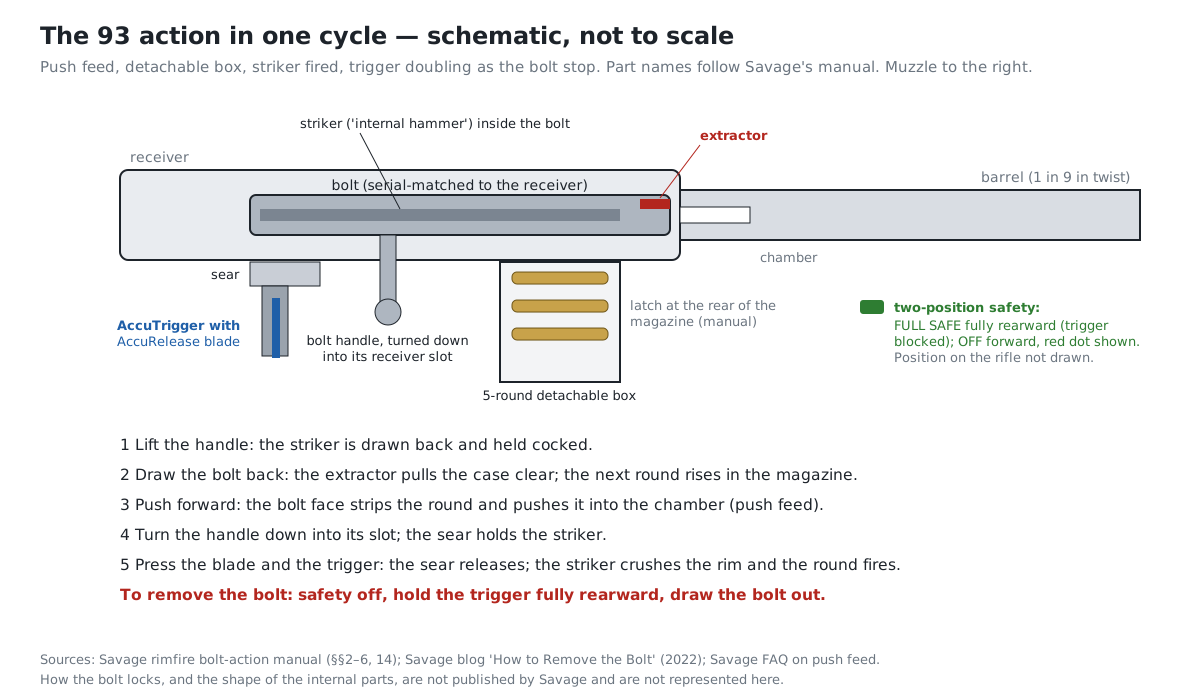
The Model 93 is a simple rifle, and its maker intends the owner to understand only part of it. Savage publishes the operating sequence, the safety, the trigger adjustment, the parts an owner may buy, and a short list of things not to take apart. It does not publish the internal geometry of the bolt, the lock-up, or how the barrel is held in the receiver. This volume describes everything the maker does publish, part by part, and marks the edge of the published record clearly rather than filling it in.
The operating descriptions below follow Savage’s rimfire bolt-action manual, which covers the Mark I, Rascal, Mark II and Model 93 in one set of sections and the B.MAG in another.1 Where Savage’s 2022 service articles add detail, they are cited separately.23
4.1.1 The action in outline
Table 1 — 4.1 The action in outline
| Element | What Savage publishes |
|---|---|
| Operation | Manually operated bolt action |
| Feed | Push feed; Savage states that all its current products are push feed4 |
| Magazine | Detachable box, latch at the rear of the magazine |
| Ignition | Rimfire; a striker Savage calls the “internal hammer”, carried inside the bolt |
| Cocking | On lifting the bolt handle; a blocked sear must be reset by raising and lowering the handle |
| Bolt stop | The trigger: held fully rearward, it lets the bolt be withdrawn or inserted |
| Safety | Two positions; FULL SAFE blocks the trigger |
| Trigger | AccuTrigger with AccuRelease blade (rifles from about 2005–06; Volume 1 §1.6) |
| Bolt | Matched to its receiver; last four serial digits engraved on it |
| Owner-serviceable bolt parts | Extractor and extractor spring clip only |
4.1.2 The cycle, step by step
Savage’s loading, firing and unloading instructions describe the whole cycle.1
Loading the magazine. Cartridges go into the detachable magazine “by pressing downward and sliding under the rear lip”, to capacity.
Inserting the magazine. The magazine goes into the stock opening and is pressed upward “until the latch snaps into position and is fully engaged”. The latch is at the rear of the magazine; pressing it drops the magazine, and Savage tells the shooter to have a hand ready to catch it.
Chambering. With the safety at FULL SAFE, the bolt handle is lifted and drawn fully rearward. “Moving the bolt handle forward and down will push the first cartridge from the magazine into the chamber.” The bolt face picks the top round from the magazine lips and pushes it forward ahead of itself: that is what push feed means, as opposed to controlled round feed, in which the extractor grips the rim as the round leaves the magazine.
Cocking. Lifting the handle cocks the striker. The manual ties cocking to the handle’s movement rather than to the bolt’s rearward stroke: when the sear has been blocked, “the bolt must be raised and lowered to ‘recock’ the firearm.”
Locking. Turning the handle down seats it in what the manual calls the “bolt arm slot” in the receiver. Savage says nothing further about the locking surfaces, and nothing further is asserted here.
Firing. The safety goes forward to OFF, exposing the red dot; the finger goes “squarely over the AccuRelease” and the trigger is squeezed straight to the rear. The sear releases the striker, which crushes the rim and fires the cartridge.
Extraction. “Pull up and fully rearward on the bolt handle to open the bolt to extract the fired case.” The extractor on the bolt head draws the case out of the chamber and it leaves through the ejection port. Savage’s parts list for the Model 93 names the extractor and its spring clip; it does not name an ejector, although the Mark II list does. How the empty case is kicked out on the 93 is therefore not stated in Savage’s own documents, and is not described here.
Single loading. A single cartridge can be placed directly in the chamber through the port and the bolt closed on it; the manual gives this as a separate procedure.
Unloading. Safety to FULL SAFE; magazine out; “placing one hand over the ejection port”, lift the handle and draw the bolt fully rearward to extract any chambered round; then “LOOK AND FEEL! BE SURE THE CHAMBER AND MAGAZINE ARE COMPLETELY EMPTY”.
4.1.3 The bolt
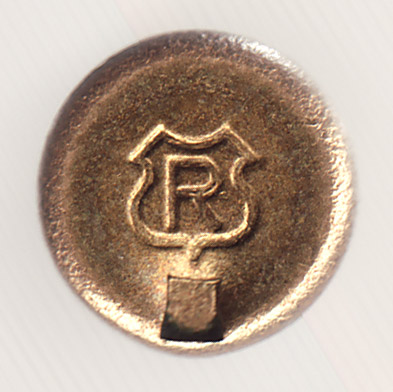
It is matched to the rifle. “BOLT ASSEMBLIES ARE SPECIFICALLY MATCHED TO A FIREARM. USING ANY OTHER BOLT ASSEMBLY MAY CAUSE EXTENSIVE DAMAGE TO THE FIREARM AND/OR SERIOUS INJURY.” Savage tells the owner to “VERIFY THAT THE 4 DIGITS ENGRAVED ON THE BOTTOM MATCH THE LAST 4 DIGITS OF THE SERIAL NUMBER ON THE RECEIVER”, and to “DISASSEMBLE ONLY ONE FIREARM AT A TIME TO AVOID INTERCHANGING COMPONENTS”.1 The practical meaning is that the bolt was fitted to this receiver and barrel at the factory. A rifle and bolt whose numbers do not match should not be fired until a gunsmith has checked it.
It carries the striker. The manual refers to “the internal hammer … restrained within the bolt assembly”. There is no separate hammer in the stock or the trigger group; everything that strikes the rim lives in the bolt.
It is not to be taken apart. Section 14 of the manual says, without qualification, “DO NOT DISASSEMBLE THE BOLT ASSEMBLY.” Savage’s service desk says the same more gently: “The bolt assemblies on our centerfire and rimfire models are designed so that they do not have to be broken down and cleaned. A light coat of oil on the outside of the bolt is sufficient … If, for some reason, the bolt must be disassembled for repair, Savage recommends that it be done by a licensed gunsmith who is familiar with the product.”4 That is why Volume 5 has no bolt detail-strip procedure: the maker publishes none and forbids the owner one.
The extractor is the exception. The extractor (part 33) and extractor spring clip (33A) are on the Model 93’s list of parts an individual may buy.1 Volume 5 covers what that implies for repair.
Dry firing. Savage advises that “if you plan to dryfire a rimfire model, we suggest you use snap caps to prevent any firing pin damage”; a single dry fire after closing the bolt “will not have any affect on the gun”.4 The usual concern on any rimfire is that, with no rim to crush, the firing pin can reach the edge of the chamber; that is presumably the damage Savage has in mind, though its answer does not say so.
4.1.4 The trigger is the bolt stop
On a Model 93 there is no bolt-release button or lever. The trigger does the job.
Savage’s 2022 service article gives the removal sequence for the Mark I, Mark II, Rascal, Model 93/93R17 and B Series:2
- Check that the rifle is unloaded and remove the magazine.
- Open the bolt.
- Move the safety to the fire position.
- Press the trigger and hold it fully rearward.
- Pull the bolt rearward and remove it.
And to reinstall: make sure the bolt handle has not rotated out of position while the bolt was out. “When the bolt handle is in line with the cutout in the receiver, the firing pin should be in the top center position.” Hold that alignment, insert the bolt with the trigger held fully rearward, then return the safety to SAFE and refit the magazine. The manual adds the same checks from the other direction: hold the bolt “so the firing pin is located top center”, and “if you encounter difficulty inserting the bolt, remove it and recheck the alignment.”1
Two consequences follow. The safety must be off to remove the bolt, because FULL SAFE locks the trigger that releases it. And a bolt that will not go back in has almost always rotated on itself while out of the rifle; the answer is to realign it, never to force it.
The owner’s sheet for the rifle documented here carries a modification note reading “Bolt Release”. On this model, Savage’s bolt release is the trigger, so the note does not describe a factory feature. Volume 1 §1.7 records it without interpretation.
4.1.5 The safety
Savage’s rimfire safety has two positions.1
- FULL SAFE: moved fully rearward, covering the red dot. “In the FULL SAFE position, the trigger is blocked from moving.”
- OFF – READY TO FIRE: moved fully forward, exposing the red dot.
The manual’s rule is that the safety goes to FULL SAFE “prior to closing the bolt when loading ammunition”, and that a loaded rifle is carried at FULL SAFE. The safety blocks the trigger. The manual does not describe it as blocking the striker or the sear directly, and it is not described that way here.
The first maintenance check in Savage’s manual concerns the safety and the bolt together: “BE SURE THE BOLT HANDLE OR CAP DOES NOT HIT THE SAFETY WHEN CLOSING THE BOLT.” Volume 3 §3.5 explains why that sentence is in capitals: Savage recalled its .17 WSM B.MAG because its bolt could catch the safety and push it to fire.
4.1.6 The AccuTrigger, and what the blade actually does
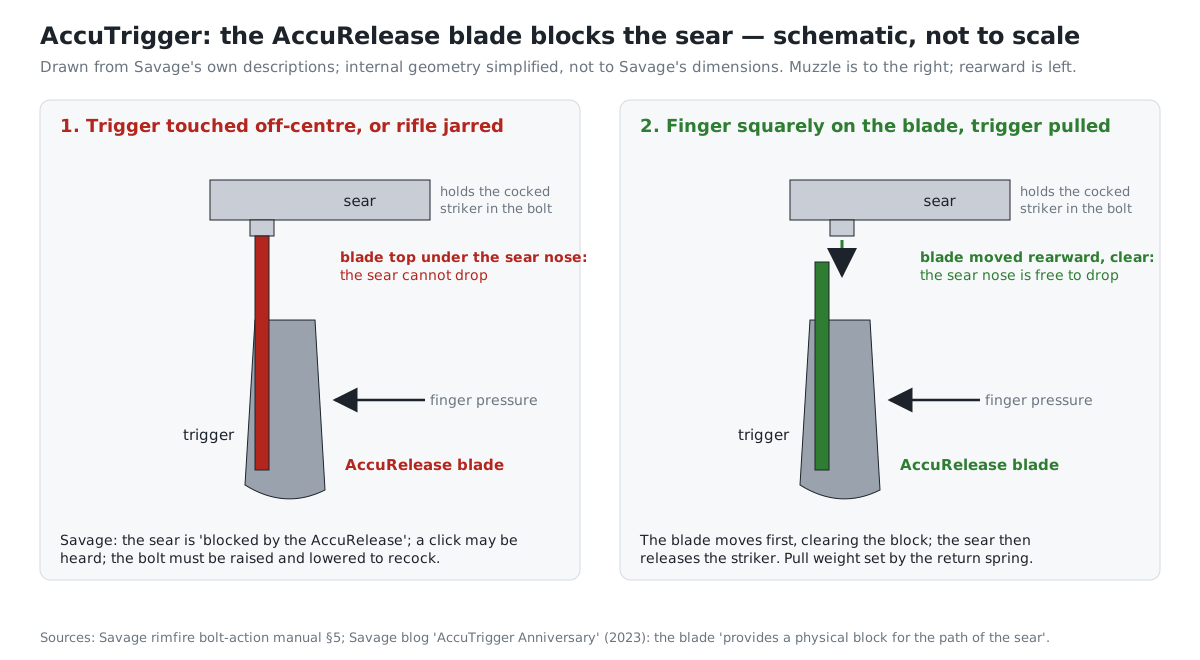
The problem it answers. Savage’s own account is straightforward: a light factory trigger is a jar-off risk, so factory triggers were set heavy for liability; the AccuTrigger was designed to let the owner set a light, crisp pull without that risk. Savage describes it as “the first factory trigger design to have minimal sear engagement to safely allow a light, crisp trigger break”, made safe by the addition of the AccuRelease blade.3
The blade is a sear block, not a trigger block. This is the point most often misunderstood. Many trigger shoes carry a blade; on most, the blade only stops the trigger itself from moving. Savage is specific that its blade is different: it “provides a physical block for the path of the sear”.5 The 2007 catalogue puts it as a condition: the AccuRelease “must be completely depressed or the rifle cannot fire. While the trigger is being pulled, the AccuRelease is intentionally depressed, which unblocks the sear.”6
What the shooter experiences. If the trigger is pulled from the side, or without the blade fully depressed, “the sear [will] disengage and be blocked by the AccuRelease. Although a ‘click’ may be heard, the sear is blocked, preventing the firing pin from hitting the primer.” The click is “the actual sear being blocked by the AccuRelease and not the firing pin being released”, and the cure is to raise and lower the bolt handle to recock.1 Savage also credits the blade with stopping the sear “if the rifle is accidentally jarred or dropped, assuming the firearm has been properly serviced and maintained”, and it attaches a condition that recurs throughout its literature: the protection holds when the trigger is maintained, and “surfaces will wear with use.”1
The adjustment. On the Model 93, adjusting the AccuTrigger requires the stock to come off.1 The adjusting element is the trigger return spring, turned with the slotted AccuTrigger tool:
- Clockwise raises the pull, to a maximum of approximately 4½ lb, reached “at the point where the spring ‘clicks’ when rotated”.
- Counter-clockwise lowers it, to a minimum of approximately 2½ lb, “where the large coil sets deep within the trigger and the small coil extends quite a bit below the trigger and you detect resistance”.
- “The spring should not be forced beyond these limits.”
Savage’s service desk gives the same lower figure for its rimfires: “adjustable down to approximately 2.5 pounds”.4 The manual’s figure of the maximum setting is captioned “(as supplied from the factory)”, so a rifle that has never been adjusted should be near 4½ lb. A spare adjusting tool is sold by Savage’s parts department.4
What the AccuTrigger does not permit. It is adjustable only between those limits and only through the spring. Savage’s manual makes one exception to its general rule against altering the rifle, and it is exactly this: “Any alteration or change (other than adjusting the AccuTrigger™) made to a firearm after manufacture can make the gun dangerous and will usually void any factory warranties.”1 Stoning a sear or fitting a lighter spring is outside that exception. The AccuTrigger cannot be fitted to a rifle that did not have one: the receiver is machined differently.4
4.1.7 The magazine
The Model 93 uses a detachable box magazine held by a latch at its rear. Savage’s Model 93 parts list names the parts around it: the detachable box magazine (item 10), a magazine retaining clip/spring (item 7) and a magazine plate (item 19I).1
Capacity. Savage’s service desk answered in 2013: “At this time, there are only 5-round magazines available for the magnum 93 series firearms.”4 Every 93R17 model page in the archive lists a five-round magazine, with one exception: the 93 Minimalist page of 2024 lists a 10-round detachable magazine.7 Whether that magazine fits older 93R17 stocks and magazine plates was not established and is not assumed.
What holds it. The fit of the magazine depends on the latch and on the plate around the well. Savage’s manual warns, when refitting the stock, against tightening the screws enough “to indent the stock or MAGAZINE RETAINING PLATE”.1 A magazine that seats loosely or drops out after reassembly is a symptom worth connecting to that warning (Volume 5).
4.1.8 The barrel, headspace, and the barrel-nut question
Savage’s most distinctive centrefire feature is its barrel lock nut: on the centrefire Model 110 family the barrel threads into the receiver and is held by a large nut, which is what allows headspace to be set against the bolt and the barrel changed without a lathe. That arrangement is widely documented and is not re-derived here. Savage’s own writing refers to the proof marks “on all barrels just in front of the lock nut”.8 The hub’s Headspace dive covers headspace in general, including a flagged note on rimfire headspace in its Volume 11.
On the Model 93, no Savage source consulted shows that system. What the Savage record does show is this:
- Headspace is controlled through the bolt. The bolt is matched to the receiver and serial-numbered to it (§4.3). That is a factory-fitting arrangement, not an owner adjustment.
- The barrel is not an owner part. The Model 93 parts list names no barrel and no nut. Savage’s service desk says “Savage Arms does not sell barrels”, and its rebarrelling offer is framed for “a centerfire model that was made after November 1, 1995”.4 Nothing is said about rebarrelling a rimfire.
- Some Model 93s have a movable recoil lug on the barrel. Asked about a barrel that sits off-centre in the stock, Savage answered: “Some model 93’s are equipped with a recoil lug located on the bottom of the barrel near the receiver … the recoil lug can be loosened and repositioned to the left or right to adjust the position of the barrel.”4 That describes a lug clamped to the barrel, not the joint between barrel and receiver.
- The barrel is button rifled and hand straightened, as are all Savage barrels, by the maker’s own statement.4 The 1-in-9 twist is on every model page (Volume 1).
How the Model 93’s barrel is actually fixed into the receiver could not be established from any Savage source, and it is not stated here. It is widely described in owner discussion; none of those descriptions was traceable to the maker, and this hub has learned not to print an attachment method on the strength of forum consensus. The consequence for an owner is unaffected: the barrel is a factory job, not a bench job. The barrel-nut system, and the home barrel changes it permits, belong to Savage’s centrefires.
4.1.9 The stock, the action screws, and three torque figures
The barrelled action sits in the stock on action screws that pass up through the trigger guard and magazine plate. Savage’s documents disagree on the details, and the disagreement is given as found rather than resolved.
Table 2 — 4.9 The stock, the action screws, and three torque figures
| Source | Screws | Hex key | Torque |
|---|---|---|---|
| Manual, §5 (Mark I, Rascal, Mark II, Model 93)1 | “the two screws securing the stock” | 9/64 in; 5/32 in for a “Thumbhole” stock | ”approximately 18 inch pounds but not enough to indent the stock or MAGAZINE RETAINING PLATE” |
| Service article, 2022 (Mark I, Rascal, Mark II, Model 93 and 93R17)3 | “the three action screws” | 5/32 in | ”front two action screws to 18-20 in-lbs. The action screw in the rear of the trigger guard should be just finger tight.” |
| Service FAQ, 2013/2024 table4 | not stated | 5/32 in (“Currently our firearms use 5/32”) | “All Mark I, II, 93, and B-Series (B22, B17) models 15 inch pounds” |
Three points are consistent across all three: the screws are light, the stock is not to be crushed, and a thumbhole stock takes a 5/32-inch key. The number of screws probably differs between stock styles; the rifle itself shows which applies. Where the figures conflict, the lower one is the safer starting point on a wood or laminate stock, and the 2022 article’s instruction to leave the rear trigger-guard screw finger tight is the most specific Savage has published for this model.
4.1.10 What could not be verified
- How the bolt locks, beyond the handle seating in the receiver’s slot.
- How the Model 93 barrel is attached to the receiver. No Savage source describes it.
- How the Model 93 ejects. Its parts list names no ejector.
- Whether the 10-round Minimalist magazine fits other 93R17s.
- Which action-screw count and torque apply to the rifle documented here — three Savage figures conflict.
- Whether the rifle documented here has the AccuTrigger (Volume 1 §1.6).
4.1.11 Bibliography
Footnotes
-
Savage Arms, instruction manual for the Mark I, Rascal, Mark II, Model 93 and B.MAG rimfire bolt actions, savagearms.com/DAM/assets/pdf/Manuals/manual_rimfire_boltaction.pdf, as archived 19 December 2022 (PDF created 2016, modified 2019). §2 safety; §3 installing the bolt; §4 basic use; §5 AccuTrigger adjustment and stock removal/installation; §6 parts list (Model 93: items 7, 10, 16B, 16D, 17B, 18, 19A, 19B, 19I, 19K, 32, 33, 33A, 60, 504, 506, 529); §14 maintenance and cleaning. ↩ ↩2 ↩3 ↩4 ↩5 ↩6 ↩7 ↩8 ↩9 ↩10 ↩11 ↩12 ↩13
-
Savage Arms blog, “How to Remove the Bolt in a Savage Bolt Action Rimfire Rifle”, 31 March 2022, savagearms.com/blog/post/how-to-remove-the-bolt-in-savage-rimfire-rifles, as archived 20 March 2025. ↩ ↩2
-
Savage Arms blog, “How to Adjust the AccuTrigger on Bolt Action Rimfire Rifles”, 16 August 2022, savagearms.com/blog/post/how-to-adjust-the-accutrigger-on-bolt-action-rimfire-rifles, as archived 1 September 2024. ↩ ↩2 ↩3
-
Savage Arms service FAQ, service.savagearms.com/hc/en-us/articles/, answers dated 11 April 2013 unless noted, as archived 2020–2024: push feed (214238983); bolt disassembly (214237103); dry fire (214239063); AccuTrigger minimum (214238383); spare adjustment tool (214239663); AccuTrigger not retrofittable (214239543); 93 magazine capacity (214237263); model 93 barrel centring and recoil lug (214238263); barrels not sold, centrefire rebarrelling (214238523); button rifling (214239163); stock hex size (214237363); action screw torque table (214238343, archived 17 April 2024). ↩ ↩2 ↩3 ↩4 ↩5 ↩6 ↩7 ↩8 ↩9 ↩10 ↩11
-
Savage Arms blog, “AccuTrigger Anniversary: Celebrating 20 Years”, 9 January 2023, as archived 1 September 2024. ↩
-
Savage Arms, 2007 Catalog, “How the AccuTrigger Works”, savagearms.com/images/pdf/catalogs/SavageCatalog2007.pdf, as archived 12 October 2007. ↩
-
Savage Arms model page “93 Minimalist” (savagearms.com/firearms/model/93-93r17-minimalist), as archived 7 September 2024 — “10-Round Detachable Magazine”. ↩
-
Savage Arms blog, “Why Does Your Savage Rifle Have a ‘Dirty Bolt Head’?”, 24 October 2023, as archived 11 October 2024. ↩
Comments (0)